How the Mustang climbed the performance ladder
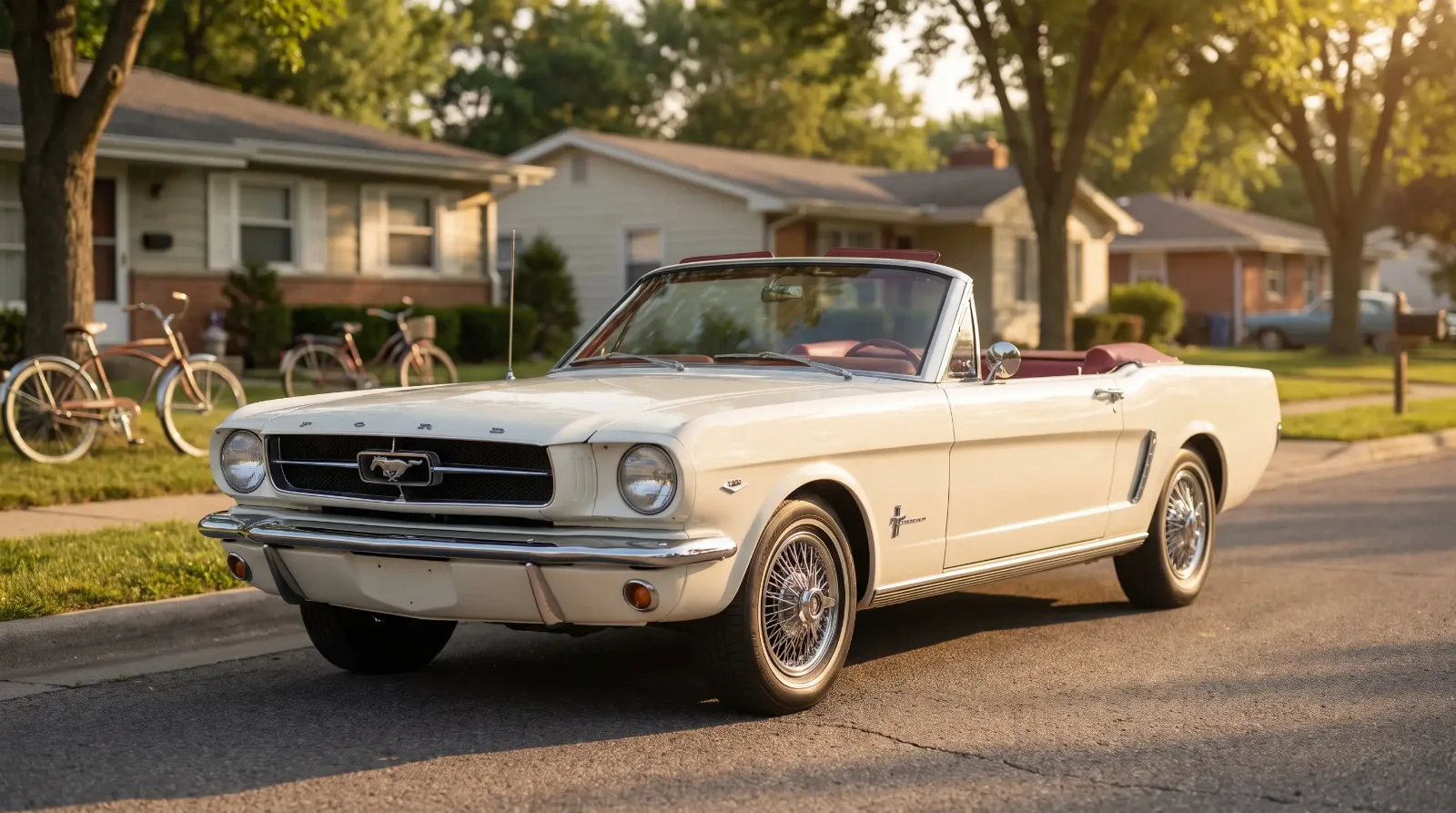
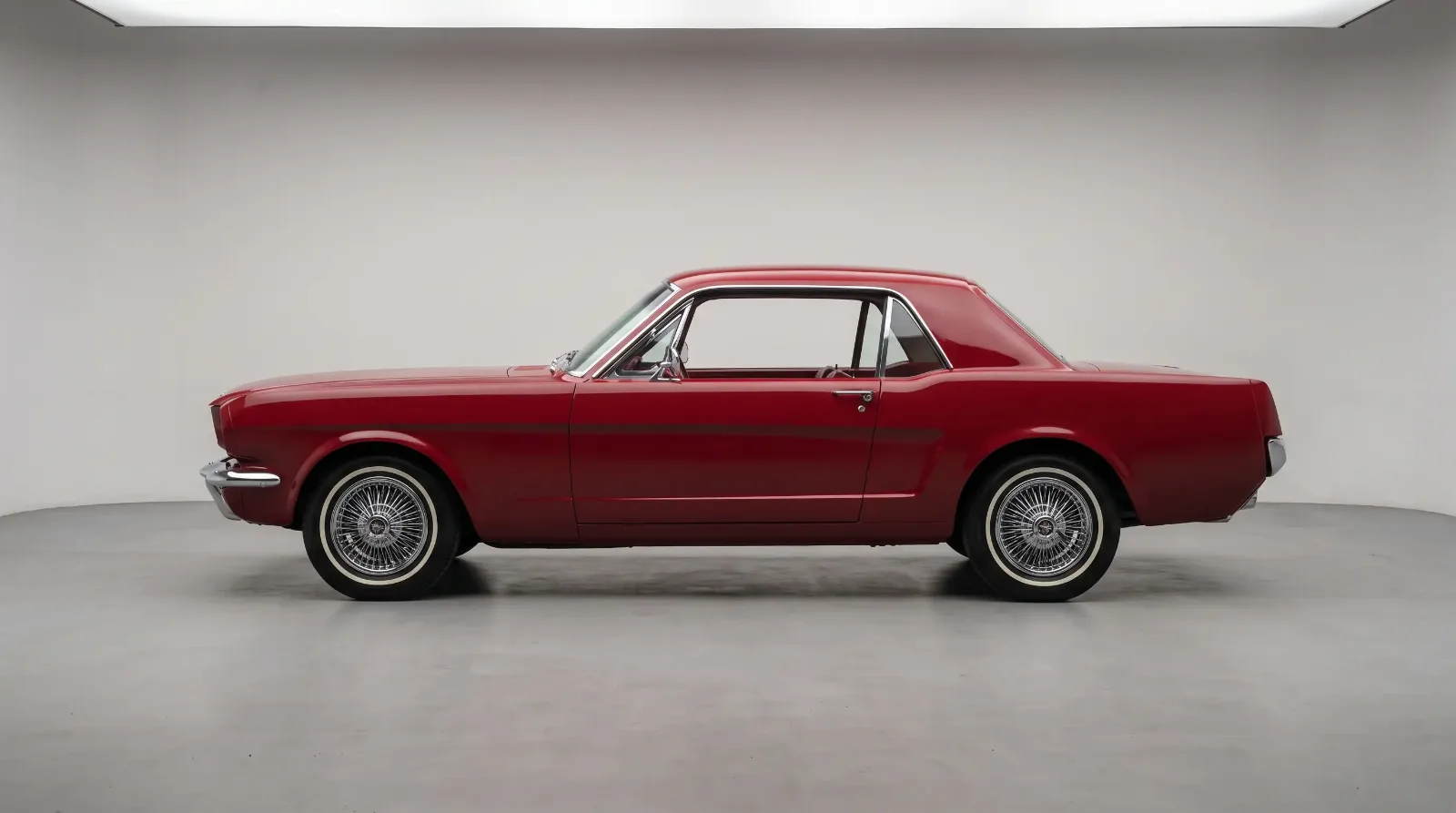
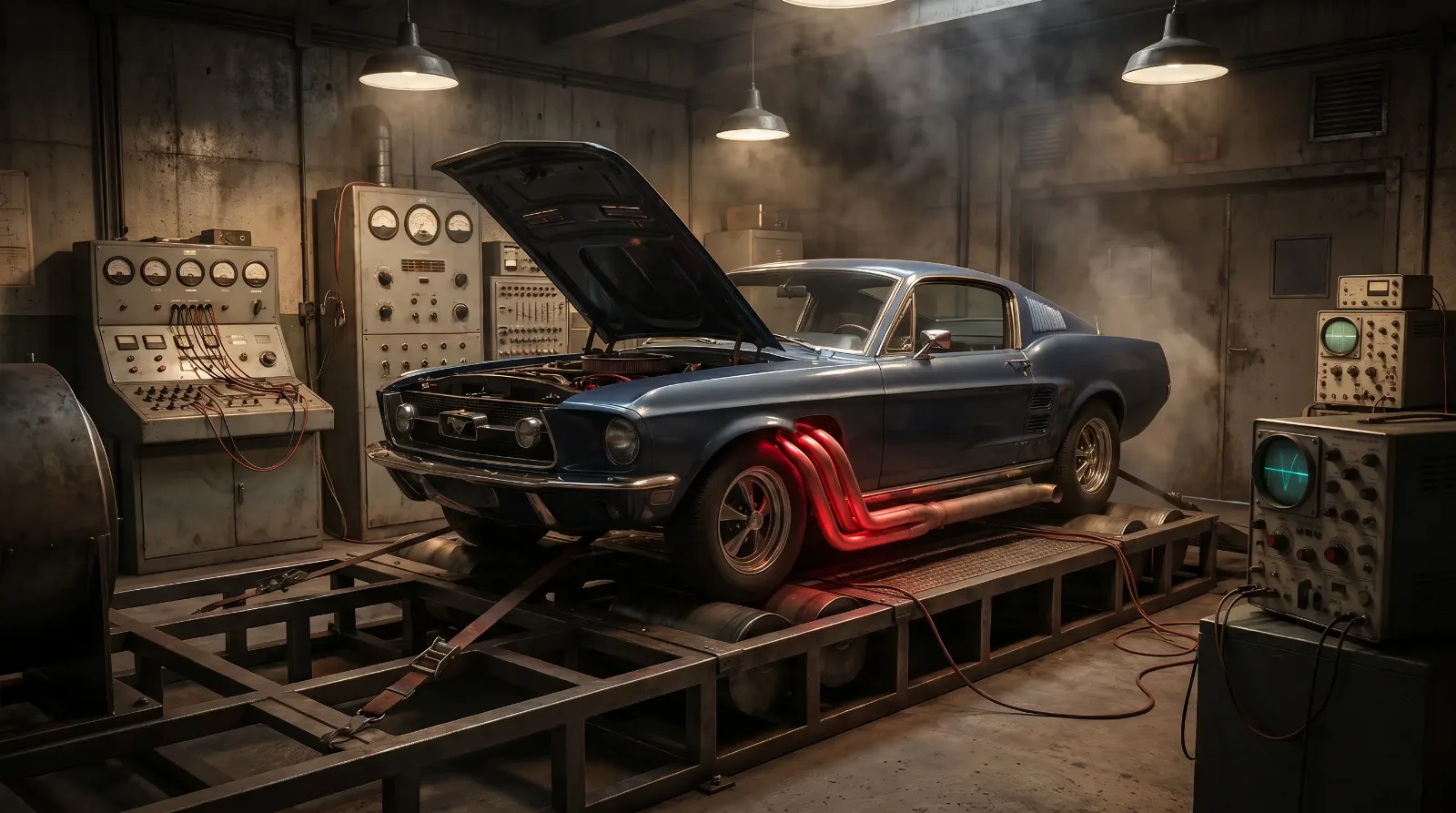
When Ford launched the Mustang in April 1964, it was a sporty, affordable car built on humble Falcon underpinnings, not a muscle car. The earliest cars could be ordered with a thrifty six-cylinder, and even the V8 options were modest by later standards. What turned the pony car into a genuine performer was a steady escalation of factory hardware over the next six years, driven by showroom demand and by the marketing value of winning on Sunday. By the time the first-generation body bowed out after 1973, the Mustang had spawned a family of high-output models that remain the most collectible cars Ford built in the era.
This is the overview of that performance ladder. Each rung, the GT equipment group, the Mach 1, the Boss 302 and Boss 429, and the 428 Cobra Jet, carried its own engine, its own mission, and its own audience. The deep technical and racing stories of the individual models live in their own articles. Here, the goal is to map how the pieces fit together and why 1969 and 1970 stand as the peak of the breed. For the broader arc of the model, see the classic Mustang story.
The GT equipment group: the first real step up
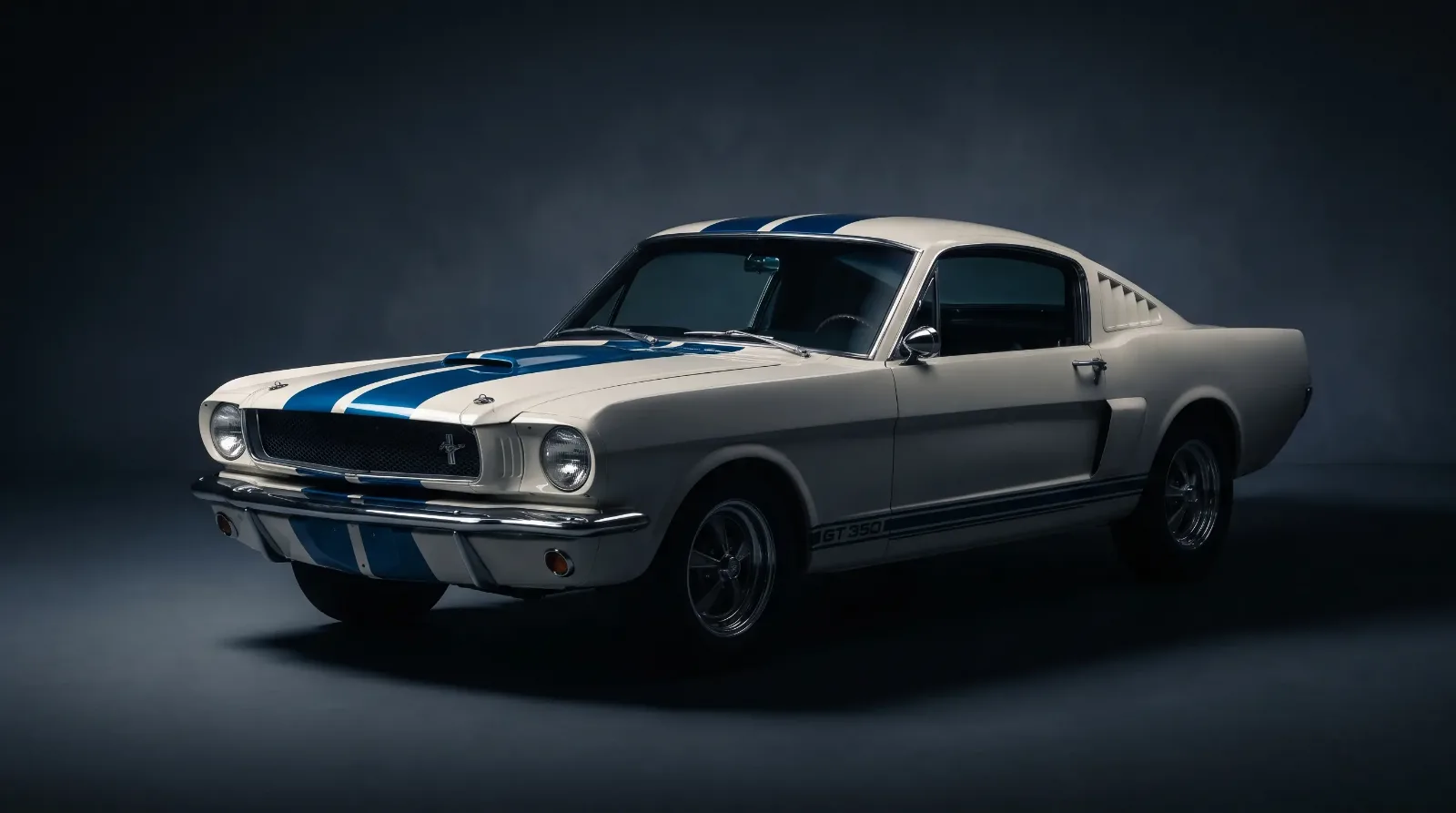
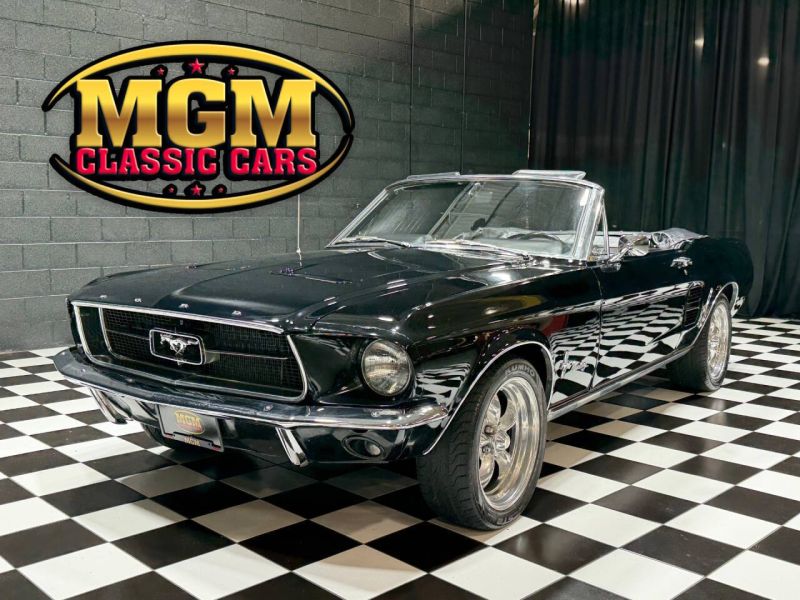
The GT package arrived in April 1965 and gave buyers a coherent performance bundle rather than a single high-output engine. Ordered alongside the larger of the available V8s, the GT group added front disc brakes, a firmer suspension, dual exhaust with trumpet tips exiting through the rear valance, fog lamps in the grille, and special badging and rocker stripes. It was less about raw horsepower than about turning the Mustang into a car that could brake and corner as well as it accelerated.
Through the mid-1960s the GT remained the enthusiast's natural choice, pairing with the 289 small-block in its higher states of tune. The package set a template Ford would follow for the rest of the decade: bundle the suspension, brakes, exhaust, and appearance items so a buyer could tick one box and get a complete car. The GT was the foundation on which the later, more specialized performance models were built.
The small-block and big-block engine families
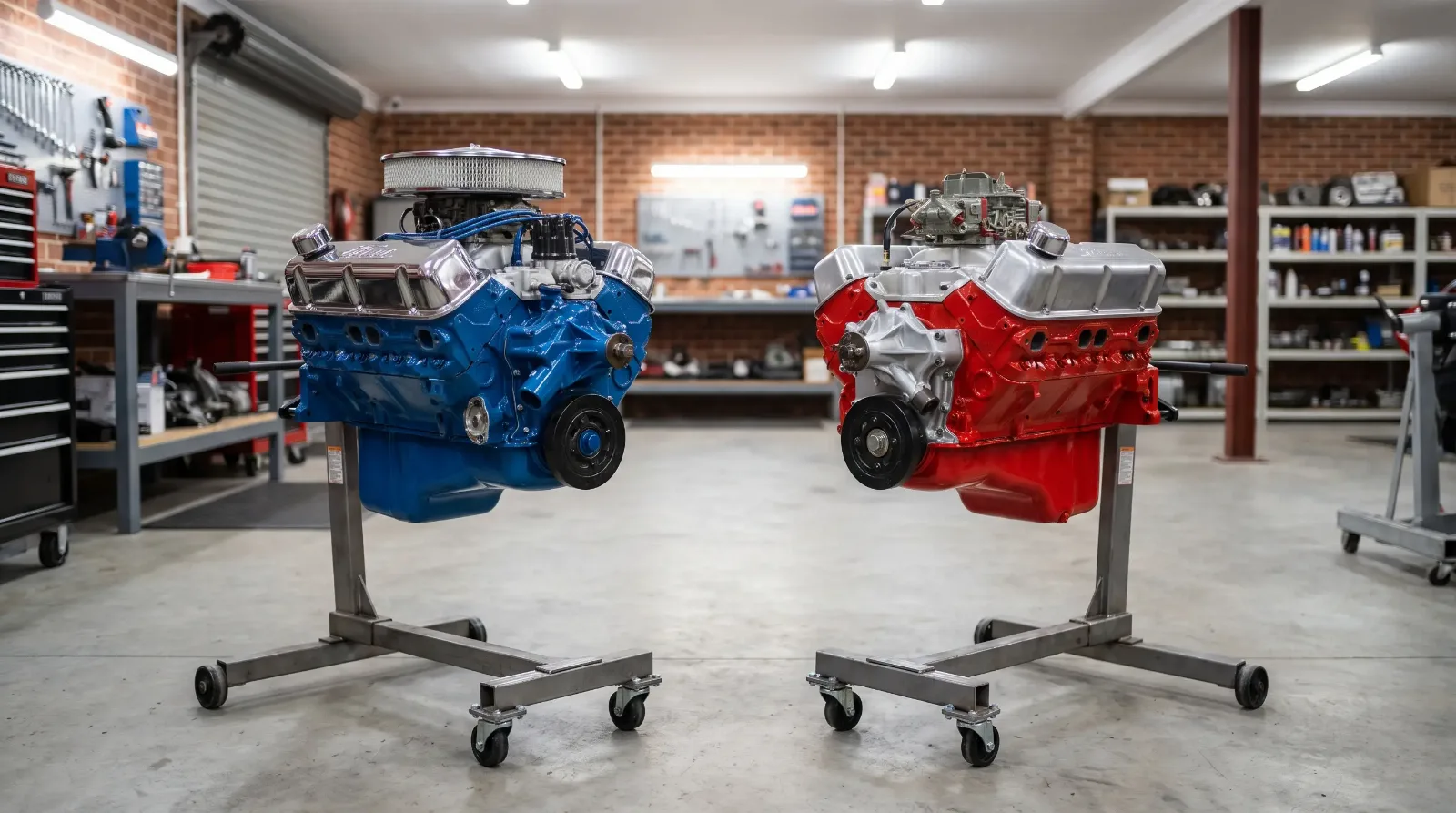
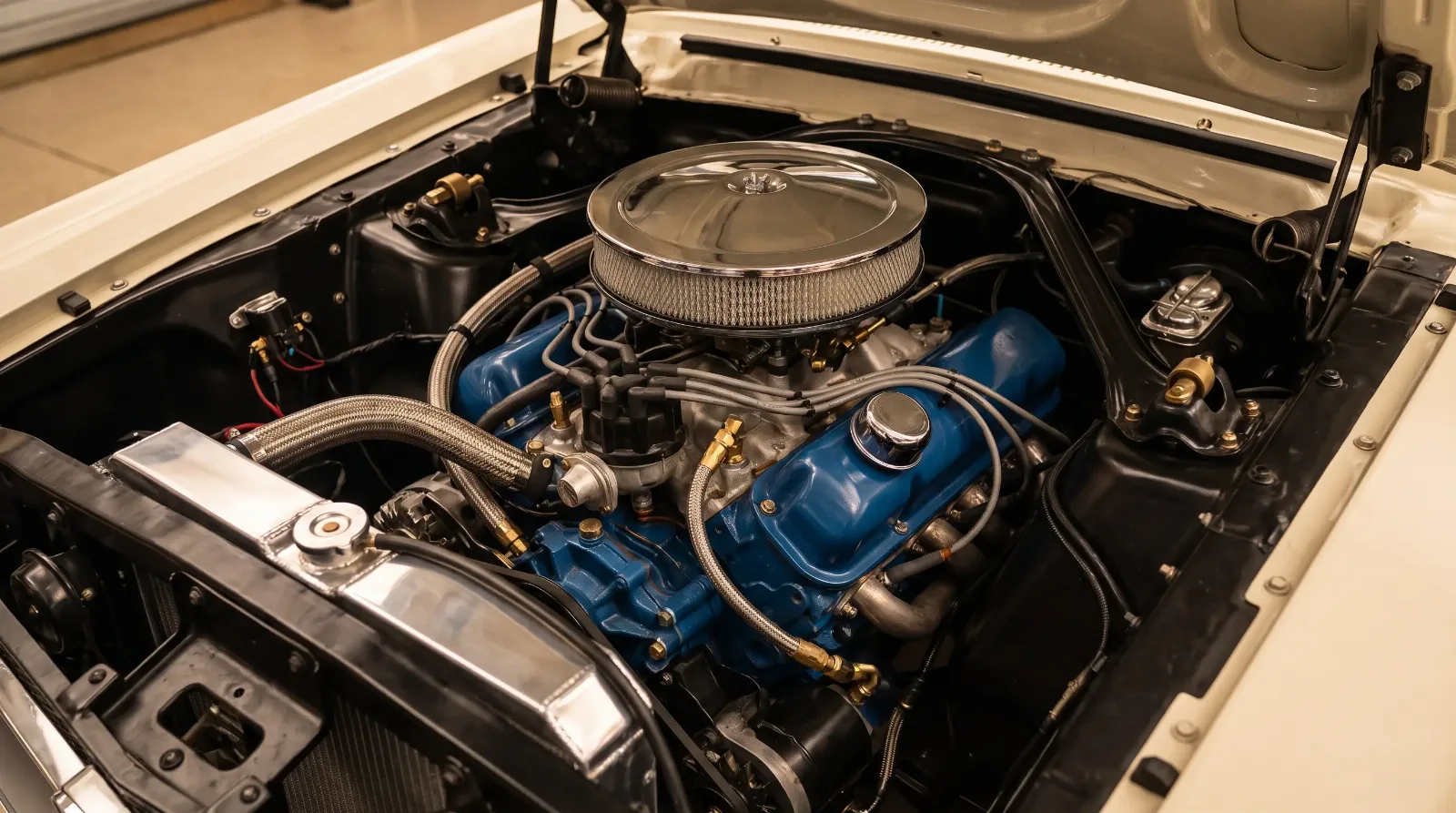
Understanding the performance Mustangs means understanding two distinct engine families. The small-block Windsor V8 family powered the early cars and the road-course specials. It began with the 260 in 1964, grew to the 289 that defined the first few years, and reached the 302 by 1968. These engines were light, revved freely, and suited the Mustang's nose-heavy balance better than anything larger, which is why Ford turned to the 302 for its Trans-Am homologation effort.
The big-block FE family answered a different question: straight-line speed. The 390 cubic inch FE appeared as the top engine option in 1967 when the body was enlarged to accept it, and it set the stage for the 428 Cobra Jet that followed. Later, the 351 Cleveland slotted in between as a mid-size V8 with big-block-style canted-valve heads that flowed well. By 1969 and 1970 a Mustang buyer could choose anything from a frugal six to a race-bred 429, a spread no earlier pony car had offered.
The Mach 1: performance you could live with
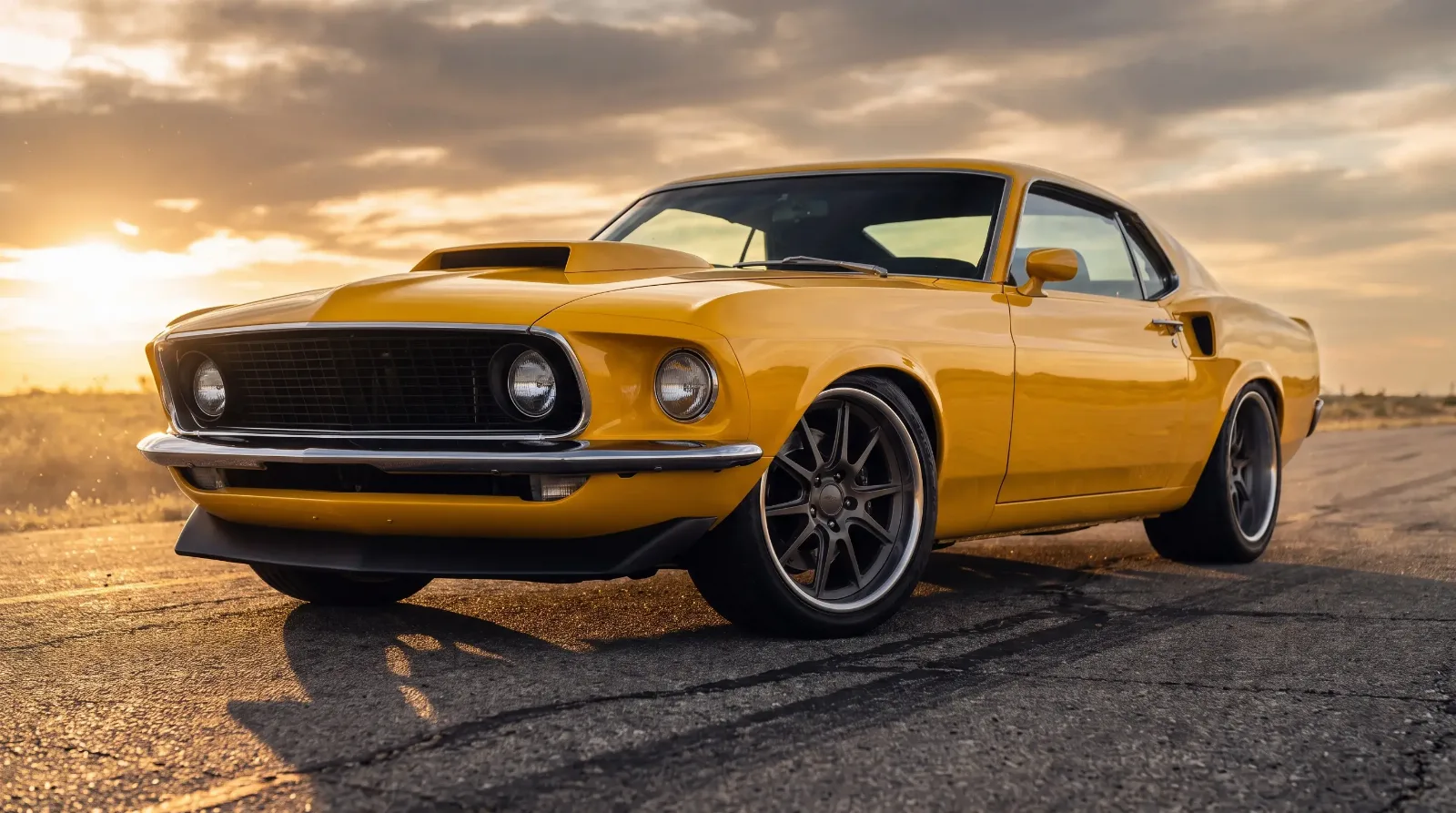
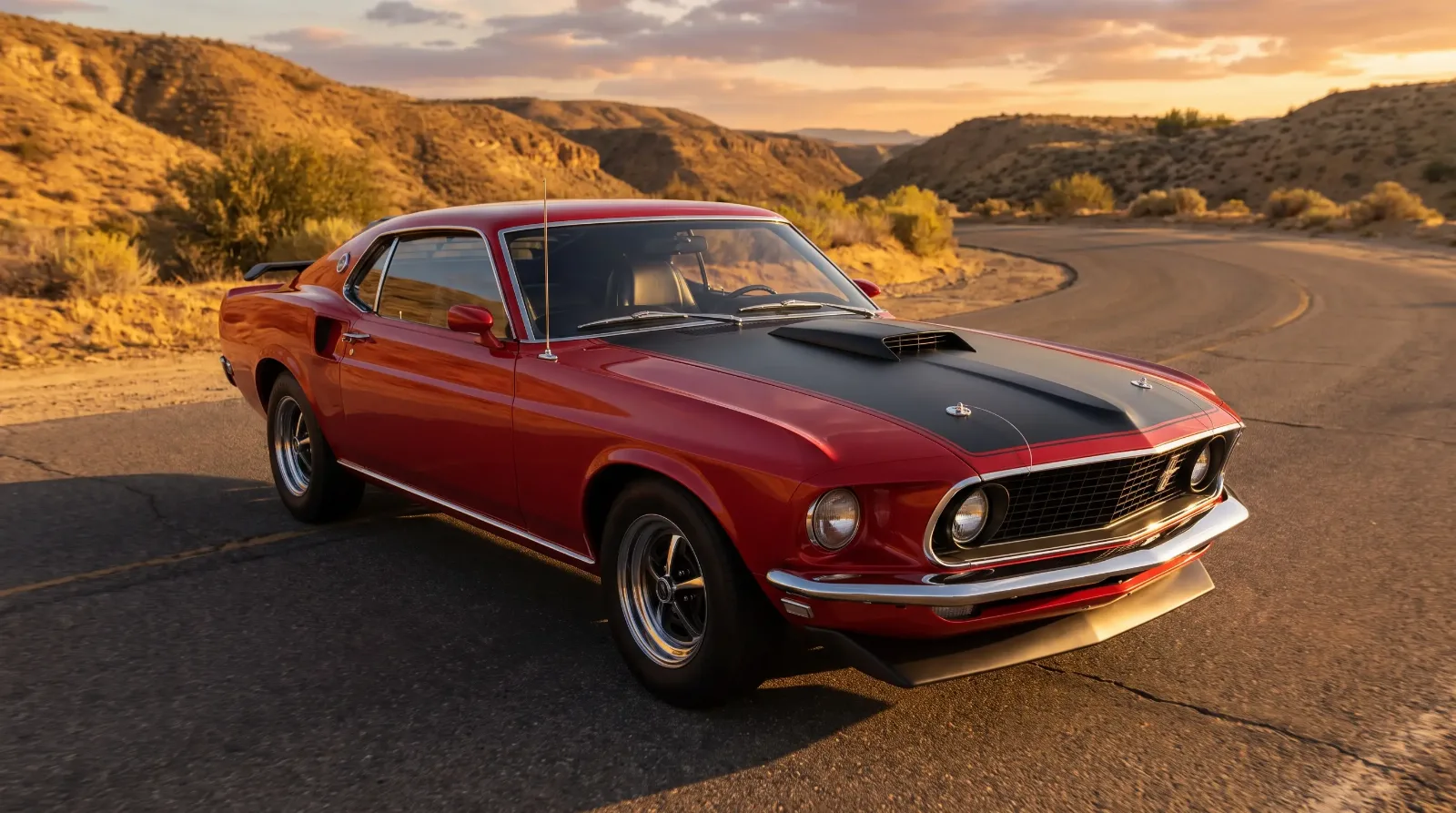
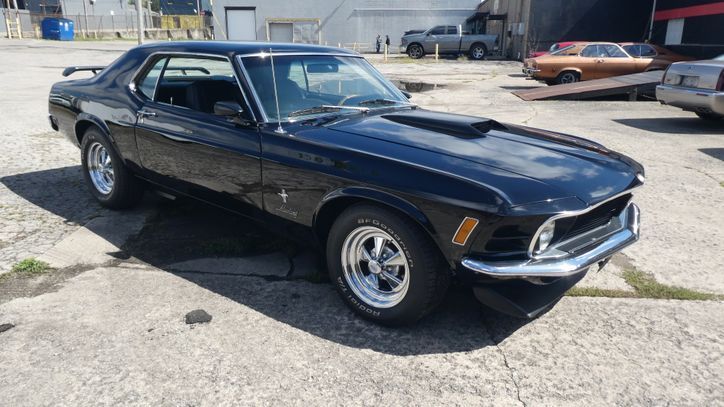
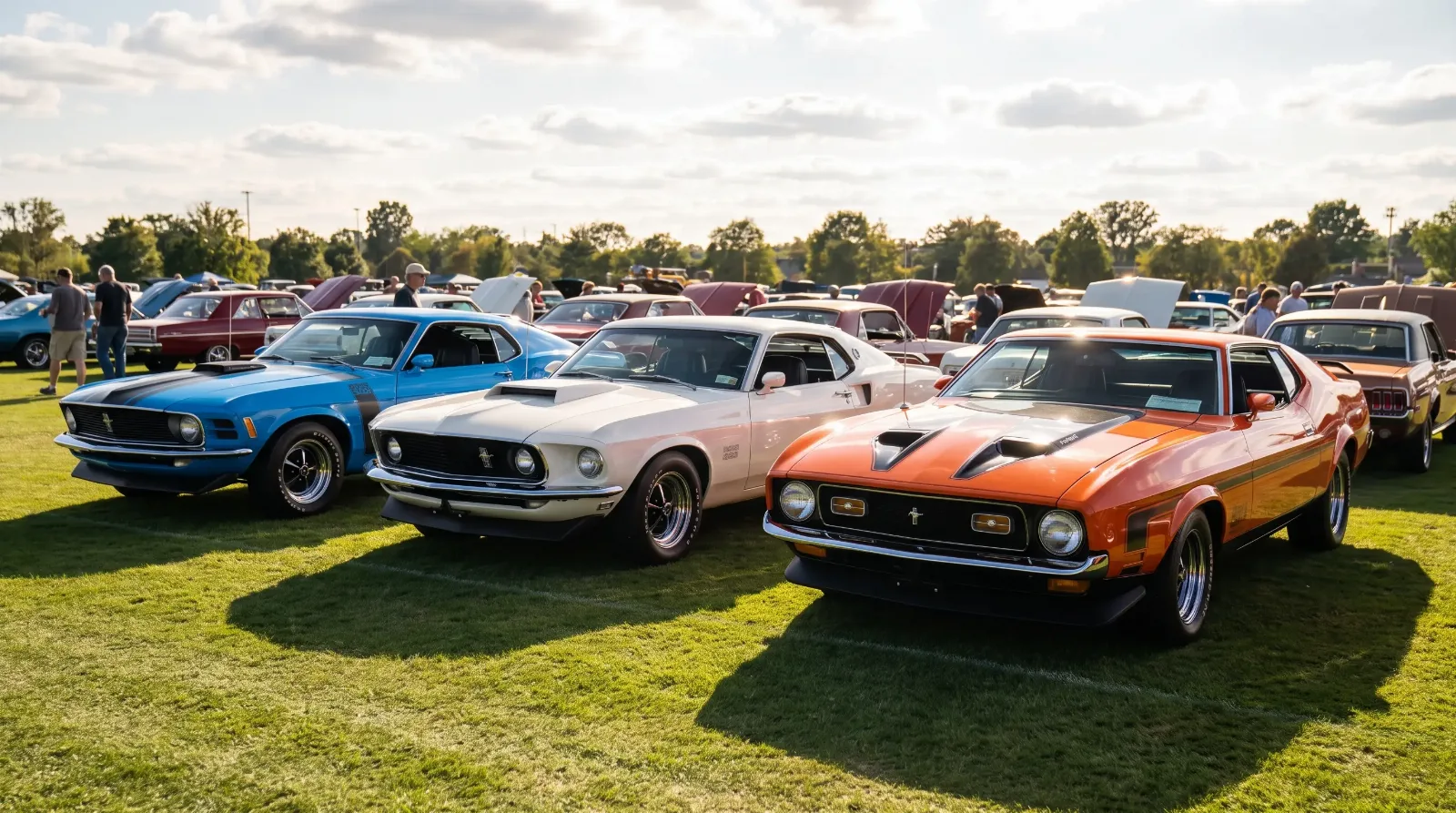
Introduced for 1969, the Mach 1 packaged the muscle-era Mustang into a single trim that buyers could order with a range of V8s, from the 351 up to the 428 Cobra Jet. It was not a stripped homologation special. It came with a deluxe interior, a blacked-out hood with optional matte treatment and hood pins, a chin spoiler, simulated side scoops, chrome exhaust tips, and the styled wheels that became its signature. The Mach 1 was the performance Mustang for people who still wanted comfort and trim.
That positioning made it a sales success and the volume leader of the high-performance lineup. Where the Boss cars were narrow-purpose machines built to satisfy racing rule books, the Mach 1 was the everyday muscle Mustang, fast, well-equipped, and visually unmistakable. It carried forward through the 1970, 1971, and later first-generation cars, evolving with the body while keeping its role as the approachable face of Mustang performance. Buyers shopping the modern market still treat a well-documented Mach 1 as one of the cornerstones of classic Mustang muscle for sale.
The Boss 302: built to win Trans-Am
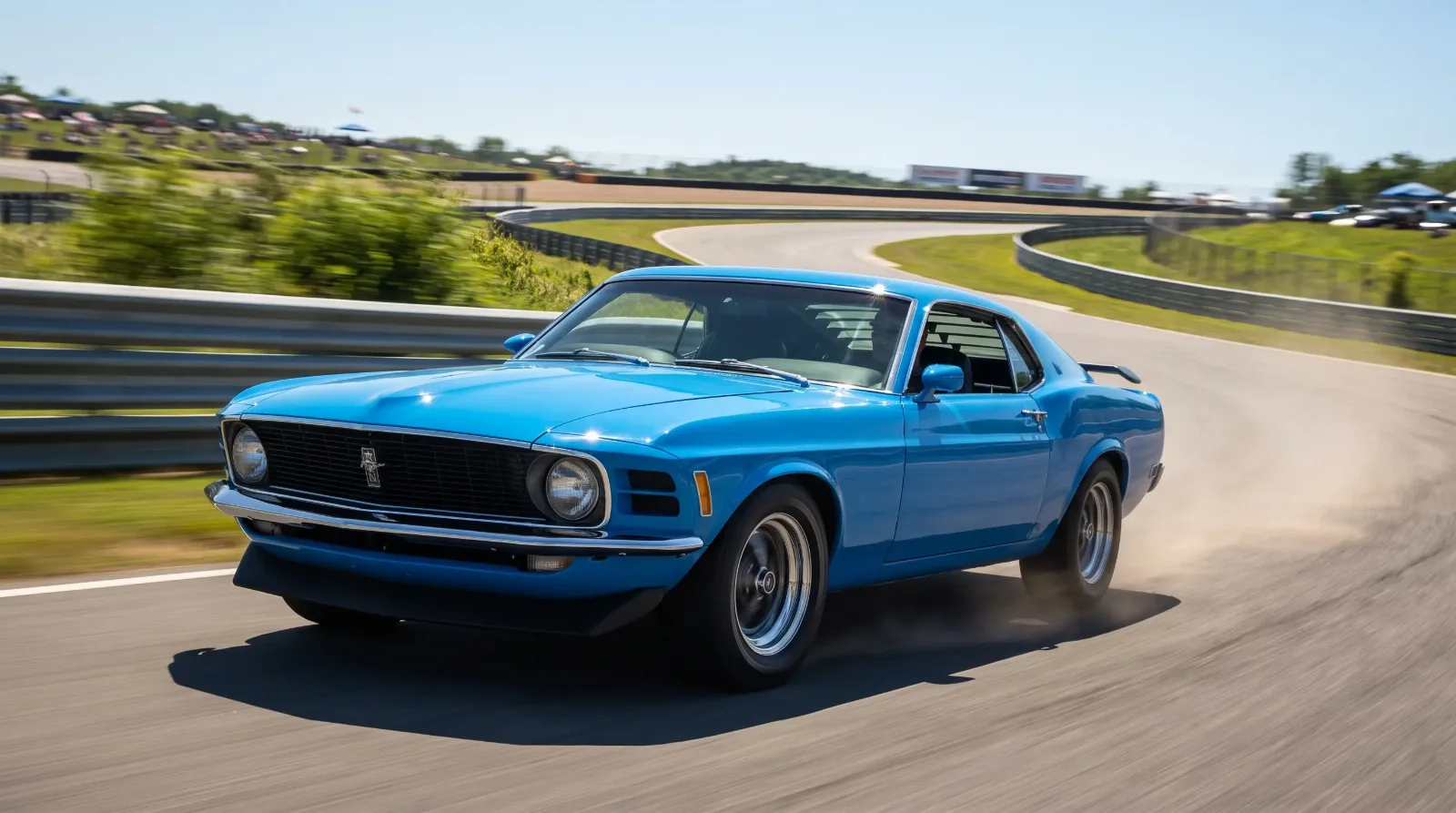
The Boss 302 existed for one reason: to beat the Camaro Z/28 in the SCCA Trans-Am series. The rules required a manufacturer to sell a minimum number of street versions to qualify the car for racing, so Ford built a road-going Boss 302 to homologate its Trans-Am effort. The result was arguably the best-handling Mustang of the era. Its small-block used the new canted-valve Cleveland-style heads on the 302 block, producing an engine that loved to rev and made its power high in the range.
Beyond the engine, the Boss 302 was a chassis car. It carried a firmer suspension, wider wheels and tires, quicker steering, and front and rear spoilers, all developed for the track and homologated for the street. Designer Larry Shinoda gave it the distinctive C-stripe graphics and blackout treatment that set it apart from any other Mustang. Built for 1969 and 1970, the Boss 302 is the road-course purist's first-generation Mustang, and the deep dive into its Trans-Am campaign belongs in its own article.
"People lump the Boss cars together, but they were built for two totally different rule books. The 302 is a corner-carver, the 429 is a drag-strip engine wearing a Mustang body. Know which one you are looking at before you pay Boss money."
— Mike Sullivan
The Boss 429: a NASCAR engine in a street car
The Boss 429 tackled a different rule book entirely. To run its new semi-hemi 429 engine in NASCAR, Ford had to homologate it by selling a quota of street cars fitted with that engine. The Mustang's engine bay was too narrow to accept the wide 429, so Ford contracted Kar Kraft to modify each car, relocating the shock towers and reworking the front structure by hand to make the big motor fit. Every Boss 429 was effectively a special-build car.
On the street the Boss 429 was an oddity. Its engine was designed for sustained high-rpm superspeedway running, not stoplight drag racing, and in street tune it was famously understated for its displacement, with Ford quoting just 375 horsepower (gross) despite a real output widely believed to be far higher. Production was small and the cars were expensive to build, which is why surviving examples sit at the very top of the first-generation value ladder today. Like the Boss 302, it ran for 1969 and 1970 only, and its NASCAR homologation story deserves a full treatment of its own.
The 428 Cobra Jet and the 1969 to 1970 muscle peak
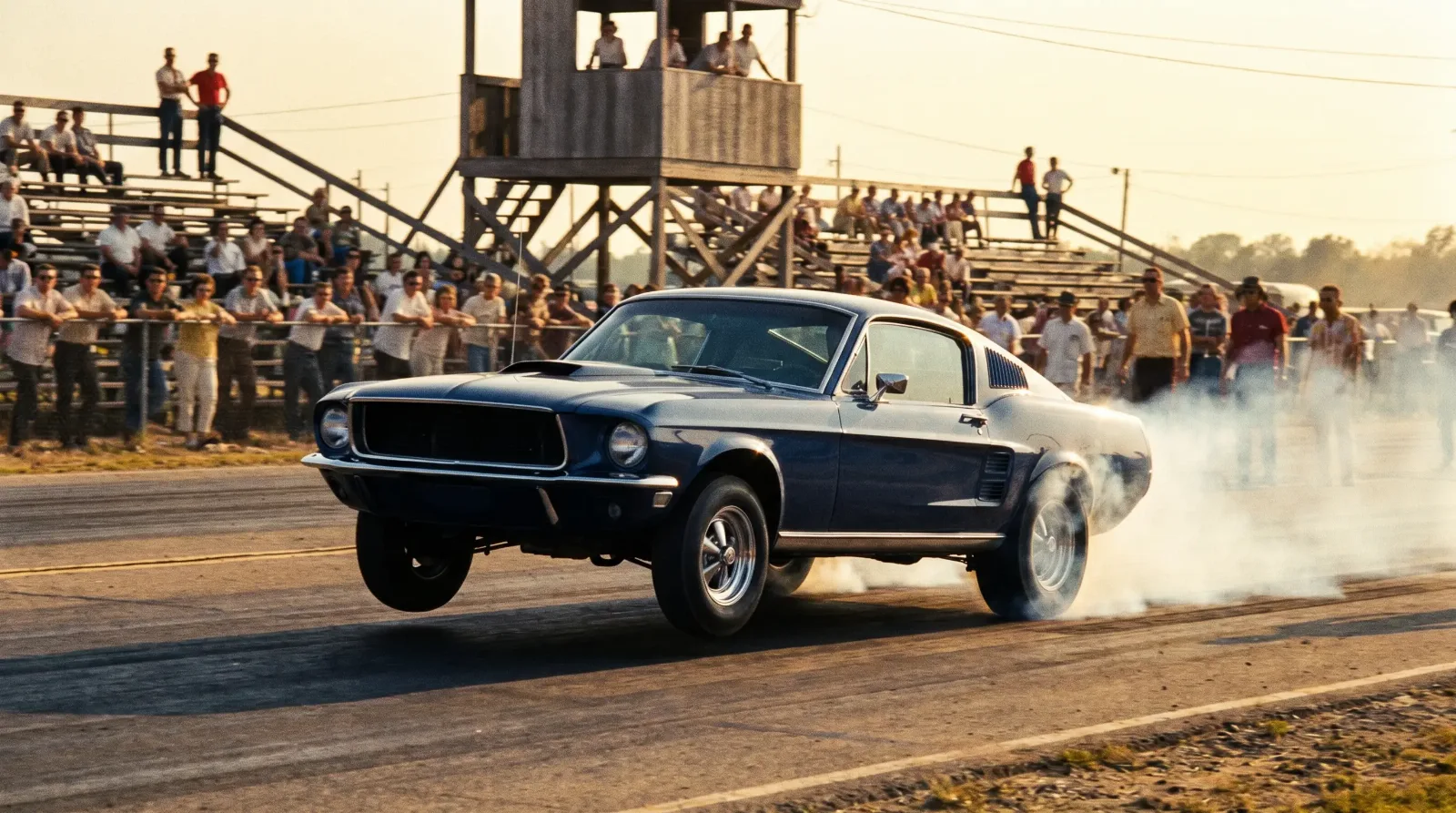
If the Boss cars were the homologation specials, the 428 Cobra Jet was the muscle-car answer to a straightforward question: how much big-block torque could Ford put in a Mustang? Introduced in 1968, the Cobra Jet took the FE-family 428 and fitted it with better-breathing heads and intake, creating a drag-strip weapon that could be ordered in the GT, the Mach 1, and other body styles. A Ram Air version drew cool air through a functional hood scoop. Its conservative factory output rating of 335 horsepower (gross) was widely understood to understate the engine's real strength.
The 428 Cobra Jet is why 1969 and 1970 mark the high point of the breed. In those two years a buyer could walk into a Ford dealer and order a Trans-Am-bred Boss 302, a NASCAR-homologated Boss 429, a torque-heavy 428 Cobra Jet, or a fully trimmed Mach 1, each a distinct interpretation of Mustang performance. Tightening emissions rules, rising insurance costs, and a shift in the market pulled the high-output engines back after 1971. The factory high-performance first-generation Mustang lineup was at its broadest and most serious in this brief window, which is exactly why these are the cars that define the era.
The performance models at a glance
| Model | Years | Engine | Role |
|---|---|---|---|
| GT equipment group | 1965 onward | 289 small-block (higher tune) | Suspension, brakes, exhaust and appearance bundle; the enthusiast's base performer |
| Mach 1 | 1969 to 1973 | 351 up to 428 Cobra Jet | Fully trimmed everyday muscle Mustang; the volume performance model |
| Boss 302 | 1969 to 1970 | 302 small-block, Cleveland-style heads | Trans-Am homologation; the road-course handler |
| Boss 429 | 1969 to 1970 | 429 semi-hemi big-block | NASCAR engine homologation; Kar Kraft special build |
| 428 Cobra Jet | 1968 to 1970 | 428 FE big-block, Ram Air optional | Big-block drag-strip muscle; orderable across body styles |
Each of these deserves a closer look on its own, but together they show how a humble 1964 pony car became, within five years, one of the most varied factory performance lineups Detroit ever offered.
Sources and notes
Horsepower figures cited here are the manufacturer's gross ratings as advertised in period. Like most muscle-era numbers, several were deliberately understated for insurance and racing-class reasons, and dyno-measured output frequently differed from the factory quote. Production details and dates reflect the consensus of the reference sources below; minor variations exist between early and late production runs. This article is for general historical and educational reference and should not be relied upon for vehicle valuation, authentication, or restoration decisions.
- Boss 429 Mustang — Wikipedia (375 hp gross factory rating; Kar Kraft build and NASCAR homologation)
- Boss 302 Mustang — Wikipedia (1969–1970 Trans-Am homologation, Z/28 rivalry, Larry Shinoda styling)
- Ford Boss 302 engine — Wikipedia (Cleveland-style canted-valve heads on the 302 Windsor block)
- Ford Mustang Mach 1 — Wikipedia (introduced for 1969, engine range up to the 428 Cobra Jet)
- 1968 Ford Mustang 428 Cobra Jet — HowStuffWorks (335 hp gross rating, April 1968 introduction, functional Ram Air scoop)
- Ford small block engine — Wikipedia (Windsor family: 260, 289, and 302 displacement history)