
Every Mustang anniversary brings the same line back around: Ford sold 22,000 Mustangs on the first day. It is a tidy number and a good headline, and it sits close enough to the truth that almost nobody checks it. Mustang first day sales are worth checking, though, because the record tells a slightly different story. The number is real. The day is wrong, and so is the verb.
Car Features
7 min read
Did Ford Really Sell 22,000 Mustangs on Day One?
The 22,000 figure is real, but Ford's own record says orders over the first weekend, not cars sold on April 17, 1964.
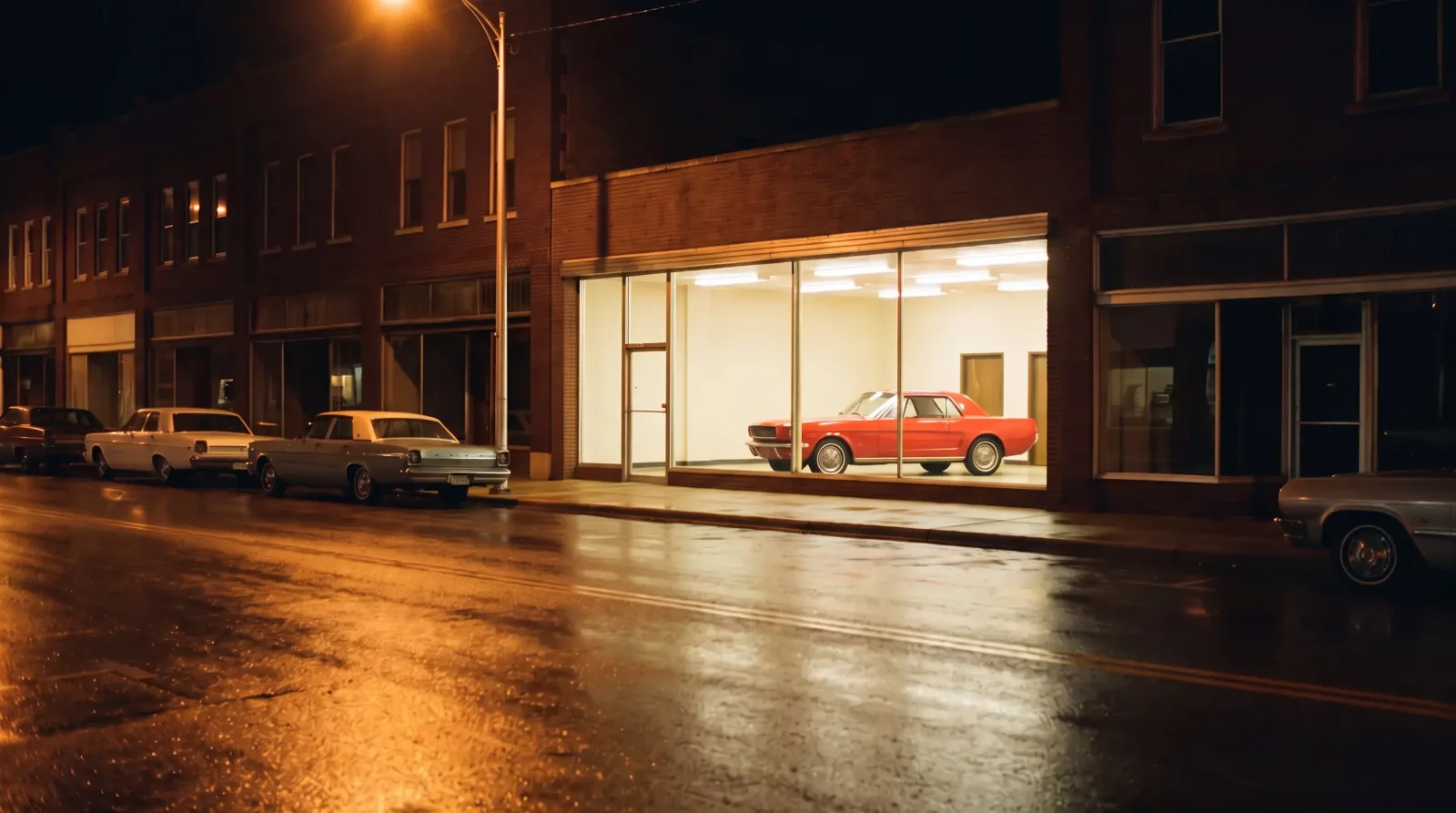
This one belongs with the rest of our look at Mustang myths and reputation, and it is my favorite kind of myth: the kind that survives because it is almost right. Nobody invented 22,000. Somebody just shortened the sentence it came from.
What Ford's own history says about the 22,000
Start with the company that printed the figure. Ford's corporate history of the car says the Mustang drew over 22,000 orders during its first weekend on sale, when more than 4 million people walked through Ford showrooms. Two words in that sentence carry the whole argument. The first is "orders." The second is "weekend."
The Henry Ford, the Dearborn museum that now owns Mustang Serial Number One, lands in the same place: about 22,000 by the end of the first weekend. The version most people read online says something else. The most widely used encyclopedia entry on the first-generation car says 22,000 orders were taken on the first day, in a sentence its own editors have tagged for clarification. When a secondary source and the primary source disagree, I go with the primary source.
The car was introduced on Friday, April 17, 1964, at the New York World's Fair in Flushing Meadows, and it was in dealer showrooms the same day. So "the first weekend" means Friday through Sunday. Three days, not one. That alone cuts the day-one rate to something like a third of the legend, if you assume the orders came in evenly, which of course they did not.
Orders, not sales: what the paperwork meant in 1964
The bigger correction is the verb. An order is a signature on a dealer's form. A sale, in the sense most readers mean it, is a car with a title and a set of keys going home with somebody. In April 1964 those were very different things, because the cars did not yet exist in anything like the numbers being ordered.
Regular Mustang production began on March 9, 1964, a little under six weeks before the introduction. Ahead of that, pre-production cars had started coming off the Rouge line on February 10, and roughly 180 of them were built. Dealers had display cars and some stock. What they did not have was 22,000 Mustangs sitting on lots across the country. The weekend's orders were a waiting list, and a long one. Many of those buyers took delivery weeks or months later.
There is a neat footnote here for anyone who collects firsts. The first Mustang sold to a retail customer was not sold on April 17 at all. Serial Number One, VIN 5F08F100001, a Wimbledon White convertible built as a pre-production car, went to Captain Stanley Tucker, a 33-year-old airline pilot, at George Parsons Ford in St. John's, Newfoundland, on April 14, 1964. That is three days before the public introduction. Ford later traded him the one-millionth Mustang to get that car back, and it went to The Henry Ford.
How Ford built a launch to fill a weekend
None of this makes the 22,000 less impressive. If anything, the record shows how deliberately Ford engineered the crowd. On the night of April 16, Ford bought time on all three television networks for one campaign, running ads on Hazel, Perry Mason and The Jimmy Dean Show, seen by more than 29 million viewers. The next morning, the Mustang was in some 2,600 newspapers. Lee Iacocca, then vice-president and general manager of the Ford Division, was on the covers of both Time and Newsweek that same week.
Then there was the price. Ford advertised a base of $2,368 for the hardtop with the 170 six. Put a figure that low in front of 29 million television viewers on a Thursday night and you get 4 million showroom visits by Sunday. The orders followed the traffic.
| Date | Event |
|---|---|
| February 10, 1964 | First pre-production cars leave the Rouge line (about 180 built) |
| March 9, 1964 | Regular production begins |
| April 14, 1964 | Serial Number One sold to Stanley Tucker in St. John's, Newfoundland |
| April 16, 1964 | Launch ads run on all three TV networks, 29+ million viewers |
| April 17, 1964 | Public introduction at the New York World's Fair; cars in showrooms; Time cover dated this day |
| April 17 to 19, 1964 | Over 22,000 orders; more than 4 million showroom visitors (Ford's figures) |
| April 17, 1964 to April 16, 1965 | 418,812 sold, a 12-month record |
| March 2, 1966 | One-millionth Mustang built at Dearborn |
Did the Mustang first day sales story hold up over the year?
The weekend was not a fluke, and the rest of the first year proves it. Ford's planners had forecast fewer than 100,000 Mustangs for the first year. The car passed that within about three to four months. In its first twelve months, from April 17, 1964 to April 16, 1965, the Mustang sold 418,812 units, a record for a twelve-month run. Ford's own history rounds its first calendar year to more than 420,000.
Run the arithmetic and the 22,000 weekend orders come to a little over 5 percent of that first-year total. Strong, but not freakish. The real story is not one magic day. It is that the opening rate never really fell off, and that three plants were eventually building the car flat out to meet it. By March 2, 1966, the one-millionth Mustang came off the line at Dearborn, less than two years after the introduction.
Put the question "is the Boss 429 a Hemi" to a room full of owners and you will see the same split this number causes: a brochure version that sticks, and a records version that takes a paragraph to explain. Neither side is lying. One of them is just shorter.
Why the day-one version stuck
Compression is most of it. "Over 22,000 orders during the first weekend" is twelve words. "22,000 sold on day one" is five, and every anniversary piece and trivia card wants the five-word version. The number never changed. The context around it wore off a little each time it was retold.
The other part is that the launch really was a frenzy, so nobody felt a need to check. There are dealer stories that get passed around every April, about bidding wars over a single car and buyers who would not leave the lot until a check cleared. None of them comes with paperwork I have been able to examine, and I treat them as color rather than record. They fit the mood of the week. That does not make them documented.
"Ford's own history says weekend, and it says orders. When the company that published the number is more careful with it than the people repeating it, I side with the company. The corrected version is still one of the best launches Detroit ever had."
Tom Ramirez
How one car turned a spring weekend into a national event, and why rivals spent the next several years chasing it, is a subject of its own; you can read more here. The short version for anyone settling a bet: Ford did not sell 22,000 Mustangs on April 17, 1964. Dealers took over 22,000 orders across the opening weekend, and the deliveries came after. The number is fine. Quote it with its own sentence attached.
That opening weekend was only the first chapter of the 1964½ car. For how the redesigns and the later generations grew out of it, pick up the wider story of the classic years.
Sources and notes
Related Reading

#1964 mustang
#1965 mustang
#mustang history
#Ford Mustang
#Lee Iacocca
#mustang myths
#Mustang launch

About the author
Tom Ramirez
Corvette researcher and historian based in Bowling Green, Kentucky. Two decades documenting Corvette production history from original factory records.
Related Listings - Ford Mustang
Comments
Be the first to comment on this article.