A car that invented its own class
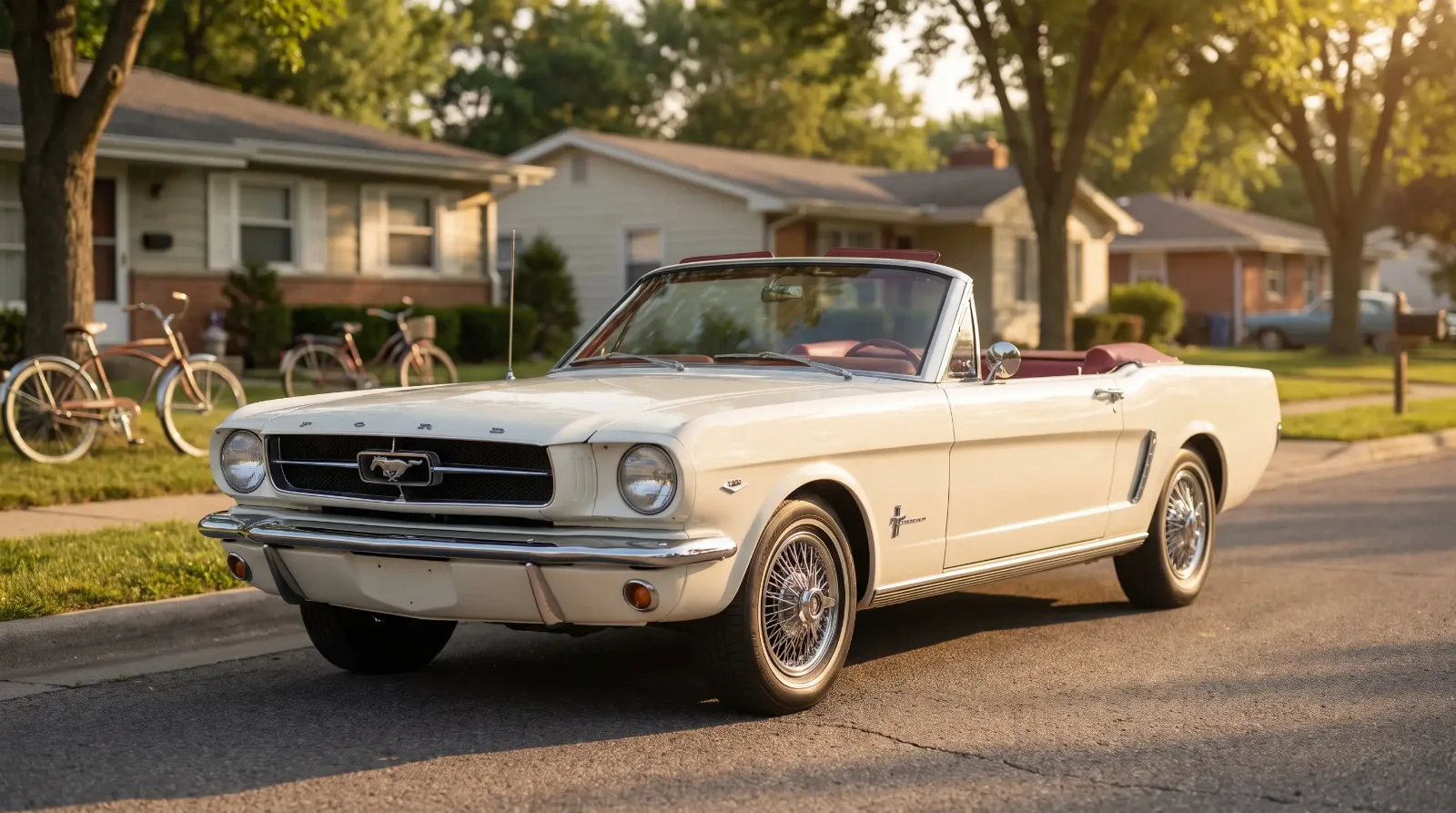
The Ford Mustang did not arrive as an evolution of anything that came before it. When it broke cover in the spring of 1964, the American market had sedans, full-size cruisers, sports cars from Europe, and a thin slice of compact economy cars. What it did not have was an affordable, stylish, sporty coupe built on a humble platform that a young buyer could option up to taste. The Mustang created that segment, and within a few years competitors were scrambling to answer it. The history of the Ford Mustang is, at its core, the story of how one product read a generation correctly and gave the entire industry a new word: pony car.
This is the overview, the spine that the rest of the Mustang story hangs on. The deep dives into the Shelby cars, the Boss models, and the Mach 1 live in their own chapters. Here the goal is to trace the arc from a sketch on Ford's drawing boards to a nameplate that has outlived nearly every rival it ever faced.
The birth: Iacocca, the youth market, and a Falcon underneath
The man most associated with the Mustang's creation is Lee Iacocca, who in the early 1960s was a rising executive and general manager of the Ford Division. Iacocca and his team read the demographics with unusual clarity. The postwar baby boom was reaching driving age, the median age of car buyers was falling, and a large group of young people wanted something sporty that they could actually afford. Ford's market research pointed to a buyer who wanted the look and feel of a personal sports car without the price of a Corvette or an imported roadster.
The genius of the project was financial discipline. Rather than engineer an expensive new platform, Ford built the car on the bones of the compact Falcon, which was already in production and already paid for. Suspension pieces, much of the floorpan, and a good deal of the running gear were shared with the Falcon and the related Fairlane. That borrowed hardware kept tooling costs low and let Ford price the car aggressively. The base sticker landed near 2,300 to 2,400 dollars, a figure deliberately set within reach of the young buyers Iacocca was chasing.
On top of that economy car foundation, Ford wrapped a long-hood, short-deck body that looked like nothing else in the showroom. The proportions did the heavy lifting. A long hood implied a big engine and power even on cars that left the factory with a modest six. The development effort ran with the urgency of a skunkworks gamble, a small group pushing a car that senior management was not entirely sure the public wanted. Iacocca staked his reputation on the bet. The bet paid off in a way almost no one predicted.
Part of what made the gamble shrewd was the breadth of buyer Ford engineered the car to reach. The same Mustang could be ordered as a frugal, six-cylinder commuter or built up into a credible street performer, and the long options list let a single body appeal to students, young families, and enthusiasts at the same time. Ford framed the car not as one fixed product but as a starting point, a blank canvas the buyer finished at the dealership. That strategy spread the development cost across a far larger audience than a narrow sports car could ever reach, and it is the reason the Mustang found buyers in numbers that no focused performance car of the period came close to matching.
April 17, 1964: the debut and the sales phenomenon
Ford unveiled the Mustang to the public on April 17, 1964, with one of the most aggressive launches the industry had seen. The car appeared at the New York World's Fair, dealerships were stocked simultaneously across the country, and the advertising blitz ran on all three television networks the same evening. The reaction was immediate and overwhelming. Crowds packed showrooms, some dealers reported cars selling off the floor before they could be prepped, and the order books filled faster than the factory could build.
The numbers tell the story better than any anecdote. Ford sold roughly 22,000 Mustangs on the first day of availability, an astonishing figure for a brand new model. First-year sales blew past internal targets several times over, and the company reached the symbolic milestone of one million Mustangs built in well under two years. The car became a genuine cultural event, the kind of debut that gets measured against the Model T for sheer commercial impact. Ford had guessed the size of the youth market and undershot it.
The demand also justified the low-cost engineering strategy after the fact. Because the Mustang shared so much with the Falcon, Ford could build them quickly and profitably at volume. A car that management had approached with caution turned into one of the most profitable launches in the company's history.
The name and the running-horse identity
The Mustang's name has been the subject of friendly argument for decades. Several explanations have circulated inside Ford over the years, including a tribute to the P-51 Mustang fighter aircraft of World War II and a connection to the wild horses of the American West. The horse interpretation is the one that stuck and the one Ford ran with, because it gave the marketing team a clean, energetic image: freedom, youth, and motion.
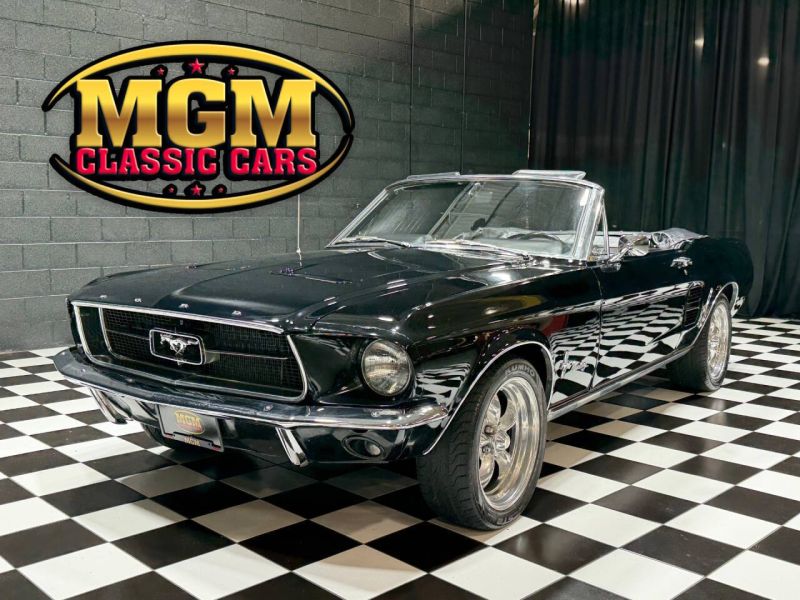
The galloping pony in the grille corral became one of the most recognizable badges in automotive history. The running horse appeared at the front of the car, charging across the grille, and the imagery was reinforced in advertising that leaned hard on the idea of the open road. Where many emblems are abstract, the Mustang's was a literal animal in mid-stride, and that directness helped it lodge in the public imagination. The name and the badge did as much for the car's identity as the sheet metal did.
First-generation evolution, 1964 1/2 to 1973
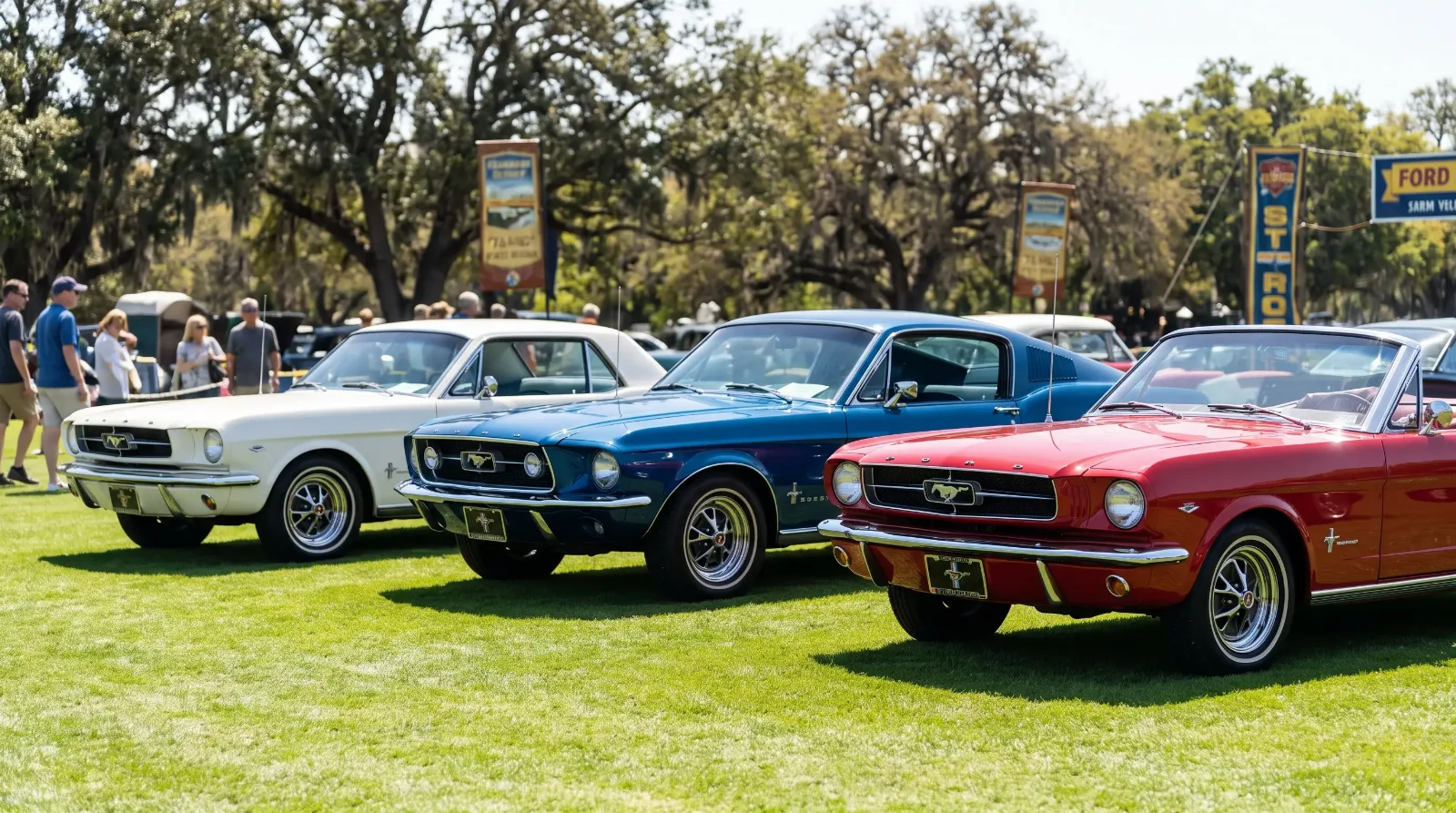
The classic Mustang that collectors prize is the first generation, the cars built from the 1964 1/2 launch through the 1973 model year. Across those years the car grew, sharpened, and then grew again, and understanding that arc is the key to reading any first-gen Mustang.
The early cars: 1965 to 1966
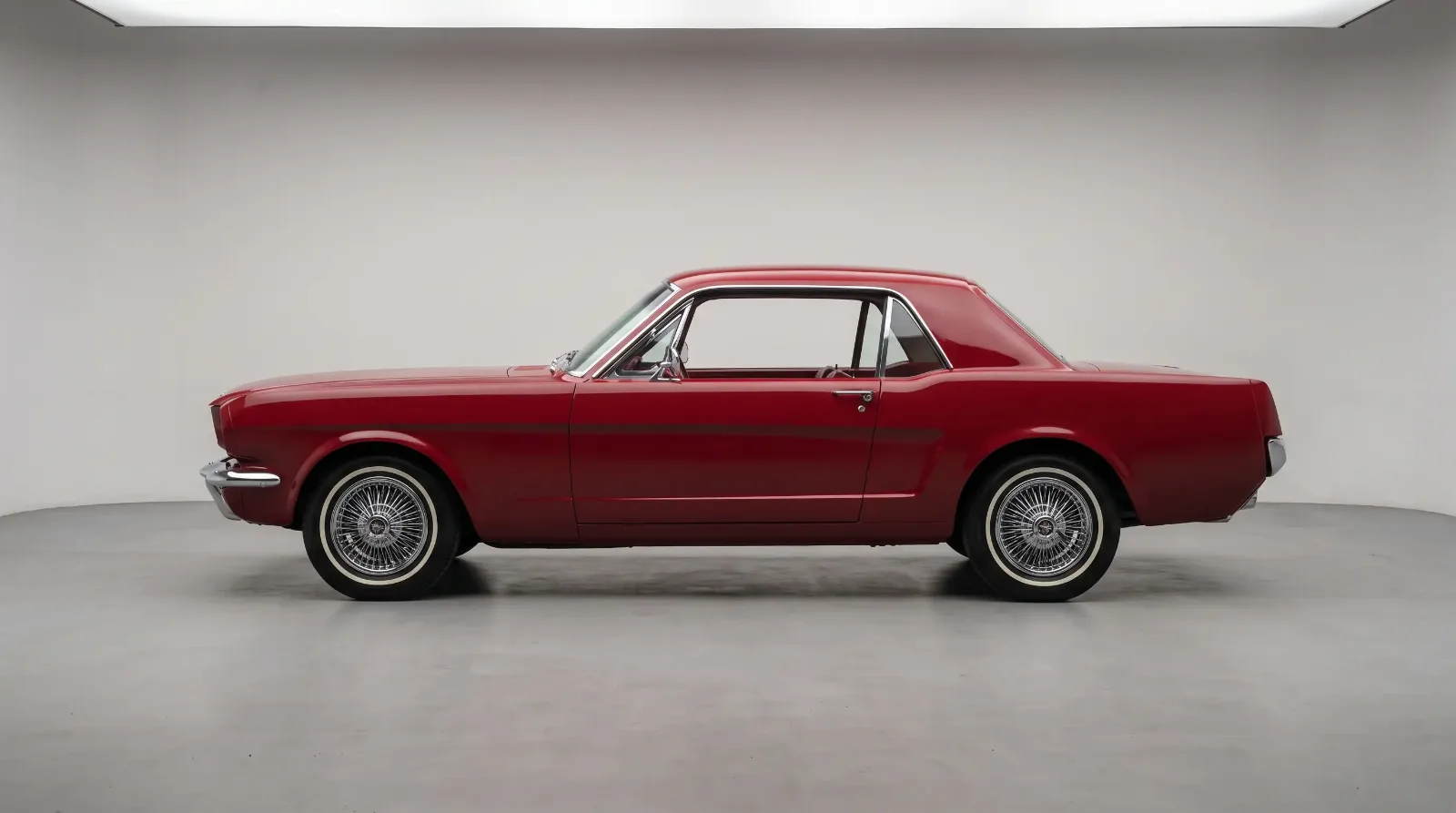
The first cars set the template. Compact, light, and clean, they offered a wide menu of engines and trim that let buyers build anything from an economical secretary's coupe to a credible performance car. The 1966 cars are mechanically close to the 1965s with detail trim changes, and together they represent the purest form of the original concept. These years sold in enormous numbers, which is good news for anyone seeking parts or an honest driver today.
The bigger body: 1967 to 1968
For 1967 Ford restyled the Mustang with more aggressive sheet metal and, importantly, a wider engine bay. The car gained size and presence, and the larger bay opened the door to big-block power that the original cars could not easily swallow. The 1967 and 1968 cars look meatier and more muscular than the dainty early models, a deliberate response to a market that was now demanding more performance.
The performance peak: 1969 to 1970
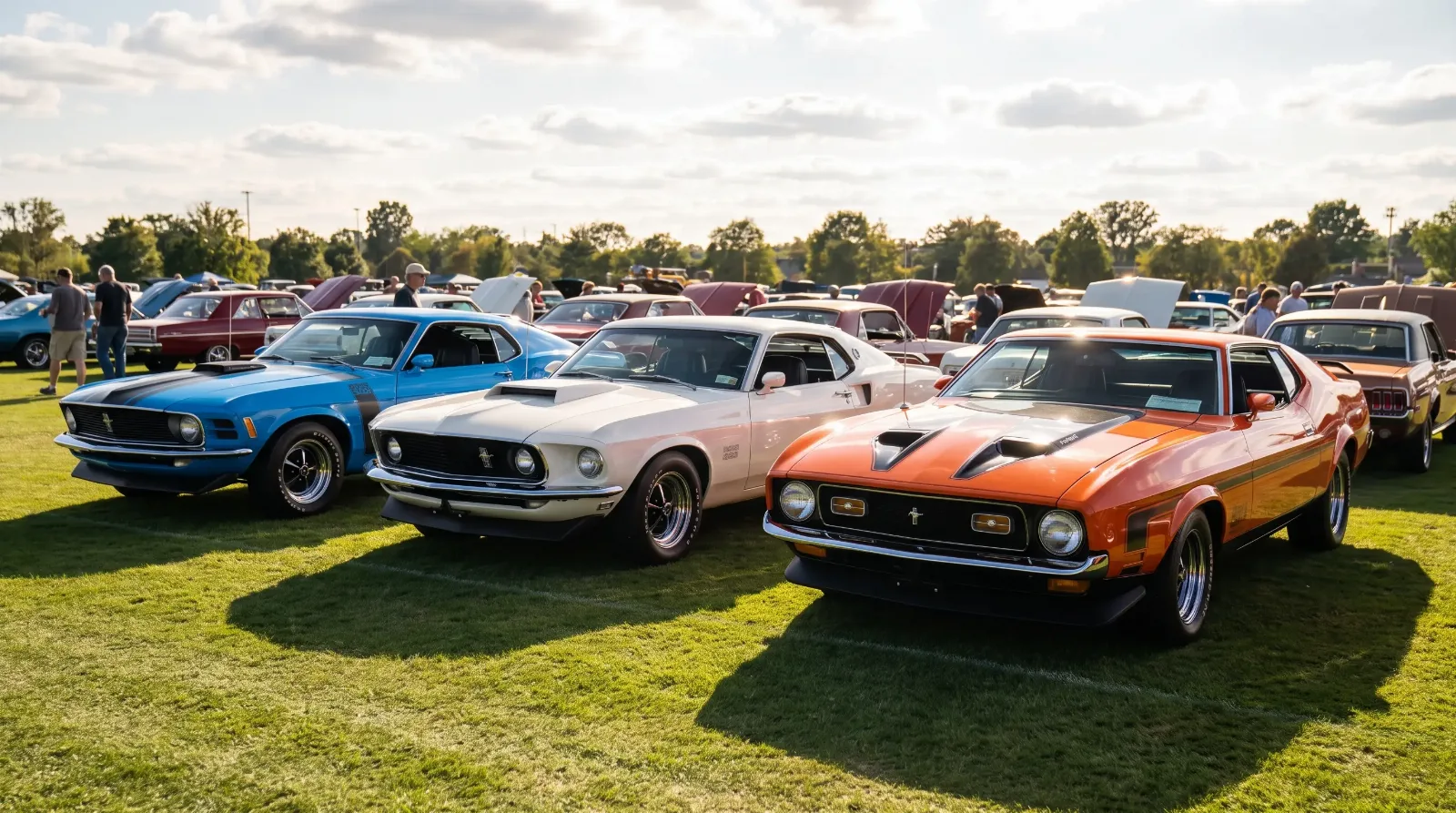
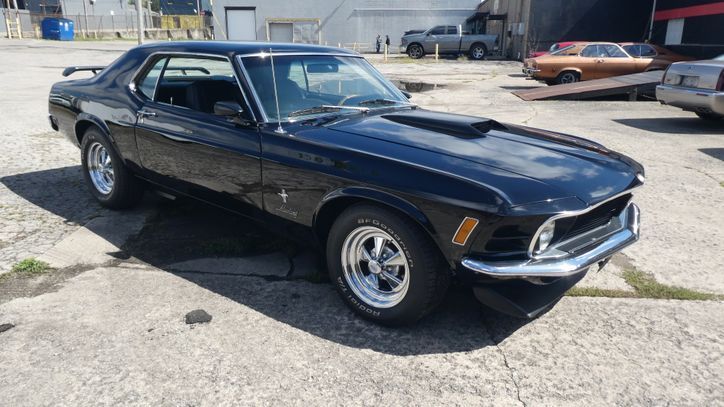
The 1969 and 1970 cars are widely regarded as the high-water mark for first-generation performance. The body grew again, the styling turned menacing, and the engine and model lineup reached its widest and wildest point. This is the era of the most collectible factory hot rods, the years when Ford threw everything it had at the muscle-car war. A 1969 or 1970 fastback in the right specification sits near the top of many enthusiasts' wish lists.
The big-body finale: 1971 to 1973
The final first-generation cars, built for 1971 through 1973, were the largest and heaviest of the breed. They grew longer, wider, and lower, partly to accommodate the biggest engines and partly to follow the styling fashion of the moment. These cars have their devoted following, but by 1973 the original light, nimble idea had been stretched about as far as it could go. The first generation closed at the end of the 1973 model year, and what came next was a sharp reversal.
| First-generation phase | Model years | Defining trait | Why it matters |
|---|---|---|---|
| Early cars | 1964 1/2 to 1966 | Compact, light, the original concept | Purest form, sold in huge numbers |
| Bigger body | 1967 to 1968 | Wider engine bay for big-blocks | Opened the door to serious power |
| Performance peak | 1969 to 1970 | Widest, wildest model lineup | Most collectible factory hot rods |
| Big-body finale | 1971 to 1973 | Largest and heaviest first-gen cars | End of the original light-car idea |
The performance era: GT, Shelby, Boss, Mach 1, and the engines
What turned the Mustang from a stylish commuter into a legend was the performance hardware that piled on through the late 1960s. At the accessible end sat the GT equipment group, which bundled handling and trim upgrades with the more potent V8 options and gave ordinary buyers a taste of the sporting Mustang. Above the GT, Ford and its partners built a series of specialist machines that each deserve their own full treatment, so here they get only their place in the overview.
The Shelby cars, the GT350 and the later GT500, were Carroll Shelby's hotter, track-minded interpretations of the Mustang, sharpened for road and competition. The Boss models, the corner-carving Boss 302 and the brutal big-block Boss 429, were homologation-driven specials built to make Ford competitive in racing. The Mach 1, introduced for 1969, packaged sporty looks and strong engine options into a single high-style trim that sold very well. Each of these is a story in itself, and the Mustang silo covers them in depth elsewhere.
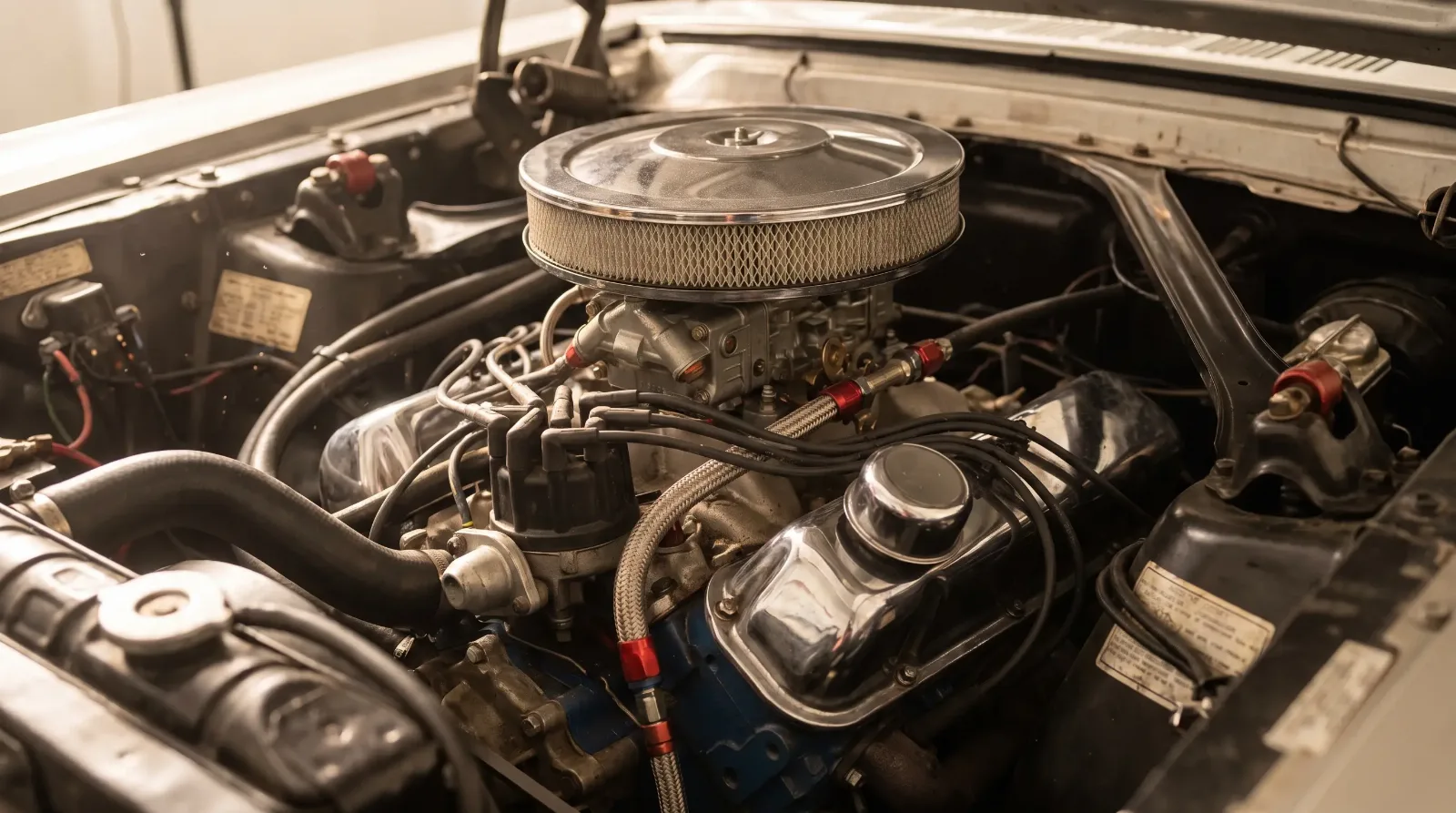
Underneath all of it was a deep and flexible engine family. Buyers could start with an inline six and step up through a range of V8s that defined the era: the small-block 260 and 289, the later 302 and 351, and the big-block 390 and the formidable 428 that powered some of the most desirable cars Ford built in those years. That spread, from mild to ferocious, is exactly what made the Mustang so successful. One car, sold to a student and a stoplight racer alike, simply by ticking different boxes on the order form.
"People romanticize the badges, but the real magic was the order sheet. The same body could leave the line as a thrifty six or a 428-powered monster, and that flexibility is why the first-gen cars still rule the hobby."
— Mike Sullivan
The cultural footprint: film, racing, and a whole new genre
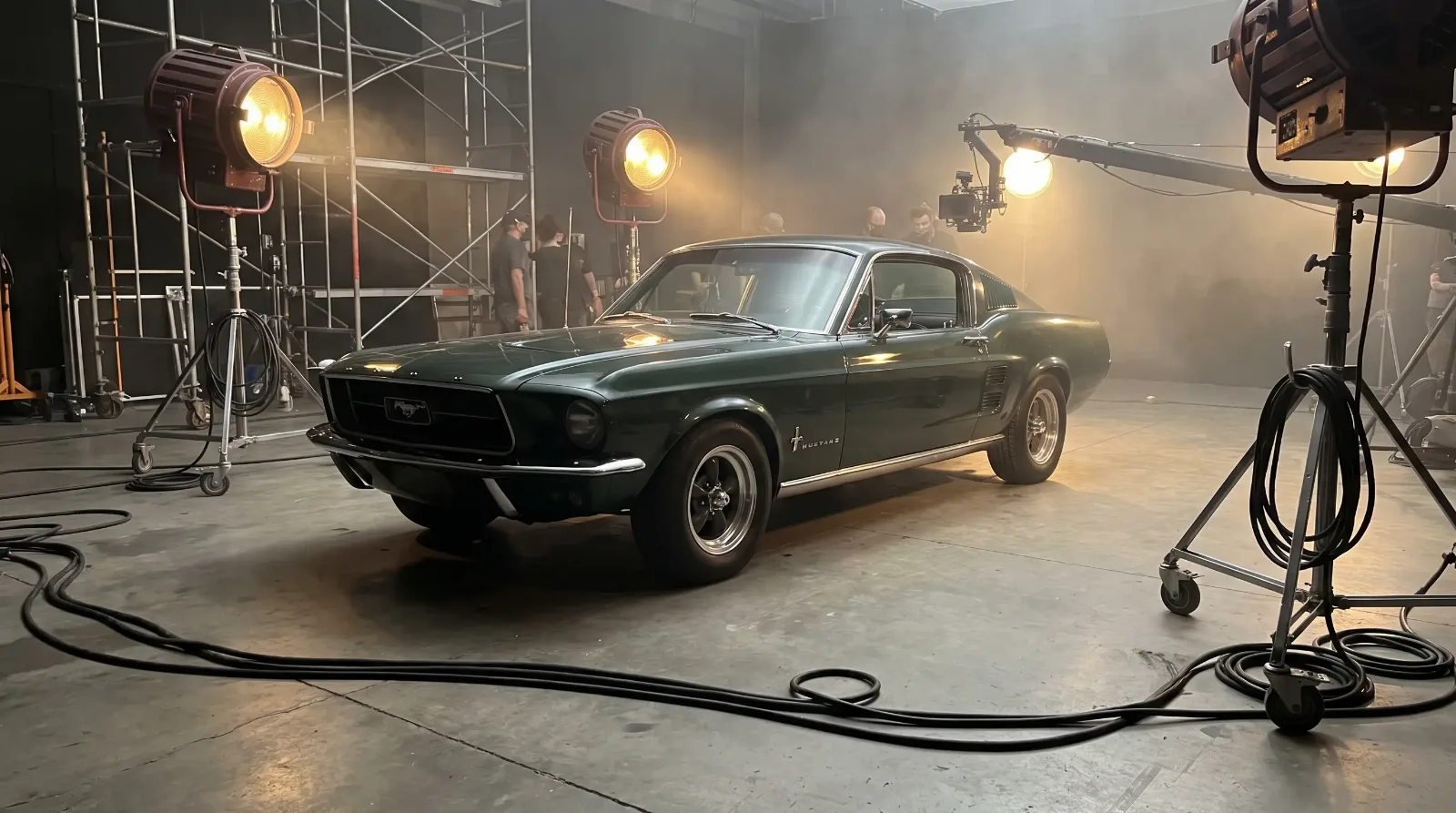
The Mustang escaped the showroom and lodged itself in the culture almost immediately. On screen it became shorthand for cool, most famously through the fastback chased and chasing through the streets in the 1968 film Bullitt, a sequence that fixed the dark-green fastback in the public mind for good. The car showed up in films, television, and music throughout the era, and it carried an aspirational charge that few products of any kind ever achieve.
On the track the Mustang earned its stripes in road racing and drag racing, with the Shelby and Boss programs built specifically to win. Those competition efforts fed straight back into the car's image, proving that the styling was backed by genuine capability. Racing success and street appeal reinforced each other in a loop that kept the Mustang relevant.
The deepest mark, though, was structural. The Mustang's runaway success forced every other American manufacturer to build a direct rival, and the pony car was born as a recognized class. The competitors that chased it, from Chevrolet, Pontiac, Plymouth, Dodge, and Mercury, all defined themselves against the car Ford built first. Inventing a genre is the rarest thing a product can do, and the Mustang did it before anyone else even understood the genre existed.
What came after, and why the classic first-gen endures
The original idea could not run forever in its bloated 1973 form, and the industry around it was changing fast. Rising insurance costs, tightening emissions rules, and the 1973 oil crisis all pushed the market toward smaller, more efficient cars. Ford's answer was the Mustang II, launched for the 1974 model year on a smaller economy-car platform. It was a deliberate retreat to the original brief of an affordable, right-sized car, and although enthusiasts of the muscle era have often dismissed it, the Mustang II sold strongly and, crucially, kept the nameplate alive through a difficult decade. From there the Mustang carried on through later generations all the way to the present, one of the very few nameplates to run continuously from 1964 into the modern era.
Yet it is the first generation that defines the legend. The combination of clean original styling, a vast and varied engine lineup, genuine racing pedigree, and that founding cultural moment makes the 1964 1/2 to 1973 cars the heart of the hobby. They are usable, they are supported by an enormous parts and restoration industry, and they span a wide enough range that a newcomer and a seasoned collector can both find a car that suits them. For anyone drawn to the breed, the market for these cars remains active and deep, and a browse through the current crop of classic Ford Mustangs for sale shows just how broad the first-generation field still is, from honest six-cylinder coupes to the big-engine fastbacks that defined the era.
That endurance is the real punchline of the Mustang story. A car built on a borrowed platform to hit a price, launched by an executive willing to bet his career on a hunch about young buyers, became a permanent fixture of American life. It invented a class, survived the storms that killed off most of its rivals, and still gallops across its own grille badge more than six decades later.
"Restore one of these and you understand why it won. The engineering is honest, the parts are out there, and when it fires up you are holding the exact thing that started the whole pony-car fight."
— Mike Sullivan
Sources and notes
The figures here reflect period Ford documentation and established marque references; horsepower numbers are period gross ratings unless otherwise noted, and any values are described in general, historical terms. Where records differ between sources we have noted the commonly cited range.
- Ford Motor Company — Mustang Debut at the World's Fair
- Wikipedia — Ford Mustang (first generation)
- Hagerty — 1965–73 Ford Mustang Buyer's Guide
- History.com — Ford Celebrates 1 Millionth Mustang (March 2, 1966)
- Britannica — The Introduction of the Ford Mustang (April 17, 1964)
- CJ Pony Parts — First-Generation Mustang Engine Reference