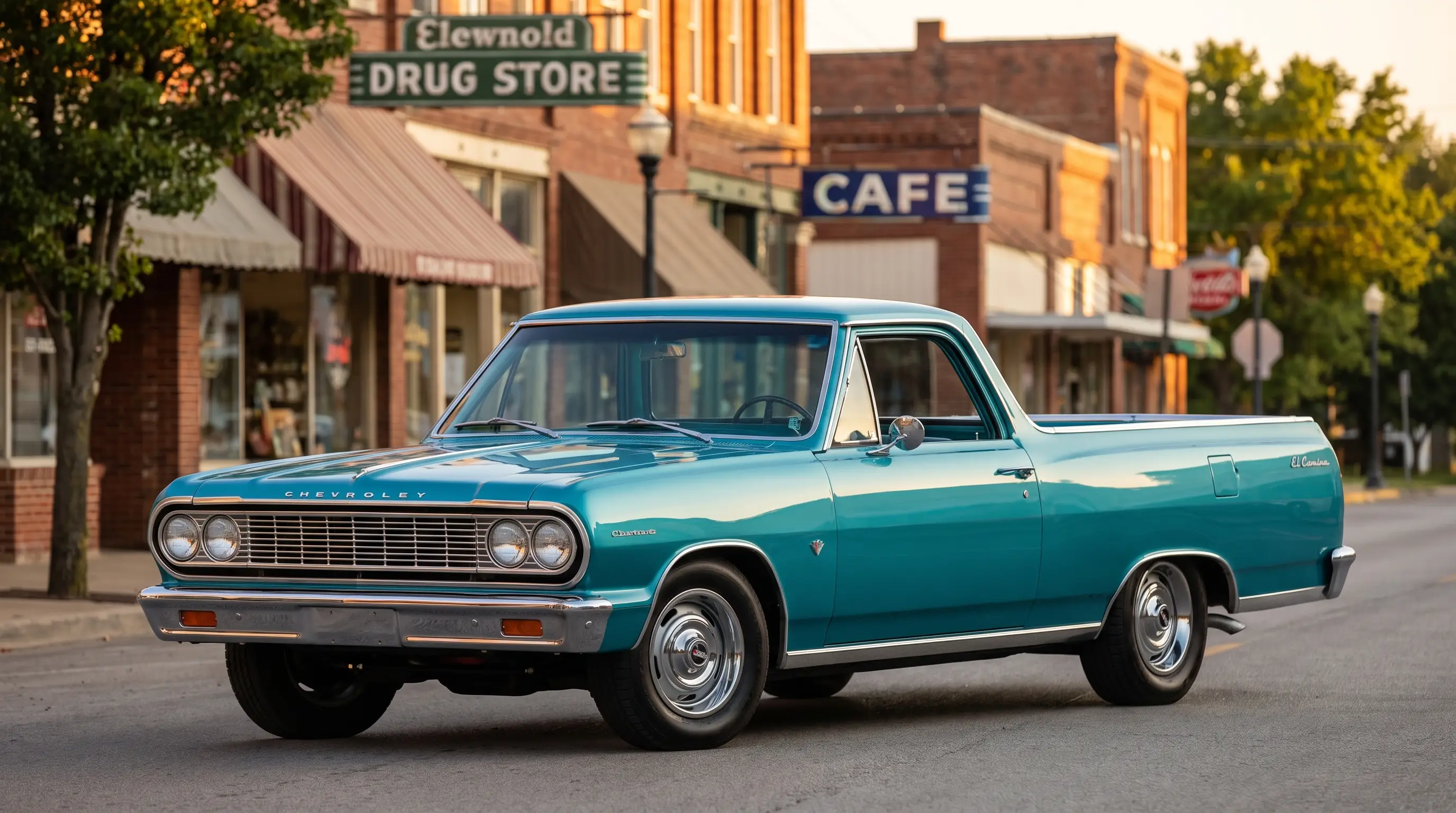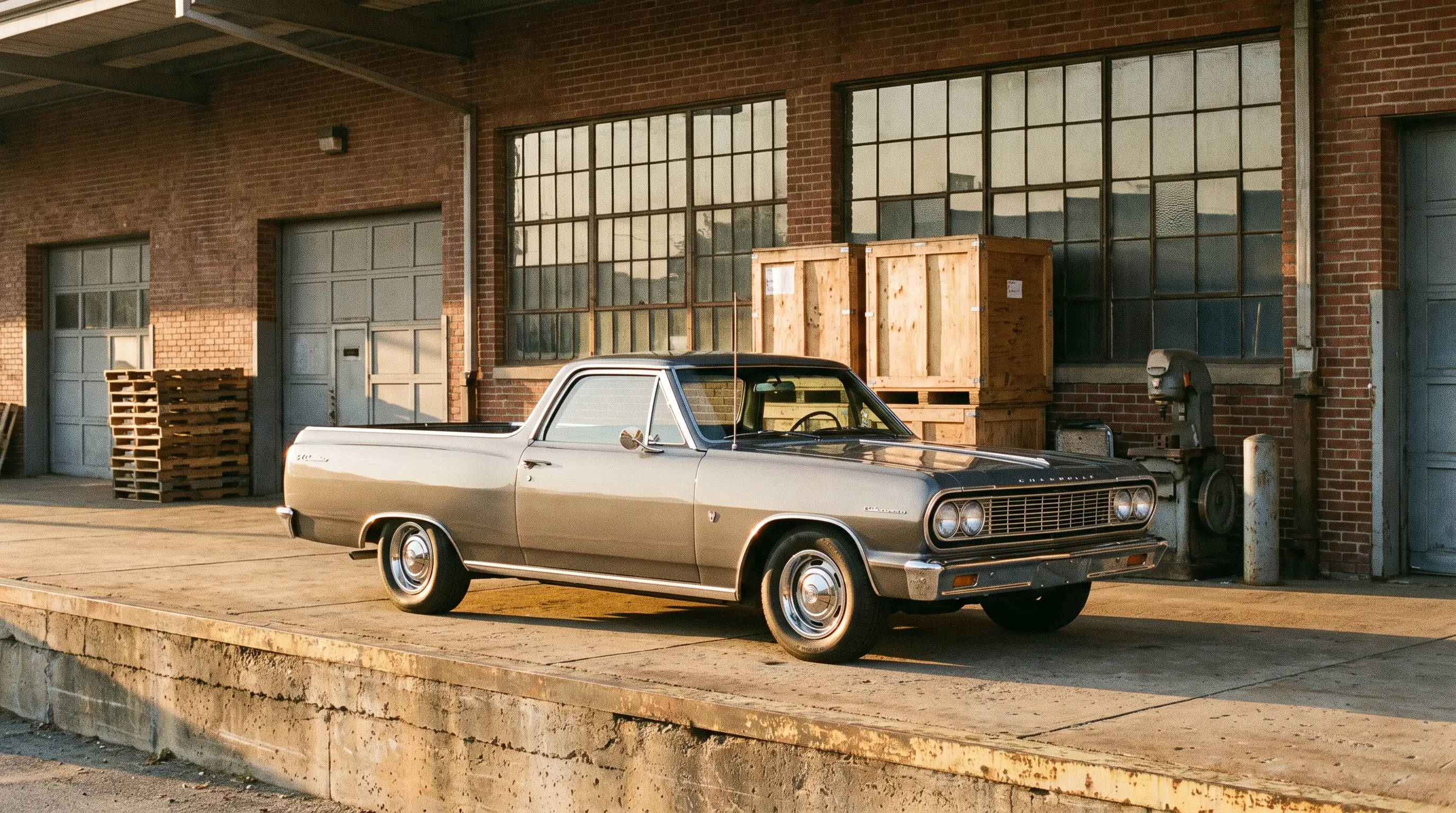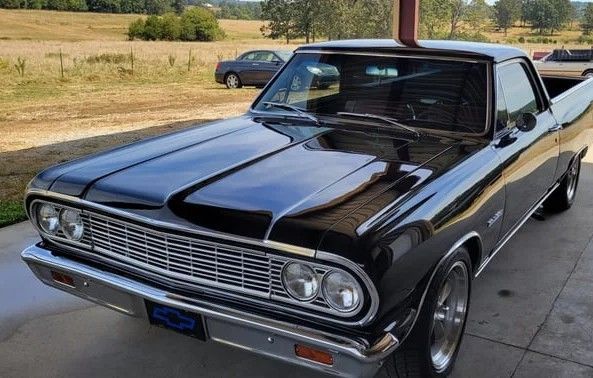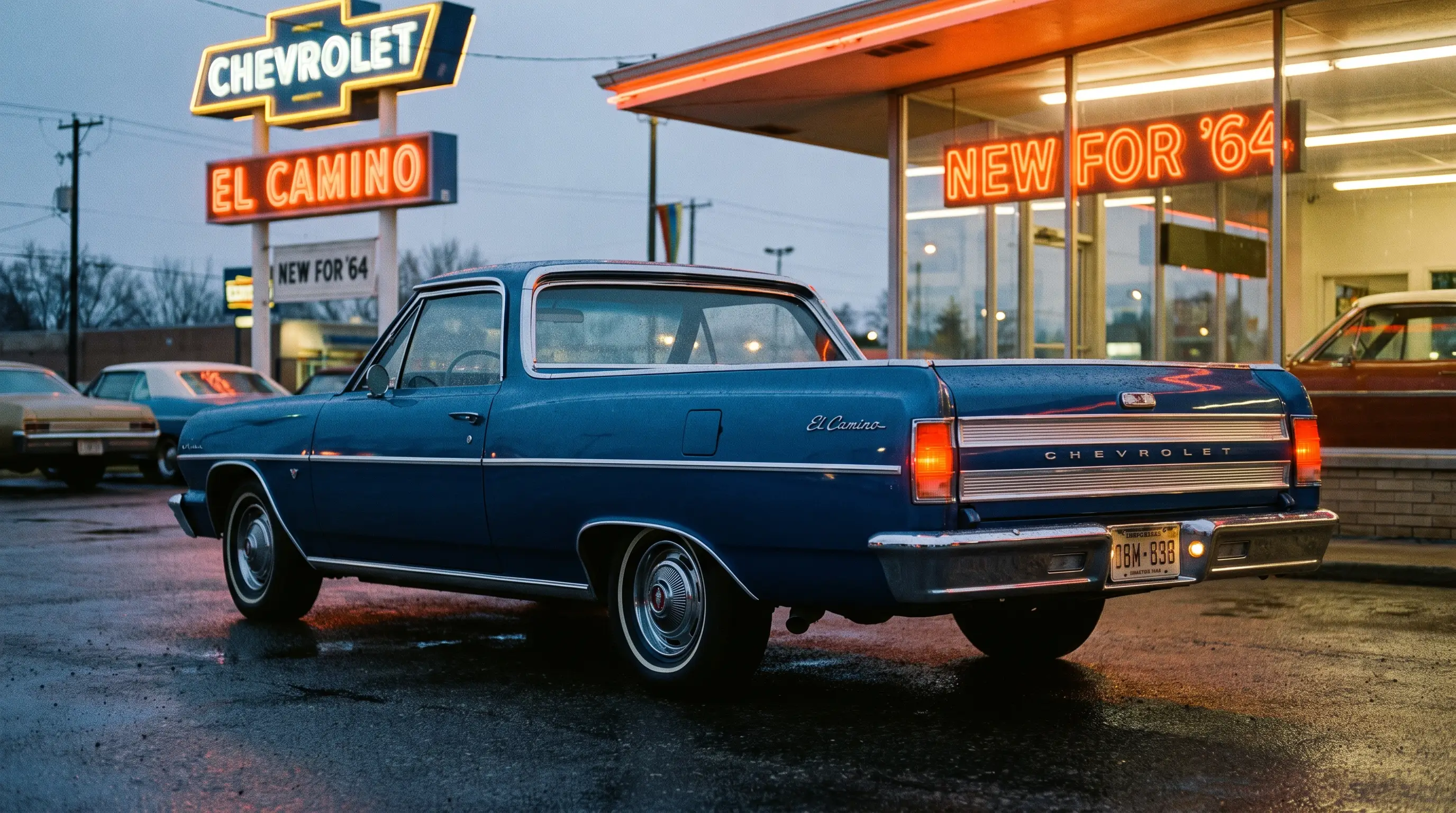
Chevrolet had already tried this idea once and walked away from it. So when the El Camino reappeared for the 1964 model year, it carried the weight of a genuine comeback rather than a routine new model introduction, and the story behind that return says a great deal about how a good idea can outlast a bad first attempt at executing it.
The gap between 1960 and 1964
The original El Camino ran for just two model years, 1959 and 1960, built on Chevrolet's full size platform alongside the Impala and Bel Air. It sold reasonably but never spectacularly, and when Ford's Ranchero began to look like the more sensible execution of the same concept, GM pulled the plug rather than keep fighting for a segment it was not clearly winning. For three full model years, Chevrolet built no car truck hybrid at all, ceding that small but persistent market entirely to Ford.
That absence was not a sign the idea had failed. It was a sign the platform had failed. The full size Chevrolet chassis was heavy, expensive to build in low volume trim, and not particularly well suited to the kind of buyer who wanted a light hauler with car like manners. Chevrolet's engineers and product planners understood this even while the nameplate sat dormant, and the solution arrived not through a redesign of the full size car but through an entirely different platform that GM had been developing for other reasons.
The Chevelle changes everything
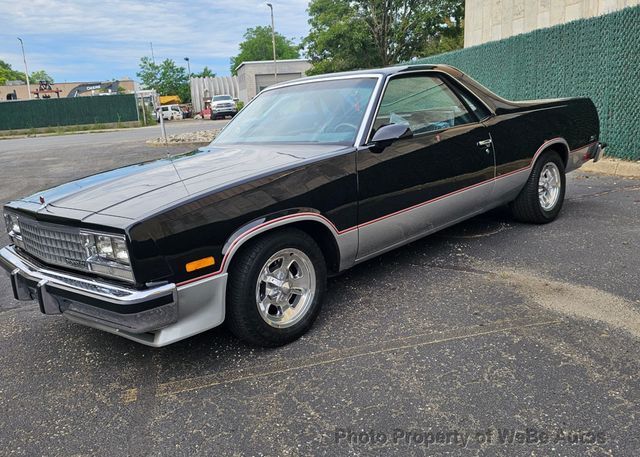
The 1964 introduction of the Chevelle gave Chevrolet exactly what the El Camino idea had been missing, a mid size, unit body platform that was lighter, cheaper to produce, and inherently better suited to a small volume derivative. Rather than building the El Camino comeback around the expensive full size architecture that had doomed the first attempt, Chevrolet based the new version directly on the Chevelle, sharing its cab, its front sheet metal, and much of its drivetrain lineup while grafting on a bed structure behind the cab.
This was a smarter business decision than it might look from the outside. A Chevelle based El Camino cost far less to engineer and tool than a bespoke design would have, since so much of the vehicle was already being built for the sedan and wagon versions. That shared tooling meant Chevrolet could offer the El Camino at a competitive price without absorbing the kind of development cost that had made the original, full size version such a difficult business case to sustain.
Proving the concept had never been wrong
Sales of the 1964 El Camino validated what Chevrolet's product planners had suspected all along, that the car truck hybrid concept had real demand, provided it was built on the right foundation. Buyers who wanted a vehicle that could handle light hauling duties during the week and still look presentable on a Sunday drive responded to the Chevelle based version in far greater numbers than they ever had to the full size original. The comeback was not a nostalgia play, it was a correction of a platform mistake that had masked a genuinely sound product idea.
It also helped that Chevrolet's dealer network had never fully forgotten the earlier car. Salesmen who had moved units of the 1959 and 1960 version, even in modest numbers, understood there was a specific type of customer asking for exactly this kind of vehicle, someone who did not want a full size pickup and did not want to give up the comfort of a passenger car either. That existing dealer familiarity gave the 1964 relaunch a running start that a completely new nameplate would not have enjoyed, since the sales pitch itself required no reinvention, only a better product behind it.
Tom Ramirez has cross referenced Chevrolet's own internal planning documents from this period, and the record supports this reading closely. The 1964 relaunch was treated internally less as a gamble and more as a fix, an application of lessons learned from the first El Camino's short run to a platform actually capable of supporting it long term. For readers who want the complete account of that model year, 1964 el camino history covers the full launch in detail.
"The first El Camino proved buyers wanted the idea. The second one, in 1964, proved Chevrolet had finally figured out how to build it profitably. Those are two very different kinds of success, and only the second one lasted."
- Tom Ramirez
The first El Camino compared to the second
Placing the two generations side by side makes the correction obvious. The full size 1959 and 1960 cars were long, heavy, and expensive to produce in the modest volumes the market actually wanted, while the Chevelle based 1964 version was shorter, lighter, and built on tooling Chevrolet was already amortizing across several other models. That difference in scale shows up in nearly every dimension of the business case, from manufacturing cost to showroom price to the practicality of the vehicle itself for the buyer who actually wanted one.
| Aspect | 1959 to 1960 El Camino | 1964 El Camino |
|---|---|---|
| Platform | Full size Chevrolet chassis | Chevelle mid size platform |
| Production run | Two model years | Continued for decades across generations |
| Tooling cost | Dedicated to a low volume model | Shared with the wider Chevelle lineup |
| Market reception | Modest, ultimately discontinued | Strong enough to establish a lasting nameplate |
The lesson Chevrolet drew from this comparison shaped product decisions well beyond the El Camino itself. Building a low volume derivative on a platform already supporting high volume siblings became the standard approach across the corporation for exactly this kind of niche vehicle, and the El Camino's 1964 relaunch is one of the clearest early examples of that strategy actually working as intended.
A comeback that set the template for decades
What makes the 1964 return significant beyond its own model year is that it established the formula the El Camino would follow for the rest of its production life. Every subsequent generation, through the 1968 to 1972 muscle era and into the G-body years of the late 1970s and 1980s, followed the same basic logic the 1964 Chevelle based car established, build the El Camino on Chevrolet's current mid size platform rather than trying to force it onto full size underpinnings. That template, set in 1964, is arguably the single most important decision in the model's entire history, more consequential in the long run than any individual engine option or styling update that followed.
Readers interested in how this platform decision connected to the broader Chevelle story of the same era will find a related story worth exploring, since the Chevelle's own development is inseparable from the El Camino's successful second act. For anyone drawn to this era of the model, there are El Caminos for sale now representing the exact generation that saved the nameplate from being remembered as a two year experiment rather than the multi decade fixture it became.