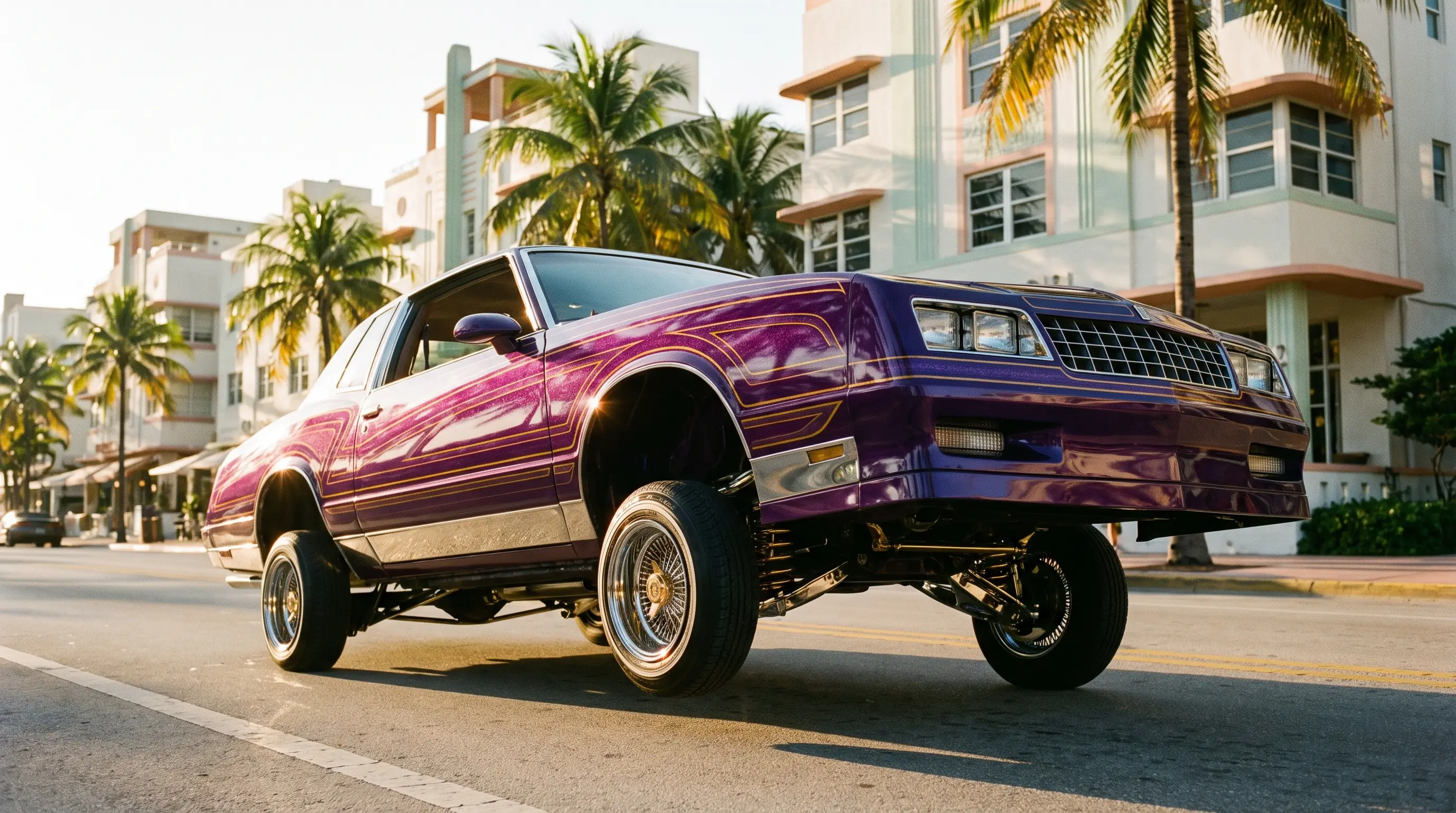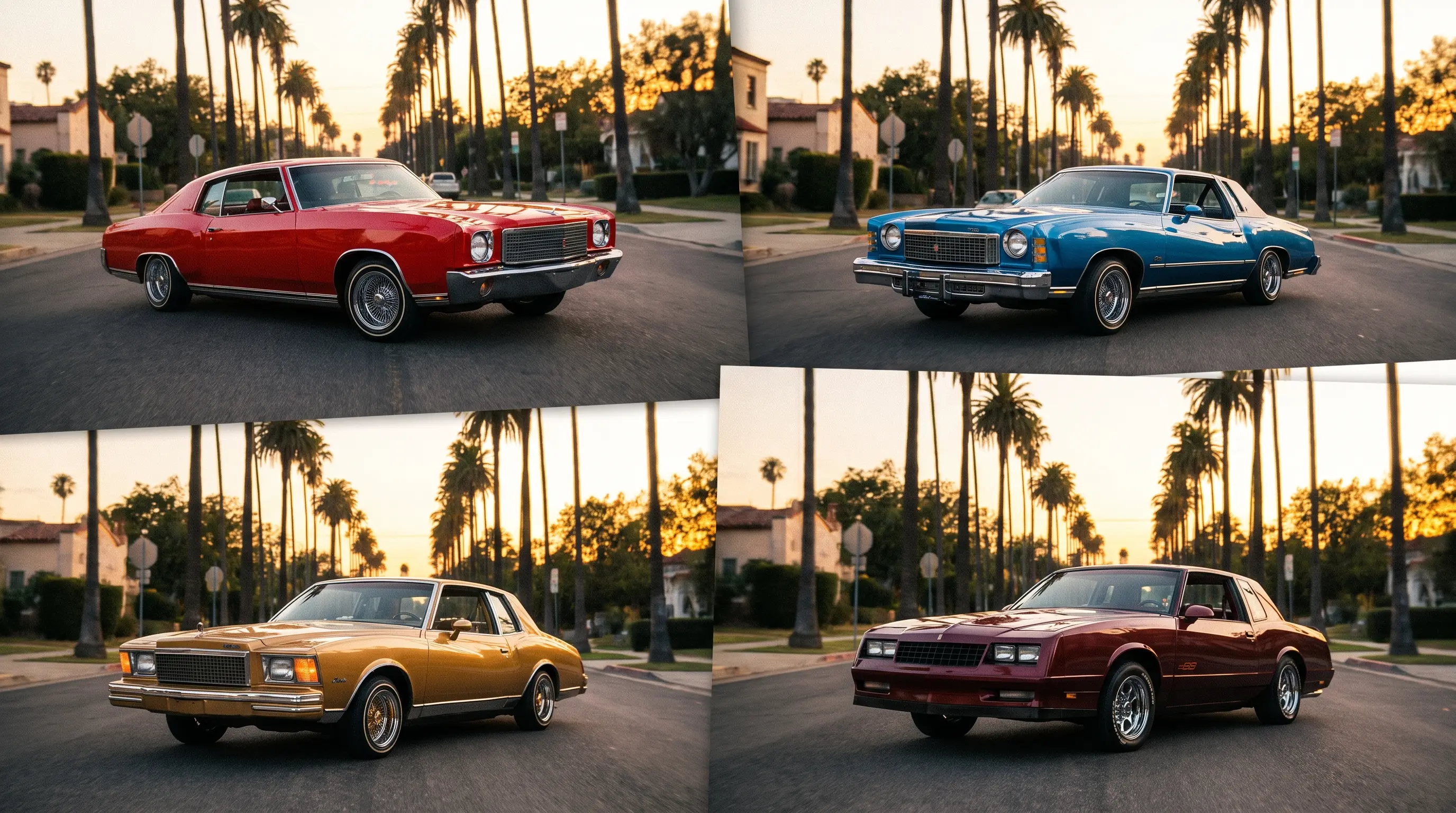
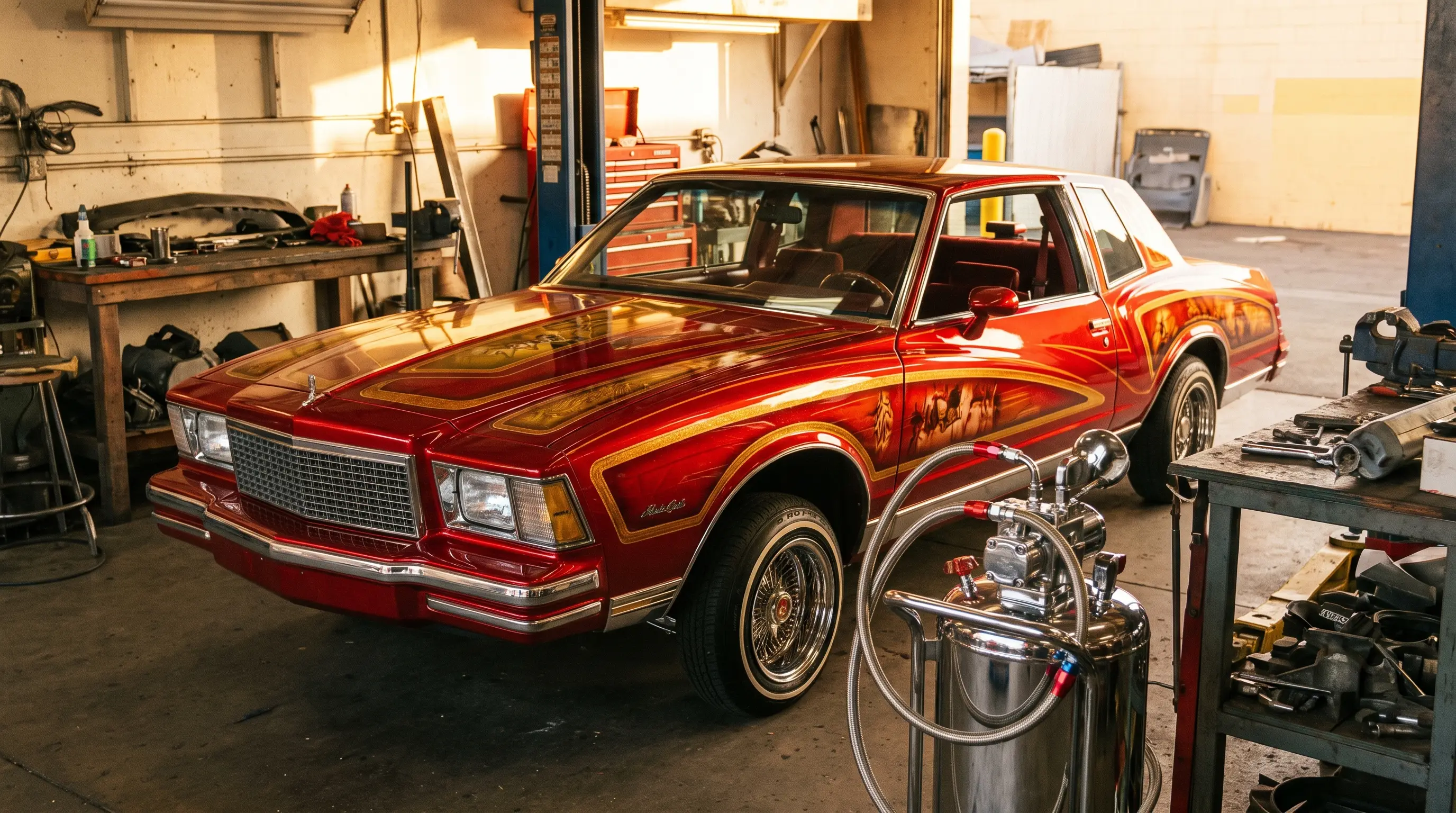
Every legendary Monte Carlo lowrider has a name attached to it, and usually more than one. Behind the paint, the hydraulics, and the interior work sits a builder, sometimes a whole shop, whose reputation grew alongside the cars they finished. We want to talk about who these people actually were, not as a list of trophies, but as a set of roles the culture needed filled, because understanding those roles tells you more about how a Monte Carlo lowrider actually comes together than any single car's story could on its own.
The painter as the signature
In most build crews, the painter carried the most public credit, since the exterior finish is what most people see first and remember longest. A respected Monte Carlo painter developed a recognizable style over years of work, whether that meant a particular approach to candy layering, a signature mural technique, or a reputation for flake consistency that competitors struggled to match. Owners sought out specific painters the way people seek out a specific tailor, understanding that the name behind the gun mattered as much as the color chosen from the chart.
Painters working the Monte Carlo scene through the 1970s and 1980s often built their reputations across multiple platforms simultaneously, since a talented painter did not limit themselves to one make. But a painter's Monte Carlo work sometimes became the piece that defined their whole career, particularly when the car went on to a magazine feature or a Super Show placement that put that specific paint job in front of a national audience.
"Everybody remembers the painter's name. Almost nobody remembers who built the frame that let the car actually hop right. That is not fair, but that is how it goes."
- Hector Morales
The hydraulic installer's quieter craft
Less publicly celebrated but arguably more technically demanding was the hydraulic installer's role. Building a system that could hop reliably, competition after competition, without cracking a frame or blowing a hose in front of a crowd required real mechanical engineering instinct, an understanding of weight distribution, pump capacity, and structural reinforcement that went well beyond simply bolting parts together. A Monte Carlo with a reputation for consistent, powerful hopping performance almost always traced back to one specific installer whose name circulated quietly within the community, even if it never appeared on a magazine cover.
These installers often worked out of modest shops, sometimes literally a home garage, building reputations through word of mouth within car clubs rather than through any formal advertising. Getting a build scheduled with a respected hydraulic specialist frequently meant a waiting list measured in months, a testament to how much the community valued that specific expertise even when it stayed out of the spotlight the paint always claimed.
The upholsterer and the interior specialist
Rounding out the core team behind most serious Monte Carlo builds was the upholsterer, responsible for the tuck-and-roll work, custom door panels, and headliner treatments that gave a car's interior its own identity. Skilled upholsterers in this scene often had backgrounds in broader automotive trim work before specializing in the specific demands of lowrider-style custom interiors, and the best among them developed signature stitch patterns and material combinations that owners requested by name.
The club leader as organizer and mentor
Above the individual craftspeople sat the car club leadership, whose role was less about hands-on fabrication and more about organizing the community structure that let all this specialized knowledge circulate. A strong club leader connected new members with the right painter or hydraulic installer for their budget and vision, mediated disputes over show credit, and represented the club's interests when magazine editors or event organizers came looking for cars to feature. That organizational work rarely gets celebrated the way an individual build does, but without it, the informal knowledge networks that let a teenager with a budget project learn from a veteran builder's decades of experience simply would not have existed.
Understanding where this started means understanding that the Monte Carlo lowrider tradition was never really about any single genius builder. It was, and remains, a collaborative culture where reputation, mentorship, and specialized craft passed between people who often knew each other for decades before any of their names ended up attached to a famous car.
How reputations actually spread
Before the internet, a builder's reputation traveled almost entirely through direct experience and word of mouth within the community. A car club member who saw an exceptional paint job at a local cruise night would ask who did the work, and that single conversation could turn into months of new business for a talented but previously unknown painter. Car shows and Super Show events accelerated this process considerably, putting a builder's work in front of hundreds of potential future clients in a single weekend, but the underlying mechanism, one satisfied owner recommending their builder to another, remained the foundation the whole system rested on.
This word-of-mouth economy rewarded consistency above almost everything else. A builder who produced one spectacular car followed by several mediocre ones would see their reputation stall quickly, since the community's memory for quality was long and the stakes of recommending a bad builder to a friend were real, both socially and financially. The builders whose names still get mentioned with genuine respect decades later earned that respect through years of consistent output, not a single lucky standout project.
What owners owed the builders behind their cars
A norm developed within the culture, largely unwritten but widely respected, that a serious owner credited the specific painter, hydraulic installer, and upholsterer who worked on their car whenever it was shown, photographed, or discussed publicly. This mattered practically as well as ethically, since a builder's reputation depended entirely on that kind of visible credit reaching potential future clients. An owner who quietly took full credit for someone else's craftsmanship, even unintentionally through omission, could do real damage to a builder's ability to earn future work, which is part of why credit and attribution carried such weight within the community's informal code of conduct.
Carrying these roles into a new generation
Today's Monte Carlo lowrider builders still fill these same functional roles, even as the specific techniques and materials have evolved with new paint technology, better hydraulic components, and modern upholstery materials that were not available to the original generation of builders. A young painter working on a Monte Carlo today is still chasing the same reputation their predecessors built decades ago, one flawless job at a time, one satisfied owner passing their name along to the next builder starting a project.
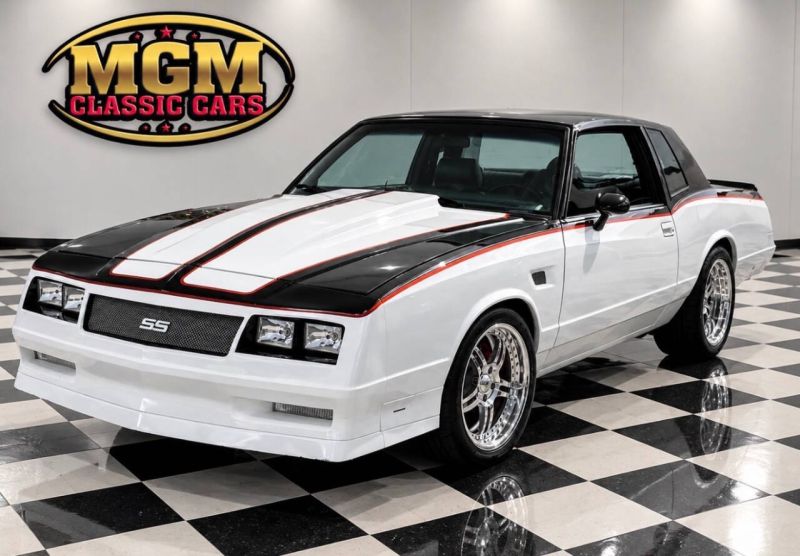
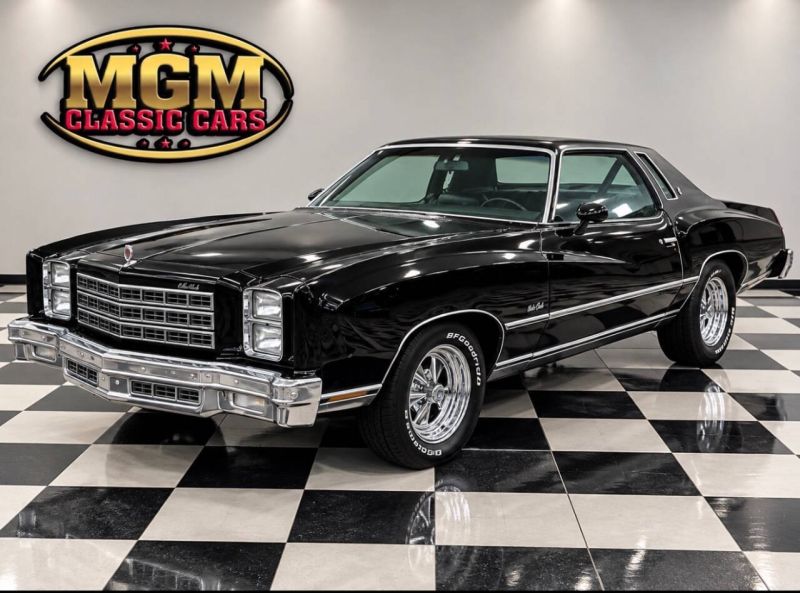
If any of this history makes you want to start your own chapter of it, the first step is the same one every builder in this tradition has taken, finding a solid base car worth the investment. You can shop classic Monte Carlo listings and begin building the relationships with painters, installers, and upholsterers that will define your own project's story.
Sources and notes
- Chevrolet Monte Carlo, Wikipedia
- The History of Lowrider Cars, Gauge Magazine
- Carros y Cultura: Lowriding Legacies in Texas, Texas Standard / Bullock Texas State History Museum
- Amigos Car Club Collection, University of San Diego Lowrider Archival Project
- 1972 Monte Carlo Becomes a Nationwide Lowrider Showstopper, Motorious via Yahoo Autos