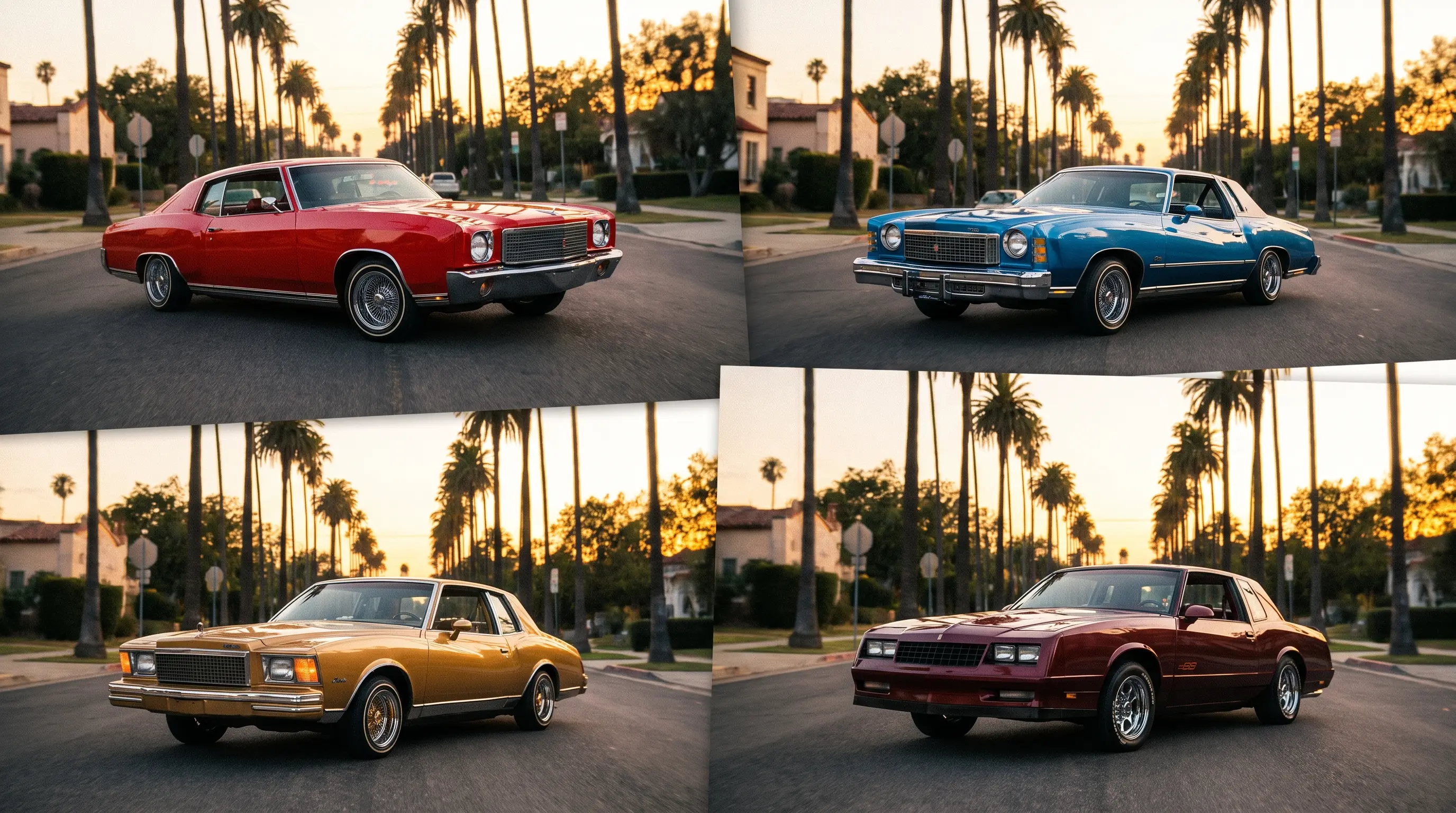
Ask ten different lowrider builders what a monte carlo lowrider generational styles conversation should cover and you will get ten different starting points, but every one of them ends up back at the same car. The Chevrolet Monte Carlo did not arrive in the barrio as a blank slate. It arrived as a personal luxury coupe with a long hood and a formal roofline, and somewhere along the way the community decided that shape was worth building around. We have watched that decision play out across four distinct body styles between 1970 and 1988, and each one asked something different of the people who customized it.
The first-gen 1970-72 Monte Carlo enters the barrio
The original Monte Carlo showed up with a nose that looked borrowed from a much more expensive car, and that alone got it noticed on the boulevard. Its wheelbase was long for a mid-size coupe, which gave builders room to work with when they started lowering it and adding wire wheels. Early adopters treated it less like a hot rod platform and more like a rolling suit, something you pressed and polished before you ever touched the suspension. The formal grille and stacked headlights read as dignified rather than aggressive, and that dignity became part of the car's appeal to a scene that valued presentation as much as performance.
This was also the era when the Monte Carlo had to share space with the Impala as the default full-size lowrider choice, and the two cars pulled from slightly different crowds. Families who wanted a car that felt like an occasion, something you drove to a quinceanera or parked outside a wedding, gravitated toward the Monte Carlo's coupe proportions and its single-purpose front seat of a car built for two people to be seen in.
The Colonnade years 1973-77 and the boulevard cruise
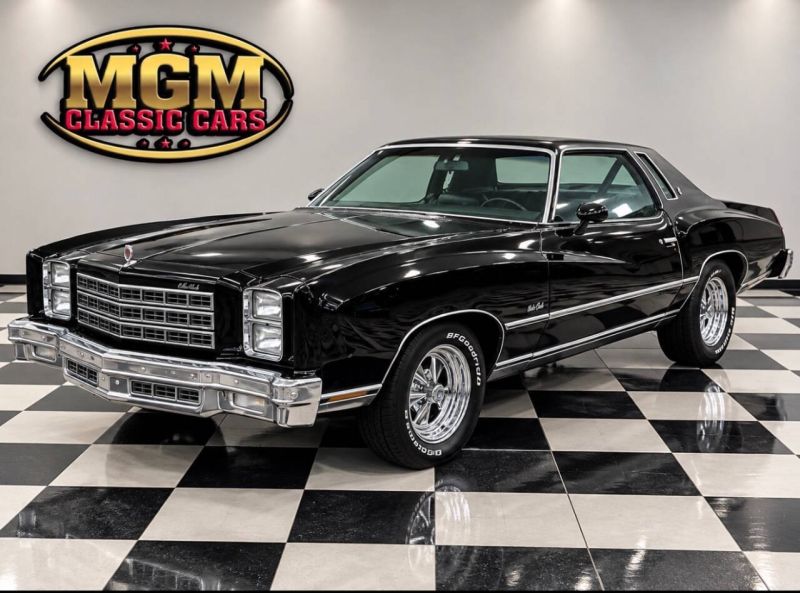
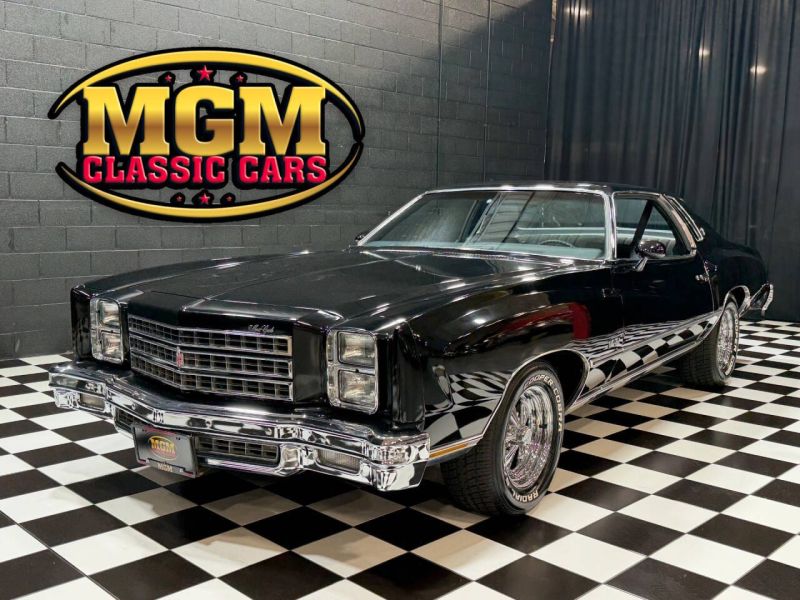
By the time the Colonnade generation landed, the Monte Carlo had grown heavier and more sculpted, with fender lines that curved in a way the earlier car never attempted. Builders leaned into that heaviness rather than fighting it. A slammed Colonnade Monte Carlo reads as a slab of chrome and steel moving at walking pace, and that low, wide stance became the template a lot of people still chase today when they talk about a proper lowrider silhouette.
The opera windows on the Colonnade cars gave painters a canvas they had not had before, a smaller enclosed pane where a family crest or a portrait could sit without competing with the rest of the bodywork. We have talked to builders who say the opera window is the single detail that tells you which decade a Monte Carlo lowrider is really from, more than the grille or the taillights.
Downsizing in 1978-80 and a shift in proportions
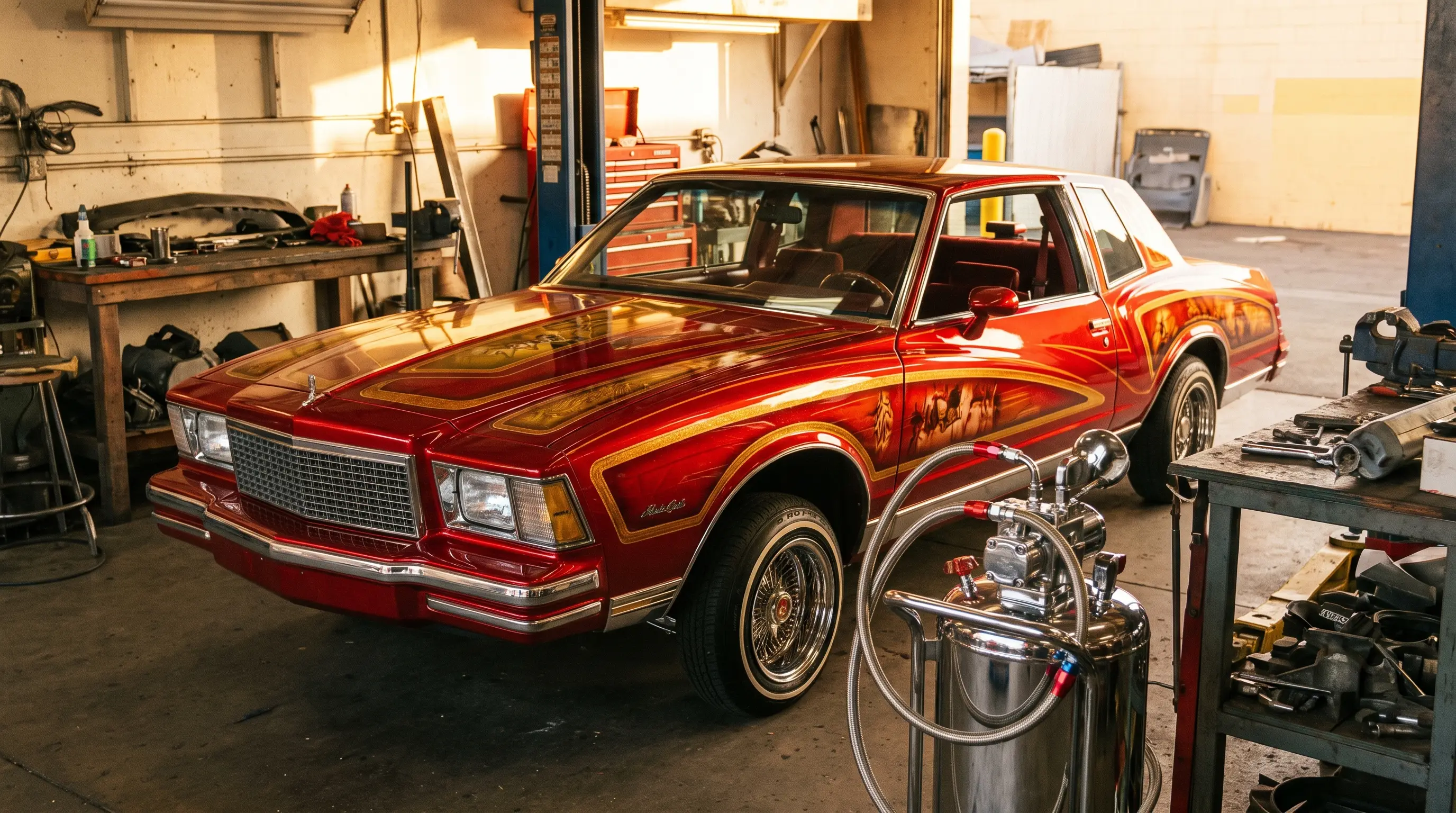
When Chevrolet downsized the Monte Carlo for 1978, the scene had to adjust its whole approach. The new car was shorter, lighter, and boxier, with crisper edges instead of the Colonnade's soft curves. Some longtime builders resisted it at first, saying it looked thin next to the cars they grew up around. Others saw an opportunity, because a lighter body sat differently on a lowered suspension and let a car hop and dance in ways the heavier Colonnade never could as easily.
This is the period where hydraulics started becoming a bigger part of the conversation in Monte Carlo builds specifically, not just in the full-size Impalas and Caprices that had carried that torch through the seventies. The downsized Monte Carlo's tighter dimensions made it a favorite for builders who wanted a car that could still move through traffic and park on a normal street while doing everything the show cars did on a Sunday afternoon.
The G-body 1981-88 becomes the lowrider's canvas
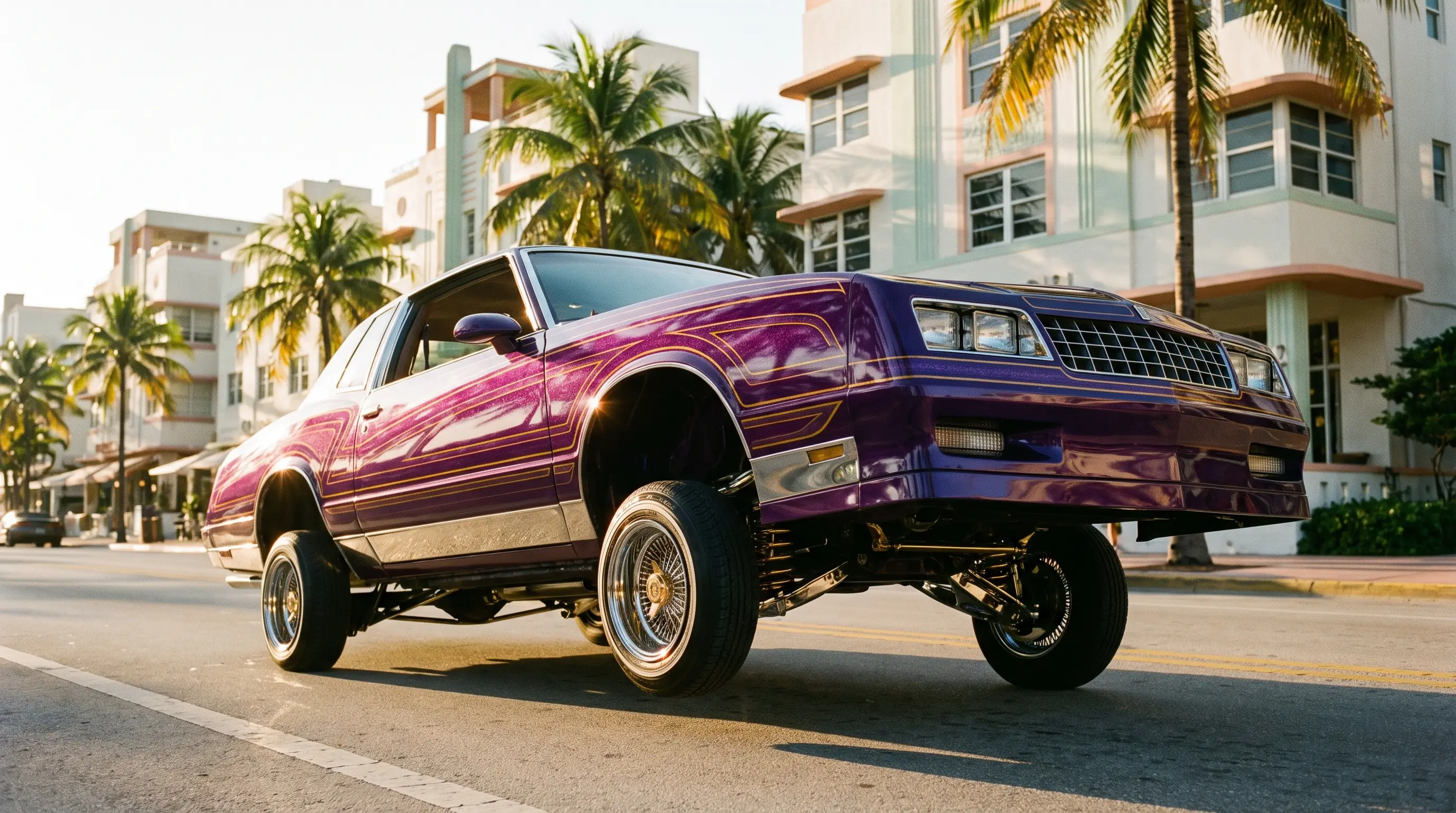
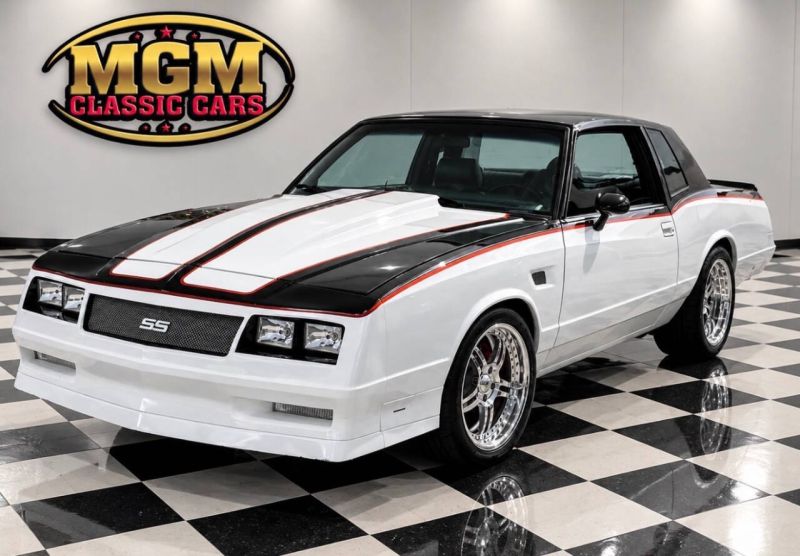
The G-body Monte Carlo, running from 1981 through 1988, is the version most people picture first when they hear the term monte carlo lowrider generational styles, and there is a reason for that. Its flat, wide rear deck, its upright rear glass, and its clean flanks gave muralists and pinstripers more usable surface than any Monte Carlo before it. The car's proportions also happened to work with the era's growing hydraulics culture, since the G-body chassis could take a lift kit without the body flexing in ways that fought the paint.
By the mid-1980s, the G-body Monte Carlo had become close to the default choice in a lot of clubs, competing directly with the Cutlass Supreme for the title of the era's favorite lowrider platform. That rivalry is still argued about at shows. You can read more on the monte carlo lowrider and where it fits against its closest competitor, because the two cars share a chassis family but ended up with very different reputations on the boulevard.
"Every generation of this car taught the scene something different. The first-gen taught us restraint, the Colonnade taught us how to use a canvas, and the G-body taught us how to make steel dance. You cannot skip a chapter and understand the whole book."
- Hector Morales
How wheels and paint tracked the changing body
Wheel choice tells its own version of this story if you know what to look for. The first-gen cars mostly wore wire wheels because that look matched the car's dignified nose and the family-occasion role it played on the boulevard. As the Colonnade landed and the body grew heavier, some builders moved to larger, deep-dish wheels that could visually anchor the extra weight without looking undersized against those bigger fenders. By the time the G-body arrived, wire wheels had come back into fashion for a lot of clubs, but now paired with a much flatter, cleaner body that gave them more room to stand out rather than competing with heavy sculpting.
Paint followed a similar arc. Early builds tended toward deep single colors with heavy clear coat and minimal graphics, since the first-gen body did not offer much flat real estate for anything elaborate. The Colonnade's opera windows opened the door to smaller, contained artwork. The downsized car's crisper panels made pinstriping cleaner and easier to execute in straight lines. The G-body, with its wide rear deck and flat quarter panels, is where full murals really took hold, because for the first time a painter had a genuinely large, uninterrupted canvas to work with on a Monte Carlo specifically.
What today's builders borrow from each era
Walk any modern lowrider show and you will see all four generations represented, sometimes parked next to each other by builders who want to make the point that the styles talk to each other across decades. A first-gen owner might borrow the G-body's paint schemes. A G-body owner might chase the Colonnade's fender skirt treatment. None of it happens in isolation, and none of it happens without people who bothered to learn what the earlier cars actually looked like before they started swinging a spray gun.
If you want the fuller arc of how the Monte Carlo got from a showroom coupe to a cultural fixture in car club culture, our complete history traces the whole model run generation by generation. And if any of these decades has you wanting the real thing under your own hands, there are usually a handful of classic Monte Carlos on the market at any given time, spanning everything from an untouched first-gen to a G-body ready for its first lift kit.
The point we keep coming back to is that the Monte Carlo never had one lowrider look. It had four, and each one still has people building it exactly right.