
Picture a suburban driveway in 1985. The paint on the El Camino SS parked there is the same base color the factory offered on a dozen other Chevrolet trims that year, but the stripe package running down the hood and along the bedside is doing all the talking. This is el camino ss 1980s decal muscle, a decade where the loudest thing about a Super Sport was usually a sheet of adhesive vinyl, not the engine underneath it. It looked fast standing still. That was, in a lot of ways, exactly the point.
Car Features
6 min read
Decal Muscle: The El Camino SS in the 1980s
When horsepower could not carry the badge, Chevrolet let stripe kits and graphics packages sell the El Camino SS image through the 1980s.
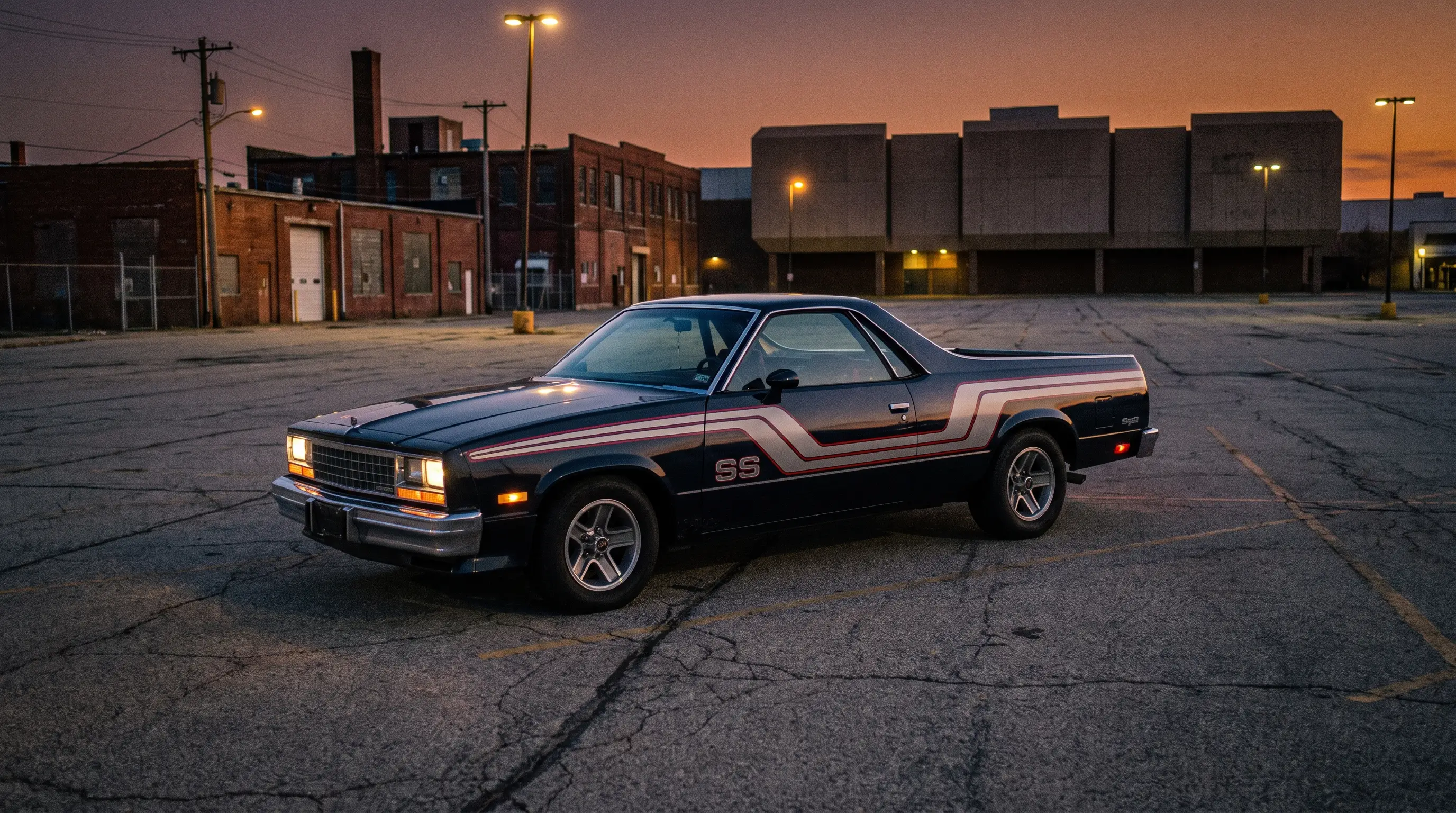
When graphics carried the badge
By the early 1980s, the El Camino SS package leaned harder on appearance than it ever had before. The stripe kits, hood callouts, and blacked-out trim pieces were doing a job that horsepower used to do on its own. A 305 cubic inch small block under the hood, typically making somewhere between 150 and 165 horsepower depending on carburetor and year, was respectable for the era but nowhere near what the SS name had meant a decade earlier. Chevrolet's designers understood the assignment. If the drivetrain could not shout, the graphics package would.
This was not unique to the El Camino. The entire American car industry leaned on decals and tape stripes through the early 1980s, a decade when emissions rules had gutted horsepower across nearly every domestic V8. The El Camino SS graphics package, with its bold lettering along the bedsides and the hood, was part of a broader visual language that included everything from the Trans Am's screaming chicken to the Monte Carlo SS's own stripe treatment.
Why the decals mattered more than they should have
There is a temptation to dismiss decal-era muscle as a hollow marketing trick, and there is some truth to that. But dismissing it entirely misses what the stripes actually accomplished. They kept a visual identity alive for a nameplate that could not compete on raw output anymore, buying the SS badge time until fuel injection and better engine management brought real horsepower back to American V8s later in the decade. Without that visual continuity, a buyer walking into a Chevrolet showroom in 1985 might not have connected the tape-striped truck in front of them to the 1970 SS 454 their father talked about. The graphics were doing brand memory work as much as they were doing style work.
The culture behind the tape stripe
Decal muscle also connects to something bigger happening in American car culture during the 1980s. This was the decade when factory graphics packages became collectible in their own right, separate from the mechanical performance underneath them. Buyers who could not afford real horsepower could still buy the look, and a whole secondary market of aftermarket stripe kits, spoilers, and wheel packages grew up around that appetite. The El Camino SS sat right in the middle of that trend, a truck-car that let a buyer project muscle car identity without the insurance bill of an actual muscle car engine.
That cultural role gave the decal-era SS a longer shelf life than its horsepower numbers alone would suggest. It kept selling through most of the decade precisely because it offered an accessible piece of a bigger, louder era that most buyers could no longer afford to actually own.
"Nobody rolled up to a stoplight in an '84 SS thinking they were about to embarrass a big block car. They were buying into an idea, a look, a connection to something. That's not nothing. That's actually a pretty smart thing for Chevrolet to have sold them."
- Patrick Walsh
What the stripe packages actually looked like
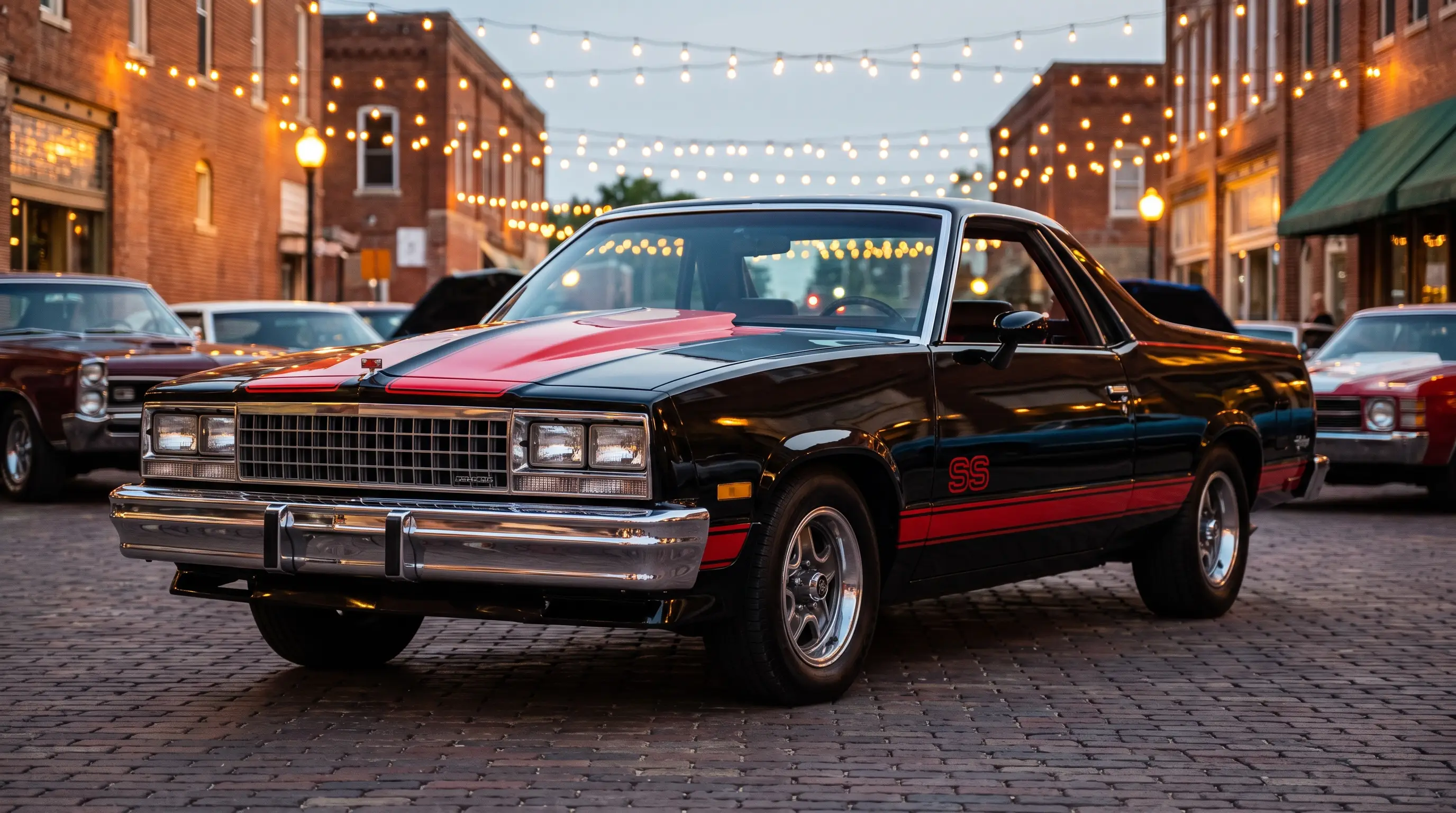
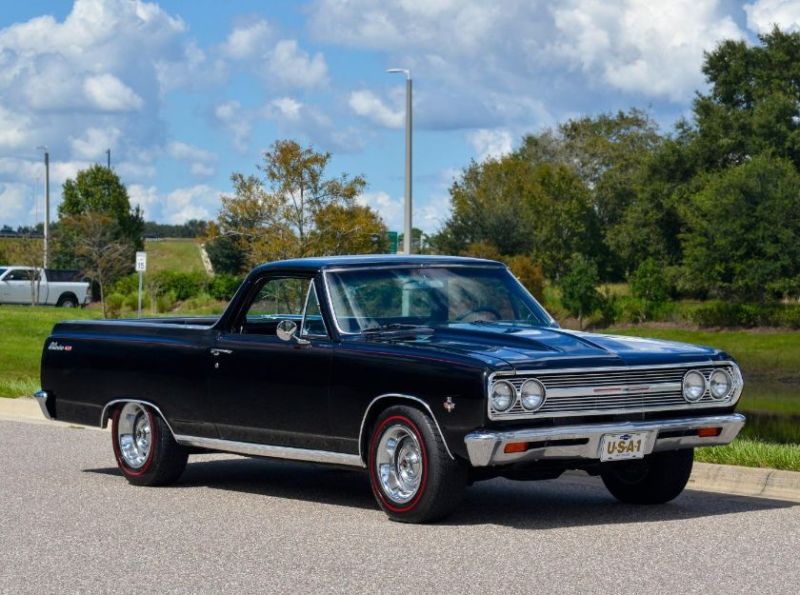
The graphics evolved noticeably across the decade rather than staying static. Earlier G-body SS trucks favored simpler hood and bedside striping in a single accent color, often black or a dark red, running in a straight line from the front fender back to the tailgate. By the middle of the decade the packages had grown busier, sometimes adding a secondary color, a checkerboard accent near the C-pillar area, and larger block lettering on the tailgate itself. Wheel choice mattered just as much as the tape. A set of factory Rally wheels or, later, the more angular alloy wheel designs Chevrolet rolled out for the SS trim did as much to sell the performance image as the stripe kit running alongside them.
Interior treatments followed the same logic. Bucket seats with a bold accent stripe running down the center, a sport steering wheel, and gauge clusters with a tachometer became part of the package even when the engine behind that tachometer was not doing anything particularly dramatic. Buyers were purchasing an entire sensory experience of speed, not just a truck bed with a V8 in front of it, and Chevrolet's designers clearly understood that the interior needed to sell the same story the exterior graphics were telling.
Where this fits today
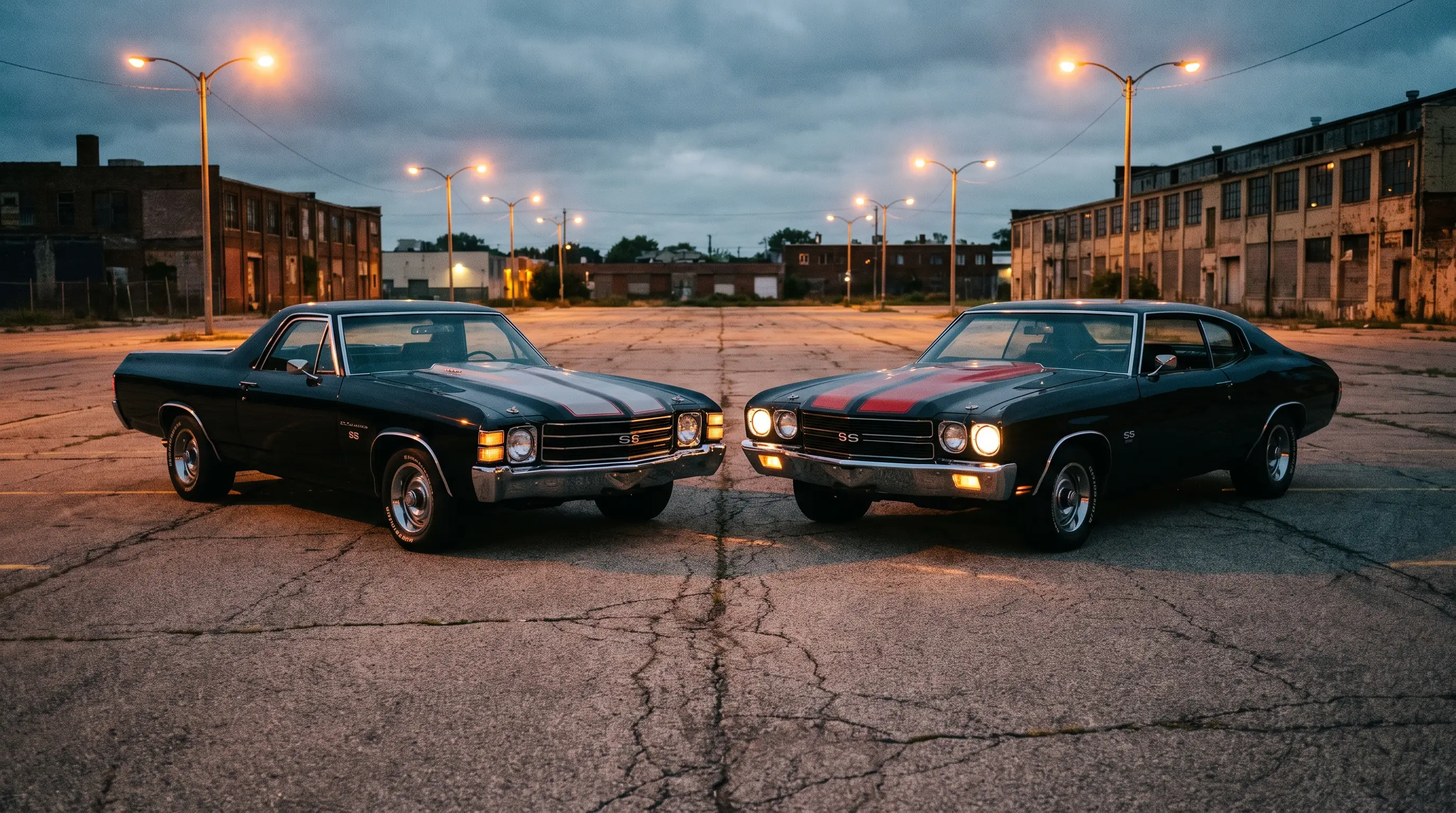
Collectors now treat these decal-era SS trucks as an honest, distinct chapter rather than a lesser imitation of the muscle era. Original, unfaded graphics packages are hard to find and command a premium among purists who want the full period look rather than a modern reproduction. For the complete arc of how the badge got from the 1968 big block introduction to this graphics-forward decade, our el camino ss retrospective traces the whole timeline, and the sibling rivalry that shaped a lot of this era's design decisions gets its own treatment in a related story worth reading alongside this one.
If the look of a striped, decal-clad 1980s SS speaks to you more than a numbers-matching 454 ever could, there are honest examples among the El Caminos for sale now, and the decal era remains one of the more affordable entry points into this whole nameplate's history.
Condition matters more with these cars than most people expect walking in. Original vinyl graphics degrade in ways paint does not, cracking, fading unevenly, and lifting at the edges after enough years in direct sun, so a truck that looks crisp in photos deserves a closer look in person before anyone assumes the stripes are original. Reproduction kits exist for nearly every year and pattern Chevrolet offered during this run, which keeps restoration realistic, but purists still pay a premium for a survivor wearing its factory-applied graphics rather than a repaint. That distinction, more than the horsepower figure under the hood, is often what separates a merely nice decal-era SS from a genuinely special one. It is also a distinction that rewards patience over impulse buying, since the honest survivors tend to surface through estate sales and long-term owners rather than open listings, and a buyer willing to wait usually does better than one who grabs the first striped truck they find.
Sources and notes
Related Reading
Have a
Chevrolet El Camino
for Sale?
Reach thousands of serious classic car collectors across the US.
Sell It Here →
Are You a Classic Car Dealer?
List your full inventory and connect with targeted classic car buyers.
Join as a Dealer →

About the author
Patrick Walsh
Automotive journalist covering classic car shows, events, and the enthusiast community across North America.
Related Listings - Chevrolet El Camino
Comments
Be the first to comment on this article.