
By 1983 half of Detroit had given up on making anything fast. Gas lines, smog pumps, and catalytic converters had turned the muscle car era into a museum piece, and most manufacturers were content selling econoboxes with vinyl stripes and calling it a day. Then Chevrolet dropped the el camino ss g body comeback into showrooms, a G-body pickup-car wearing a Super Sport badge with a straight face, and it turned out the malaise era still had a pulse. It was not fast by 1970 standards. It was fast for 1983, and that is a different, more honest kind of fast.
Car Features
7 min read
The G-Body El Camino SS and the Meaning of Muscle in a Malaise Age
When the muscle car era went quiet, the G-body El Camino SS kept the Super Sport badge alive through the worst years the American V8 ever had.
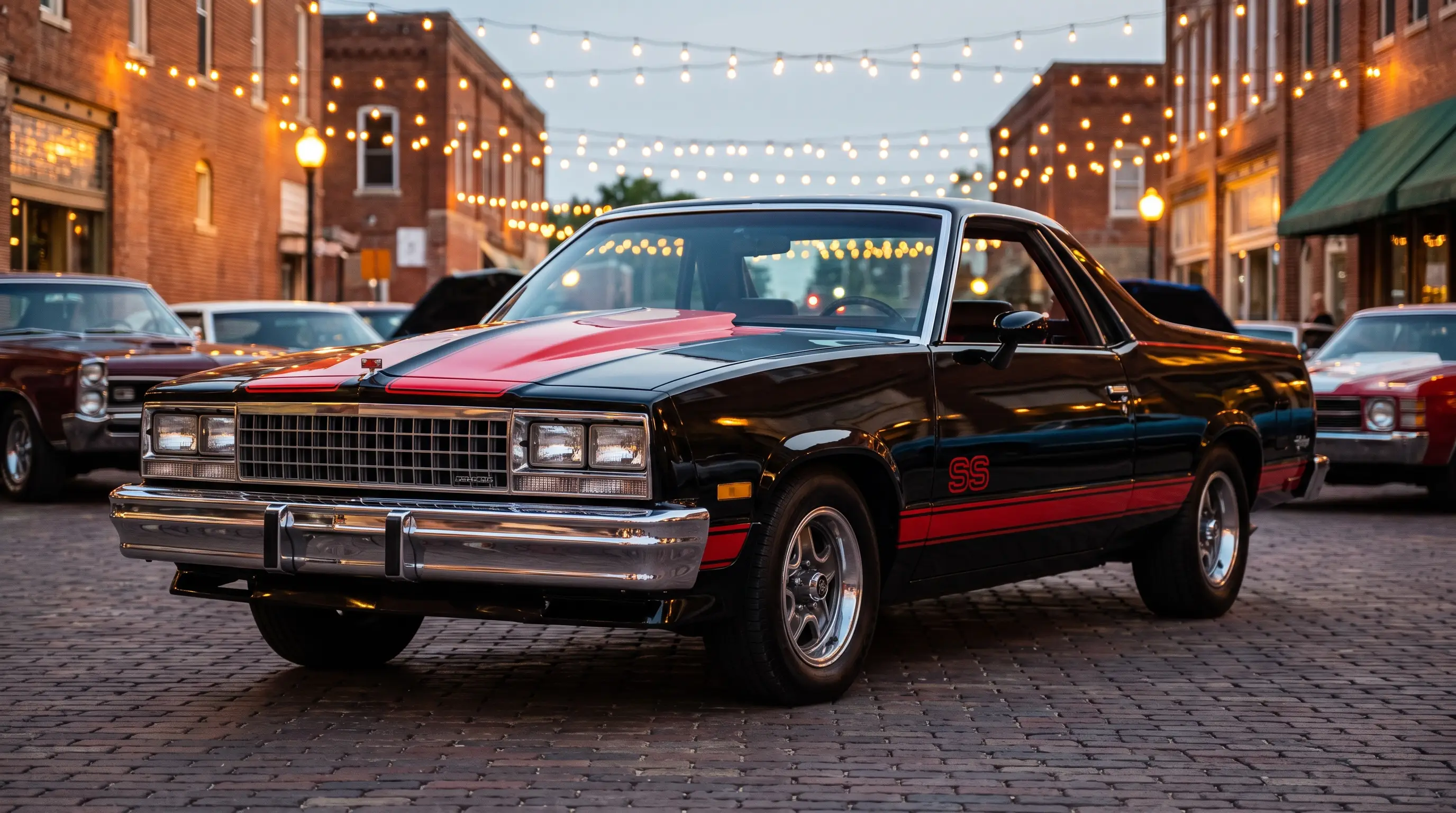
What "SS" meant on a G-body
The G-body El Camino, built from 1978 through 1987, shared its bones with the Chevrolet Malibu and, later, the Monte Carlo SS. An SS trim package, RPO Z15, was actually offered continuously from 1978 through 1982, a cosmetic decor option that added nothing to performance. Then in 1983, the badge changed hands: Chevrolet stopped building its own SS trim and instead partnered with Choo-Choo Customs, Inc., a Chattanooga outfit that took standard El Caminos ordered through any Chevrolet dealer and converted them with a new front air dam, sport mirrors, Designer Series door handles, aluminum side moldings (through 1985), Rally wheels, and SS badging before delivery. Neither version was ever a factory-built performance option in the classic sense. The engine under the hood was a 305 cubic inch small block, rated around 150 to 165 horsepower depending on the year and carburetor setup.
That is not a number anyone brags about next to a 1970 SS 454. But context matters. In an era when a lot of American V8s were making barely 120 horsepower and choking on smog equipment, 165 horsepower with a real four-barrel carburetor and a manageable curb weight was a genuine standout. The G-body SS was the loudest thing left standing on a showroom floor that had otherwise gone quiet.
Borrowing the Monte Carlo's playbook
Chevrolet was doing something smart with badge engineering here, and most buyers never noticed. The Monte Carlo SS, introduced in 1983, was building real momentum in NASCAR-adjacent marketing and street credibility, and the El Camino SS rode that same wave without duplicating the exact drivetrain or aero package. Where the Monte Carlo SS got the aerodynamic nose treatment aimed at stock car racing, the El Camino SS kept its utilitarian shape and leaned on stripe graphics and wheel packages to carry the sporty image. It worked well enough that plenty of buyers cross-shopped the two and picked the one with the bed.
Why the comeback mattered more than the horsepower
Here is the thing nobody wants to say out loud about the malaise era: it almost killed the whole idea of a performance truck-car. If Chevrolet had walked away from the SS badge entirely during the emissions-choked early 1980s, there is a real chance the nameplate never comes back at all, and the modern muscle car revival of the 2000s never gets to point at the El Camino as part of its lineage. The G-body SS kept the badge alive through the worst years the American V8 ever had. That is not a small thing.
It also proved something about what buyers actually wanted. The G-body SS sold reasonably well for a niche trim in a shrinking segment, which told Chevrolet that a market for sporty, badge-forward, small block trucks still existed even after the fuel crisis had gutted the muscle car business. That signal mattered more to the badge's survival than any single horsepower figure from this era.
"I've had guys come into the shop apologizing for their G-body SS, like it needs to explain itself next to a 454. It doesn't. That car kept the lights on for the whole nameplate when everybody else quit trying."
- Mike Sullivan
What survives and what to expect
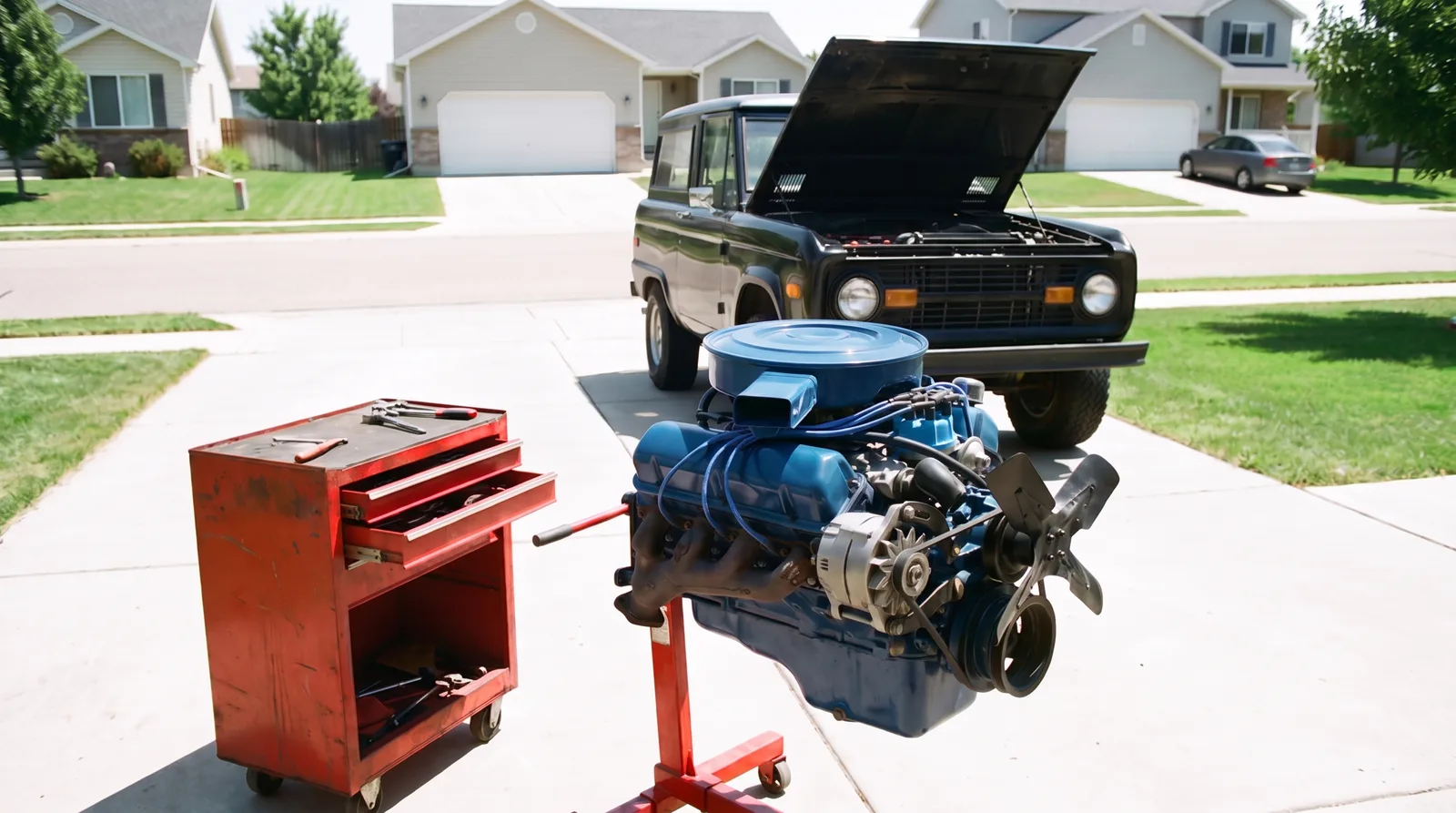
These are simple, durable machines mechanically. The 305 small block is about as forgiving an engine as General Motors ever built, parts are everywhere, and the G-body platform underneath is shared with enough other Chevrolet and Oldsmobile products that finding suspension and brake components is rarely a problem. The usual failure points are the same ones you find on any G-body of this vintage: weak factory paint that chips easily, rust creeping in around the wheel wells and rear window channel, and interior plastics that go brittle after decades of sun exposure. None of that is exotic or expensive to address if you catch it early.
What is harder to find is a genuinely clean, unmolested example, since these were daily-driven work trucks for a lot of their life and were not treated with the reverence collectors give a 1970 SS. That scarcity of honest survivors is starting to push prices up slowly, particularly for the final 1986 and 1987 model years with the Vortec-adjacent updates and slightly better fuel injection setups toward the very end of production.
Where it fits in the bigger story
The G-body comeback is not the loudest chapter in the El Camino SS story, but it might be the most important for keeping the badge alive to see another day. Compare it to what happened to other performance nameplates that did not get a badge lifeline during these years. Plenty of them simply vanished, folded into base trims and never revived, because nobody kept the name in front of buyers long enough for a later generation to rediscover it. The El Camino SS avoided that fate specifically because Chevrolet kept selling a version of it, even a modest one, straight through the worst years the American V8 ever had.
There is also a practical lesson buried in here for anyone shopping this era today. The G-body SS was never meant to be a collector's trophy when it was new. It was a work truck with attitude, priced to move, aimed at buyers who wanted a little style without paying big block insurance rates. That intent shows up in how these cars were used and, frankly, how they were neglected. Fewer of them got babied in a heated garage, more of them hauled feed, firewood, and furniture, and that means the survivors that are actually clean today are rarer than their production numbers suggest. A shop that has been through a few dozen of these will tell you the same thing: finding one that has not been resprayed, re-interiored, or patched with mismatched sheet metal is the real challenge, not finding parts once you own it.
For the full story of how the SS name traveled from 1968 through the muscle era and into this malaise-age survival run, the complete history connects all the dots, and it makes the G-body's quiet persistence look a lot more important in hindsight than it did on a 1983 showroom floor. And if a G-body SS sounds like the honest, affordable entry point into this history that it actually is, there are always a few worth checking out among the browse classic El Camino listings available right now.
Sources and notes
Related Reading

About the author
Mike Sullivan
Detroit-area muscle car enthusiast and restoration specialist with three decades of hands-on experience working on American iron.
Related Listings - Chevrolet El Camino
Comments
Be the first to comment on this article.