
Factory records tell a more precise story than nostalgia usually does, and the el camino ss evolution badge is a good example of why that precision matters. The Super Sport package first appeared on the El Camino for the 1968 model year as the SS 396 option, carrying the visual and mechanical hallmarks Chevrolet had already established on the Chevelle SS a few years earlier. From there, the badge went through more revisions than most casual histories give it credit for, and each one tells you something about what Chevrolet thought the SS name needed to mean in a given year.
Car Features
6 min read
The Evolution of the El Camino SS Badge
From the 1968 SS 396 launch to the final G-body trucks of 1987, the El Camino SS badge changed meaning more than once without ever disappearing.
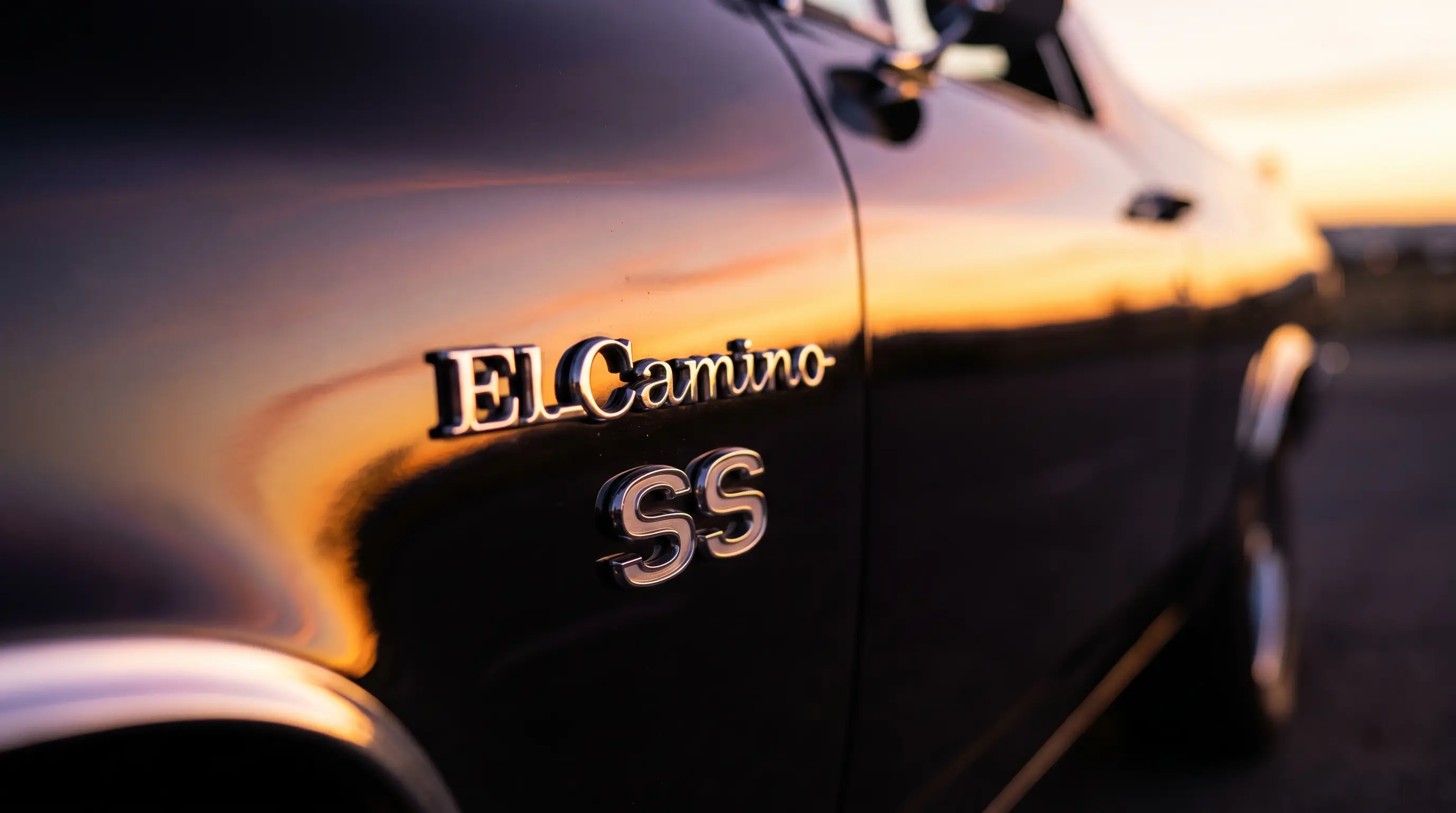
1968 to 1969: borrowing a proven formula
When the El Camino SS launched for 1968, Chevrolet was not inventing anything new so much as extending a formula that had already worked on the Chevelle. The SS 396 package brought the 396 cubic inch big block, upgraded suspension, dual exhaust, and specific SS badging to the El Camino lineup for the first time. Documentation from this era shows Chevrolet treating the El Camino SS largely as a running mate to the Chevelle SS rather than a standalone development program, which explains why the two nameplates shared so much sheet metal and so many mechanical specifications through these early years.
The 1969 model year carried the same basic SS 396 formula forward with modest trim revisions. Production figures for El Camino SS units during these two years remain harder to isolate precisely from total El Camino production, since Chevrolet's surviving documentation does not always separate SS-package units from standard trims in every record that has come down to today's researchers.
1970: the badge reaches its performance peak
The 1970 model year is where the SS badge hit its high water mark for raw specification. Chevrolet introduced the SS 454 option that year, offered with either the LS5, rated at 360 gross horsepower, or the ultra-rare LS6, rated at 450 gross horsepower. The LS6 El Camino was exceptionally scarce, with roughly 500 built that year, far fewer than the LS6-optioned Chevelle, making it one of the rarest big-block combinations Chevrolet ever offered on this platform. Regardless of which engine a given car carried, 1970 represents the year the SS badge carried the most engine underneath it that Chevrolet would ever offer on this platform, big block displacement paired with the least amount of emissions equipment strangling it.
1971 to 1972: the badge starts absorbing new rules
Compression ratios dropped across the board starting in 1971 as Chevrolet prepared for unleaded fuel requirements and tightening emissions rules, and the SS badge's horsepower figures dropped along with them. The switch to net horsepower ratings in 1972 makes direct comparison to earlier years tricky, since a 1972 SS 454 rated at 270 net horsepower was not necessarily a weaker engine than a 1971 SS 454 rated in gross terms, just a more honestly measured one. This is the period where factory documentation itself starts reflecting the industry-wide shift toward a different way of talking about engine output entirely.
1973 to 1977: the badge survives a changed market
The SS package continued through the Chevelle-based El Camino's final Colonnade-style generation, though big block availability narrowed considerably and eventually disappeared from the option sheet as the decade progressed. By the mid 1970s, the SS El Camino's identity rested increasingly on trim, wheels, and stripe packages rather than any standout mechanical specification, a shift that set up exactly the pattern the badge would follow through its final G-body decade.
"Every time someone tells me the SS badge 'died' after 1970, I pull the production records and show them otherwise. Chevrolet kept building these things, kept selling them, kept documenting them. The badge changed its meaning more than once. It never actually disappeared."
- Tom Ramirez
1978 to 1987: a new platform, a familiar name
The G-body redesign for 1978 gave the SS badge a new chassis to sit on, and eventually a small block-only identity that carried it through the final 1987 model year. Factory paperwork from this era shows the SS package increasingly categorized as an appearance and trim option rather than a distinct performance engineering program, a formal acknowledgment of the direction the badge had already been drifting since the mid 1970s. Understanding that full evolution, badge code by badge code, decade by decade, is exactly what the whole picture lays out from the 1968 introduction through the final 1987 cars.
For anyone tracing this evolution with an eye toward buying into a specific chapter of it, whether that means chasing a documented 1970 SS 454 or a more attainable G-body small block SS, there are usually a few worth reviewing among the current shop classic El Camino listings.
One of the most common mistakes buyers make when shopping any year of El Camino SS is assuming the exterior badge alone confirms the drivetrain underneath it. SS emblems, like most factory trim pieces, were removable and interchangeable across model years, and decades of owners have swapped badges, added stripe kits, or restored cars with reproduction emblems that do not necessarily match the original factory build. The only reliable way to confirm a specific engine and options combination is cross-referencing the cowl tag or trim tag codes against Chevrolet's factory documentation for that model year, not simply trusting whatever badge happens to be bolted to the fender today.
This matters more for the earlier big block years, where the difference between a genuine SS 396 or SS 454 build and a cosmetically dressed six-cylinder or small block car can represent a substantial gap in both historical accuracy and resale value. Factory build sheets, when they survive with a car, remain the gold standard for confirming exactly which engine, transmission, and options left the assembly line together, and serious buyers should treat any SS badge without supporting documentation as a claim to verify rather than a fact to accept.
This same verification discipline applies just as much to the later G-body cars, even though the stakes are lower in dollar terms. Reproduction stripe kits and SS decals are widely available and commonly applied to non-SS G-body El Caminos to dress them up for resale, so a buyer chasing an original SS-optioned truck from this era should still confirm the trim tag rather than assume the graphics on the truck in front of them reflect how it left the factory. The badge itself, across every year Chevrolet applied it to this platform, has always been something a determined seller could add. What cannot be added after the fact is the factory paperwork that confirms it belonged there in the first place, and that paperwork is what separates a documented SS from a car merely wearing SS clothing.
Sources and notes
Related Reading
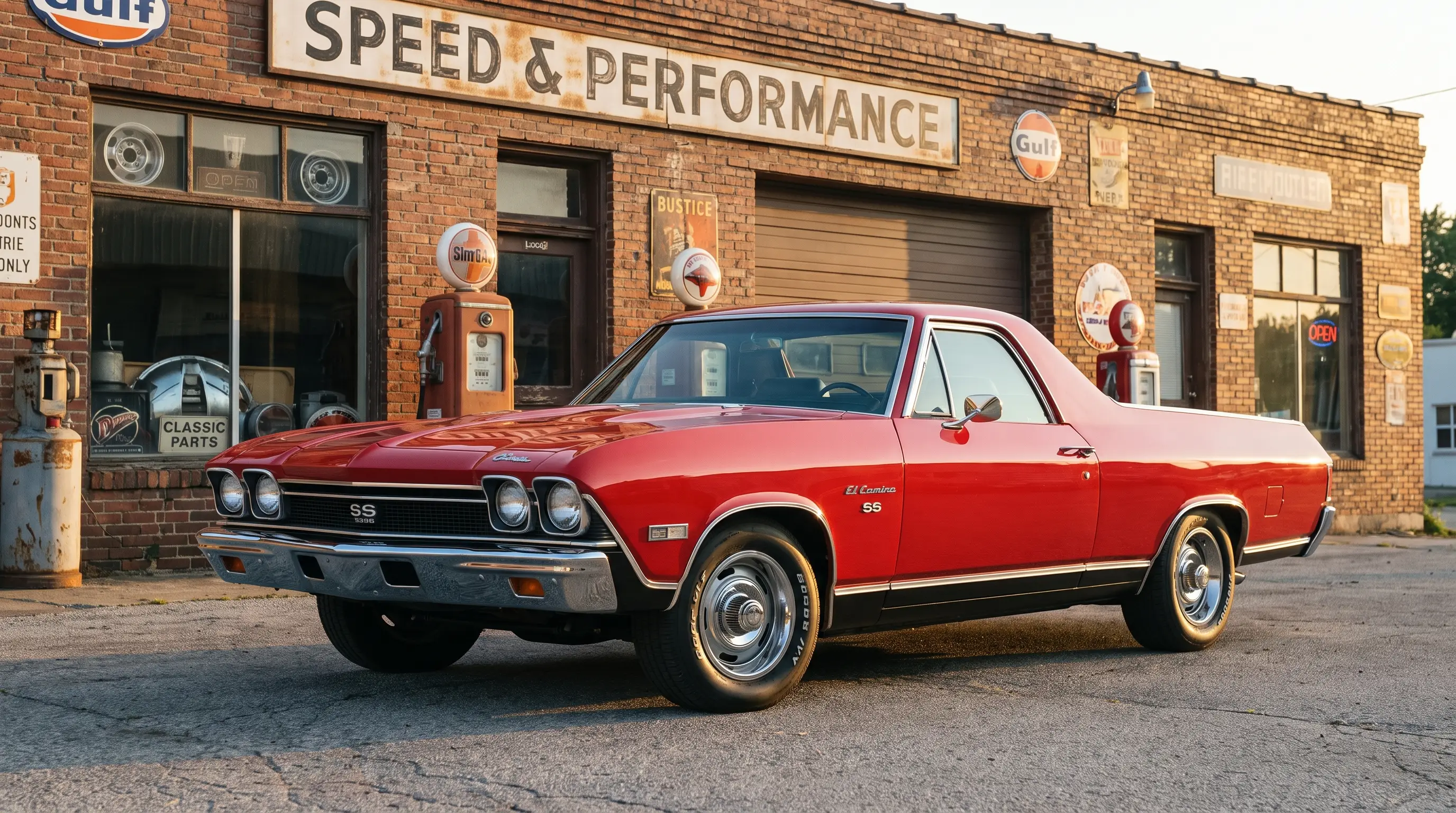
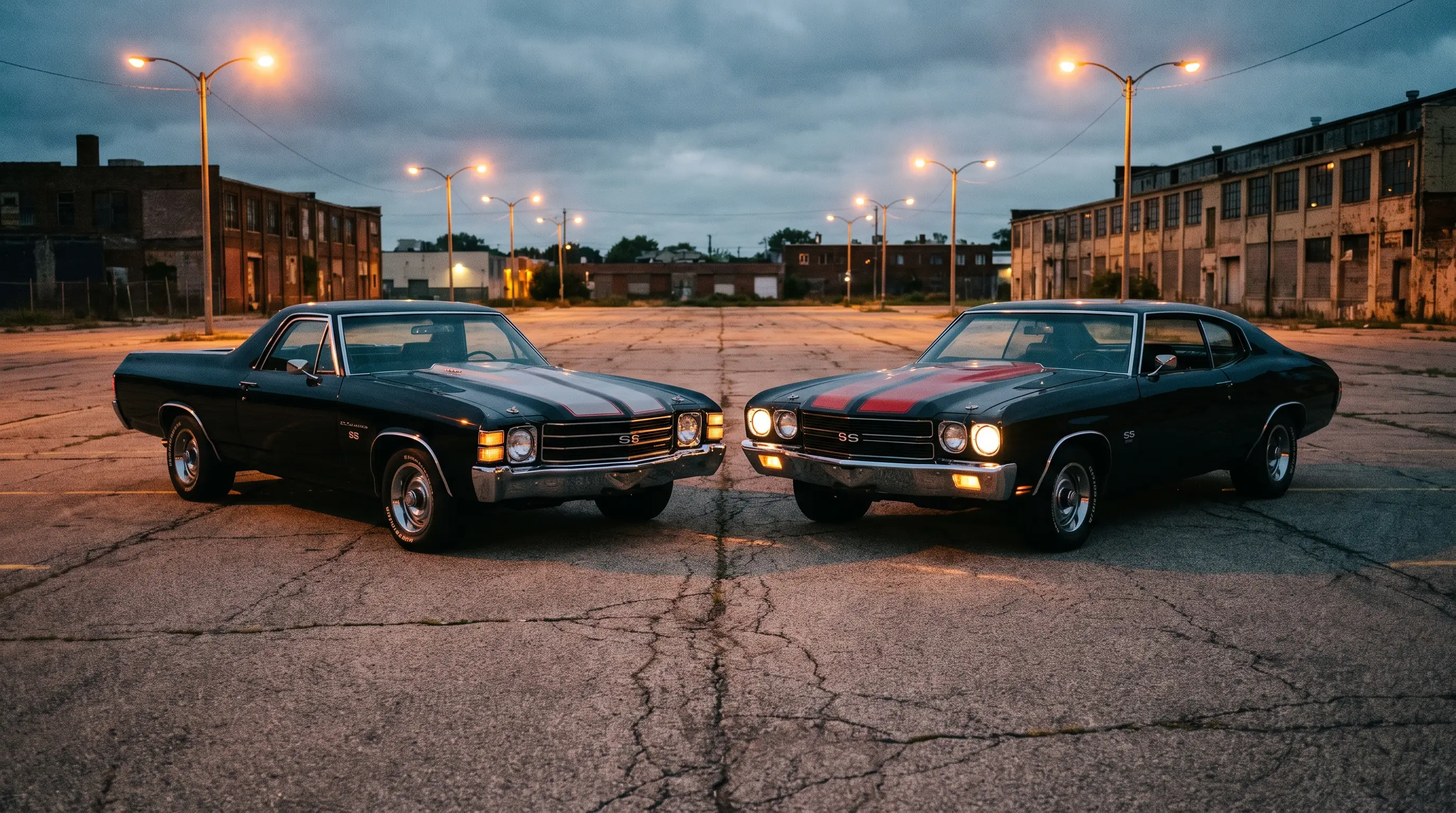
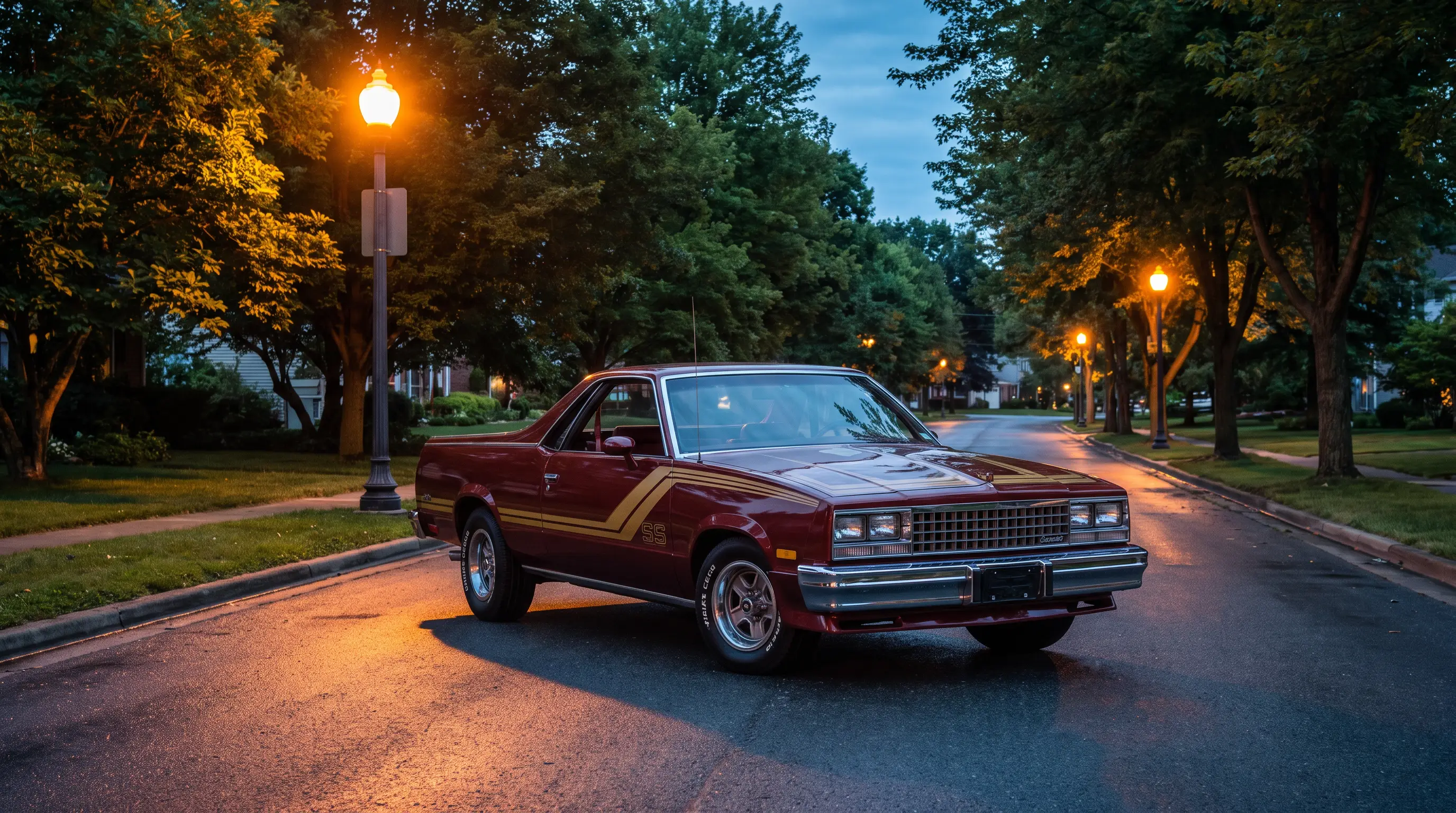
Have a
Chevrolet El Camino
for Sale?
Reach thousands of serious classic car collectors across the US.
Sell It Here →
Are You a Classic Car Dealer?
List your full inventory and connect with targeted classic car buyers.
Join as a Dealer →

About the author
Tom Ramirez
Corvette researcher and historian based in Bowling Green, Kentucky. Two decades documenting Corvette production history from original factory records.
Related Listings - Chevrolet El Camino




Comments
Be the first to comment on this article.