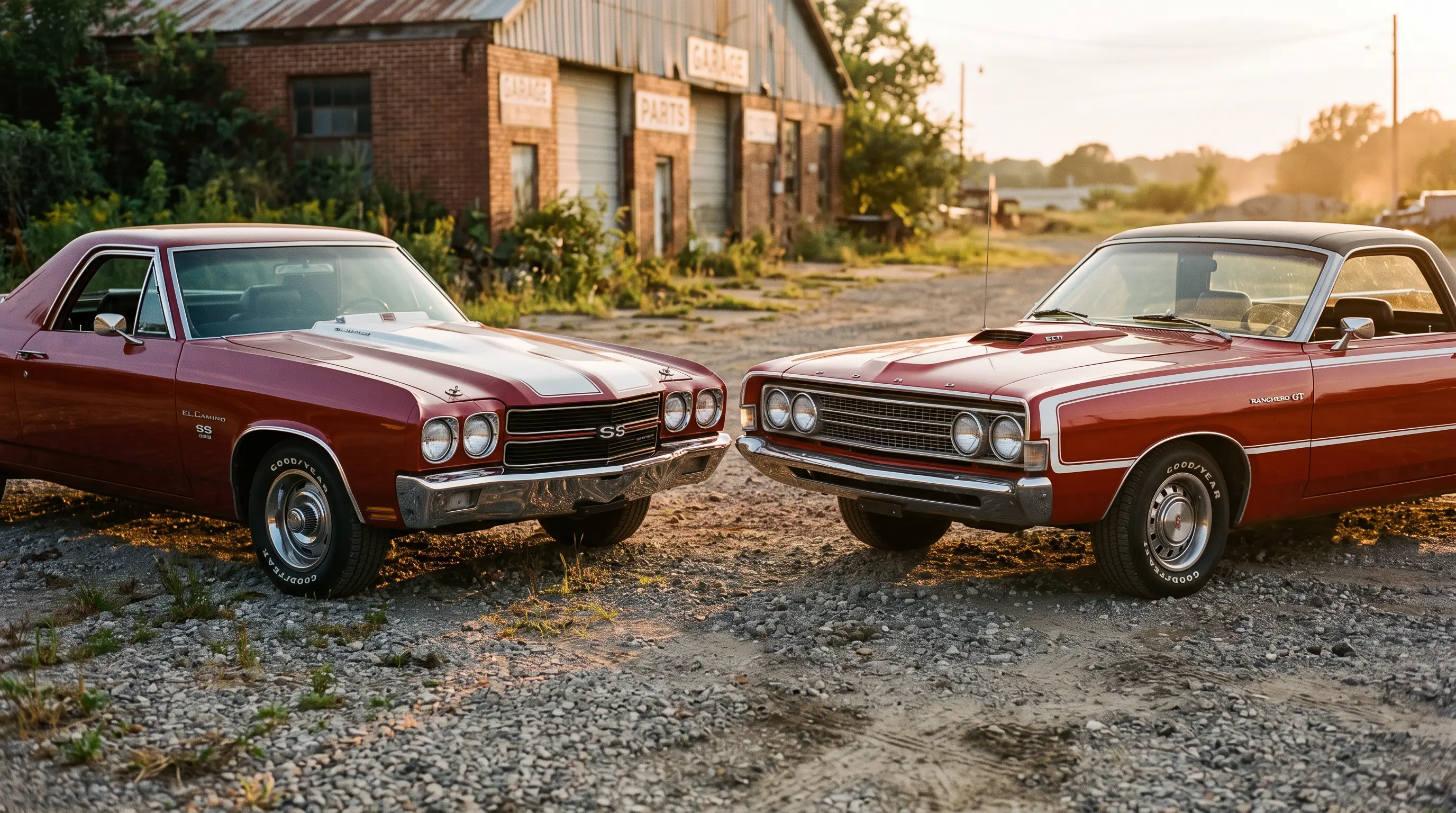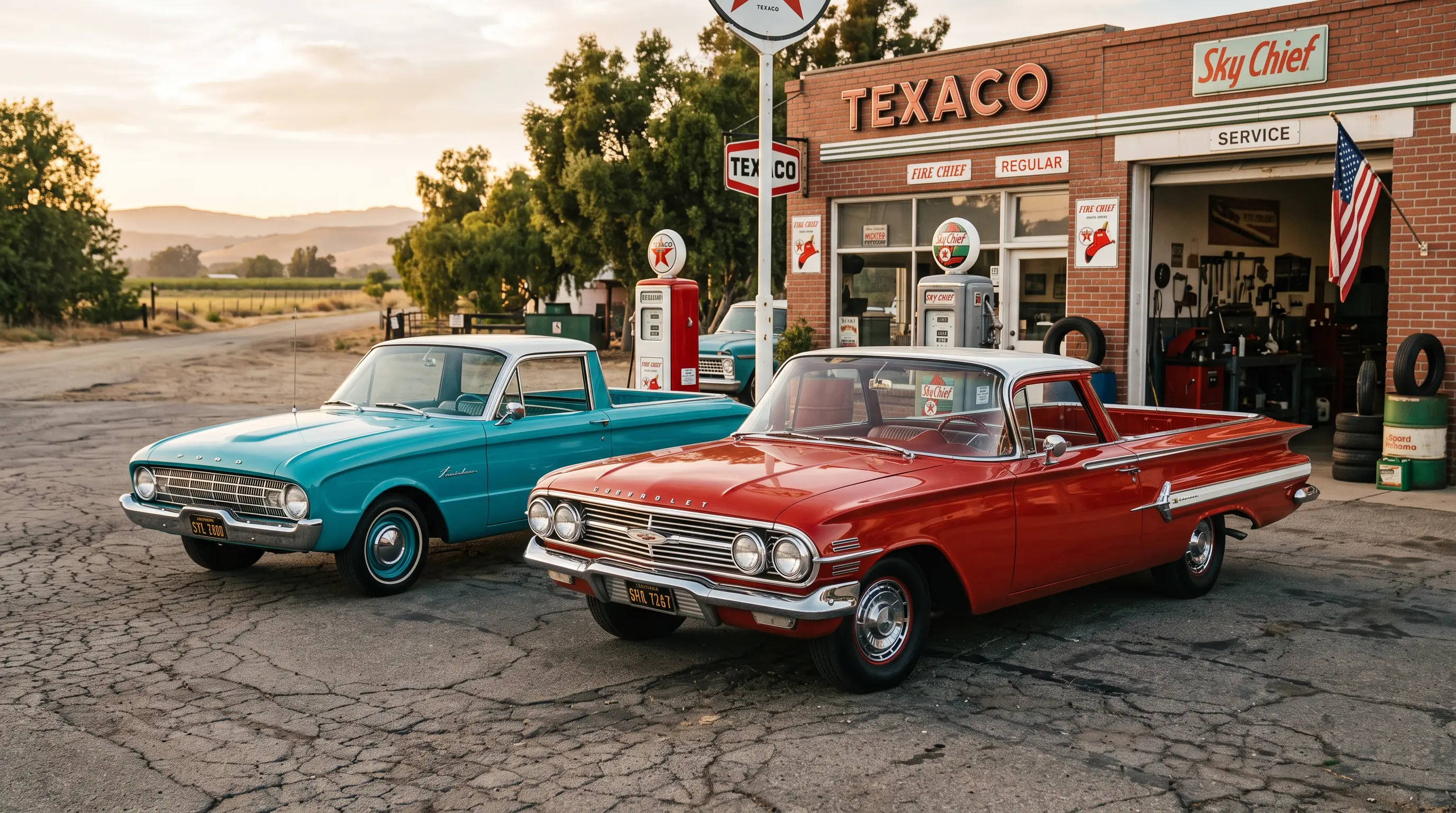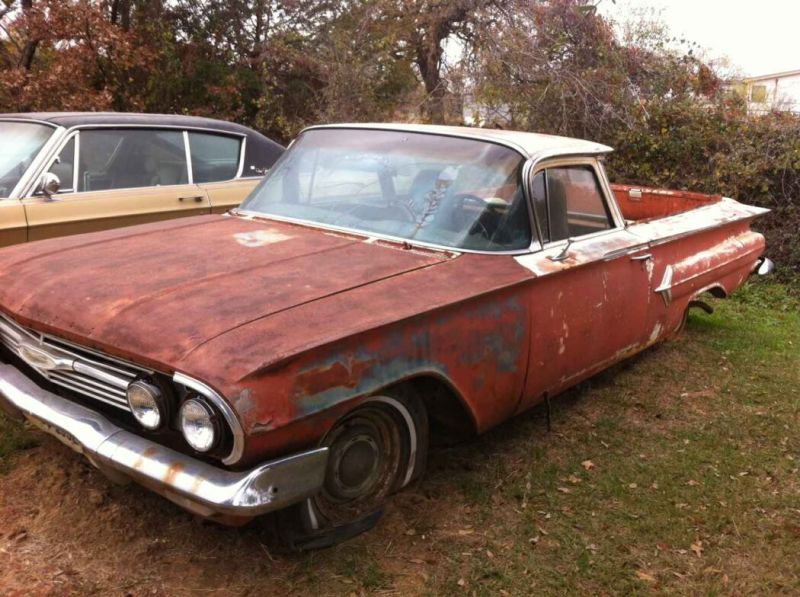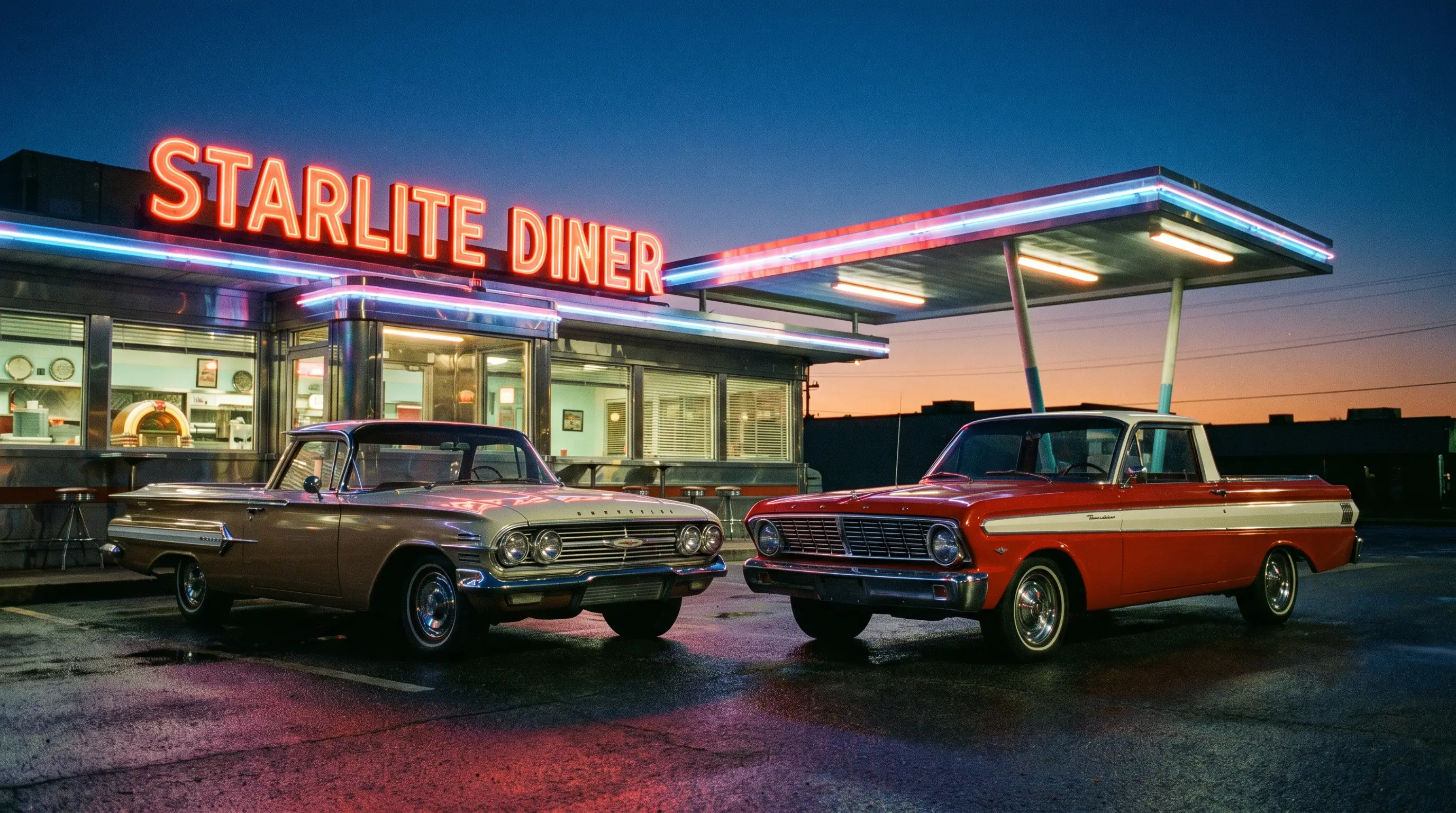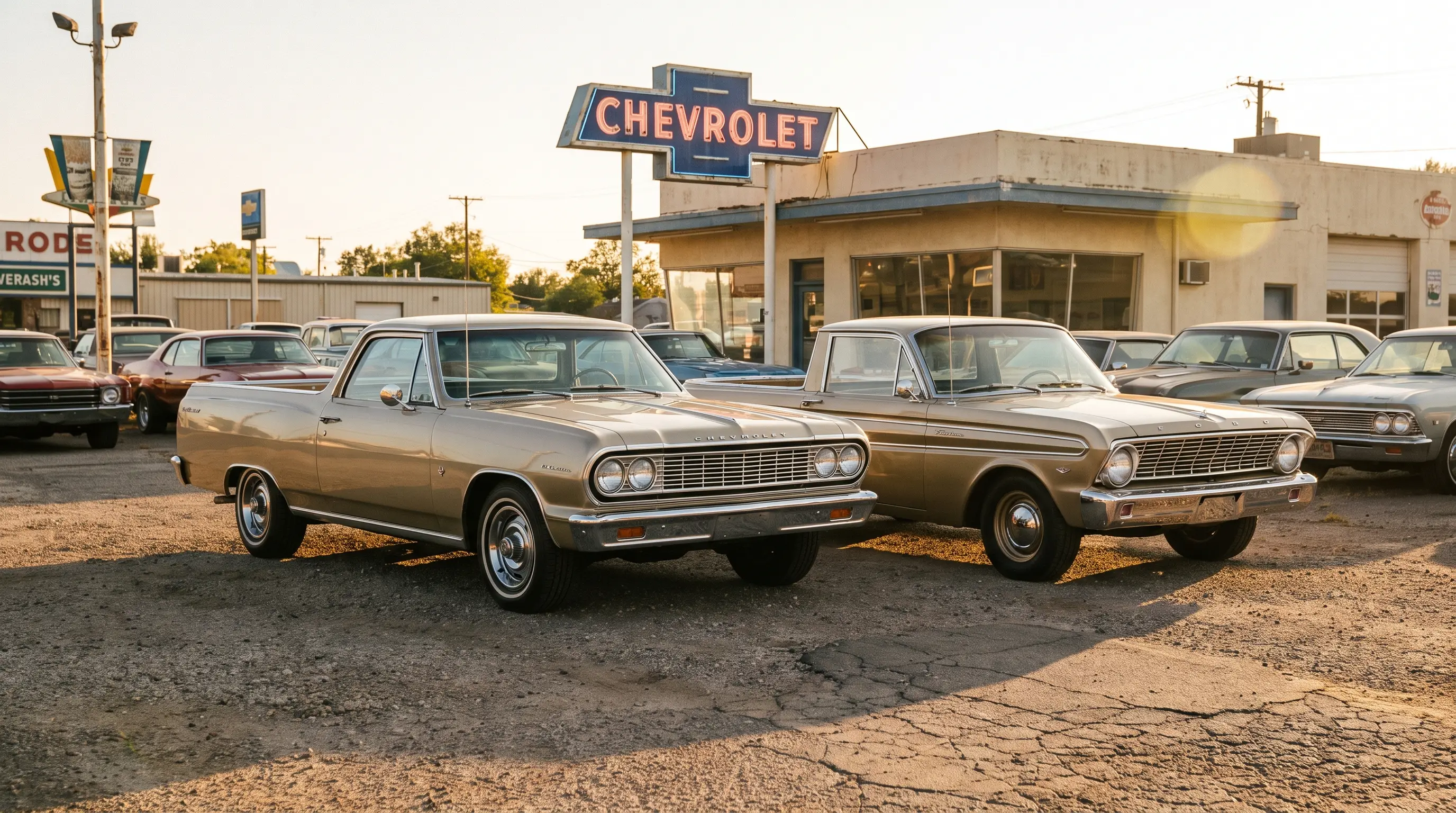
Four years is a long time to sit out a segment you helped create, and that is exactly the position Chevrolet found itself in when it brought the El Camino back for 1964. Ford's Falcon-based Ranchero had spent the intervening years selling steadily and unopposed, while Chevrolet's original full-size answer had been discontinued after just two model years. The 1964 restart was Chevrolet's chance to correct that mistake, and the documentation from this relaunch shows a company that had clearly done its homework.
The platform correction that mattered most
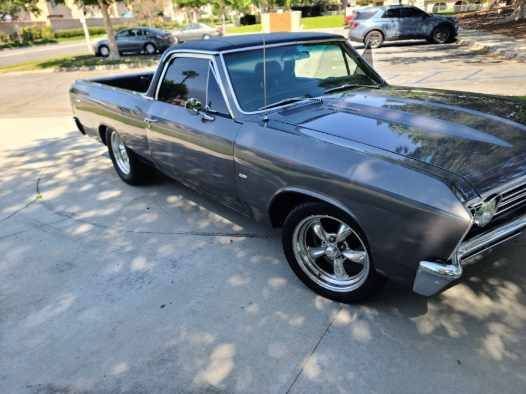
Chevrolet's most consequential decision for 1964 was abandoning the full-size platform entirely in favor of the newly introduced Chevelle chassis. This was not a cosmetic change. The Chevelle-based El Camino was smaller, lighter, and considerably more efficient than its full-size predecessor, bringing it much closer in concept to what Ford had already proven worked with the Falcon-based Ranchero. Factory records from the period show the El Camino sharing body stampings, suspension components, and drivetrain options directly with the Chevelle sedan and wagon lines, a level of parts commonality the original 1959-60 El Camino never had with any single Chevrolet model.
That shared parts strategy reduced Chevrolet's tooling costs for the relaunch significantly compared to building a dedicated platform from scratch, which likely made the 1964 return a considerably lower-risk proposition for company leadership than the original 1959 launch had been. Where the first El Camino required its own body stampings on the full-size chassis, the Chevelle-based version could lean on tooling and engineering already committed to a high-volume sedan line.
Matching Ford's own strategy, four years late
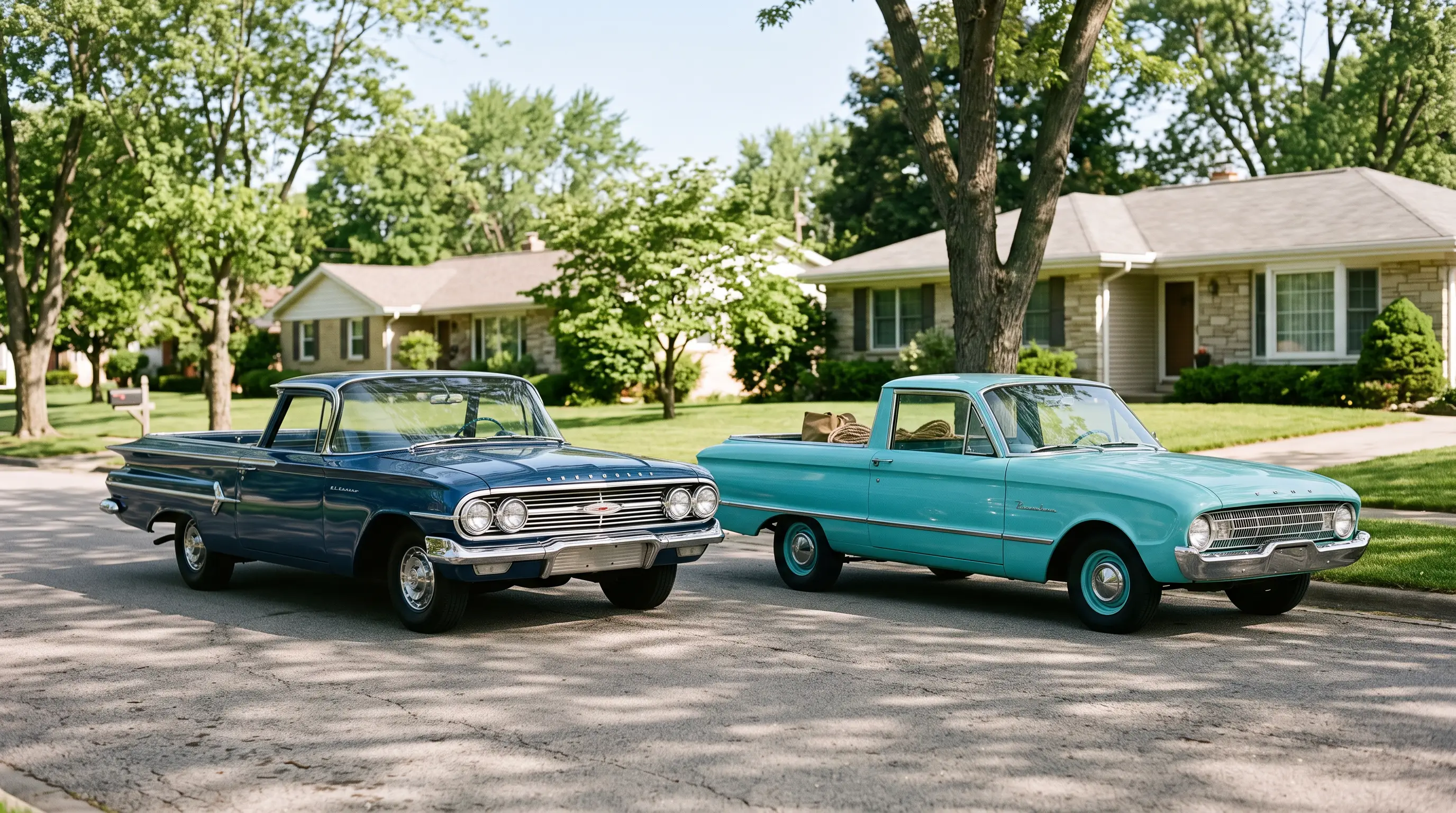
The irony documented in period comparisons is that Chevrolet's 1964 solution essentially mirrored Ford's 1960 Falcon-based Ranchero strategy, just applied four years later and to a slightly larger platform. Both companies had arrived, eventually, at the same conclusion: the car-truck concept worked best on a smaller, car-based platform rather than a full-size chassis. Ford simply reached that conclusion first and had four uncontested years to build brand loyalty around it before Chevrolet's Chevelle-based answer arrived to compete directly again.
Those four years were not wasted from Ford's perspective. Buyers who had purchased a Falcon-based Ranchero between 1960 and 1963 had already built brand loyalty around the nameplate, and Ford's continuous presence in the segment meant the Ranchero name never disappeared from cross-shopping conversations the way the El Camino name temporarily did. Chevrolet's 1964 restart had to win back a segment identity, not just launch a new product into an open field.
What the restart actually delivered on day one
The 1964 El Camino launched with a range of six-cylinder and V8 engine options carried directly from the Chevelle lineup, giving buyers immediate access to more powerful engine choices than the original El Camino had offered at its own debut. This mattered competitively, since it meant the restarted El Camino could position itself against the Ranchero not just on price and efficiency, but on performance potential as well, a dimension the segment would come to lean on heavily as the muscle car era approached later in the decade.
Trim levels followed a similarly Chevelle-derived structure, letting Chevrolet offer the El Camino across a range of price points rather than as a single, undifferentiated model. This flexibility gave dealers a genuine answer to whatever specific configuration a Ranchero shopper might be comparing against, rather than forcing every El Camino buyer into one fixed specification.
"The 1964 relaunch reads, in the factory paperwork, like a company that studied exactly why its first attempt failed and built the opposite of every mistake. That is rarer in Detroit than people assume."
- Tom Ramirez
Reading the sales figures against Ford's response
Ford did not sit still once Chevrolet's Chevelle-based El Camino reentered the market. Ranchero sales through the mid-1960s show Ford actively defending its position with updated trim packages and, later in the decade, its own performance-oriented variants designed to answer the same muscle car momentum the El Camino was chasing. The competitive pressure that had been effectively absent for four years returned immediately, and buyers benefited from the renewed rivalry through more frequent updates and sharper pricing from both manufacturers than either company had bothered with during Chevrolet's absence from the segment.
Period sales data is not always precisely comparable across sources, since Chevrolet and Ford reported figures under differing conventions and year-by-year Ranchero breakdowns for the mid-1960s are not consistently published even in specialist references. What is available generally supports the conclusion that the restarted El Camino recaptured meaningful market share within its first two or three seasons back, rather than needing a slow multi-year climb. That relatively quick recovery is further evidence that the Chevelle-based platform decision addressed buyers' actual objections to the original full-size car, rather than simply refreshing the same basic proposition and hoping for a different result.
Why the restart succeeded where the original did not
The clearest evidence that Chevrolet got the 1964 restart right is simply how long the resulting car lasted. Where the original El Camino ran for two model years, the Chevelle-based version continued through generation after generation, eventually surviving the Chevelle name itself when Chevrolet moved the El Camino onto the downsized G-body platform after 1977, and kept it in production all the way through 1987. A restart that corrects the fundamental platform mistake behind its predecessor's failure does not typically need a second correction, and the El Camino's subsequent quarter-century of production is the clearest confirmation that 1964 got the fundamentals right.
For readers who want the earlier chapters of this back-and-forth, including Ford's original 1957 launch and Chevrolet's flawed full-size answer, where this started lays out that full sequence before this piece's focus on the correction itself. And for anyone whose research has turned into an actual shopping trip, classic El Camino for sale listings today draw heavily from this 1964 restart generation, since it represents the version of the car that Chevrolet actually got to build for decades rather than for two brief, forgotten model years.
Buyers shopping this generation today benefit from the same parts commonality that helped the 1964 restart succeed in the first place. Because so much of the El Camino's mechanical identity traces back to Chevelle tooling, engine casting numbers, trim tags, and drivetrain components can be verified against the same documentation collectors already use for Chevelle sedans, making authenticity checks considerably more straightforward than they would be for a car built on a standalone platform found nowhere else in the Chevrolet lineup. That documentation advantage, more than any single spec, is why this generation remains the easiest entry point into El Camino ownership for a buyer who wants a verifiable history rather than a story taken on faith.
Dealer training materials from the 1964 launch season, where they survive in collector hands today, reveal how carefully Chevrolet had studied the segment's actual objections before the restart. Sales staff were coached to emphasize the Chevelle-based car's lower price point relative to the discontinued full-size model, its improved fuel economy, and its genuine passenger car ride quality, rather than leaning on the styling spectacle that had defined the 1959 pitch. That shift in emphasis, from spectacle to substance, tracks closely with the same lesson Ford had already learned four years earlier with its own Falcon-based pivot, and it is a large part of why the 1964 restart avoided repeating its predecessor's short production life.