
Settling who came first between the El Camino and the Ranchero is not actually complicated, though enthusiast arguments at car shows often make it sound like a genuine mystery. Ford's Ranchero reached showrooms for the 1957 model year. Chevrolet's El Camino followed two years later, arriving for 1959 as a direct answer to a segment Ford had already staked out. The more interesting question is not who came first but why Chevrolet waited, and what that delay actually cost the company in the segment's early years.
Car Features
7 min read
Who Came First: Ranchero, El Camino and the Chase
Ford's Ranchero beat the El Camino to market by two years, and Chevrolet's first answer landed on the wrong platform. Here is the real sequence of events.
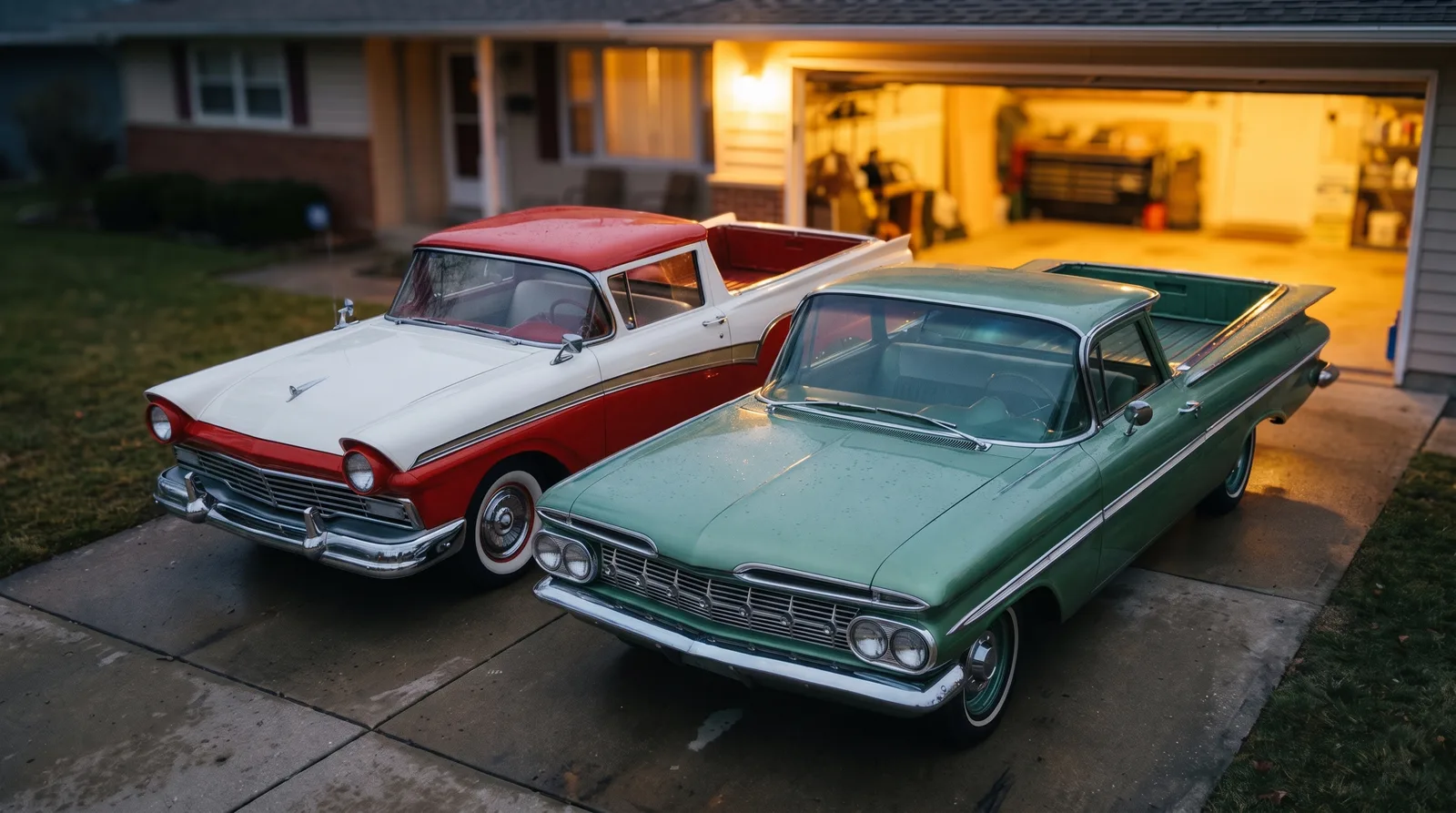
Ford's head start and why it worked
Ford introduced the Ranchero in 1957 by combining the full-size Fairlane's body and chassis with an open cargo bed grafted where the trunk would normally sit. The pitch was straightforward: buyers who wanted the ride and interior comfort of a car but occasionally needed to haul something larger than a trunk could hold now had a factory-built option instead of having to modify a sedan themselves. Ford's timing benefited from a genuine gap in the market. Full-size pickups of the era were utilitarian and comfort was an afterthought, so a car-based alternative with real cargo capacity had obvious appeal to suburban buyers and small tradesmen alike.
The early Ranchero sold well enough to prove the concept, and Ford kept refining it, moving the platform down to the compact Falcon chassis by 1960. That shift mattered enormously for the segment's future direction, since it established that the car-truck concept worked better on a smaller, more efficient platform than on a full-size chassis, a lesson Chevrolet would eventually absorb as well, just a few years later than Ford did.
Chevrolet's delayed but calculated answer
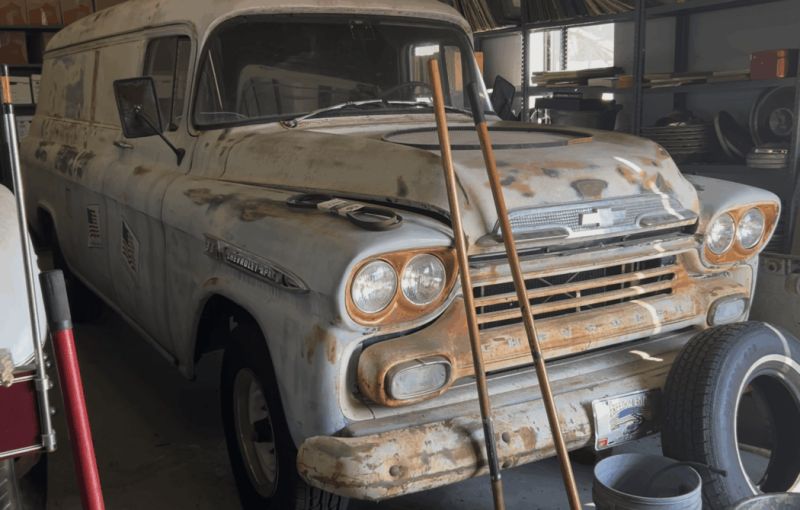
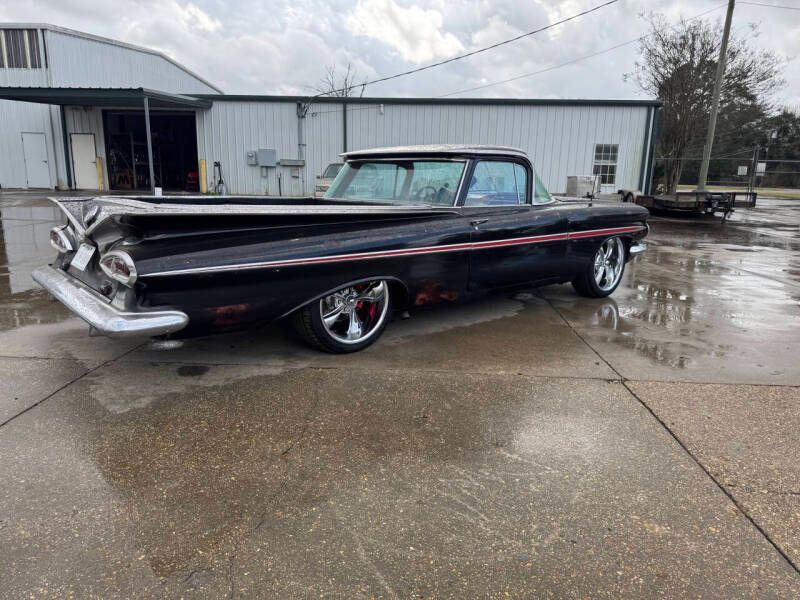
Chevrolet did not rush into the segment. The El Camino arrived for 1959, two full years after the Ranchero, built on the full-size Chevrolet Impala platform rather than anything compact. That delay let Chevrolet study how the Ranchero was actually being used and marketed before committing engineering resources to its own version, though the resulting 1959-60 El Camino still followed Ford's original full-size formula rather than leapfrogging straight to a smaller platform.
That decision proved costly almost immediately. The full-size El Camino sold reasonably in its debut year but tapered quickly, and Chevrolet discontinued it after just two model years, while Ford's Ranchero, freshly moved onto the Falcon platform, kept selling steadily. Chevrolet had come second to market and then compounded the disadvantage by following the format Ford was already abandoning.
The real answer came five years later
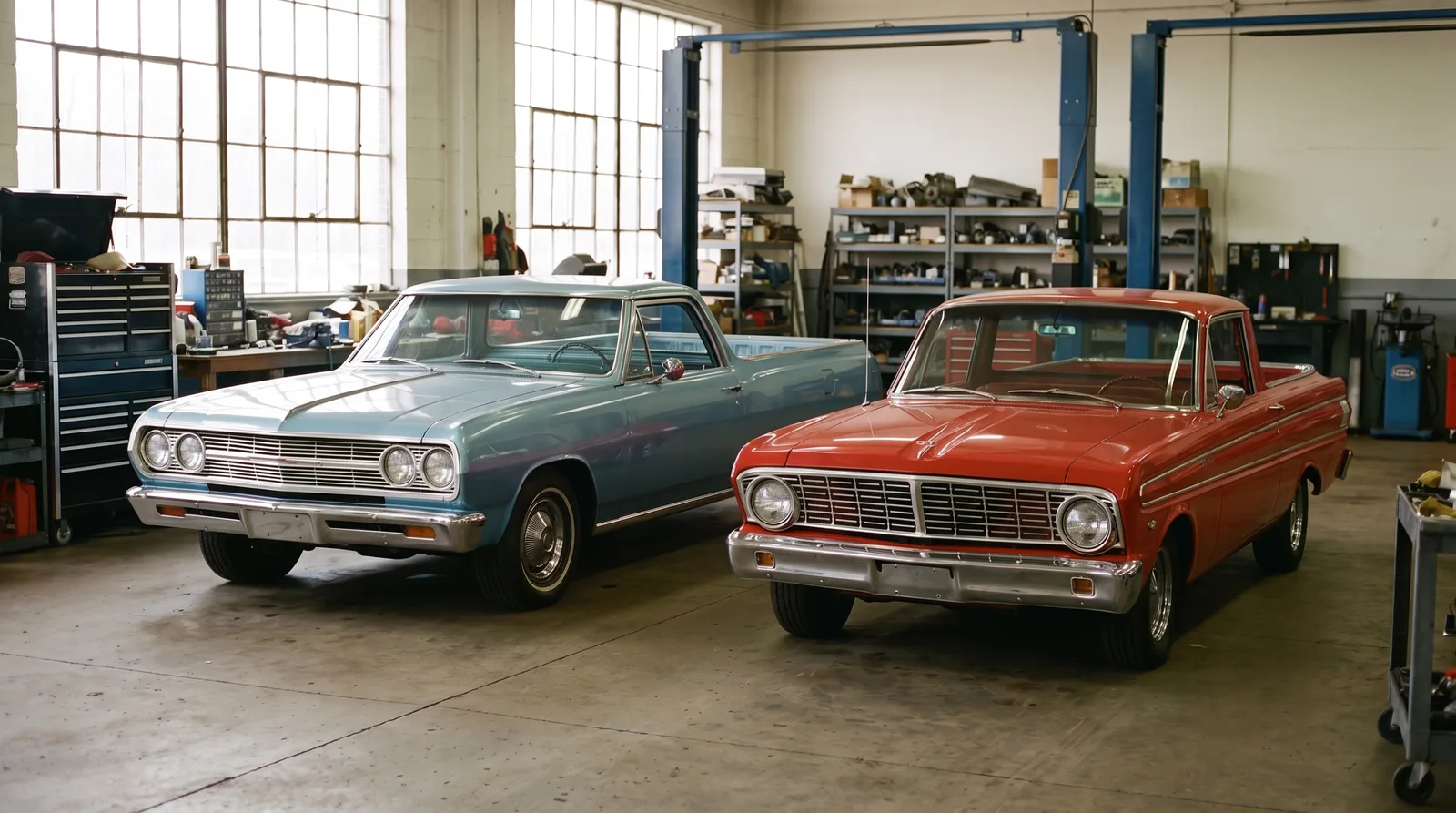
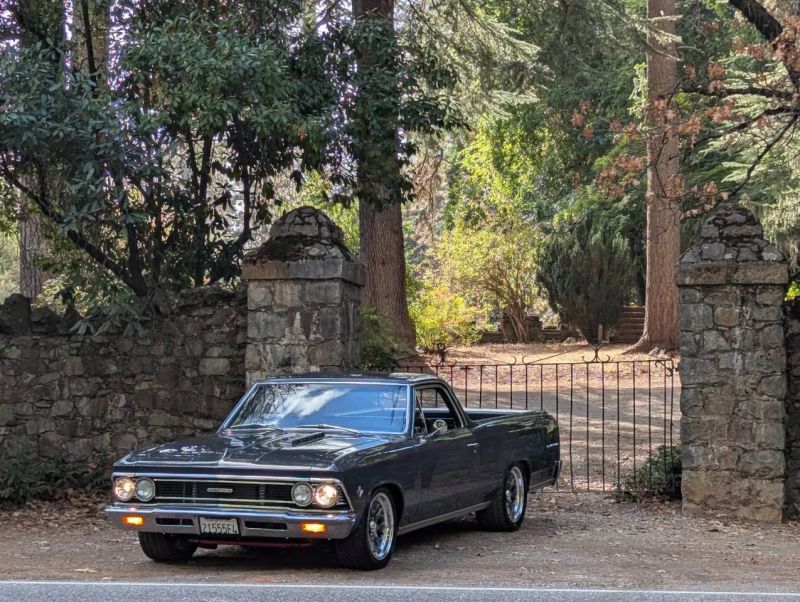
Chevrolet's genuine response to Ford's platform lesson did not arrive until 1964, when the El Camino returned built on the new Chevelle chassis rather than the discontinued full-size car. That gap, essentially half a decade during which Chevrolet had no answer to the Ranchero at all, meant Ford effectively owned the car-truck segment uncontested through the early 1960s. When the Chevelle-based El Camino did return, it matched the Ranchero's compact-platform logic almost exactly, just years after Ford had already proven the formula worked.
This sequence, Ford first in 1957, Chevrolet's flawed full-size answer in 1959, Chevrolet's discontinuation in 1960, and finally Chevrolet's corrected relaunch in 1964, explains why enthusiast debates about who came first tend to get more heated than the facts actually warrant. Ford was first by any reasonable measure, and Chevrolet's initial answer was arguably a step behind Ford's own platform strategy rather than an even match.
"Being second to market is not a disqualification. Being second and copying the wrong version of your rival's homework, as Chevrolet briefly did in 1959, is a different problem entirely."
- Sarah Whitfield
How the two companies read each other's moves
Detroit in the late 1950s was a small enough world that neither Ford nor Chevrolet could make a move like the Ranchero without the other noticing immediately, and internal product planning documents from the period, to the extent they survive and have been discussed by historians, suggest Chevrolet was tracking Ranchero sales figures closely before greenlighting its own full-size answer. What is less clear, and genuinely disputed among researchers, is whether Chevrolet's engineering team had already committed to the full-size Impala platform before Ford's Falcon-based Ranchero appeared in 1960, or whether the decision was locked in independently of Ford's next move. Either way, the outcome was the same: Chevrolet's first answer arrived on the wrong platform at almost the exact moment the segment's real future was becoming clear.
This kind of near-miss timing is common in Detroit's competitive history, where two manufacturers chasing the same buyer often end up a model cycle apart from matching each other's best idea. The El Camino and Ranchero rivalry is a particularly clean example because the sequence of platform decisions, full-size first from Ford, full-size answer from Chevrolet, compact pivot from Ford, and compact-adjacent correction from Chevrolet years later, is unusually well documented compared to many other segment battles from the same decade.
Why the sequence still matters to collectors
For collectors researching either nameplate, the sequence of events shapes how rare and how historically significant each early model year actually is. The 1957-59 Ranchero represents genuine segment pioneering with no direct domestic competitor yet on the market. The 1959-60 El Camino, by contrast, represents Chevrolet's flawed first attempt, discontinued quickly enough that surviving examples are scarcer than the sales figures alone would suggest, giving these early cars a specific kind of historical weight distinct from the more common Chevelle-based cars that followed from 1964 onward.
Readers who want the fuller picture, including how the 1964 relaunch corrected Chevrolet's original platform mistake and set up decades of subsequent production, can find our complete history covering the entire arc from 1959 through the model's final year. For anyone motivated to shop rather than just read, the practical next step is straightforward: find a classic El Camino from whichever era of this rivalry interests you most, keeping in mind that the earliest full-size cars carry a different kind of scarcity than the Chevelle-based generation that eventually won the argument by simply outlasting its rival.
Pricing at auction reflects this distinction more consistently than casual shoppers expect. A documented 1959 or 1960 El Camino, given how few survived Chevrolet's brief two-year commitment to the format, often draws stronger interest from serious collectors than its raw production numbers would predict, precisely because it represents the company's first, imperfect answer to a rivalry that would not truly resolve in Chevrolet's favor for another two decades. That scarcity premium is unlikely to shrink, since no more original full-size El Caminos are being made, and every year narrows the pool of surviving cars a little further, which is precisely why documentation and a verifiable ownership chain matter so much more on these early cars than on later, more common model years.
Enthusiast forums tend to flatten this sequence into a single sentence, usually something like "Ford did it first, Chevy copied it," which is technically true but skips over the more interesting part of the story: Chevrolet's first attempt was not a copy of the Ranchero that ultimately succeeded, it was a copy of the earlier full-size Ranchero that Ford itself had already moved past. That distinction, subtle as it sounds, is the entire reason the sequence of events matters to anyone trying to understand why one company's second attempt (Ford's Falcon-based Ranchero) so clearly outperformed the other company's first attempt (Chevrolet's Impala-based El Camino) in the exact same market.
Sources and notes
- Ford Ranchero - Wikipedia
- Chevrolet El Camino - Wikipedia
- Chevrolet Introduces the El Camino, 1959 - Mac's Motor City Garage
- 1957-1979 Ford Ranchero History - Classic Industries
- 1959 Chevrolet El Camino Base - Hagerty Valuation Tools
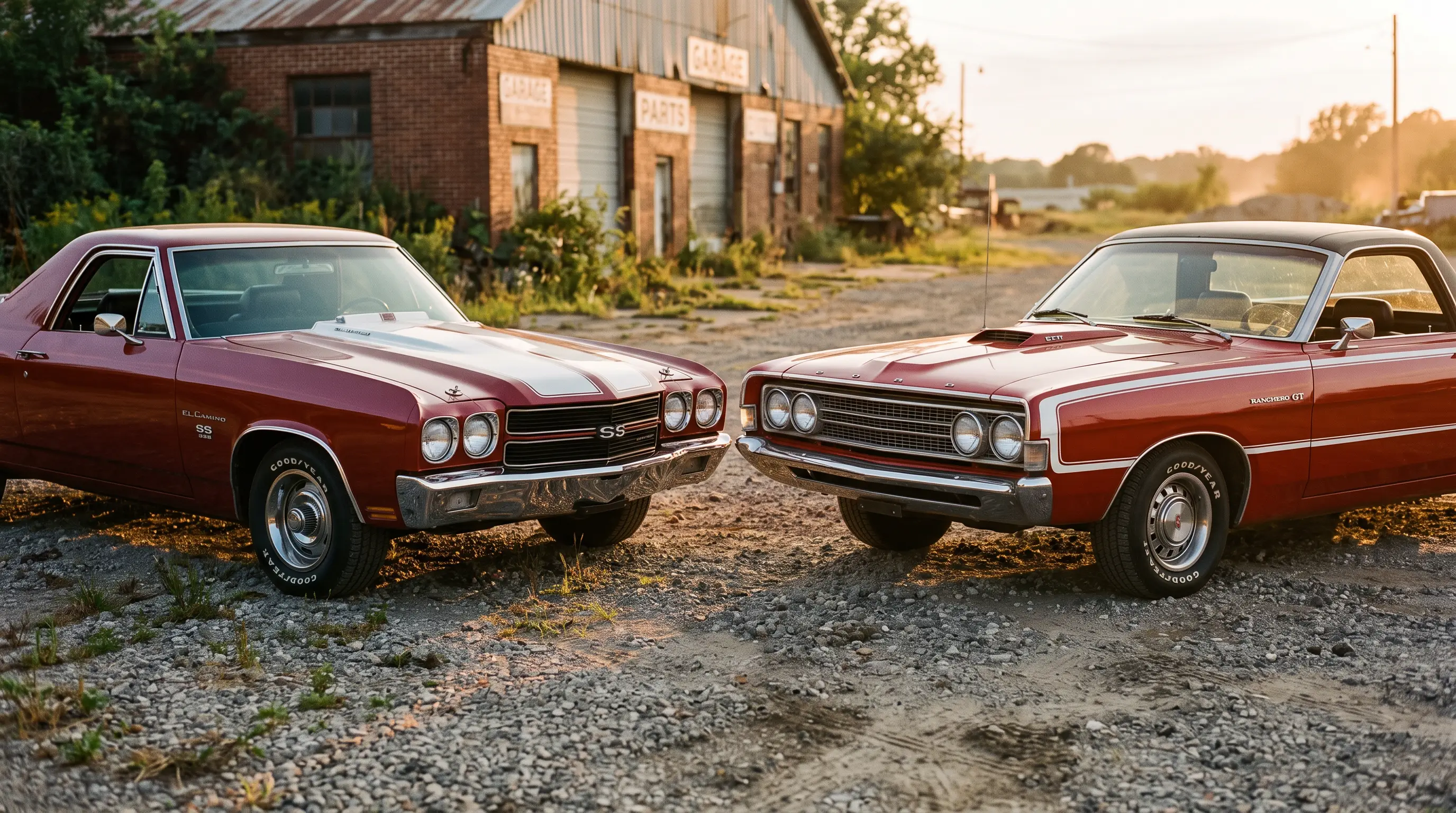
That opening skirmish set up a rivalry that ran for decades, the whole of El Camino versus Ford Ranchero.
Related Reading
Have a
Chevrolet El Camino
for Sale?
Reach thousands of serious classic car collectors across the US.
Sell It Here →
Selling a classic? Here's how: compare the places to sell classic cars
Are You a Classic Car Dealer?
List your full inventory and connect with targeted classic car buyers.
Join as a Dealer →

About the author
Sarah Whitfield
Third-generation classic car collector specializing in pre-war American and European coachbuilt automobiles. Researcher and concours enthusiast.
A '57 Ranchero sat on a cattle outfit near one of the units I patrolled, mostly primer and patina by the time I knew it. The rancher's wife drove it for feed and mail and only ever called it "the car." Never saw anybody wash it. It never looked like it needed it.