
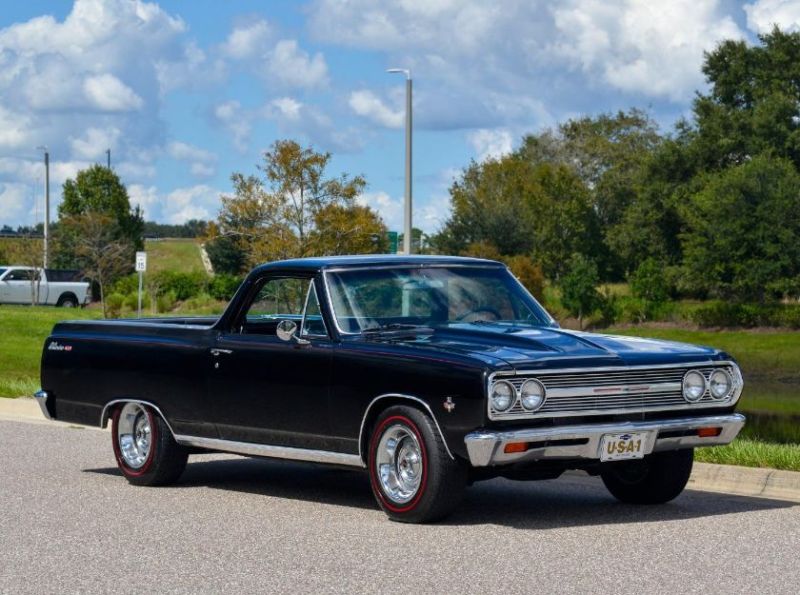
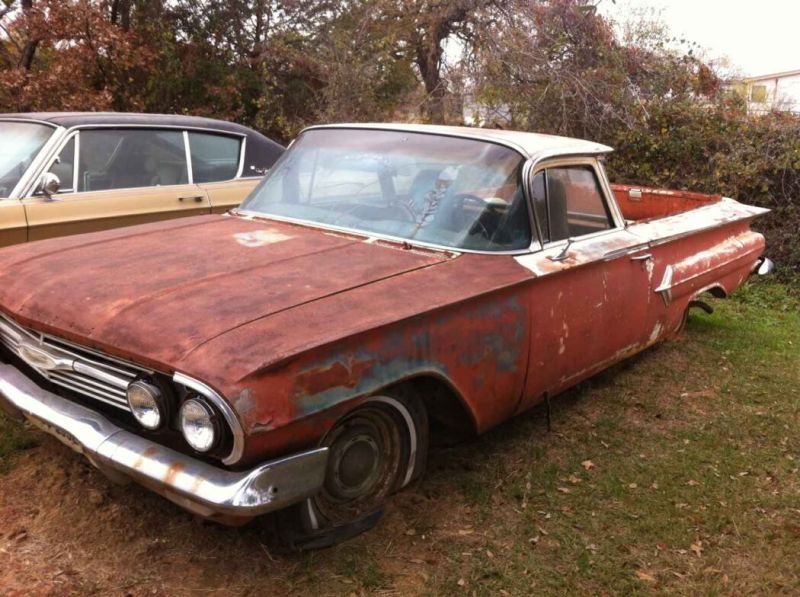
A camera loves a certain kind of silhouette, and the El Camino has one of those silhouettes. Low nose, long hood, a bed where a trunk should be, and a shape that reads instantly on screen even from a distance. Directors have reached for that shape again and again over the decades, in music videos, in low-budget cruising films, in the closing shots of prestige television, while the Ranchero, built for the exact same purpose and driven by many of the same kinds of people in the same decades, has spent most of its screen time as scenery rather than as a character in its own right. This is the story of why one cartruck kept getting cast and the other kept getting overlooked.
Car Features
6 min read
El Camino and Ranchero: The Cartrucks of Hollywood
From Breaking Bad's closing shot to decades of background film work, here is why the El Camino became a screen icon while the Ranchero stayed scenery.
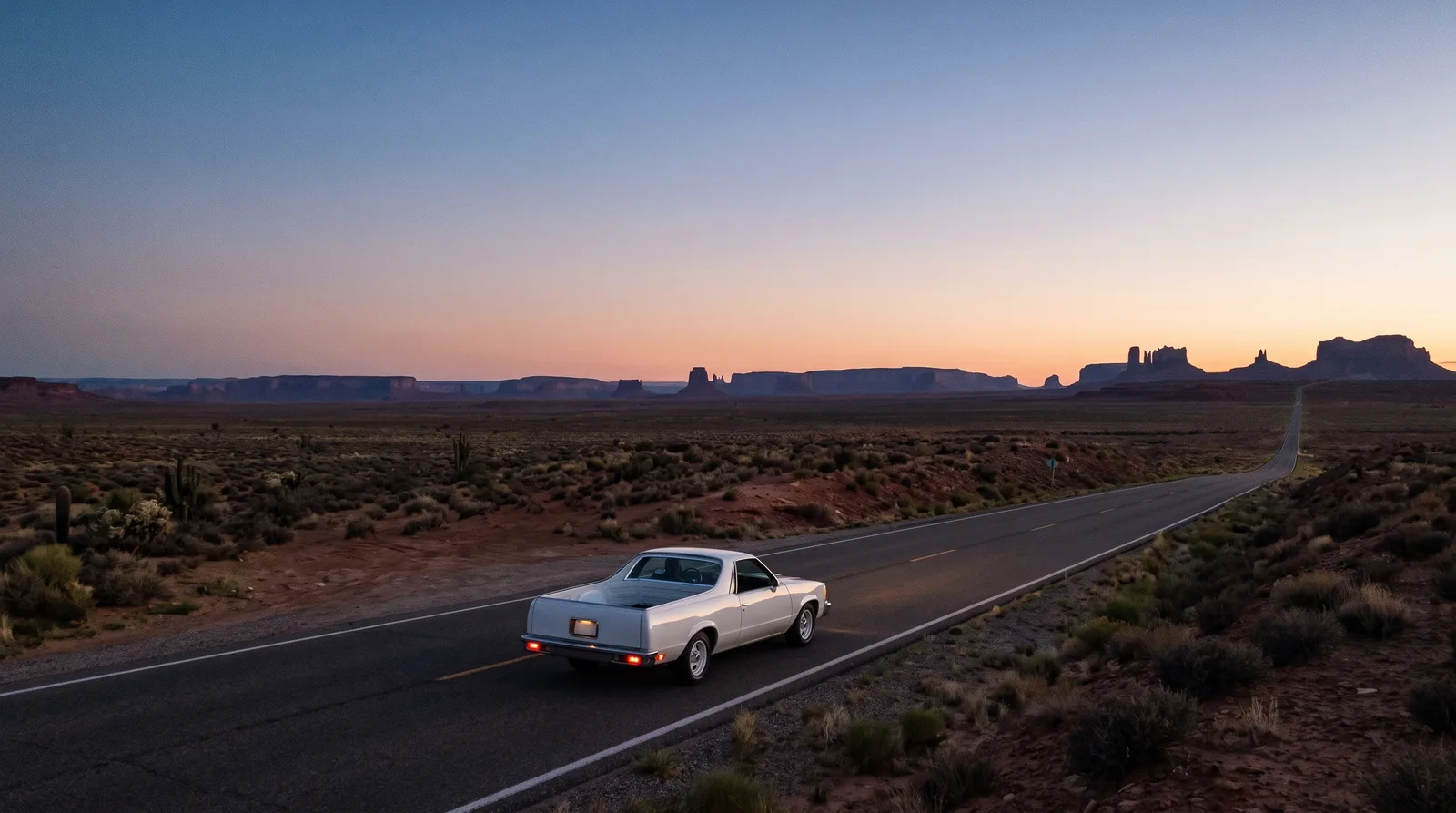
The role that changed everything
No single appearance did more for the El Camino's screen reputation than Breaking Bad. The white 1982 El Camino driven by Jesse Pinkman in the show's final stretch became such a central image that when the creators built a feature film around the character's escape, they titled it simply El Camino. That decision alone put the nameplate in front of an audience that had never set foot at a car show and would never otherwise have learned the name. Our el camino vs ranchero retrospective covers the full production history behind that specific model if you want the mechanical background behind the car that ended up famous.
Beyond that single show, the El Camino has turned up as a supporting presence across music videos, low and slow car culture documentaries, and films exploring Southern California cruising culture, often customized with hydraulics or a lowered stance that signals a specific regional identity the moment it rolls into frame. Casting directors reach for that visual shorthand because audiences already recognize it, which becomes a self-reinforcing cycle. The more the car appears, the more recognizable it becomes, and the more recognizable it becomes, the more likely the next production is to reach for it again.
Where the Ranchero actually shows up
The Ranchero has not been absent from the screen entirely, it has simply been cast in smaller, quieter parts. Period films and television set in the 1960s and 1970s use it, along with plenty of other period-correct vehicles, to ground a scene in its decade without drawing attention to the car itself. That is a legitimate kind of screen work, the automotive equivalent of a reliable character actor who never gets top billing but shows up in dozens of productions doing solid, unglamorous work.
The difference is that nobody has built a title around the Ranchero, and no single scene has attached itself permanently to the culture the way the closing shot of Breaking Bad did for its rival. Ford's cartruck did its job as a piece of production design, and production design, by definition, is meant to be believed rather than noticed.
What a prop department actually looks for
I spoke once with a set decorator who explained the calculus in plainer terms than I expected. A production needs a vehicle that reads correctly from thirty feet away on a monitor, survives a shooting schedule without constant mechanical attention, and does not require the audience to already know anything about cars to understand what they are looking at. The El Camino checks every one of those boxes cleanly, especially in its later, boxier years, when parts and running examples were easier for a production to source on a modest budget. A shape that reads as instantly American, instantly working-class, instantly of a specific decade is worth more to a director than a shape that requires a caption.
The Ranchero meets those same practical requirements just as well mechanically, but it lacks the same instant legibility to a mass audience. Ask most people to picture a Ranchero and you will get a blank look. Ask them to picture an El Camino and, thanks to decades of accumulated exposure, plenty of people who have never set foot at a car show can conjure something close to the right image. That gap in public recognition, built slowly across music, lowrider culture, and eventually a hit television show, is exactly the kind of shorthand a production reaches for when it needs an audience to understand a scene without a single line of dialogue explaining it.
Why the camera keeps choosing one over the other
Part of this comes down to timing rather than merit. The El Camino stayed in production through 1987, which meant later, boxier, distinctively 1980s examples were still relatively common and affordable when television and film productions set in that decade needed period-correct vehicles for shows that themselves aired decades later. The Ranchero disappeared from showrooms in 1979, giving it a narrower window of production-era vehicles available to set decorators working on stories from the years right after.
Part of it is also pure visual character. The El Camino's later body styles, especially the boxy 1978 to 1987 generation, have a distinctive enough profile that audiences register it instantly even in a blurry background shot. Directors do not need to linger on it, the shape alone communicates the era and the attitude. That kind of visual efficiency is exactly what makes a prop department reach for the same vehicle again on the next production.
"I have talked to more than one person whose entire introduction to classic cars started with recognizing an El Camino from a screen before they ever saw one parked at a curb. That is a strange kind of fame for a work truck to earn."
- Nora Beckett
What this means for owners today
If you own an El Camino, you own a piece of visual language that pop culture keeps returning to, whether you asked for that association or not. Strangers will comment, ask about the show, want a photo. If you own a Ranchero, you own something quieter, a car that gets to exist on its own terms without a television franchise attached to its reputation, and plenty of owners genuinely prefer that anonymity. Neither position is better, they are just different relationships with the same basic idea, a car up front and a bed out back, and both relationships are worth respecting on their own terms rather than ranking one above the other simply because a camera happened to find it first. If the screen legend has you curious about owning the real thing, you can look at El Caminos for sale now and see how the actual car compares to the version you have watched on a screen.
Sources and notes
Related Reading

About the author
Nora Beckett
Automotive features writer and photographer who tells the human stories behind the cars, from show fields to cross-country road trips.
Related Listings - Chevrolet El Camino




Comments
Be the first to comment on this article.