Somewhere in America there is a guy loading a dirt bike into the bed of a car that has whitewalls, a chrome bumper, and bucket seats. His neighbor drives a pickup. His brother-in-law drives a coupe. He drives both at once, and he would not have it any other way. That contradiction, hauler in the back and hardtop up front, is the whole reason the Chevrolet El Camino exists, and it is the reason people still argue about it at car shows sixty-odd years after the first one rolled out of the plant. The El Camino was never quite a truck and never quite a car. It was Chevrolet's answer to a question most buyers did not know they were asking.
The name means "the road" in Spanish, and that is fitting, because the El Camino spent almost three decades on American roads without ever settling on exactly what it wanted to be. It arrived, disappeared, came back, got muscle, lost it, got soft, got downsized, and finally bowed out in the late 1980s. Along the way it picked up a following that has nothing to do with practicality and everything to do with attitude. This is the story of how a strange idea became a genuine icon.
A 1959 answer to an Australian question
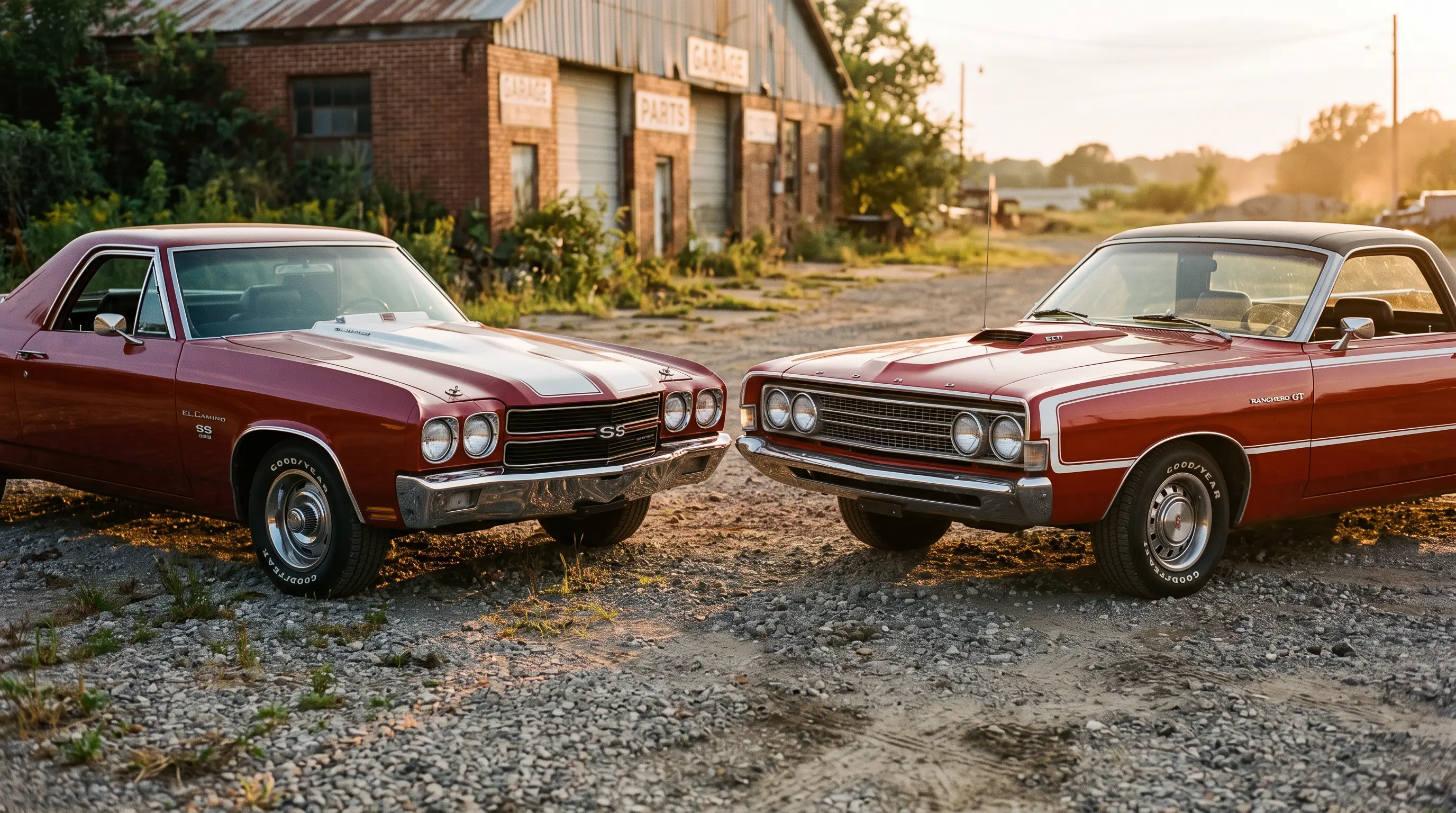
The coupe utility, a passenger car with a cargo bed grafted onto the back, was not a Chevrolet invention. Australians had been building them since the 1930s, when a farmer's wife supposedly wrote to Ford Australia asking for a vehicle she could take to church on Sunday and haul pigs in on Monday. Ford Australia obliged, and the "ute" was born. The idea drifted to North America slowly. Ford got there first in the United States with the Ranchero in 1957, a car-based pickup built on the compact Ranch Wagon body.
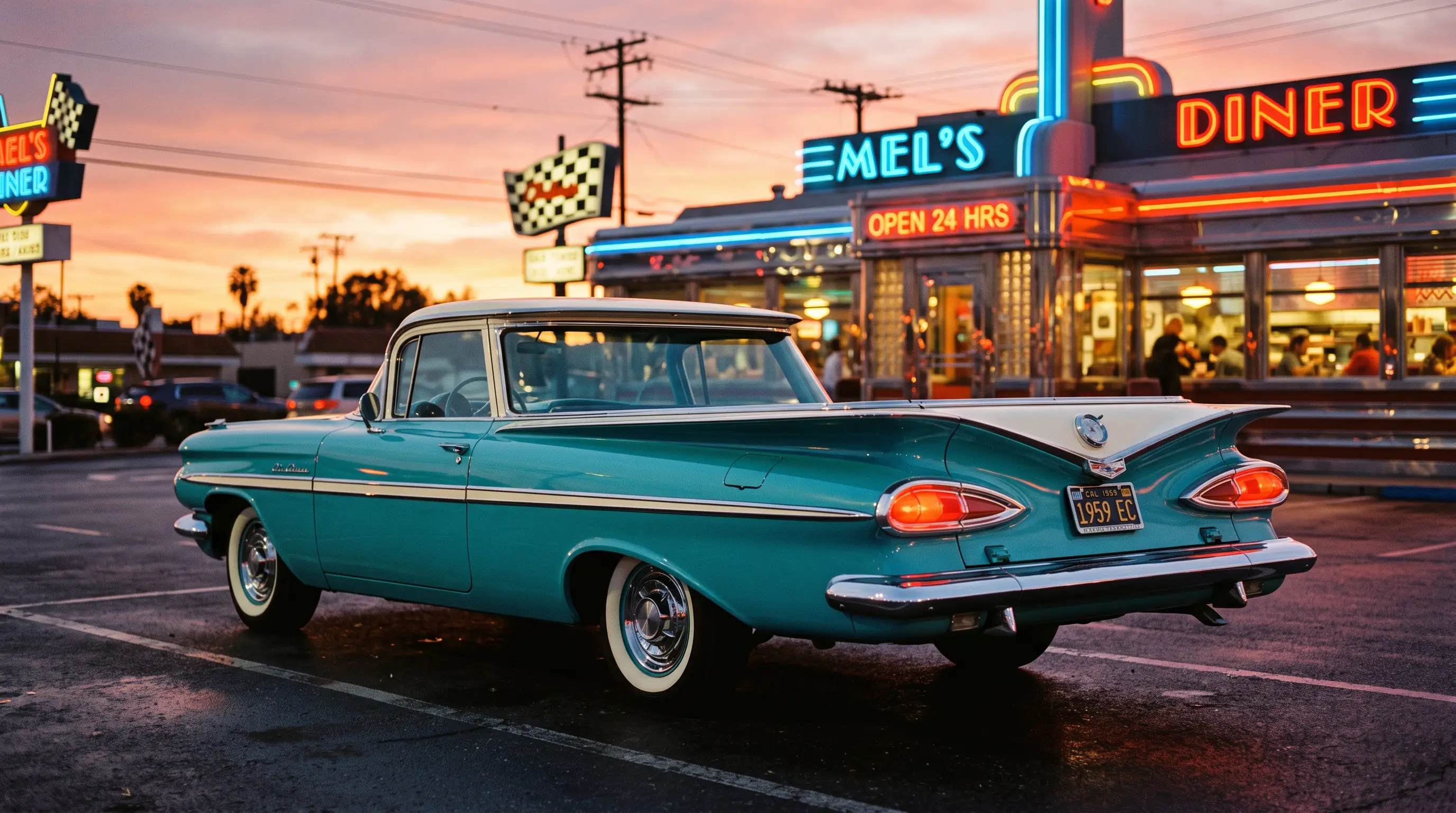
Chevrolet watched Ford sell Rancheros for two years and then answered in a way that was pure General Motors. Where the Ranchero was modest, the 1959 Chevrolet El Camino was enormous, finned, and dressed to the nines. It was built on the full-size Chevrolet platform, sharing its body with the Brookwood station wagon, which meant it carried the wildest styling year in Chevy history. The 1959 cars had those horizontal "batwing" tailfins and cat-eye taillights, and the El Camino wore all of it without apology. Here was a work vehicle with the profile of a spaceship.
That first El Camino could be ordered with everything from a mild six-cylinder up to the 348 cubic inch V8, and buyers could load it with the same options as any Impala. It was luxurious for a hauler and useful for a cruiser, which confused the market a little. Chevrolet sold a respectable number in 1959, then watched interest cool in 1960 when the styling calmed down. After the 1960 model year, Chevrolet pulled the plug. The El Camino was gone, and for a few years it looked like the experiment was over.
The gap years and the Chevelle rebirth
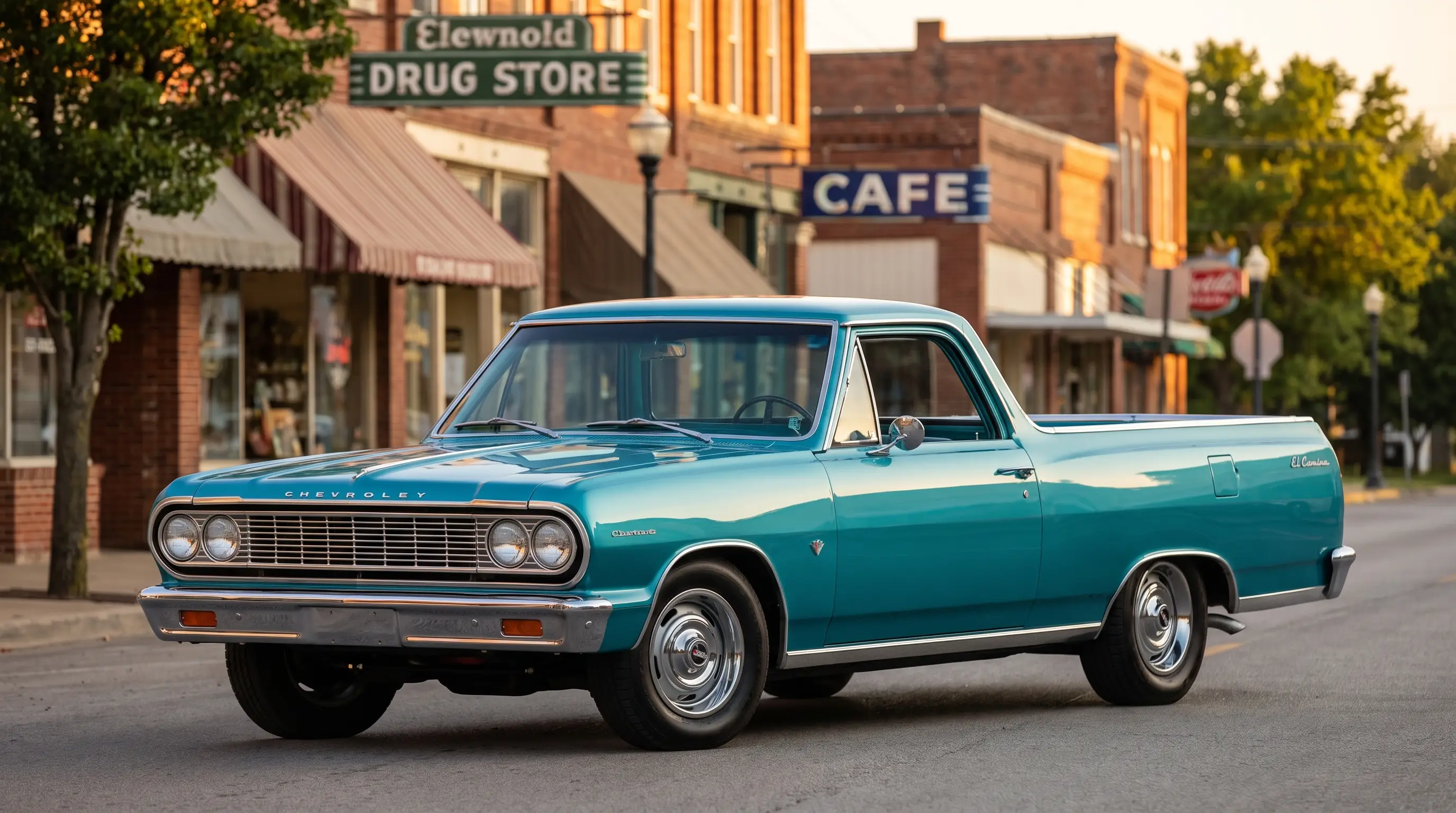
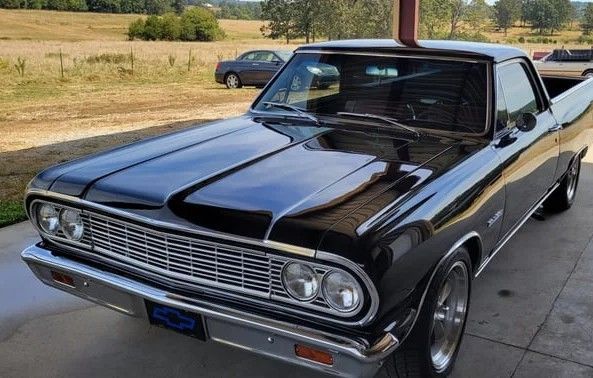
What brought the El Camino back was not nostalgia. It was a new car. In 1964 Chevrolet launched the Chevelle, a mid-size car on the new A-body platform, and the El Camino returned riding on it. This was the smartest thing that ever happened to the model. The full-size 1959 version had been too big and too expensive to be a sensible work vehicle. The Chevelle-based El Camino was right-sized. It looked like a car, hauled like a small truck, and cost like something in between.
From 1964 forward the El Camino's fortunes were tied to the Chevelle, and that turned out to be a gift. Every time the Chevelle got a restyle, a new engine, or a performance package, the El Camino inherited it. The mid-size platform gave the model a clean, handsome profile that aged far better than the finned original. By the late 1960s the El Camino had shed its novelty-item reputation and become a legitimate, good-looking part of the Chevrolet lineup. It was no longer the odd cousin. It was starting to look cool.
The timing helped enormously. The mid-1960s were the moment the American mid-size car came into its own, and buyers who once would have chosen a full-size sedan were discovering that a smaller, sharper car did everything they needed and drove better doing it. The El Camino rode that same wave. It slotted neatly between the family car and the pickup at a time when a lot of households wanted exactly one vehicle that could do a bit of both. Chevrolet dealers found it easy to sell, because the pitch wrote itself. You could take the kids to school, run to the lumberyard, and pull up to a nice restaurant without ever looking out of place. Very few vehicles could honestly make that claim, and none of them wore a bowtie.
The muscle years: SS396 and the big-block era
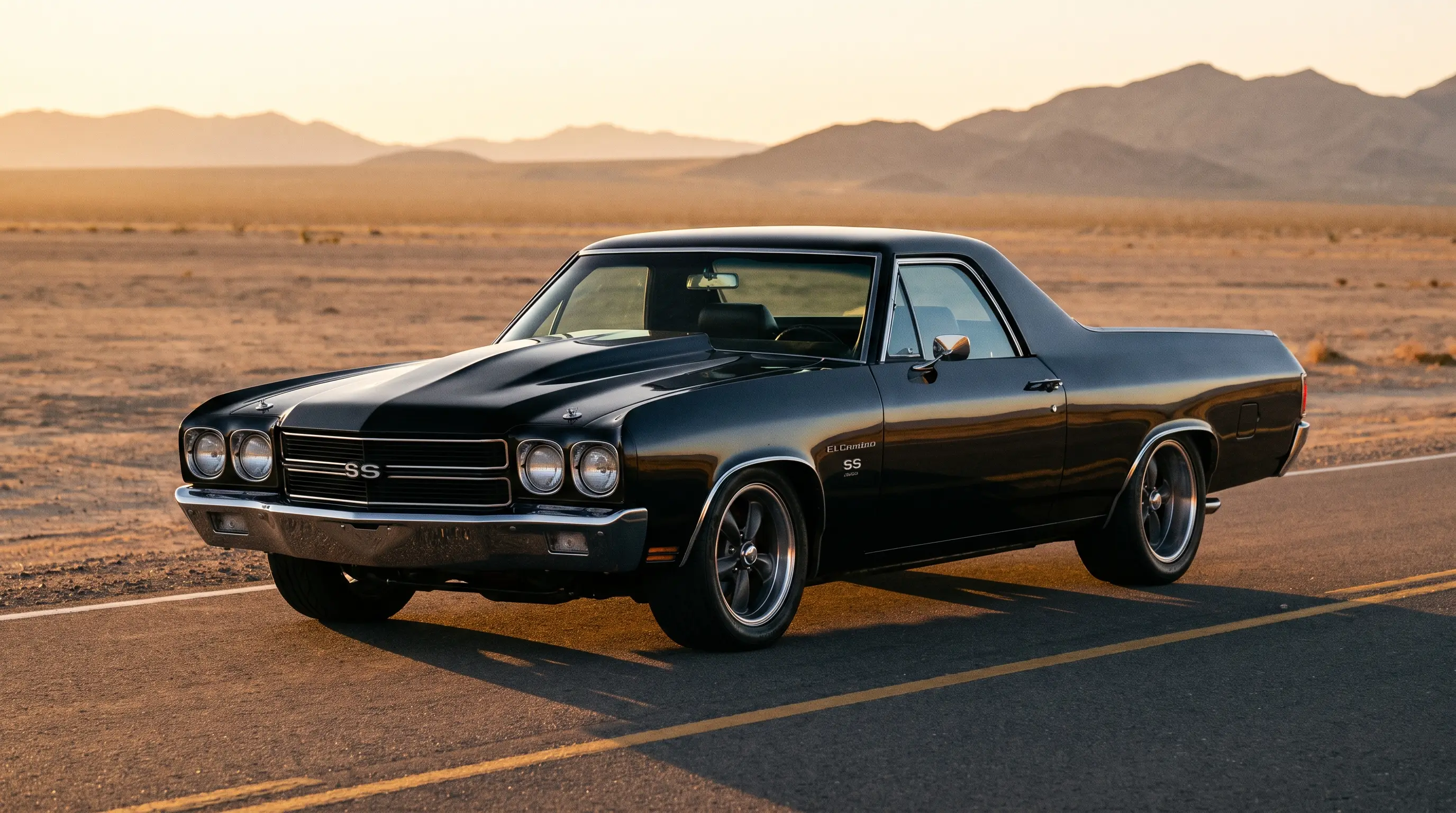
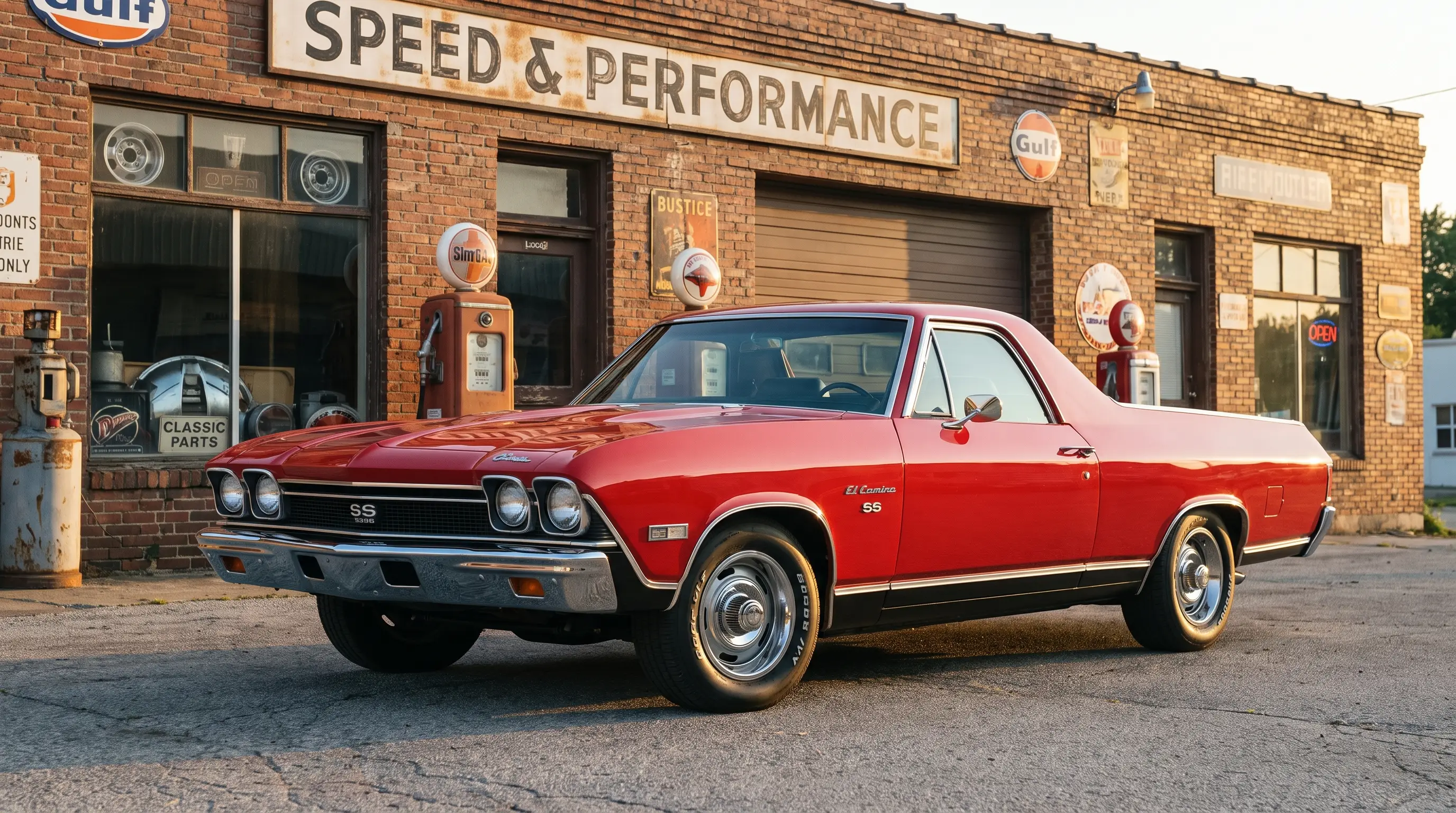
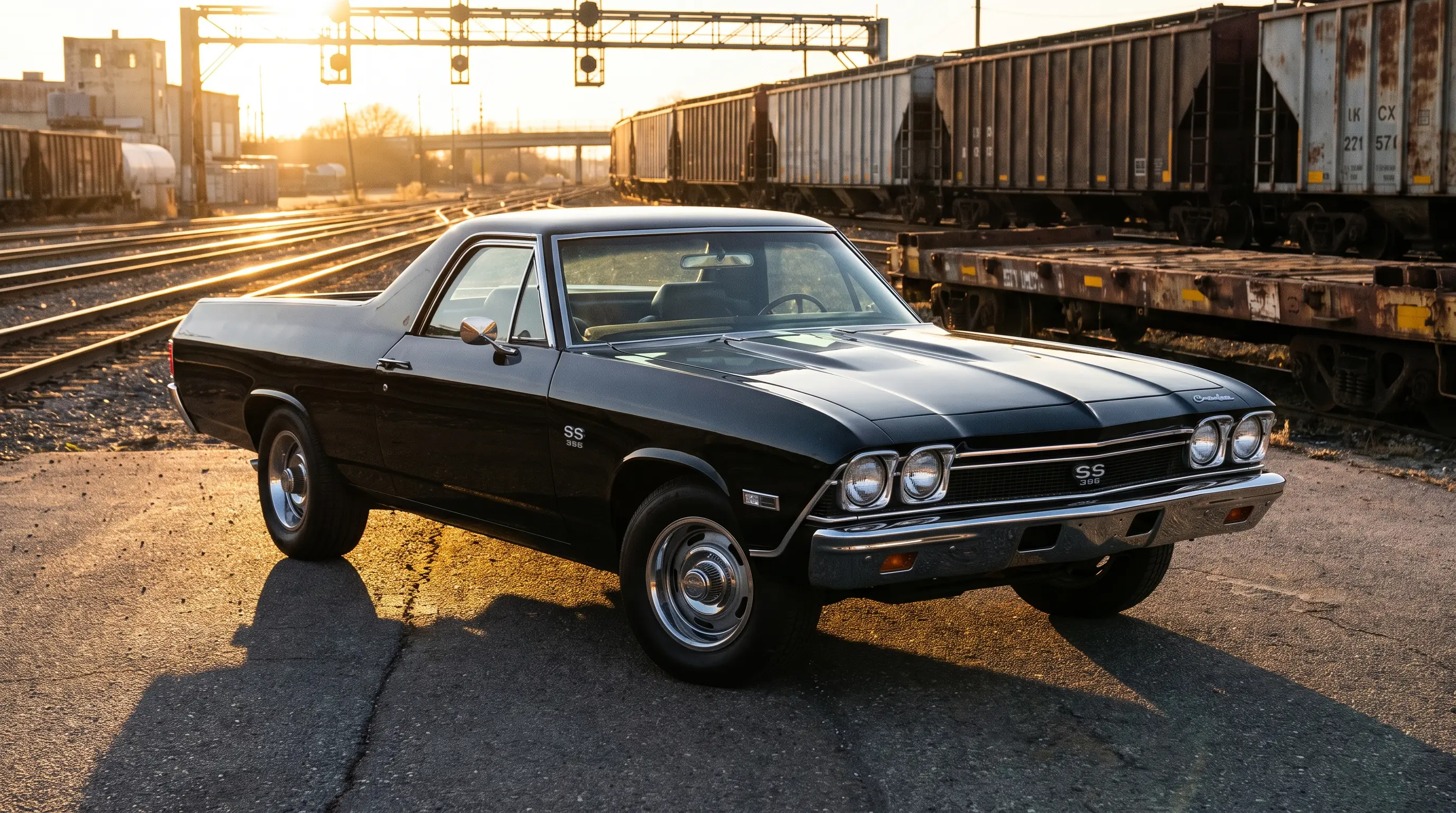
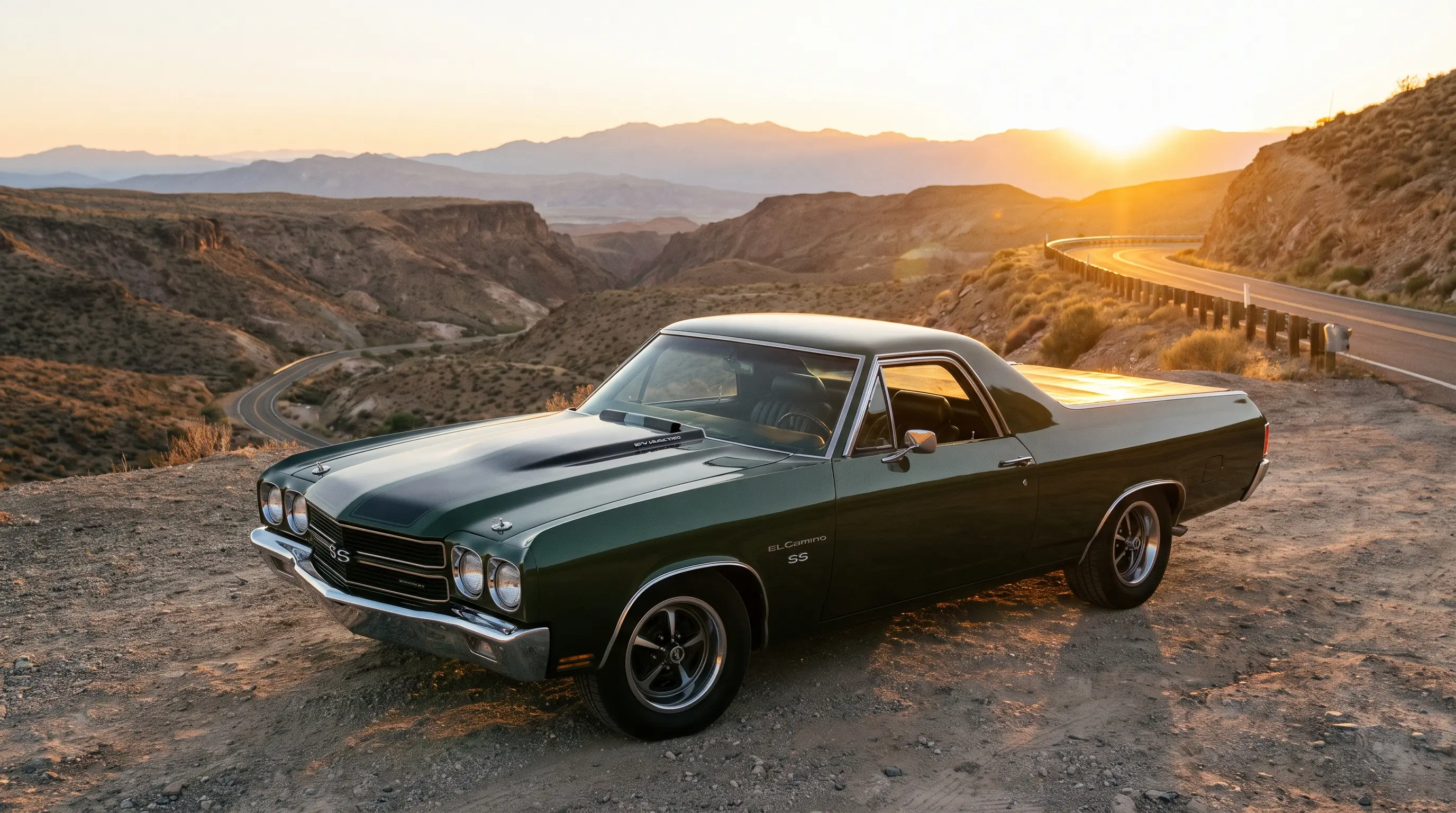
Here is where the El Camino stopped being interesting and became legendary. When the muscle car boom swept through Chevrolet in the late 1960s, the El Camino got dragged along for the ride, and it was the best thing that could have happened to it. In 1968 the Super Sport package arrived, and suddenly you could buy a pickup with a 396 cubic inch big-block V8 under the hood. The El Camino SS396 was a working man's muscle car, a machine that could carry a load of lumber during the week and embarrass a GTO at the light on Saturday night.
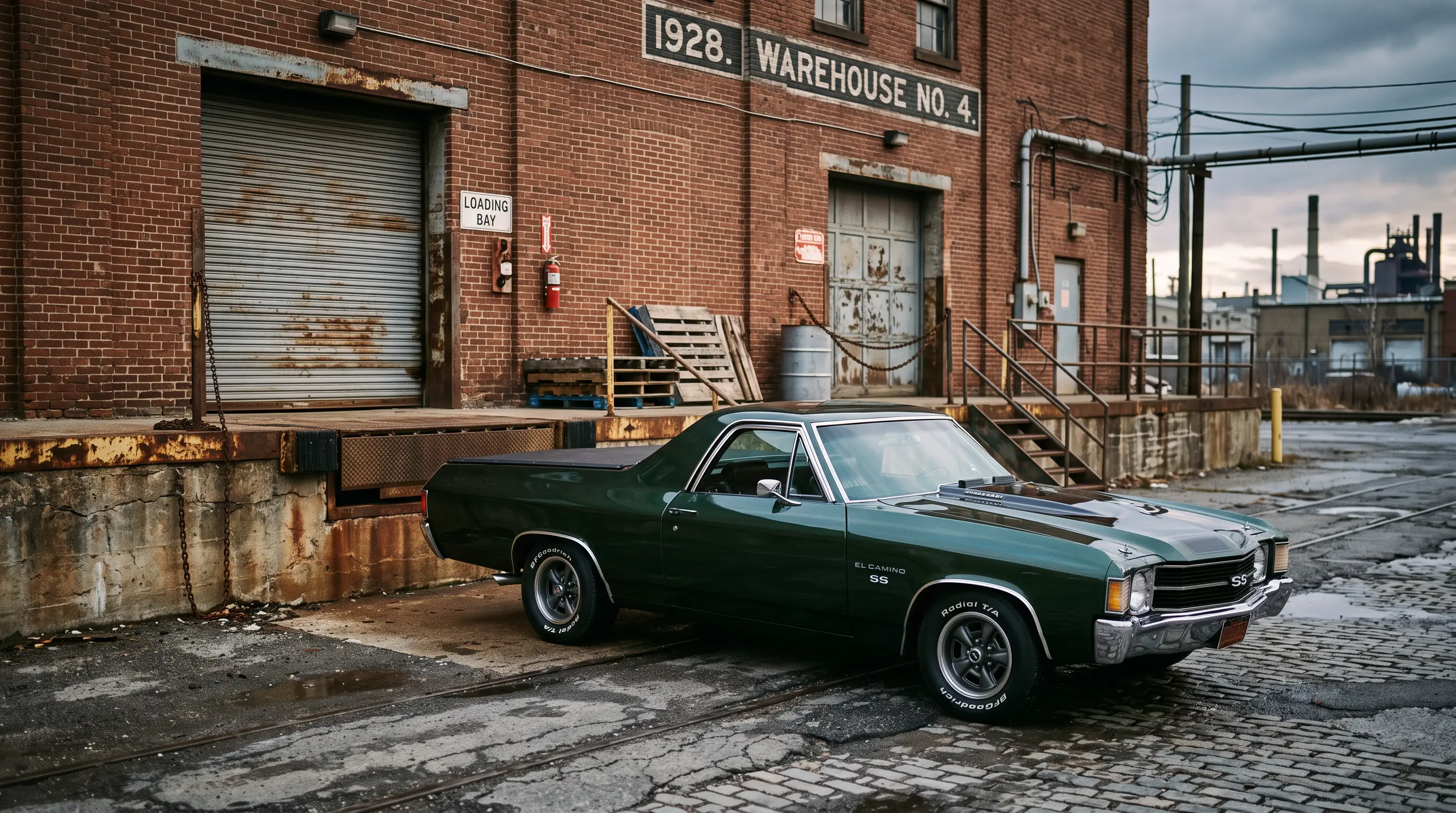
The peak came at the turn of the decade. For 1970 the SS could be ordered with the 454 cubic inch big-block, and in its hottest LS6 form the numbers were staggering for a vehicle with a cargo bed. Chevrolet rated the LS6 454 at 450 hp, the same monster engine offered in the Chevelle SS. Think about that. You could walk into a dealership and order what amounted to a pickup truck with one of the most powerful engines Detroit built during the entire classic muscle era. It made no sense, and that is exactly why enthusiasts love it.
The muscle El Caminos looked the part too. The SS package brought bold stripes, blacked-out grilles, cowl-induction hoods, and the kind of stance that told everyone at the drive-in you were not there to haul mulch. These 1968 to 1972 cars are the ones that command the biggest money today and the ones that put the El Camino permanently on the map as a performance vehicle rather than a curiosity.
"The genius of the SS El Camino was never the horsepower on its own. Plenty of cars had big-blocks. The genius was the wink. You were driving something practical, something your father would approve of, and it happened to be quietly terrifying. Nobody expected the pickup to be the fastest thing in the parking lot."
- Patrick Walsh
Living through the malaise, then the G-body
Muscle cars did not survive the early 1970s intact, and neither did the El Camino's high-output era. Rising insurance costs, tightening emissions rules, and the 1973 oil crisis choked the life out of the big-block. For 1973 the El Camino moved to the larger Colonnade styling that Chevrolet used across its mid-size range, and it grew heavier and more subdued. The SS badge stuck around, but the engines behind it got tamer with almost every passing year. This was the malaise era, and no American performance vehicle escaped it cleanly.
Still, the El Camino kept selling, because its core appeal never depended on horsepower. People bought it because it was useful and stylish at the same time, and that need did not go away just because the muscle did. The Colonnade cars of 1973 to 1977 have their own quiet fan base today, partly because they are more affordable than the muscle years and partly because that long, low body has aged into something genuinely handsome.
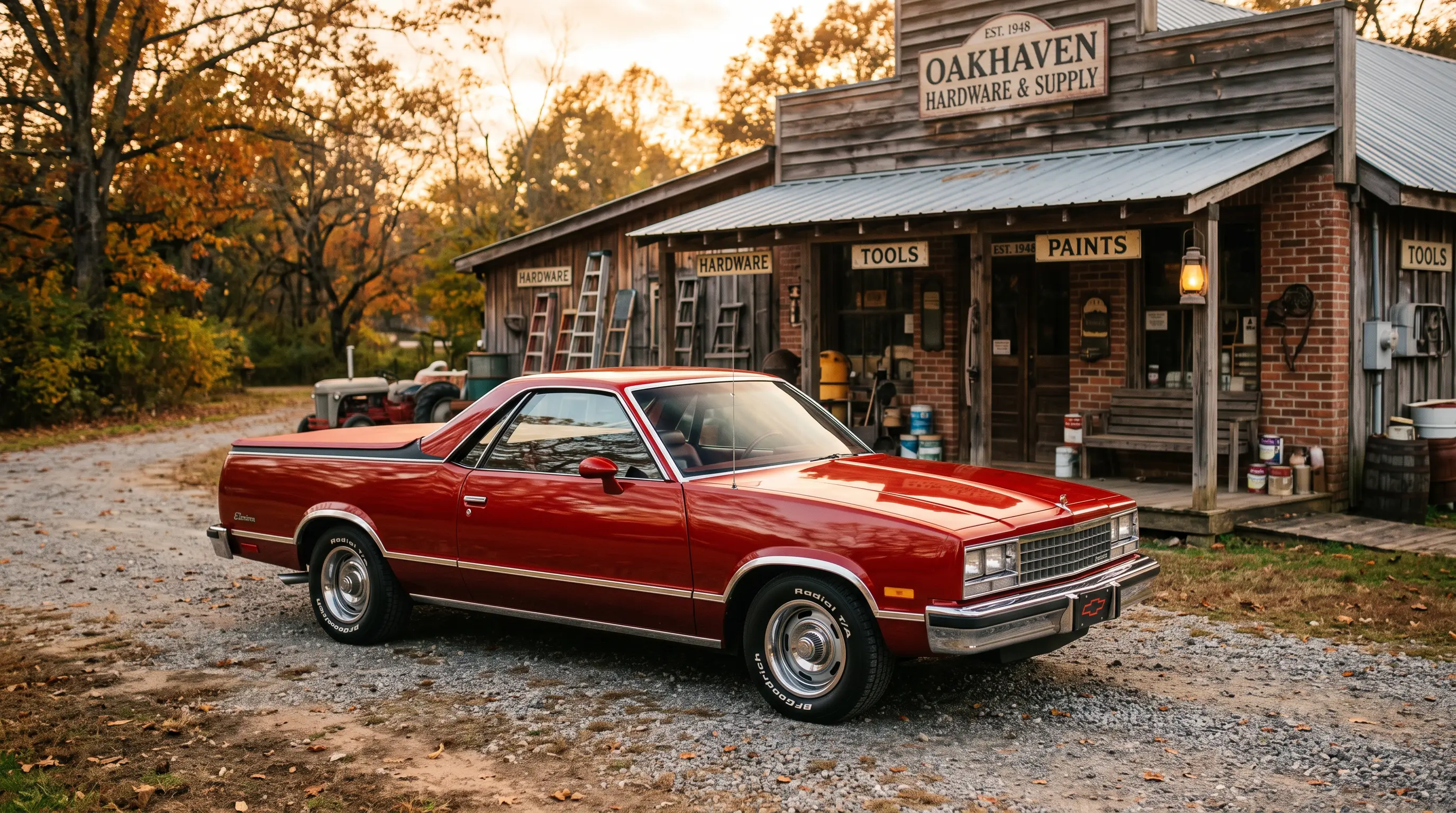
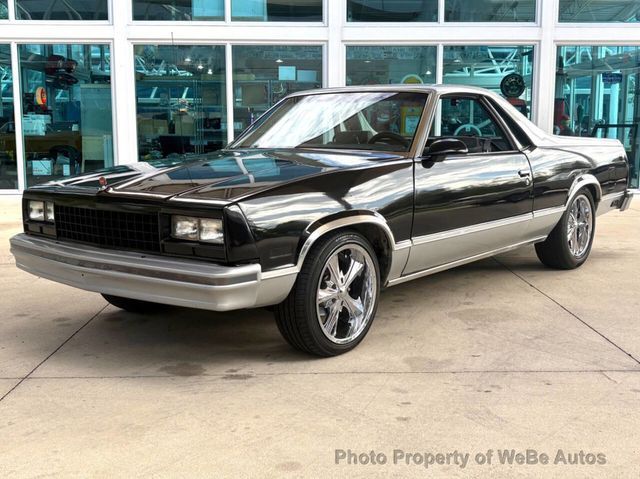
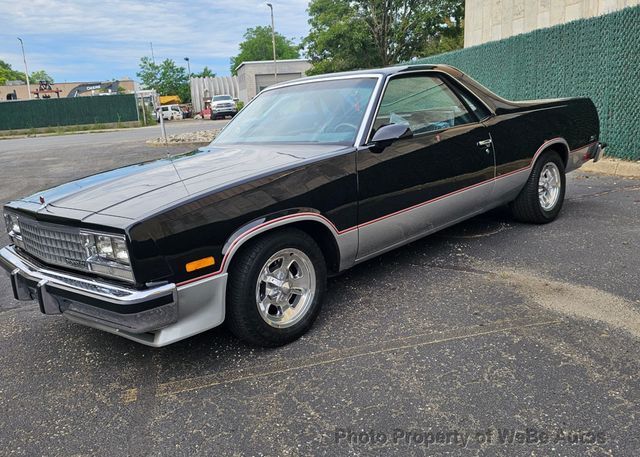
The last major chapter began in 1978, when General Motors downsized nearly everything. The El Camino moved to the trimmer G-body platform, shedding weight and length while keeping the same basic recipe. These lighter cars ran through 1987, making the G-body generation the longest-lived of them all. Chevrolet offered dressy trims like the Conquista with its two-tone paint, and outside coachbuilders got involved too. The Choo Choo Customs shop in Tennessee turned out a run of sporty El Caminos with a distinctive front-end treatment that fans still hunt for by name.
Engines as legend
You cannot tell the story of the Chevrolet El Camino without talking about what went under the hood, because the engine bay is where the model kept surprising people. Across its life the El Camino offered a spread from economical straight-sixes to the largest big-blocks Chevrolet built, and that range is a big part of why the car means different things to different owners.
The small-block V8 family did most of the everyday work. The 283, the 327, and later the ubiquitous 350 gave the El Camino the easy torque that made it genuinely useful as a hauler while still being fun to drive. The 327 in particular has a following among people who want a smooth, revvy engine without the thirst and weight of a big-block. For the muscle crowd, though, it was always about the big iron. The 396 made the El Camino a legitimate street brawler, and the 454 turned it into something close to a legend.
Here is a quick look at the engines that defined the model across its most collectible years.
| Engine | Displacement | Era | Reputation |
|---|---|---|---|
| 283 small-block V8 | 283 cu in | Early 1960s | Dependable workhorse, the sensible choice |
| 327 small-block V8 | 327 cu in | Mid to late 1960s | Smooth and revvy, an enthusiast favorite |
| 396 big-block V8 | 396 cu in | 1968 to early 1970s | The engine that made the SS matter |
| 454 big-block V8 | 454 cu in | 1970 to 1972 | The muscle-era halo, rare and revered |
| 350 small-block V8 | 350 cu in | 1970s to 1987 | The all-rounder that outlasted them all |
The beauty of that spread is that it lets the El Camino be whatever its owner needs it to be. Someone chasing a period-correct SS restoration wants the big-block story. Someone who just wants a distinctive weekend driver is perfectly happy with a healthy 350. Both are telling the truth about what the car was.
Colors, culture, and the lowrider chapter
The El Camino's second life had nothing to do with the factory. Somewhere along the way the model became a canvas, and the customizers took over. Its long rear deck and its car-plus-bed silhouette made it a natural for the lowrider scene, especially across California and the Southwest, where it became a fixture of a culture built around pride, craft, and family. Candy paint, gold trim, hydraulics, and murals turned working El Caminos into rolling art, and the community that formed around them treats the cars with a reverence the original engineers never imagined.
That cultural reach is a big reason the El Camino refuses to fade. It shows up in music videos, in films, in album covers, and in the driveways of people who were not even born when the last one was built. A car with this much character was always going to be adopted by people who wanted to say something with it. The El Camino says plenty without needing to open its mouth.
"Ask ten El Camino owners why they bought one and you will get ten different answers, but they all rhyme. It is about not fitting in a box. The car is a little bit of a rebel, and the people who love it tend to be the same. That is not marketing. That is just who shows up."
- Patrick Walsh
Collecting the El Camino today
For a long time the El Camino was the affordable way into classic Chevrolet ownership, the car you bought when the Chevelle or the Camaro had already priced you out. That is changing, and it has been changing for a while. The genuine 1968 to 1972 SS big-block cars, especially documented 454 examples, now sit firmly in serious-money territory, and clean examples from every generation have climbed steadily as a whole generation of buyers rediscovers them. If you are shopping the market for a classic Chevrolet El Camino for sale, the spread is enormous, from tidy small-block drivers to concours-grade muscle-era cars, and knowing which era you are chasing matters more than ever.
The good news for anyone getting in now is that the El Camino still offers a lot of car for the money relative to its more famous siblings. The mechanical parts are shared with millions of other Chevrolets, so keeping one running is refreshingly painless compared with rarer machinery. The bad news, if you can call it that, is that the days of finding a running project for pocket change are mostly behind us. The secret is out.
Why the El Camino still matters
The El Camino outlived its own logic. It was built to fill a niche that barely existed, it survived by borrowing the best parts of whatever Chevrolet was building that decade, and it endured long enough to become genuinely beloved for the very thing that made it strange. Nobody needs a car with a truck bed. That was never the point. The point was that you could have one, and that having one said something about you.
Detroit does not build the El Camino anymore, and the closest modern equivalents, the small unibody haulers now trickling into showrooms, arrive without any of the swagger. The original had swagger to spare. It could wear tailfins or stripes or candy paint, carry a load or leave rubber, and look right doing any of it. That is a rare kind of flexibility, and it is why the Chevrolet El Camino remains one of the most instantly recognizable shapes in American car culture.
So the next time you see one loading a dirt bike into the bed while riding on whitewalls, give it a nod. You are looking at a car that never picked a lane and was better for it. Half car, half truck, all American, and still, after all these years, completely its own thing.
Sources and notes
- Chevrolet El Camino - Wikipedia
- The End of the Road: 1987 Chevrolet El Camino - Mac's Motor City Garage
- Chevrolet's Mark IV LS6 454 Made the 1970 Chevelle (and El Camino) SS, Super - Hemmings/Automotive American
- Choo Choo Customs helped Chevy deliver a proper-looking El Camino SS - Hagerty
- El Camino Timeline - Changes From 1959-1987 - Classic Chevy
- 1959 Chevrolet El Camino - Conceptcarz