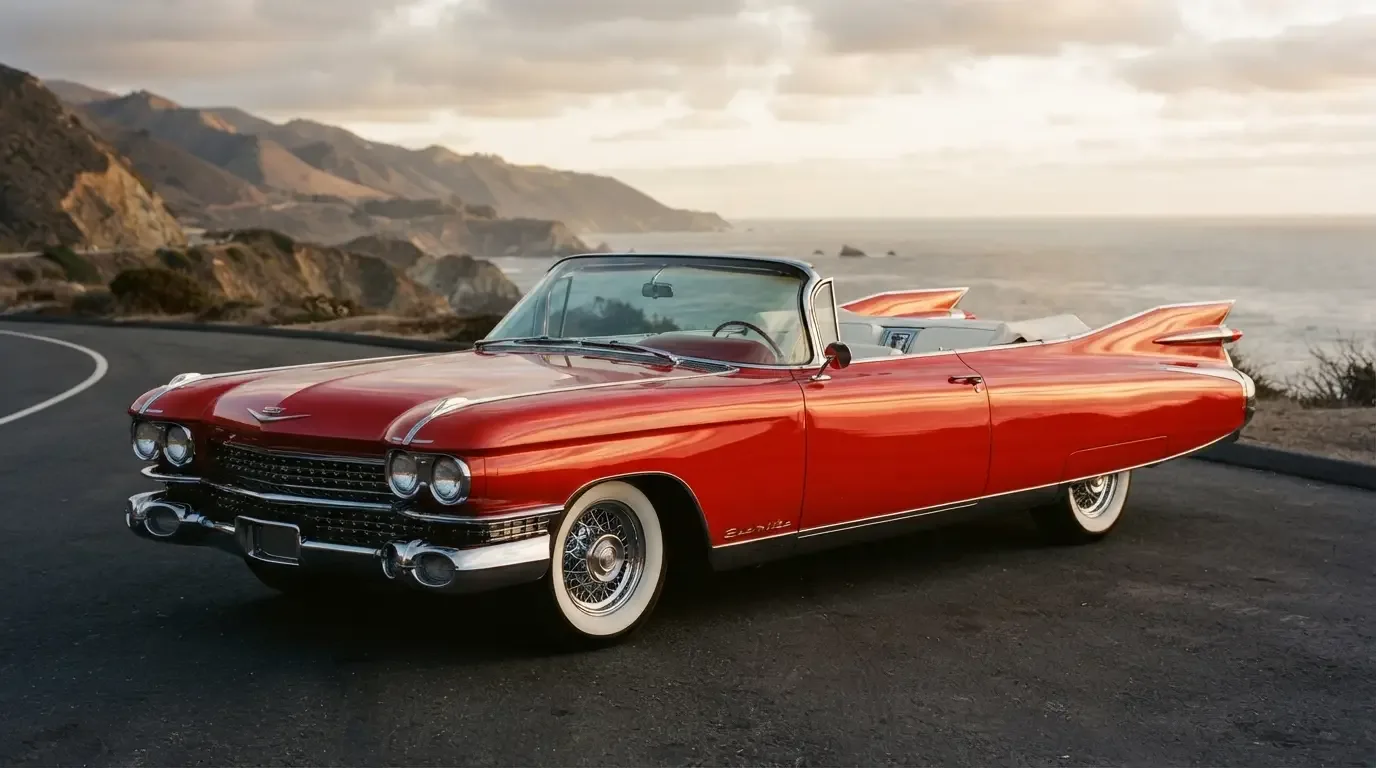
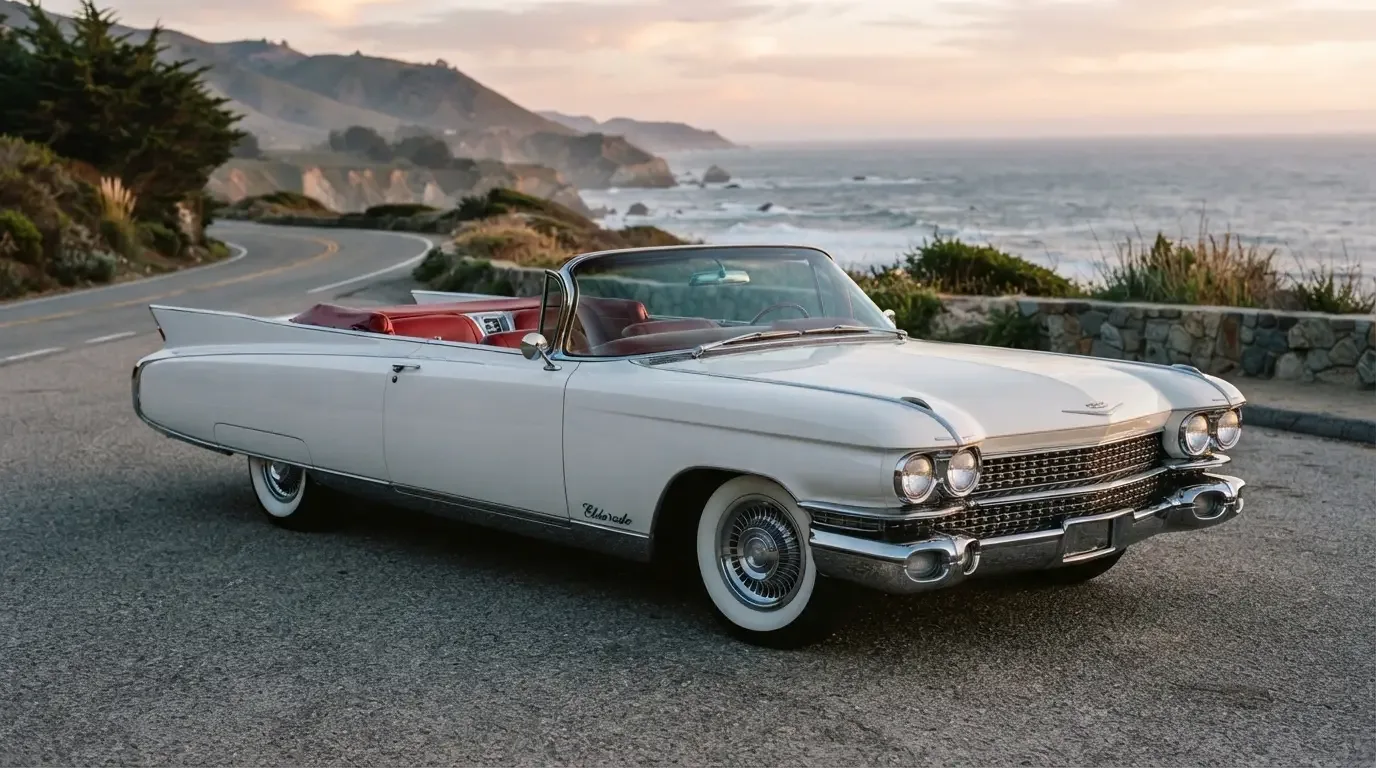
The 1960 Cadillac Eldorado had an unenviable job: follow the single most famous tailfin design in American automotive history without simply repeating it. Cadillac's engineering and design records show a deliberate, model-year-specific decision to reduce the fin height and simplify the rear treatment for 1960, a choice that gets less attention than the fins themselves but tells its own story about how quickly Detroit could pivot once a design trend peaked. For the full record of what came before it, our 1959 cadillac eldorado retrospective covers the model year the 1960 car had to follow.
Why Cadillac pulled the fins back so soon
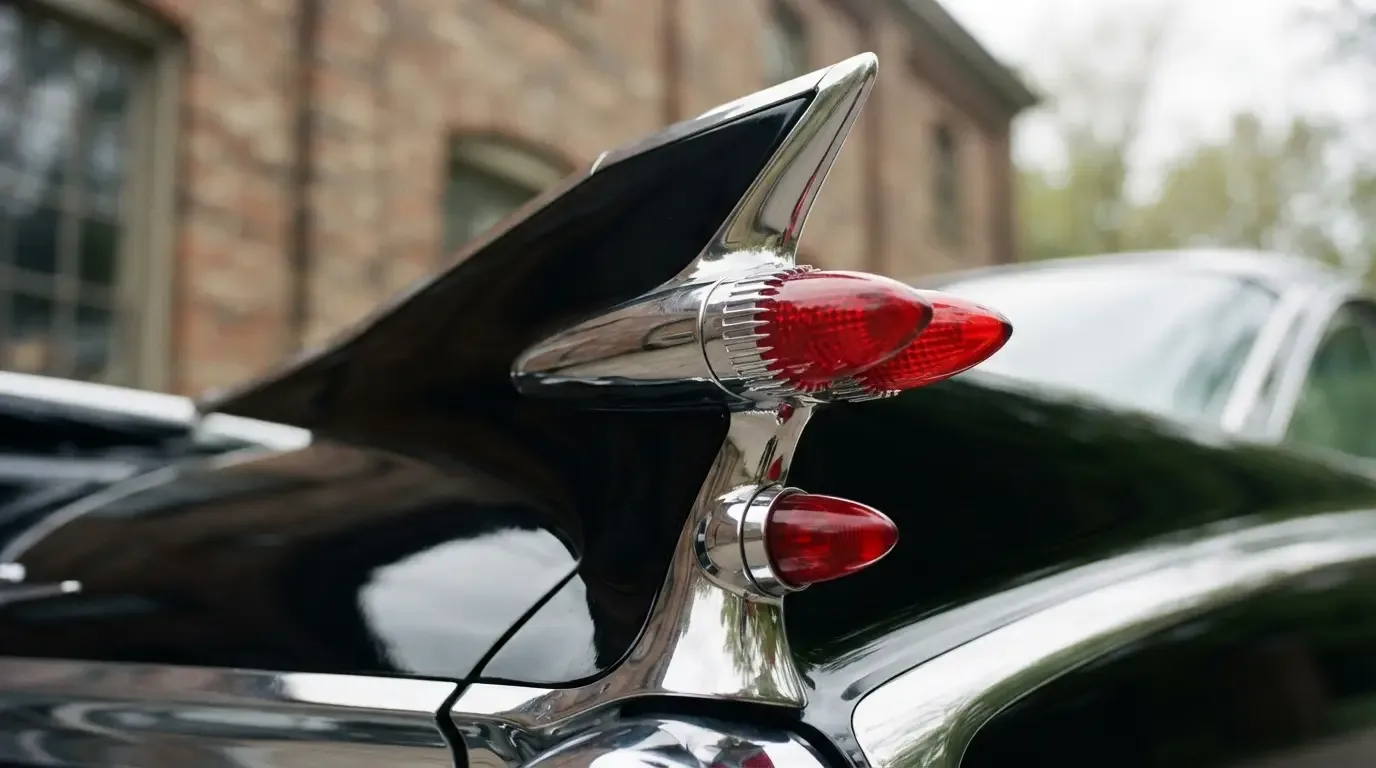
The 1959 Eldorado's fin height represented the absolute peak of the postwar fin era across the entire American industry, not just at Cadillac. Chrysler and Lincoln had been in the same design race, and by the end of the 1959 model year, industry sentiment inside design studios was already shifting toward the view that the trend had reached, and possibly passed, its natural limit. Cadillac's design department responded quickly. Rather than pushing further in 1960, the fin was lowered and its profile softened, with the dual bullet taillights, previously mounted high at the fin tip, brought down and reshaped into a less dominant position on the rear fender.
This was not a slow, multi-year taper. It was a sharp, single-model-year correction, which is unusual in an era when Detroit's design cycles typically evolved a theme gradually across several seasons rather than reversing course abruptly. That speed suggests Cadillac's stylists and executives recognized 1959 as a high-water mark in real time, rather than only in retrospect the way most design peaks get identified decades later by historians.
What stayed the same, and what changed
The 1960 Eldorado retained the same fundamental architecture as its predecessor: the same general 130-inch wheelbase, the same Seville hardtop and Biarritz convertible body style split, and the same 390 cubic inch V8 underneath, still rated at 345 horsepower in factory literature, consistent with the prior year's output. What changed was almost entirely visual. The grille was revised, the side trim was simplified, and the overall silhouette read as noticeably calmer from every angle, particularly from behind, where the reduced fin and repositioned taillights made the single biggest difference in the car's character.
| Detail | 1960 Eldorado |
|---|---|
| Wheelbase | 130 inches |
| Engine | 390 cu in V8 |
| Horsepower | 345 hp |
| Fin height vs. 1959 | Lowered, simplified |
| Taillight position | Lower on the fender, less dominant |
| Body styles | Seville hardtop, Biarritz convertible |
How the market and press reacted at the time
Period commentary on the 1960 Eldorado tended to frame the car as more mature and more restrained than its predecessor, language that reads today as coded acknowledgment that 1959 had gone about as far as fin styling reasonably could. Sales figures for the toned-down design held up respectably within the specialty-car segment Cadillac had built the Eldorado around, suggesting the reduction in visual drama did not meaningfully hurt the car's standing with the buyers who could afford it. Cadillac's flagship customers in 1960 were, by most accounts, receptive to a slightly quieter statement after a year of maximum visual volume.
That reception matters for how factory historians read the two model years today. The 1959 car gets the magazine covers, but the 1960 car's more measured design has its own defenders, particularly among buyers and collectors who find the reduced fin height easier to live with day to day while still carrying every bit of the Eldorado's specialty-car pedigree underneath.
Where 1960 sits in the longer Eldorado story
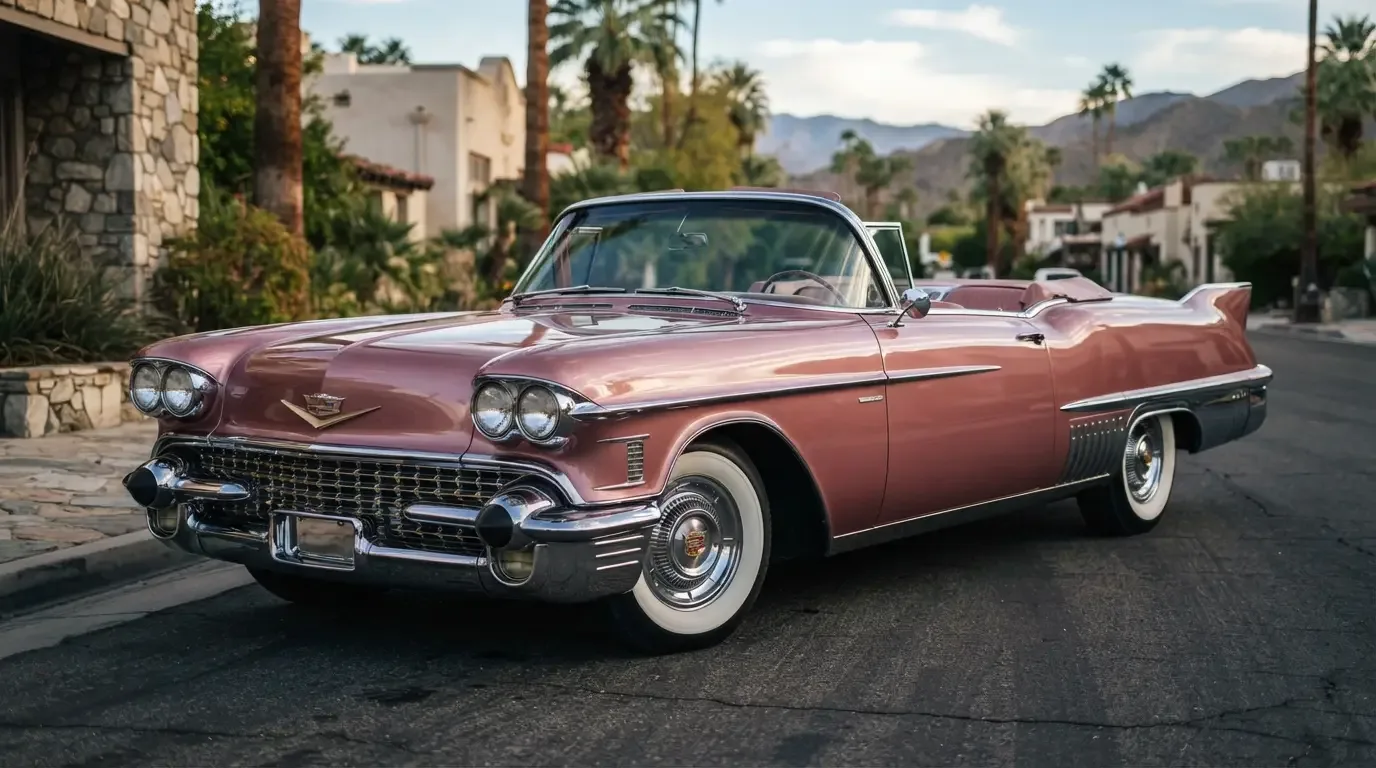
Looking at the Eldorado's design across consecutive years reveals a more interesting pattern than most single-year writeups capture. The 1958 car, which came before the 1959 peak, was itself a heavily chrome-laden design that set up the visual escalation that followed. Readers interested in that earlier chapter can find a related story covering how the 1958 model established the platform the 1959 and 1960 cars were built on.
"The 1960 Eldorado gets treated as a footnote to 1959, and that undersells it. Cadillac made a real, documented design decision to change course in a single model year, and that decision is exactly the kind of detail factory records preserve better than popular memory does."
- Tom Ramirez
Reading the factory records against the popular narrative
One thing factory documentation clarifies that popular narrative tends to flatten is how deliberate the 1960 revision actually was. It would be easy to assume Cadillac simply ran out of ideas after 1959 and defaulted to something plainer. The engineering and design change records tell a different story: specific instructions to reduce fin height, specific direction to relocate the taillight assembly lower on the fender, and specific attention paid to keeping the overall proportions of the car balanced once that visual weight came off the rear. This was considered work, not retreat.
That distinction matters when evaluating how the 1960 Eldorado should be remembered. It was not a lesser design produced with less care. It was a different design brief entirely, one that traded maximum visual drama for a more restrained statement while keeping every mechanical and specialty-car credential the Eldorado name carried. Treating it as simply "the year after the famous year" undersells the amount of intentional design work that went into making the correction land as gracefully as it did.
Collecting the 1960 today
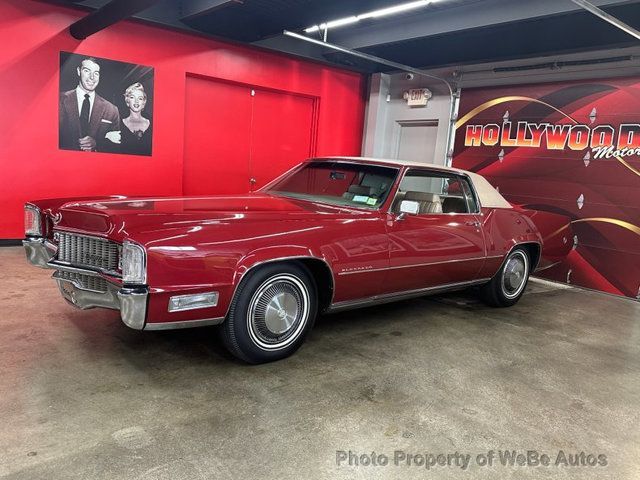
Because the 1960 Eldorado sits in the shadow of its more famous predecessor, values have historically trailed the 1959 car despite broadly comparable mechanical specification and comparable rarity in the specialty-car body styles. That gap has narrowed somewhat as collectors have grown more interested in the fuller arc of Cadillac's tailfin era rather than fixating on a single peak year, and a well-documented 1960 Eldorado in either Seville or Biarritz form remains a genuinely significant car in its own right, not merely a lesser version of 1959. Anyone curious how that plays out in current asking prices can look at Eldorados for sale now to compare listings across both model years directly.
For a factory historian, the more interesting question is not which car is objectively better, since that is largely a matter of taste, but which car more accurately represents Cadillac at its most confident. The 1959 Eldorado made a statement it could not repeat. The 1960 Eldorado made a different kind of statement: that the same company could recognize a peak, step back from it cleanly, and still produce a genuinely desirable flagship in the process. That is a harder trick to pull off than simply going bigger again, and it deserves more credit than it usually gets.