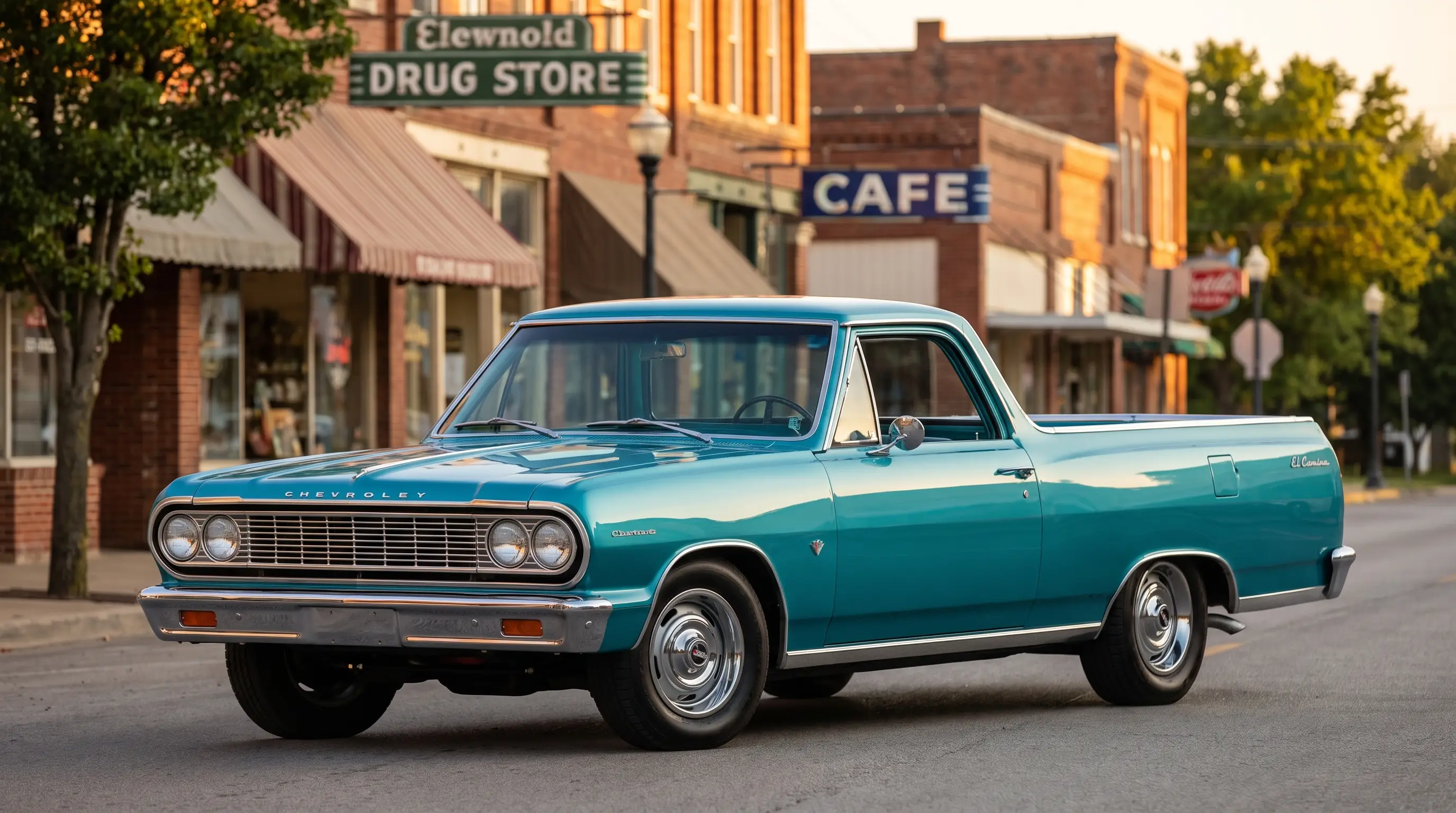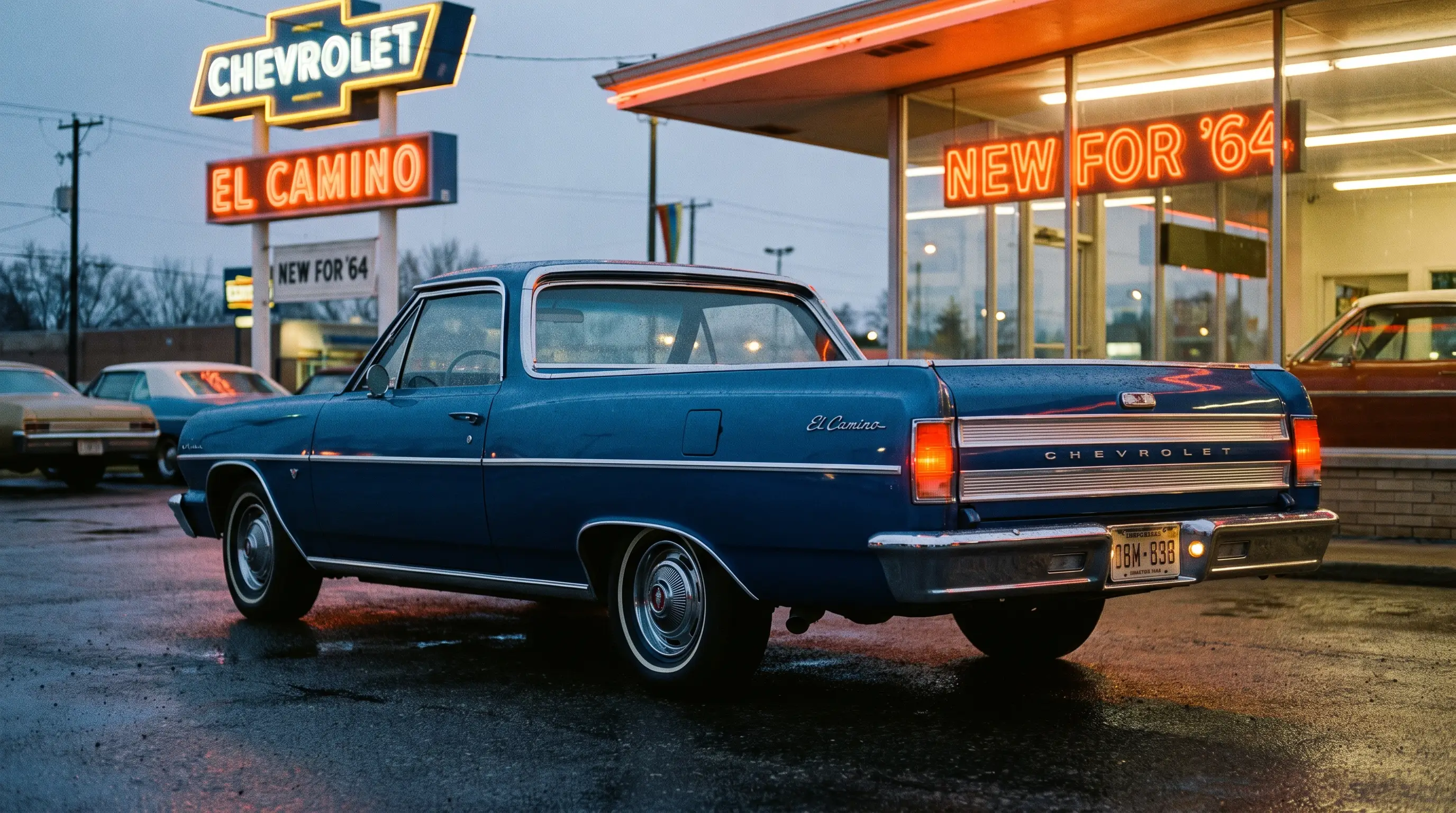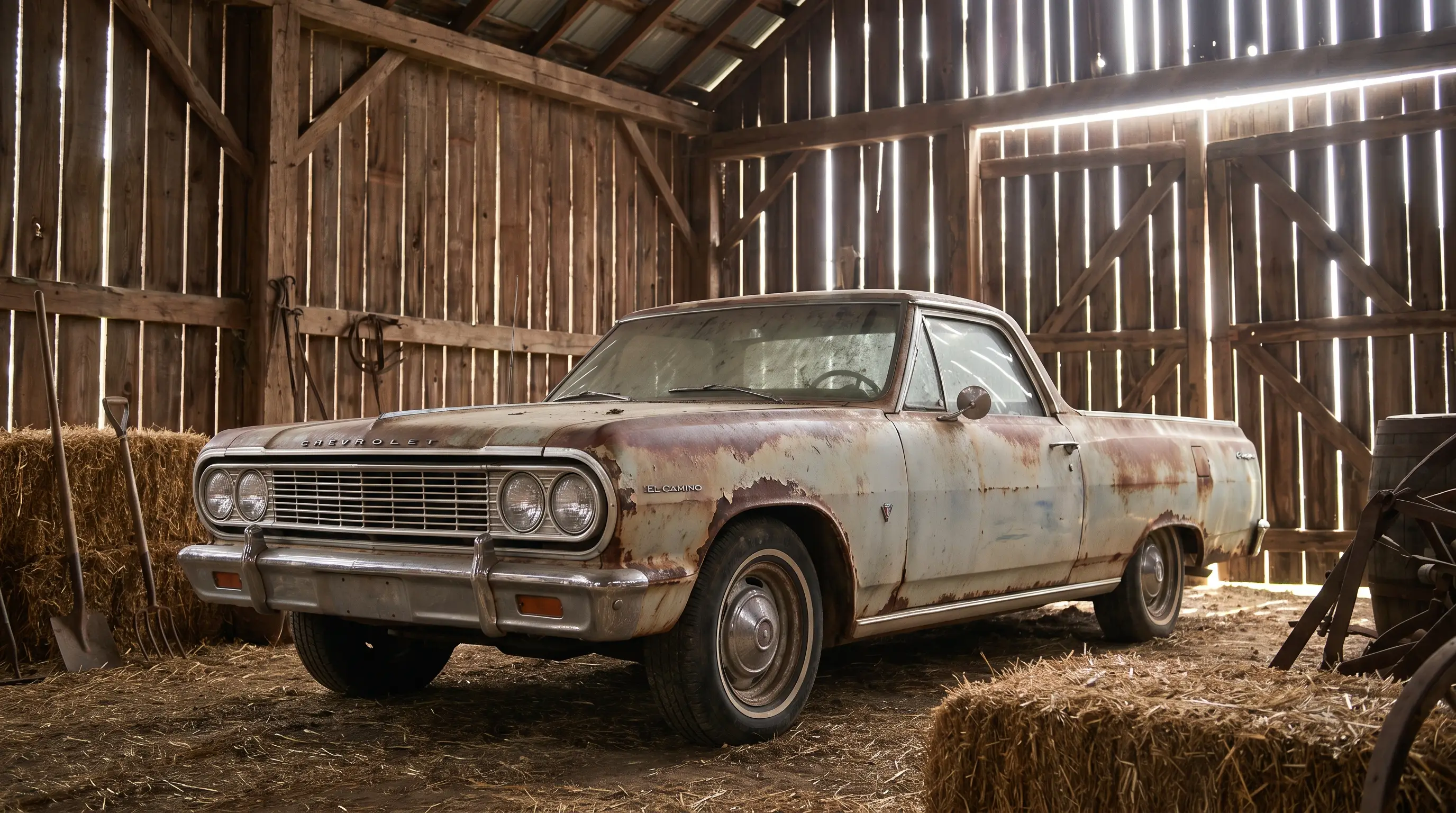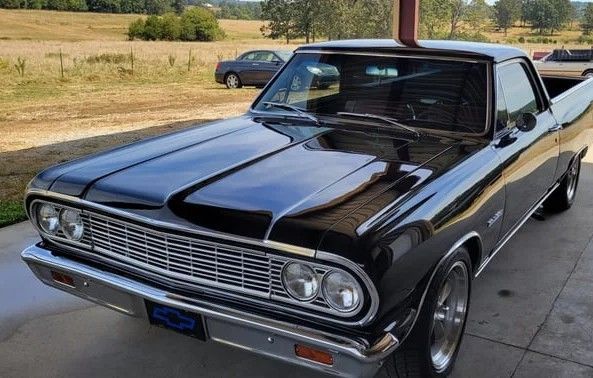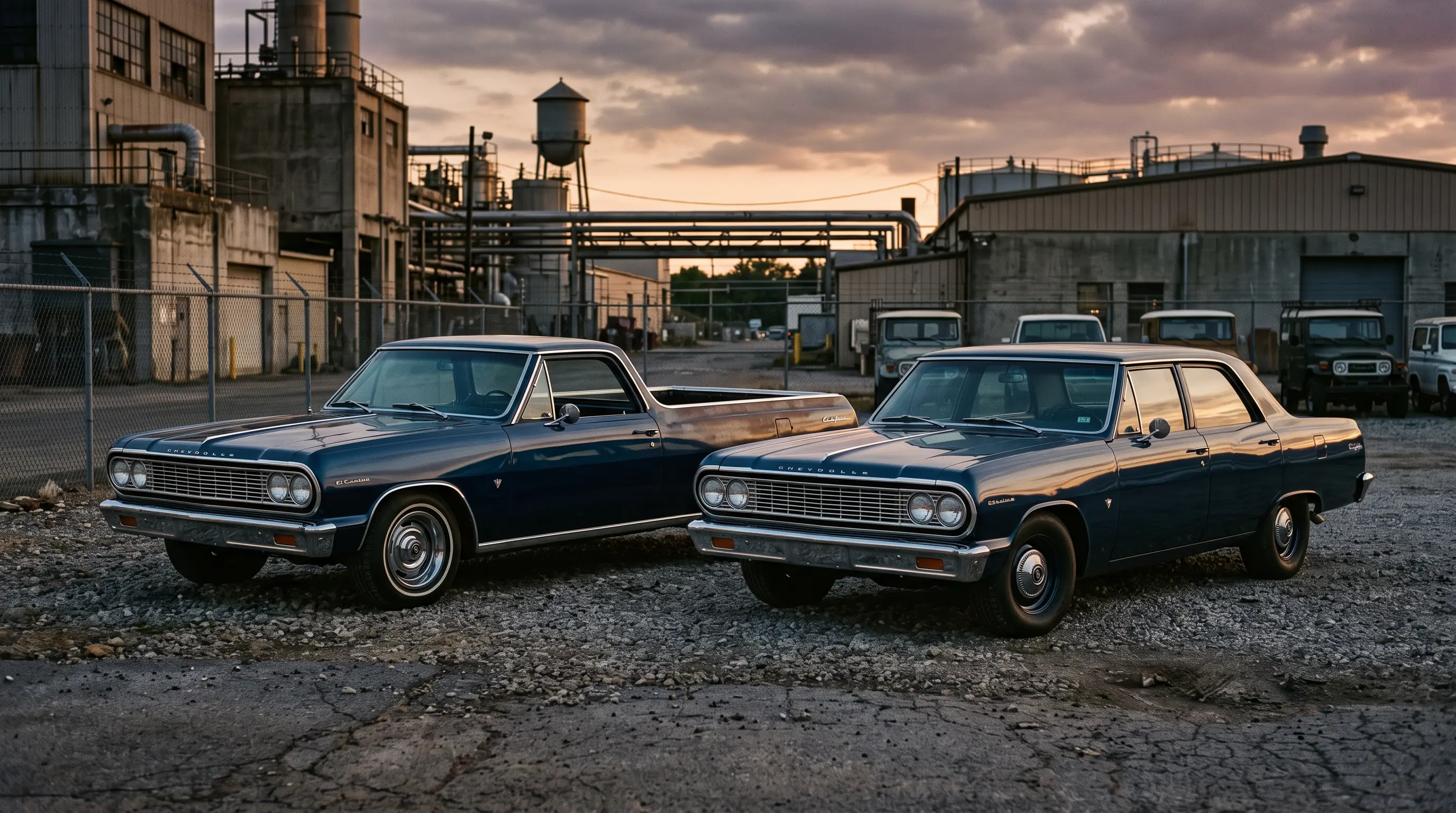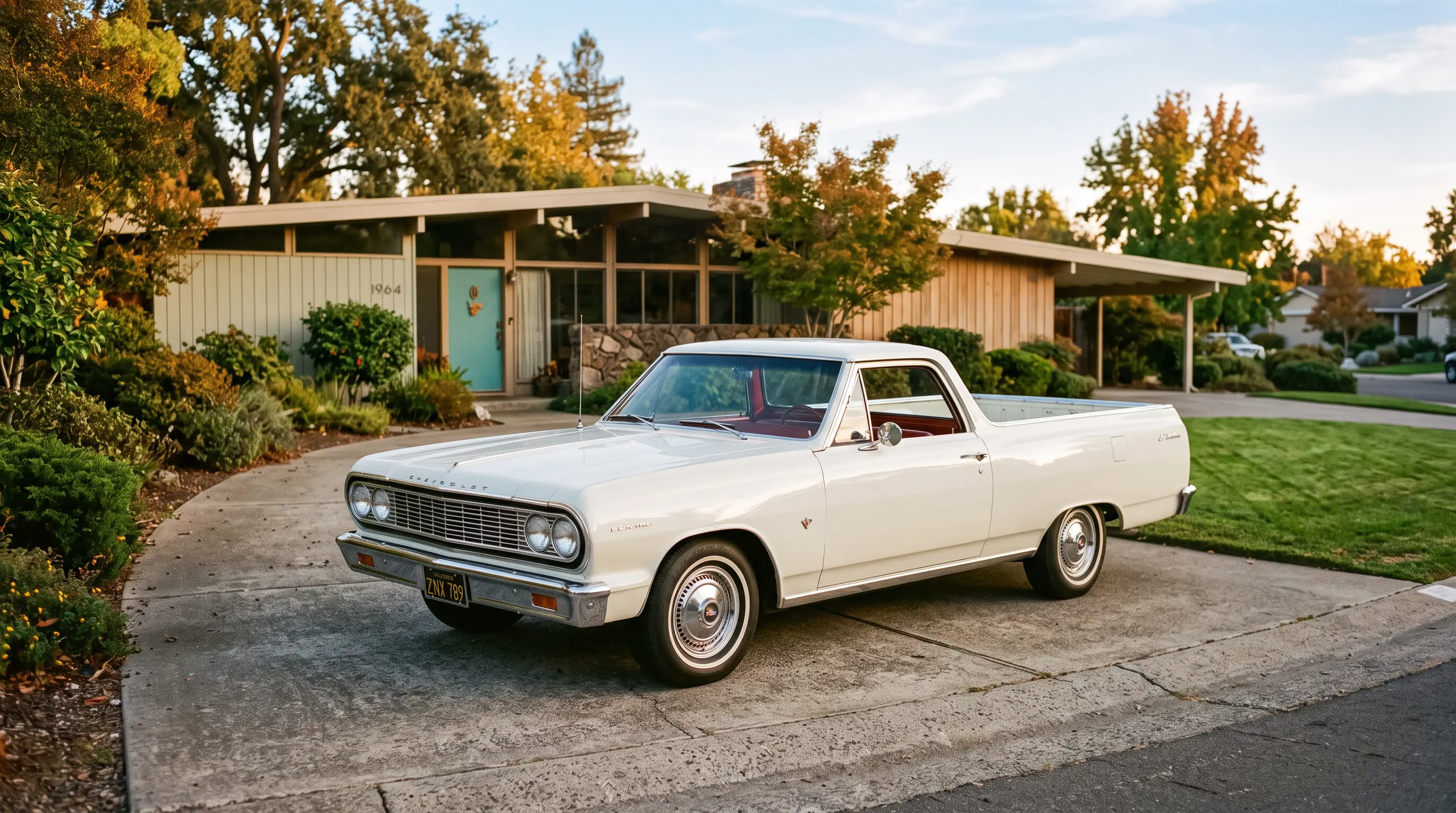
Chevrolet had already tried the car-truck idea once, with the 1959-60 El Camino, and let it lapse. When the 1964 El Camino arrived, built on the Chevelle's compact new A-body platform, it was a second attempt at a concept the company had already abandoned. What makes the 1964 relaunch worth studying is not just that it happened, but that it actually stuck. Unlike the first generation, the Chevelle-based El Camino ran in production for years afterward and eventually became one of the most recognizable names in the lineup. That did not happen by accident.
The platform problem the first generation never solved
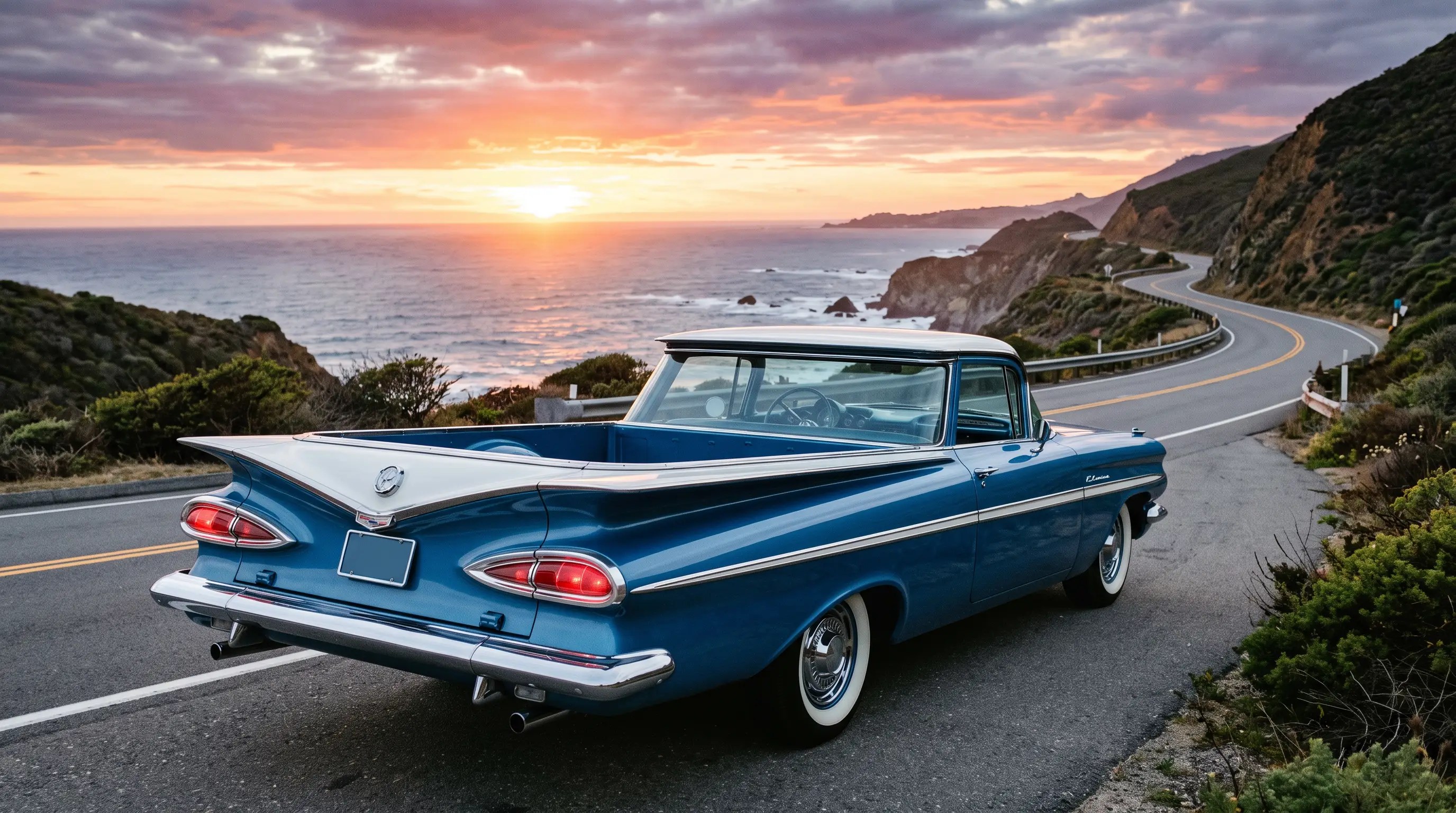
The 1959-60 El Camino was built on Chevrolet's full-size platform, which meant a car-truck hybrid the size of a Bel Air, with all the bulk and thirst that implied. It sold reasonably in its first year but fell off quickly, and Chevrolet discontinued it after 1960 rather than commit to a second generation on the same oversized frame. The core problem was proportion. A full-size car with a bed behind the cab looked like a compromise rather than a coherent design, and buyers who wanted genuine cargo capacity had the standard pickup line to choose from instead.
The Chevelle-based platform that arrived for 1964 solved that proportion problem directly. A mid-size body carried the bed more naturally, the wheelbase suited the car-like handling Chevrolet wanted to advertise, and the smaller footprint meant better fuel economy and easier parking for buyers who wanted a vehicle that could double as a daily driver during the week and a hauler on the weekend.
Timing the market correctly
Ford had already proven the car-truck concept could work commercially with the Falcon-based Ranchero, which by the early 1960s had found a steady niche among suburban buyers and small business owners who needed light hauling capacity without committing to a full-size pickup. Chevrolet's 1964 relaunch was a direct response to that proof of concept, timed to catch the same buyer with a Chevelle-based alternative rather than conceding the segment to Ford outright.
That timing mattered more than most retrospective accounts credit. By 1964, the mid-size segment itself was maturing, with the Chevelle establishing a strong sales base in its own right. Attaching the El Camino to a platform that was already proving itself in the marketplace, rather than building it on an aging full-size chassis the way Chevrolet had in 1959, meant the car-truck concept launched alongside genuine market momentum instead of against it.
What buyers actually wanted from the segment
The 1959-60 El Camino had been marketed somewhat ambiguously, caught between selling as a stylish alternative to a wagon and selling as a genuine work vehicle. The 1964 model resolved that ambiguity by leaning into both identities honestly rather than picking one. Trim levels and options let a buyer configure the car toward whichever use mattered more to them, from a basic hauler with vinyl bench seats to a dressed-up model with upgraded trim that looked at home outside a suburban house rather than a farm.
That flexibility answered a real gap in the market. A buyer who needed occasional hauling capacity but did not want to drive a full pickup as a daily vehicle now had a genuinely car-like option that handled, rode, and parked more like the Chevelle sedan it was based on. The full-size 1959-60 El Camino never offered that trade-off convincingly, since its size and thirst undercut the daily-driver argument that made the concept appealing in the first place.
"The first El Camino asked buyers to accept a full-size car's bulk in exchange for a bed. The 1964 asked much less of them, and that is precisely why it worked."
- Sarah Whitfield
The engineering decisions hiding behind the badge
Beyond platform strategy, the 1964 El Camino benefited from a handful of engineering choices that had nothing to do with car-truck novelty and everything to do with sound mid-size engineering. The Chevelle's unibody-adjacent construction, with a bolted-on front subframe carrying the engine and suspension, gave the El Camino a stiffer structure than a traditional body-on-frame truck of comparable size, which translated into more car-like handling on the road. That structural choice also simplified repairs, since a damaged front subframe could be swapped without touching the rest of the body, an advantage that mattered to owners using the vehicle hard.
The bed itself, while smaller than a standard pickup's, was engineered with enough depth and floor reinforcement to carry genuinely useful loads rather than serving as a styling gesture. Chevrolet's engineers reportedly benchmarked the Ranchero's cargo dimensions directly, which meant the 1964 El Camino's bed was competitive on real capacity rather than simply matching the Chevelle's proportions and hoping buyers would not compare it to the Ford alternative. That attention to actual utility, layered on top of the car-like driving experience, is what let Chevrolet market the vehicle honestly as both things at once instead of picking a compromise.
The long-term payoff of getting it right the second time
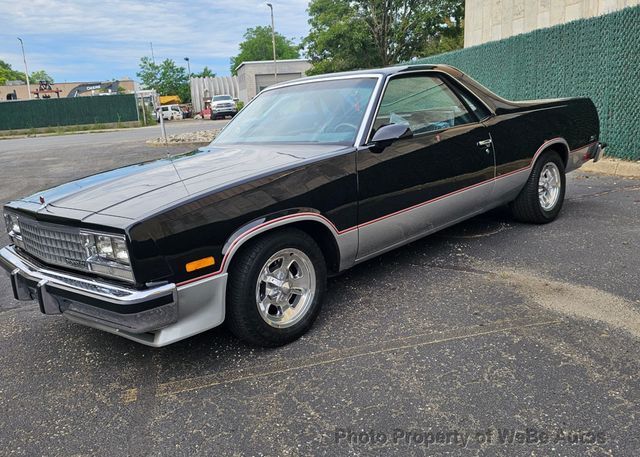
The proof of the 1964 reinvention's success is in what came after it. Where the original El Camino ended after two model years, the Chevelle-based version continued through repeated body changes over more than two decades, eventually outliving the Chevelle name itself when Chevrolet carried the El Camino forward onto the G-body platform after 1977. A concept that had failed once found, on its second attempt, a foundation stable enough to support that kind of longevity.
For anyone researching how this all connects, more on the 1964 el camino specifically fills in the model-year details that this piece treats at a higher level, while our complete history traces the full arc from the 1959 original through the car's final year in 1987. Together they explain why a concept that failed once became, on its second try, one of the more durable names in Chevrolet's postwar lineup.
Why this history still matters to buyers today
Understanding why the 1964 relaunch succeeded also explains what collectors value about the car today. Its Chevelle-based mechanicals mean parts availability and documentation are more straightforward than for many equally old vehicles, and its dual identity as both a legitimate work vehicle and a comfortable driver gives it broader appeal than a pure muscle car or a pure utility vehicle would have. Anyone browsing classic El Caminos on the market for a 1964 model is really shopping for the vehicle that proved the entire car-truck concept could last, which is a different proposition than shopping for a novelty that happened to sell for two years and vanish.
That distinction is worth keeping in mind when comparing asking prices across model years. A 1964 example, as the car that reset the entire concept on firmer footing, carries a historical significance that later, flashier model years sometimes overshadow but never actually erase.
It is also worth remembering how narrow the window was for this reinvention to fail a second time. Chevrolet had already walked away from the car-truck concept once, and a poorly received 1964 relaunch could easily have ended the idea permanently rather than triggering two more decades of production. The fact that the Chevelle-based approach succeeded well enough to survive multiple redesigns through the 1960s and 1970s, and then transition again onto the G-body platform in 1978, says as much about the soundness of the underlying strategy as any single sales figure from the 1964 model year could.
Dealers played a quieter role in that success than most retrospectives acknowledge. Because the 1964 El Camino shared showroom floor space, financing paperwork, and service department familiarity with the Chevelle line, a salesperson could pitch the car-truck concept to a skeptical buyer using a platform the dealership already knew inside and out. That operational simplicity, invisible to most buyers at the time, removed friction from the sales process in a way the standalone full-size 1959-60 El Camino never enjoyed.