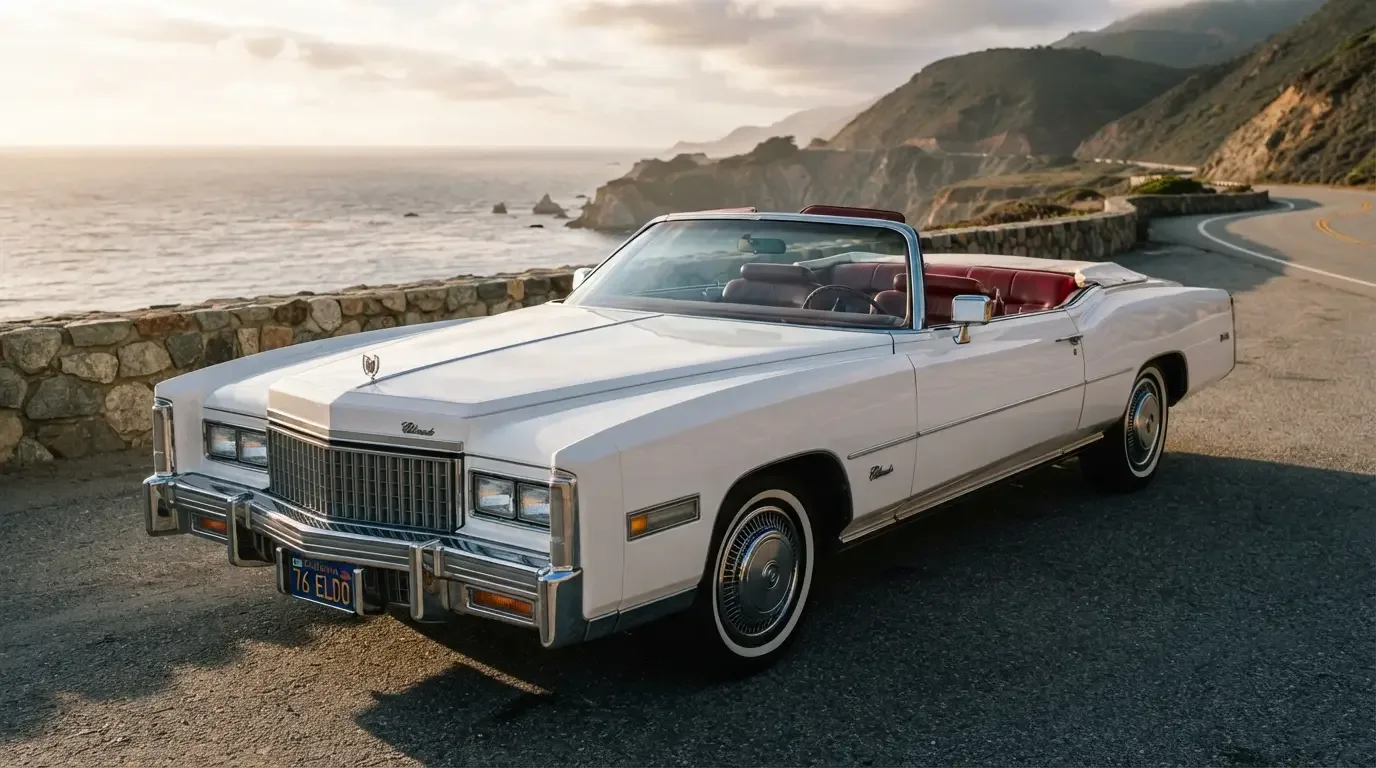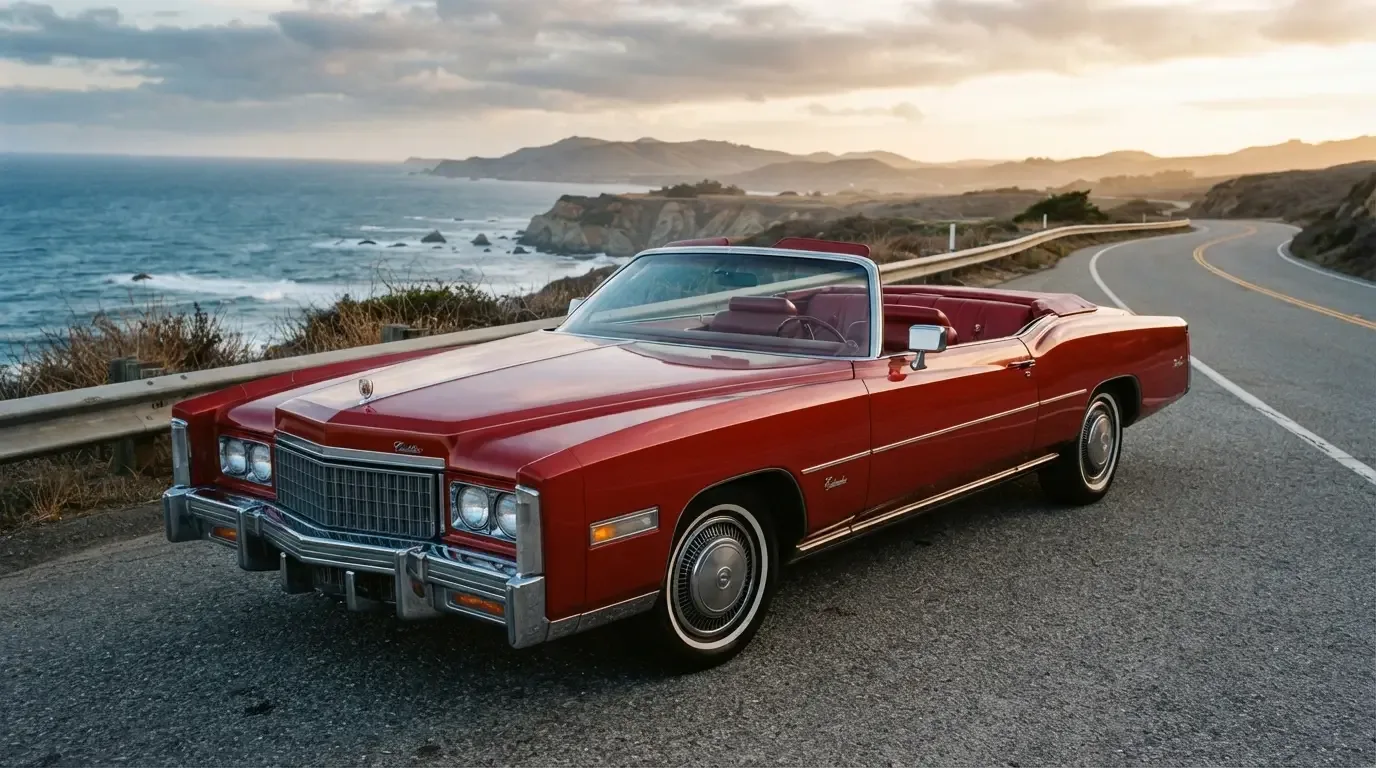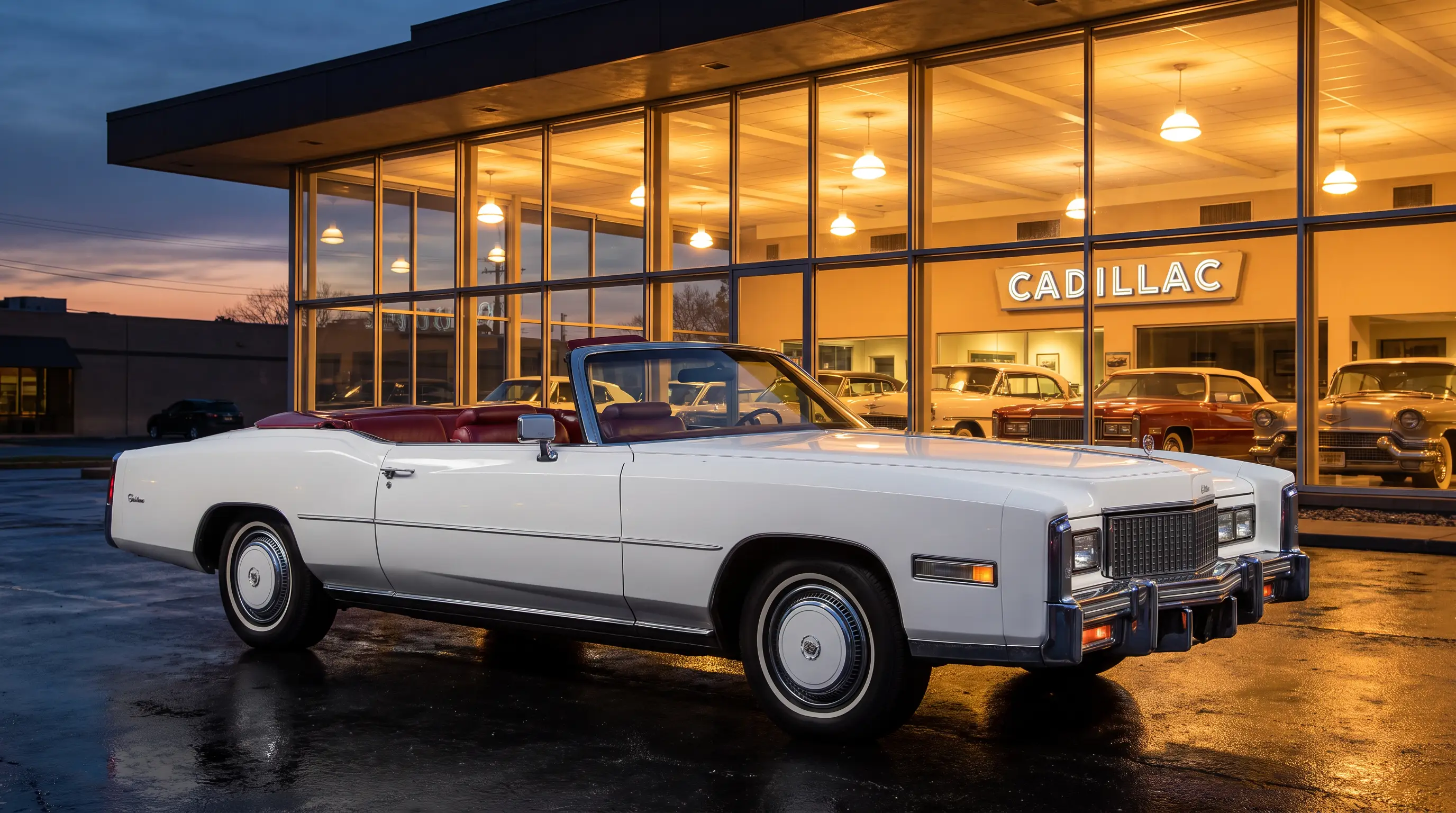
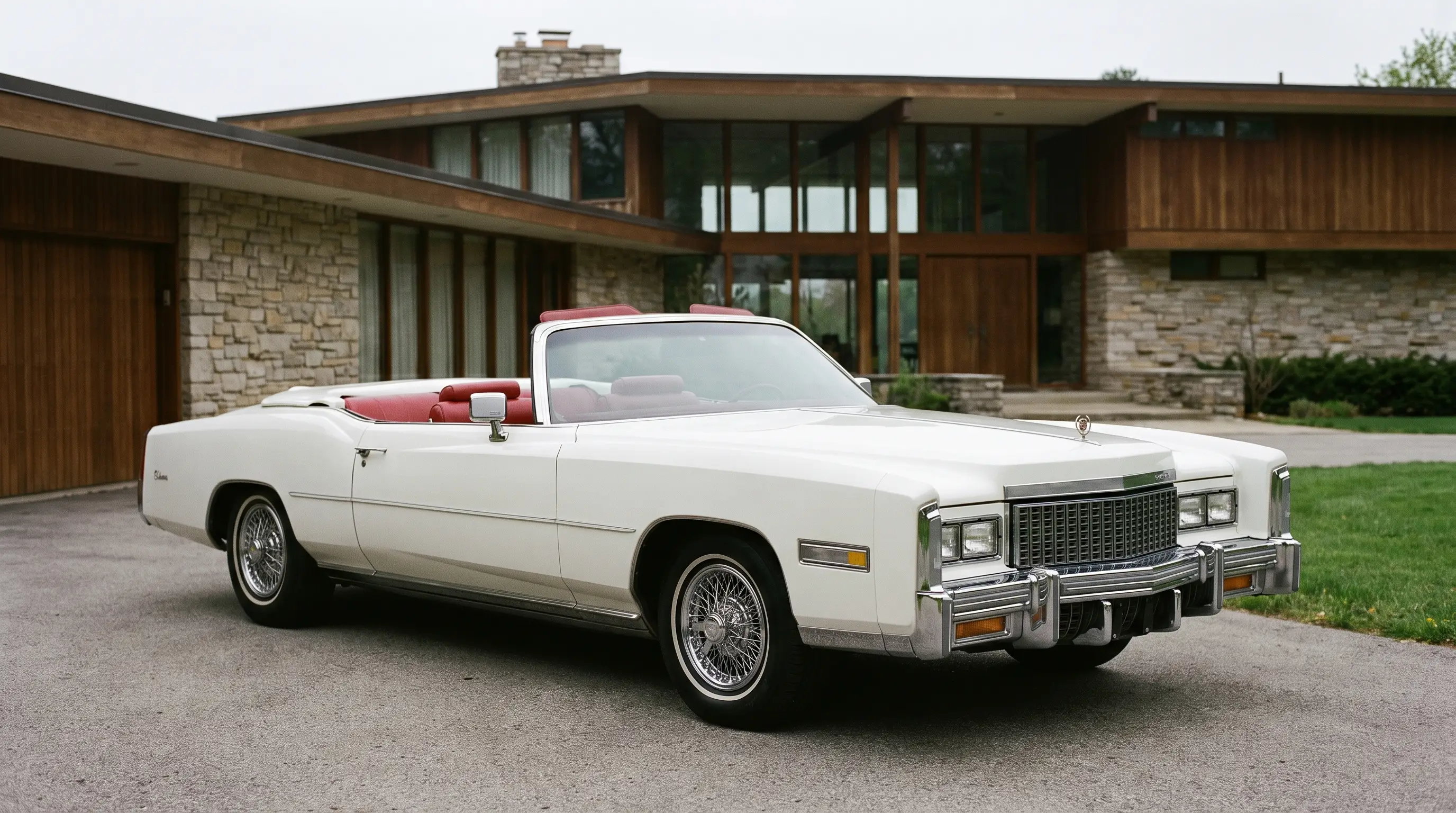
The 1976 Cadillac Eldorado convertible sits in an odd spot in the collector market. It was sold to the public as the last American convertible, and that story alone has kept demand steady for almost fifty years. But a story is not a number, and if you are trying to pin down 1976 cadillac eldorado value today, you need to separate the marketing from the math.
Why the 1976 story still moves the market
Cadillac and its dealers told buyers in 1976 that General Motors was ending convertible production for good. Dealers marked up cars, buyers hoarded them in garages with the plastic still on the seats, and the "last convertible" line became part of the car's identity before it was ten years old. You can read the full 1976 cadillac eldorado history for the details of how that campaign played out, but the short version is that scarcity got baked into the price before the car had done a single mile.
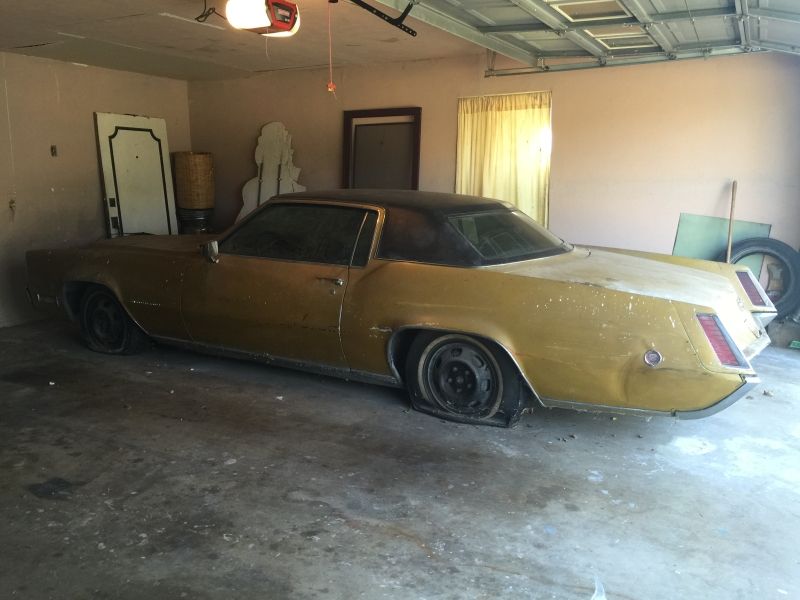
That history matters for value today because it created two different populations of survivors. There are cars that were driven, serviced, and used the way Cadillac intended, and there are cars that were parked as an investment and have spent decades under a cover with single-digit mileage. Both show up at auction under the same model name, and the price gap between them is enormous.
What actually drives price on these cars today
Condition and originality separate a $30,000 car from a $70,000 one faster than any option list does. A numbers-matching 500 cubic inch V8, its original Cadillac interior trim, and paperwork tracing back to the first owner all add real premium. Color matters too. The bright end of the 1976 palette, reds and whites with white tops, tends to bring more than the browns and dark greens that were more common on the lot.
Mileage is the trap buyers fall into. A sub-1,000-mile survivor sounds like the obvious best buy, but low-mile cars often have deteriorated rubber, dried-out hoses, and fuel systems that have not seen ethanol-free gas in decades. A well-sorted 40,000-mile driver can be the more sensible purchase even if the sticker price looks lower on paper.
| Condition tier | Typical asking range | What you are paying for |
|---|---|---|
| Driver quality, older repaint | $18,000 to $28,000 | A usable convertible, minor flaws expected |
| Well-kept original or older restoration | $32,000 to $45,000 | Solid mechanicals, presentable interior, no major issues |
| Low-mile, documented survivor | $55,000 and up | Originality premium, collector-grade paperwork |
The gap between hype and appraisal
I look at a lot of "last convertible" cars, and the gap between what an owner believes their Eldorado is worth and what it actually brings at a real sale is often 20 to 30 percent. That gap almost always comes from treating the marketing story as if it were a rarity number. Cadillac built roughly 14,000 Eldorado convertibles for 1976, which is not a small production run by classic car standards. It is a scarce car relative to modern volumes, not a one-of-a-kind piece.
"People bring me a car and tell me it is the last convertible Cadillac ever made. I have to tell them it is the last one for a while, and that a car that sold new for eleven grand does not become priceless just because a dealer said so in a brochure."
- Marcus Feld
Documentation changes the calculus more than almost anything else. A build sheet, original window sticker, and a chain of ownership that can be traced back to 1976 will consistently add several thousand dollars over an otherwise identical car with no paper trail. Buyers are not just purchasing the metal, they are purchasing the story, and a verifiable story is worth paying for.
Where the market is heading
Interest in 1976 Eldorado convertibles tracks with the broader boomer-to-collector handoff happening across the classic car market. Prices for clean, honest examples have held up better than for cars that lean entirely on the last-convertible narrative without the condition to back it up. Buyers researching a purchase should also look at a related story covering how the convertible ban actually unfolded at General Motors, since it explains why this specific model year carries the weight it does.
My advice to anyone shopping this market is simple. Pay for condition and documentation first, and let the "last convertible" tagline be a nice bit of trivia rather than the reason you write the check. If you want to see what is actually available right now rather than what sold five years ago, Eldorados for sale now gives a much more honest read on where real asking prices sit.
A buyer's checklist before you commit
- Verify the VIN and cowl tag match the paperwork before discussing price
- Ask for service records covering at least the last ten years, not just the original window sticker
- Get an independent inspection even on a low-mile car, since dry-rotted rubber and fuel lines are common on stored examples
- Compare the asking price against three or four recent completed sales, not listing prices, which tend to run high
The 1976 Eldorado convertible is a genuinely good classic to own. It is comfortable, it turns heads, and parts support remains reasonable for a car this size. Just buy it because the car is right, not because a fifty-year-old sales pitch still has a hold on the market.
Insurance, storage, and the cost of ownership
Value is not just the purchase price. A 1976 Eldorado convertible is a large, heavy car with a soft top mechanism, power everything, and an interior that is expensive to redo correctly if it goes wrong. Agreed-value collector insurance is the right tool here, and it is worth getting an appraisal in writing before you ever call an insurer, since a policy based on a vague estimate can leave you short after a claim.
Storage costs money too, and it should. Convertible tops age faster outdoors, chrome pits in damp climates, and the vacuum-operated systems that run the top, windows, and locks on these cars do not like sitting idle for years at a time. Buyers who plan to drive the car occasionally, rather than mothball it, tend to end up with fewer expensive surprises than buyers chasing the lowest odometer reading they can find.
None of this changes the basic appeal of the car. It rides well, the cabin is enormous by modern standards, and the 500 cubic inch V8 has enough torque to make the whole experience feel effortless. The question is never whether the 1976 Eldorado convertible is a good car. It clearly is. The question is whether the price on the table reflects the actual car in front of you, or just the legend printed on the dealer brochure fifty years ago.
For anyone weighing a purchase, the practical move is to treat the last-convertible story as context, not as a pricing formula. Two cars with identical mileage and options can be worth very different amounts once you factor in rust history, a prior repaint that does not match factory panel gaps, or a transmission that was rebuilt with the wrong parts. A pre-purchase inspection from someone who knows this specific platform, not a generic classic car checklist, is worth every dollar it costs.