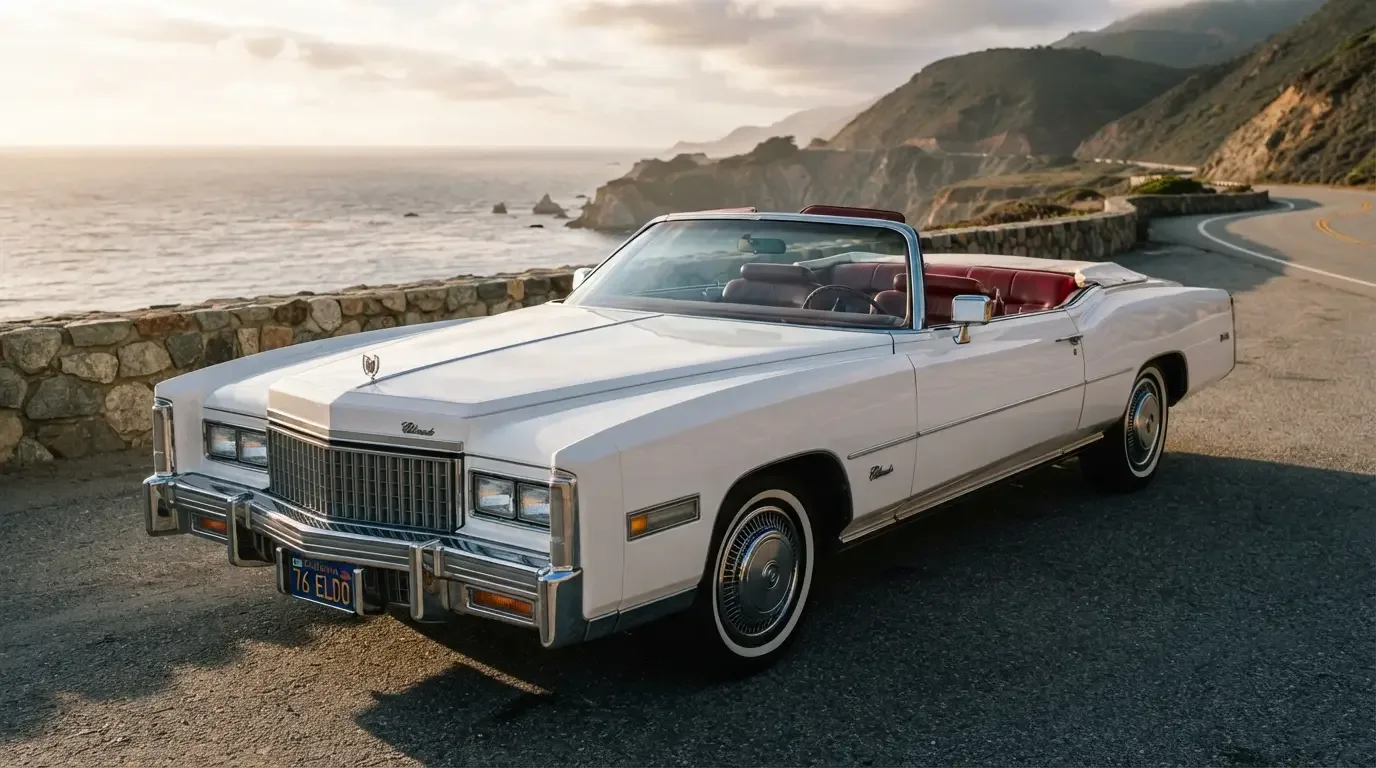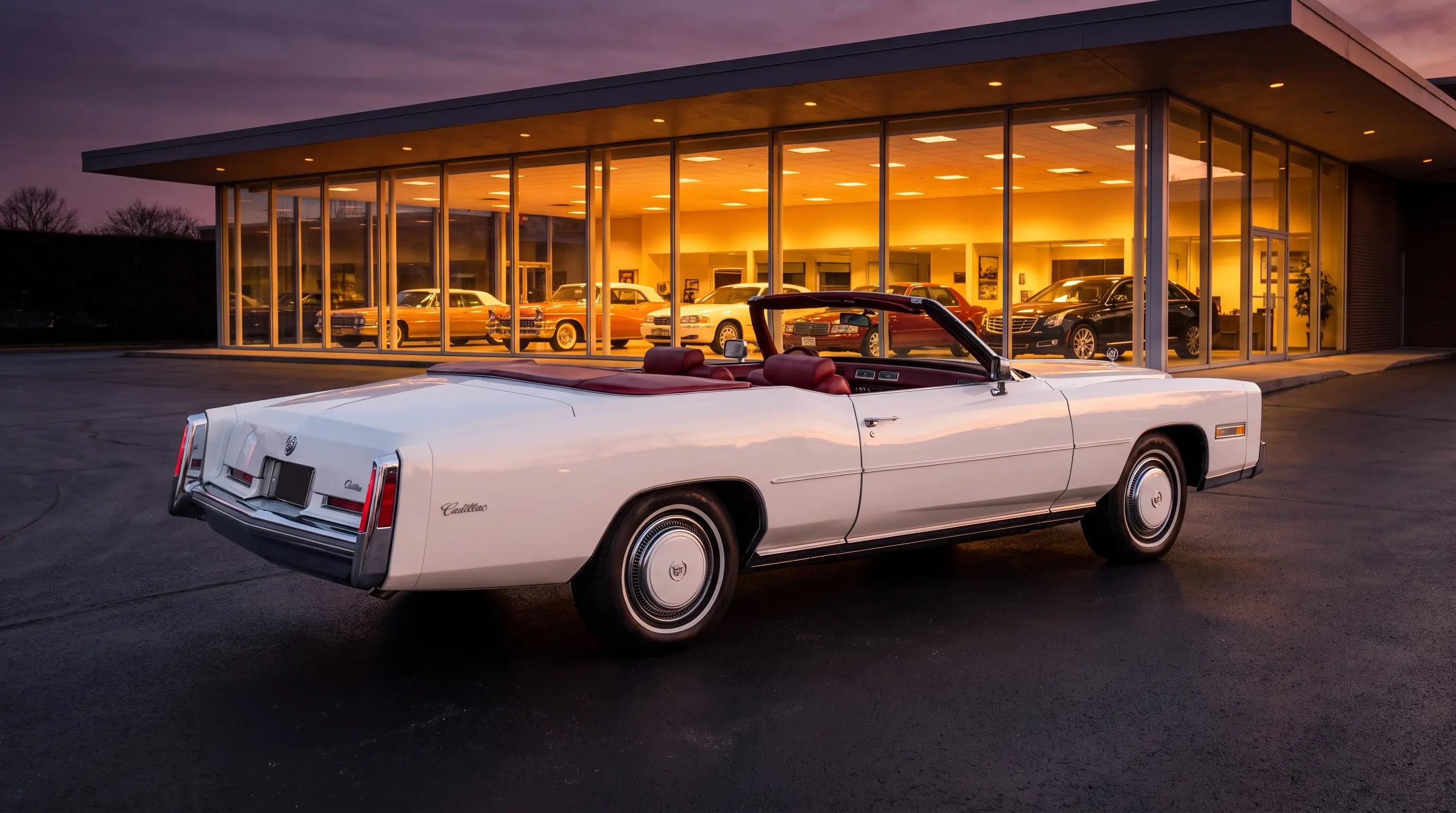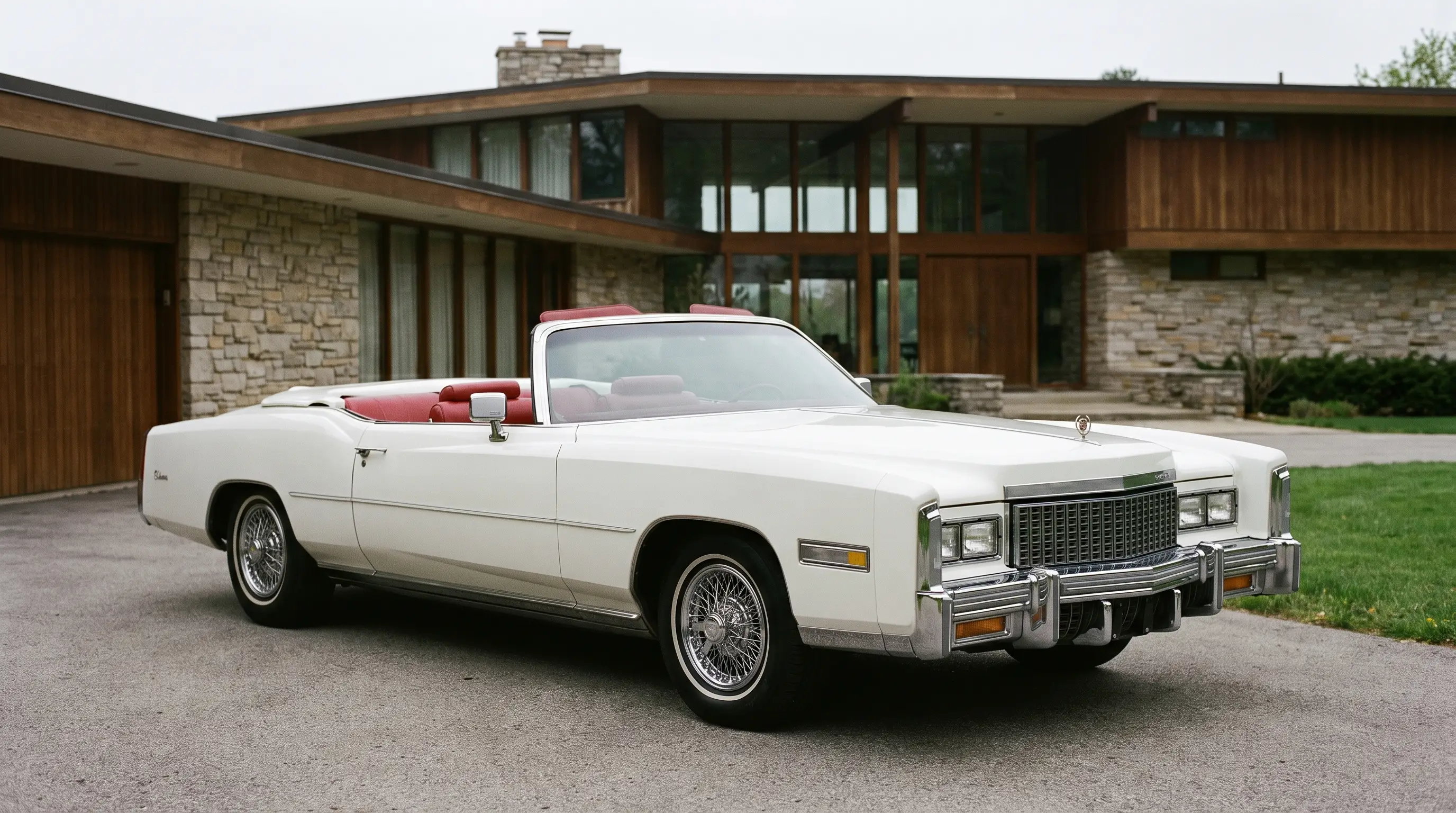
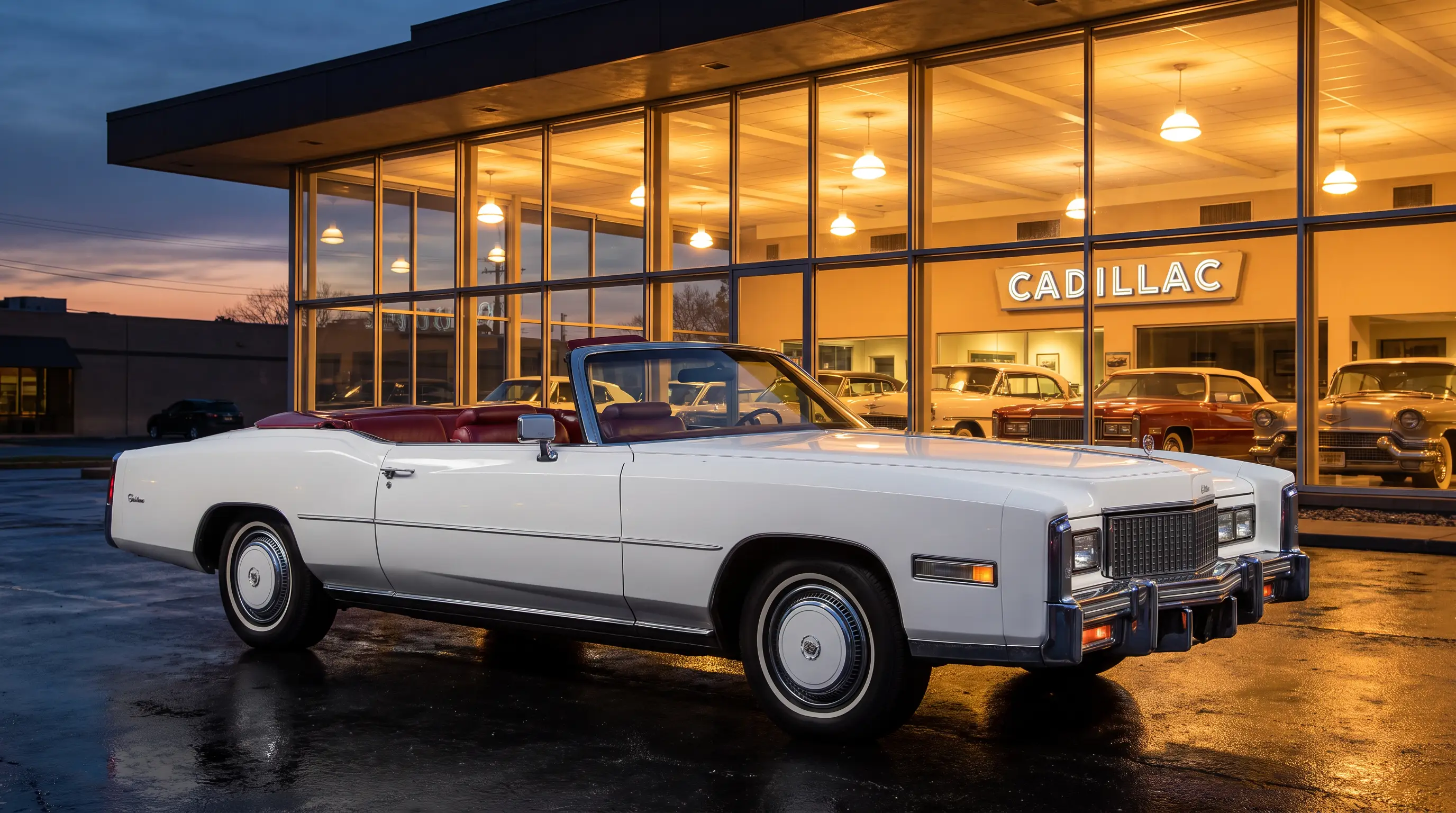
Guys bring me 1976 Cadillac Eldorados all the time expecting me to treat them like a museum piece just because somebody once told them it was "the last American convertible ever built." I have to break the news every time. It was not the last one. That last cadillac convertible myth got repeated so often it became gospel, but it was only true for a while, and that difference matters if you actually want to understand what you are working on in my shop.
What Cadillac actually said
Cadillac's own marketing in 1976 claimed the Eldorado would be the final convertible produced by any major American manufacturer, not just the final Cadillac convertible. That was a big claim, and at the time it was probably true, or close enough to true that nobody in Detroit was planning to prove it wrong. Every other domestic manufacturer had already dropped convertibles from their lineups by the mid-1970s, squeezed by the same combination of rollover safety concerns, declining demand, and rising insurance costs that pushed Cadillac to make the same call.
What the ad campaign did not say, and could not have known, was that the "last convertible" claim had an expiration date built right into it. Six years is not forever in the car business, and six years turned out to be exactly how long the claim held up.
| Claim | Reality |
|---|---|
| "Last American convertible ever" | Held true from 1976 to 1982 |
| Next factory convertible | Chrysler LeBaron, 1982 |
| Eldorado convertible return | Never happened |
| Effect on 1976 values | Initial premium, later corrected |
Chrysler proved it wrong
In 1982, Chrysler brought a convertible back with the LeBaron, built off the K-car platform and aimed at a very different, more budget-conscious buyer than the Eldorado had ever targeted. It did not matter that the LeBaron was a smaller, cheaper car built for an entirely different customer. What mattered is that an American manufacturer built a factory convertible again, which meant the 1976 Eldorado's central selling point, the "last one ever" claim, was no longer technically accurate.
Some 1976 Eldorado owners who had bought their cars specifically as an investment, plastic still on the seats, felt burned by that. They had paid a premium, sometimes bought a second or third example just to keep in storage, on the promise of permanent scarcity, and Chrysler's decision undercut that promise less than a decade later. I have talked to owners who still bring it up unprompted, decades on, with a little bit of residual irritation in their voice.
What that correction did to values
Prices for 1976 Eldorado convertibles softened somewhat once it became clear the car was not the permanent endpoint of American convertible manufacturing that buyers had been promised. That correction was not catastrophic. These are still desirable, well-built cars with genuine presence, and plenty of owners loved theirs regardless of what the marketing claimed. But the speculative premium that had inflated some 1976 asking prices in the years immediately after launch did not hold up the way early buyers hoped it would.
That price history is a big part of our complete history of the model, which covers the full arc from launch hype through the eventual market correction once the "last convertible" claim stopped being true. Anyone shopping for one of these cars today should understand that history before assuming a 1976 example automatically commands top dollar just because of its old marketing pitch.
"I have never once cared what a magazine ad said about a car's place in history. I care whether the top motor works, whether the floors are solid, and whether the guy selling it can tell me the truth. The rest is just noise that wears off eventually."
- Mike Sullivan
Why the myth stuck around anyway
Marketing claims have a way of outliving their own accuracy, and the "last American convertible" line attached itself to the 1976 Eldorado so thoroughly that plenty of people still repeat it today without knowing it stopped being true in 1982. Part of that is just how memorable the original campaign was. Cadillac and its dealers leaned hard into the farewell narrative, and a strong enough story tends to stick in the public memory long after the facts underneath it have moved on. I have had customers insist to my face that no American convertible was built between 1976 and today, and I have had to walk them through the LeBaron, the Mustang convertible's own return in 1983, and everything that came after.
Car culture in general is prone to this kind of thing, where a good enough story becomes shorthand for a car's identity and nobody bothers checking whether the story still holds up. The Eldorado is far from the only classic to carry a legend that outlived its accuracy, but it is one of the more stubborn examples I deal with regularly, mostly because the original claim was so specific and so widely repeated in period advertising that it became part of how an entire generation of buyers understood the car before they ever opened the hood.
None of this means the 1976 Eldorado is a lesser car once you know the truth. It is still a genuinely well-built, comfortable, powerful piece of American engineering from a specific and interesting moment in Cadillac's history. It just is not, and never really was for very long, the permanent and final word on the American convertible that the original brochure promised.
What actually matters when you are buying one
Forget the "last convertible" pitch entirely when you are standing in front of an actual 1976 Eldorado deciding whether to buy it. Check the trunk floor and rocker panels for rust, cycle the top a few times to make sure the motor and hydraulics work smoothly, and look underneath for evidence of accident repair or long-term water intrusion around the top well. None of that has anything to do with whether Chrysler built another convertible six years later. It has everything to do with whether you are buying a solid car or somebody else's expensive problem.
Once you know what you are actually looking at mechanically, you can go compare prices against other browse classic Eldorado listings and decide for yourself whether the asking price reflects the car in front of you or still carries some leftover premium from a marketing claim that expired decades ago.