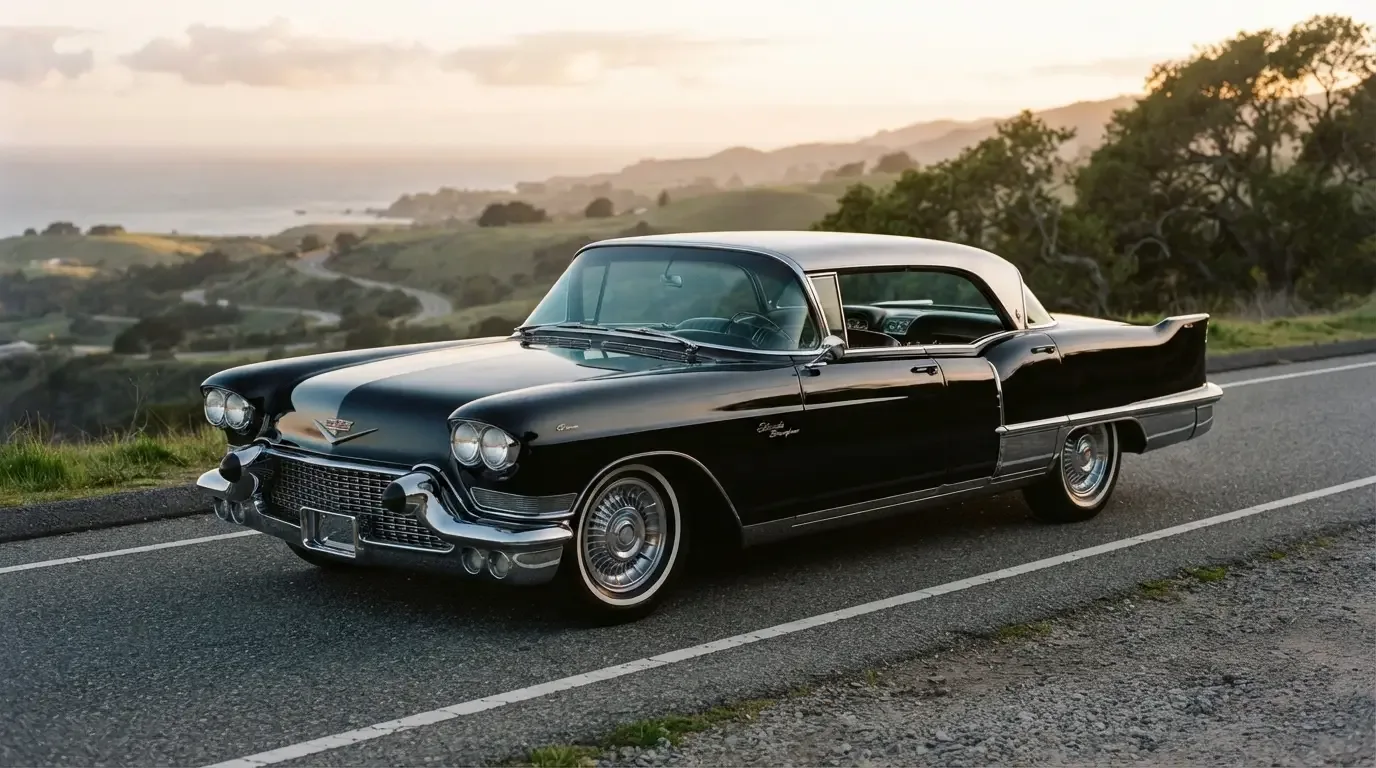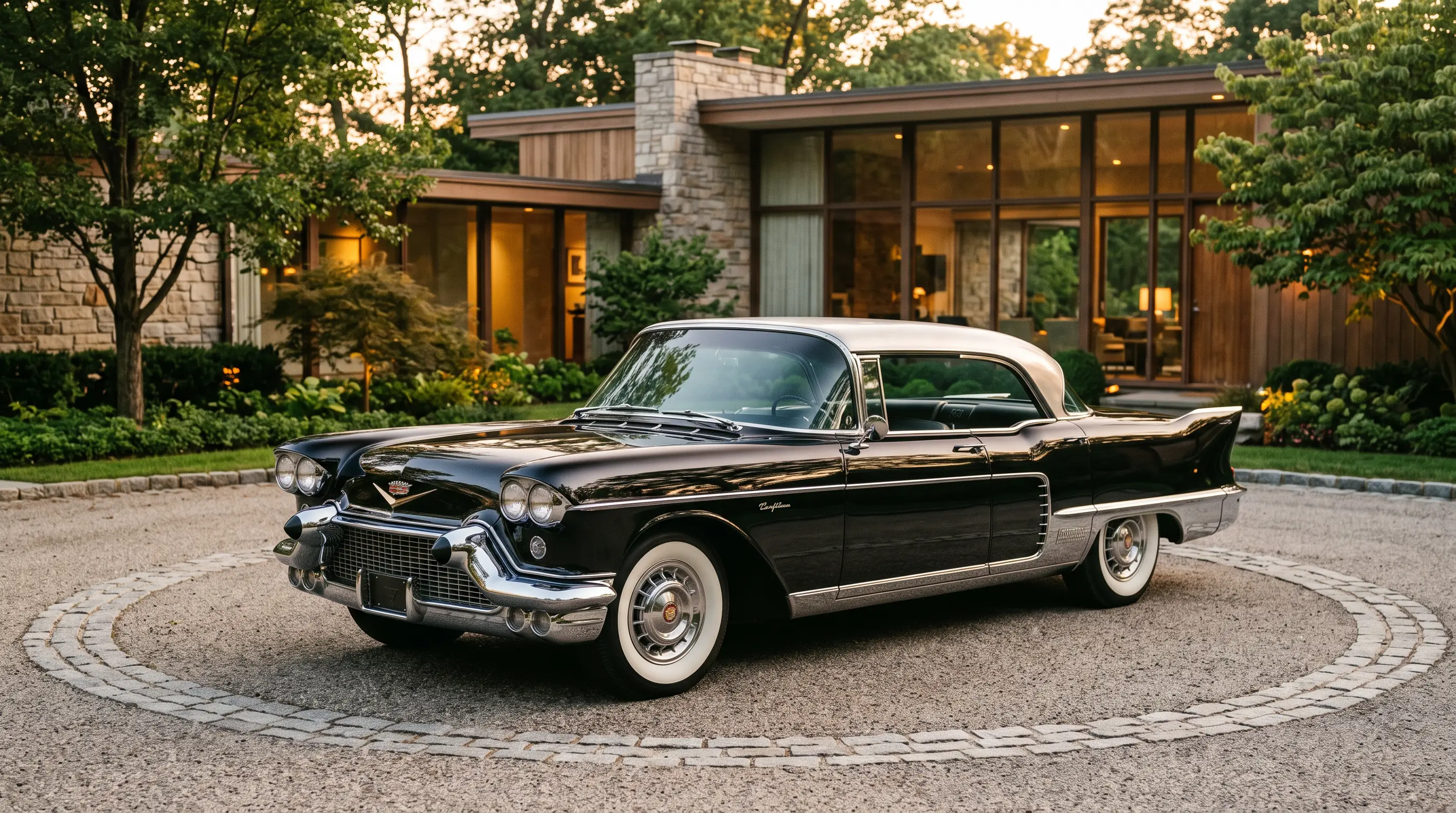
The Cadillac Eldorado Brougham original price was $13,074 when it went on sale for the 1957 model year, and that number is the whole story before you even open the door. A standard Cadillac Series 62 sedan that year stickered around $4,800. A loaded Series 75 limousine, with a professional driver up front and jump seats in back, ran about $6,500. The Brougham cost more than two of those limousines put together, and General Motors sold it at a loss on every single unit.
That gap between price and cost is the number every appraiser comes back to when a Brougham crosses the desk. It tells you what the car was built to prove, not what it was built to earn.
What $13,074 actually bought in 1957
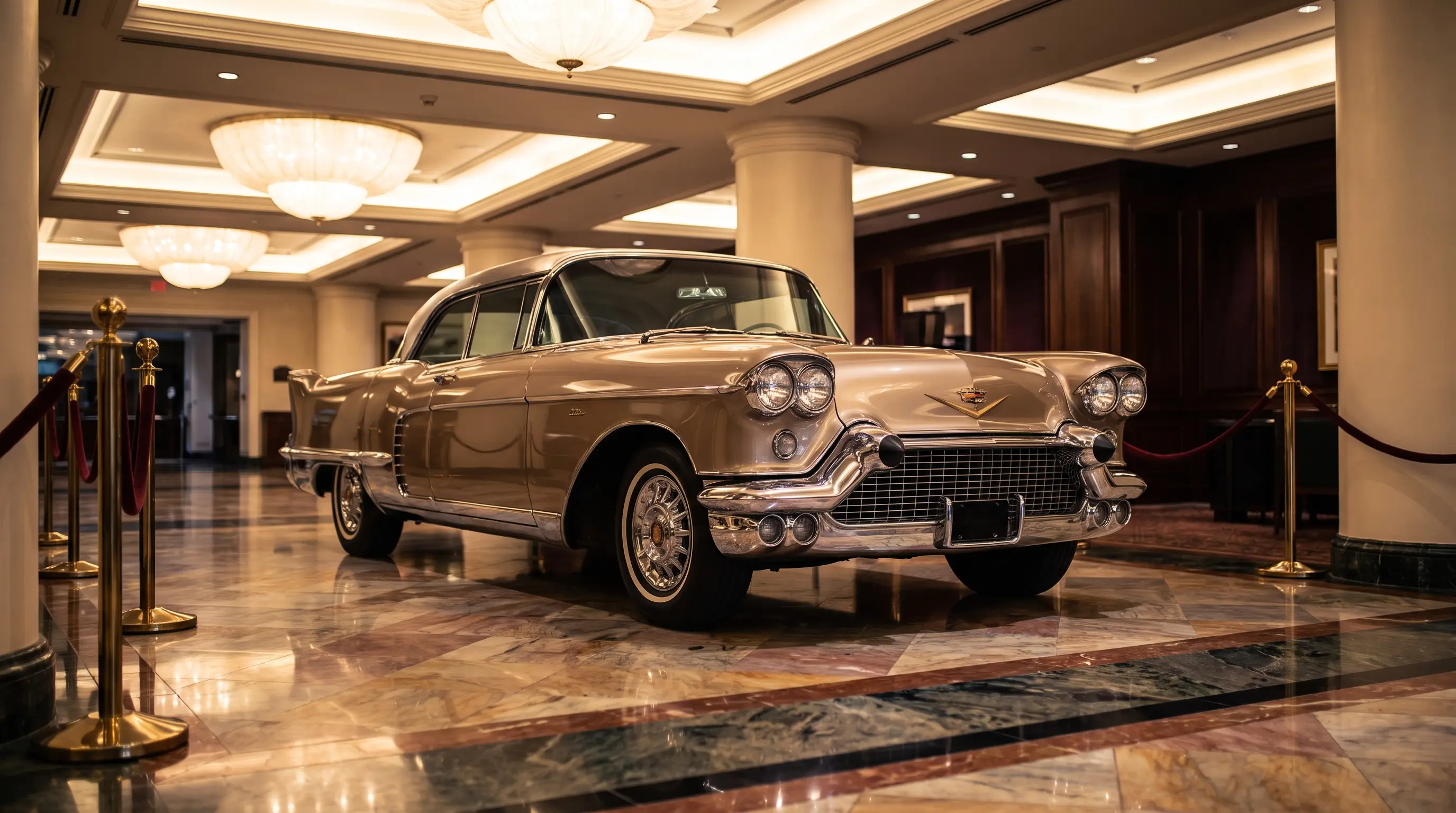
For that money the buyer got a hand-assembled body with a brushed stainless steel roof, a self-leveling air suspension system borrowed from aircraft engineering, quad headlights before they were legal in most states without a waiver, and a cabin trimmed in Karakul lamb's wool carpet and leather that was cut and sewn by hand. The door handles were flush-mounted push-button units. The frameless door glass and pillarless "hardtop" construction on a four-door body was itself a manufacturing headache nobody else was willing to absorb at volume.
Every one of those features cost real labor, and Cadillac priced the car to reflect roughly a third of that labor. Estimates from the period put GM's loss at somewhere between $10,000 and $15,000 per car depending on which internal accounting you trust, meaning the division may have lost as much building each Brougham as the customer paid for it.
Why a halo car is priced to lose money
This is not unusual for a flagship, and it is not incompetence. A halo car exists to pull customers toward the rest of the lineup, and Cadillac needed that pull badly in the mid-1950s as Lincoln and Imperial pushed harder into the luxury segment. The Brougham's price tag was a marketing tool as much as a sales figure. It told the country that Cadillac could build something no other American manufacturer would even attempt, and it let a Series 62 buyer feel like they were getting a bargain by comparison.
The strategy worked in the sense that it generated coverage in every major magazine of the era and reinforced Cadillac's standing at the top of the American market. It did not work as a sales program. At $13,074, the Brougham was priced against European coachbuilt cars, not against anything Detroit was moving in volume, and the buyer pool for that was always going to be tiny.
What the price meant for who actually bought one
The customer list reads like a period who's who: industrialists, entertainers, at least one head of state. These were buyers who did not cross-shop. A car priced at three times a standard Cadillac was, for that clientele, still cheaper than a proper coachbuilt European car and came with a domestic dealer network for service. You want the full story on who built it and why the specification list ran so far past reasonable, but the short version is that nobody at Cadillac expected the Brougham to sell on value. It sold on exclusivity, and exclusivity has never been cheap to manufacture on purpose.
| Item | 1957 Price |
|---|---|
| Eldorado Brougham | $13,074 |
| Cadillac Series 62 sedan | approx. $4,800 |
| Cadillac Series 75 limousine | approx. $6,500 |
| 1957 Brougham production | 400 units |
| 1958 Brougham production | 304 units |
Reading the original price against the car in front of you today
When I appraise one of these now, the original sticker matters less than what it proves about intent. A car that cost this much to build, and that was sold this deliberately at a loss, was never built to a price point. That changes how you evaluate deviations from factory spec. A repaired air suspension system that's been converted to conventional coils is not a minor variance, it's the removal of one of the specific features that justified the number in the first place. Buyers chasing a Brougham for investment purposes need to treat the original specification sheet as the baseline, then discount hard for anything missing.
Documentation carries more weight here than on almost any other American collector car of the period, precisely because the production run was so small and the original cost so far out of line with anything comparable. A Brougham with full ownership history and original air suspension components, even non-functional ones retained in the car, holds a real premium over a driver-quality example with unknown history.
"You don't appraise a Brougham the way you appraise a production Cadillac. You're appraising a $13,000 loss leader from 1957, and every part that's missing is a part GM specifically chose to lose money manufacturing. That's not a small deduction, that's a structural one."
- Marcus Feld
The downside case, stated plainly
Liquidity is the risk nobody likes to discuss. Because so few were built, and because the market for a $13,000-in-1957 car is by definition narrow, a Brougham can sit on the market longer than a more common Eldorado convertible even at a fair price. That's not a reason to avoid the car. It's a reason to buy documentation and originality first and worry about resale timing second. If you're comparing this car against anything currently listed as a classic Eldorado for sale, ask specifically whether the air suspension components are present and whether the stainless roof has ever been replaced. Those two questions will tell you more about long-term value than the odometer reading ever will.
The original price was never meant to make sense as a business proposition, and that's exactly why the number still matters seven decades later. It's the clearest evidence available that Cadillac built this car to prove a point, not to turn a profit, and cars built to prove a point tend to hold their significance long after cars built to hit a sales target are forgotten.
How the 1959-60 Broughams changed the math
The story doesn't stop at 1958. When Cadillac moved Brougham production to Pininfarina in Italy for 1959 and 1960, the price and the philosophy both shifted. The Italian-built cars dropped the stainless steel roof and the most extreme fins in favor of a cleaner, lower silhouette, and the price actually came down somewhat from the 1957-58 peak, though it remained far above anything else in the American market. Production numbers shrank too, with roughly 99 built for 1959 and about 101 for 1960, figures small enough that some sources give slightly different totals depending on how partial-year assembly gets counted.
What matters for an appraiser is that the 1957-58 domestic cars and the 1959-60 Pininfarina cars are not interchangeable in the market's eyes. They share a name and a mission but not a bill of materials, and a buyer treating them as the same car is making a mistake that shows up immediately once you start comparing feature lists side by side. The stainless roof alone is a dividing line collectors use constantly when discussing which years actually deliver on the original engineering promise.
Original price as a floor, not a ceiling
None of this means a well-documented Brougham is a guaranteed appreciating asset. It means the original price sets a psychological floor under how the car gets discussed and valued, even when actual auction results move independently of that number. A car built to lose money on purpose, in extremely low volume, with features nobody else offered, tends to hold cultural weight regardless of where the market happens to sit in a given year. That weight is worth something to a buyer thinking in decades rather than quarters, and it's worth almost nothing to someone expecting a quick flip.
Sources and notes
- Hagerty Valuation Tools - 1957 Cadillac Eldorado Brougham
- RM Sotheby's - 1957 Cadillac Eldorado Brougham auction listing
- Curbside Classic - 1960 Eldorado Brougham by Pininfarina
- New Cadillac Database - Historical Eldorados 1957-1960
- Wikipedia - Cadillac Eldorado
- Heacock Classic - 1957-58 Cadillac Eldorado Brougham