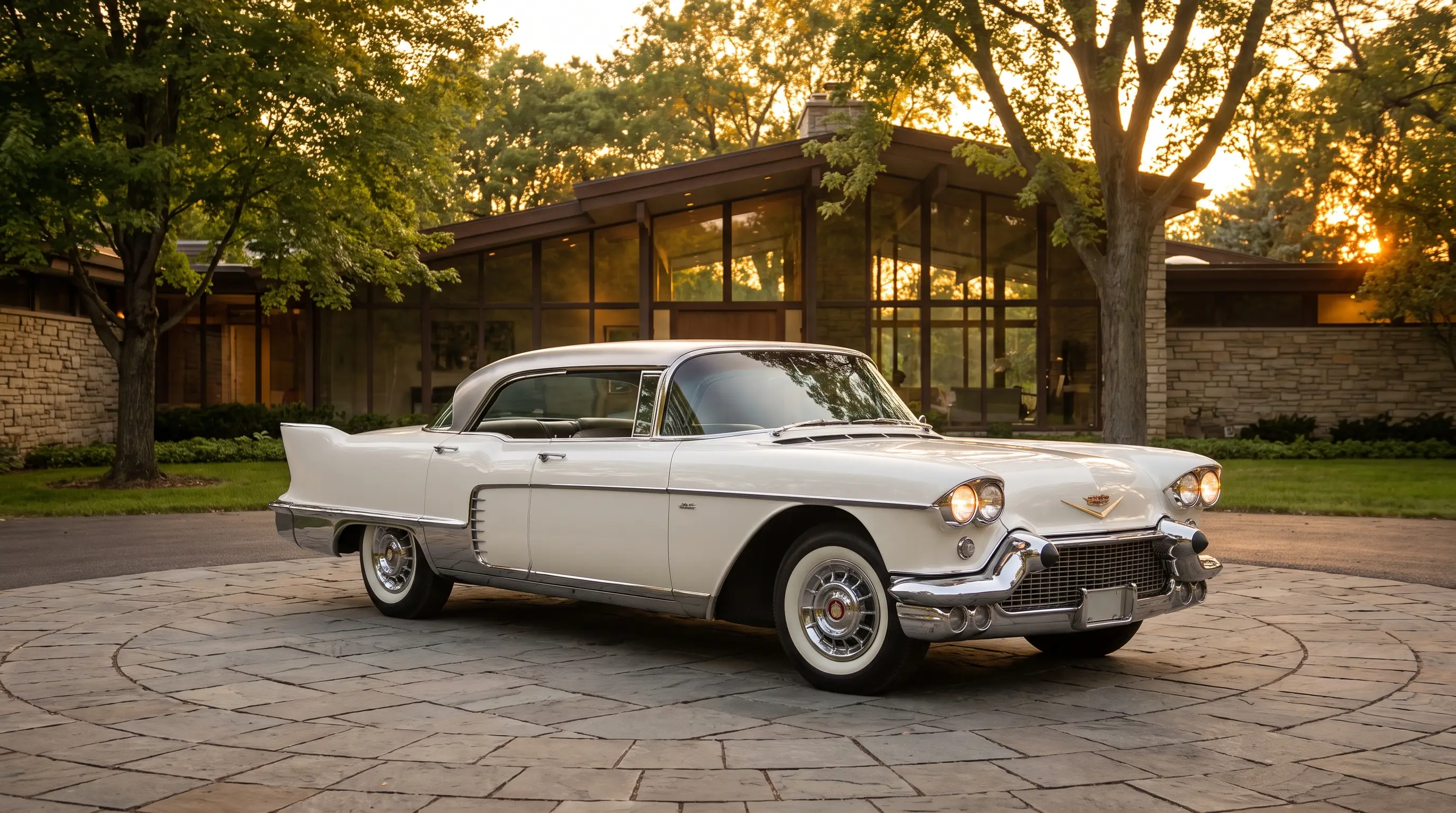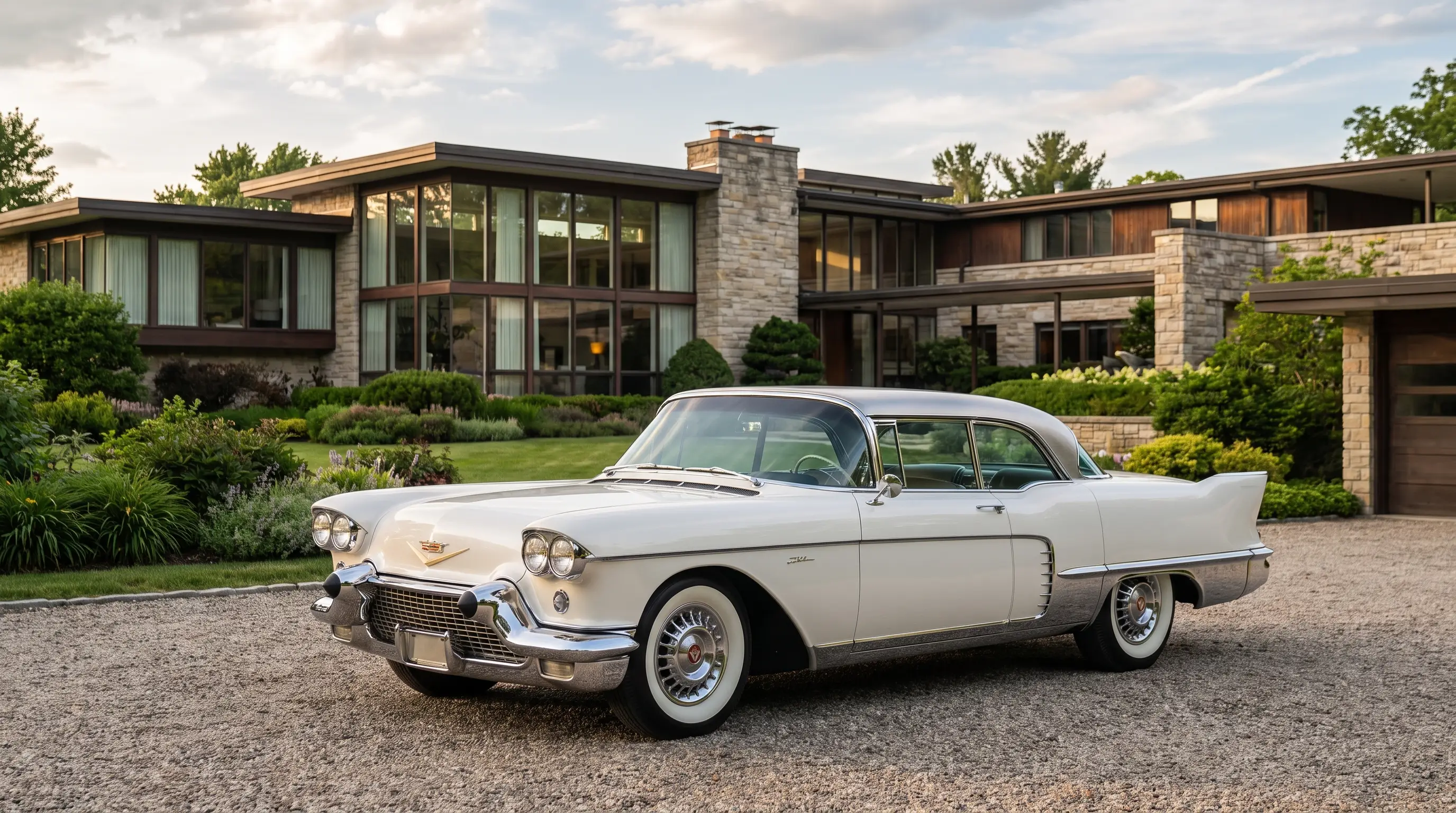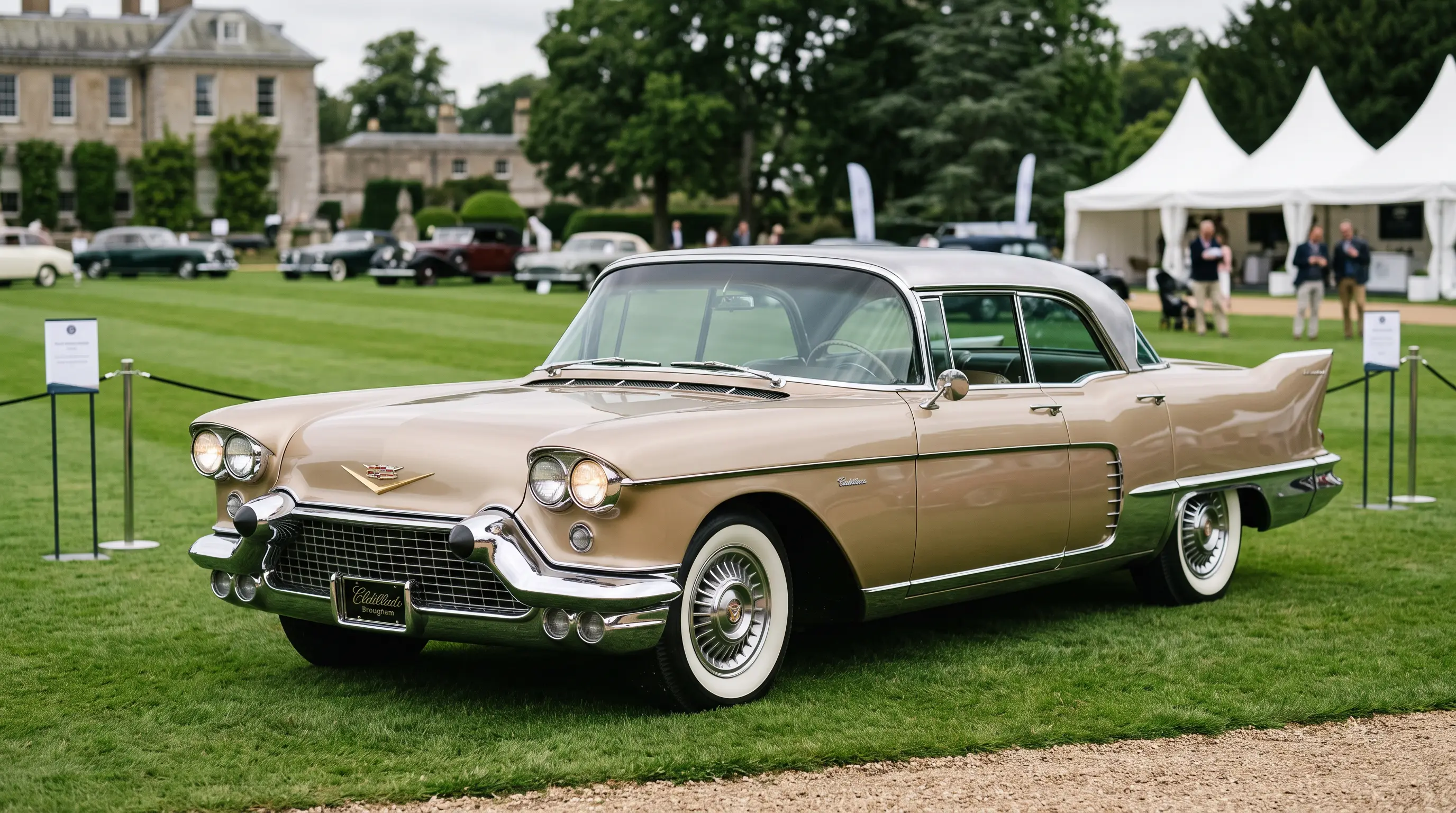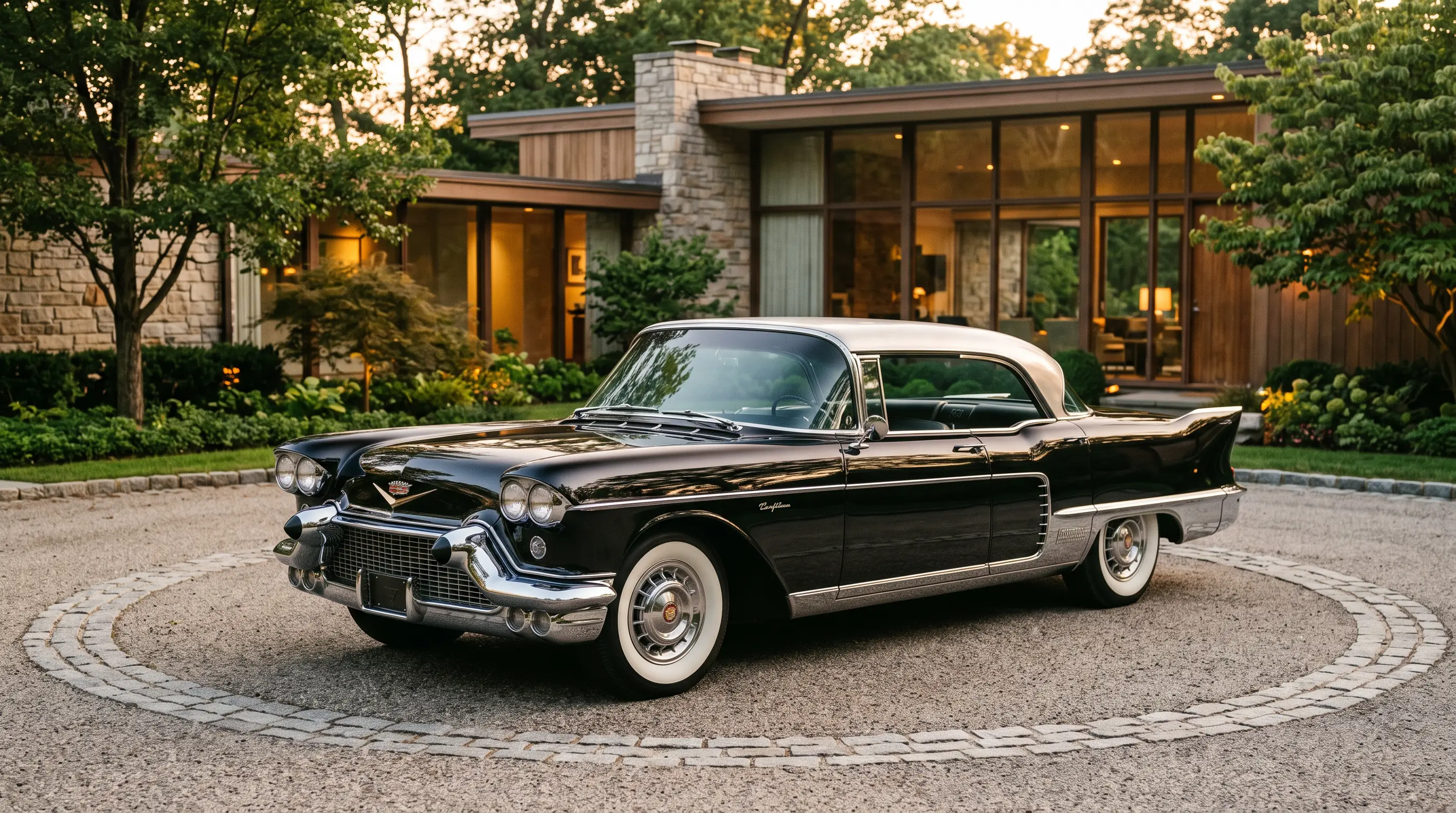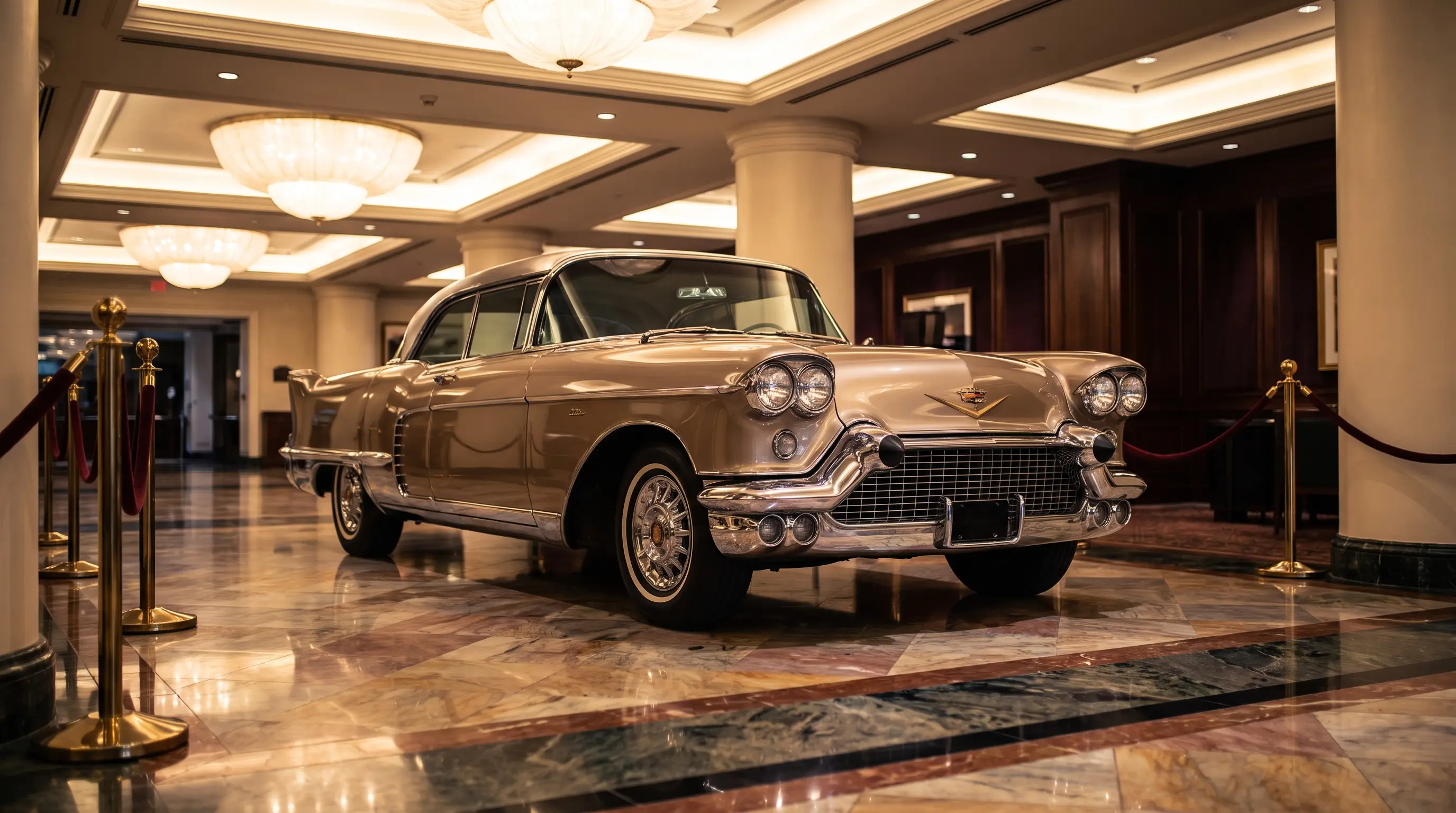
There is a fellow in our chapter, a retired tool-and-die man named Ron, who keeps a Polaroid in his wallet of a car he sat in exactly once, in the summer of 1958, when he was nine years old. His uncle worked the line in Detroit and knew a salesman, and for about ninety seconds a boy in short pants was allowed to sit behind the wheel of a brand new Cadillac Eldorado Brougham. Ron still talks about the smell of it. He remembers the little metal cups in the glovebox and the way the door shut like a bank vault. He did not become a rich man, but he never forgot that the most expensive American car of its day let a kid touch the steering wheel. When we get to swapping stories at the fall meet, that Polaroid comes out, and every time somebody younger asks the same question. How much did that car actually cost?
The answer is the part that stops people. In 1957 the Eldorado Brougham carried a sticker of roughly $13,074, which was more than a Rolls-Royce Silver Cloud sold for in the United States that same year. You could buy two ordinary Cadillacs for the price of one Brougham and still have money left for gas. That single fact is why the car earns its own chapter, and why anyone reading the broader cadillac eldorado history eventually circles back to the four-door that outpriced Rolls-Royce and lost money on every unit anyway.
How a show car became a showroom promise
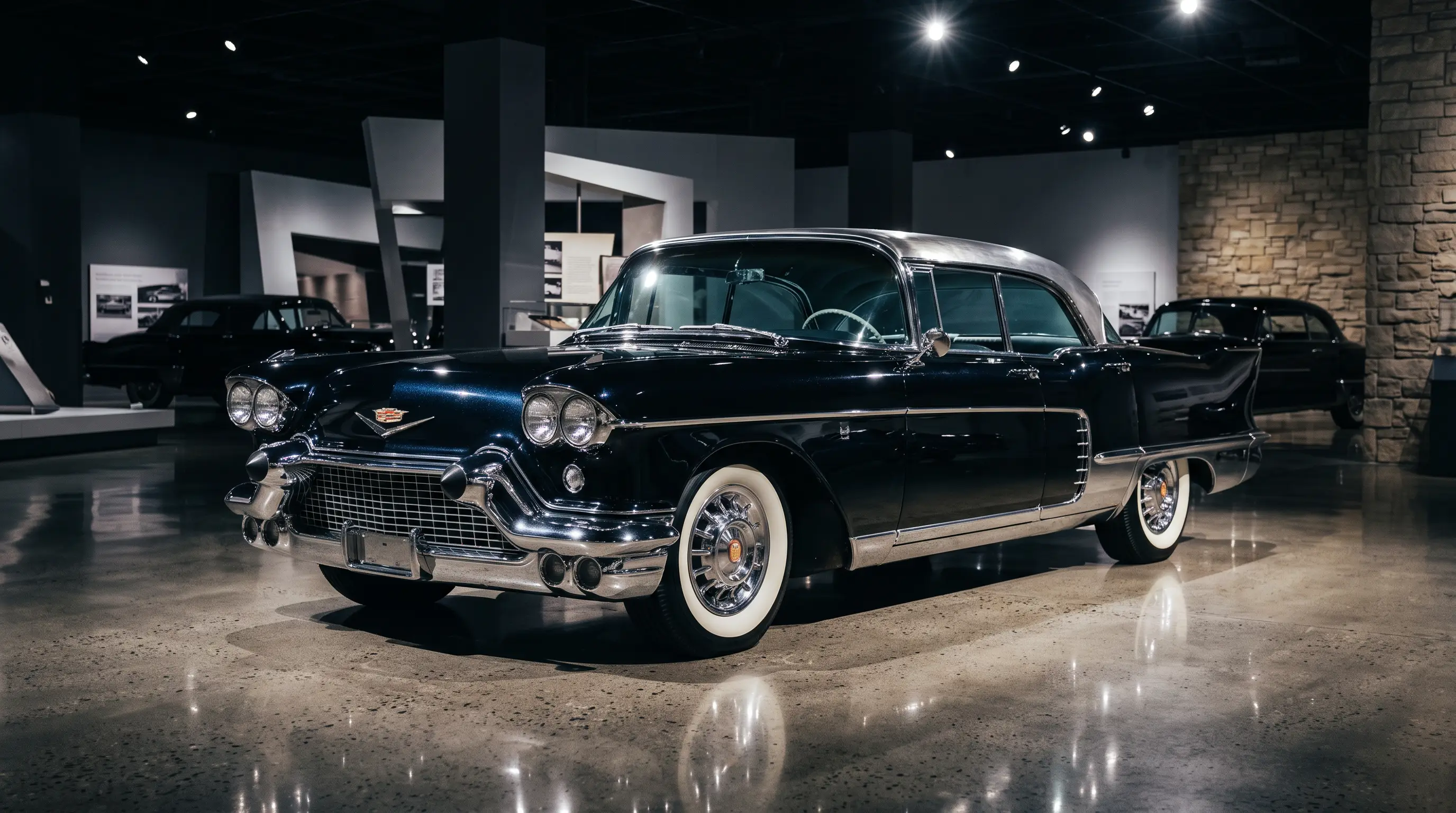
The story the club tells starts, as these things usually do, with a dream car that was never meant to be built. Cadillac had been floating stainless-roofed Eldorado Brougham showpieces through the Motorama circuit in the mid-1950s, and the crowds loved them the way crowds always love something they cannot have. General Motors design leadership decided to call its own bluff. The Brougham would go into production, roof and all, as a rolling advertisement for what the division could do when nobody counted the pennies.
That is the detail I keep coming back to. The Brougham was not built to make money. It was built to make a point. Every division inside GM wanted the halo, and Cadillac got it, and the engineers were handed a brief that amounted to put everything on it. So they did. When you understand that the car was a statement first and a product second, the wild specification sheet stops looking like excess and starts looking like the whole entire point.
The specification that justified the price
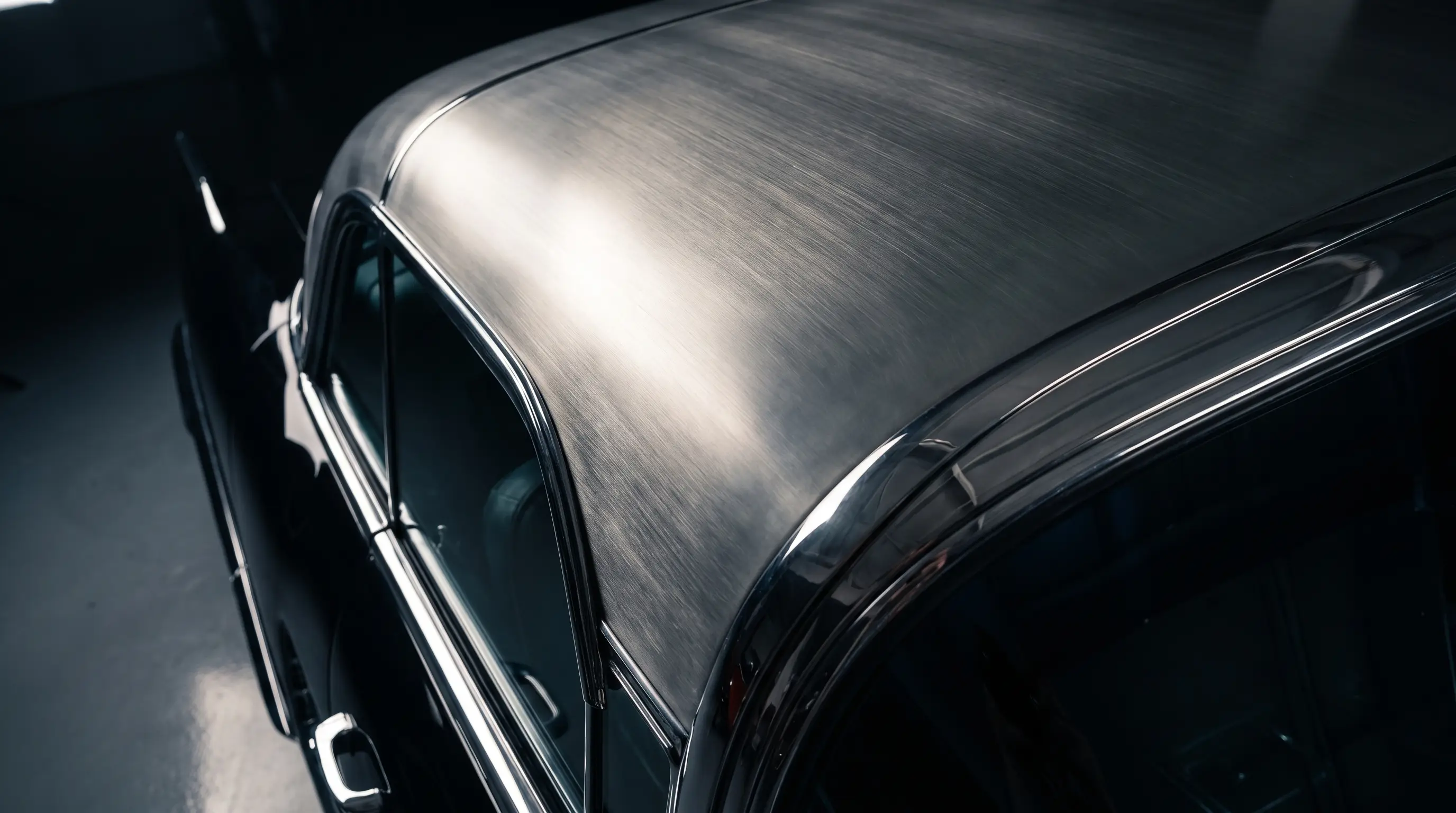
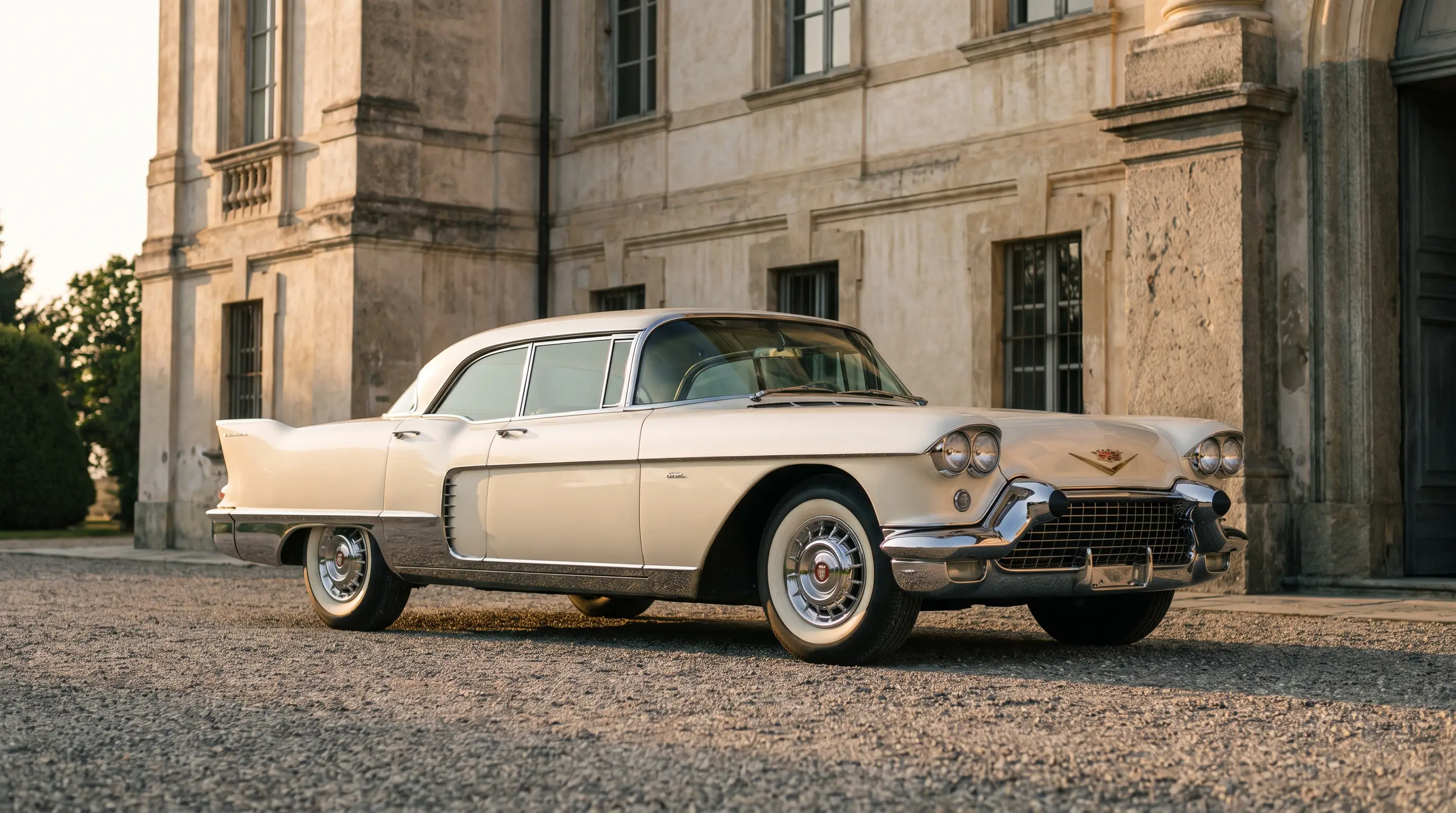
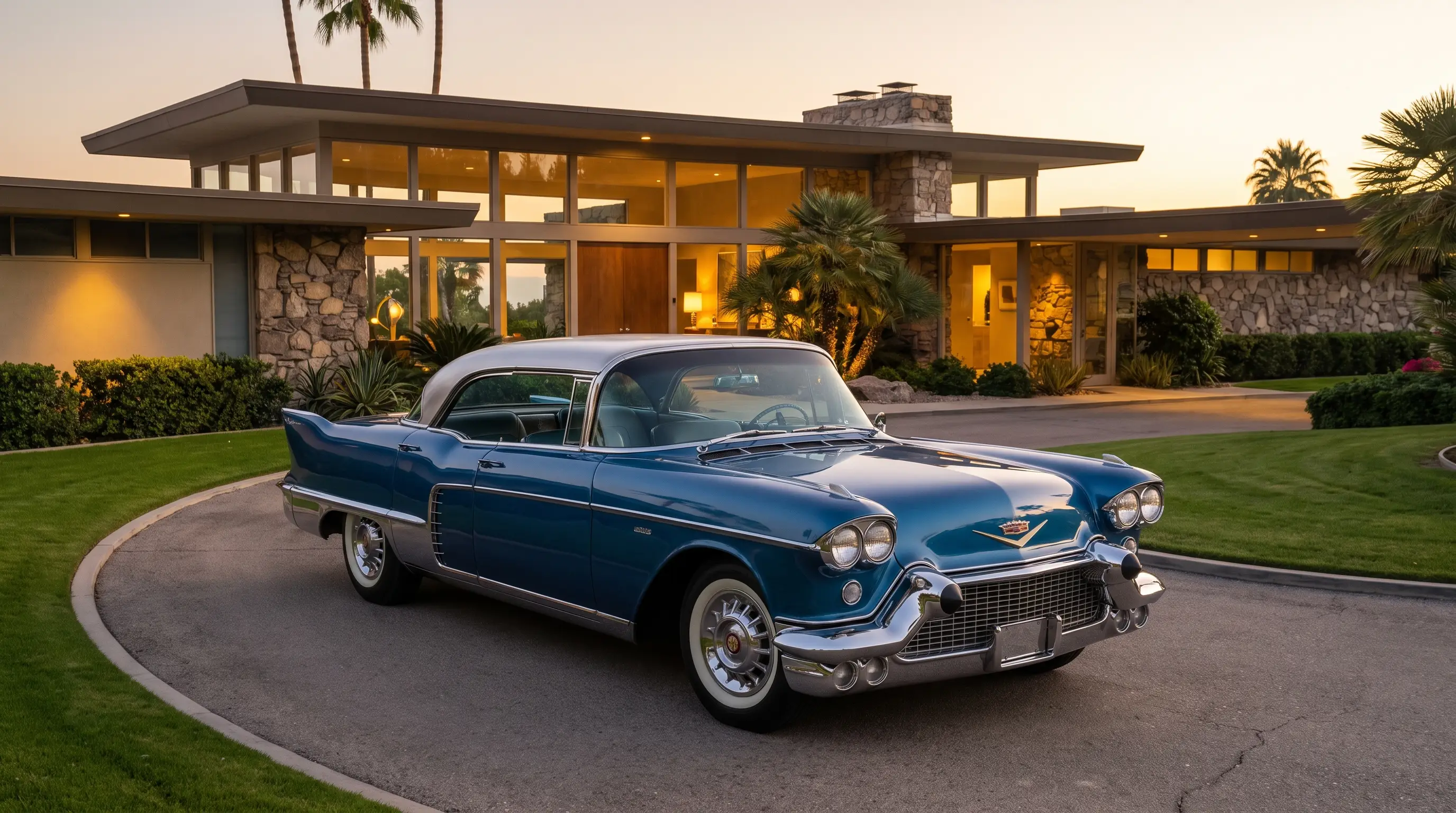
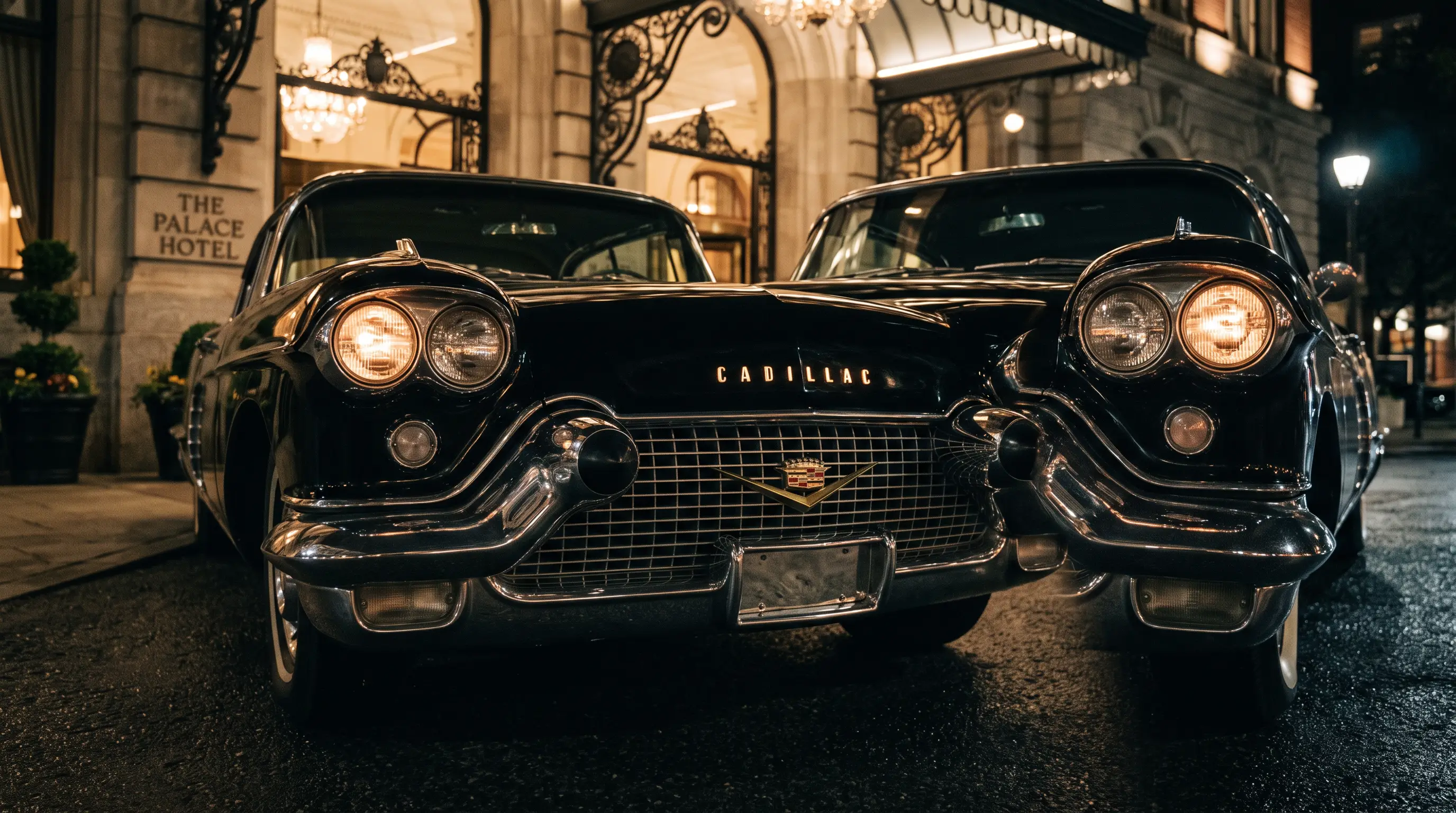
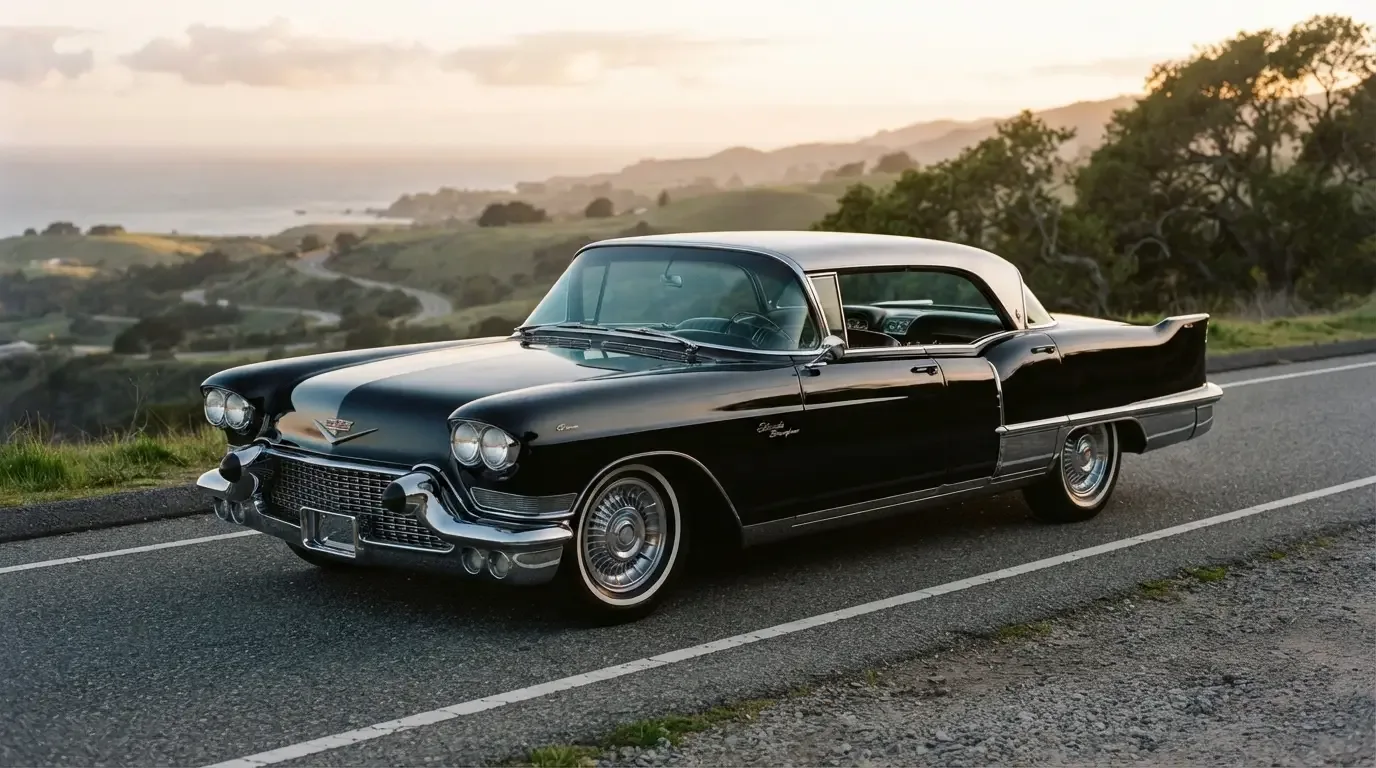
Ask a modern buyer why a 1957 sedan should cost Rolls-Royce money and you have to walk them through the list. This was the first American production car with quad headlamps, a feature so new that a handful of states had to change their laws before the car was strictly legal to sell there. It rode on air suspension when air suspension was closer to science fiction than to engineering, with a compressor and a set of rubber domes doing the job coil springs did on every other car in the lot. The roof was brushed stainless steel. The wheels were forged aluminum. Inside there were memory power seats, meaning the car remembered where you liked to sit, in an era when most cars still remembered nothing at all.
| Detail | 1957 Eldorado Brougham |
|---|---|
| Body style | Four-door hardtop, pillarless |
| Roof | Brushed stainless steel |
| Engine | 365 cubic inch V8, roughly 325 hp with dual four-barrel carburetors |
| Suspension | Self-leveling air suspension |
| Headlamps | Quad, an American production first |
| Wheels | Forged aluminum |
| Base price (1957) | About $13,074 |
| Production, 1957 | Around 400 units |
| Production, 1958 | Around 304 units |
The list goes on into the sort of territory that makes club members grin. There were magnetized cups in the glovebox so they would not rattle. There was a ladies' vanity, a cigarette case, a tissue dispenser, a comb, a mirror, an atomizer of Arpege perfume by Lanvin on some cars. Cadillac was not selling transportation here. Cadillac was selling the idea that the most fortunate people in America should never have to reach for anything.
Why Cadillac lost money on every one
Here is the punchline our chapter historian likes to deliver, and he waits for it. Cadillac lost money on the Brougham. Even at a price that beat Rolls-Royce, the hand-built nature of the car and the cost of that specification meant the division reportedly spent more to build each one than it took in at the register. Estimates that get passed around at meets put the loss at something like ten thousand dollars per car, which in late-1950s money was staggering. The Brougham was a loss leader in the most literal sense. It led the brand, and it lost.
Production numbers tell you the rest. This was never a volume car. The 1957 run came to something on the order of 400 cars, and the 1958 run was smaller still at roughly 304. Put together, the American-built Broughams of those two years number in the hundreds, not the thousands. When you see one at a national show, you are looking at a survivor from a batch small enough that owners tend to know each other by first name.
"Every club has a car that people gather around and lower their voices. For us it is the Brougham. It is the one where a member will drive four hundred miles just to stand next to it and not say much."
- Wayne Coburn
The Italian chapter nobody expected
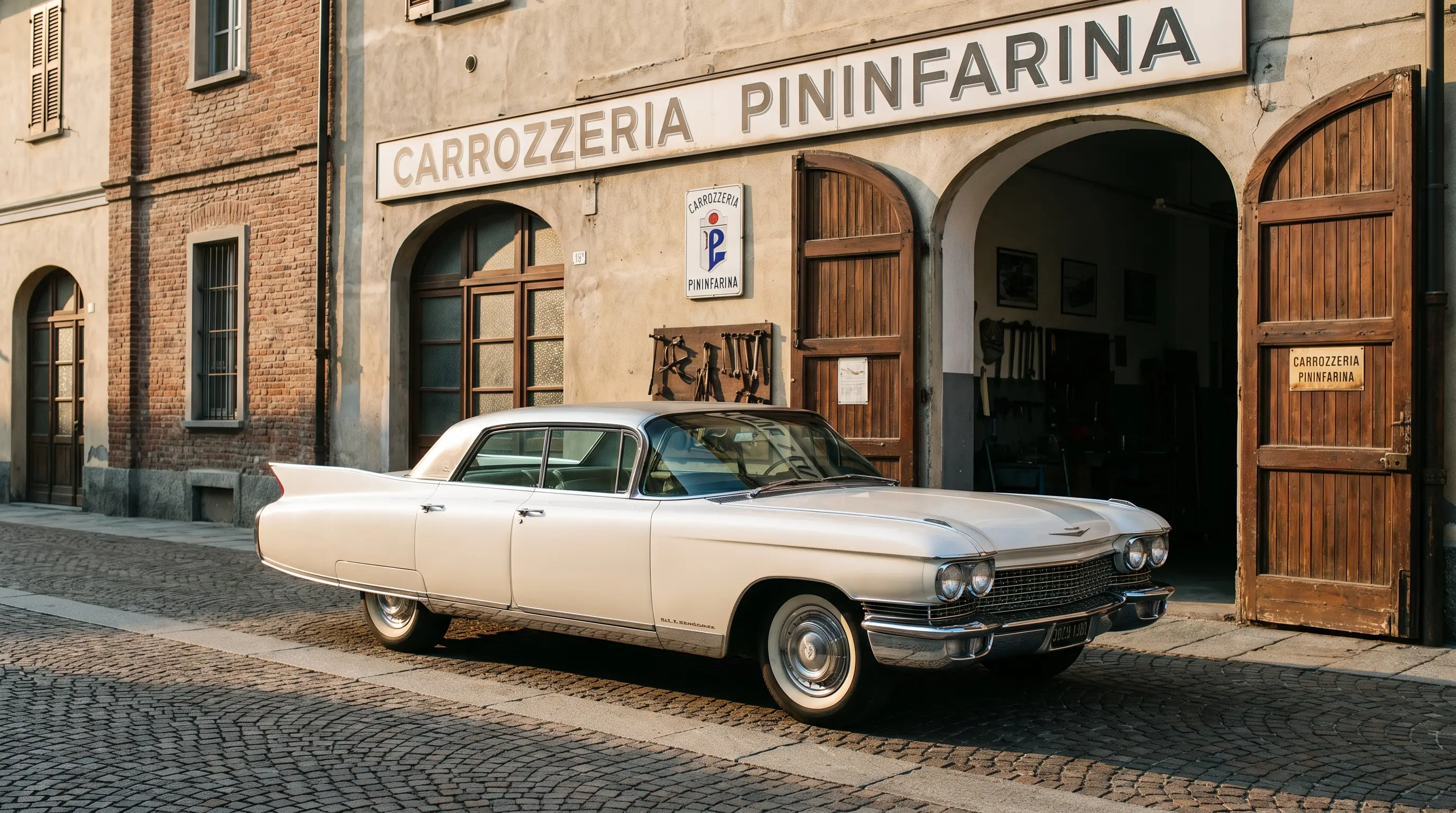
The part that surprises newer members is that the Brougham story did not end in Detroit. For 1959 and 1960 the Eldorado Brougham was redesigned and the bodies were built in Italy by Pininfarina, then shipped back and finished in the States. These later cars are a different animal, more restrained in their sheet metal and even rarer than the first pair of years, with just 99 built for 1959 and 101 for 1960. Ask a collector which Brougham they want and you will start an argument that runs until the coffee is cold. The purists love the 1957 stainless roof and the quad-lamp shock of the thing. The quiet crowd loves the Italian cars for their tailored restraint.
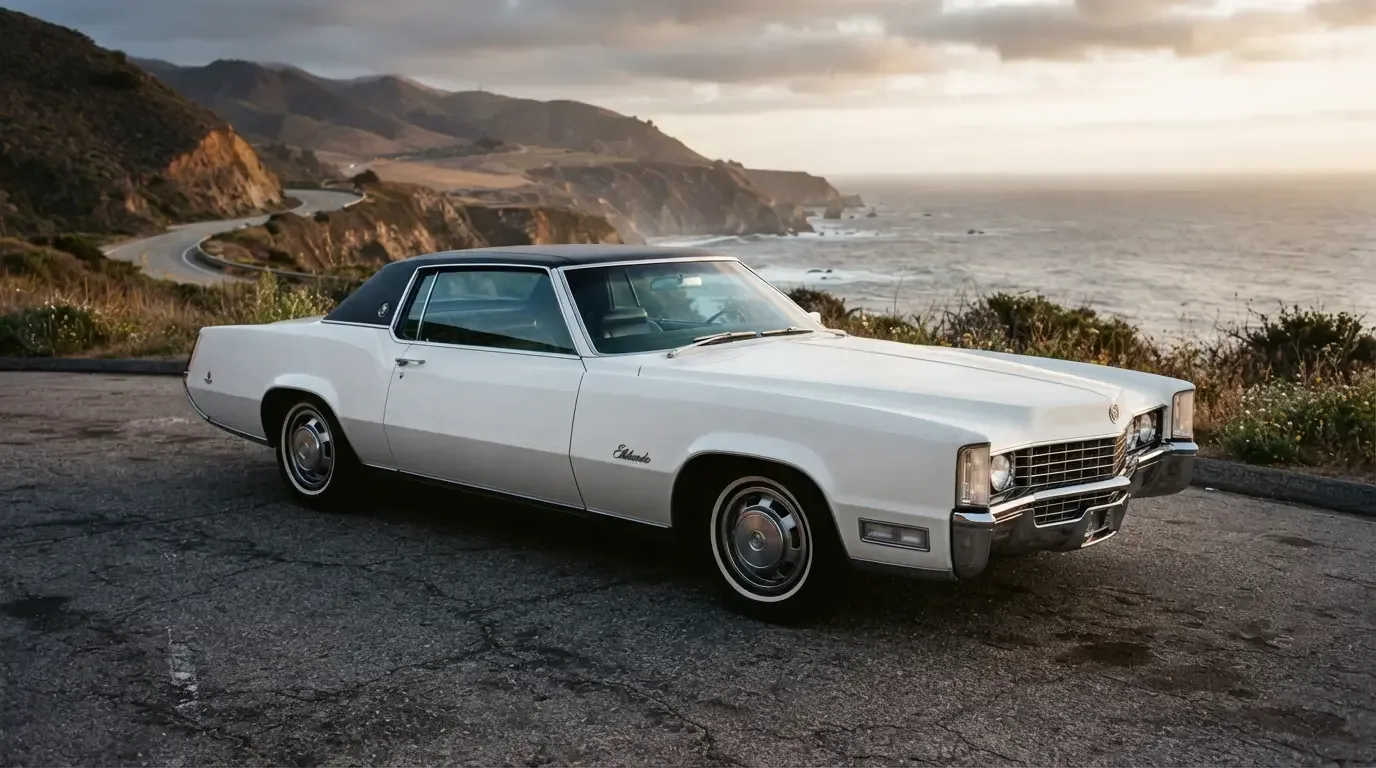
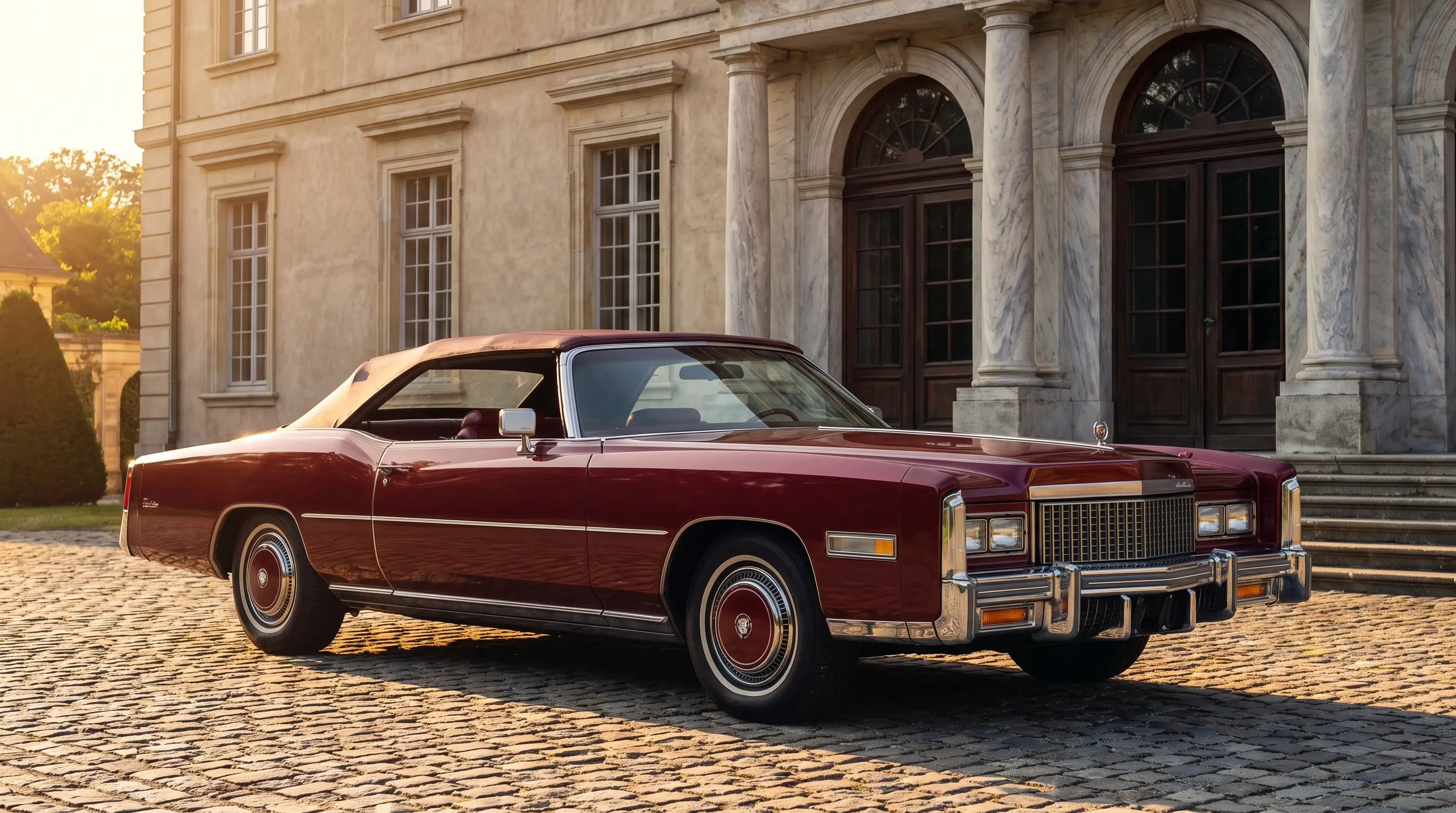
Either way you land, the Brougham sits at the top of the fin-era Cadillac story like a crown that cost more than the head it sat on. If you enjoy the way one great car opens the door to the next, the 1967 front-drive Eldorado is worth a look too, because it is the moment Cadillac stopped chasing pure spectacle and started chasing engineering headlines instead.
Who actually bought one
The natural question at every meet is who wrote the check. The answer is a very short list. At a price that beat Rolls-Royce, the Brougham was aimed at the sort of buyer who already owned several cars and wanted the one nobody else on the street could have. Captains of industry, entertainers, a scattering of the genuinely wealthy who treated a new car the way other people treat a new watch. The car was never meant to sell in numbers, so Cadillac did not chase the ordinary luxury buyer. It chased the person for whom money had stopped being the deciding factor.
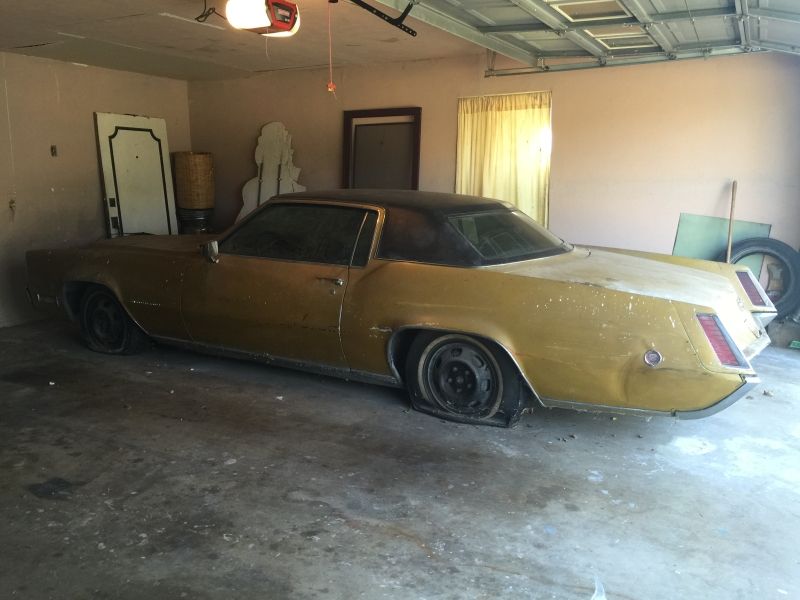
That narrow appeal is exactly why the survivors carry the stories they do. When our chapter historian tracks a specific Brougham through the decades, the ownership chain often reads like a small society column. Cars like this tended to stay with people who could afford to keep them, then passed to collectors who understood what they were holding. The ones that fell through the cracks, that got tired and cheap and neglected in the 1970s, are the ones that are hardest to bring back now, because so much of what made a Brougham a Brougham was in the details that get lost when a car is treated as ordinary transportation.
There is a lesson in that for anyone who tells the history. The Brougham was a car built for a moment of postwar American confidence, when a domestic company decided it could and should build the most expensive car in the world and dare anyone to argue. It did not last. The economics never worked. But for a few years the most costly car you could buy in America was not European at all, and that fact still makes people at our meets sit a little straighter when they say it out loud.
What a Brougham means to a collector today
When one of these comes up for sale, the room changes. Documentation is everything. A Brougham with its build records, its original interior appointments still in the glovebox, and honest history behind it is a car that trades in a different universe from a project that has lost its air suspension and half its trinkets. The community has learned this the hard way, watching cars get parted, watching reproductions of the little accessories creep into the market. The best of them, the fully documented survivors, are among the most valuable postwar American Cadillacs, and their values reflect how few were made and how hard they are to keep correct.
Ron never owned one. Most of us never will. That is not really the point of the Brougham, though, and it never was. The car existed to prove that an American company could out-build the best of Europe and would happily lose money doing it, just to say it could. If you want to see where the surviving cars change hands and what honest history is worth in dollars, you can always shop classic Eldorado listings and watch how the market treats the ones with paperwork. And if you ever find yourself standing next to one at a show, do what our chapter does. Let the kid sit in it. Ron did, once, and he is still telling us about it sixty-odd years on.
Sources and notes
- conceptcarz: 1957 Cadillac Series 70 Eldorado Brougham specifications
- Wikipedia: Cadillac Eldorado
- NotoriousLuxury: 1957-1958 Cadillac Eldorado Brougham
- NotoriousLuxury: 1959-1960 Cadillac Eldorado Brougham by Pininfarina
- Hagerty: 1958 Cadillac Eldorado Brougham
- Classic and Sports Car: Cadillac Eldorado Brougham