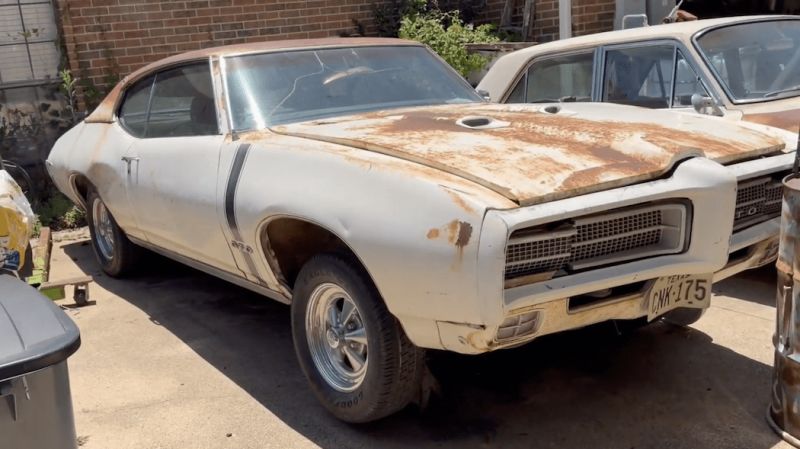
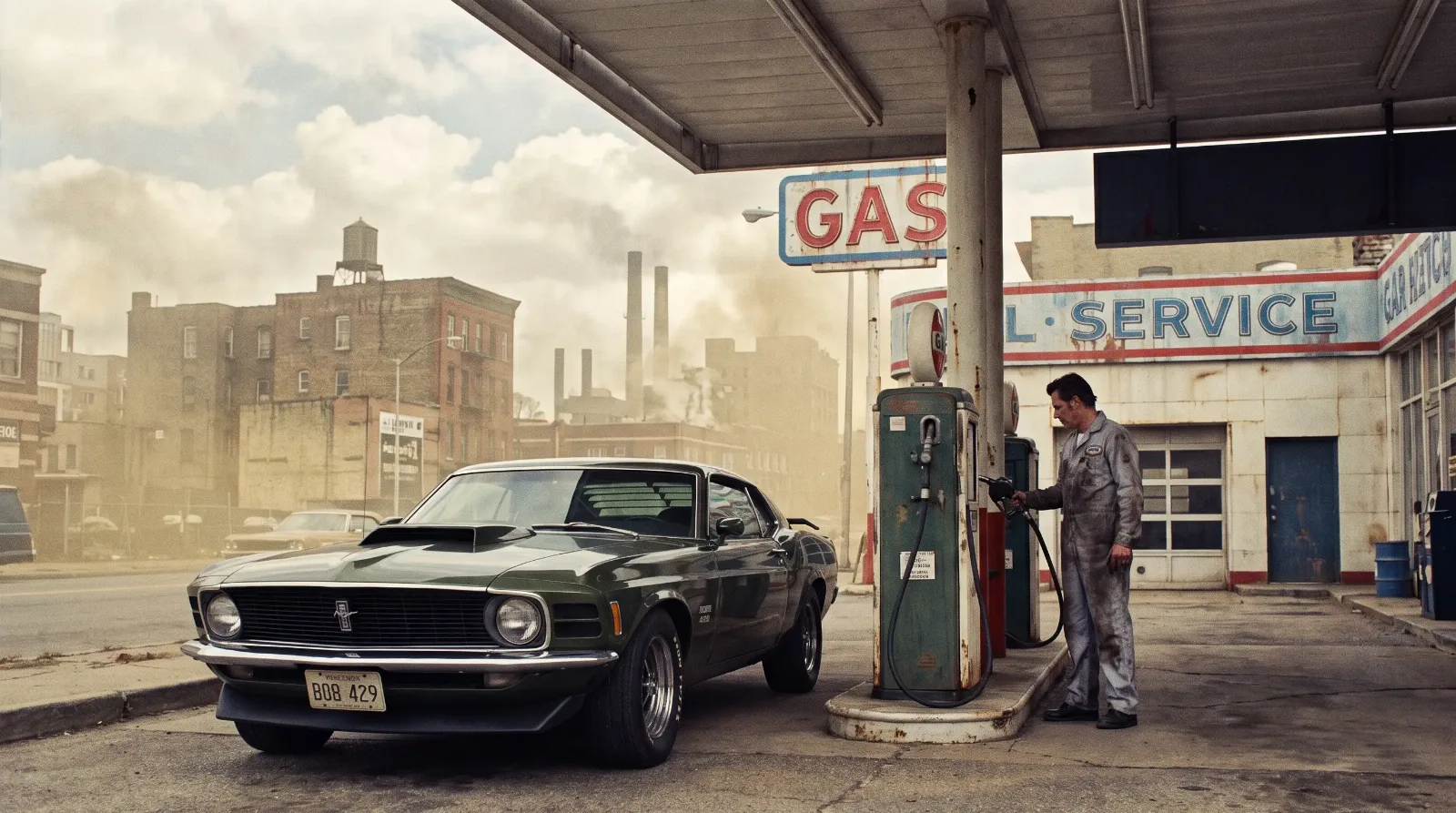
The number that ended the muscle car era wasn't a horsepower figure. It was a compression ratio. Drop that one number enough and every other spec on the sheet falls with it, and that's exactly what happened to Detroit's V8s between 1970 and 1974.
Compression was the first casualty
High-compression engines make more power because they extract more energy from each combustion cycle, but high compression also demands high-octane fuel to avoid detonation, the pinging and knocking that happens when fuel ignites too early under pressure. Leaded gasoline had been the industry's cheap fix for that problem since the 1920s, boosting octane and letting engineers run tighter compression ratios without worrying about detonation. When the federal government began mandating catalytic converters starting with the 1975 model year to cut carbon monoxide and hydrocarbon emissions, leaded fuel became a direct threat to that hardware. Lead coats and destroys the precious metals inside a catalytic converter within a few tanks of gas. The fix required removing lead from gasoline, and removing lead meant losing the octane cushion that high-compression engines depended on.
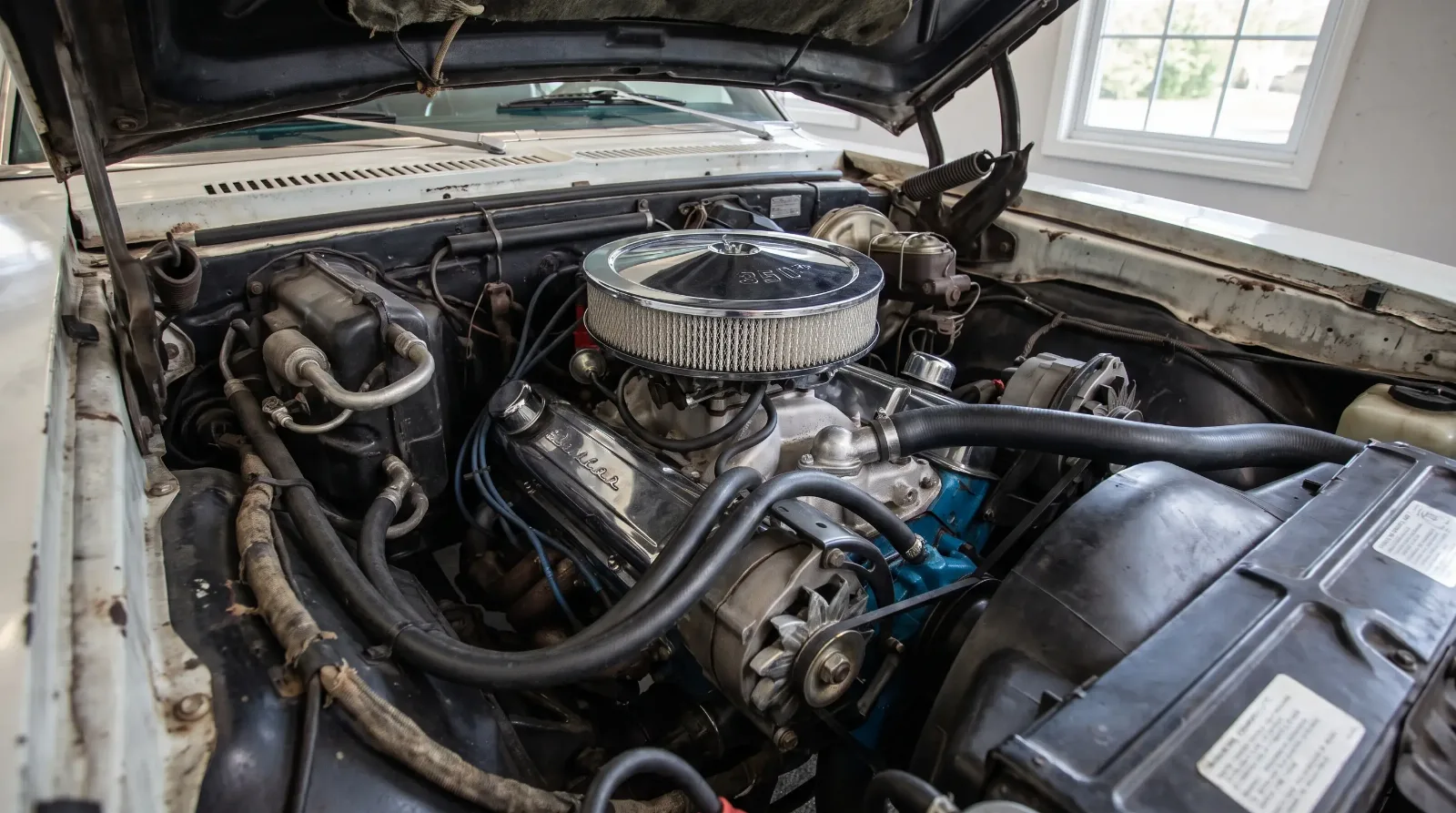
Manufacturers saw this coming years ahead of the 1975 mandate and started dropping compression ratios across their entire lineups well before the catalytic converter requirement actually took effect. A 1970 Pontiac V8 running compression in the 10:1 range or higher was, by 1974, running compression closer to 8:1 on many applications, engineered from the start to tolerate lower-octane unleaded fuel. Lower compression is lower thermal efficiency, and lower thermal efficiency is lower horsepower, independent of anything else going on with the engine.
Emissions hardware added its own tax
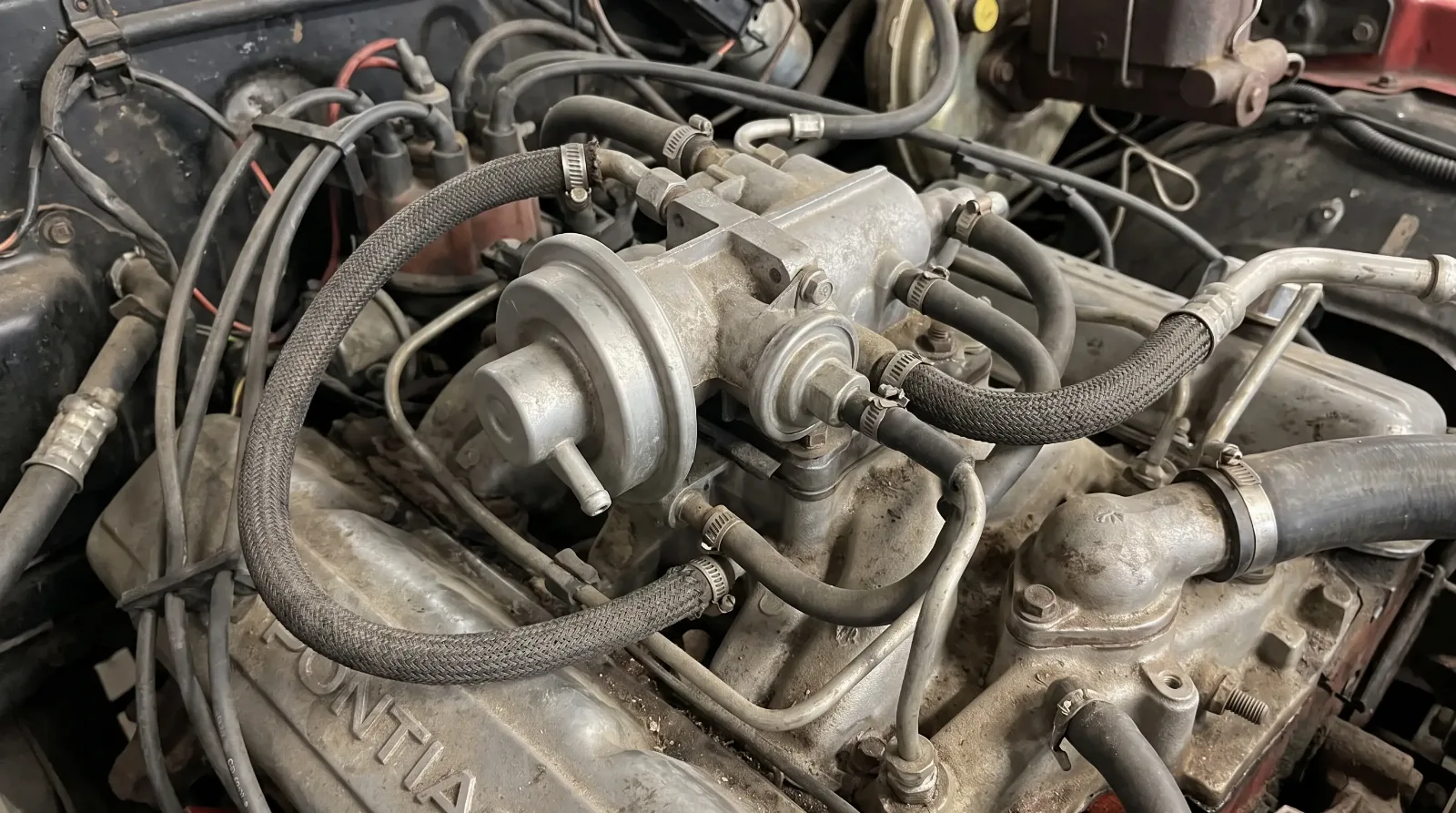
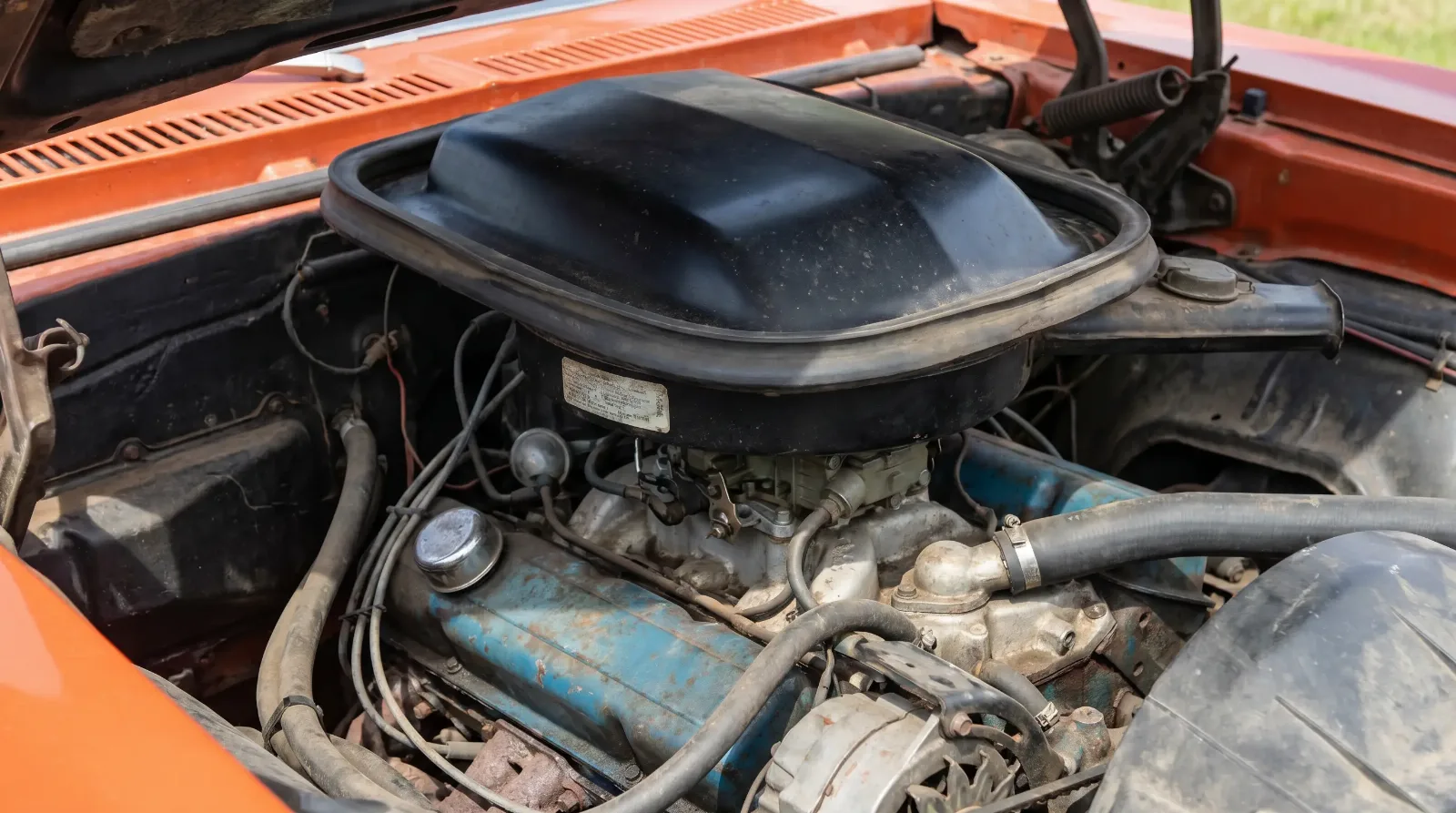
Compression wasn't the only thing dragging output down. Exhaust gas recirculation, required to cut oxides of nitrogen, routed a portion of spent exhaust gas back through the intake to lower peak combustion temperatures. It worked as designed for emissions purposes, and it also cut power by diluting the fresh air-fuel charge with inert exhaust gas. Air injection systems, pumping fresh air into the exhaust manifold to burn off unburned hydrocarbons, added parasitic load from the pump itself and further leaned out the tune. None of these systems existed to make an engine better. They existed to make an engine compliant, and compliance and output were pulling in opposite directions through most of the early 1970s.
"Every single piece of this equipment made sense on its own. Stack five of them on the same engine and you've built a completely different powerplant than the one it replaced, whatever the badge on the fender says."
— Dan Reeves
The insurance and fuel price pincer
Regulation didn't act alone. Insurance companies had already been raising premiums on performance cars through the late 1960s and into the early 1970s, pricing a meaningful share of the GTO's traditional buyer base out of the market before emissions rules even bit down hard. Then the October 1973 oil embargo hit, gas prices climbed sharply, and buyer psychology shifted almost overnight away from anything marketed around horsepower. A detuned engine in a car nobody could afford to insure, sold into a market suddenly anxious about fuel costs, is not a recipe for a healthy performance segment. By 1974, all three pressures, regulation, insurance, and fuel prices, were compounding rather than acting in isolation.
It's also worth remembering that these regulations, unpopular as they were with performance-car buyers at the time, addressed a real public health problem. Urban air quality in major American cities had degraded badly through the 1960s, and vehicle emissions were a documented, significant contributor. The engineers detuning Pontiac V8s weren't working against some arbitrary bureaucratic obstacle course. They were responding to a legitimate environmental crisis, even if the timeline and the technology available to them in the early 1970s made the transition rougher on performance than a slower, better-sequenced rollout might have.
| Factor | Timeframe | Effect |
|---|---|---|
| Gross-to-net HP switch | 1971-1972 | Published ratings drop 20-30% on paper |
| Compression reduction | 1971-1974 | Real thermal efficiency and output decline |
| EGR and air injection | 1972-1974 | Parasitic loss, leaner tunes |
| Catalytic converter mandate | 1975 onward | Required unleaded fuel, locked in low compression |
The 1975 deadline shaped every 1974 decision
It's worth being specific about the timeline here, because a lot of the engineering choices that show up on a 1974 GTO only make sense once you know the 1975 catalytic converter mandate was already locked in before the 1974 model year even started production. Automakers don't design a car's emissions and fuel systems in a vacuum year to year. They plan multiple model years out, which means the engineers spec'ing the 1974 GTO's 350 knew exactly what was coming for 1975 and made choices accordingly, running lower compression and leaner tunes a year ahead of when the catalyst hardware would technically require it. That's why the 1974 engine already reads more like an early-catalyst-era engine than a true pre-emissions performance unit, even though the actual catalytic converter wasn't bolted on until the following model year.
The Environmental Protection Agency, created in 1970, was also still refining its own testing standards and enforcement mechanisms through this period, which added a layer of uncertainty automakers had to engineer around. Manufacturers sometimes had to build in extra margin against emissions targets because the exact final testing procedures weren't fully settled until close to a model year's production start. That uncertainty pushed engineers toward more conservative tuning than the letter of any single regulation strictly required, another reason output on engines like the GTO's 350 came in lower than the underlying hardware might have otherwise allowed.
What this means for the cars that survived
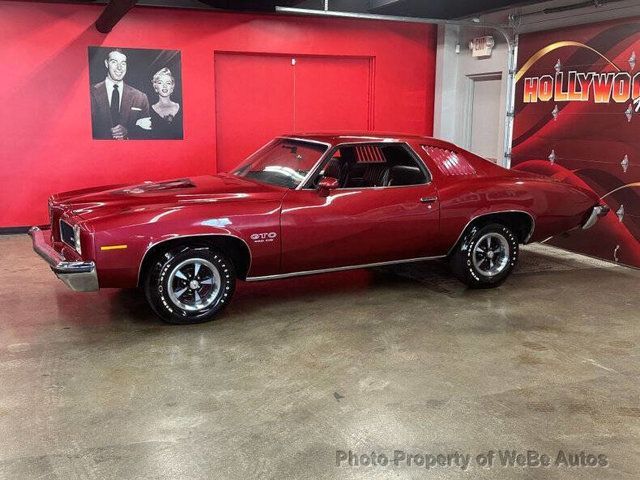
Understanding this stack of pressures changes how you should look at a 1973 or 1974 GTO's spec sheet. These weren't lazy engines or half-hearted efforts from an automaker that stopped caring. They were engines built by people solving a genuinely hard problem, keeping a V8 running, legal, and drivable through a period of regulatory change that hit faster than the engineering could comfortably absorb. The compression drop, the emissions hardware, the fuel switch, all of it landed on Pontiac's lineup at the same time it landed on every other manufacturer's, and the GTO happened to be one of the more visible casualties because performance had always been its entire identity.
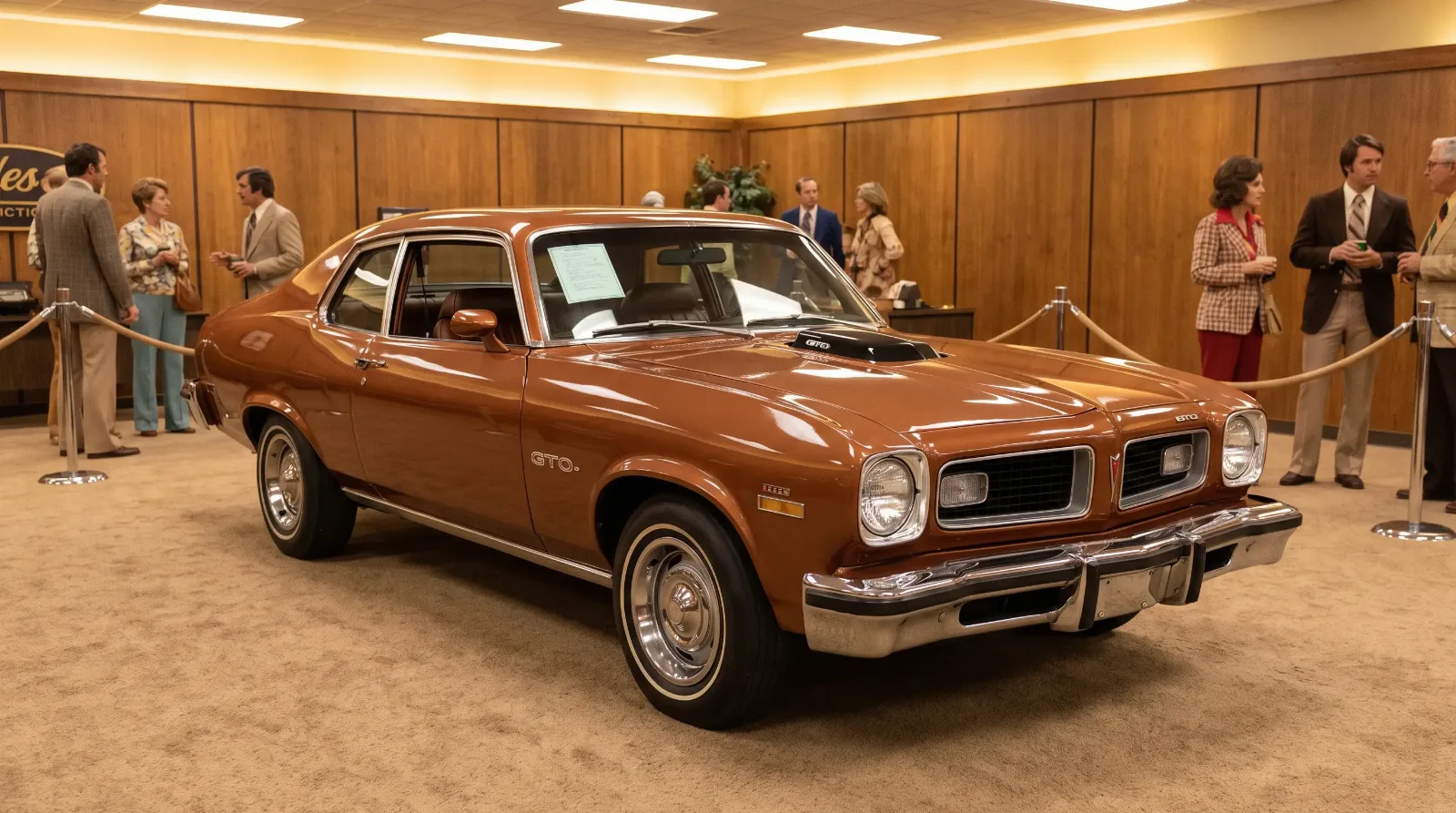
One of the more interesting responses to this squeeze showed up on the compact 1974 GTO's hood. Pontiac borrowed a functional Shaker scoop design from the Trans Am and put it on a car that, on paper, had every reason to skip a performance flourish like that entirely. Read on for how a fresh-air hood scoop ended up being one of the last genuine performance statements Pontiac made before the end of the GTO arrived at the close of the 1974 model year.