
Sometimes the most important thing an automaker does is admit it made a mistake and fix it quickly. That is the entire story of the 1963 Ford F100, a model year that does not get much individual attention next to flashier chapters of F-series history, but that quietly corrected one of the more consequential missteps in the truck's development. After a brief and troubled experiment with unibody construction, Ford brought back a separate bed, and the truck was better for it almost immediately.
Car Features
7 min read
The 1963 Return to a Separate Bed
The 1963 Ford F100 quietly fixed the unibody generation's biggest flaw, restoring a separate bed while keeping the styling buyers had come to like.
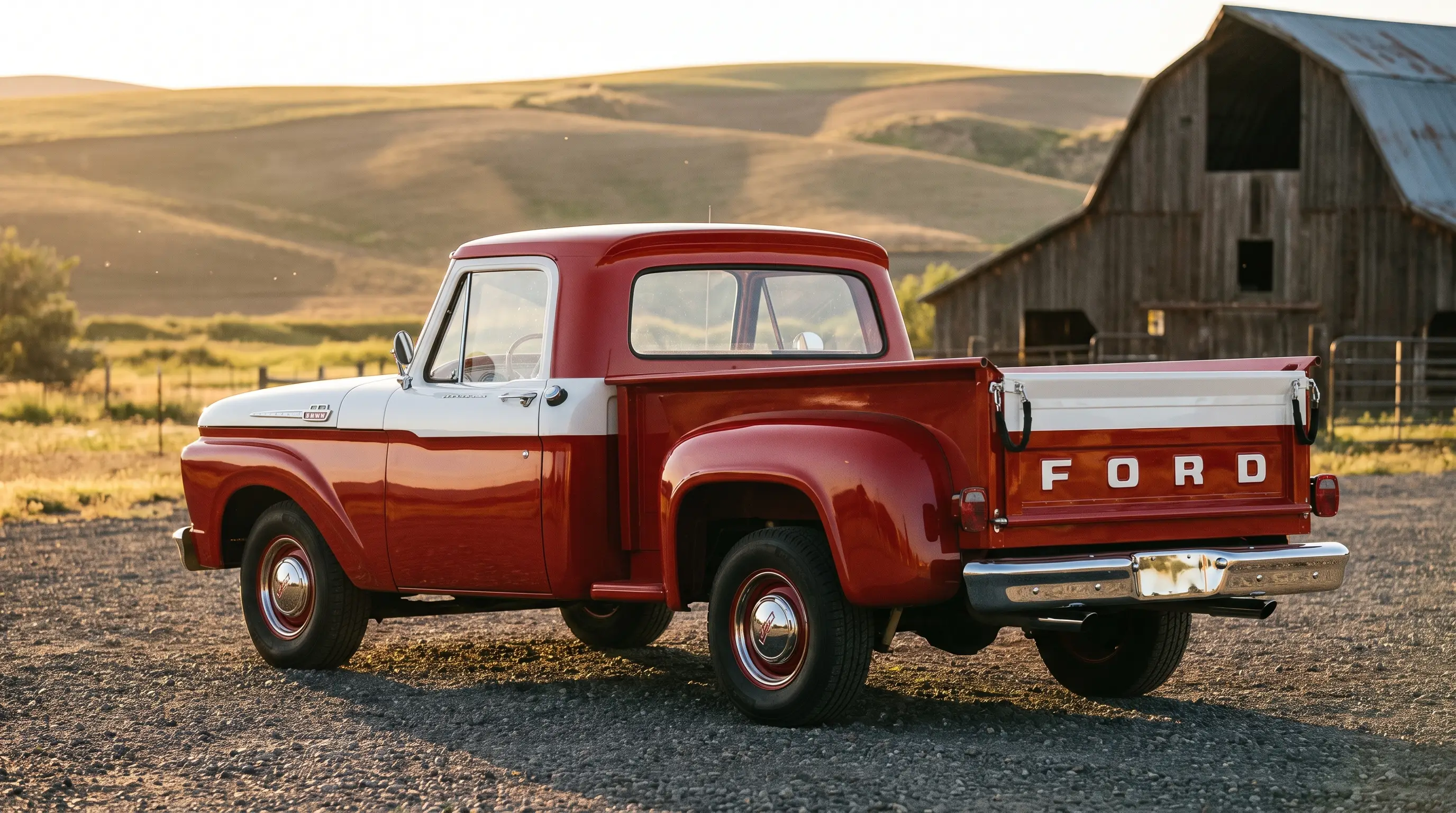
Correcting course without abandoning the look
Ford's engineers faced a real design challenge in 1963. The unibody trucks that preceded this change had developed a well-documented problem with structural stress at the seam where the welded cab and bed met, a direct result of removing the independent flex that a traditional frame and separate bed provided. Simply reverting to the old pre-unibody look would have solved the mechanical problem but thrown away the cleaner styling that buyers had actually responded well to.
Instead, engineering split the difference in a way that reads as genuinely smart in hindsight. The bed became its own separate structure again, mounted independently of the cab so it could flex naturally under load without transmitting stress into the cab structure. But the exterior styling kept much of the smooth, integrated look the unibody generation had introduced, so the truck did not look like a step backward even though structurally it very much was a return to a proven, more durable approach.
What actually changed underneath
The separate bed rode on its own mounting points, isolated from the cab structure by design so that road-induced twisting stayed contained within the bed assembly rather than migrating forward into the cab and causing the door misalignment and stress cracking that had plagued the unibody trucks. This was not a radical new idea. It was the same basic approach every conventional pickup before and after this window used, and its return was as much a vindication of traditional truck engineering as it was a specific fix for a specific problem.
Reliability improved accordingly. Trucks from this point forward held up to genuine work duty, hauling loads across rough terrain, without developing the seam cracks and door alignment issues that had become the unibody generation's defining flaw. It was not a flashy engineering story, but it was the right one, and owners who put these trucks to actual work noticed the difference.
"This is a genuinely underrated model year. Nobody puts a poster of a 1963 F-100 on their wall, but from an engineering standpoint, this is where Ford quietly fixed a real problem without losing what people liked about the look. That's harder to pull off than it sounds."
- Tom Ramirez
A transitional truck worth taking seriously
Trucks from this specific window occupy an interesting spot in the collector hierarchy. They are not as rare or as talked about as the short-lived unibody trucks that preceded them, and they are not yet the more thoroughly refined trucks that arrived a couple of years later once Ford had settled fully into this generation's mature form. What they are is a genuinely solid, historically significant transitional truck, built during the exact window when Ford figured out how to keep the styling advances of the early 1960s without repeating the structural mistakes.
For collectors interested in the engineering story of this era rather than just the styling, that transitional status is actually a selling point. These trucks represent the moment the whole platform matured, and driving one today gives you a tangible feel for exactly what changed and why it mattered.
How buyers reacted at the time
Contemporary buyers did not necessarily know the technical details behind the change, but they noticed the practical difference almost immediately. Farmers and small business owners who had grown wary of the unibody trucks' reputation for door misalignment and body cracking found that the corrected design held up the way a truck was supposed to, and word of that improvement traveled through the same informal networks, dealers, neighbors, fellow tradesmen, that had spread the original complaints so quickly a couple of years earlier.
That kind of quiet reputational recovery rarely shows up in official sales figures or company announcements, but it mattered enormously to Ford's standing with exactly the working buyers the F-100 depended on most. A truck brand that could not be trusted to survive a season of real farm or jobsite work would have struggled badly in a market where word of mouth carried more weight than any advertisement.
Why this year gets overlooked by collectors
Part of why this specific model year does not command the attention some other years get comes down to simple timing. It sits between two more distinctive chapters, the dramatic and short-lived unibody experiment before it, and the more mature, further-refined trucks that followed once Ford settled fully into this generation's later form. A transitional year, even one that fixed a genuine problem, rarely gets the spotlight that a truck with a dramatic backstory or a landmark new feature receives.
That relative obscurity is arguably an opportunity for a patient buyer. Trucks from this window are not chasing the same collector premium that unibody survivors or later, more famous model years command, which means a well-documented example can sometimes be acquired for less than its genuine historical significance would suggest it deserves.
What came next
The separate bed fix set the stage for further refinements as the decade went on, including the eventual introduction of a new front suspension design that would go on to define this generation's driving character for years afterward. Readers curious about that next chapter should check out worth a look too, which covers how Ford continued to build on the foundation this model year established.
For the complete background on how this generation evolved from the unibody experiment through the separate bed correction and beyond, read the background that ties this whole period together into one coherent story.
Finding a survivor from this window
Trucks from this specific transitional period do not flood the market the way later, more common model years do, so patience matters if you are hunting for one specifically. When you are ready to start comparing what is actually available, you can shop classic F-100 listings and look closely at build dates and structural details to identify a genuine example of this corrected, separate-bed design rather than assuming every truck from the surrounding years is identical underneath.
It is easy to overlook a model year that fixed a problem instead of introducing a headline feature. But for anyone who actually understands what these trucks went through structurally in the early 1960s, this quiet correction deserves real credit.
Sources and notes
Related Reading

Have a
Ford F-100
for Sale?
Reach thousands of serious classic car collectors across the US.
Sell It Here →
Are You a Classic Car Dealer?
List your full inventory and connect with targeted classic car buyers.
Join as a Dealer →
#ford f-100
#Ford truck history
#1963 Ford F100
#separate bed
#unibody correction
#classic pickup engineering

About the author
Tom Ramirez
Corvette researcher and historian based in Bowling Green, Kentucky. Two decades documenting Corvette production history from original factory records.
Related Listings - Ford F-100



Comments (1)
C
Carol Hendricks
1 month ago
Been in the hobby thirty years. The quality of information available now compared to the mid-90s is remarkable. This is a good example.