
I have stripped paint off more 1972 K5 Blazers than I can count off the top of my head, and every single one of them tells you something before you ever crack a body panel. The original color tells you where the truck lived, what it did for a living, and sometimes whether it is even wearing its factory shade underneath three decades of repaints. Color on these trucks was never just decoration. It was a signal, and if you know how to read it, a 1972 K5 Blazer's paint history can tell you as much as the VIN plate does.
Car Features
6 min read
The Colors That Define a 1972 K5 Blazer
A builder's read on 1972 K5 Blazer color, from the factory palette to how door jambs and two-tone splits give away a truck's real history.
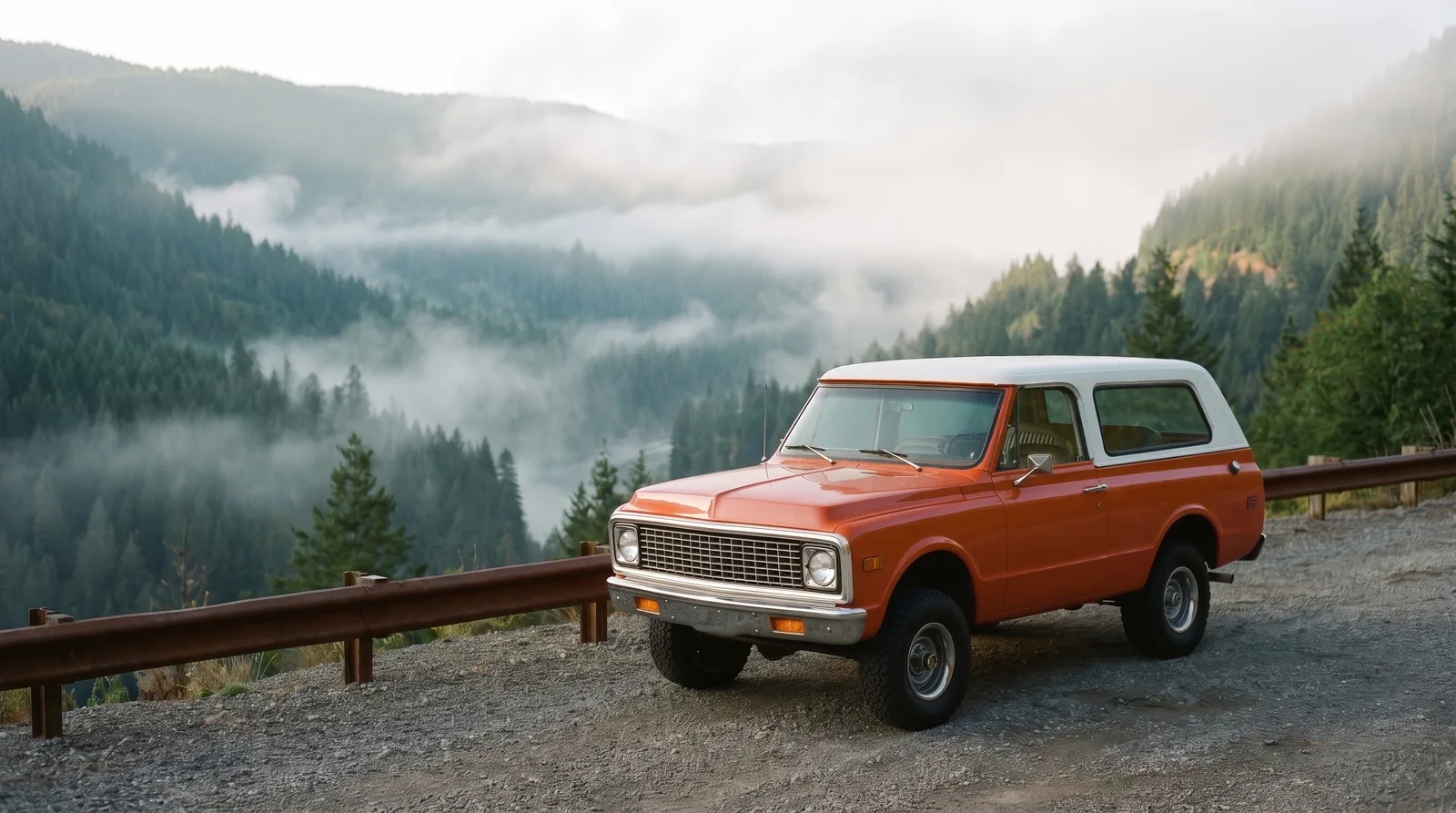
What Chevrolet actually offered in 1972
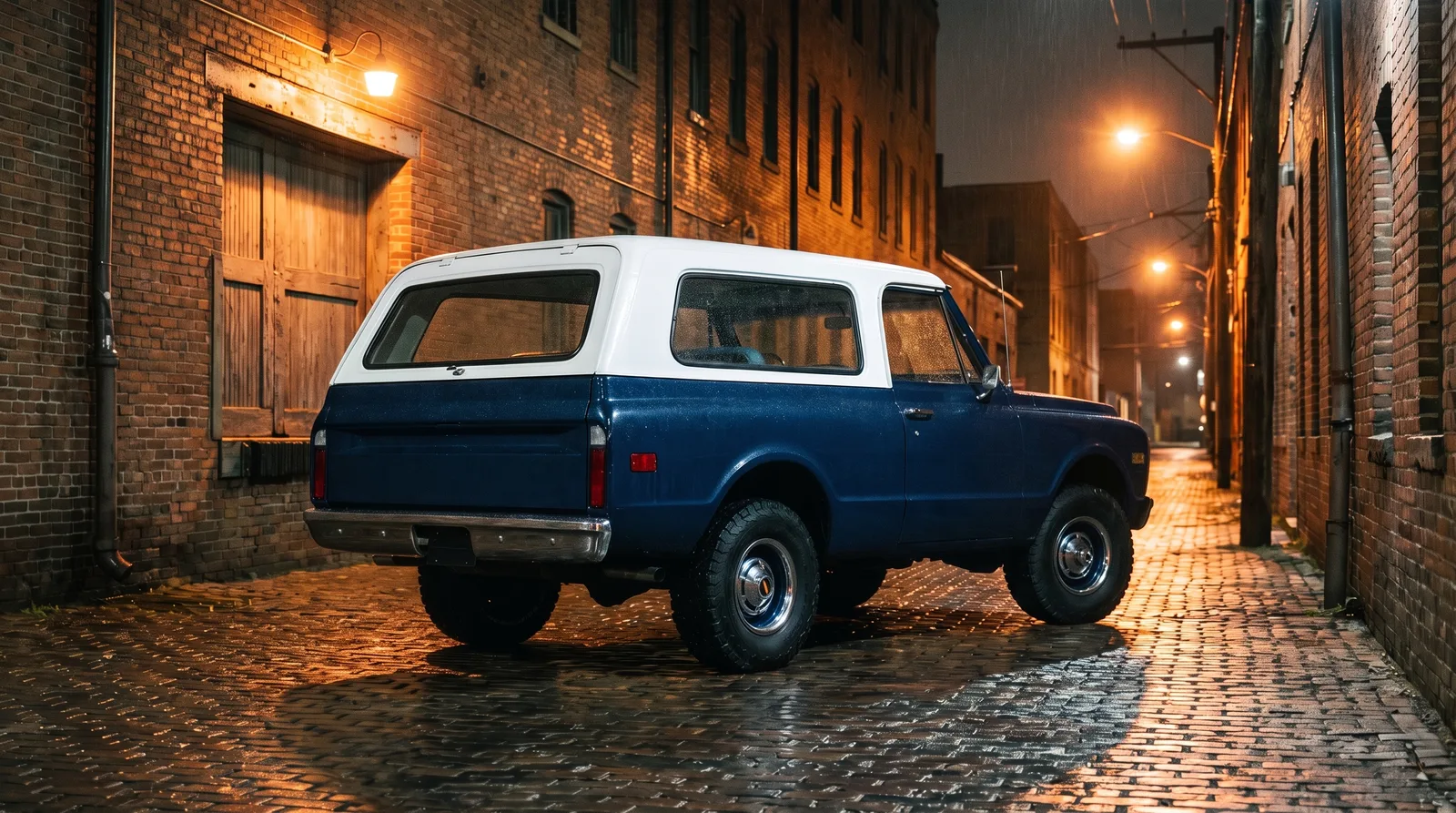
The 1972 palette leaned heavy on earth tones and bold single-stage colors that suited a truck sold as much for ranch and outdoor work as for suburban driveways. Shades like Forest Green, Cranberry Red, and a range of tans and browns showed up constantly on base and Custom trim trucks, colors chosen as much for hiding dirt and wear as for looking good in a showroom. Cheyenne trim buyers had access to two-tone combinations, typically a darker lower body with a lighter upper section split at a defined body line, a look that photographed well and that a lot of restorers chase specifically because it reads as more premium without changing anything mechanical.
White was common too, especially on fleet and government-ordered trucks, for the same practical reasons white always gets chosen for working vehicles: heat reflection and easy touch-up matching from a standard can.
Reading paint like a builder reads a body
When I get a 1972 K5 Blazer in the shop, the first thing I do before any bodywork starts is find the door jambs, the inside of the glove box, and the frame near the firewall, because those are the places overspray from a repaint job almost never fully reaches. If the color there does not match what is on the outside, you are looking at a repainted truck, and that changes how I approach the whole project. It is not a dealbreaker. It just means I am not restoring original paint, I am recreating a color decision somebody else made, sometimes well, sometimes not.
Two-tone trucks give away even more, because factory tape lines and the actual quality of the split between colors are things a cheap repaint almost never replicates correctly. A wavy line where there should be a crisp one, or overspray bleeding across the trim strip that should have masked it, tells you within about thirty seconds whether you are looking at factory work or a driveway job from 1988.
Fading and oxidation on original single-stage paint tell their own story too, one I read as carefully as the color itself. A truck stored outdoors for decades under harsh sun fades unevenly, lighter on the hood and roof, closer to true on vertical panels shaded by the cab, and that pattern is nearly impossible for anyone to fake convincingly on a repaint. It is one more piece of evidence, alongside the door jambs and the two-tone splits, that either confirms or contradicts whatever story a seller is telling about a truck's history.
Why color affects the build decisions that follow
A truck wearing a rare original color puts real pressure on a restoration decision that a common-color truck never faces. Repaint it in something modern and easier to match, and you have thrown away a genuinely uncommon piece of the truck's identity. Chase the original shade instead, and you are dealing with paint codes that some suppliers reproduce inconsistently, comparing swatches under different lighting, sometimes ordering test panels before committing a truck to a full respray.
I lean toward keeping original colors whenever the body will support it, partly out of respect for the truck and partly because a documented original-color build holds value better with buyers who actually know what they are looking at. A truck resprayed in a color it never wore from the factory is a custom build, full stop, and it should be sold and priced as one, not passed off as anything closer to original.
| Where to check | What it reveals |
|---|---|
| Door jambs | Original color beneath repaints |
| Glove box interior | Overspray-free reference color |
| Two-tone split line | Factory versus amateur repaint quality |
| Frame near firewall | Rarely oversprayed, honest baseline |
"The color on one of these trucks isn't cosmetic to me. It's the first piece of evidence I've got before I've turned a single wrench."
- Jim Vasquez
Mixing and matching a resto-mod build
Not every project coming through my shop is chasing factory-original color, and I do not push every customer toward it either. A builder going the resto-mod route, modern drivetrain, updated suspension, different intent for the finished truck entirely, has more freedom to pick a color that suits the build's personality rather than its birth certificate. Deep gloss modern paints, flat finishes, custom two-tones that never existed on a factory order sheet, all of that is fair game once a truck has already left the original-restoration lane behind.
What I push back on is customers who want it both ways, a heavily modified truck dressed up in a color story that implies factory originality it does not actually have. Pick a lane. Either the truck is a faithful, documented original, or it is a build with its own identity, and the paint should tell the truth about which one you are looking at rather than blur the line for a future buyer who will not know the difference.
Buying with color in mind
Anyone shopping for a 1972 K5 Blazer should treat paint the same way I do in the shop, as information rather than decoration. A common single-stage color in rough shape is an honest, affordable starting point. A documented original two-tone in good condition is a different category of truck entirely, and priced accordingly. Knowing which one you are actually looking at before you buy saves a lot of arguments with yourself six months into a project.
Ask to see a build sheet or dealer invoice before you commit to a purchase, and if none exists, walk the truck yourself before trusting a seller's description of what color it left the factory wearing. It takes five minutes to check a door jamb and a glovebox. It takes a lot longer, and costs a lot more, to find out after the sale that the truck in your driveway is not the color it was sold to you as.
For the broader context on the 1972 model year, including the trim levels tied to these color and two-tone options, the full story covers the lineup in detail. And if a particular shade has caught your eye, you can look at what is currently available among classic K5 Blazer for sale listings and see what colors survived.
Sources and notes
Have a
Chevrolet Blazer
for Sale?
Reach thousands of serious classic car collectors across the US.
Sell It Here →
Are You a Classic Car Dealer?
List your full inventory and connect with targeted classic car buyers.
Join as a Dealer →

About the author
Jim Vasquez
Southern California hot rod and custom car builder with roots in the traditional kustom kulture scene.
Related Listings - Chevrolet Blazer

More in Car Features
Comments
Be the first to comment on this article.