
The 1965 Ford F-100 arrived at a moment when Ford could not afford another quiet year. The unibody experiment of the earlier 1960s had come and gone, rivals were sharpening their own truck lineups, and the F-100 needed a model year that gave dealers something concrete to talk about. It got one. The 1965 truck combined a redesigned grille, a genuinely new front suspension, and a trim structure that pointed toward where Ford trucks were headed for the rest of the decade.
Car Features
7 min read
The 1965 Ford F-100
The 1965 Ford F-100 paired a redesigned grille with the all-new Twin I-Beam suspension, marking a genuine turning point for the mid-1960s truck lineup.
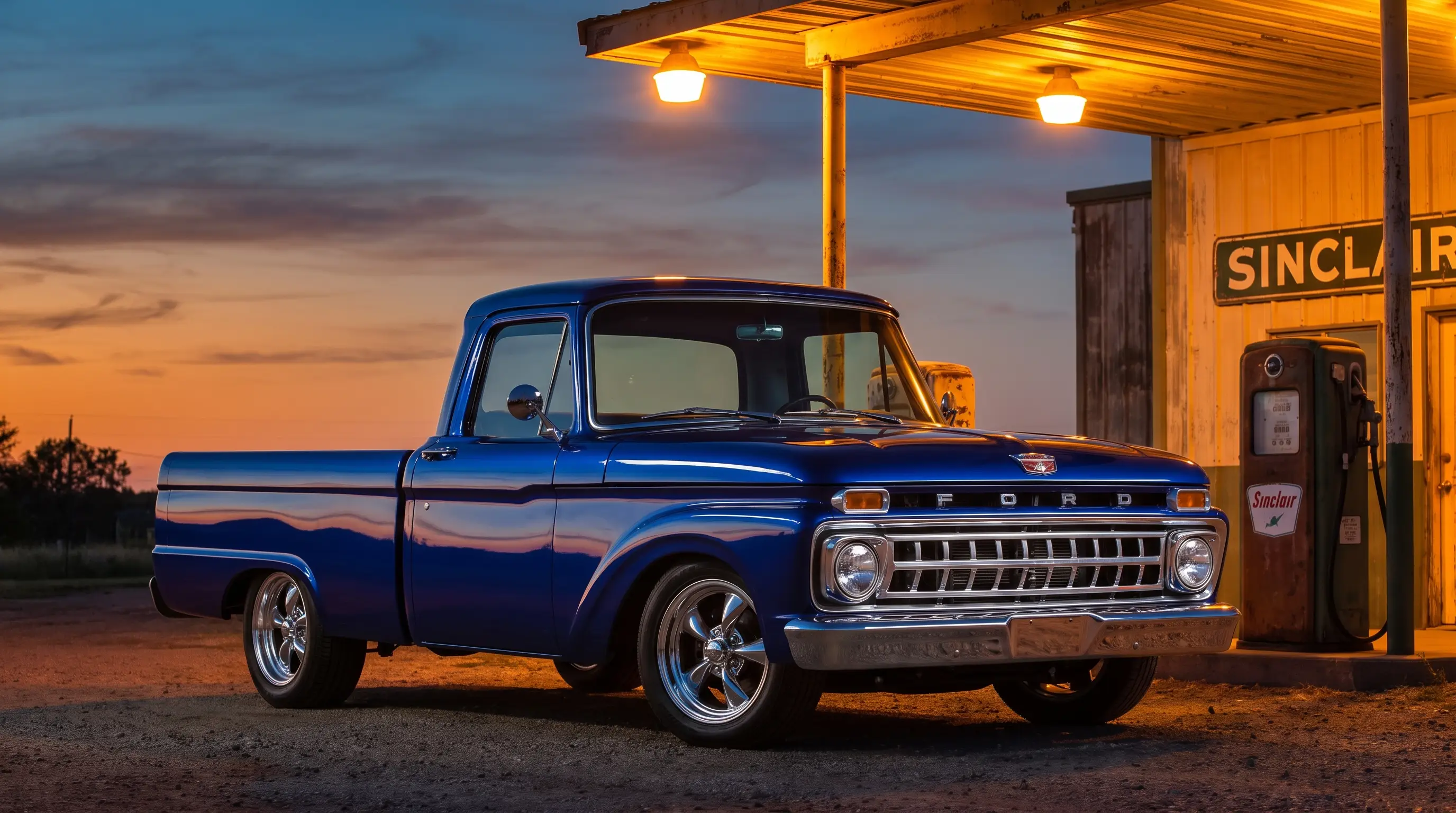
A fresh face on a proven cab
Visually, the 1965 F-100 kept the boxy, slab-sided cab that had defined the line since 1961, but the front end got a real update. The grille was wider and more horizontal, with a cleaner bumper treatment that dropped some of the fussier chrome details of the early sixties trucks. Ford's designers were working within a tight budget, since the frame and cab structure carried over, but the changes at the nose were enough to make the 1965 look distinctly newer than the truck it replaced, which mattered on a crowded dealer lot competing against Chevrolet's own recently updated lineup.
Twin I-Beam changes everything under the skin
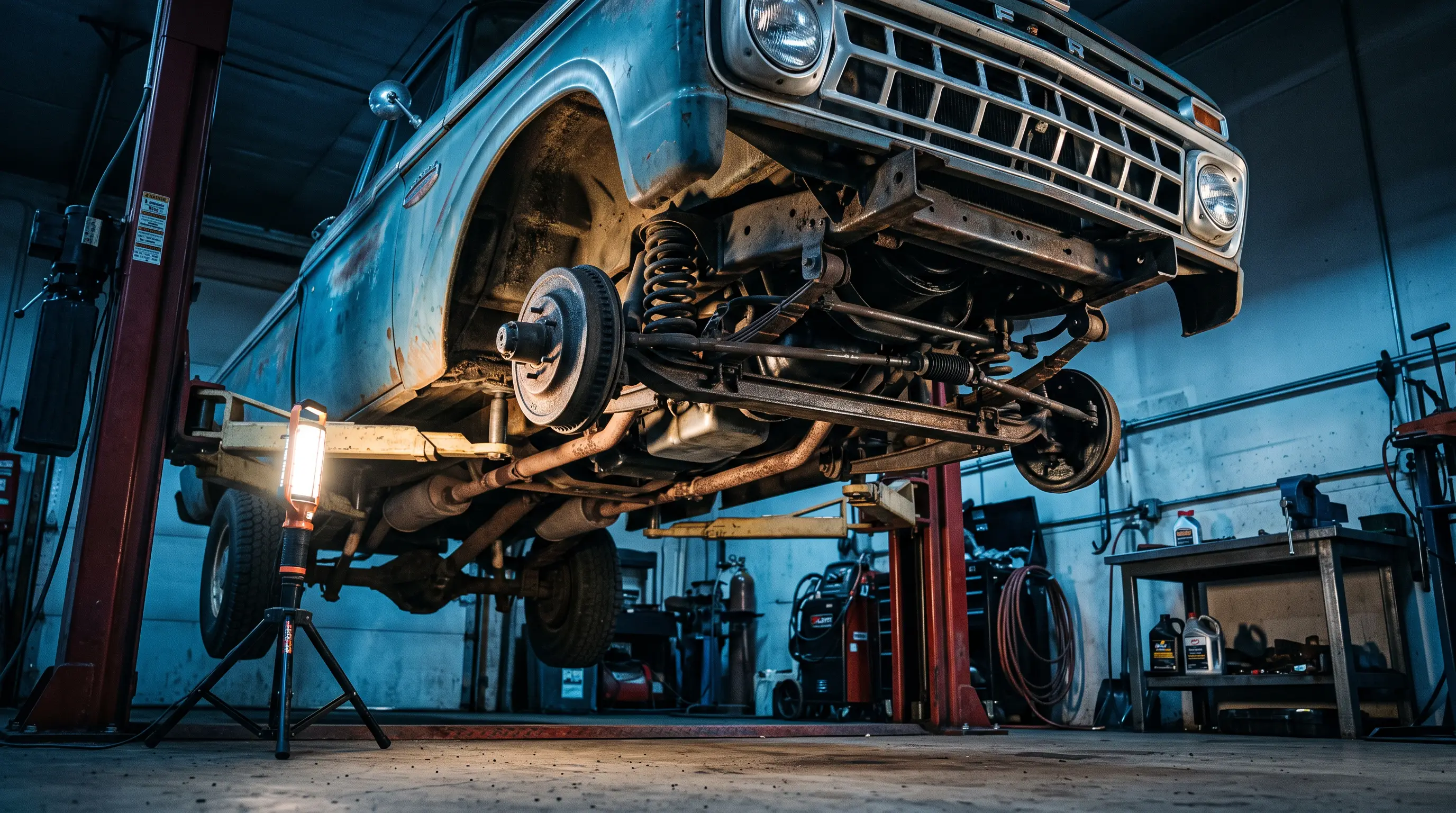
The mechanical story of 1965 is the Twin I-Beam front suspension, Ford's replacement for the solid front axle that had ridden under F-Series trucks since the beginning. Instead of a single beam connecting both front wheels, engineers split it into two independently pivoting beams, one per side, mounted to coil springs. Each wheel could react to bumps on its own, which cut down dramatically on the shudder and bounce that had always been part of driving a loaded work truck over rough pavement. Ford's own marketing at the time promised "untrucklike riding smoothness," and the coil-spring, radius-arm layout traded a measure of camber change for a noticeably softer ride than the old straight axle. Contemporary road tests praised the change as the single biggest improvement to how an F-100 felt from behind the wheel, and it remained the foundation of Ford's front suspension engineering for years afterward.
Under the hood, the 1965 F-100 buyer had a real menu of choices. The base engine was Ford's inline six, adequate for light duty and popular with fleet buyers who valued economy and simplicity over performance. Above that sat V8 options that gave the truck genuine highway pull, especially useful for anyone regularly towing or running a loaded bed. The specific displacement and horsepower figures varied by year and option sheet, and buyers cross-shopping a survivor today should always confirm the original engine against the truck's documentation rather than assuming from the trim badge alone.
Styleside and Flareside, two very different personalities
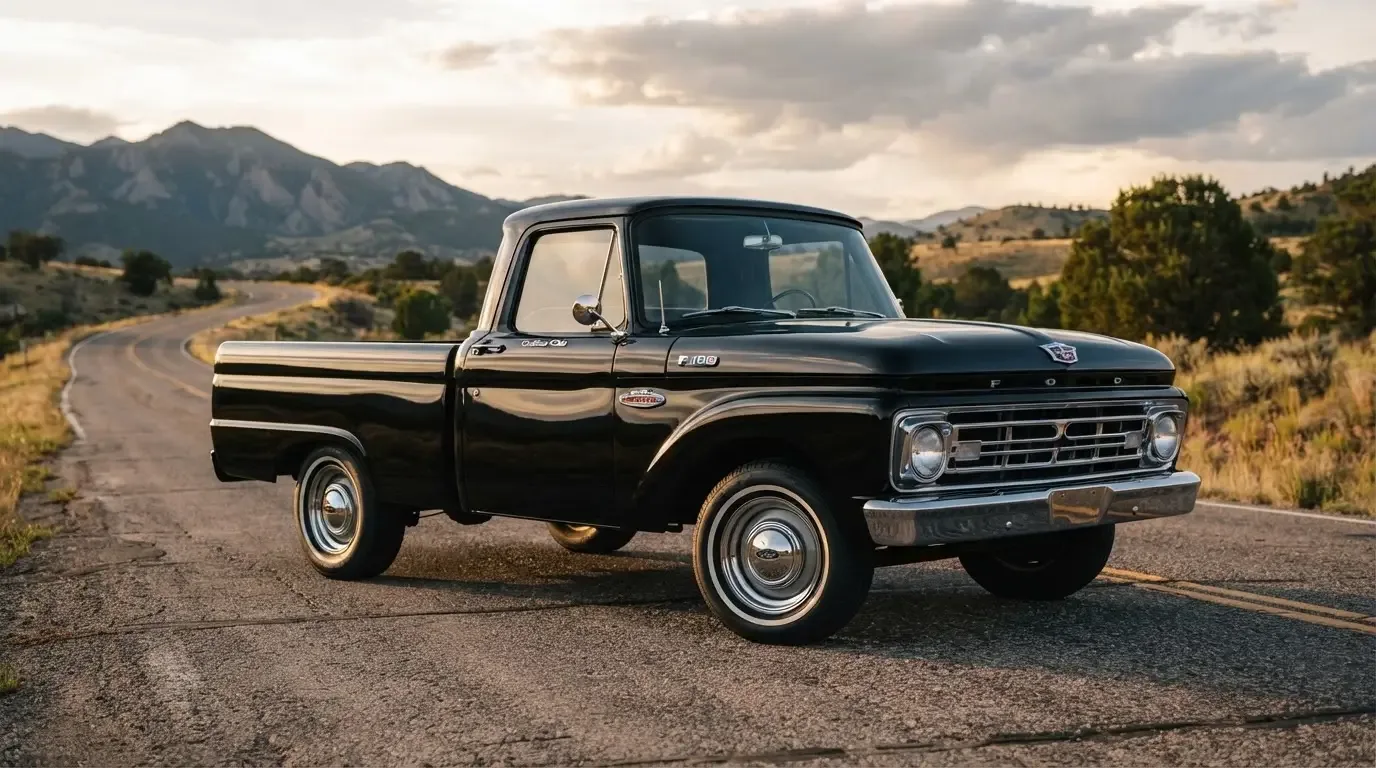
Buyers in 1965 chose between two distinct bed styles. The Styleside bed had smooth flanks that ran flush with the cab, giving the truck a cleaner, more modern silhouette that appealed to buyers who used the truck for both work and everyday driving. The Flareside bed, by contrast, kept the separate fenders and stepped-out rear wheel wells that traced back to Ford's earliest pickups, a look that farm and ranch buyers still favored for its rugged, traditional character. That split in taste is part of why 1965 trucks remain interesting to collectors today, since the two bed styles essentially split the model into two different aesthetic camps built on the same mechanical foundation, an era covered in more depth in where this started.
An interior built for the working day
Inside, the 1965 cab reflected Ford's growing awareness that pickup buyers wanted more comfort than earlier generations offered without going soft. The dash carried a simple, legible instrument layout, and the bench seat, while far from plush by modern standards, was noticeably better cushioned than the seats in early 1960s trucks. Higher trim packages added options like a padded dash pad, additional sound insulation, and brighter interior trim, small touches that mattered to buyers who spent long hours on the road rather than just running errands around town.
The base truck's cabin remained deliberately simple, with a painted metal dash and rubber floor covering that could handle work boots and spilled coffee without complaint. Moving up the option sheet brought carpet, chrome accents around the gauges, and a nicer grade of vinyl on the door panels. Ford was careful not to price these comfort options so high that fleet buyers avoided the truck altogether, which is why a well-optioned 1965 F-100 could still undercut a comparably equipped car while offering most of the same daily comfort.
Powertrain choices buyers actually cross-shopped
For 1965, Ford positioned the F-100 against Chevrolet and Dodge with a lineup designed to cover both ends of the market. Fleet buyers gravitated toward the six-cylinder for its lower purchase price and easier upkeep, while individual buyers and small businesses that needed to tow or haul heavier loads regularly stepped up to a V8. Transmission choices followed a similar pattern, with a manual transmission remaining the default for most work-focused buyers and an automatic available for those willing to pay extra for convenience. That range of options is part of why the 1965 model year appealed so broadly, since the same basic truck could be configured as a bare-bones work unit or a genuinely comfortable daily driver depending entirely on what boxes a buyer checked on the order form.
"The paperwork on these trucks tells a clearer story than the chrome does. Production records show Ford treating 1965 as a genuine reset, not a facelift, and that shows up in how differently the truck drives compared to the year before it."
- Tom Ramirez
Why the 1965 still matters to collectors
Among the 1961 to 1966 generation of F-100s, the 1965 model tends to draw particular attention because it represents the point where the truck's ride quality caught up with its looks. Earlier trucks in the generation have their own charm, but the Twin I-Beam suspension gives the 1965 and later trucks a driving experience that holds up far better on today's roads. That combination of an attractive, updated cab and a genuinely improved chassis is a big part of why shoppers browsing classic F-100 for sale listings often gravitate specifically toward 1965 and 1966 examples rather than the earlier years of the generation.
The 1965 F-100 is not the flashiest truck Ford ever built, and it was never meant to be. It was a working vehicle that got quietly, meaningfully better in the places that counted, and that combination of substance over spectacle is exactly why it still finds an audience among people who actually want to drive the truck they collect.
What makes 1965 particularly interesting to study is how many separate improvements landed in a single model year rather than being spread out gradually the way Ford usually handled running changes. The suspension, the styling, and the trim structure all shifted together, which gives researchers and collectors a clean, well-defined line between the earlier trucks in the generation and the ones that followed. Few single model years in Ford truck history carry that much concentrated change, and it is a large part of why 1965 keeps coming up whenever serious students of the F-100 discuss which year actually marked the turning point.
Sources and notes
Related Reading
Have a
Ford F-100
for Sale?
Reach thousands of serious classic car collectors across the US.
Sell It Here →
Are You a Classic Car Dealer?
List your full inventory and connect with targeted classic car buyers.
Join as a Dealer →

About the author
Tom Ramirez
Corvette researcher and historian based in Bowling Green, Kentucky. Two decades documenting Corvette production history from original factory records.
Related Listings - Ford F-100




Comments
Be the first to comment on this article.