
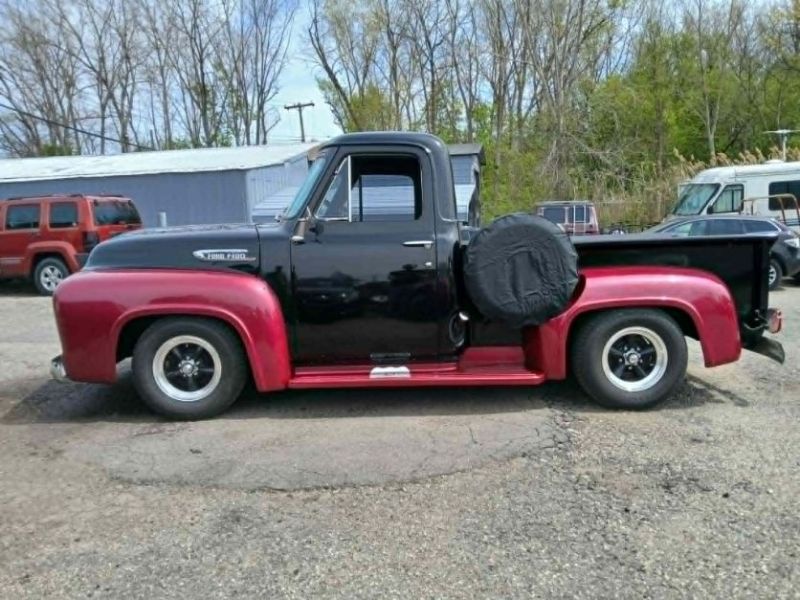
The 1966 Ford F-100 is often treated as a footnote to the more celebrated 1965 model, the year that introduced Twin I-Beam suspension and a redesigned grille. That framing undersells what 1966 actually represents. As the final year of the 1961 to 1966 body generation, the 1966 F-100 is the most refined version of a truck Ford had been steadily improving for half a decade, and for anyone studying the period closely, it deserves attention on its own terms rather than as an afterthought.
Car Features
7 min read
The 1966 Ford F-100
As the final year of the 1961-66 generation, the 1966 Ford F-100 represents the most refined version of a design Ford spent five years developing.
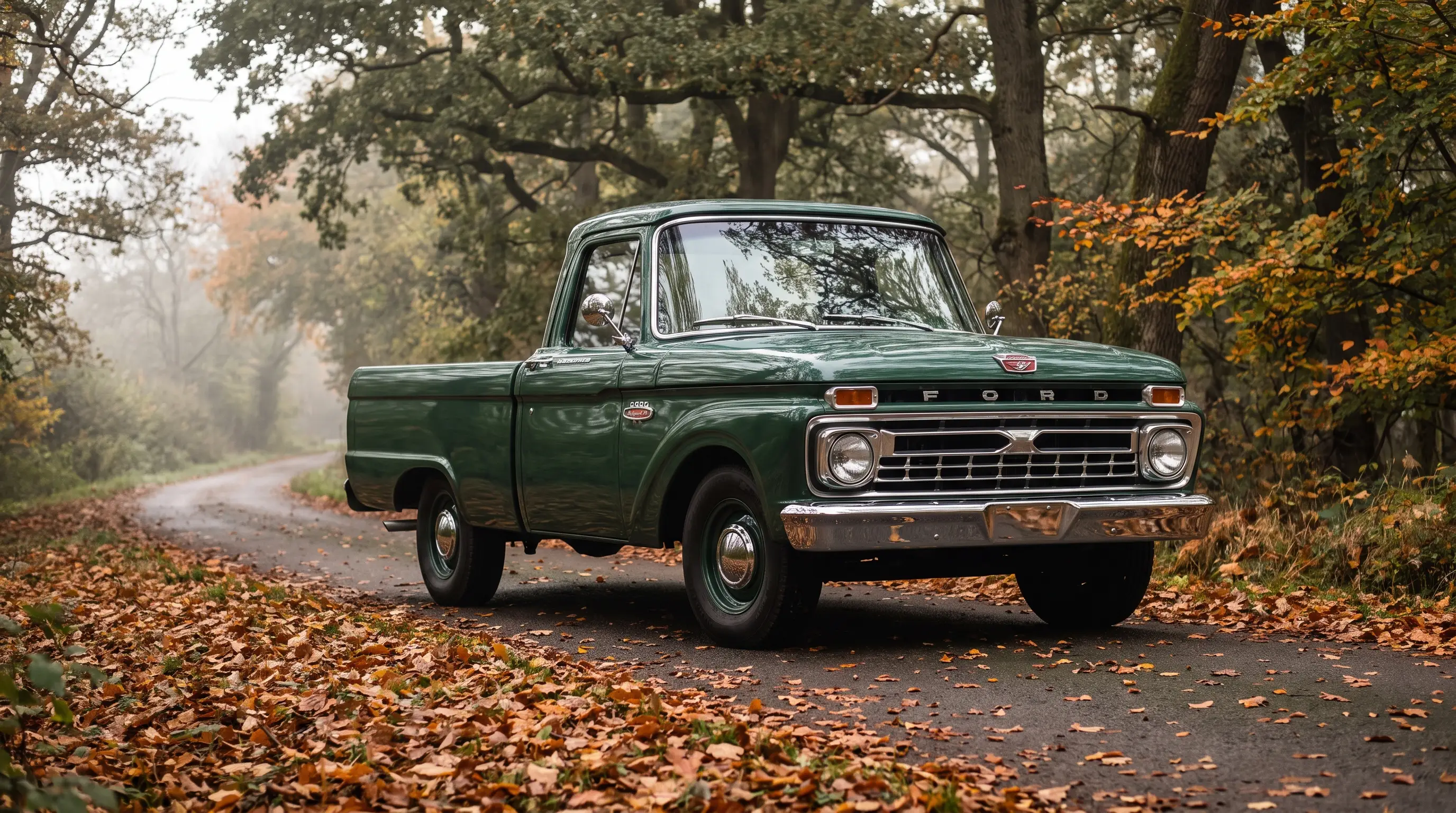
The last word on a five-year design
By 1966, Ford's engineers and stylists had lived with the slab-sided F-100 cab long enough to iron out its early rough edges. The basic proportions, a wide, flat-flanked body with a relatively low beltline, had been set since 1961, but the details around it had matured considerably. Trim placement, badge design, and interior fittings on the 1966 truck show a level of polish that the earlier trucks in the generation simply did not have, the product of five model years of incremental refinement rather than one dramatic redesign.
Carrying the Twin I-Beam forward
The Twin I-Beam front suspension, new for 1965, carried into 1966 largely unchanged, and by this point Ford had a full year of production feedback to validate the design. Owners and dealers alike had confirmed what the engineering promised: a smoother ride over rough surfaces without sacrificing the load-carrying strength buyers expected from a work truck. For anyone documenting the mechanical lineage of the F-100, 1966 stands as the year the Twin I-Beam system proved itself was not a one-year novelty but a genuine platform Ford intended to keep. That broader arc, from the unibody years through the suspension redesign, is covered in the full story of the generation.
Documentation and production details worth noting
For researchers and serious buyers, the 1966 model year carries specific identification details that matter more than casual observers might expect. Trim tags, engine codes, and body style designations from this final year of the generation can be confused with 1965 production if a buyer is not careful, since the two years share so much of their basic architecture and the same Twin I-Beam front end. The safest identifiers remain the truck's warranty/door data plate and any surviving build sheet, both of which encode the model year, engine, and trim level directly rather than relying on styling cues alone. Anyone researching a specific truck's history should treat the door tag and any surviving factory paperwork as the primary source, rather than relying on casual visual comparison between the two model years.
Why period-correct detail matters here
Collectors focused on originality tend to gravitate toward the last year of any given body style, and 1966 fits that pattern for the F-100. A truck built in this final year benefits from every running change Ford made across the generation without carrying any of the early teething issues that showed up in 1961 and 1962 production. That makes an unmolested 1966 example a genuinely useful reference point for anyone trying to understand what the platform looked like at its most developed, whether that research supports a restoration project or simply a deeper appreciation of how the truck evolved.
This is also why 1966 trucks tend to draw disproportionate interest at concours and club judging events focused on this generation. Judges evaluating originality often treat the final year of a body style as the benchmark against which earlier examples get measured, since any factory refinement made across the five preceding years is already baked into a 1966 truck by default. A judge comparing a 1961 example against a 1966 example is, in effect, comparing an early draft against Ford's own final revision, and that context should shape how any serious evaluation of originality proceeds.
How production numbers shaped survival rates
Like most work trucks of the era, F-100s built in this generation were used hard, and a meaningful share never survived long enough to become collectible. Fleet trucks in particular were often run until they were no longer economical to repair, then scrapped rather than preserved, which means surviving examples today skew toward trucks that spent more of their life in private hands rather than commercial service. Exact factory production and survival figures for the 1966 model year are not consistently published across Ford's own archives, so any specific count circulating online should be treated with caution rather than quoted as gospel. That skew matters for anyone researching the model, since the population of surviving 1966 trucks is not a representative sample of everything Ford actually built that year, but rather a filtered set shaped heavily by who kept a truck long enough for it to become worth preserving.
"People assume the last year of a body style is just old news dressed up one more time. With the F-100, 1966 is closer to the definitive version, the one where every earlier compromise had already been worked out on someone else's warranty claim."
- Sarah Whitfield
What this means for today's market
For buyers evaluating the used market now, the practical difference between a 1965 and a 1966 F-100 is small, both share the Twin I-Beam suspension and the same basic cab, but the details separate them for anyone doing careful research. Shoppers who browse classic F-100 listings should ask sellers directly which model year they are looking at and request supporting documentation where possible, since visual similarity between the two years can make casual identification unreliable. A well-documented 1966 truck, correctly matched to its original engine and trim, remains one of the more historically complete choices within the entire 1961 to 1966 generation.
Treating 1966 as simply "more of 1965" misses what makes it valuable to collectors and historians. It is the year the generation's design reached its final, most resolved form, and that distinction is worth preserving accurately rather than blurring into the shorthand of "mid-sixties F-100" that so often gets applied to the whole run.
Trim and option availability in the final year
By 1966, the full spread of trim options developed across the generation, from the base work truck to the Ranger appearance package, was available with a level of consistency that earlier years did not always offer. Ford had worked out supply chain issues and dealer ordering processes over the preceding five years, meaning a 1966 buyer had an easier time actually getting the specific combination of engine, bed style, and trim they wanted compared to someone ordering in the generation's first year or two, when some combinations were harder for dealers to source quickly. That maturity in the ordering process is a subtle but real part of why 1966 production tends to show more consistent build quality and fewer of the small assembly quirks that turn up occasionally on very early examples of this body style.
For researchers working from period dealer literature, 1966 also represents the last point at which brochures and press materials describe this specific cab and chassis combination before Ford's attention shifted toward developing the next generation. That makes surviving 1966 sales literature a useful closing reference for anyone assembling a complete documentary record of how this truck evolved from its 1961 introduction through its final year, work that pairs naturally with a close look at the trucks themselves rather than relying on paperwork alone.
Sources and notes
Related Reading

Have a
Ford F-100
for Sale?
Reach thousands of serious classic car collectors across the US.
Sell It Here →
Are You a Classic Car Dealer?
List your full inventory and connect with targeted classic car buyers.
Join as a Dealer →

About the author
Sarah Whitfield
Third-generation classic car collector specializing in pre-war American and European coachbuilt automobiles. Researcher and concours enthusiast.
Related Listings - Ford F-100
Comments
Be the first to comment on this article.