Ask a longtime F-100 owner how they learned to actually restore their truck properly, and the answer rarely mentions a manual. It mentions a club, a person, a Saturday spent under a hood with someone who had already made every mistake worth avoiding. Ford f100 clubs built that transfer of knowledge into an actual institution, and understanding how they formed explains a lot about why this truck's community has stayed so strong for so long.
The earliest clubs grew out of necessity, not hobby culture
Before classic truck collecting became a recognized hobby category, small informal groups of F-100 owners started meeting simply to trade parts and troubleshoot problems together. These were not yet formal clubs with bylaws and dues. They were loose networks of people who happened to own the same truck and realized pooling knowledge beat solving every problem alone. That practical origin shaped the culture these clubs eventually built: focused on genuine competence, not just enthusiasm.
As those informal networks grew through the 1970s and 1980s, some began organizing more formally, holding regular meetings, publishing basic newsletters, and eventually staging their own small truck shows separate from broader classic car events. The transition from loose network to structured club took years, but it happened because enough owners wanted something more sustainable than word of mouth.
Regional clubs built expertise that outlasted individual members
One of the most valuable things a good regional club does is preserve knowledge past any single member's involvement. When a longtime member with decades of hands-on F-100 experience eventually steps back, a healthy club has already absorbed much of that knowledge through mentorship, documented technical bulletins, and simple repetition at meetings. That institutional memory is worth more than any single expert, because it survives turnover.
This kind of preservation matters enormously for a vehicle with a production run spanning three decades and countless year-to-year changes in specifications. Our ford f100 history retrospective covers how deep that specification variation actually runs, and club-level expertise is often the fastest way for a new owner to get accurate answers about their specific year and trim.
National organizations gave the movement structure and reach
As regional clubs multiplied, national-level organizations emerged to coordinate larger events, standardize judging criteria for show competitions, and provide a unifying voice for F-100 and broader F-Series enthusiasts across the country. These national groups do not replace the local clubs. They complement them, giving owners access to bigger annual gatherings and a broader technical resource base than any single region could sustain alone.
That two-tier structure, local clubs handling day-to-day community and national organizations handling large-scale events and standards, has proven remarkably durable. It gives new owners an easy local entry point while still connecting them to the truck's full national community when they are ready for it.
"A club is not a fan page. It is the difference between guessing at a repair and having someone who already fixed the exact same problem tell you exactly how, over coffee, for free."
- Patrick Walsh
Club-sponsored technical bulletins fill gaps the factory manuals leave open
Original Ford service manuals cover the basics, but they were never written with a fifty-year-old truck's real-world problems in mind, things like sourcing a discontinued part, correcting a factory defect Ford quietly fixed mid-production, or adapting a later-year component to an earlier chassis. Clubs fill that gap through member-written technical bulletins, accumulated over years and often distributed through newsletters or dedicated forum sections, covering exactly the kind of practical knowledge no factory document ever anticipated needing.
These bulletins represent one of the clubs' most valuable and least visible contributions. They rarely get attention outside the community itself, but for an owner trying to solve a specific, obscure problem, a well-maintained club technical archive can save weeks of trial and error.
Shows and events built around clubs keep the culture visible
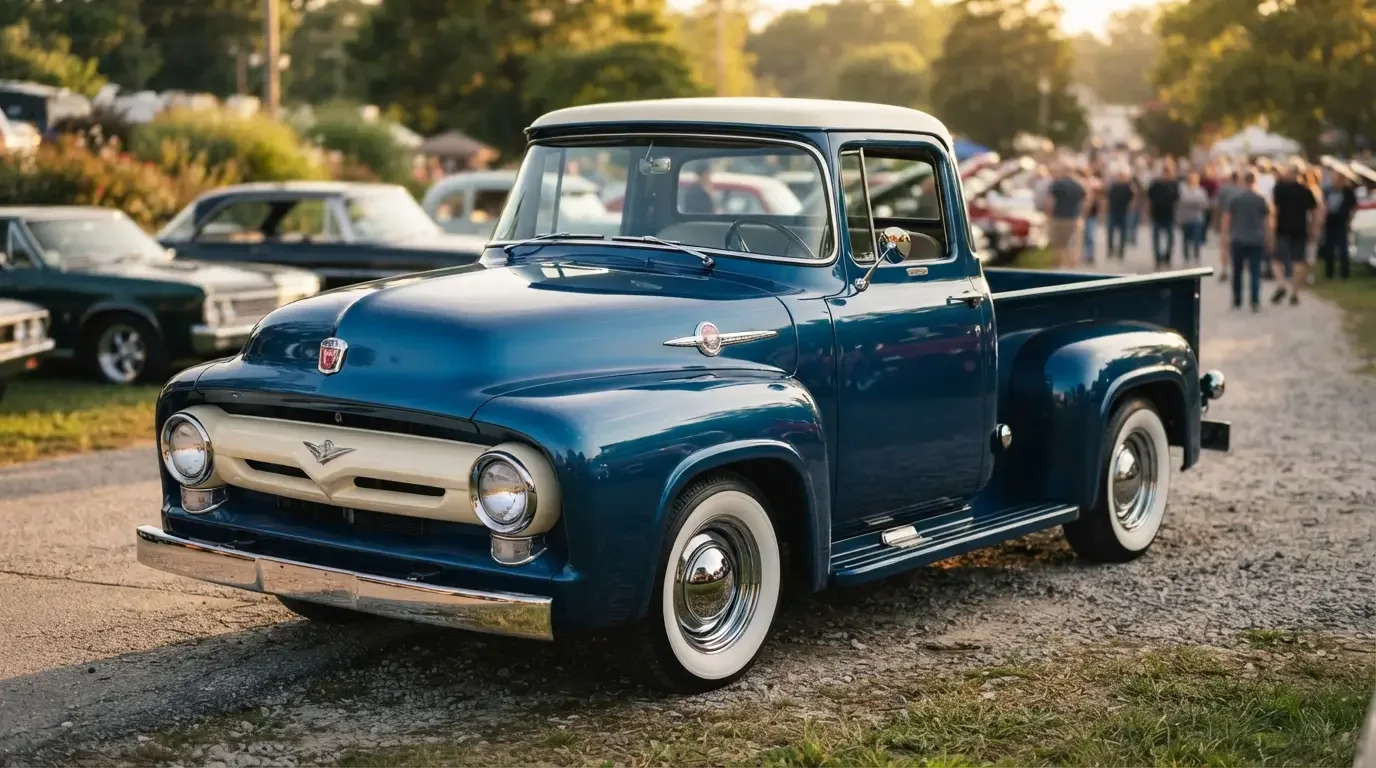
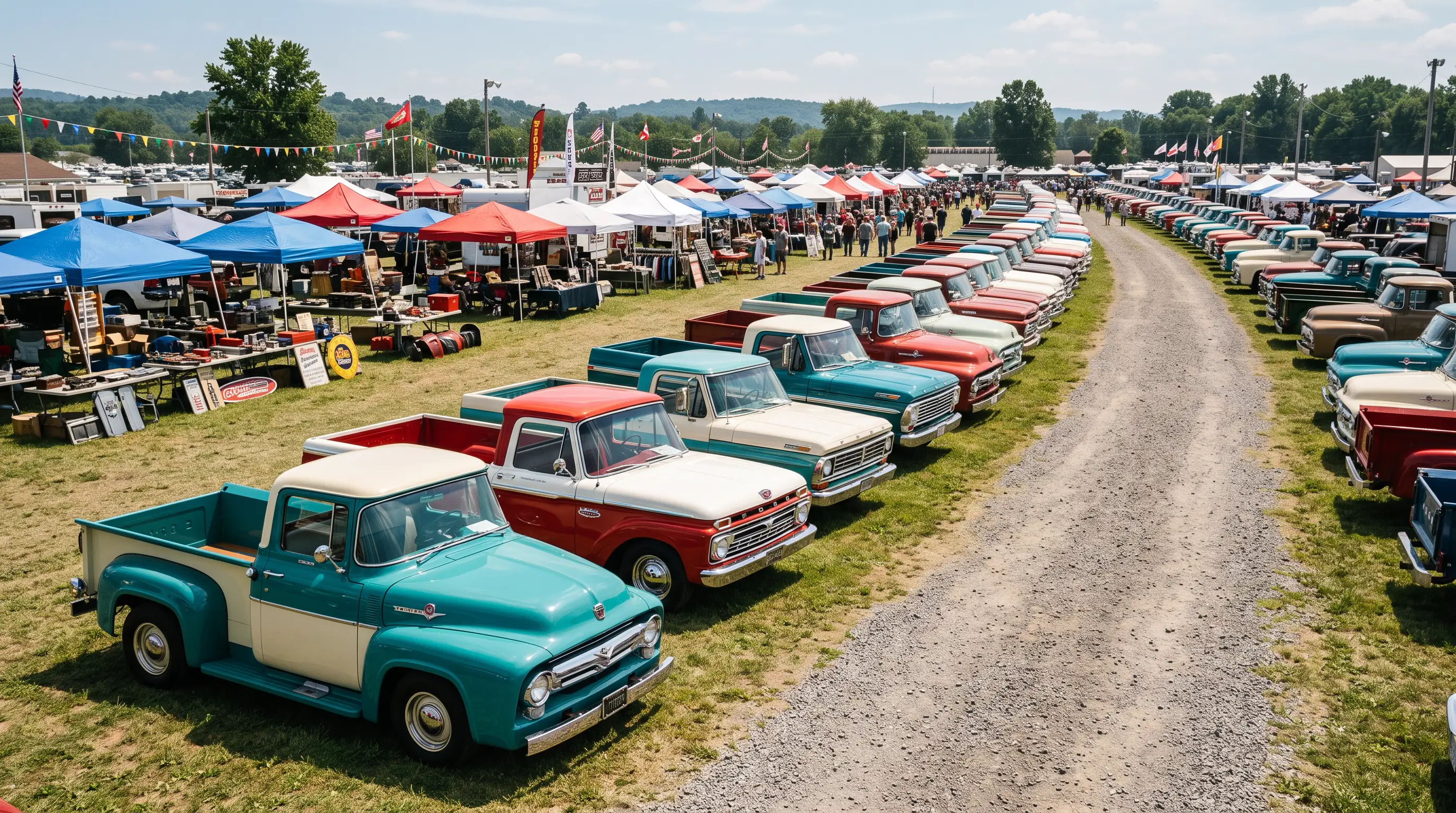
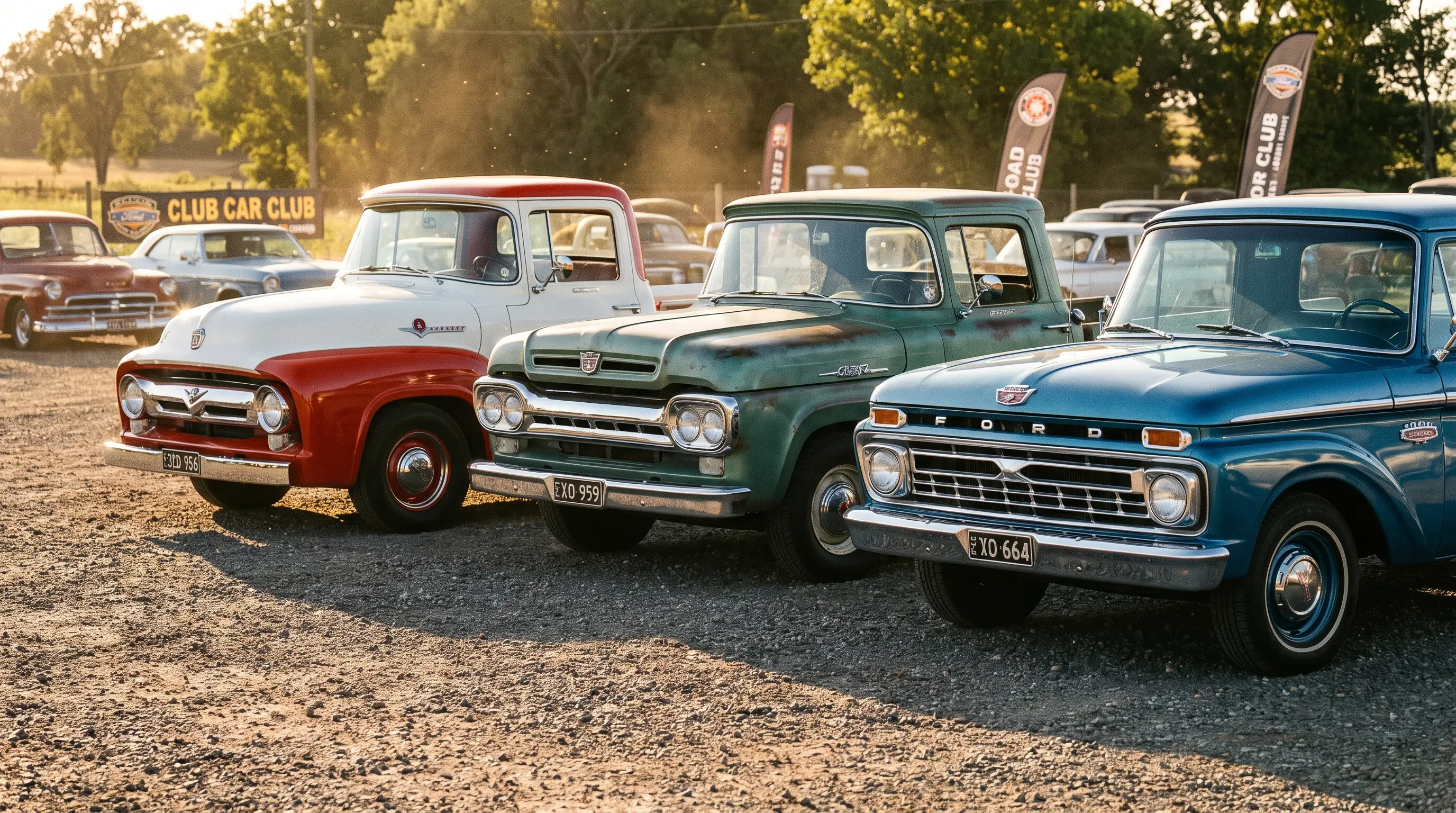
Beyond technical support, club-organized shows and cruise-ins give F-100 owners a reason to actually use their trucks rather than leaving them parked in a garage year round. These events also serve as recruitment, introducing curious onlookers to a community they might not have known existed. A well-run local show does more for the truck's ongoing popularity than any single magazine feature, because it puts real people and real trucks in front of an audience that can walk right up and ask questions.
Some of the larger annual gatherings have grown considerably over the decades, and a related story covers one of the bigger events in more detail, including how it evolved from a modest regional meetup into something drawing owners from across the country.
Club culture has its own unwritten etiquette
New members quickly learn that F-100 clubs operate on informal rules that no bylaw document actually spells out. Show up prepared to listen before you show up with opinions about the correct way to restore something. Bring questions, not assumptions, and expect that the answer to almost any specification question will start with "it depends on the year," because three decades of production changes make blanket statements about the F-100 almost always wrong in some detail.
This etiquette exists because the truck's long production run genuinely does produce meaningful year-to-year and even mid-year differences, and veteran members have learned the hard way that overconfident advice causes real problems for someone attempting an accurate restoration. Respecting that culture of careful, year-specific knowledge is usually the fastest way to earn trust within a club.
Why joining a club still matters for new owners
For anyone considering their first F-100, connecting with a club before or immediately after the purchase remains one of the smartest moves available. Members can help evaluate a potential purchase, flag known problem areas for specific years, and provide a support network for whatever restoration or maintenance work lies ahead. That kind of access is difficult to replace with online research alone, however good the forums have gotten.
If you are looking to join that community with a truck of your own, F-100s for sale now is a good place to start, and a local club is very likely the next call worth making right after.
The trucks brought people together long before anyone called it a hobby, and the clubs simply gave that instinct a permanent home. Fifty years on, that home is still open, still welcoming new members, and still passing along the same practical knowledge that started the whole thing in a driveway somewhere with two owners comparing notes.