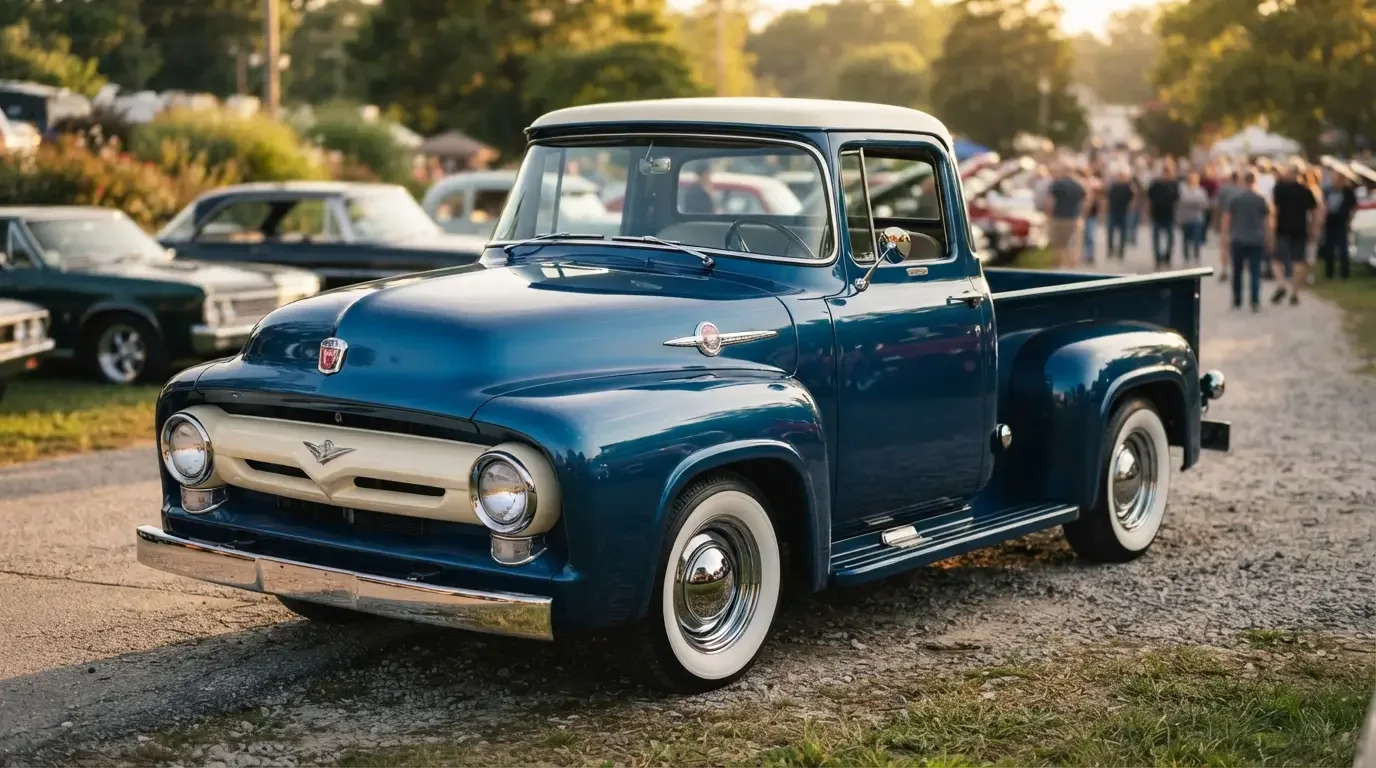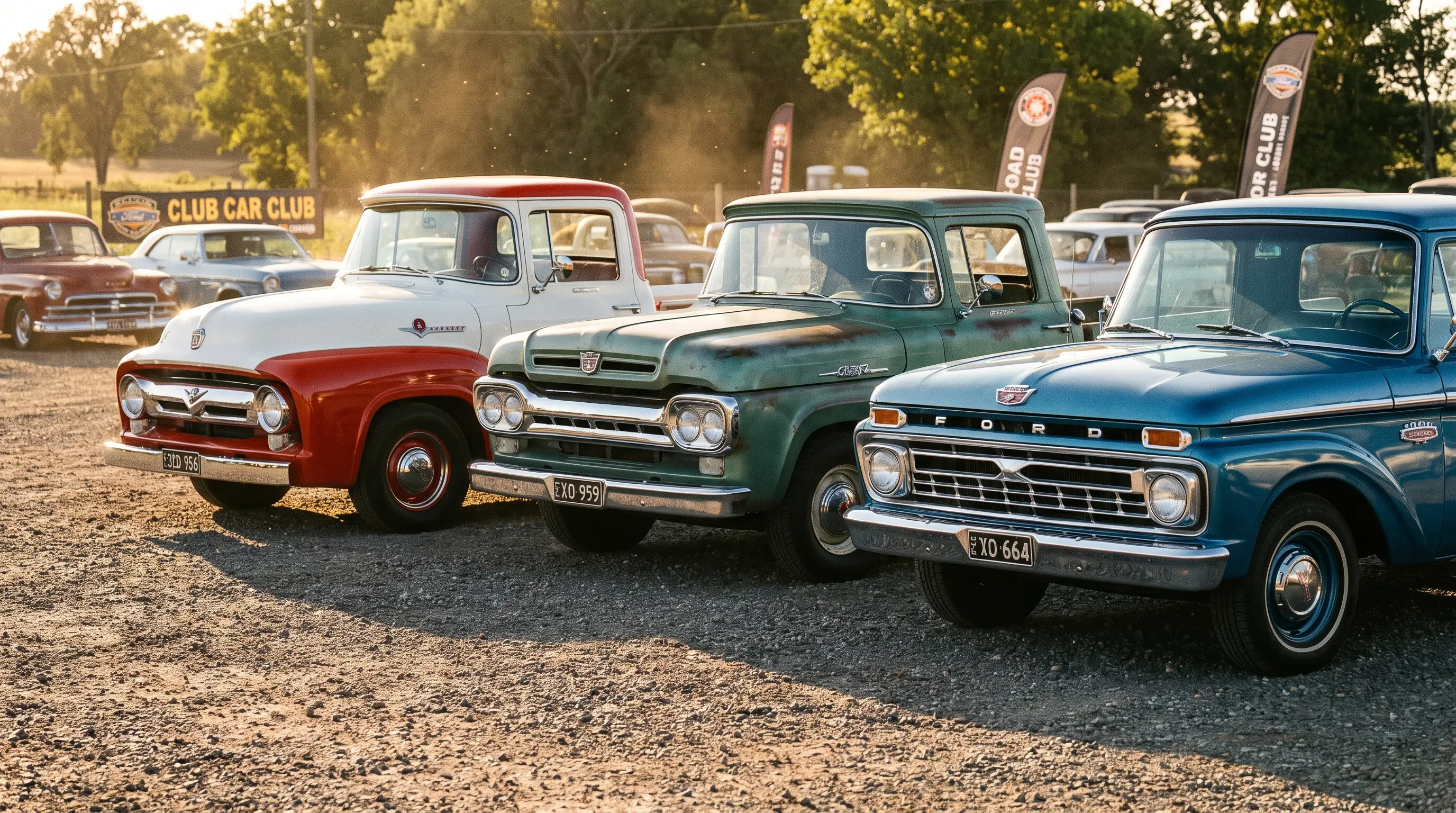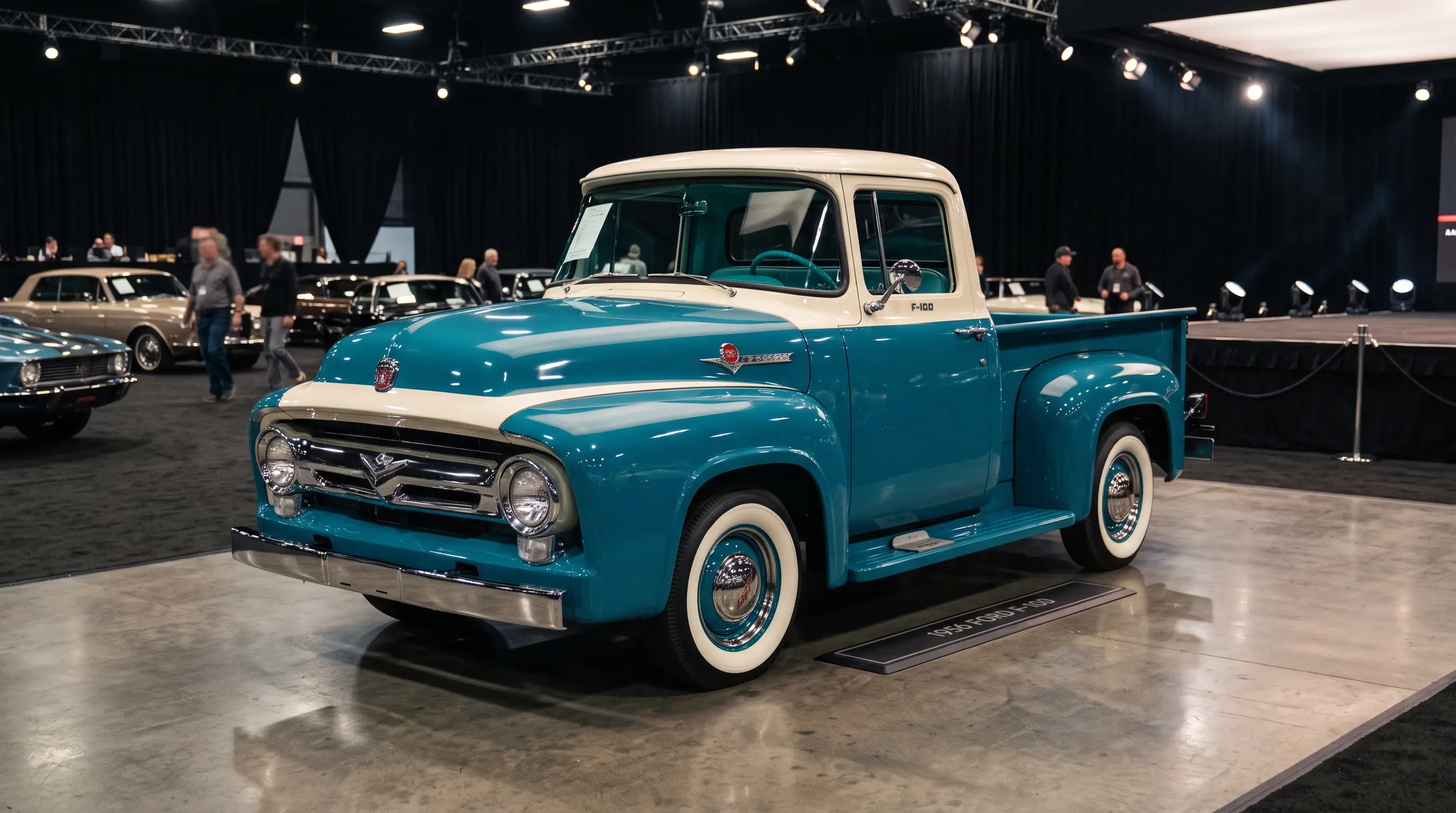
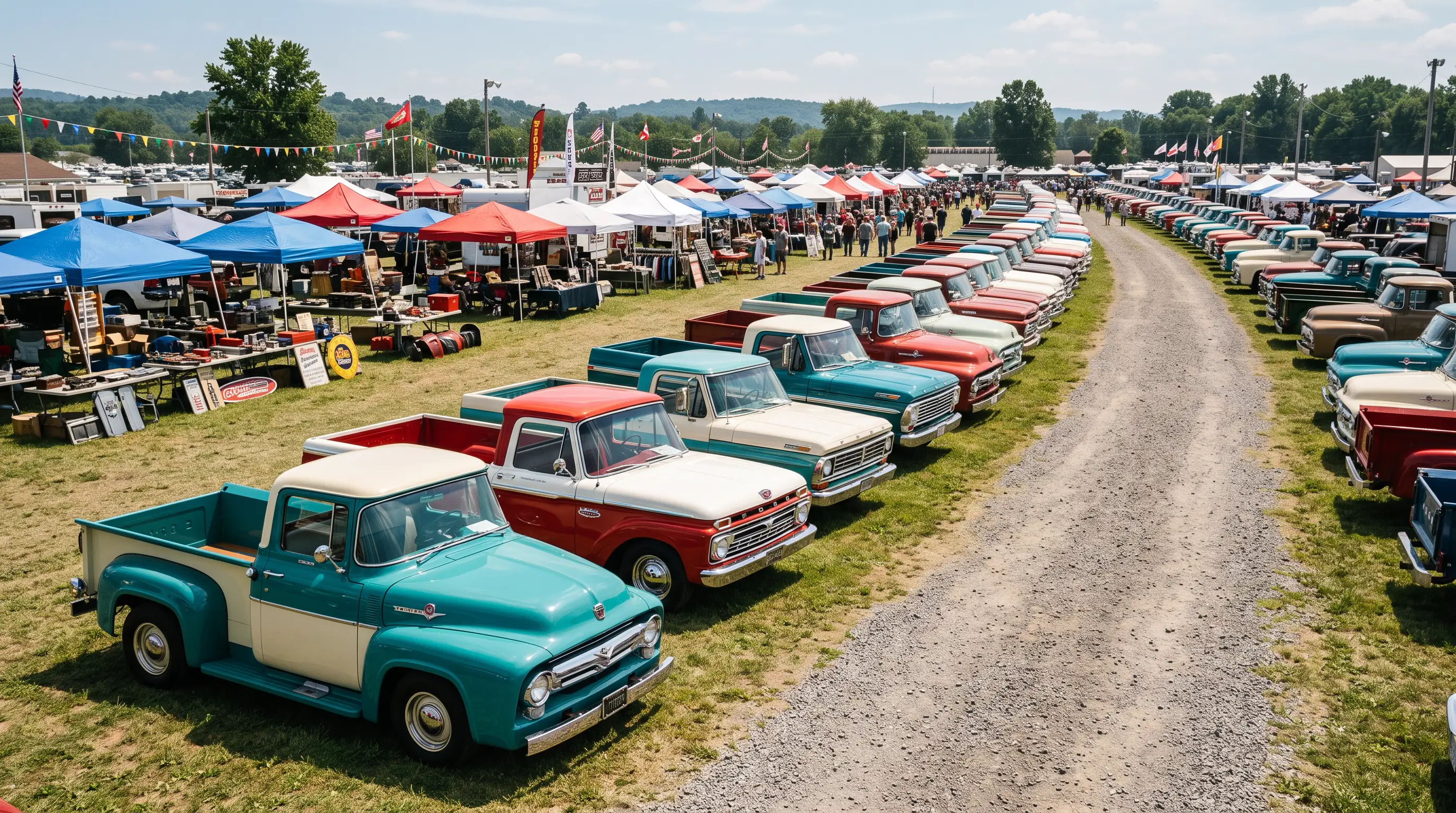
The first time you walk a fairground lot packed with nothing but Ford F-100 trucks, the scale of it catches you off guard. Rows of short-beds and big-window cabs stretch further than seems reasonable for a single model, and every third owner you meet has a story about where the truck came from and who in the family drove it first. The F-100 Supernationals is that scene multiplied across an entire weekend, and it has become the one gathering serious owners plan their summer around.
How a single-model show even works
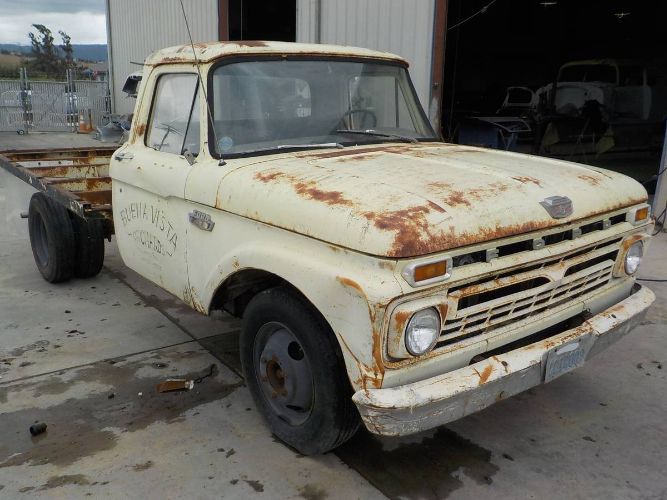
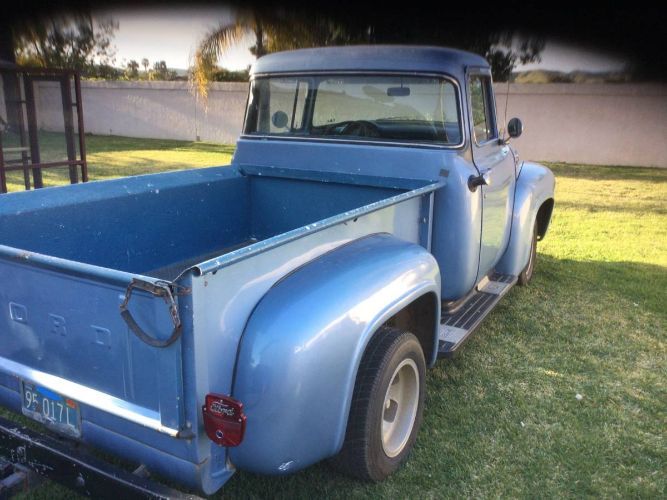
Most truck shows mix makes and eras under one tent. The Supernationals does the opposite on purpose, restricting the field to F-Series trucks and letting the F-100 carry the event. That narrower focus changes the texture of the show entirely. Instead of wandering past a Chevy here and a Dodge there, you get a slow education in just how much variation exists within one nameplate: flatheads next to Y-blocks, three-window cabs parked beside big-window trucks, bone-stock originals sharing a row with patina-heavy customs running modern drivetrains. The show has run annually in the Sevierville and Pigeon Forge area of Tennessee for roughly four decades, long enough to become a fixture on the calendar rather than a one-off gathering.
Judging categories tend to split along those same lines, separating original and restored trucks from the custom and street-truck builds so neither style has to compete against the other for recognition. That structure keeps the show welcoming to the guy who spent thirty years chasing numbers-matching parts and the guy who dropped a modern engine under the hood and painted it candy orange. Both belong here, and the organizers seem to understand that the F-100 world only stays healthy if it keeps room for both.
The swap meet is half the reason people show up
Ask a longtime attendee what actually draws them back every year and plenty will tell you it is not the judging, it is the swap meet. Vendors haul trailers of NOS trim, reproduction sheet metal and boxes of parts pulled from trucks that did not survive, and the walk down those vendor rows has saved more than one restoration that was otherwise stalled on a single missing piece. A dash bezel that has been on a want list for two years might turn up on a folding table for twenty dollars, sitting next to a stack of shop manuals nobody else wanted.
That commerce matters more than it sounds. Original F-100 parts have gotten harder to source every year as trucks get parted out or restored with reproduction pieces instead, and a concentrated gathering of sellers who specialize in exactly this platform is genuinely rare. Regional swap meets exist, but few match the density of F-100-specific inventory that shows up here once a year.
Where the real history gets traded
The parts trading gets the attention, but the stories traded alongside it are what keep people coming back. Owners compare notes on which parts houses still stock what, which reproduction vendors got a trim piece wrong, and which junkyard three states over still has a rusted-out donor truck worth the drive. None of that gets written down anywhere official. It lives entirely in the heads of people who have been doing this for decades, and a show like this is one of the few places that knowledge still gets passed along in person rather than typed into a forum.
"You learn more standing in a parking lot for an hour than you do reading six months of forum posts. Somebody always knows the answer, you just have to find the right guy leaning on the right tailgate."
- Wayne Coburn
Award categories that reward more than shiny paint
The judging structure at events like this has evolved over the years to recognize categories beyond raw restoration quality. Longest-distance-traveled awards honor the owners who trailer trucks across multiple state lines. Best-in-family categories acknowledge the trucks that have stayed with the same bloodline since new, which is its own kind of documentation even without a paper trail. Youth and first-time-entrant recognitions exist specifically to pull newer, younger owners into a hobby that can otherwise skew gray-haired.
That last point matters more than it might seem. A show that only rewards concours-perfect restorations quietly tells young enthusiasts they do not belong until they can afford a six-figure build. Categories built around participation and story, not just paint depth, keep the door open for the twenty-something who just bought their first project truck and drove it in on a wing and a prayer.
The culture behind the crowd
What actually happens at a show like the Supernationals connects directly to the broader story of how the F-100 went from a working farm and job-site truck to a collector object people plan vacations around. read the background on how that shift happened, because the show itself is really just the visible tip of a much longer cultural arc. Trucks that were once considered disposable equipment are now the centerpiece of a weekend that draws owners from across the country, and that did not happen by accident.
The people who organize and attend these gatherings tend to talk about the trucks the same way they talk about family history, because for a lot of them, it is exactly that. A truck bought new by a grandfather, handed down through a father, and now sitting under a canopy getting judged by strangers who understand precisely what that lineage means. That is not something you get at a general car show where the F-100 is one entry among fifty different makes.
What to know before your first trip
First-time attendees should plan for heat, long walking distances between vendor rows and the show field, and more conversation than they probably expected. Bring a notebook, because the parts leads and contact information traded in person rarely make it onto a business card. If the goal is actually finding a truck rather than just admiring other people's work, the show weekend is also a reasonable time to start looking seriously, since sellers who are not entering their own trucks often bring a project or two to sell on the side.
For anyone whose visit turns into a genuine search rather than just a weekend of looking, find a classic F-100 is a sensible next stop once the show wraps and the parking lot empties out.
Camping, caravans and the trip itself
A surprising number of regulars treat the drive to the show as part of the event rather than just the means of getting there. Owners caravan in loose groups from neighboring states, stopping at diners and gas stations along the way and picking up strays who spot the trucks and fall in behind them for the last leg. By the time the group actually rolls onto the show field, they have already put a few hundred miles on a truck that might otherwise sit in a garage all year, and that mileage becomes part of the story told back home.
Local campgrounds near the show grounds fill up fast, and the ones that do tend to turn into their own informal satellite gathering once the sun goes down and the show field empties for the night. Tailgates come down, folding chairs come out, and the conversation that started in the swap meet rows continues well past dark. It is not unusual for a deal on a hard-to-find part to actually close around a campfire rather than at the vendor's table earlier in the day, once two owners have had a few hours to talk through exactly what each of them needs.
None of that is officially part of the show program, but ask any longtime attendee what they remember most from a given year and it is rarely the trophy ceremony. It is usually the drive, the campground, or the conversation that ran three hours longer than anyone planned. That is the part of the culture a schedule can never quite capture, and it is also the part that keeps people coming back year after year even after they have already won every award the judges have to offer.