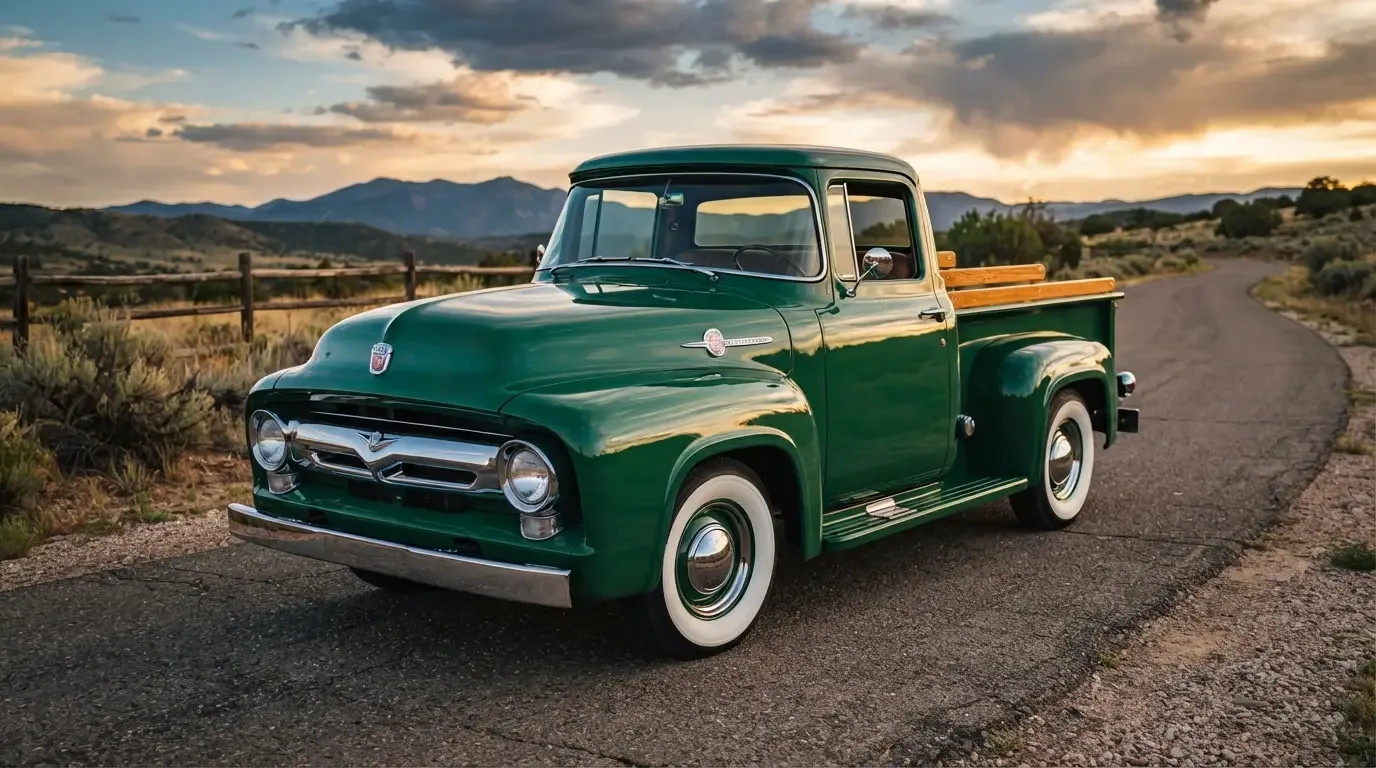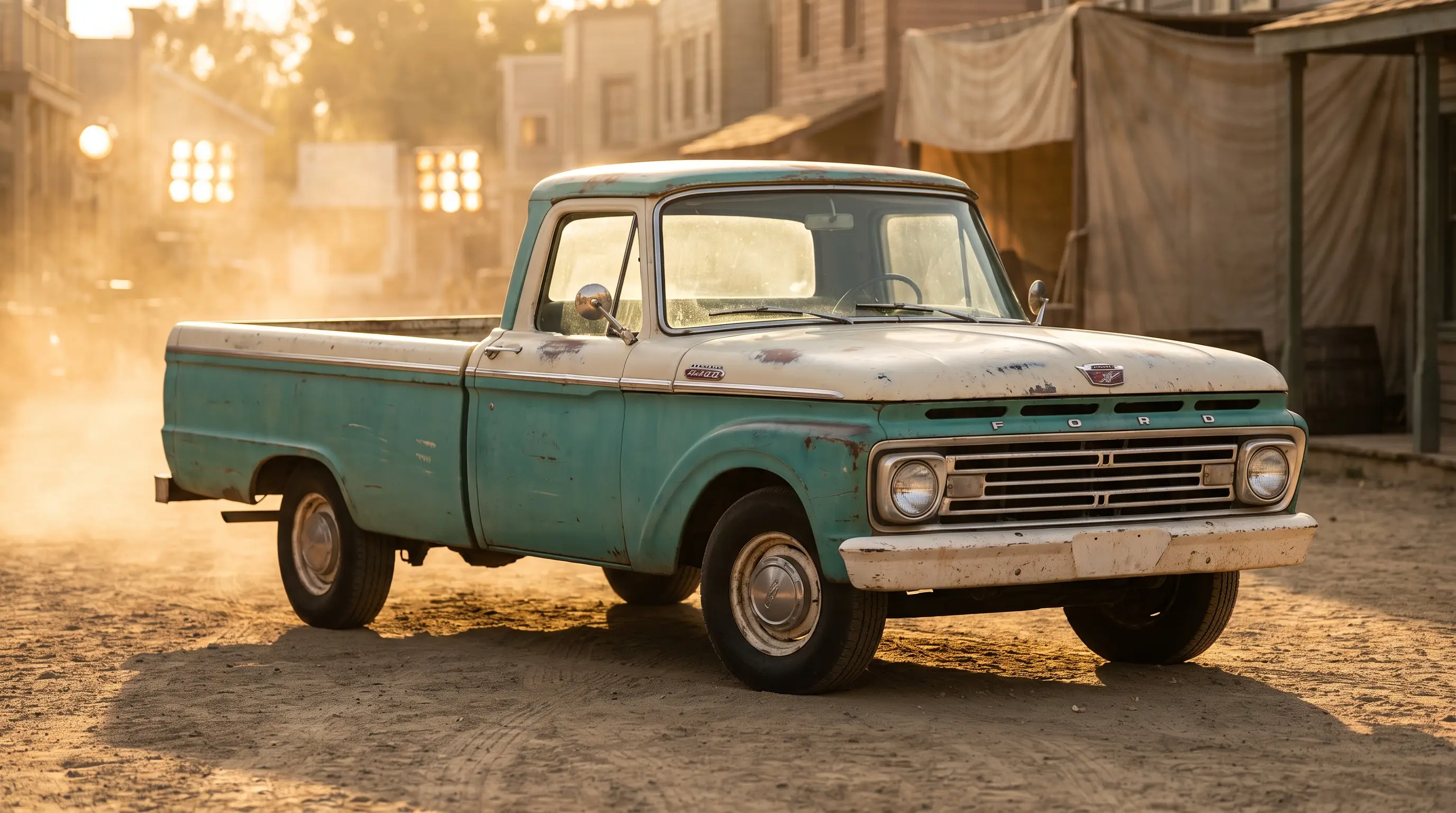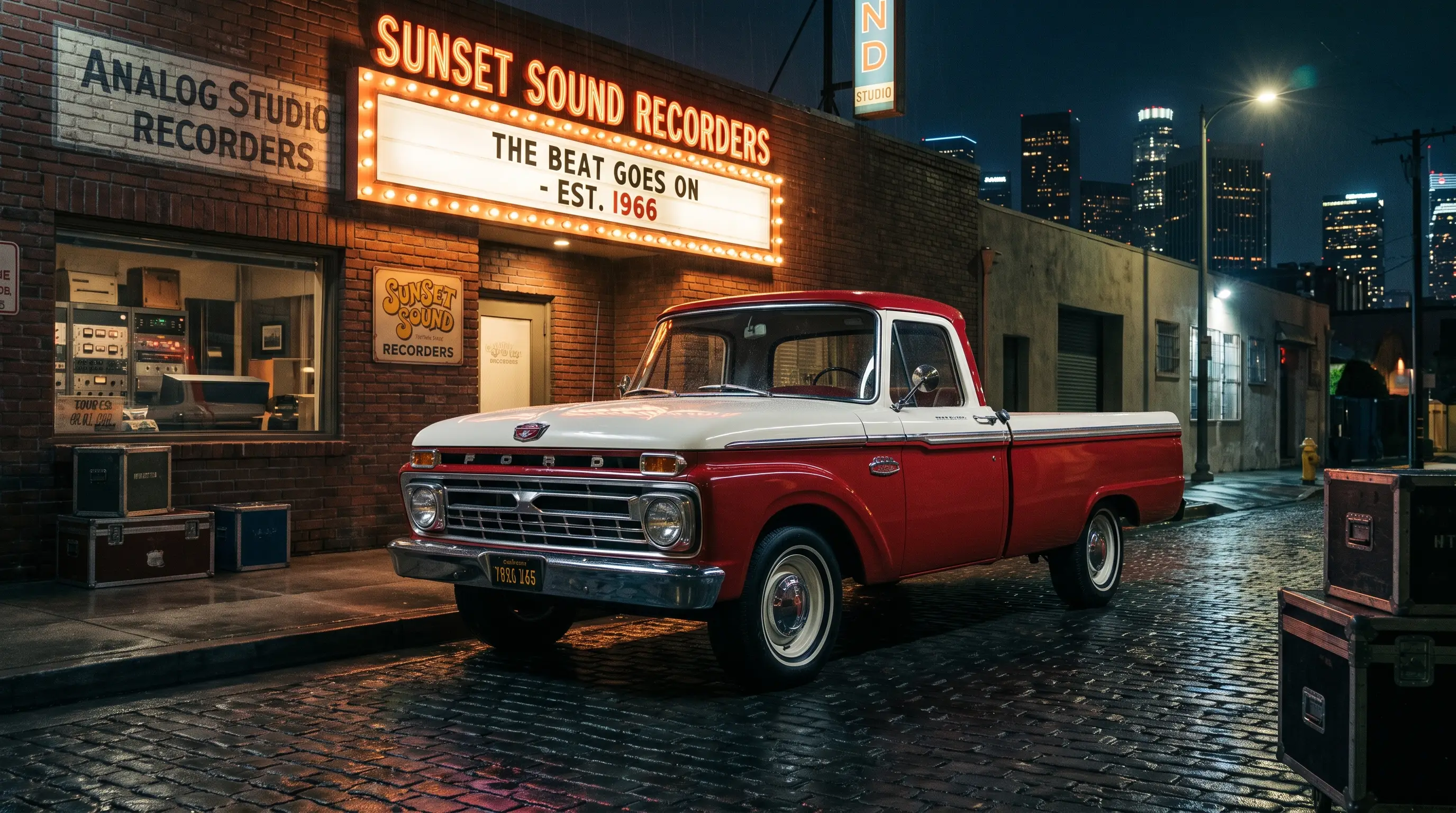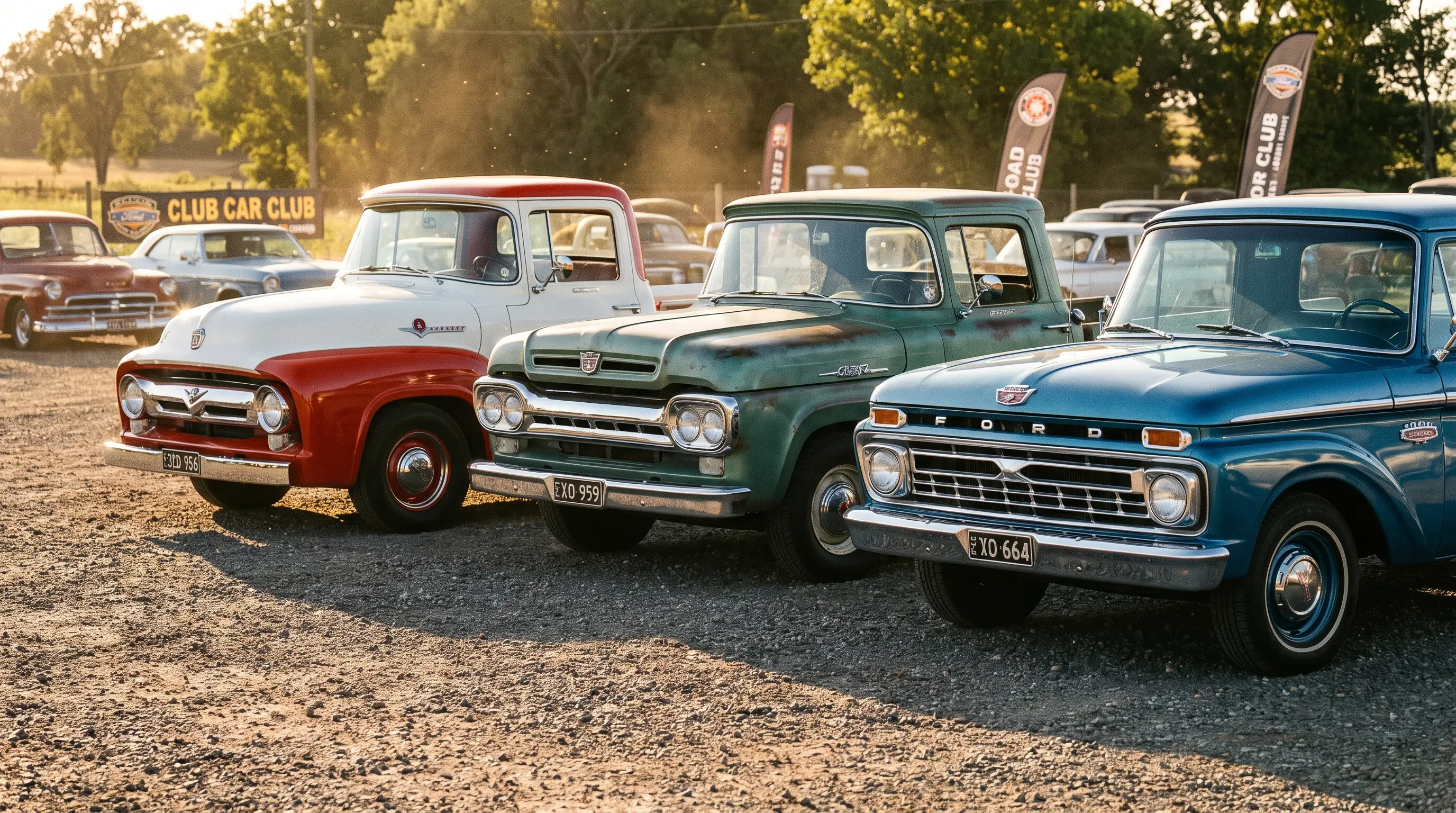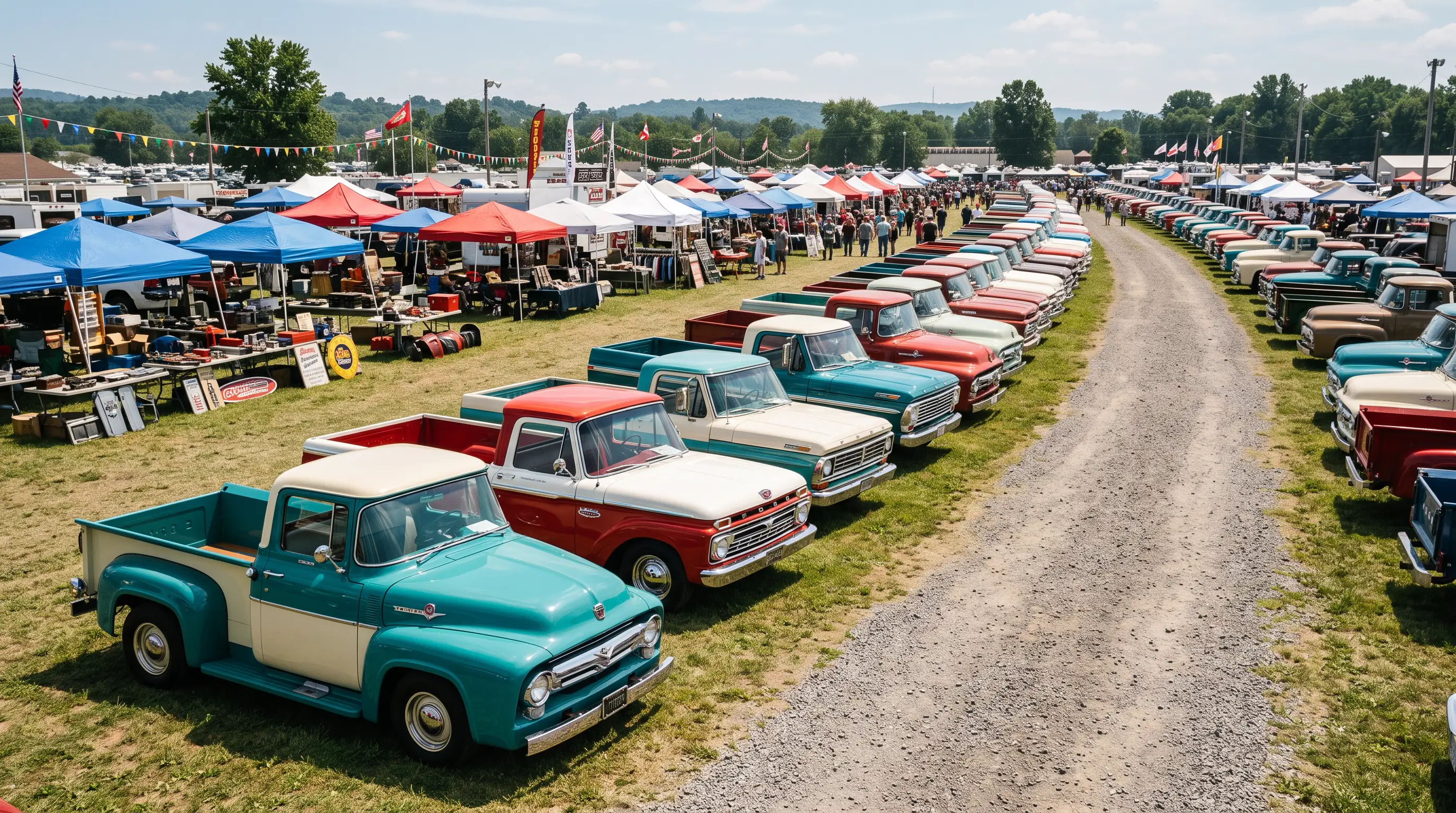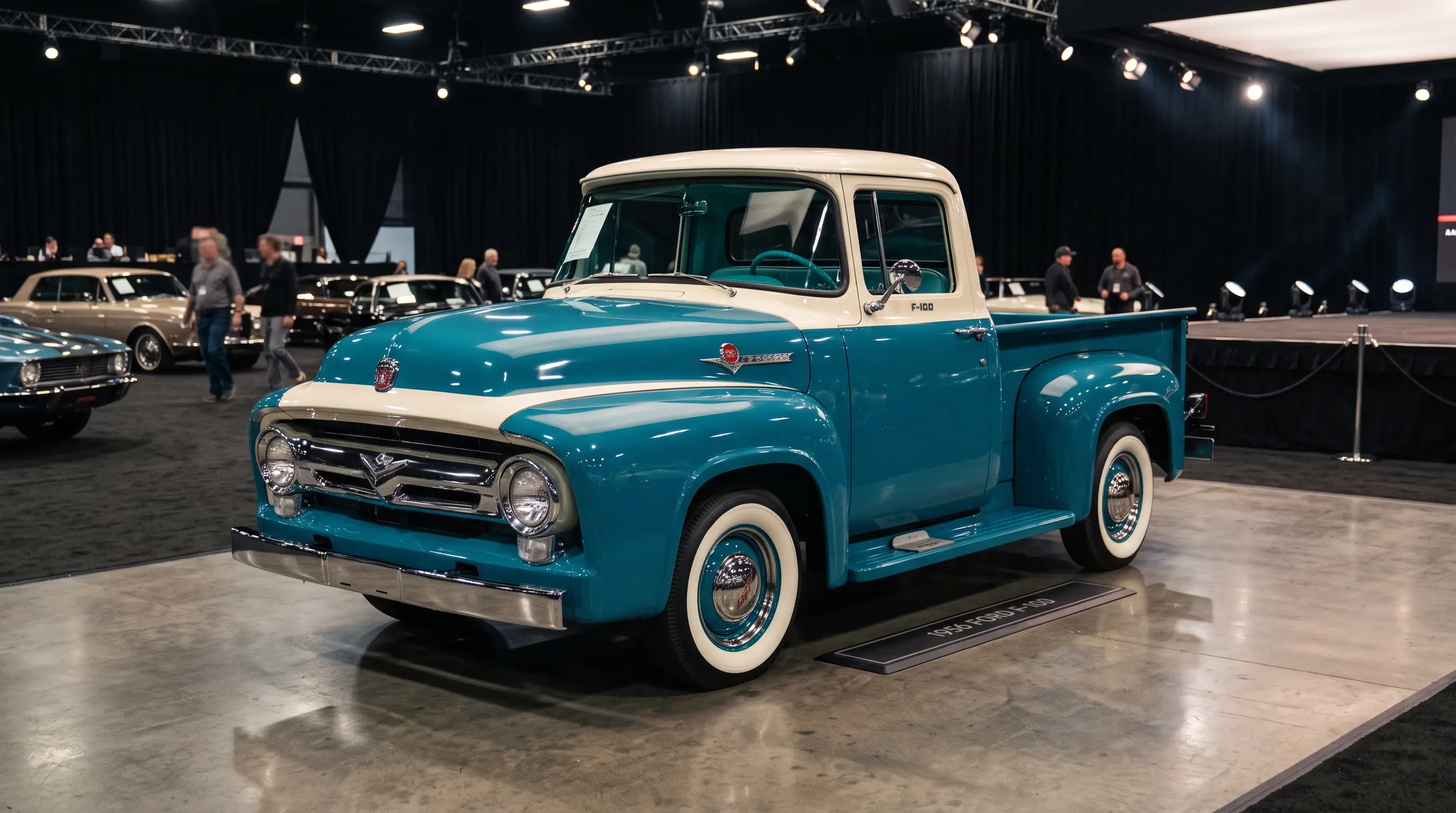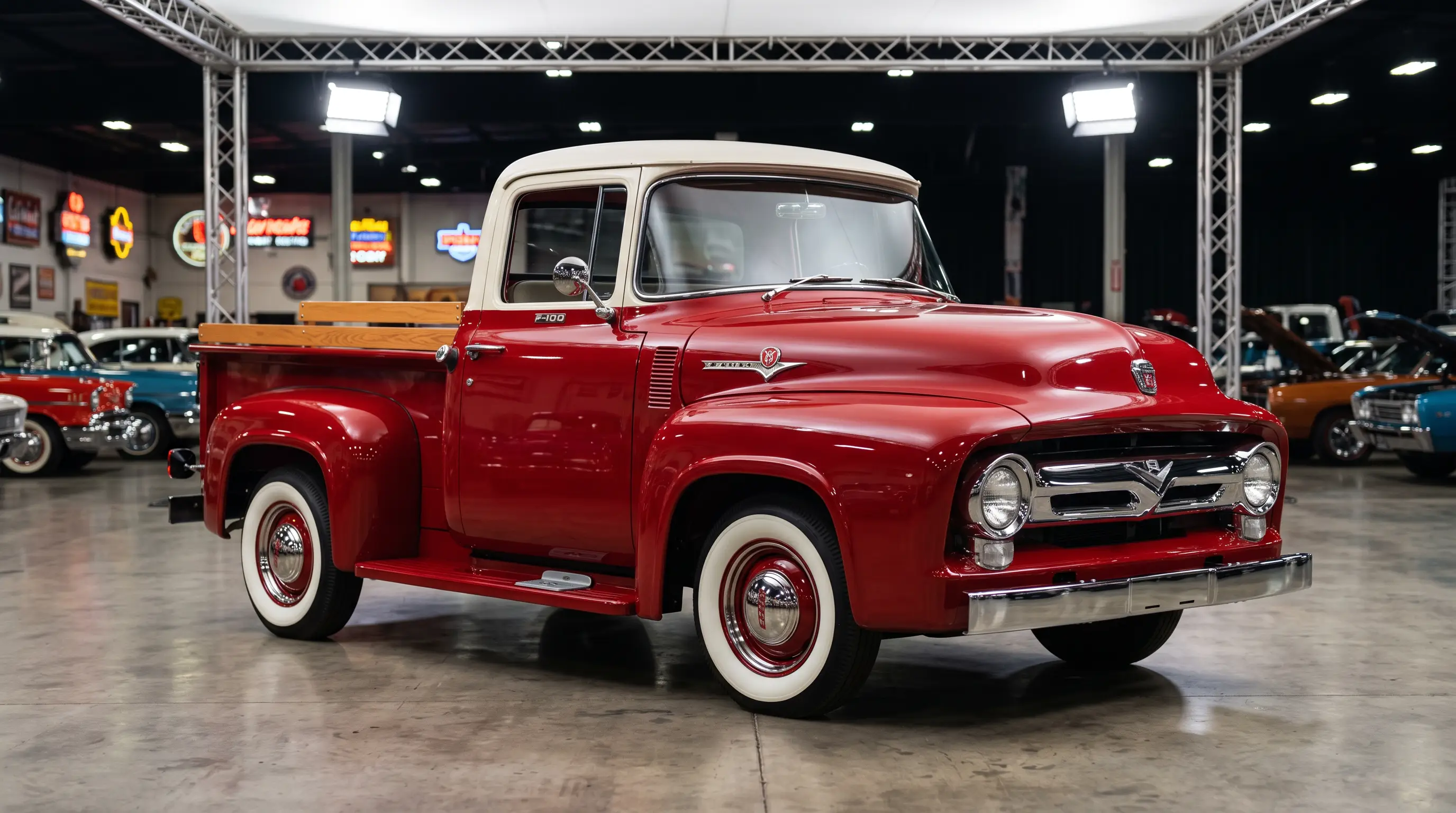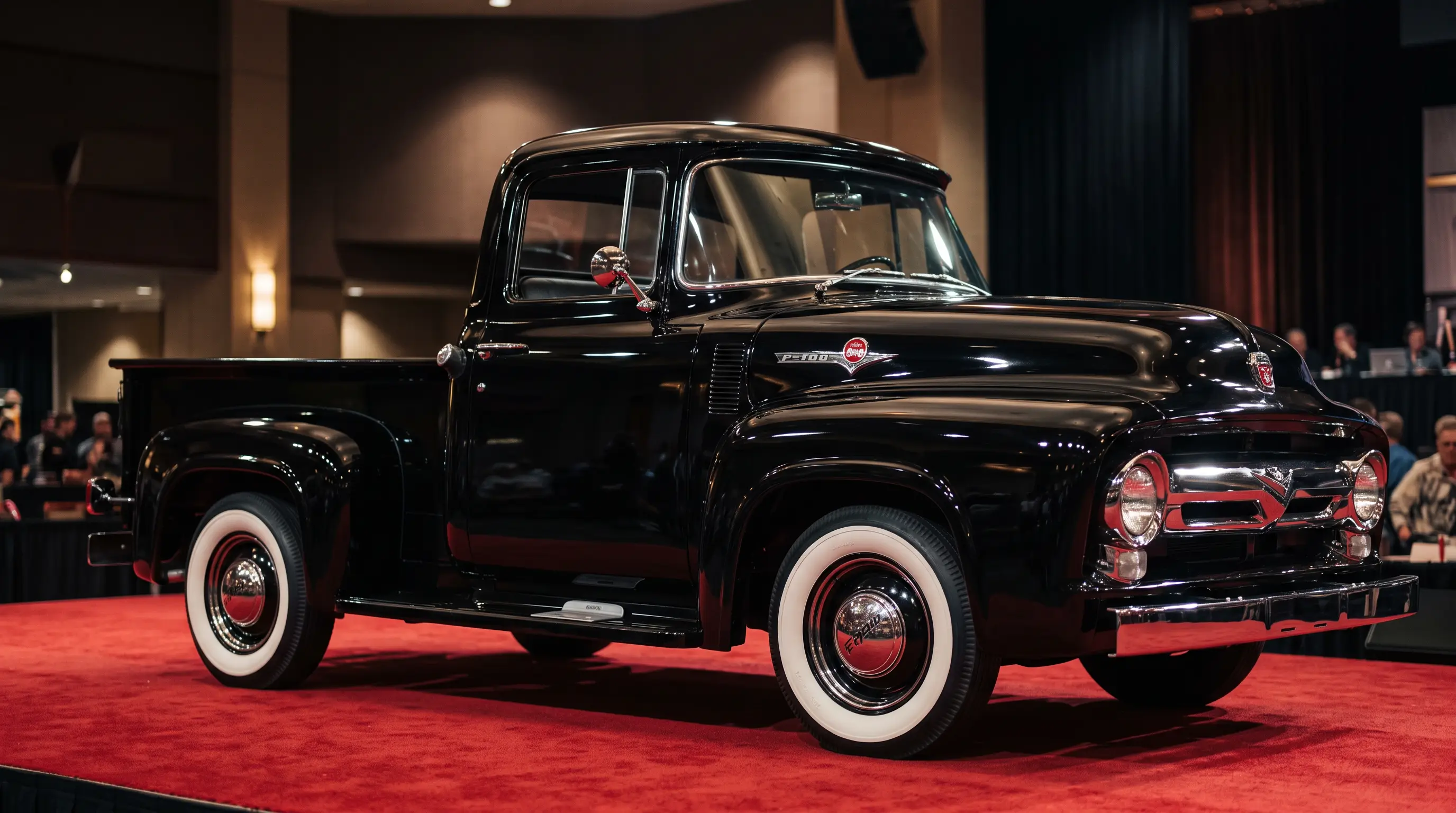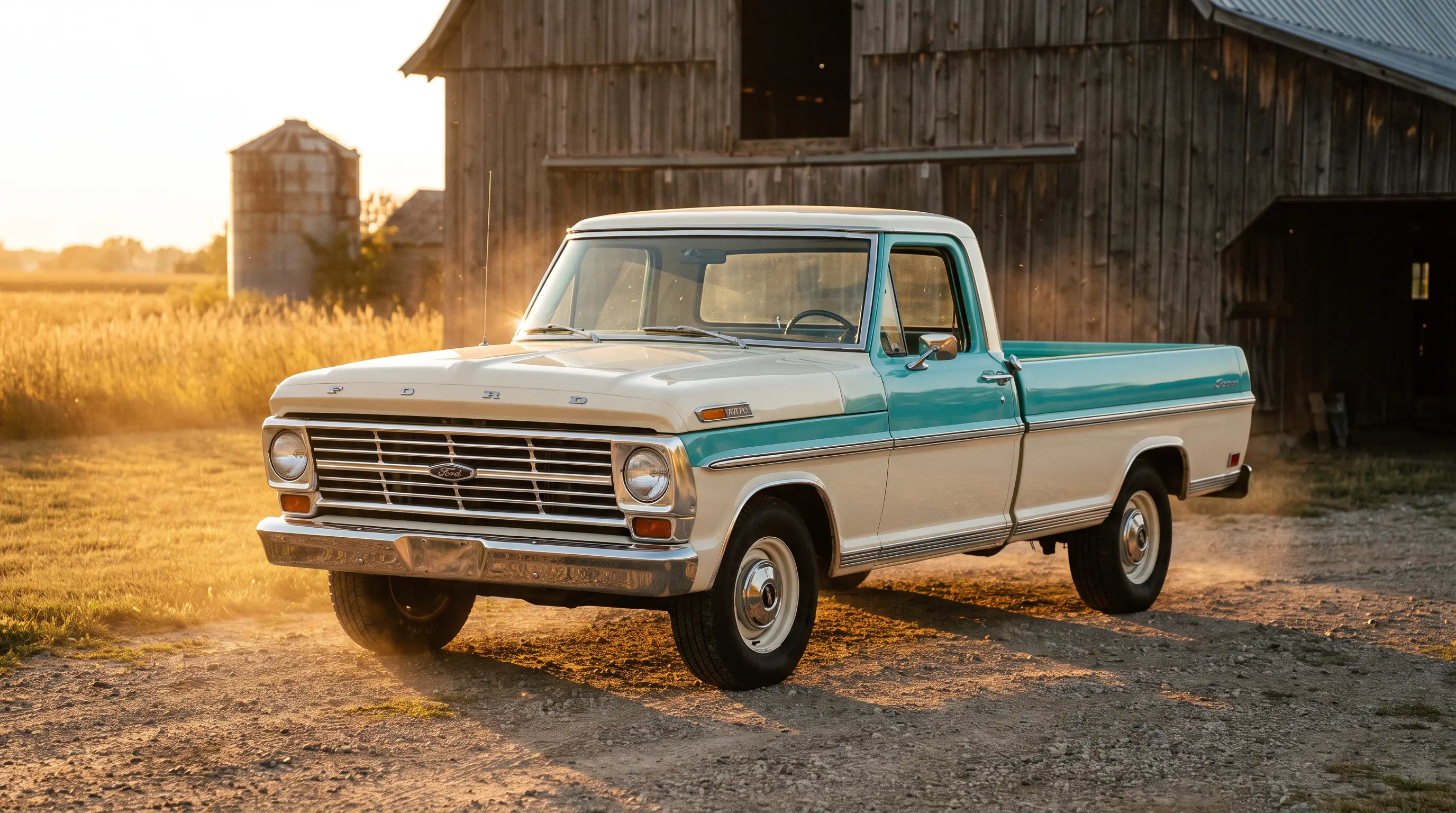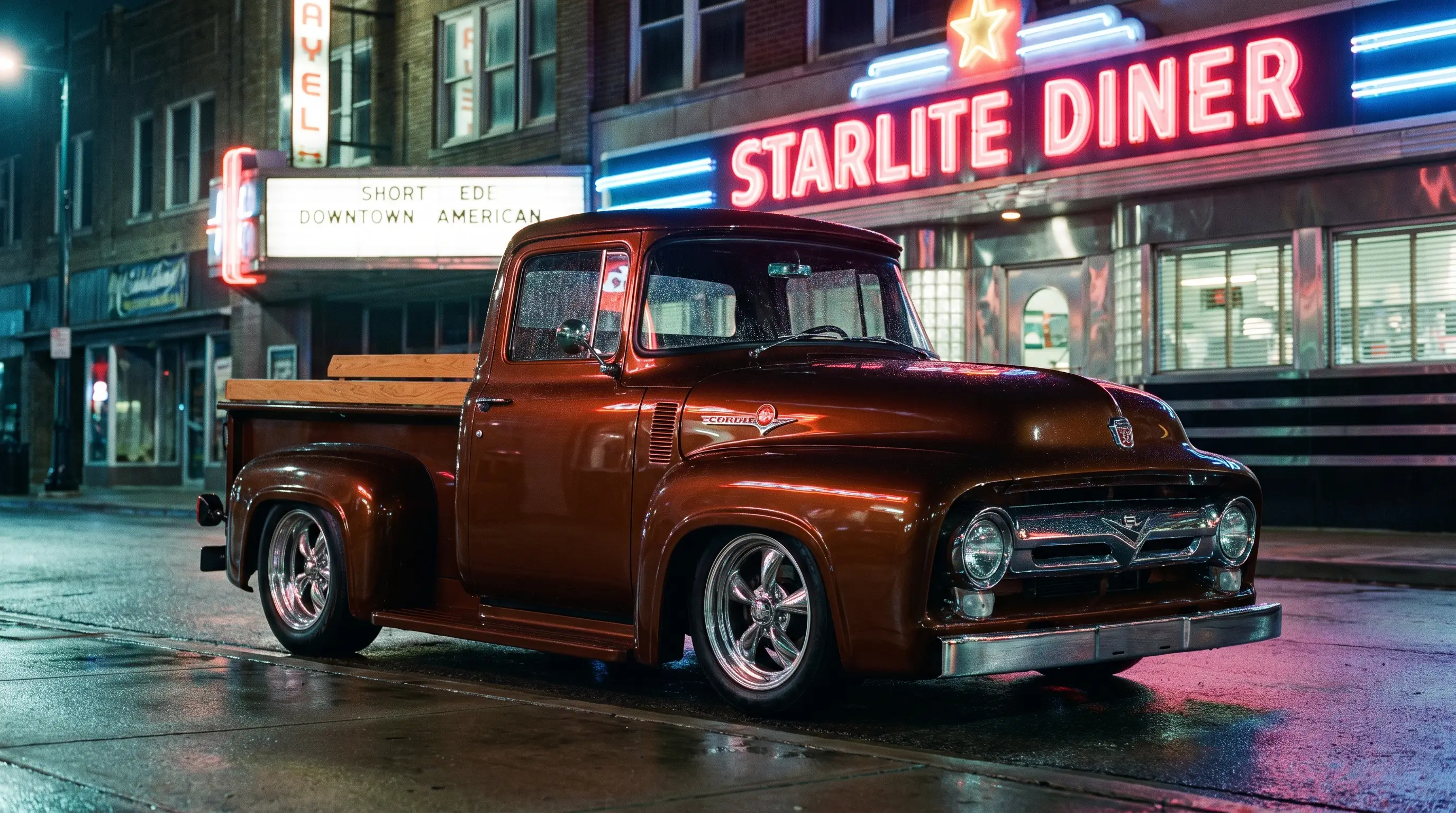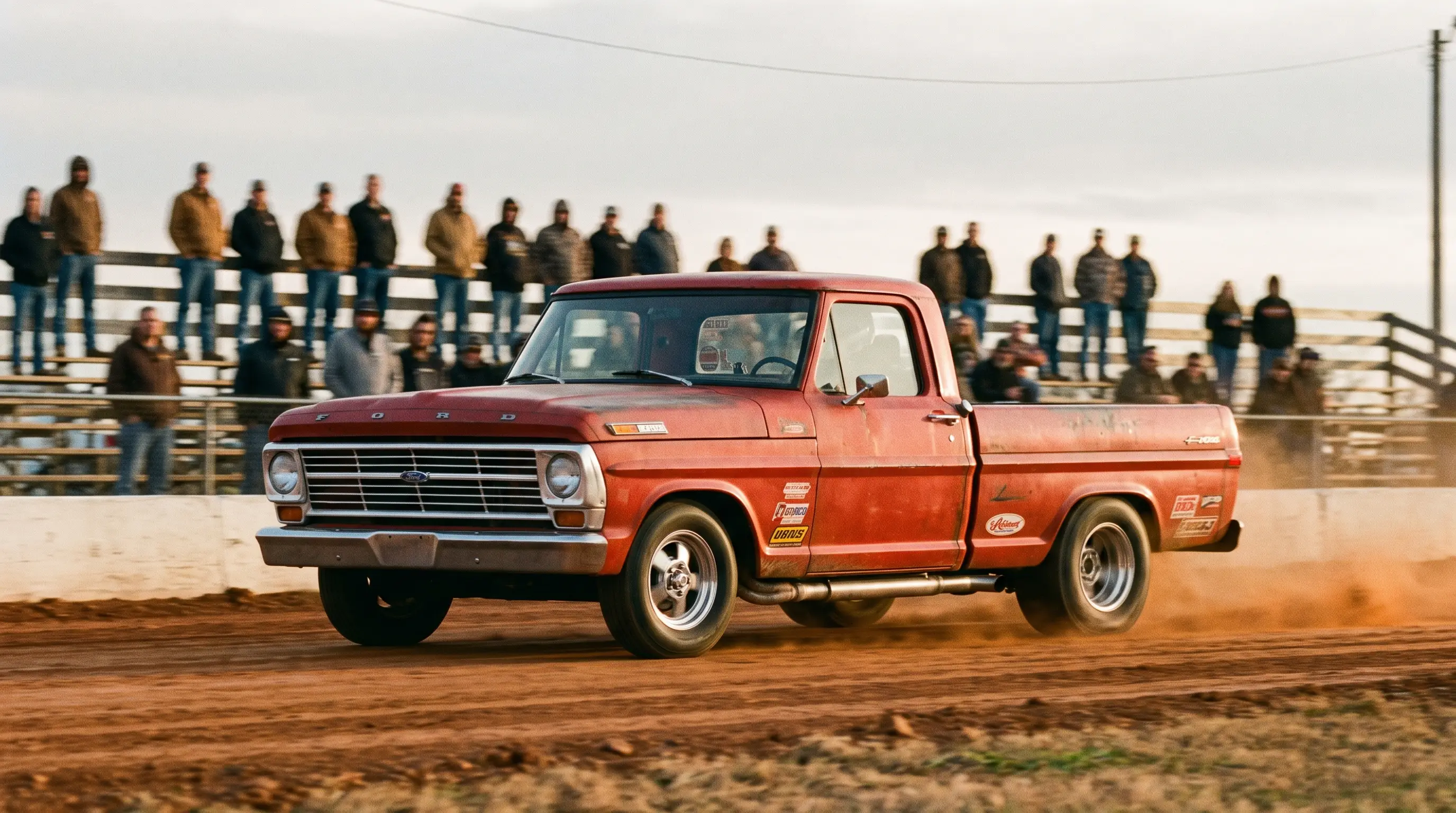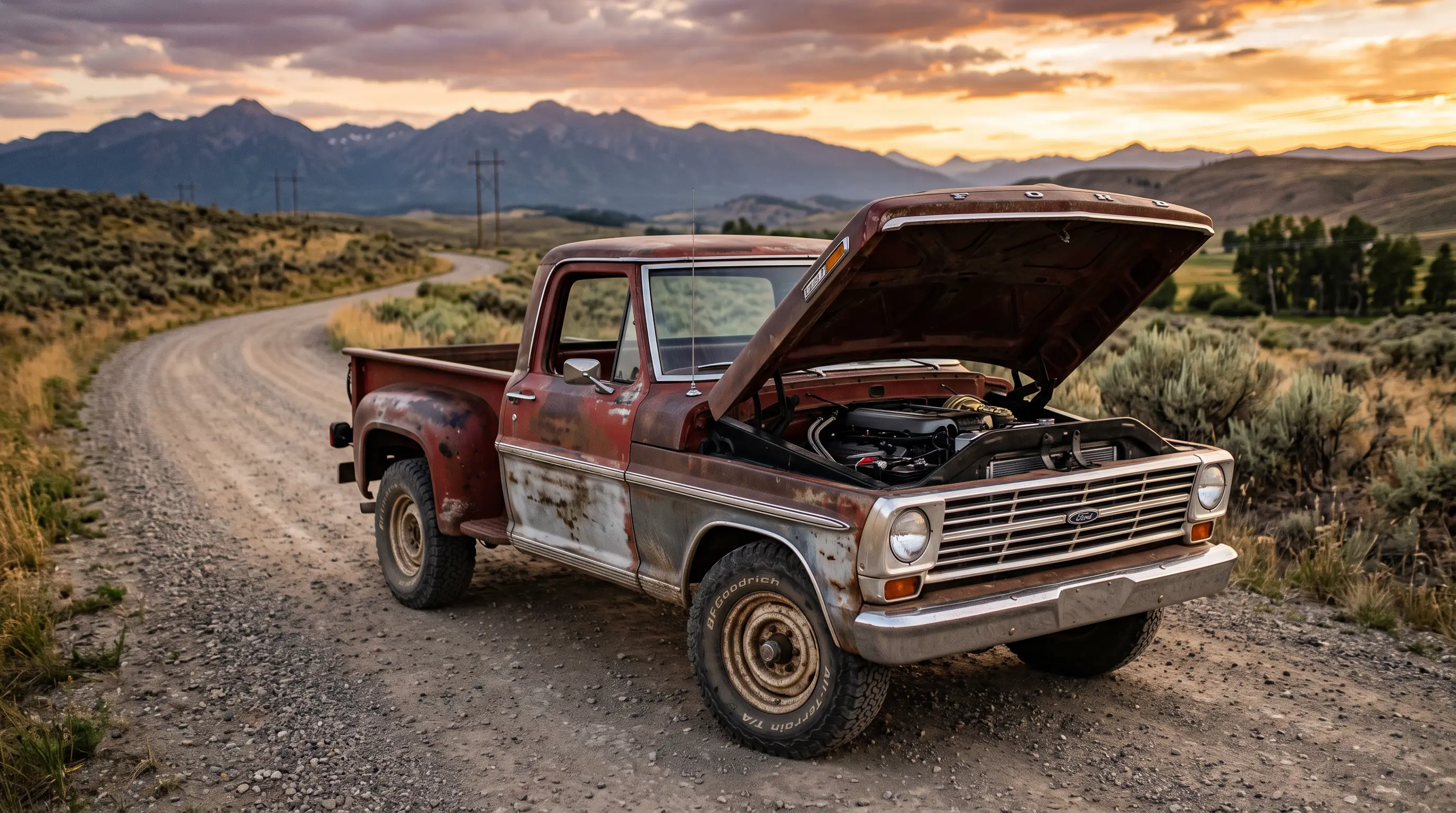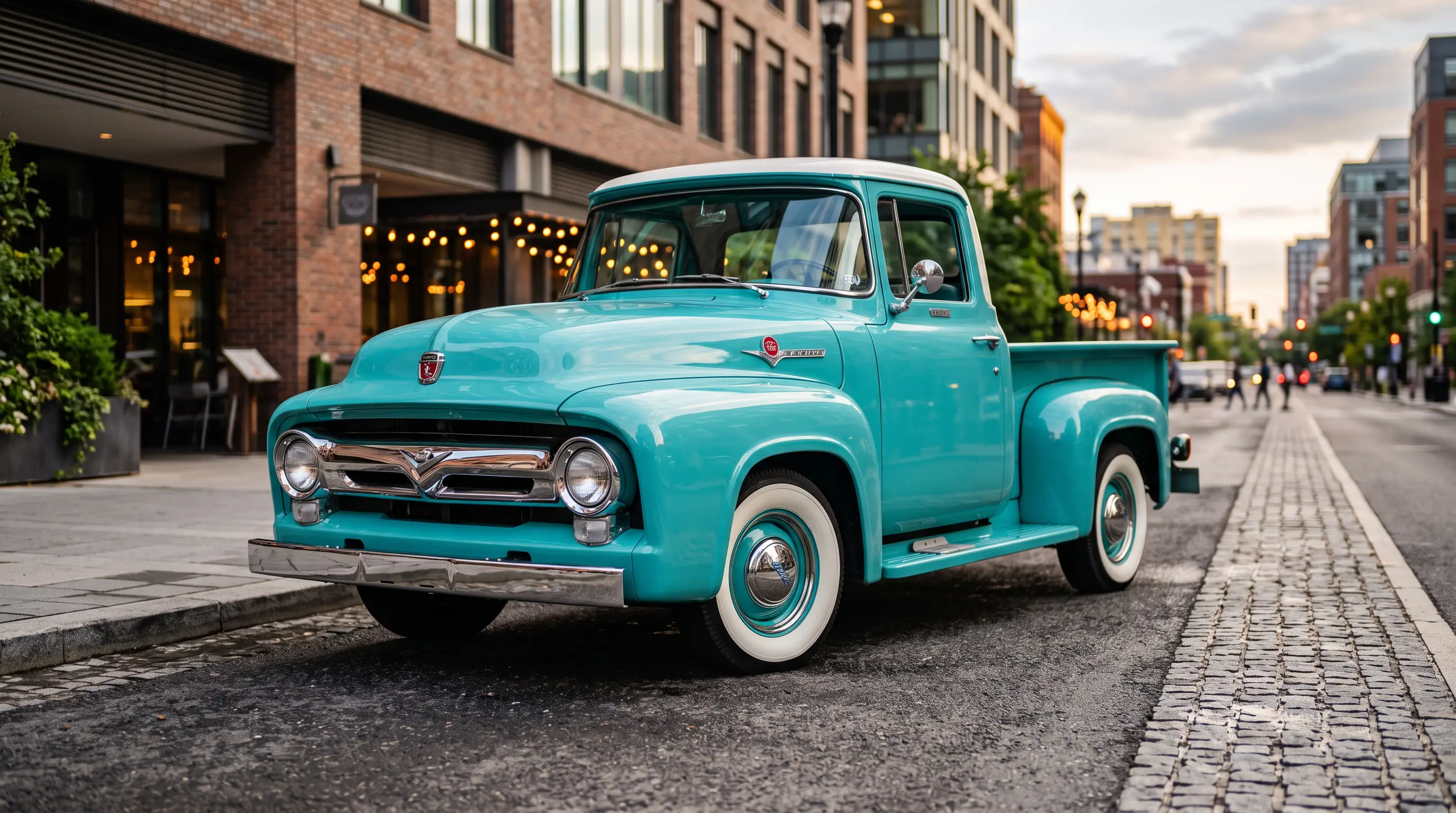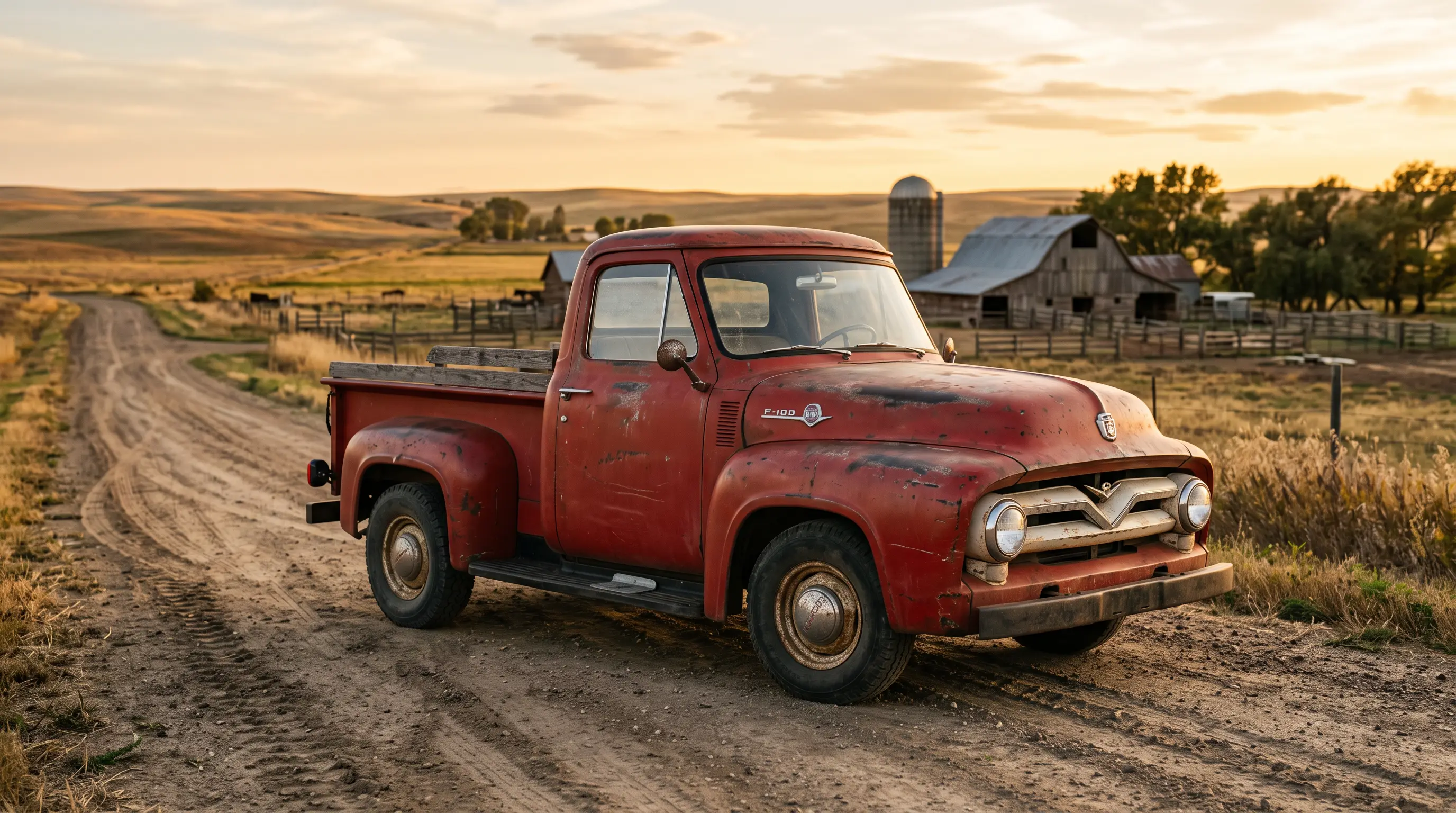
There is a photograph a lot of families have a version of. A father leans against the fender of a Ford pickup, sleeves rolled, squinting into a summer that ended fifty years ago. The truck in the frame is almost never the point of the picture, and that is exactly why it matters. For three decades the Ford F-100 was the quiet furniture of American life, parked at the edge of weddings and worksites and Sunday mornings, and the story of Ford F100 history is written as much in those background snapshots as in any brochure. The truck was never trying to be remembered. It got remembered anyway.
I think that is the whole secret of why these trucks move people now. They are not exotic. They are familiar. And familiarity, given enough time, turns into something close to love.
The truck that was always in the frame
When Ford introduced the F-1 in 1948 and rebranded it the F-100 in 1953, it was selling a tool, not a dream. The advertising of the era said so plainly. The pitch was payload, durability, a day's work done and the truck still ready for tomorrow. There was no romance in it. The romance came later, applied by the people who kept these trucks long after the work ran out.
Look at where the F-100 actually lived. It lived on ranches and in city alleys, at lumber yards and lake houses. It carried Christmas trees and hay bales and the occasional reluctant dog. A truck that is present for that many ordinary moments accumulates a kind of emotional weight that no sports car ever earns, because the sports car was always an occasion and the truck was always just there. Being there is underrated. It is also how you end up in fifty years of family photographs.
The early advertising leaned on wholesome, sturdy imagery, and it worked because it was mostly true. If you want the full sweep of how the model grew across its generations, our our ford f100 retrospective lays out the timeline, and reading it alongside old ad copy shows how a work tool slowly became a cultural fixture without anyone planning it that way.
On screen and in the background of a decade
The F-100 rarely got a starring role. It got something more useful for its legend: constant supporting work. Set designers reach for these trucks when they want a scene to feel honest, because a vintage Ford pickup reads as authentic in a way a fancier vehicle cannot. Put one in the driveway and the whole street believes the year on the clapboard.
That is a quiet kind of fame. The truck became a signal. When you see one parked outside a farmhouse in a film, you already know something about the people who live there before a word is spoken. The F-100 did that work over and over, decade after decade, and it shaped how a couple of generations picture the past. We remember the fifties and sixties partly the way the movies framed them, and a Ford truck was very often in the frame.
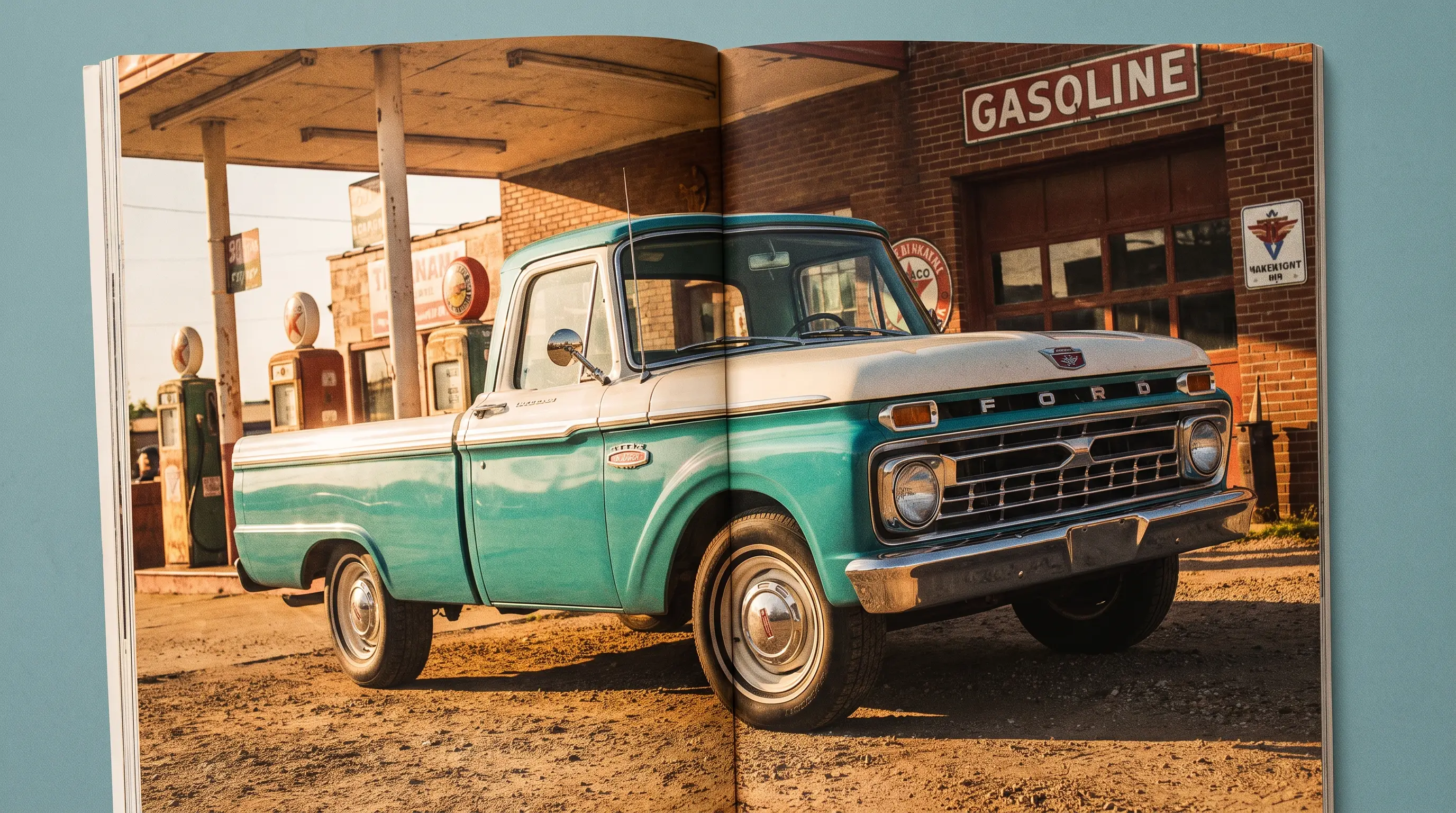
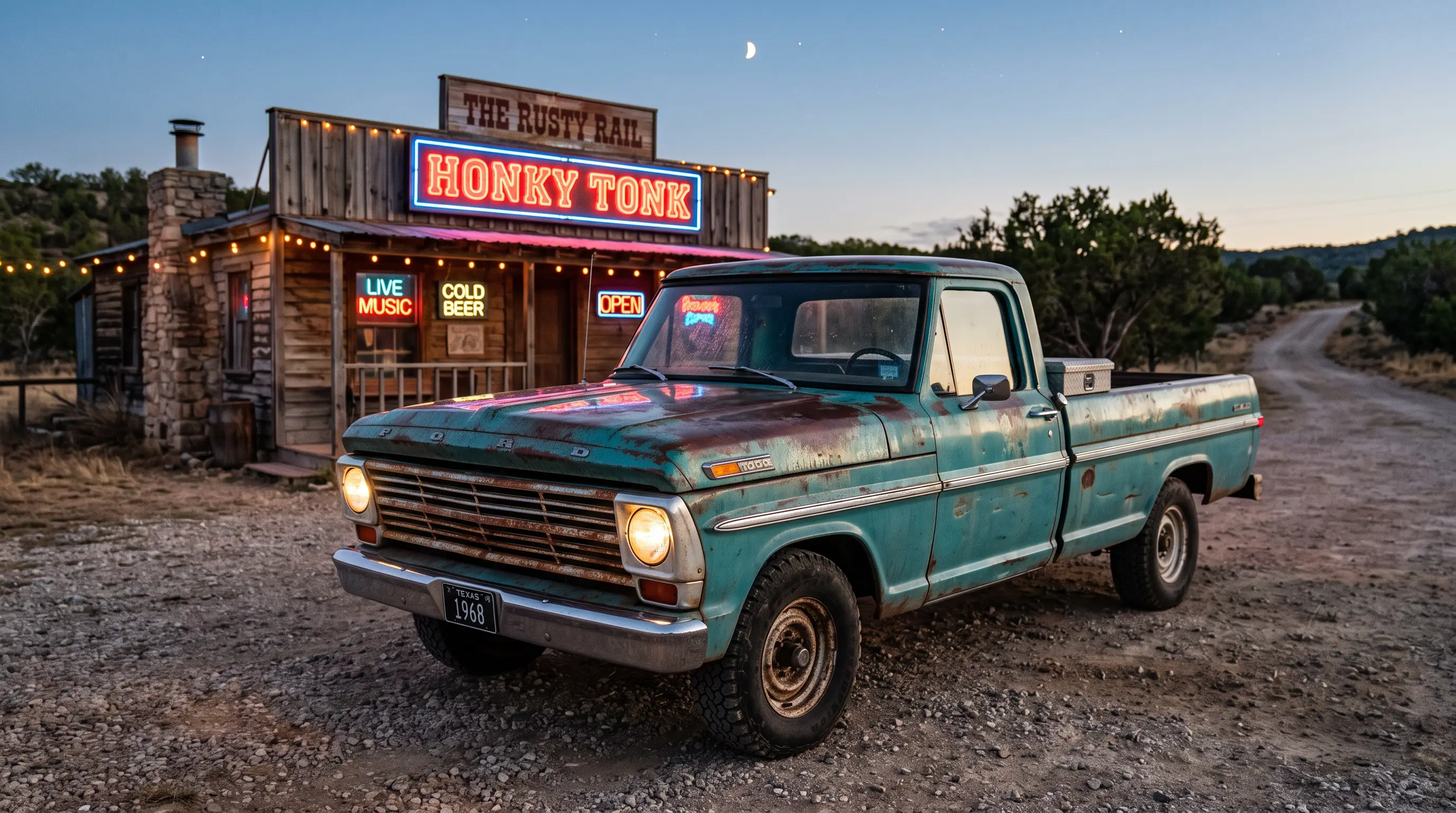
Music and photography did the same. Album covers, magazine spreads, the endless visual language of Americana all borrowed the F-100 because it was instantly readable. None of this was the truck's idea. It simply looked right, and looking right for that many years turns a vehicle into a symbol.
Advertising eventually caught up to what the culture already felt. By the time these trucks were old, marketers were selling the memory of them, using vintage pickups to sell everything from denim to whiskey to insurance. The truck had become a mood. Show a weathered Ford in the golden light of late afternoon and a viewer supplies the rest without prompting: hard work, honest people, a simpler year. That the picture is half invented does not weaken it. Most of the things we love about the past are half invented, and the F-100 gives that feeling a shape and a grille.
How the collector market woke up
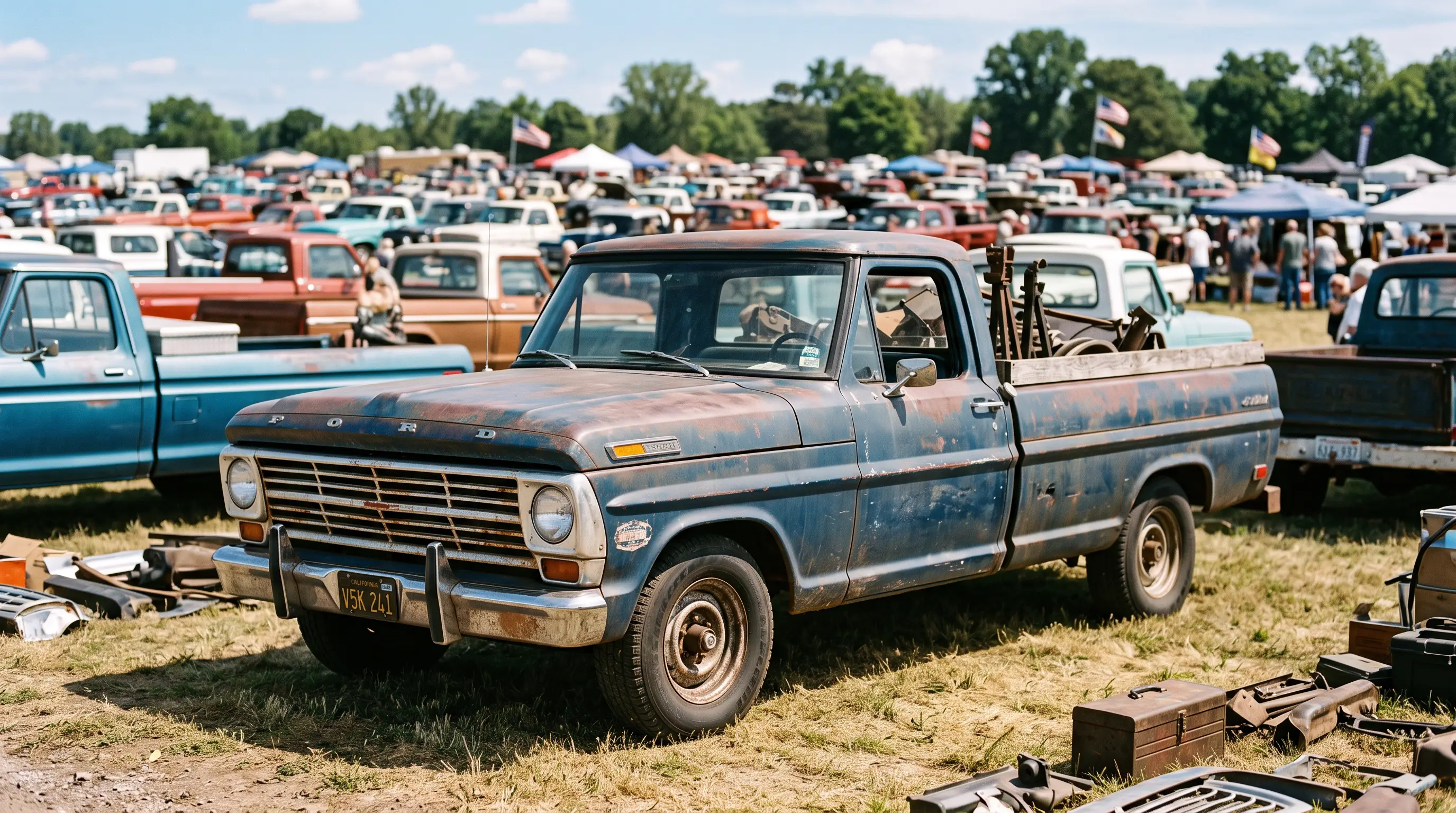
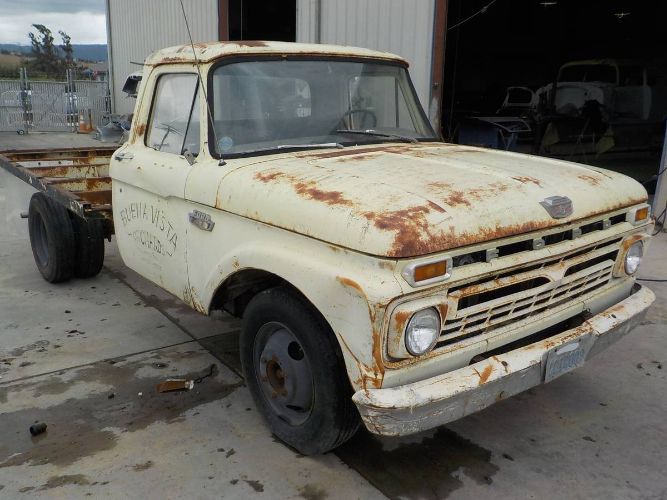
For a long time these trucks were cheap, and being cheap nearly killed a lot of them. A truck worth eight hundred dollars gets used until it dissolves. Thousands did. That attrition is precisely why clean survivors now command real money, because the ordinary truck that was everywhere became the well-kept truck that is suddenly rare.
The market for classic pickups shifted meaningfully over the last two decades. Trucks that collectors once dismissed as too common or too utilitarian became desirable as buyers who grew up around them reached the age and income to want one back. Nostalgia has a schedule, and it runs on a roughly forty-year delay. Right on cue, the F-100 arrived at auctions that used to be reserved for muscle cars.
| Era | Collector standing | What drives the value |
|---|---|---|
| 1948 to 1952 (F-1) | Prized early history | Age, originality, flathead-era charm |
| 1953 to 1956 | Style favorite | Rounded looks, film and photo appeal |
| 1957 to 1960 | Rising interest | Flatter, wider styling, Styleside bed |
| 1961 to 1972 | Broad demand | Unibody curiosity, then classic proportions |
| 1973 to 1979 (Dentside) | Fastest-climbing | Affordability, driveability, parts supply |
What buyers actually pay for
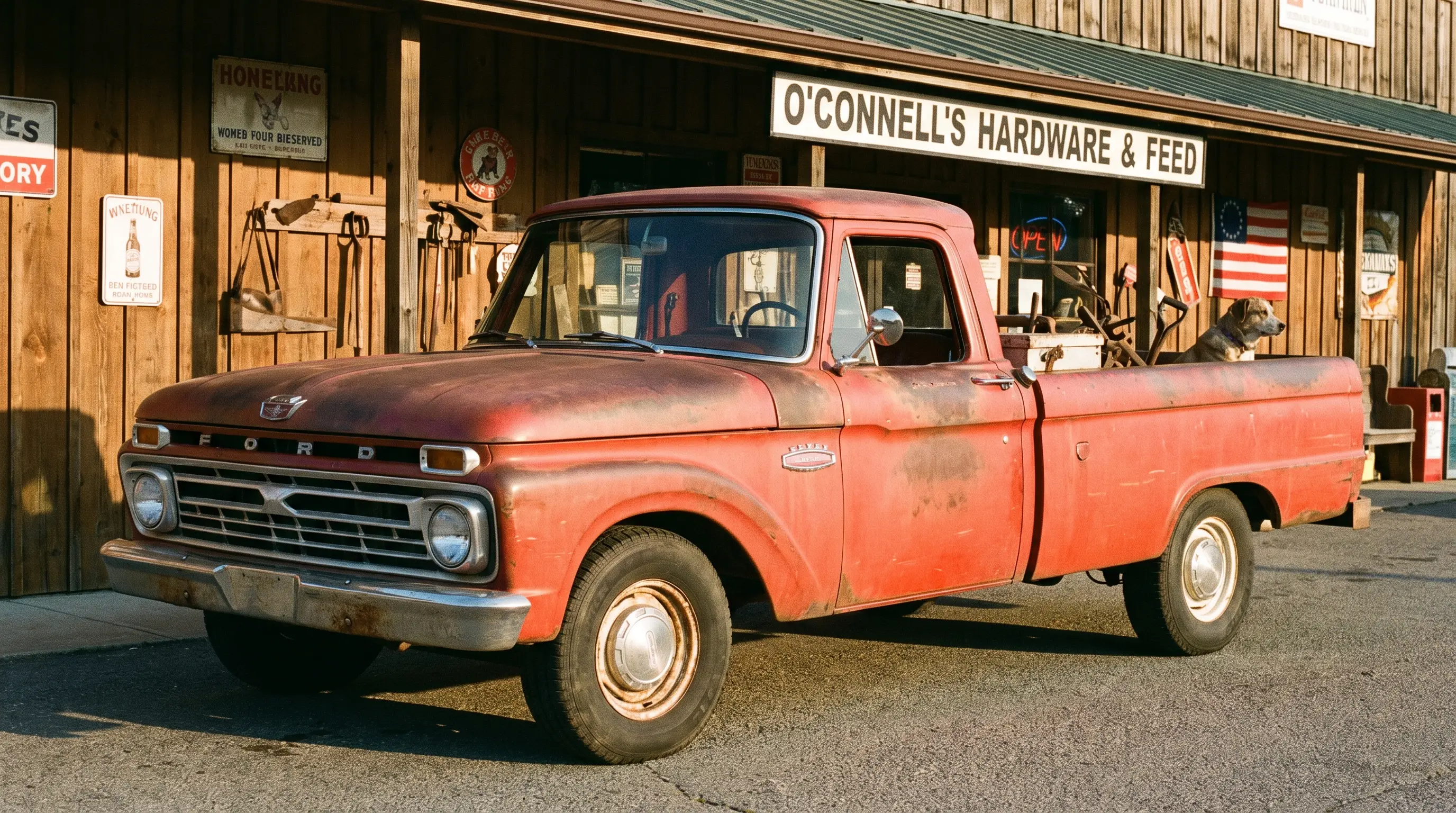
Condition first, then story. A truck with honest patina and a known history can outsell a slicker but anonymous restoration, because collectors increasingly want the object to feel real. Originality carries a premium. So does a documented single-family history, the kind of provenance that turns a used truck into an heirloom.
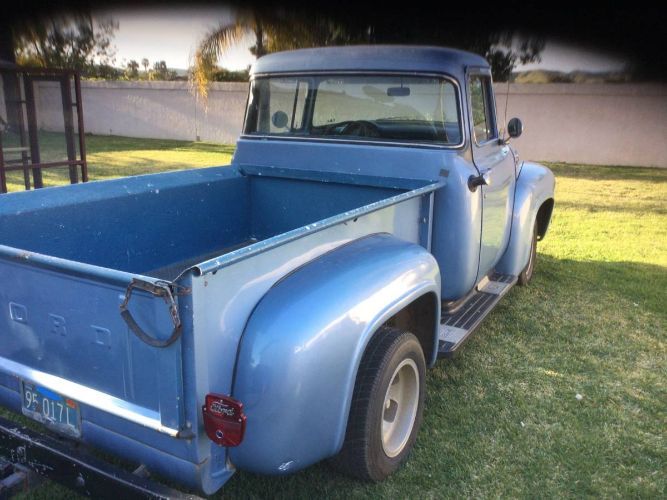
Short beds outsell long beds. Styleside outsells Flareside for most buyers, though the stepside look has its own devoted crowd. Trim matters, with the dressed-up Ranger and Ranger XLT packages pulling ahead of base trucks. But above all of it sits the intangible thing, the feeling that a particular truck belonged somewhere and to someone. That is what people are really buying, and it does not show up on a spec sheet.
"I watched a man stand a long time next to a plain green F-100 at an auction, not bidding, just looking. When I asked, he said his grandfather had one exactly like it. He did not want a truck. He wanted a Tuesday afternoon in 1969 back. That is what these things sell."
- Nora Beckett
The restomod question and the purist's worry
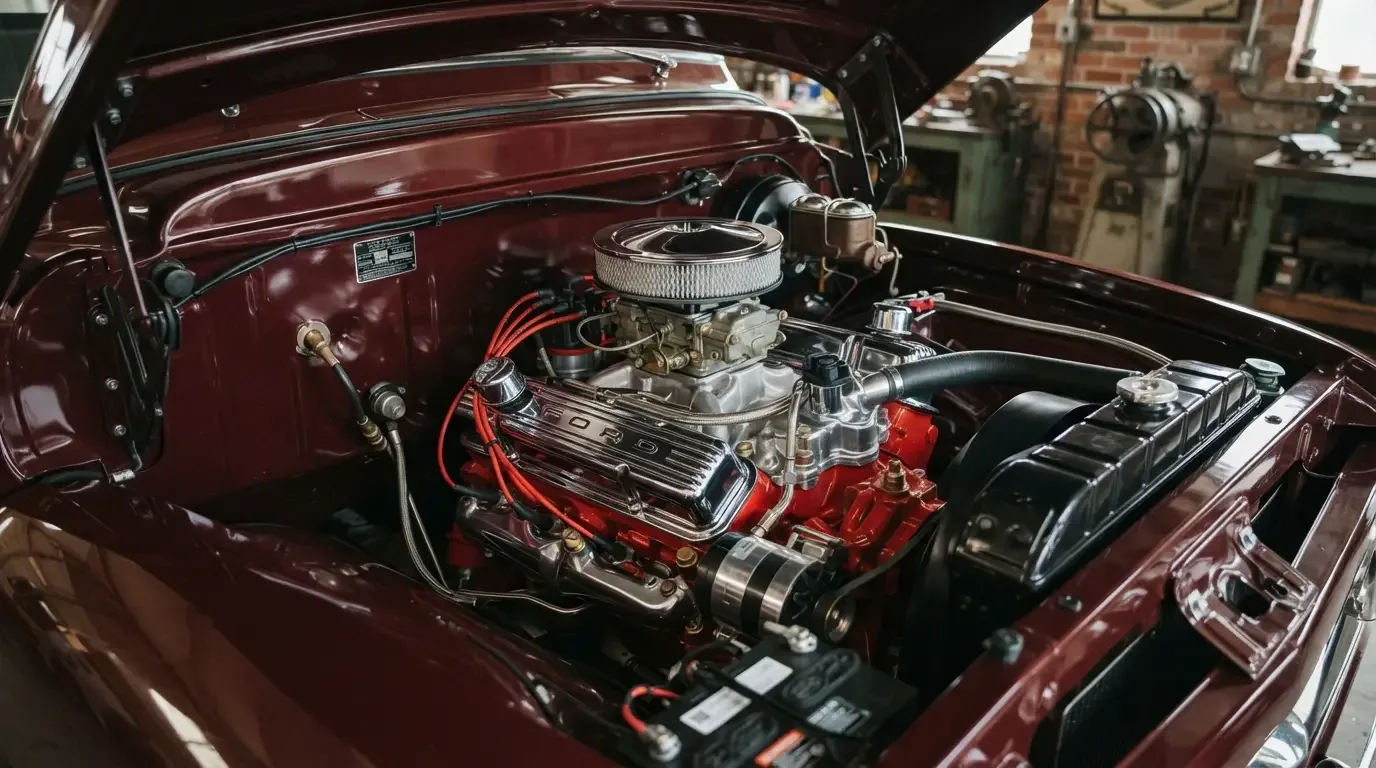
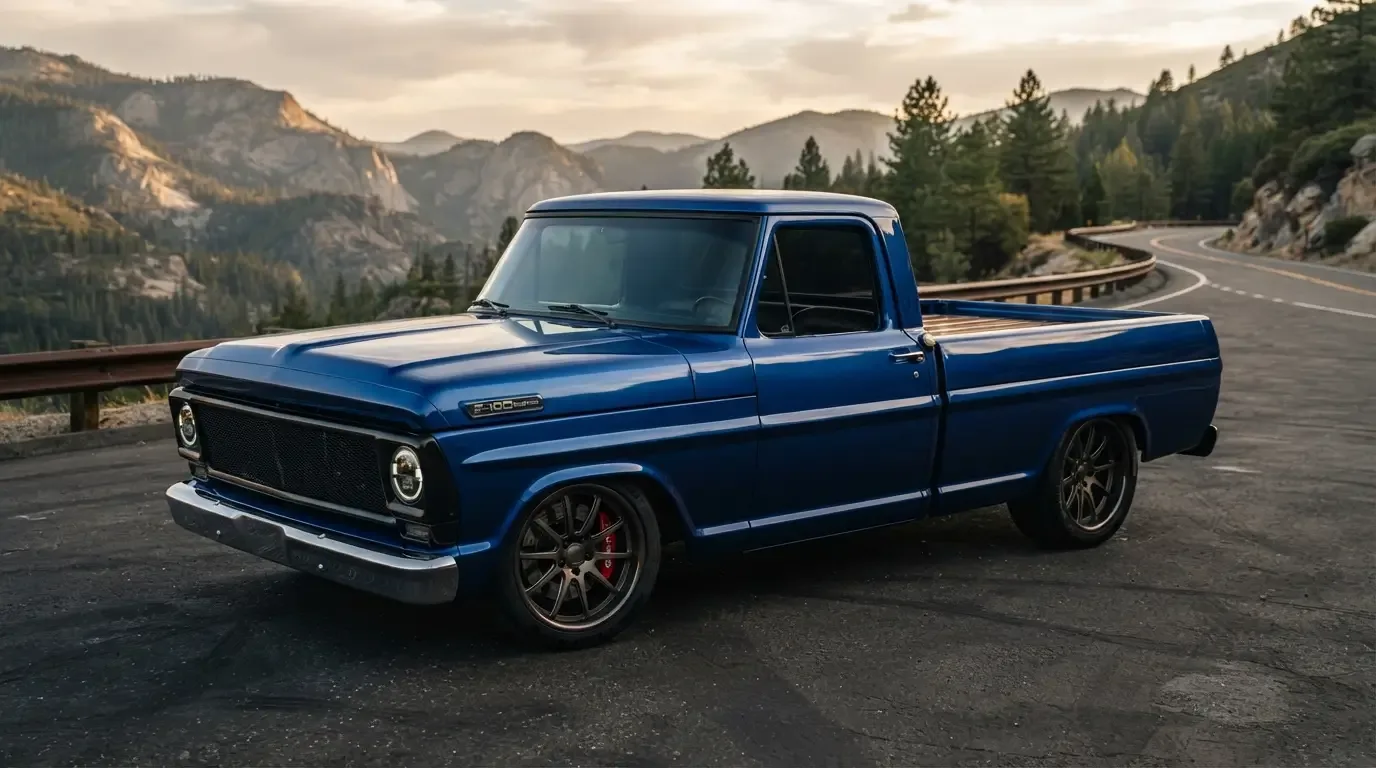
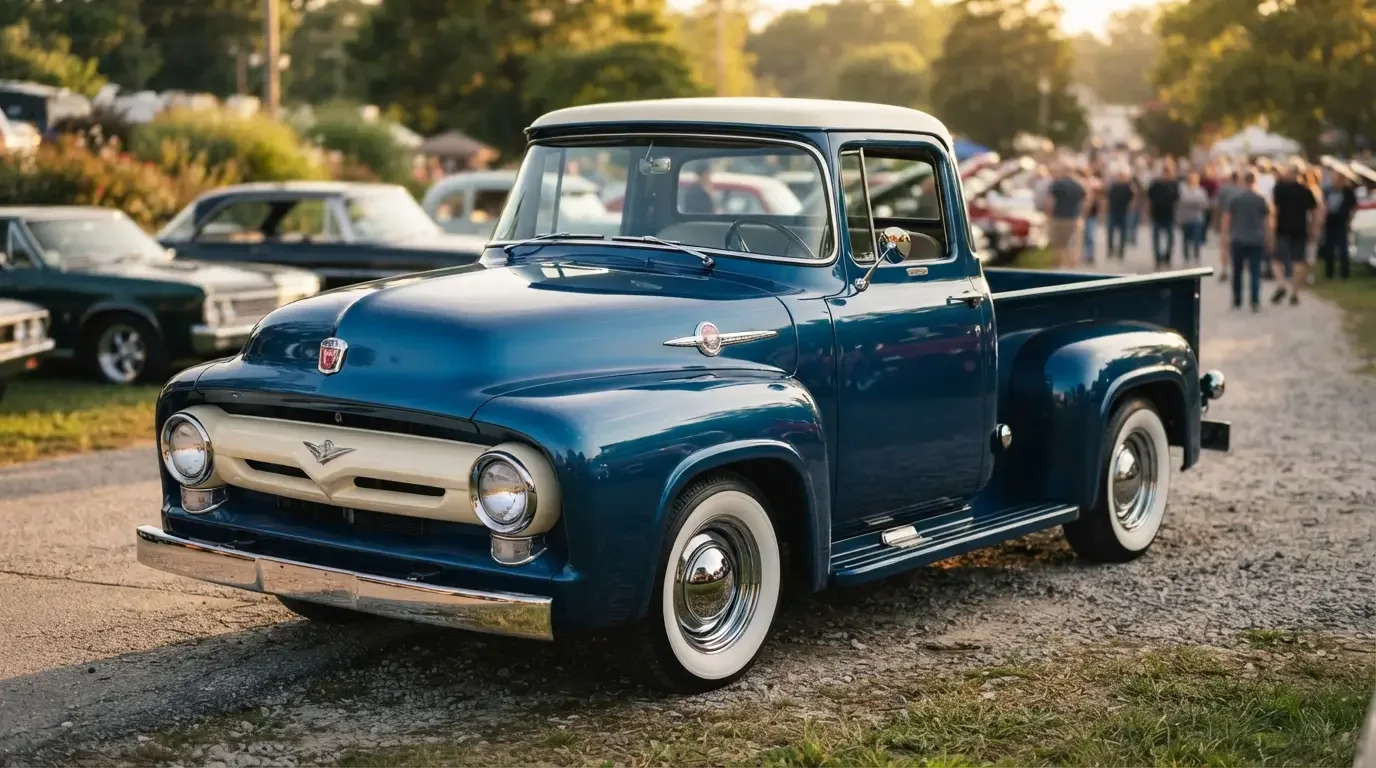
As values rose, so did the temptation to modernize. Restomods, trucks with vintage bodies over modern running gear, became one of the hottest corners of the market, and they pull big numbers when done well. Purists wince. They see original trucks being cut up to build something faster and shinier, and they mourn every unmolested survivor that gets converted.
Both sides have a point, and both are part of why the F-100 stays culturally alive rather than freezing into a museum piece. The originality crowd preserves the truth of the object. The builder crowd keeps the truck on the road and in the conversation of younger people who might otherwise never notice it. A model needs both to stay loved. If the custom side interests you, keep exploring that world in our companion feature, and you can keep exploring how far the modern builds have gone.
Why the values keep climbing
The simplest explanation is supply and memory. Supply keeps shrinking as rough trucks finally rust out and clean ones get locked into collections. Memory keeps expanding as each new wave of buyers arrives carrying childhood pictures of a Ford pickup in the yard. Shrinking supply plus growing demand is not a mystery. It is arithmetic, and it points one direction.
There is a softer factor too. These trucks are usable. You do not need a trailer and a climate-controlled garage to enjoy one, the way you might with a fragile exotic. An F-100 wants to be driven, waved at, parked in front of the hardware store. That accessibility keeps demand broad rather than narrow, and broad demand holds value better than the fashion-driven spikes that chase rarer cars up and then abandon them.
Generational timing matters more than any single market trend. The people who are bidding now watched a truck like this in a driveway when they were small, and money tends to follow memory once a buyer has enough of both. As that wave moves through, the trucks it grew up around move with it. The F-100 is riding that wave right now, and there is no obvious reason to expect the tide to turn while the people who remember these trucks are still shopping.
The truck we decided to keep
A culture does not choose what it saves on purpose. It saves what it cannot bear to lose, and it usually figures out which is which only after most of them are gone. The Ford F-100 slipped into American memory through the side door, in the background of photographs nobody staged, and by the time we realized how much we cared, the ordinary ones had mostly vanished. What is left, we now protect. If a particular one has already got its hooks in you, there is always a classic F-100 for sale somewhere waiting for the person who remembers why it matters.