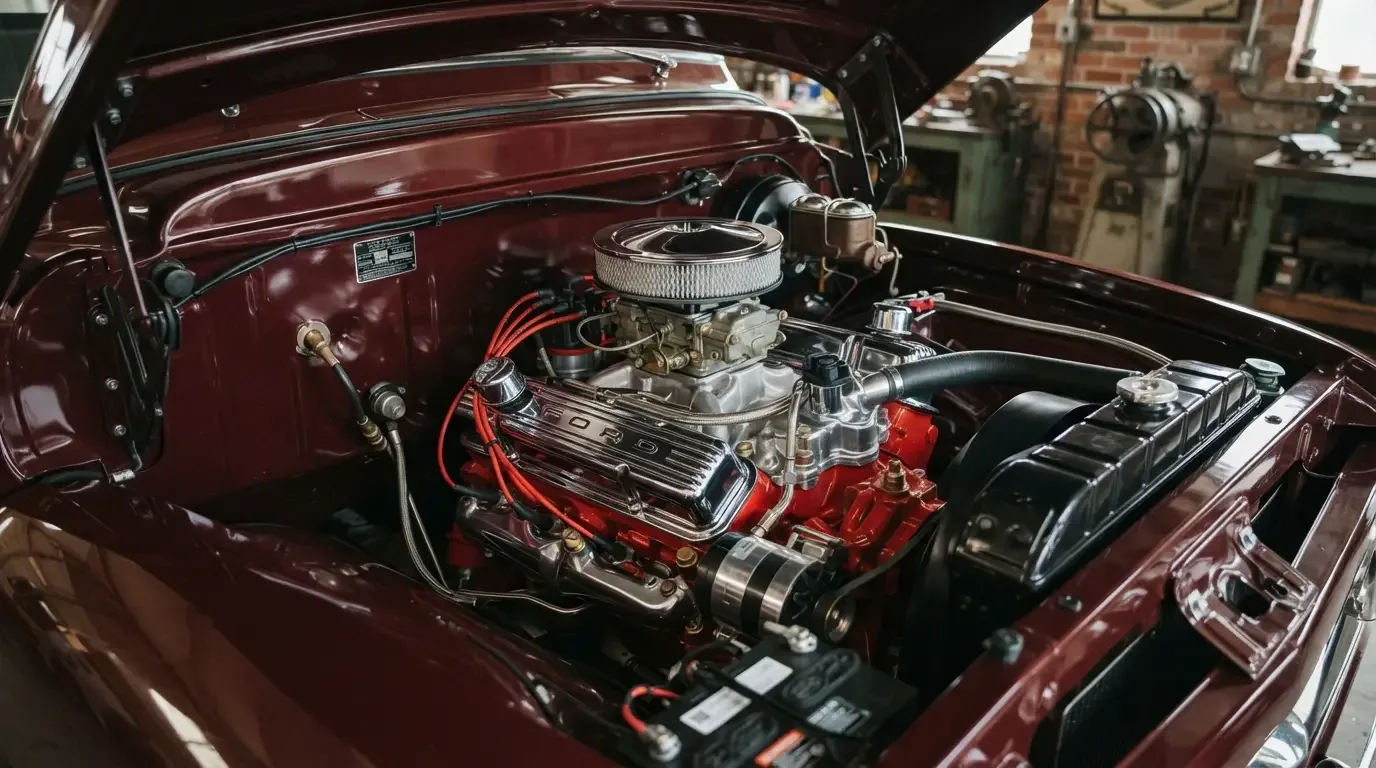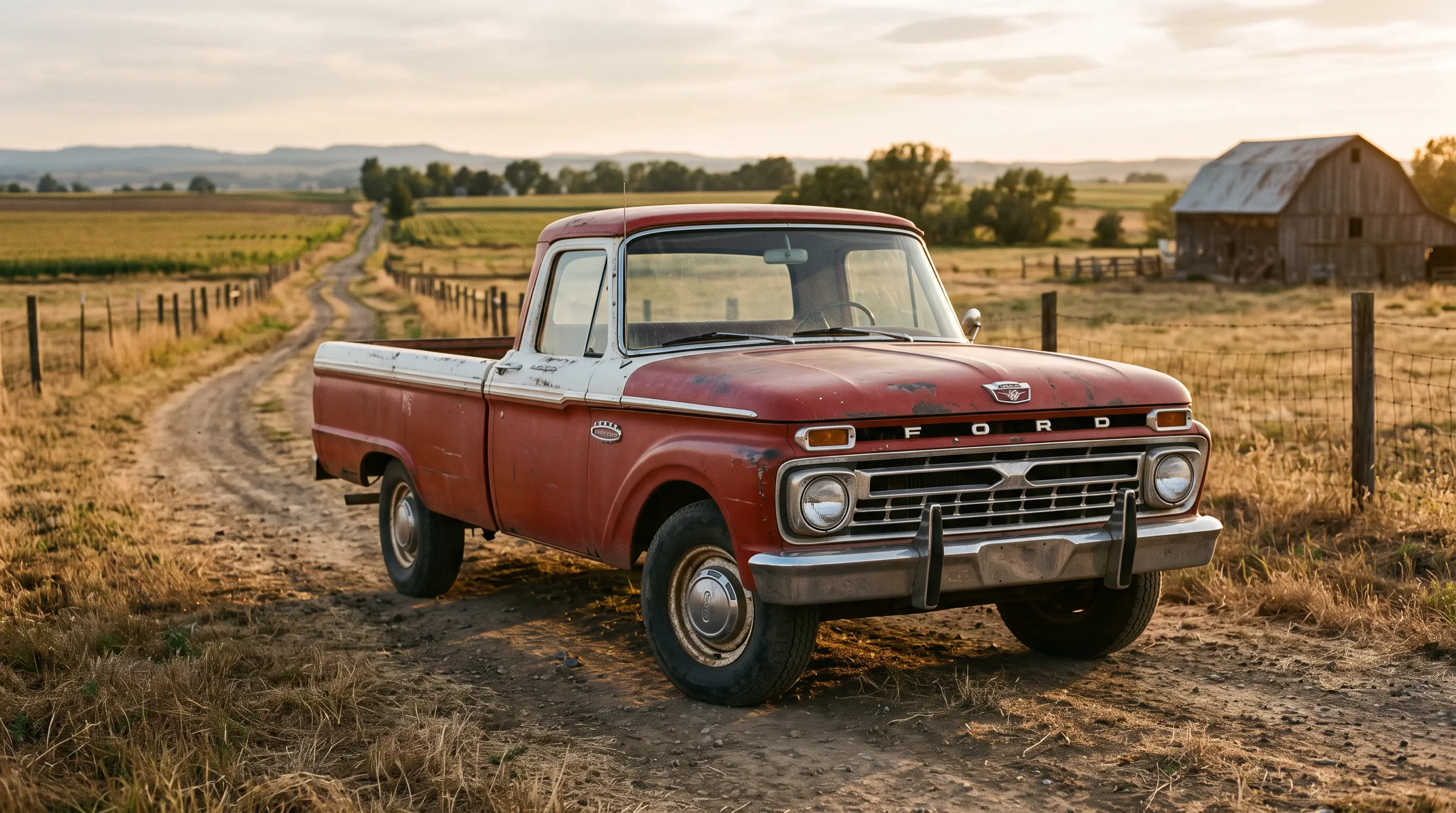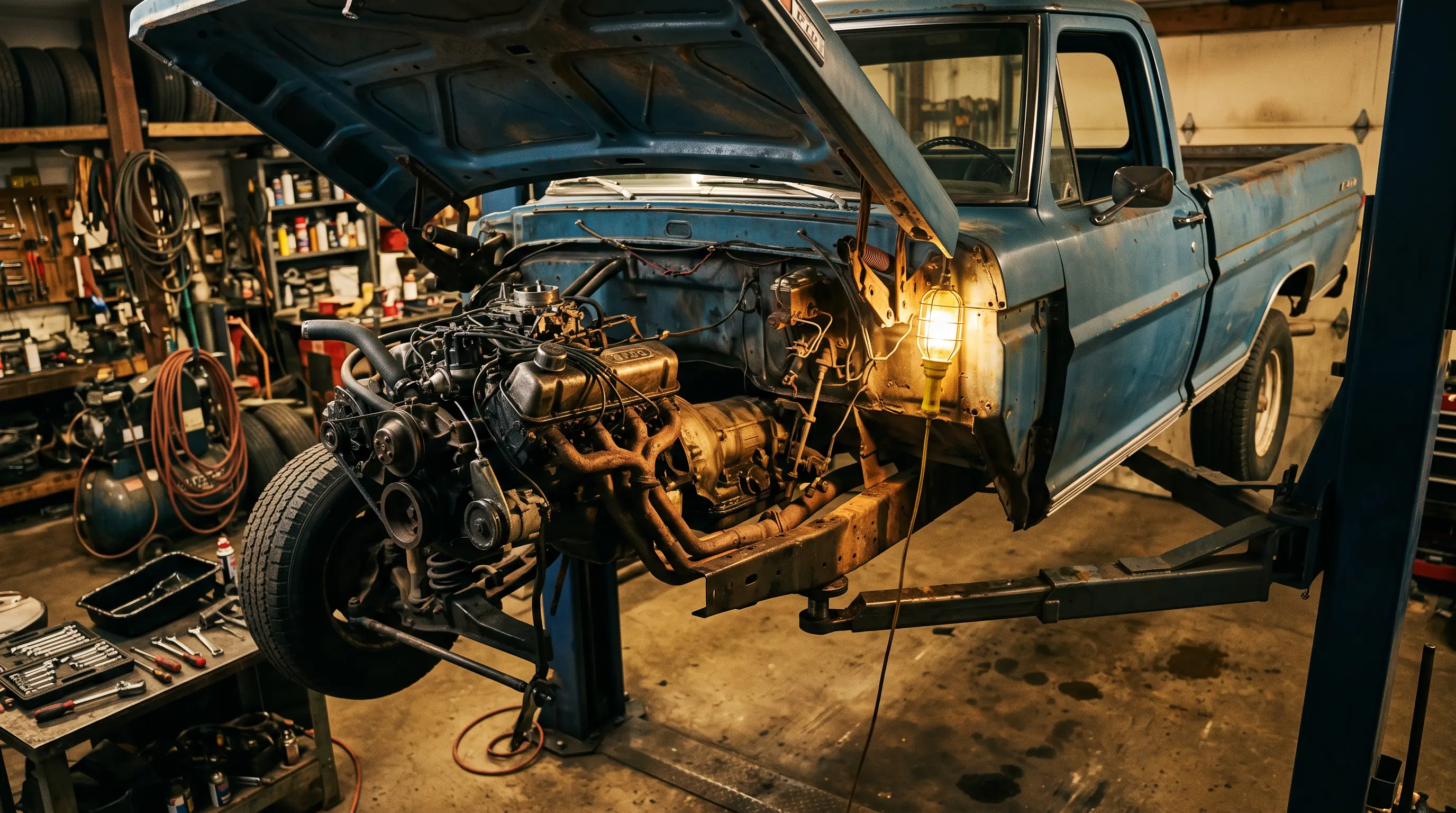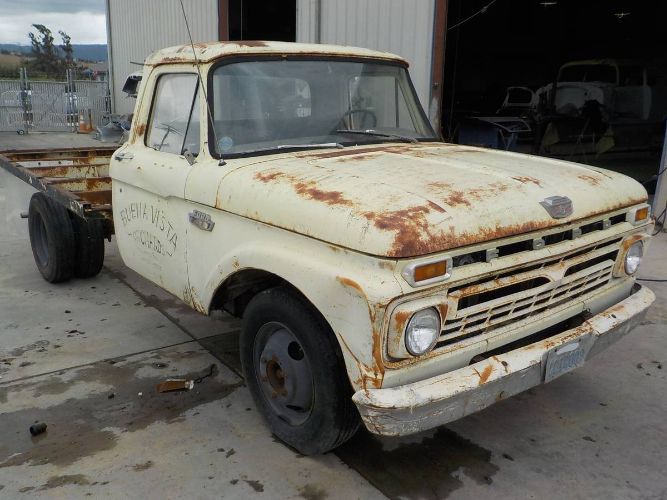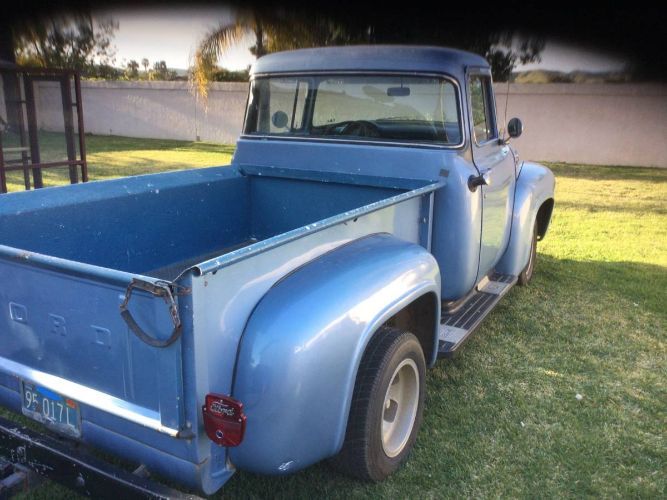
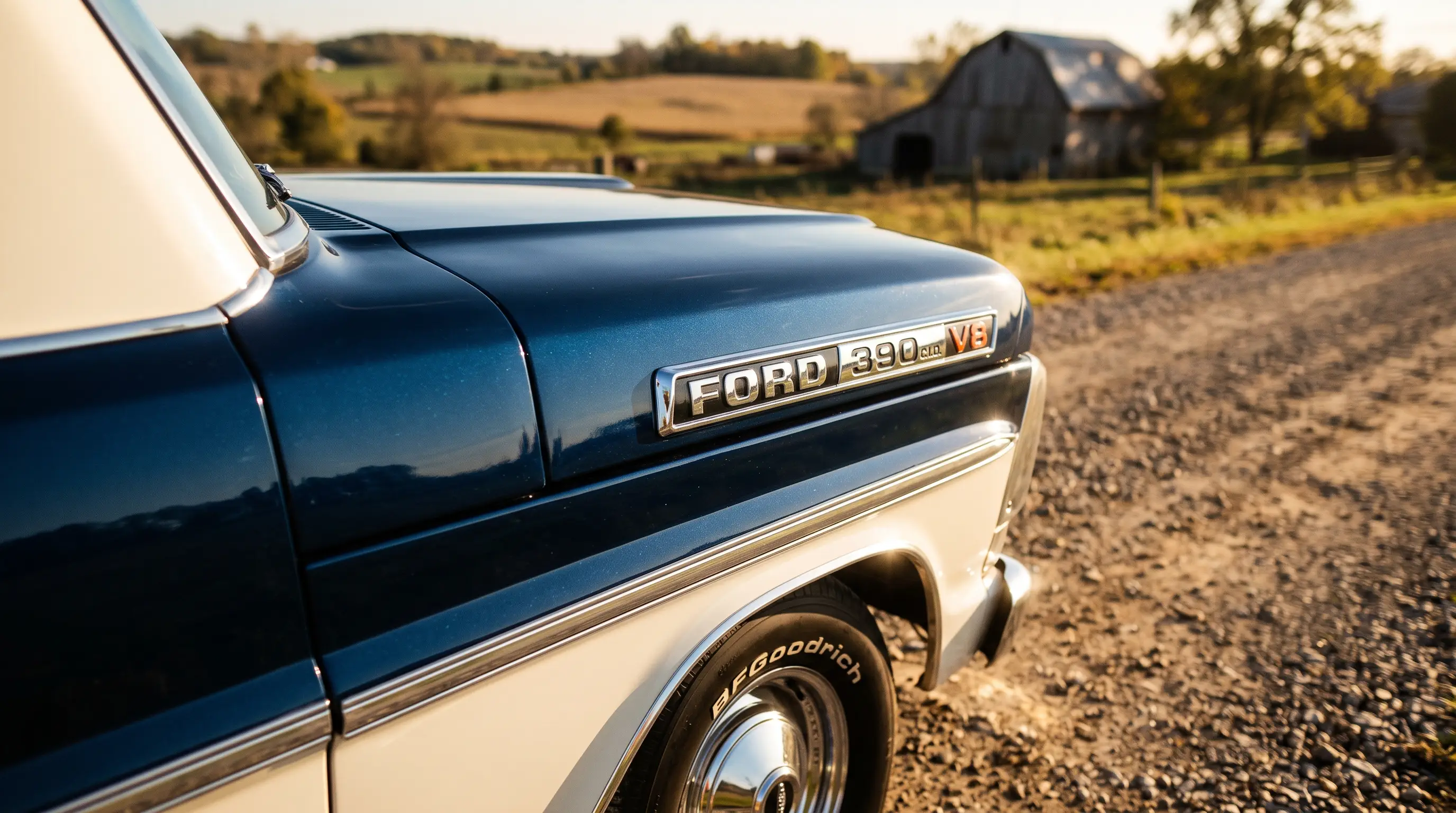
Before anyone opens the hood of an F-100, the fender badge already told them what they were looking at. Ford used small chrome and script emblems on the front fenders of its trucks to announce engine displacement or engine family, a detail that seems trivial until you realize how much identification work those little badges are still doing on the collector market today. A truck with the correct badge for its stated engine tells a buyer the seller either knows what they have or got lucky. A truck with a mismatched badge tells a different story entirely, and reading that story is a skill worth having.
What the badges were actually for
Ford's fender badges served a straightforward marketing purpose in period. A buyer walking a used car lot, or a neighbor admiring a truck in a driveway, could tell at a glance whether they were looking at a six-cylinder work truck or a V8 with more capability, without needing to ask or pop the hood. That mattered more in an era when engine choice varied so widely across otherwise identical-looking trucks. The badge did the identification work that a spec sheet would otherwise have to do, and it did it in a way that flattered the buyer a little, since driving a V8-badged truck signaled you had chosen the stronger option.
Different displacement figures got different badge treatments across Ford's production years, generally rendered in script or block lettering depending on the era, with V8 badges typically calling out the engine as a V8 specifically rather than just listing the number. The exact typography changed across F-100 generations as Ford refreshed its styling, but the underlying purpose stayed the same the whole time.
| Badge Detail | What It Signals |
|---|---|
| Displacement number badge | Confirms the engine size the truck left the factory with |
| V8 script or emblem | Distinguishes a V8-equipped truck from the standard six |
| Badge placement | Front fenders, positioned for visibility at a glance |
| Badge condition | Original chrome versus reproduction, a clue in itself for originality claims |
Reading badges as a collector today
A mismatched badge is not automatically a red flag. Engines get swapped over sixty years for all kinds of legitimate reasons, and a truck can be a perfectly honest, well-documented vehicle while wearing a badge that no longer matches what is under the hood, especially if a prior owner never bothered to update the fender emblem after a swap. What a mismatched badge does mean is that you cannot take the exterior at face value, and it is worth asking the seller directly whether the engine matches the factory badge or whether something changed along the way.
Original badges in good condition are also collectible in their own right, separate from the truck they came off of. Parts hunters chase clean, unpitted fender emblems the same way they chase good glass or unfaded interior trim, because a full set of correct, original badges is one of the harder details to nail perfectly on a restoration.
"A badge is a claim, not a fact. It tells you what Ford said was under the hood in 1968, or what a later owner wanted people to think was under the hood. Either way, verify before you believe it."
- Emily Chen
Badges and originality claims
Serious buyers treat badges as one data point among several, not as proof of anything by themselves. A correct badge paired with a documented build sheet, a matching engine casting date, and consistent paint underneath the emblem tells a much stronger story than a badge alone ever could. The badge is the headline. The documentation underneath it is the article, and the two need to agree before a claim about engine originality holds up to scrutiny.
This is part of a larger pattern that runs through every conversation about F-100 engines, from displacement to marketing names to the badges themselves. For the complete rundown of how Ford's engine lineup evolved across the model's production, our complete history ties all of it together in one place.
Badges as part of the truck's visual identity
Beyond their identification role, fender badges are part of what gives an F-100 from a given era its specific character. A truck's face changes noticeably depending on which badges sit on the fenders, and collectors who care about period-correct presentation treat this detail with the same seriousness they apply to correct paint codes or correct interior trim. A truck wearing the wrong badge for its era, even if the mismatch is purely cosmetic and unrelated to the engine question, reads as slightly off to anyone who knows what to look for, the same way a wrong-year taillight or an incorrect grille pattern would.
This attention to small details is part of what separates a casual restoration from one built to satisfy serious judging standards. Concours-level events specifically look for this kind of correctness, and fender badges are exactly the sort of small, easily overlooked detail that separates a good restoration from a great one. Getting it right takes research into what a specific model year actually wore from the factory, since badge designs shifted across F-100 generations in ways that are easy to get wrong without a reliable reference.
What this means when you are shopping
Do not buy or pass on a truck based on the fender badge alone in either direction. Use it as a starting point for questions, not as a final verdict. Ask the seller what documentation exists to back up the engine claim, look for consistency between the badge, the casting numbers, and any paperwork available, and treat any mismatch as a prompt to dig deeper rather than an automatic disqualifier. The trucks worth buying are the ones where the whole story holds together, badge included. Anyone ready to start comparing real examples against that standard can go browse classic F-100 listings and start asking these exact questions of real sellers.
It also helps to remember that badges alone were never meant to carry the full weight of an originality claim, even when Ford installed them at the factory. They were a marketing convenience for a 1960s buyer walking a lot, not a certification stamp for a collector sixty years later. Treating them with that same context in mind, useful but limited, keeps expectations realistic whether you are buying, selling, or simply trying to understand what a particular truck's badges are actually telling you.
For a first-time buyer without a trained eye for period-correct details, bringing along someone who has handled several F-100 restorations is worth more than any single article. Badges are one piece of a larger puzzle, and reading that puzzle correctly takes the kind of pattern recognition that only comes from having looked at a lot of original trucks side by side.