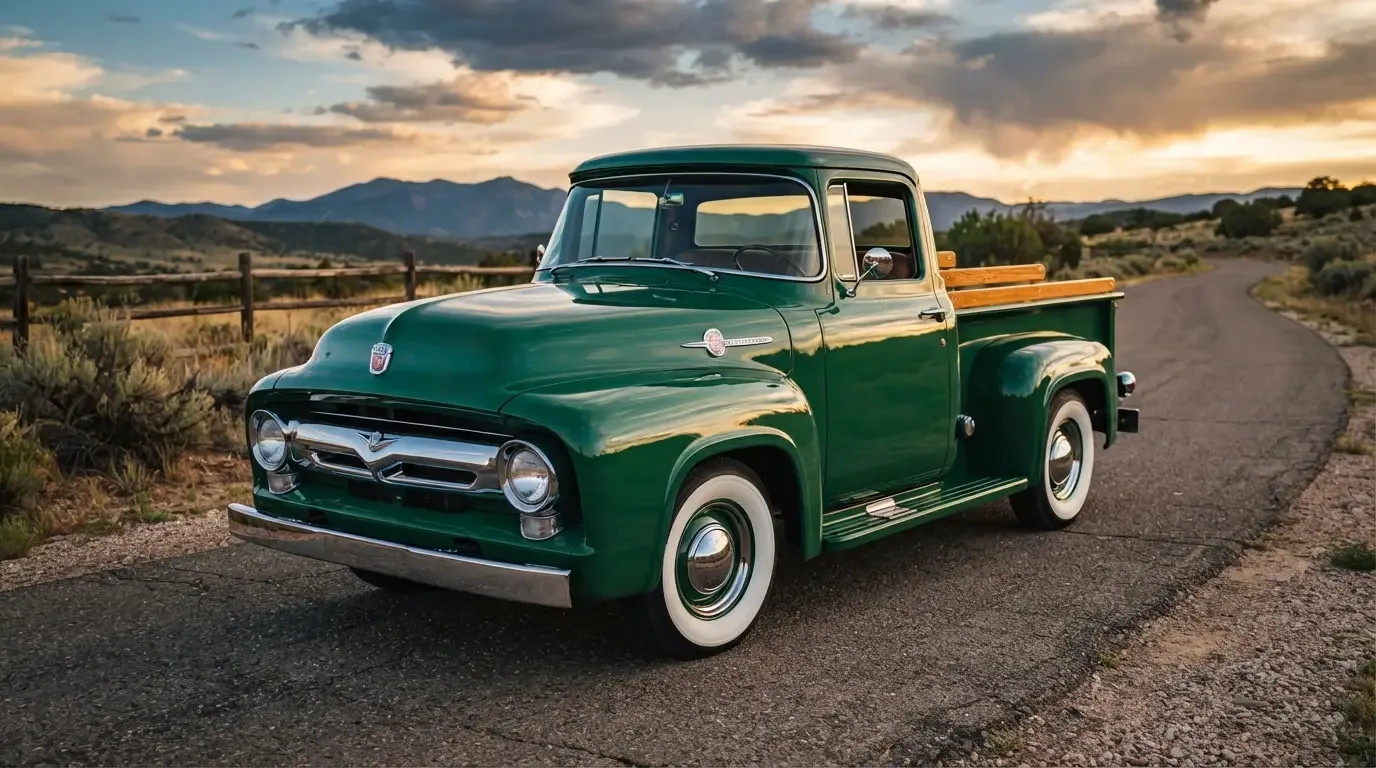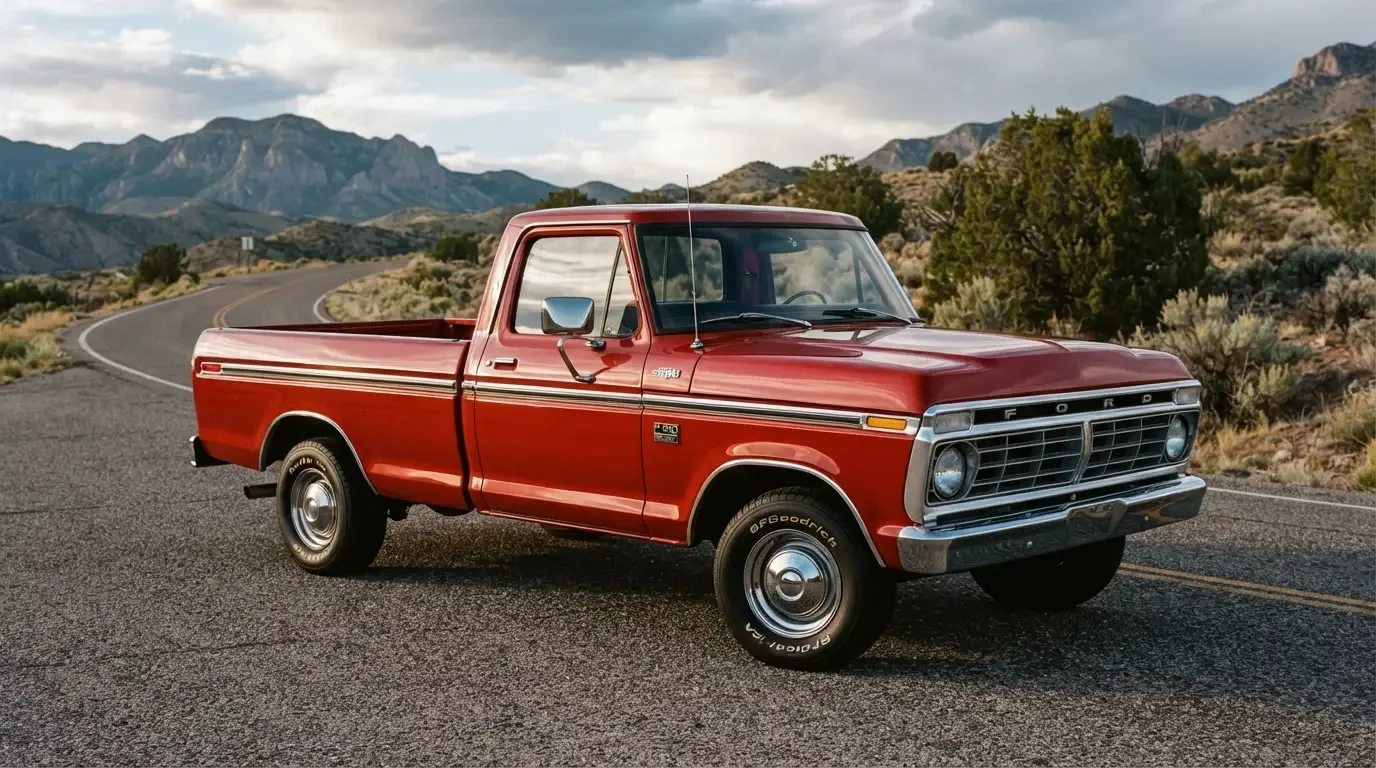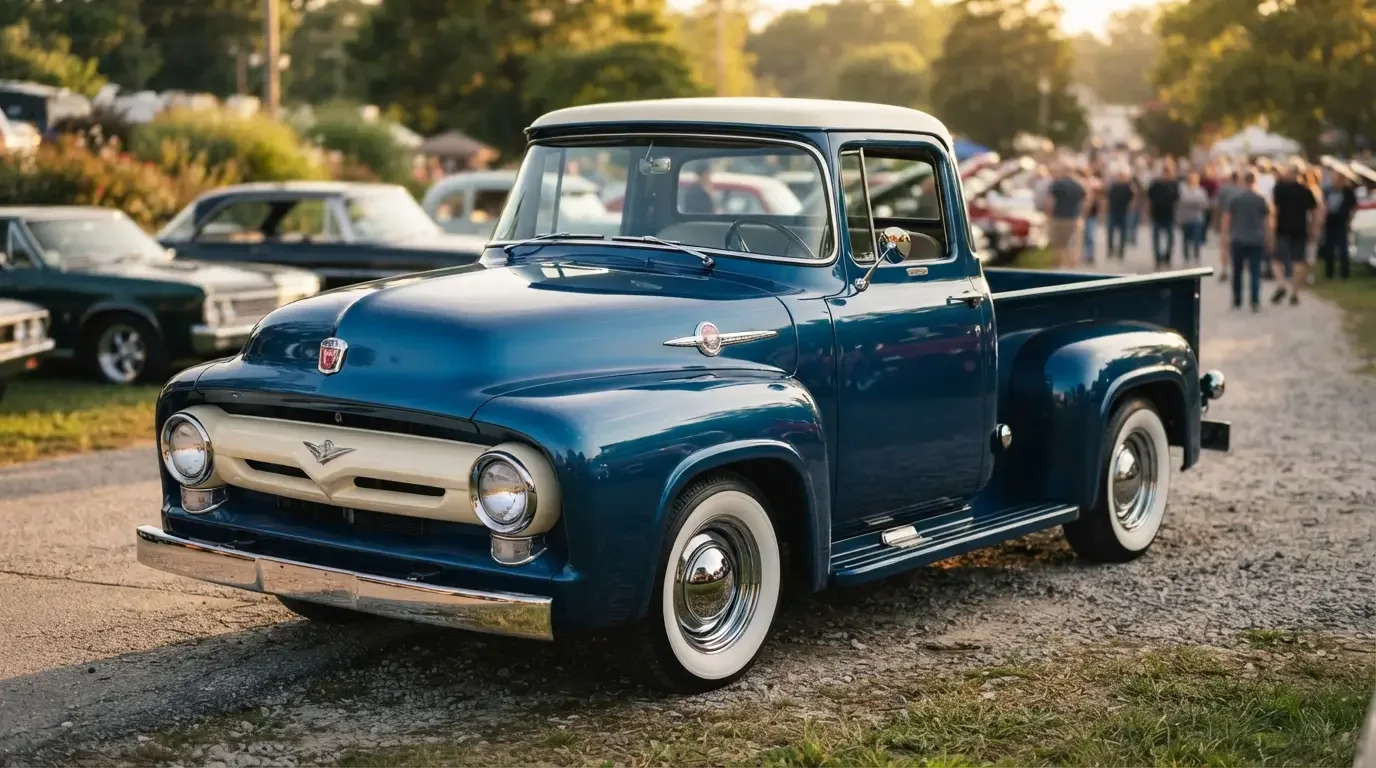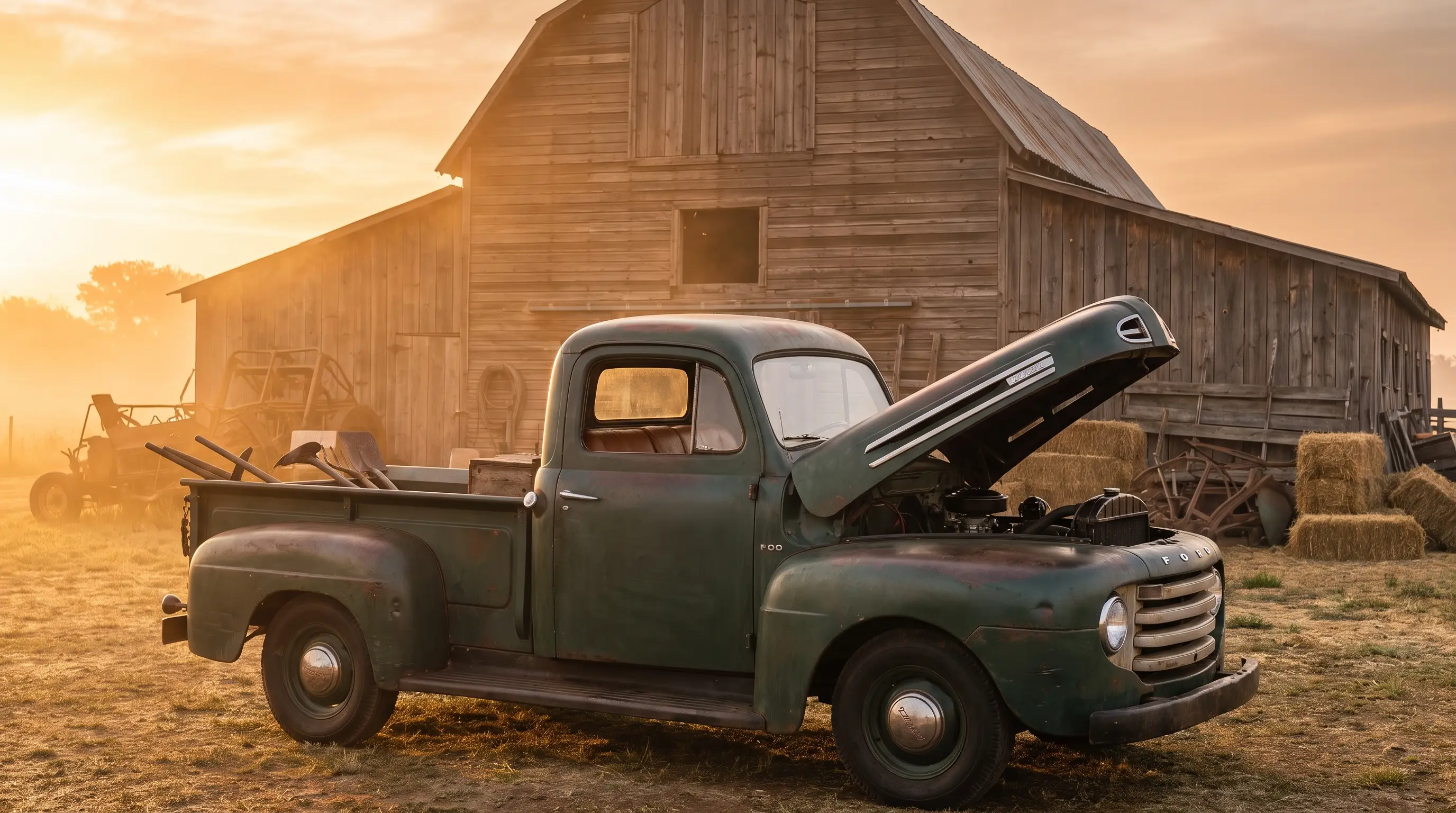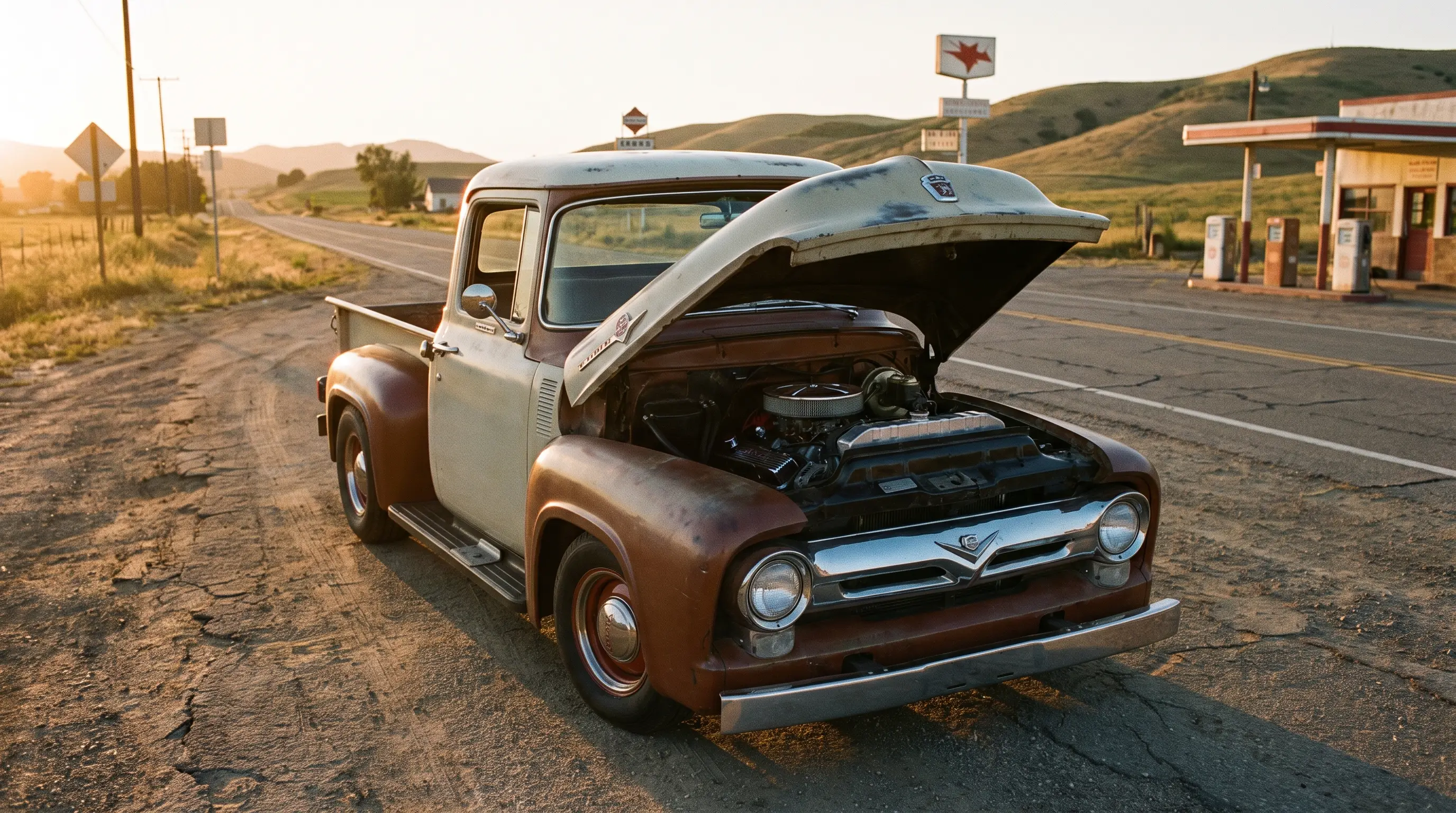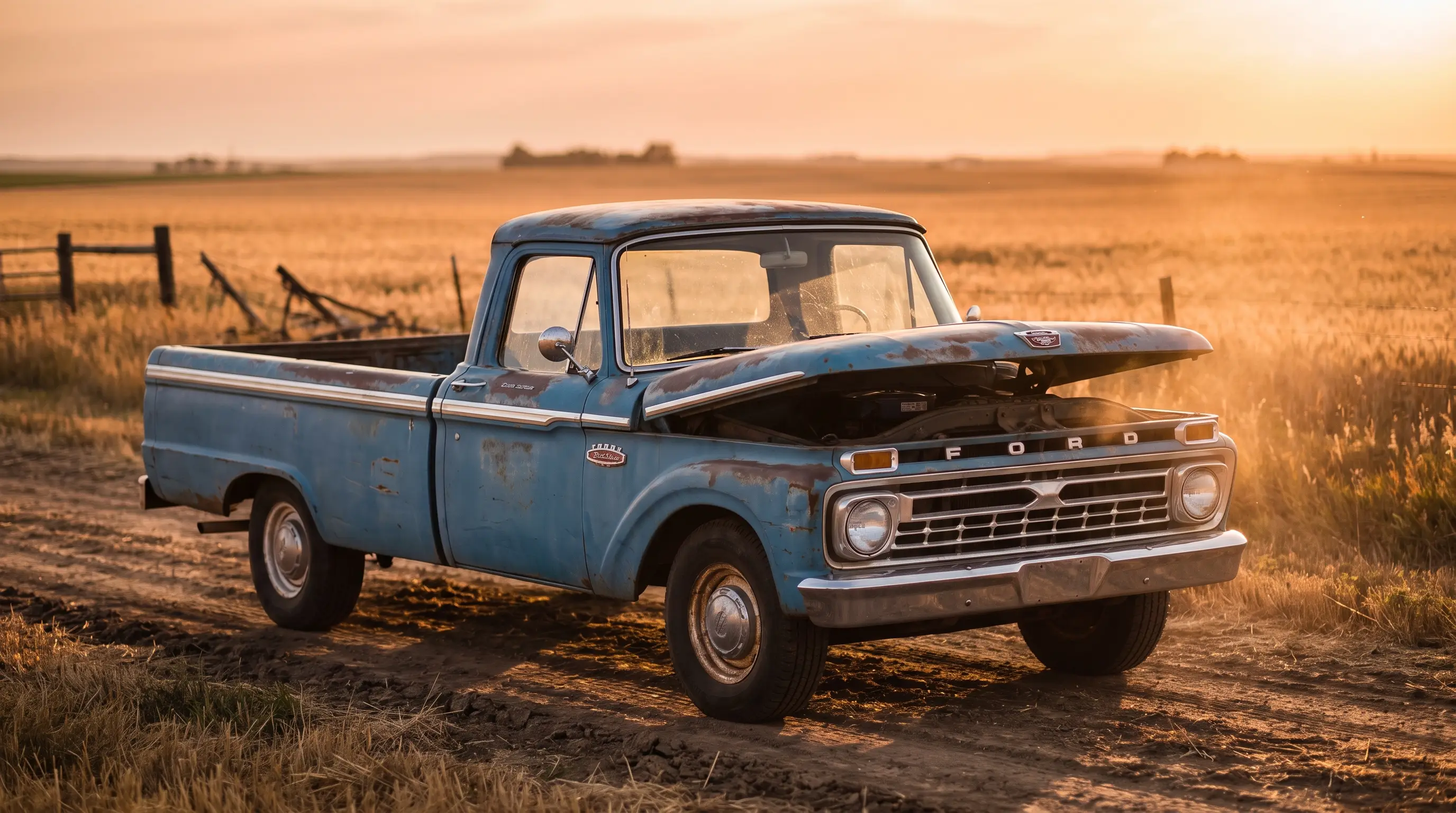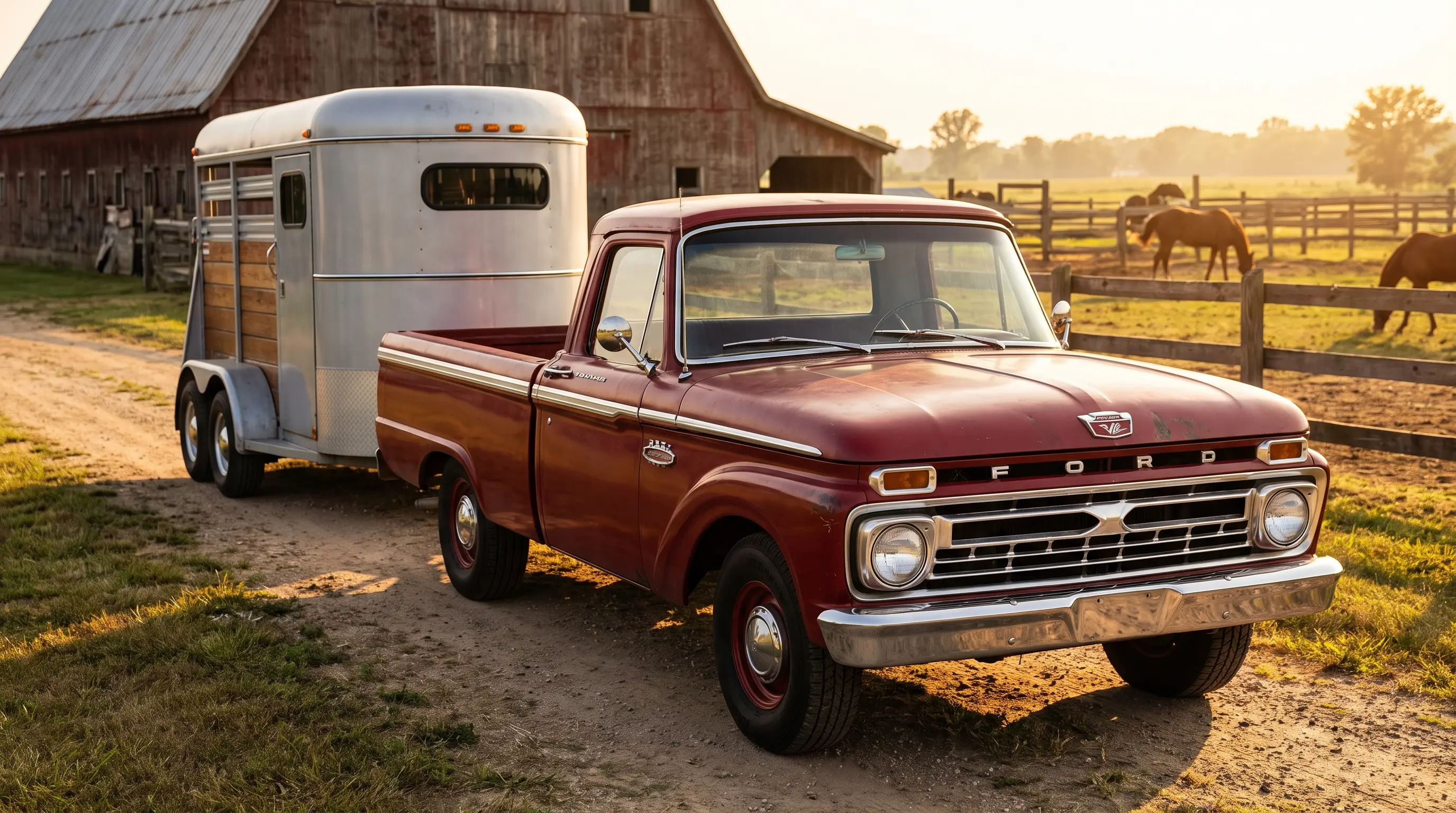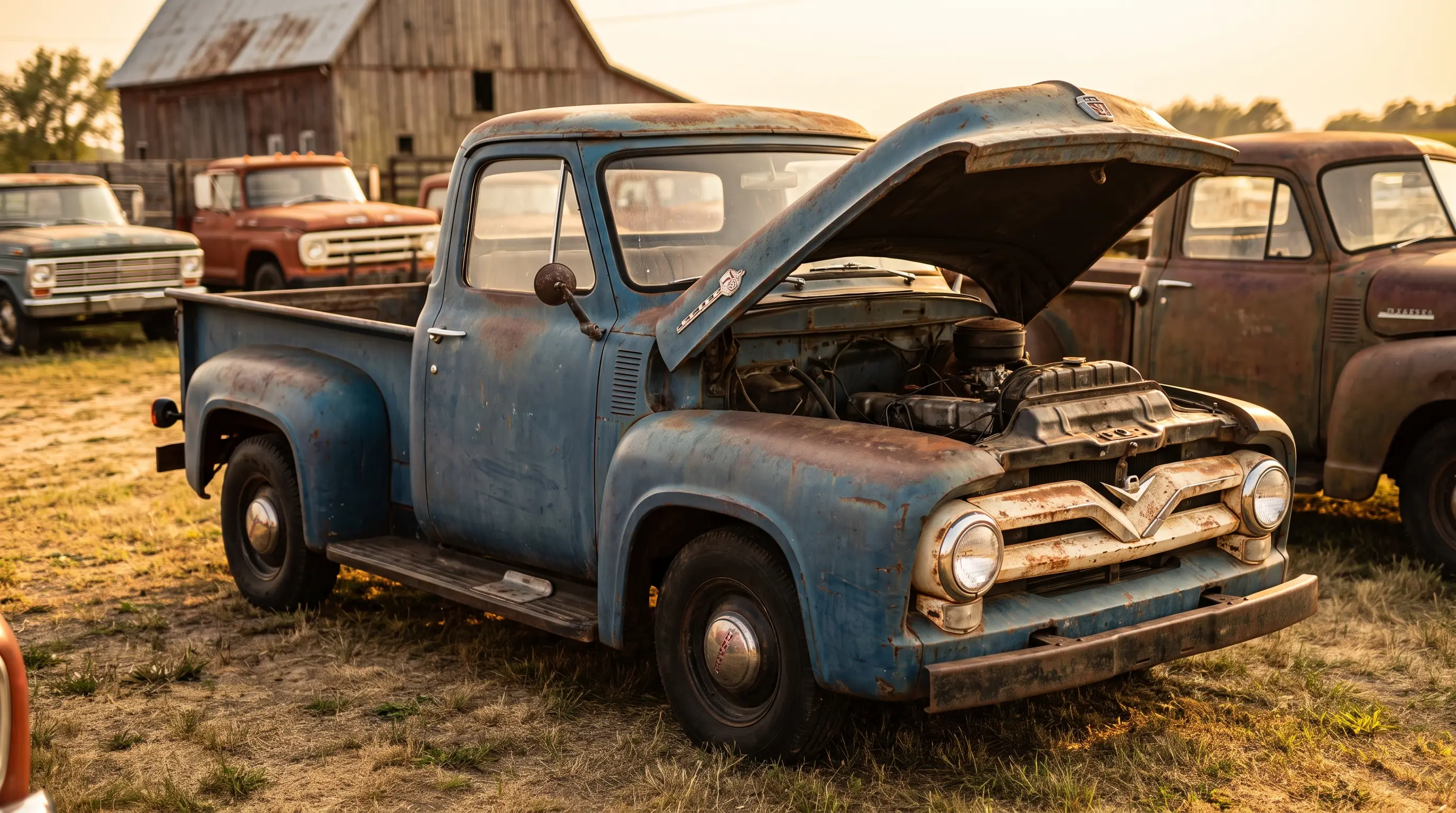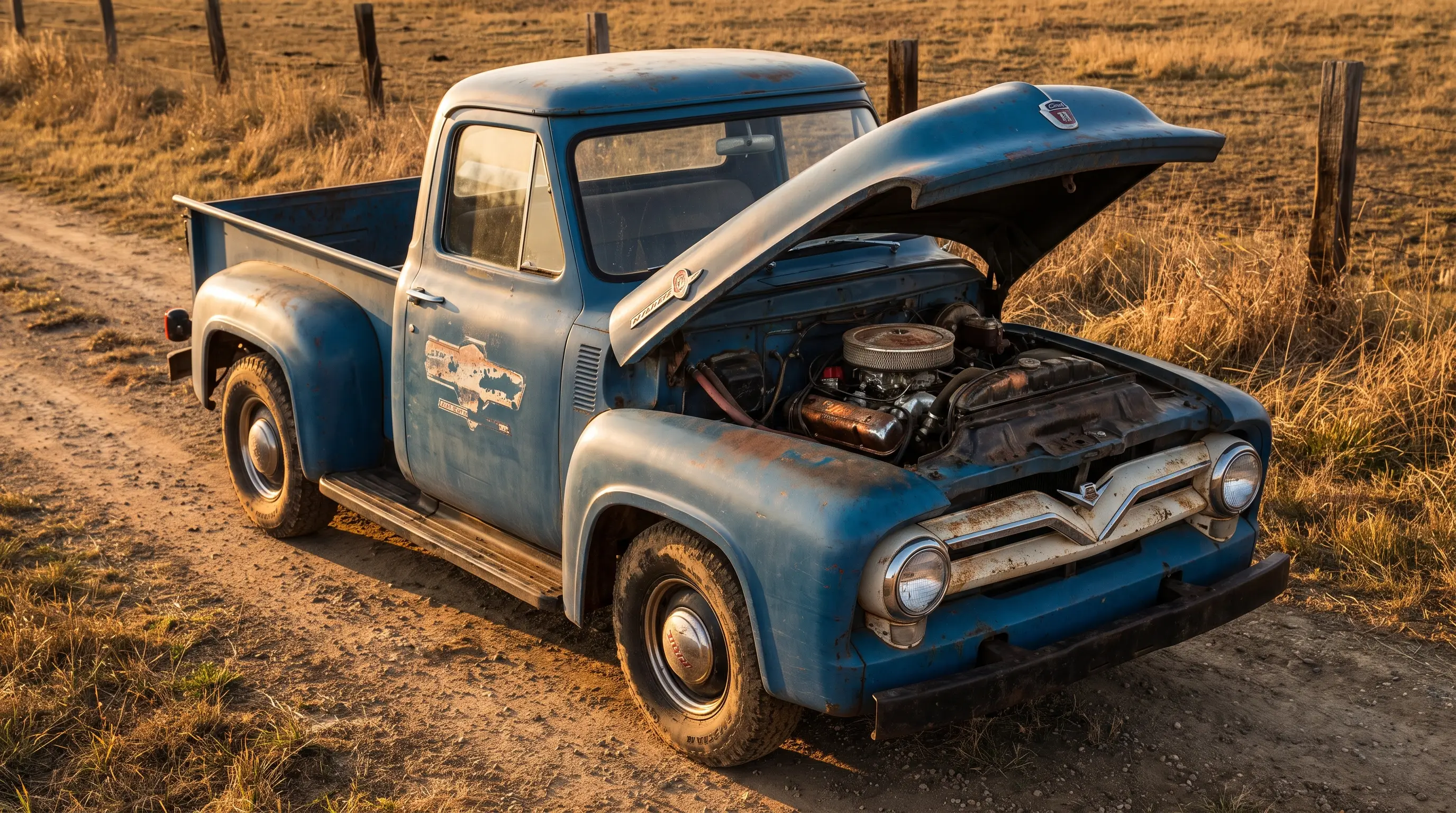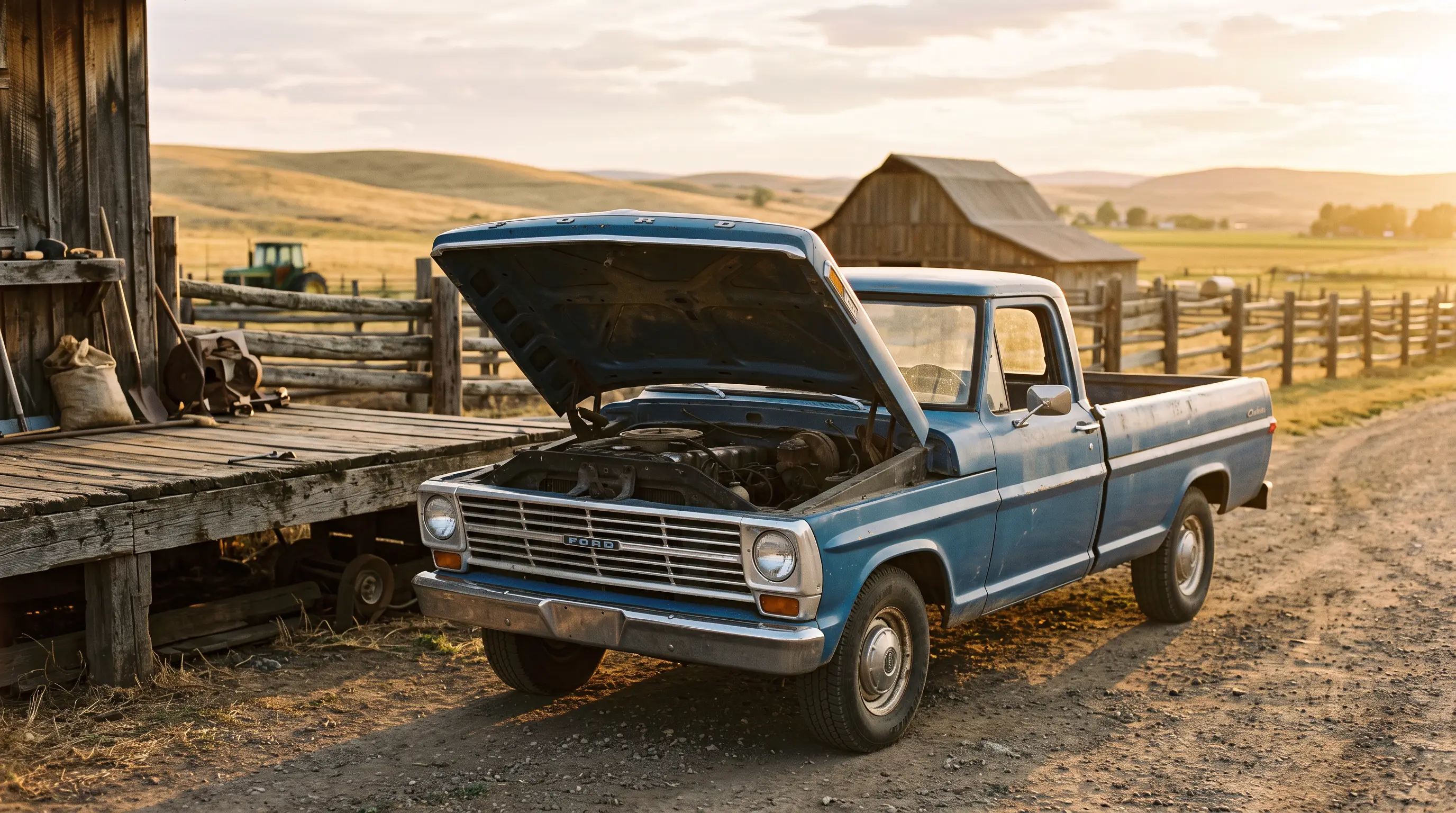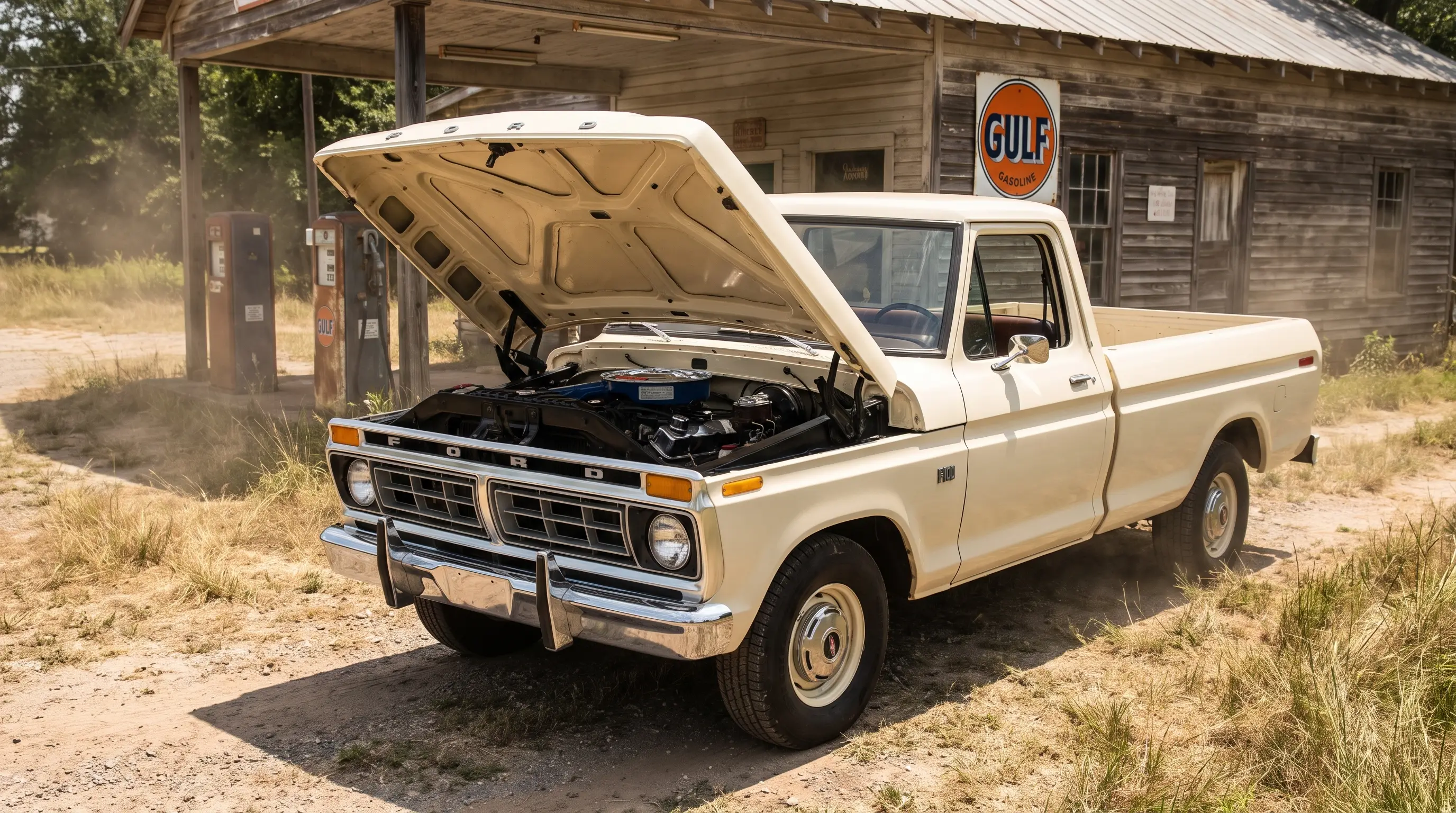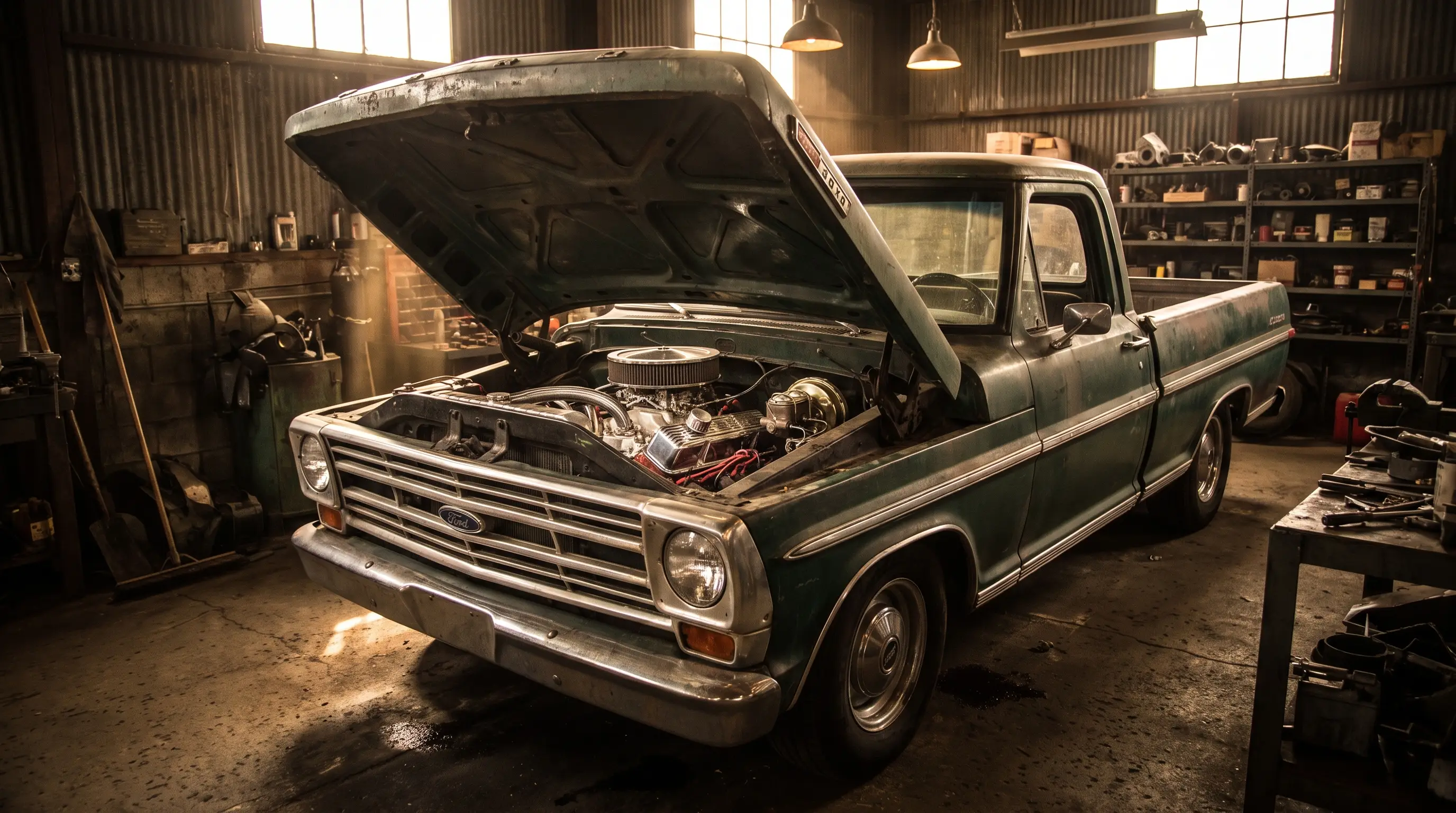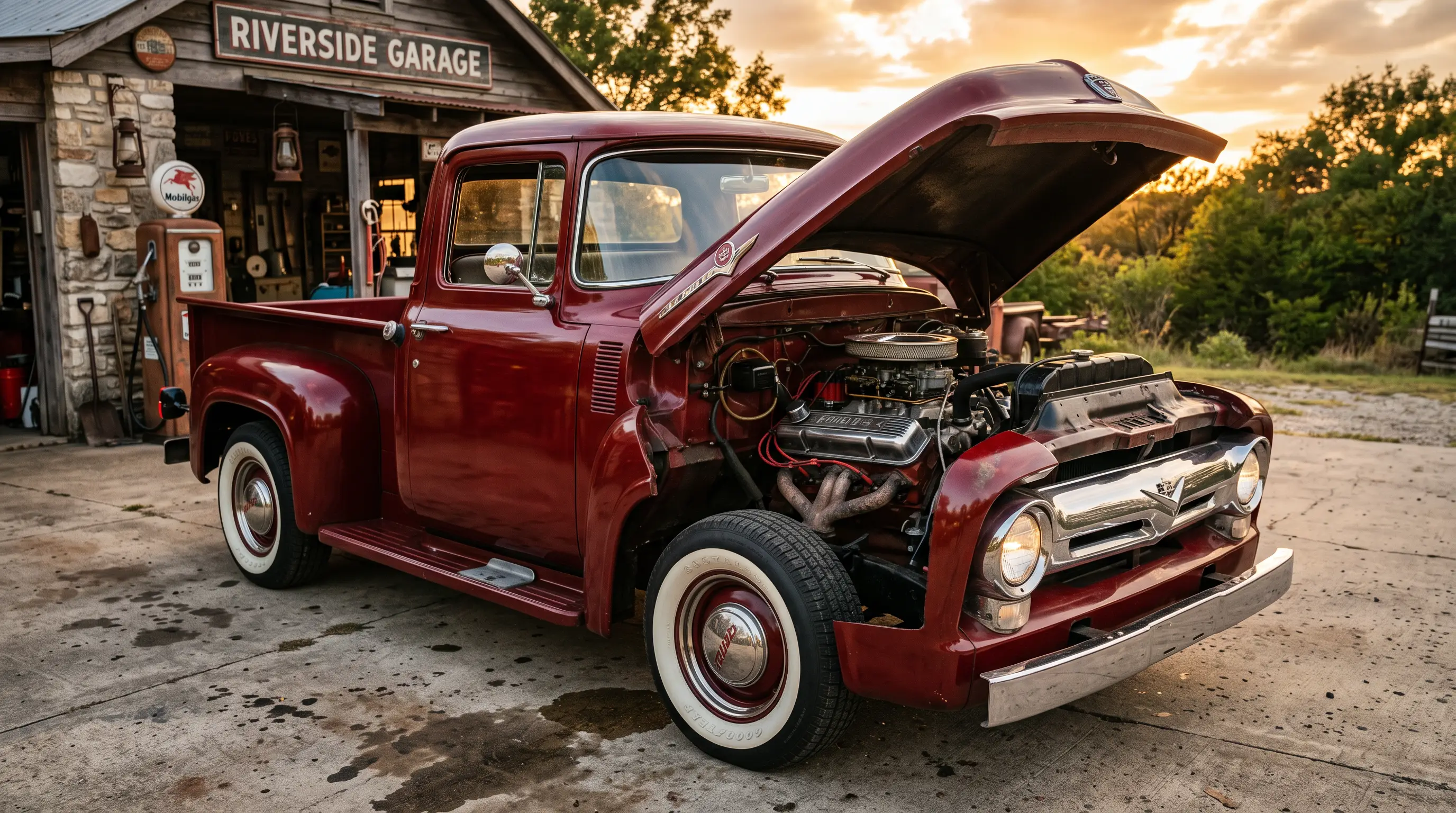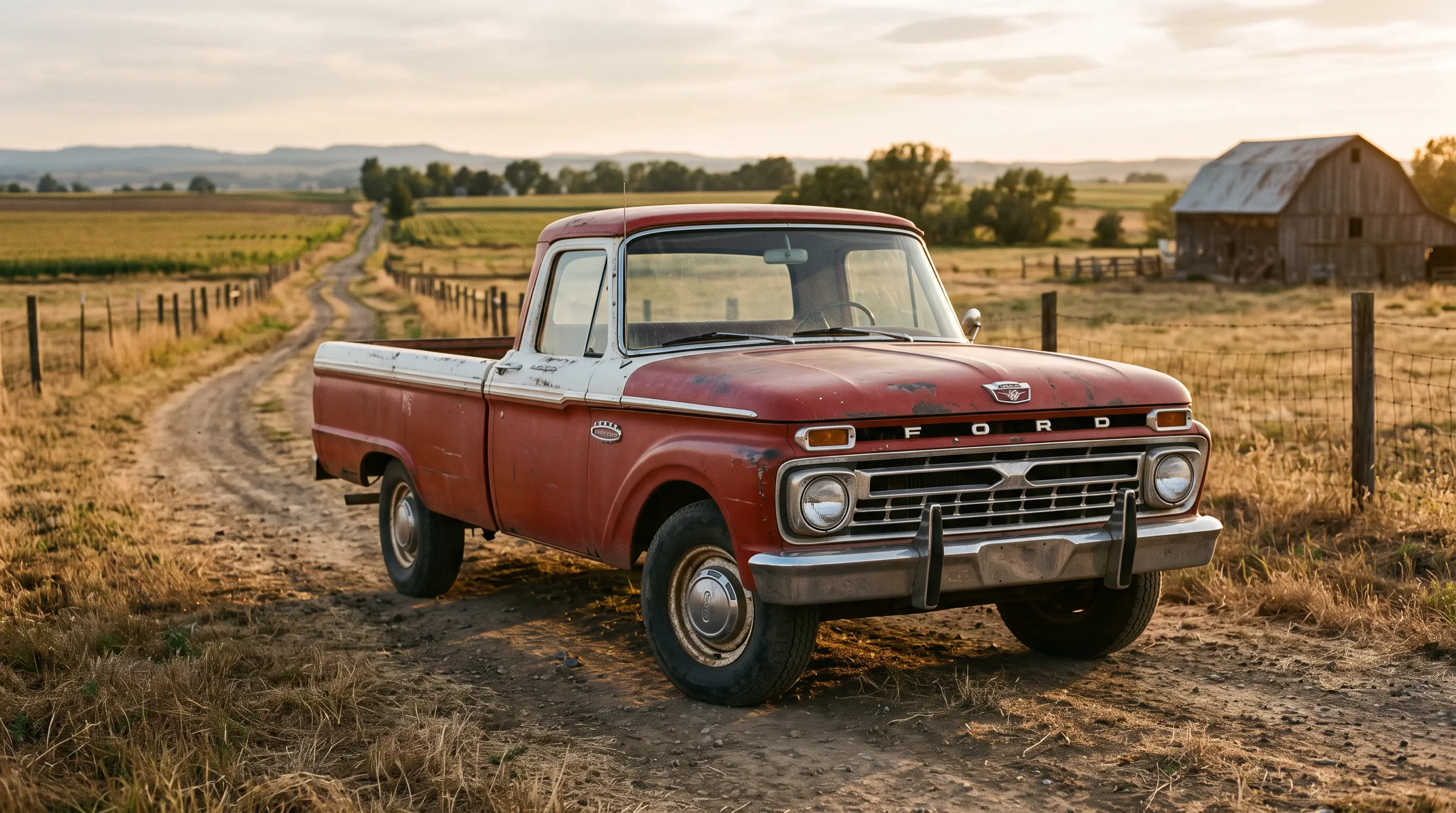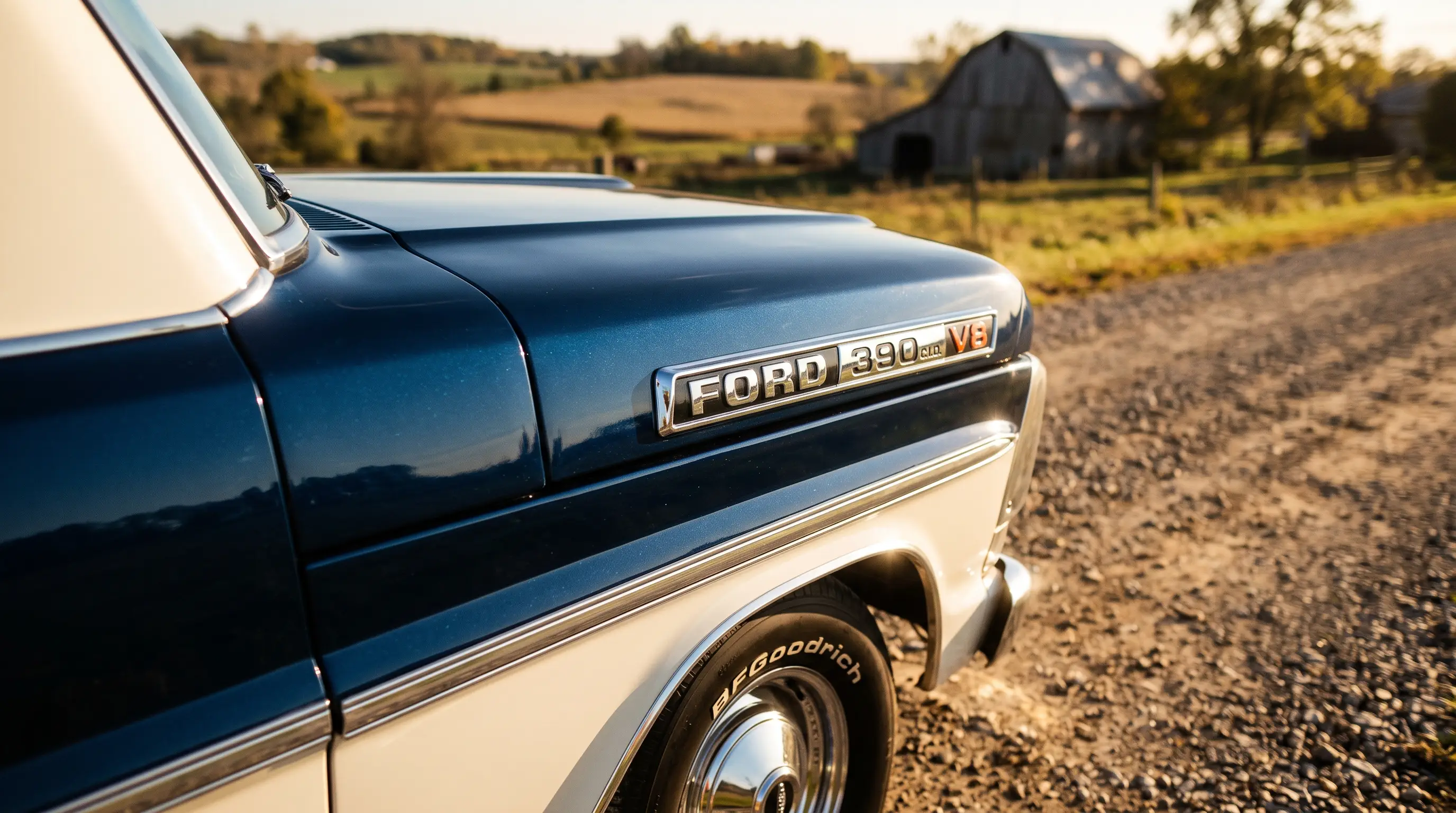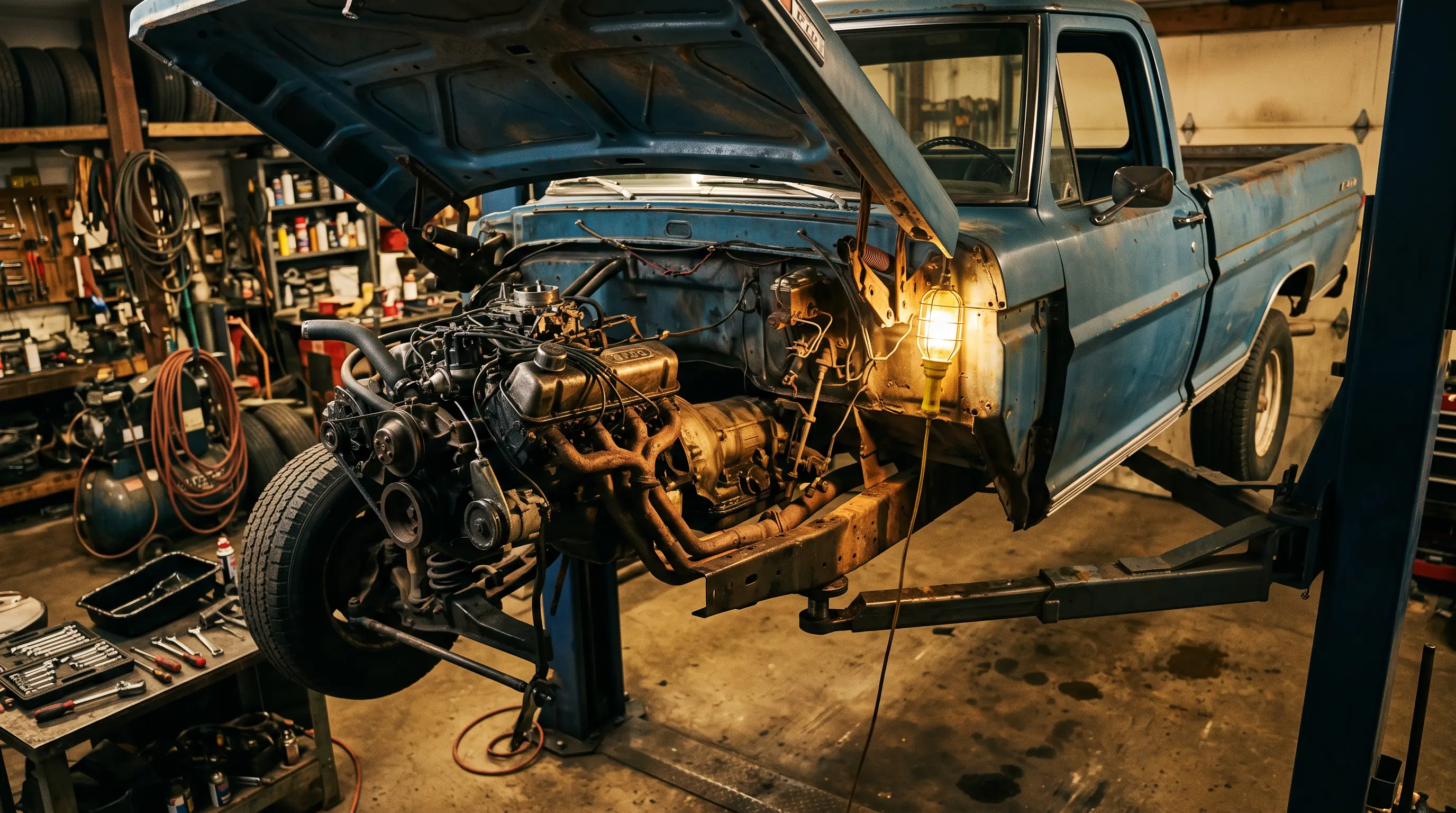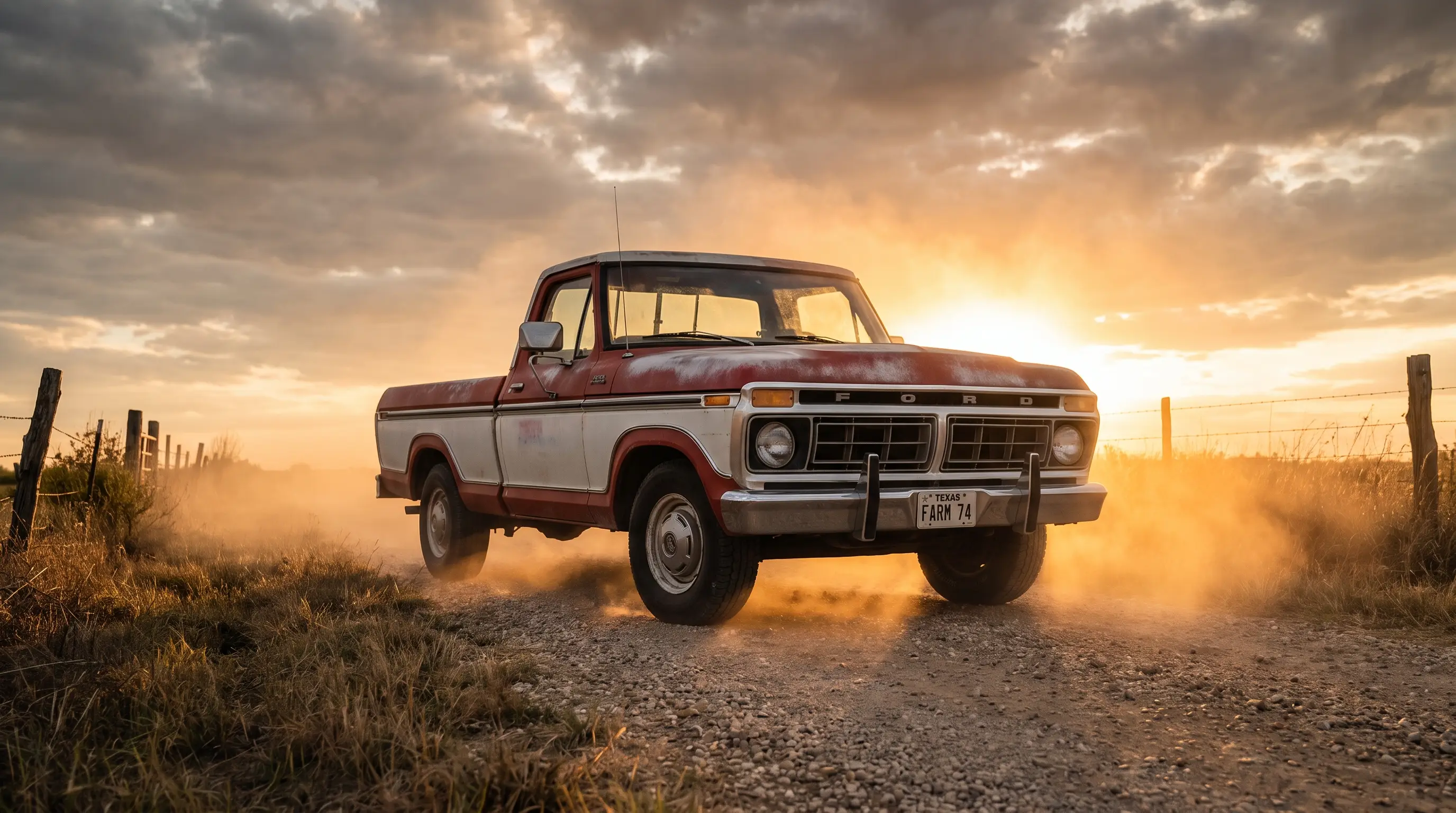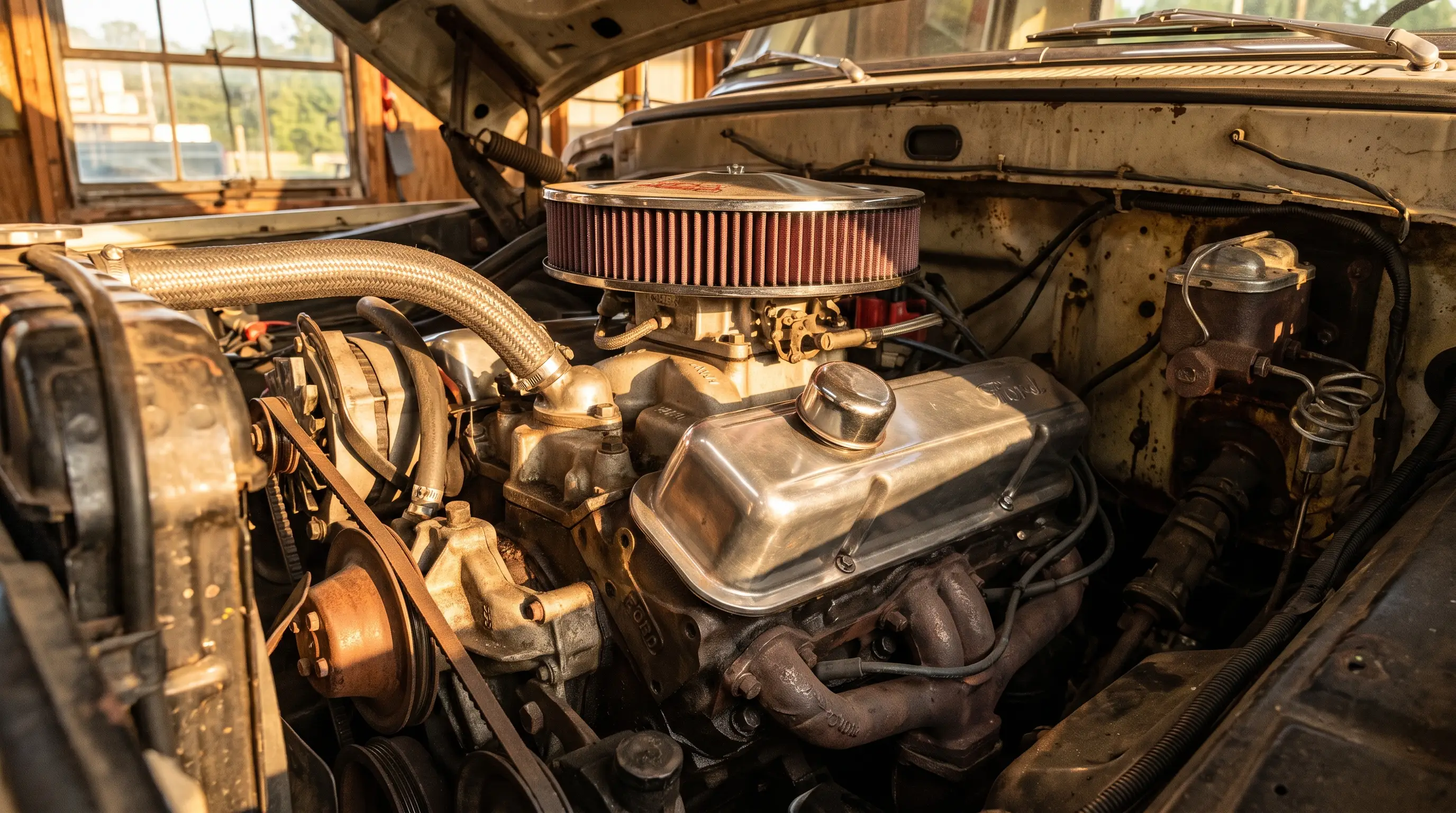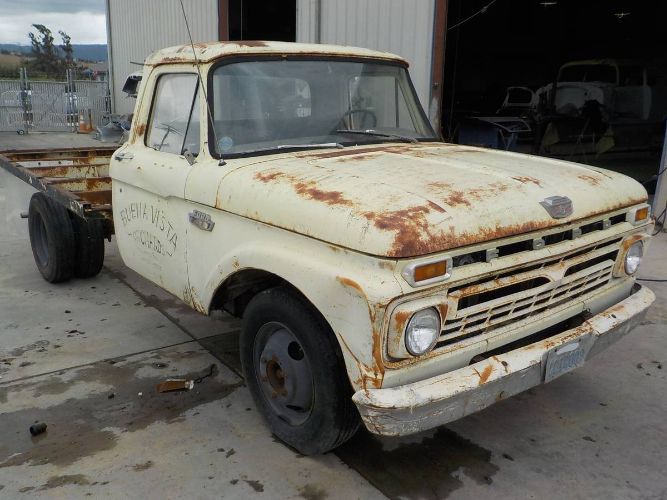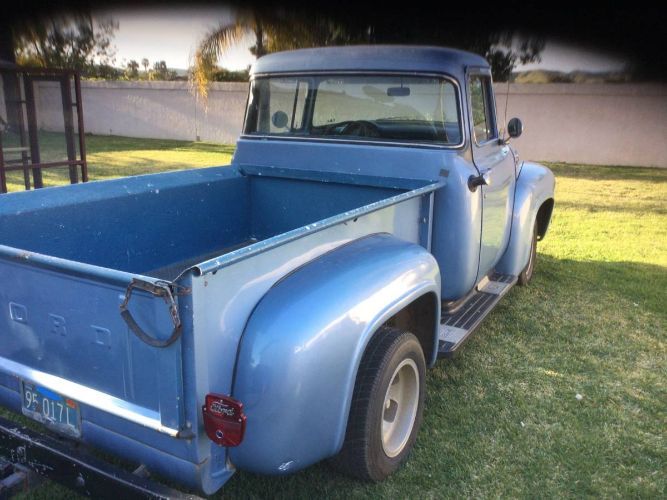
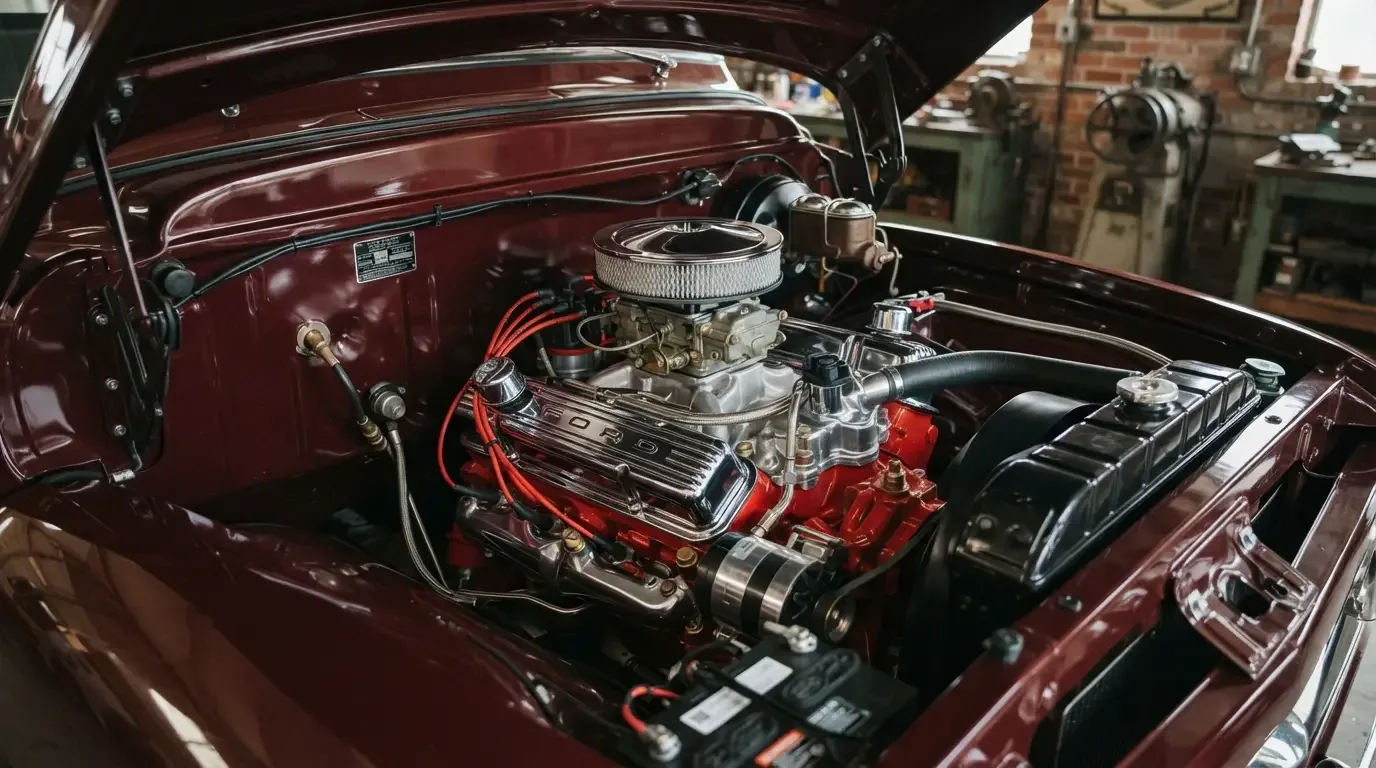
Thirty-one years. That is how long the classic Ford F-Series half-ton ran, from the 1948 F-1 to the 1979 Dentside, and in that window Ford put nearly every engine family it owned under the hood. The story of Ford F100 engines is really four stories stacked on top of each other: the flathead that started it, the Y-block that modernized it, the FE big-blocks that muscled it, and the 300 six that outlived them all. Each one defined a stretch of the truck's life. None of them was chosen by accident.
I am going to give you the numbers and the verdicts, not the folklore. Some of these engines earned their reputation. One of them earned a reputation it did not deserve. Let us sort out which is which.
The flathead V8 got it started
The F-1 launched in 1948 with the flathead V8, the same basic engine Ford had been building since 1932. Displacement was 239 cubic inches. Output was modest, right around 100 gross horsepower at 3600 rpm in F-1 tune. That number looks tiny today. In 1948 it was plenty, because the truck weighed what it weighed and the roads were slow.
The flathead was not fast. It was simple. Valves in the block, no overhead complexity, and a shape that any mechanic in any small town could fix with hand tools. That simplicity is the whole reason it lasted as long as it did. Ford ran the flathead in the F-100 through the early fifties, and by the time it retired it was badly outdated. Overheating was its known weakness. The exhaust routing ran hot through the block, and a flathead worked hard would tell you about it.
Verdict: charming, historically important, slow. Buy a flathead truck because you love the era, not because you want to keep up with traffic. For the full arc of how the nameplate grew up around these engines, read the ford f100 story and you will see how the powertrain drove the truck's identity from year one.
The Y-block brought overhead valves
For 1954 Ford dropped the flathead and gave the F-100 the Y-block V8. This was the big one. Overhead valves, a deep-skirted block that gave the family its name, and real modern breathing. Early displacement was 239 cubic inches, and it grew from there to 272, 292, and eventually 312. Power climbed with it.
The Y-block mattered because 1953 was the last flathead year and 1954 was the first overhead-valve year, and that single model-year jump changed what the truck could do. More power, more heat tolerance, more room to grow. The Y-block was not perfect. It had an oiling quirk in the rocker area that owners learned to manage, and it got leapfrogged fairly quickly by newer designs. But it dragged the F-100 into the modern engine era, and that was the job.
The FE big-blocks brought muscle
By the late fifties and into the sixties, buyers wanted torque, and Ford answered with the FE engine family. In F-100 service that meant the 352, the 360, and the 390 cubic inch big-blocks. These were the heavy hitters. The 390 in particular gave the truck genuine pulling power, the kind you feel when a loaded trailer stops arguing with a grade.
Numbers tell the story. A 390 FE made real low-end torque, well above what any six could touch, and it did it without straining. That is what a work truck actually needs. Not peak horsepower, torque down low where the load lives. The FE engines were heavy and thirsty, and in the fuel-price years of the seventies that mattered, but nobody who bought one for towing ever complained about the grunt.
The FE family is also why the middle years of the F-100 have a following among people who want a vintage truck that can merge onto a modern highway without drama. A 360 or 390 truck has margin. It is not quick, but it is unbothered.
| Engine | Family | Approx. displacement | Role in the F-100 |
|---|---|---|---|
| Flathead V8 | Flathead | 239 cu in | Launched the F-1 in 1948, retired by mid-1950s |
| Y-block V8 | Y-block | 239 to 312 cu in | First overhead-valve V8, from 1954 |
| 352 / 360 / 390 | FE big-block | 352 to 390 cu in | Torque and towing muscle |
| 302 / 351 | Windsor small-block | 302 to 351 cu in | Everyday V8 hauling |
| 300 | Inline six | 300 cu in | The durability legend, from 1965 |
The 300 six is the one that mattered most
Here is the verdict that surprises people. The most important engine in the whole F-100 story is not a V8. It is the 300 cubic inch inline six, introduced in 1965 and built in one form or another for decades after. It is the engine owners trust the most, and the numbers back them up.
The 300 made its power low. Peak torque arrived just off idle, which is exactly where a truck uses it, and the long-stroke design meant it pulled like a small tractor. It was not powerful on paper. Horsepower ratings were unremarkable. That was never the point. The point was that a 300 six would run a quarter million miles on regular maintenance and keep running, and enough of them did that the reputation became fact rather than legend.
Seven main bearings. That is the detail the durability crowd always cites, and it is the right one. A seven-main-bearing crank in an inline six is overbuilt for the loads a light truck puts on it, and overbuilt engines last. The 300 also had a gear-driven timing setup in its early form and a simple, serviceable layout that rewarded owners who did nothing but change the oil.
If I had to keep one classic F-100 engine forever, sight unseen, I would take the 300 six. Not because it is the most exciting. Because it is the one that will still start.
"People argue V8 versus six like it is a personality test. It is not. The 300 outlasts most of the V8s, sips less fuel, and asks for nothing. The numbers are not close. The six wins on the metric that actually matters, which is still being alive."
- Dan Reeves
Small-blocks carried the everyday load
Between the big FE torque monsters and the humble six sat the Windsor small-blocks, the 302 and the 351. These were the sensible middle. Enough power for a loaded truck, lighter than a big-block, easier on fuel, and simple to keep alive. The 302 in particular became the default V8 for people who wanted eight cylinders without the weight and thirst of an FE.
The emissions years hurt these engines the most. Compression dropped, tuning got strangled, and a mid-seventies 351 makes numbers that look sad next to a clean early example. That is the era, not the engine. Freed of the worst emissions hardware, a Windsor small-block is a willing, durable V8 that does everything the average owner asks and complains about none of it.
One number worth remembering: the 302 and the 351 share a lot of their basic architecture, so parts, knowledge, and support are everywhere. That is not a small thing on a fifty-year-old truck. An engine that half the country already knows how to fix is worth more in daily reality than a rarer, punchier option that leaves you hunting for someone who understands it. Ubiquity is a feature. On these small-blocks you get it for free.
Which engine should you actually want?
Depends on the job. Want the cheapest reliable truck that will run forever? The 300 six, full stop. Want to tow something heavy the old-fashioned way? Find an FE, a 360 or a 390. Want a period-correct historical piece? The flathead or the Y-block, and accept the performance that comes with the history. Want a middle-ground daily V8? The 302.
What you should not do is overpay for displacement you will never use. A big-block truck costs more to buy, more to feed, and more to insure, and most owners drive to cars and coffee, not up a mountain with a trailer. Match the engine to the actual use and the whole ownership experience gets cheaper and easier.
Fuel economy is the tiebreaker most buyers ignore until they own the truck. A 300 six sipping regular will embarrass a 390 at the pump by a wide margin, and over a few thousand miles a year that gap is real money. None of these engines is efficient by modern standards, but the spread between the thriftiest six and the thirstiest big-block is large enough to change how often you actually take the truck out. An engine you can afford to drive is an engine you will drive.
The engines built the legend
Every generation of this truck is remembered for how it drove, and how it drove came down to what Ford put under the hood. The flathead gave it a start, the Y-block modernized it, the FE gave it muscle, and the 300 six gave it the reputation for lasting forever that still sells these trucks today. The engines are the reason the F-100 became more than transportation. What happened next, as these trucks moved from work tools to collector pieces, is the next chapter. If reading this has you wanting one of your own, there are plenty of classic F-100s on the market wearing every engine mentioned here.