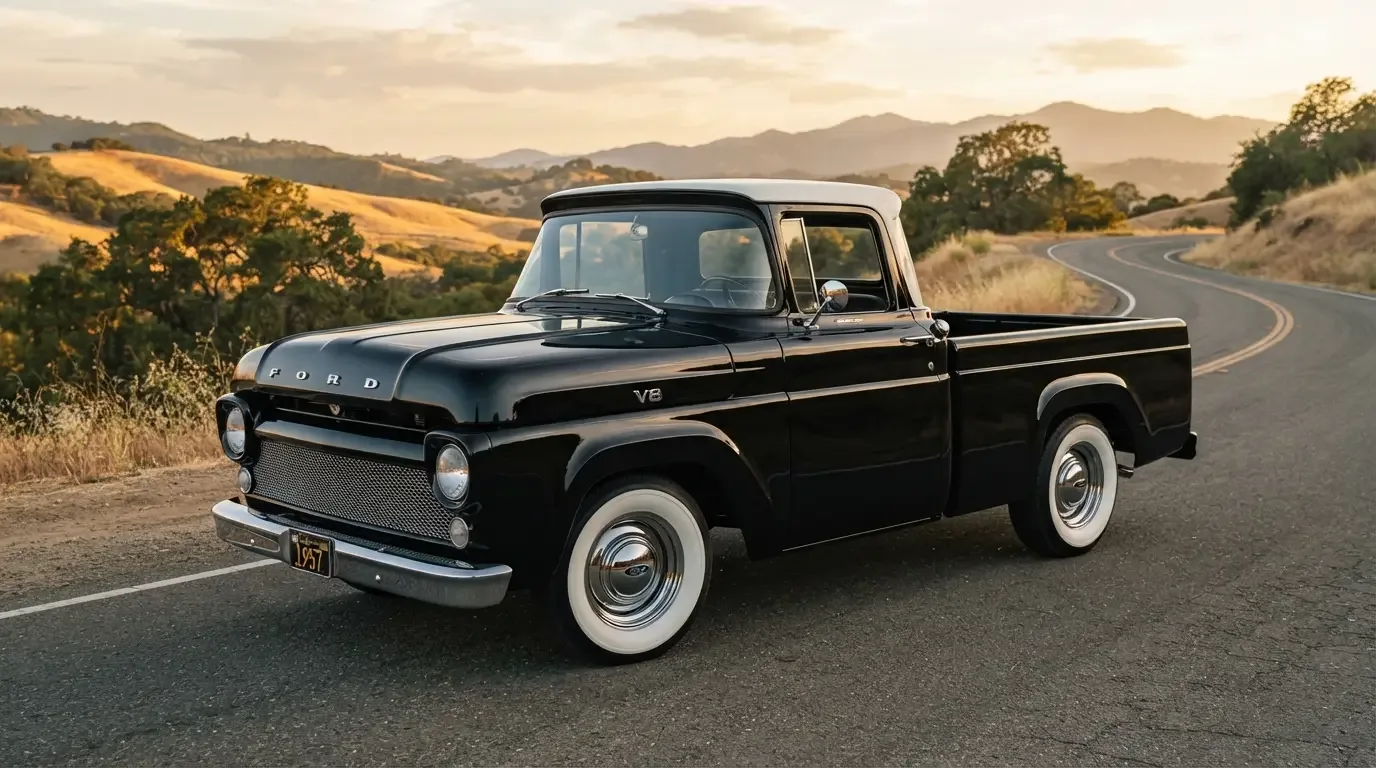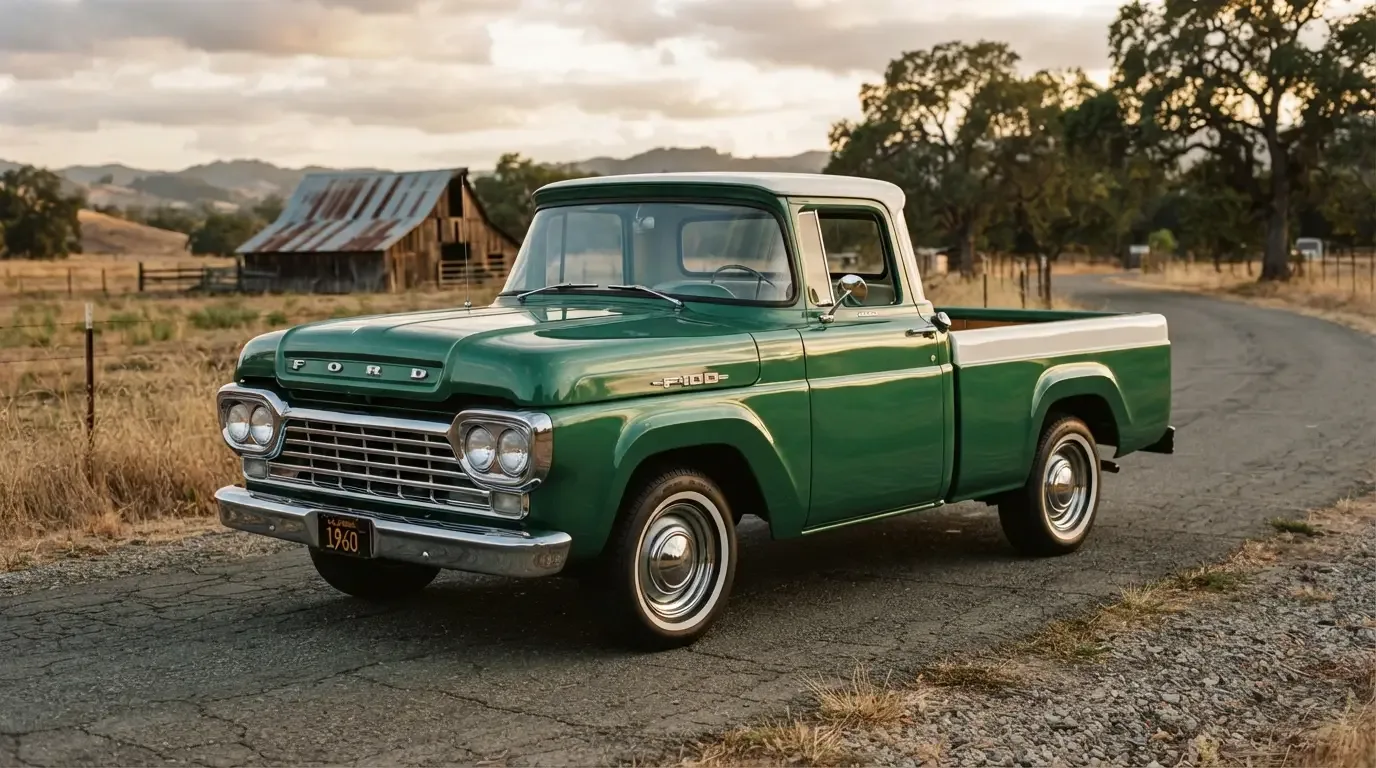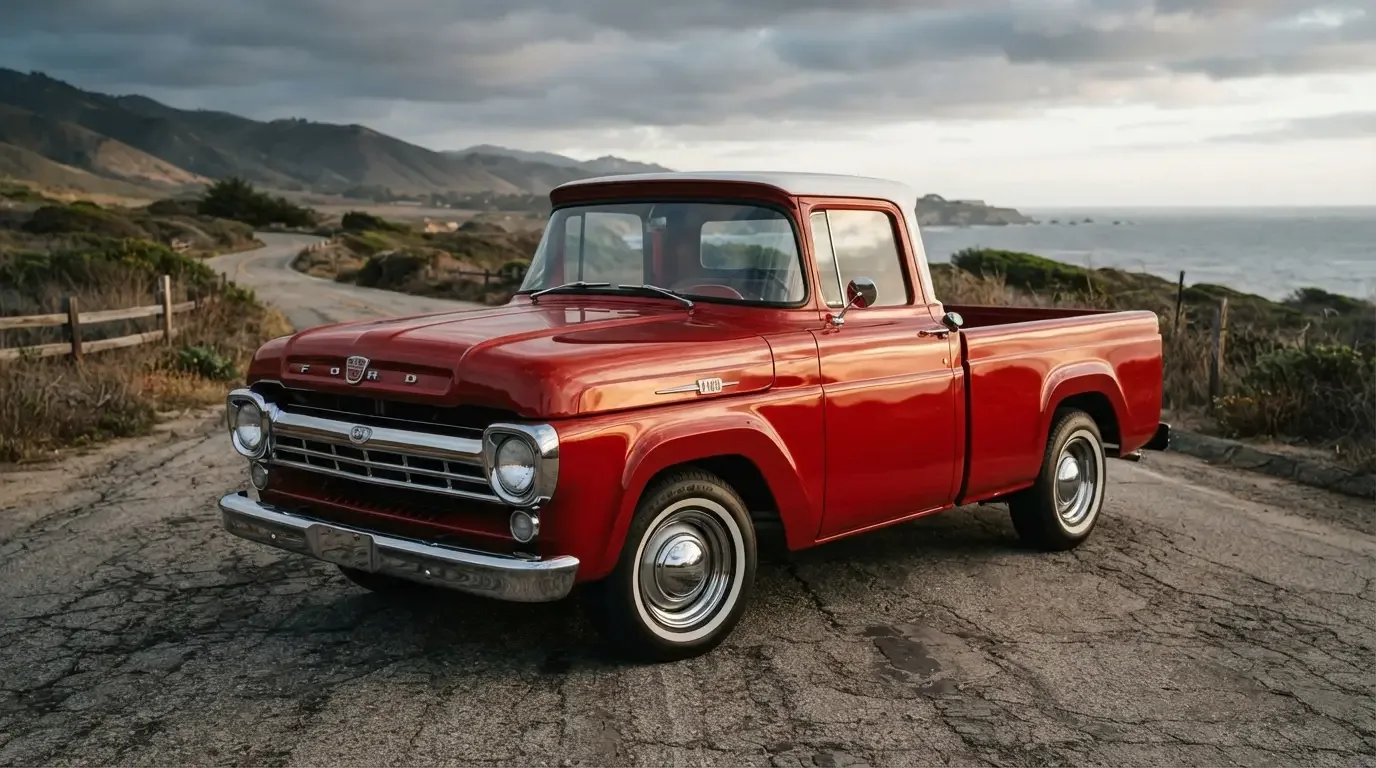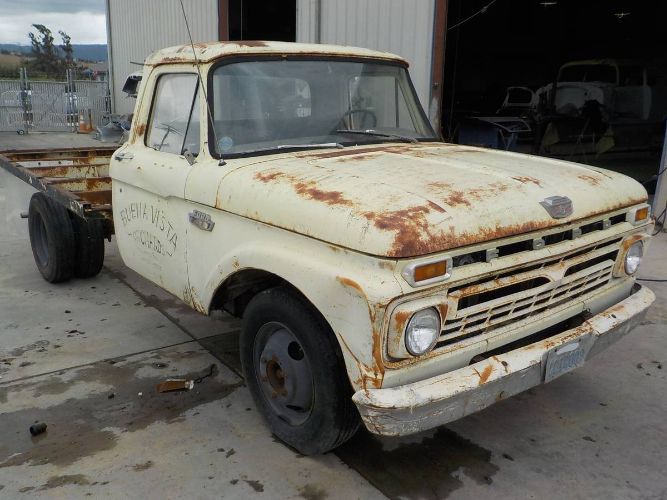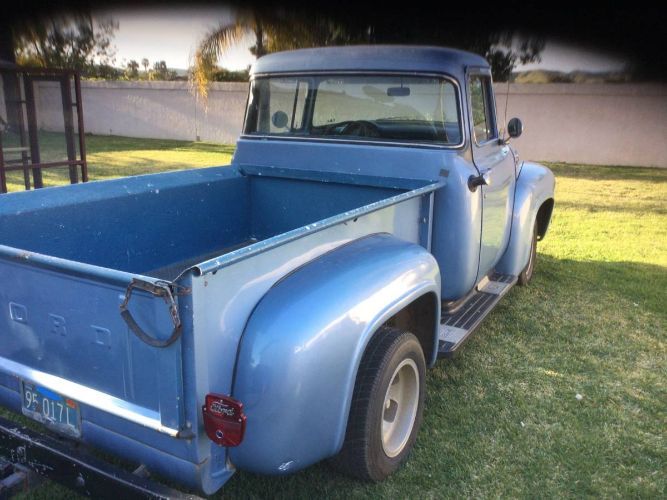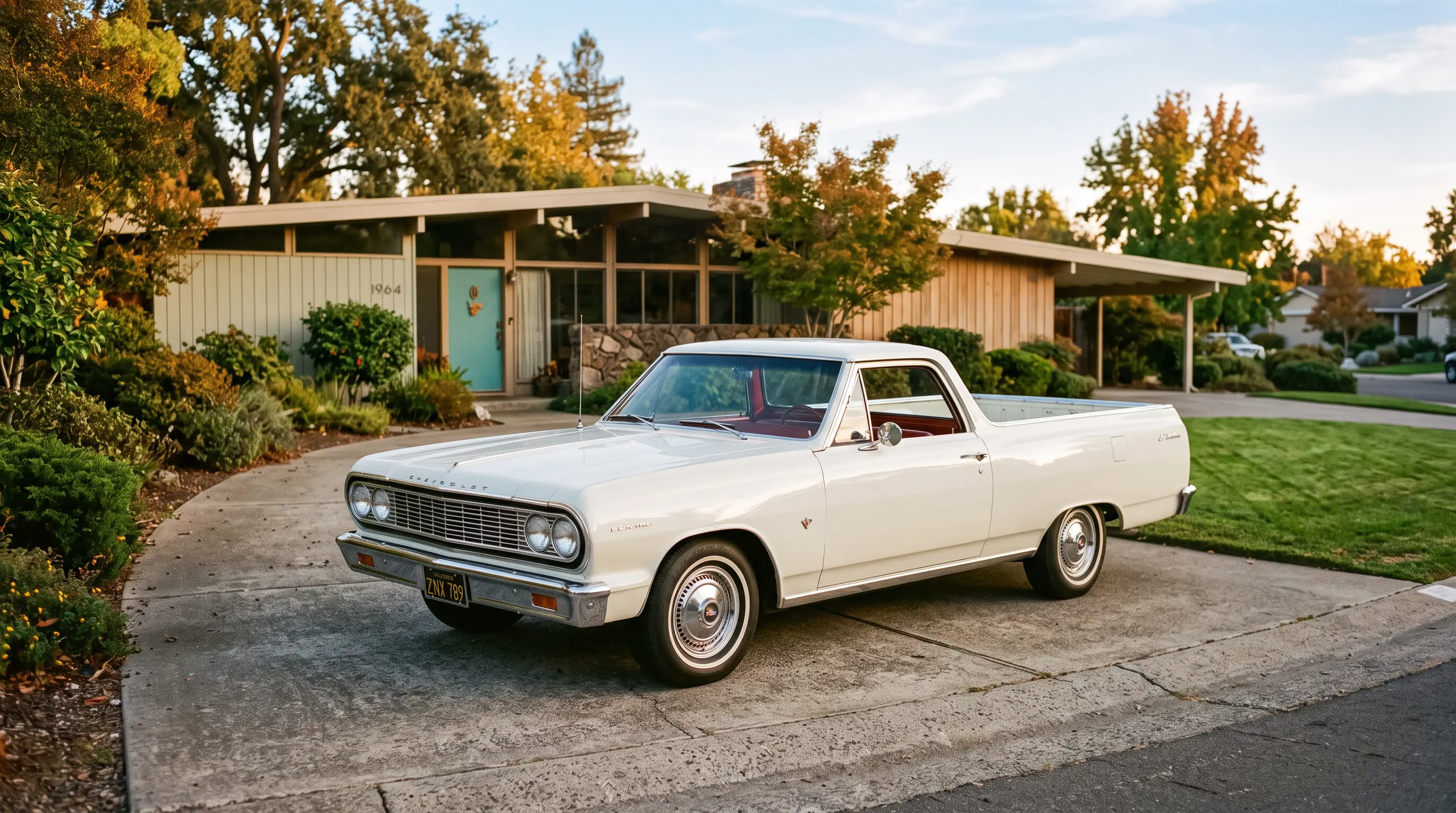
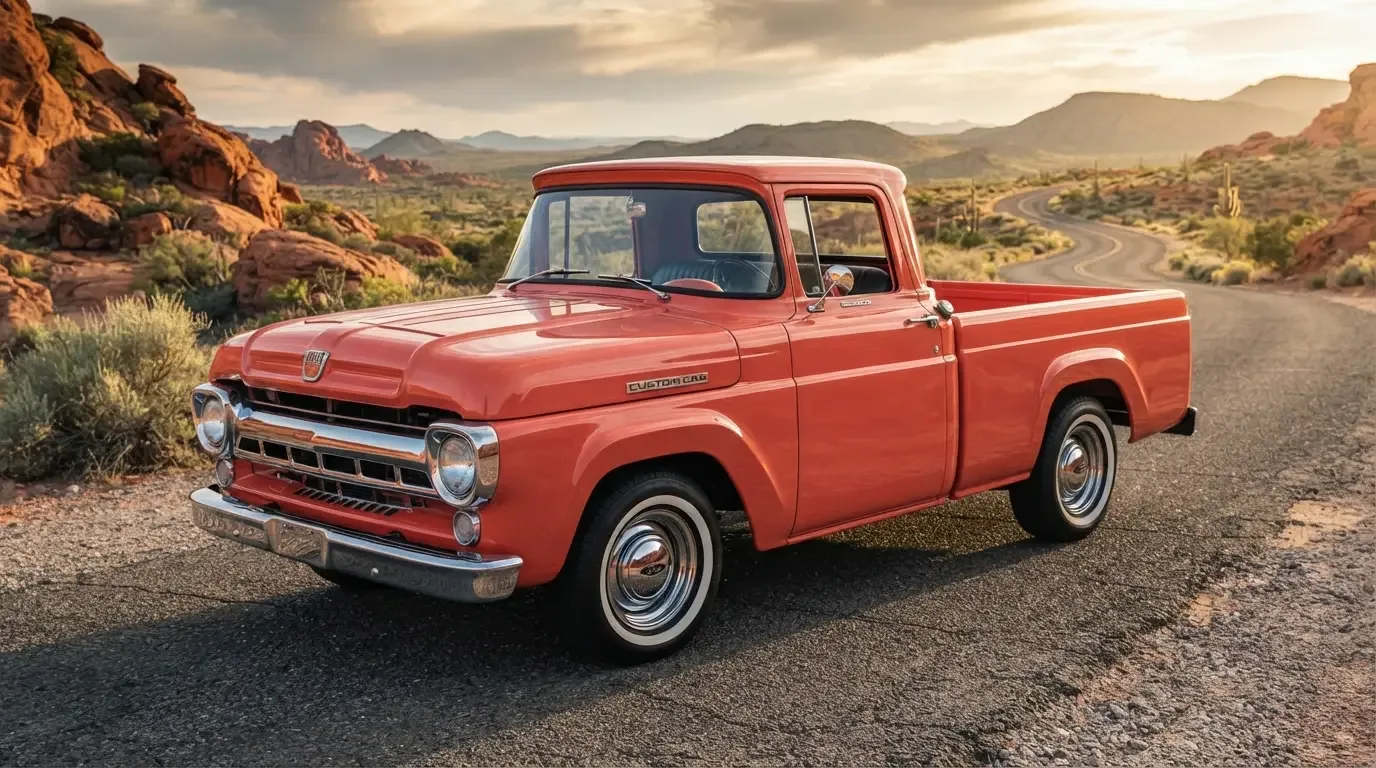
There is a photo that circulates at truck shows, passed around on phones more than it is ever printed anymore, of a brand-new 1957 F-100 parked outside a Ford dealership next to a five-year-old model from the same lineup. The old truck looks like a tool. The new one looks like it belongs somewhere nicer. The difference is mostly one thing: the bed sides run flush with the cab instead of stepping out around separate fenders. Ford called it Styleside, and it is one of those quiet engineering decisions that ended up reshaping what an entire category of vehicle was allowed to look like.
A bed that stopped looking bolted on
Every pickup before this generation wore its fenders like something added after the fact, because that is essentially what they were. A narrow cargo box sat between two separate fender panels, bolted on to cover the rear wheels, and the whole assembly read as a truck first and a design object a distant second. The styleside bed changed that relationship entirely. The bed sides now ran the same width as the cab, in one continuous line from the door all the way to the tailgate, with the wheel housings boxed into the interior of the bed rather than hanging outside it as separate fenders. Suddenly a truck could sit in a driveway next to the family sedan and not look like it belonged to a different category of object.
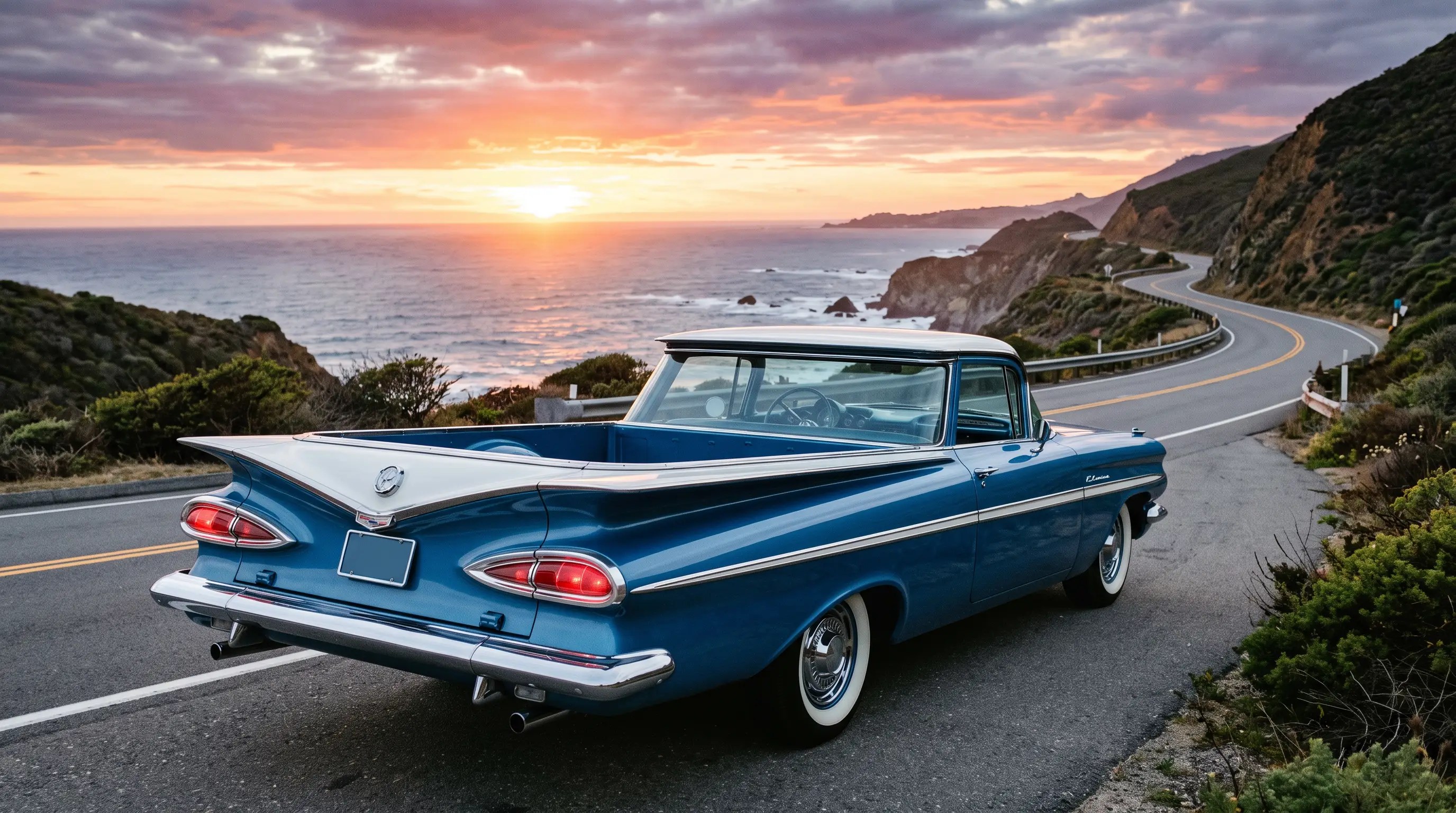
That shift did not happen in a vacuum. Chevrolet had beaten Ford to a flush-sided bed with the low-production Cameo Carrier back in 1955, a truck built in small numbers specifically to prove the concept could sell, and by 1957 both companies were racing to bring the idea to their mainstream truck lines. Ford's styleside answer for 1957 rode alongside the flat hood and full-width front end the truck was also debuting that year, meaning a buyer walking onto a Ford lot that season was looking at a truck that had been rethought from the windshield back to the tailgate, not just given a new grille.
What the change actually meant for a working truck
None of this styling ambition mattered if the bed could not still do a truck's actual job, and Ford knew it. The styleside bed gave a wider opening at the top rail than the old flareside arrangement, useful for loading bulky items, though the boxed-in wheel wells did eat into the usable floor width in a way the older separate-fender beds never had to deal with. A rancher hauling loose hay bales barely noticed. A contractor trying to lay a stack of plywood flat across the bed floor noticed immediately, and it is part of why the older flareside bed never fully disappeared from Ford's order sheets even as styleside became the more popular choice through the following decade.
Talk to anyone who grew up around one of these trucks and the bed usually comes up before the engine does, which tells you something about how much the look mattered to the people actually buying them. A friend of mine in Nashville inherited his grandfather's 1959 F-100, a styleside model bought new to haul feed and, more honestly, because his grandfather thought it was the better-looking truck on the lot that year. Sixty-some years later the bed floor has been patched twice and the wheel wells have been dented and pulled back out more than once, but the flush line down the side of that truck is still the first thing anyone comments on when it rolls into a show field.
| Trait | Older separate-fender bed | Styleside bed |
|---|---|---|
| Visual line | Broken by fender bulge | Continuous from cab to tailgate |
| Wheel housing | Outside the cargo area | Boxed into the bed interior |
| Load floor width | Uninterrupted, narrower overall | Wider opening, humps intrude at floor level |
| Introduced | Original F-Series design | 1957 model year |
The styleside bed also changed what a damaged truck cost to fix. A dented flareside fender was a bolt-on part, unbolt it, replace it, done. A dented styleside panel was part of the bed's structural side, meaning body shop labor and, depending on the era and the shop, actual sheet metal work rather than a straight parts swap. That tradeoff, better looks for a harder repair, is one every styleside owner eventually ran into, usually the first time a shopping cart or a low branch caught the wrong corner.
"Everybody remembers the year their family got the good-looking truck. Nobody ever tells that story about the flareside. It's always the styleside truck that shows up in the photo behind the birthday party or parked outside the church on Sunday. That flush line down the side did something to how people felt about owning a work truck."
— Patrick Walsh
A design idea that outlived the truck it started on
What is easy to miss, looking back from today, is how completely the styleside concept won the argument it started. Within a decade of its 1957 introduction, the flush-sided bed had become the dominant configuration across nearly every American truck manufacturer, and the older separate-fender look, once the only option anyone knew, became the specialty item ordered by buyers chasing a specific traditional appearance rather than the mainstream choice it had always been. That is a genuine reversal, and it happened fast enough that a truck buyer in 1965 would have found the older flareside bed almost quaint, a deliberate throwback rather than simply how trucks were built.
The styleside idea also outlasted this specific generation of F-100 by decades, carrying forward through every redesign that followed as the default expectation for what a modern pickup bed should look like. Later generations refined the proportions and added wider beds that solved the wheel-well intrusion problem the original design never fully addressed, but the basic premise, a cargo box that reads as part of the truck's body rather than something hung off the back of it, traces straight back to what Ford and its competitors were fighting over on dealer lots in 1957. Few individual design decisions from that era can claim to have shaped an entire product category as thoroughly as this one did.
Part of a bigger redesign
The styleside bed cannot really be separated from everything else Ford changed that same model year. For the full picture of that 1957 introduction, our 1957 Ford F-100 retrospective covers the flat hood, the wraparound windshield, and everything else that arrived alongside this new bed, and for a closer look at the visual language Ford was chasing across the whole truck, a related story digs further into the design decisions behind the era. What stuck, decade after decade, was the basic premise the styleside bed proved out: a truck did not have to look like a tool to still work like one. Anyone chasing a piece of that story today can look through F-100s for sale now and see how many of these flush-sided beds are still out there, patched, repainted, and still turning heads the way they did the day they left the lot.