
Here is the short version. From the mid-1950s through the early 1960s, if you ordered a V8 in a Ford F-100, you got a Y-block. Not the small-block that came later and made Ford's reputation with hot rodders for the next forty years. A different engine entirely, named for the shape its deep-skirted block made when you looked at it from the front, with the crankcase extending well below the crankshaft centerline in a Y-shaped cross section. It is not the engine most people think of when they picture a classic Ford V8, and that is exactly why it deserves a straight explanation instead of getting waved off as "the old one before the good one."
Car Features
7 min read
The Y-Block Era of the F-100
Before the small-block V8 took over, Ford's deep-skirted Y-block powered the F-100 through some of its most durable working years, and it deserves more credit than it gets.
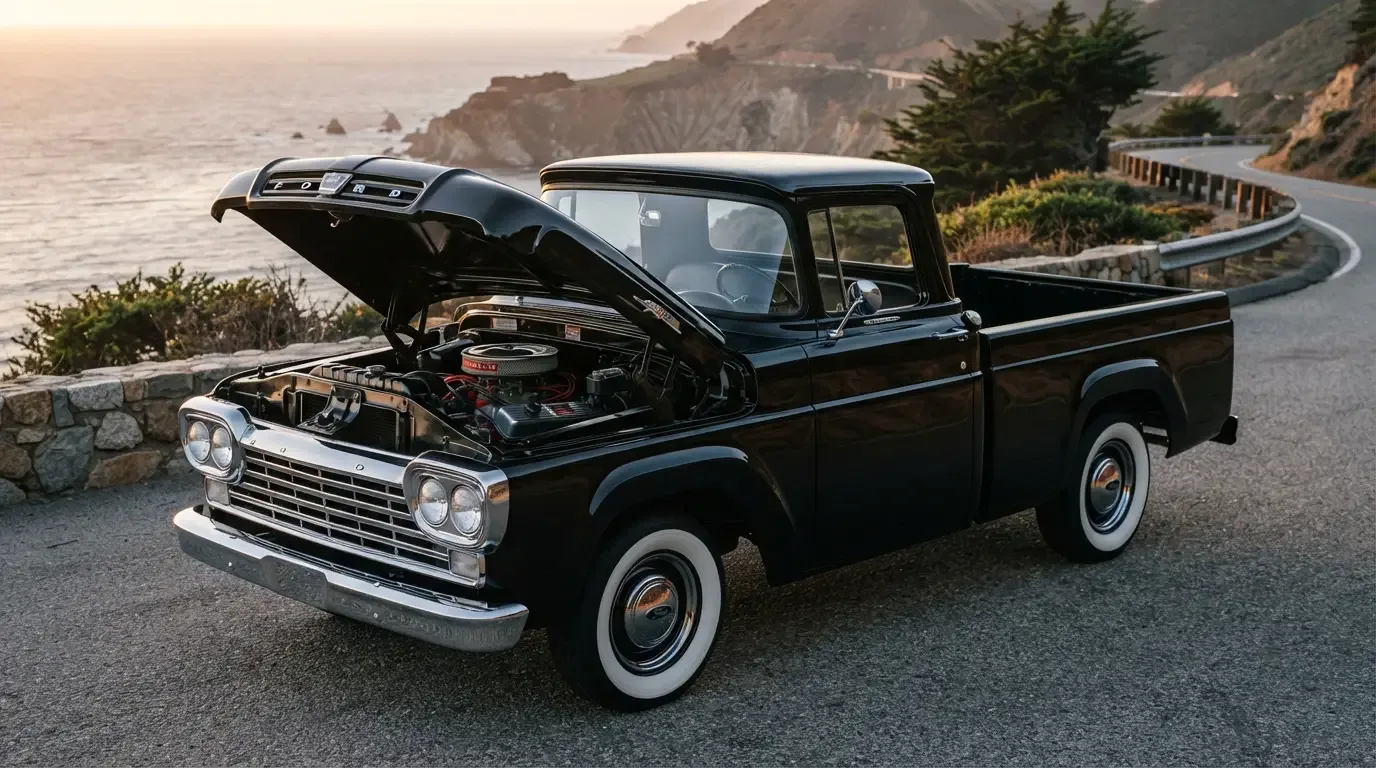
What made a Y-block a Y-block
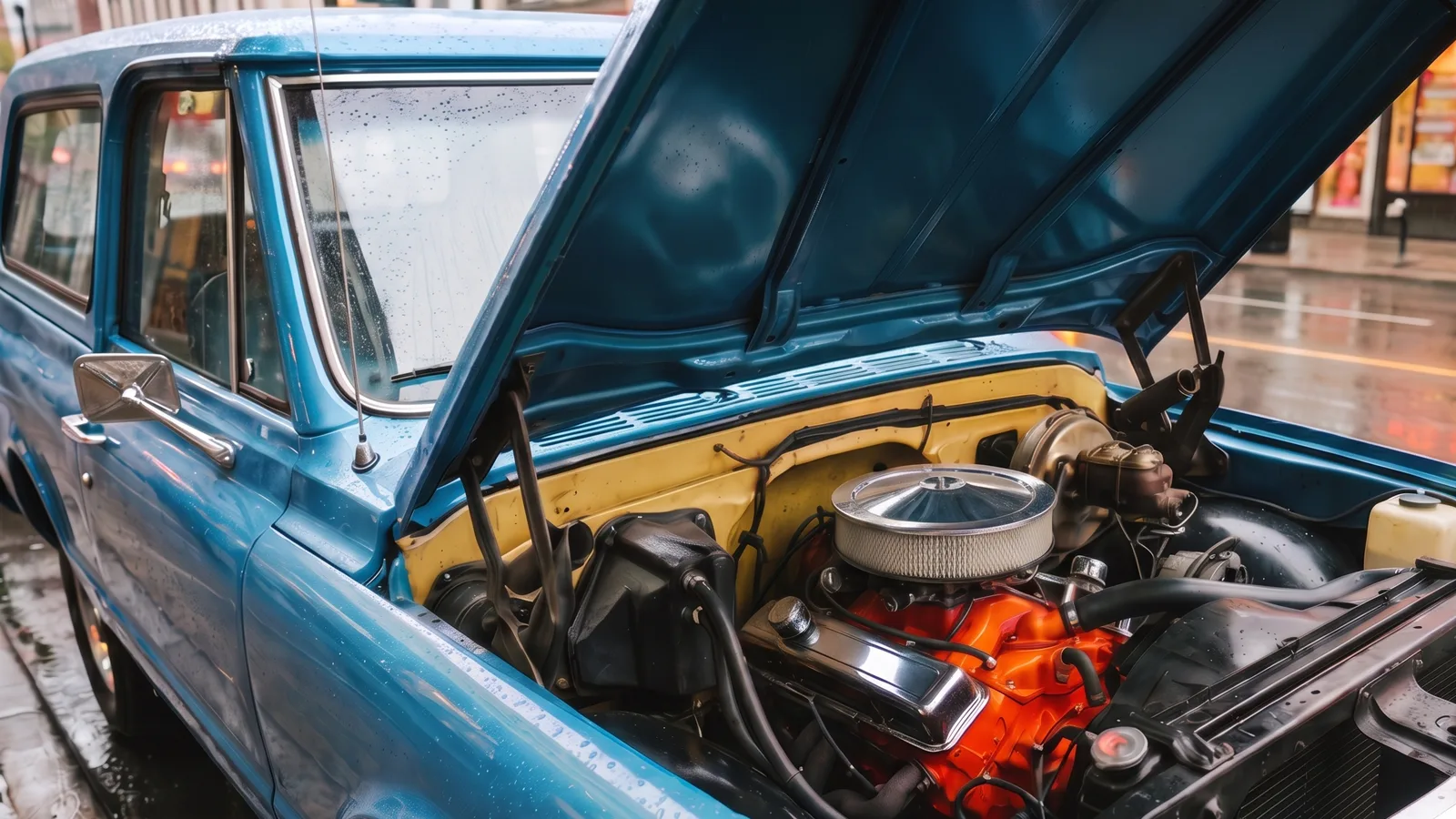
The defining feature is right there in the name. Ford's engineers extended the block casting down past the crankshaft centerline, creating deep skirts on either side that gave the bottom end more rigidity than a shallower-skirted design. Cut one in half and the cross section looks like a Y, block on top, skirt hanging down below the crank. That structure made the engine heavier and physically taller than what replaced it, but it also made it stout for the era, and Ford trucks running these engines developed a reputation for durability that outlasted the design's own production run by decades.
Displacement grew across the years this engine was offered in F-100 trucks, moving from smaller early configurations up through larger versions as Ford responded to demand for more capability in a truck that was doing real work, not just commuting. The Y-block debuted for 1954 at 239 cubic inches, rated around 139 horsepower in that first year, and Ford grew the family through the mid-1950s to a 272 cubic inch version that carried much of the truck line from 1955 into 1957, with a larger 292 cubic inch version also in circulation during those years. Exact horsepower and configuration shifted by model year, and anyone chasing a specific number should confirm it against a factory spec sheet for the year in question rather than assume figures carry across years unchanged. What I will tell you flatly: this was a truck engine built for torque and reliability under load, not for revving out on a dyno, and that priority shows in how the engine is built.
| Trait | Y-block characteristic |
|---|---|
| Block design | Deep-skirted, crankcase extends below crank centerline |
| Era in F-100 use | Mid-1950s through early 1960s |
| Reputation | Durable under load, heavier than later small-block designs |
| Successor | Ford's small-block V8, phased in through the 1960s |
Why it got overshadowed
Ford replaced the Y-block with a genuinely lighter, more modern small-block V8 architecture through the 1960s, and that newer engine family went on to power everything from Mustangs to Broncos to another generation of F-Series trucks, building a following that dwarfs whatever attention the Y-block ever got. That is not a knock on the Y-block. It is just what happens when an engine gets replaced by something the aftermarket decides to build an entire industry around. Parts availability, performance culture, and decades of magazine coverage all followed the small-block, and the Y-block got left as the engine your grandfather's truck had before the "real" V8 came along.
That reputation is not entirely fair. A well-maintained Y-block in a period-correct F-100 does exactly what it was built to do, and for a truck being kept close to original rather than built for a modern swap, it is the correct engine to have under the hood, full stop. Anyone chasing numbers-matching originality on a truck from this era should treat the Y-block as a feature, not a placeholder waiting to be pulled.
"People ask me why they should care about an engine that got replaced by something better. Simple answer: it wasn't built to compete with what came after it. It was built to move a loaded truck reliably for a working owner in 1958, and by that measure it did its job. The dyno sheet from sixty years later doesn't get a vote."
Dan Reeves
The straight six was never a lesser choice
Plenty of F-100 buyers in this era skipped the V8 entirely, and that was not automatically the wrong call. Ford's inline-six options through these years cost less to buy, cost less to service, and delivered perfectly adequate performance for a truck doing light hauling around a small operation rather than towing heavy loads or covering long highway miles. The six also weighed less over the front axle, which mattered for handling and tire wear on a truck that spent most of its life half-loaded rather than maxed out.
I bring this up because I see buyers today assume a six-cylinder truck from this era is automatically the lesser find compared to a Y-block V8, and that assumption does not hold up against how these trucks were actually bought and used new. A period buyer who never needed the extra torque of the V8 was not settling for less by choosing the six. He was matching the engine to the job, which is exactly the kind of decision this truck was designed to accommodate across its whole engine lineup, not just the top of it. A well-documented original six-cylinder truck deserves the same respect as a Y-block for the same reason: it is correct for what it is, and correct is what actually matters when you are talking originality.
What buyers should actually check
If a listing claims a Y-block-equipped F-100, verify it. Engine swaps are common enough in this generation of truck that a claimed original engine deserves a look at casting numbers and any surviving build documentation before you take the seller's word for it. A truck that has had a later small-block or a modern crate engine swapped in is not automatically a worse buy, plenty of buyers prefer that for reliability and parts availability, but it changes what the truck actually is from a documentation standpoint, and it should change the price you are willing to pay if originality matters to you.
Casting numbers on the block are the fastest way to confirm what you are actually looking at, and matching those numbers against the truck's other documentation, where it exists, beats trusting a listing description every time. This generation of F-100 has been on the road for close to seventy years now, plenty of time for an engine bay to have changed hands more than once.
Where the Y-block fits in the bigger picture
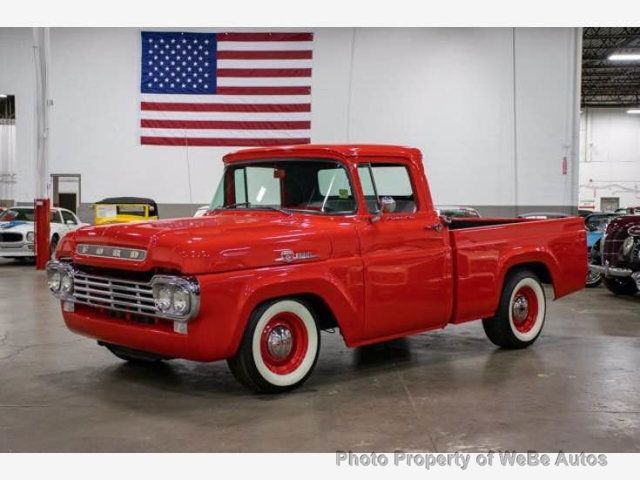
The Y-block years line up closely with the 1957-60 body generation this truck wore for most of that engine's run in the F-100 line. For the full picture of that generation, styling, bed options, and the mechanical changes across those years, the whole picture covers it in one place. If you want to see what has survived from that era, engine intact or otherwise, shop classic F-100 listings and start checking casting numbers for yourself.
Sources and notes
Related Reading

About the author
Dan Reeves
Performance engine builder from North Carolina's motorsports corridor, focused on swaps, forced induction and making real, repeatable power.
Related Listings - Ford F-100
Comments
Be the first to comment on this article.