
Car and Driver's March 1964 cover shows a red Ferrari leading a green Pontiac GTO through a downhill right-hand kink, nose to tail, close enough to touch. It is a painting, not a photograph, because the race it depicts never happened. Ferrari's 250 GTO was a homologation special built for FIA competition, a car so scarce that fewer than 40 examples existed, campaigned by factory teams and privateers who paid a fortune for the privilege. Pontiac's new option package, built on a Tempest LeMans and sold to anyone who could finance $296 on top of the base sticker, had borrowed that name outright. The magazine story that put both cars on the same cover wasn't a real test of one against the other. It was a dare, illustrated as fact.
Car Features
8 min read
The 1964 Ferrari 250 GTO vs Pontiac GTO Road Test That Started a War
Pontiac named its new option package after Ferrari's racing homologation special, and a 1964 magazine cover made the provocation famous.
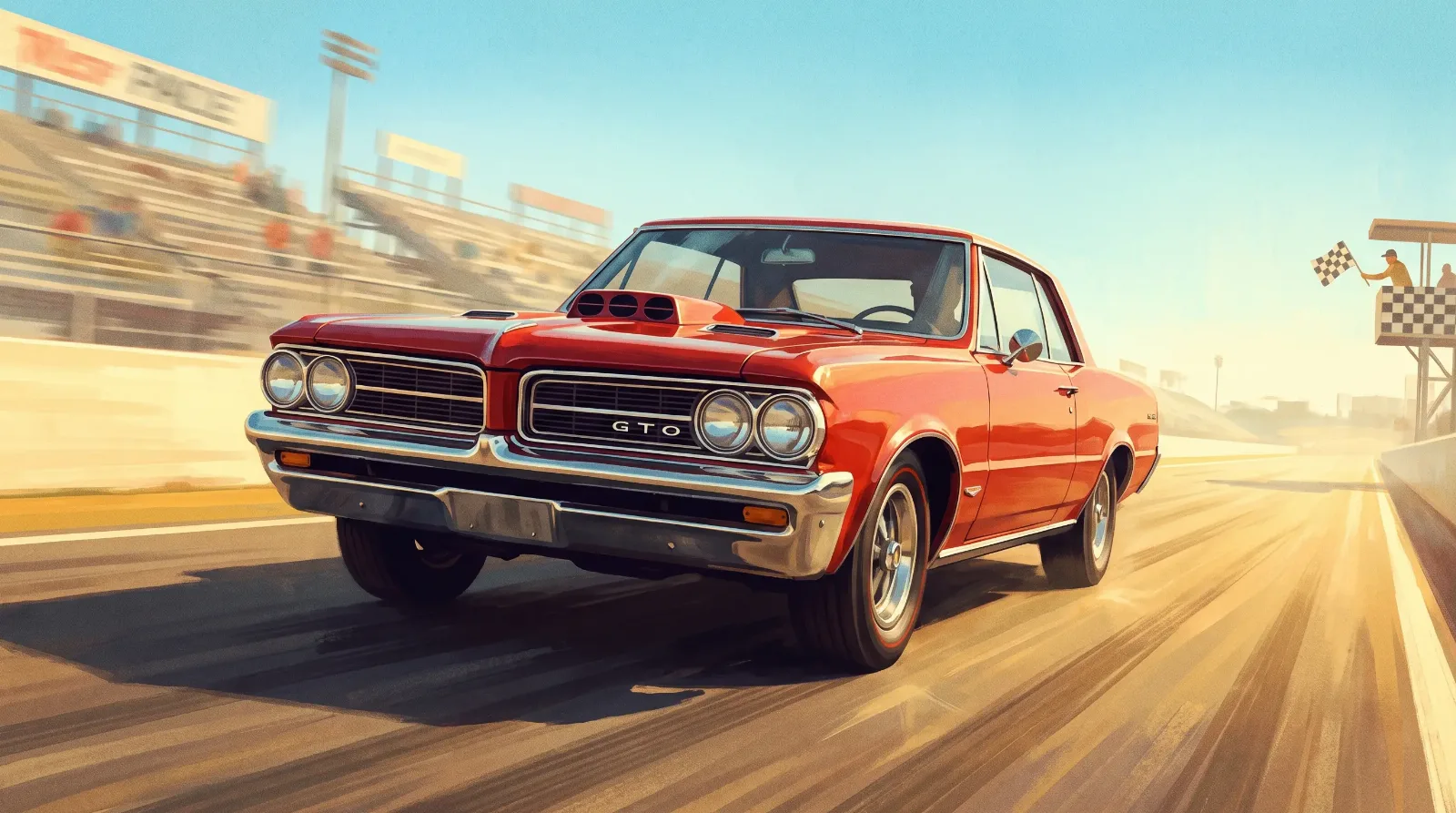
A name borrowed on purpose
Pontiac's marketing department knew exactly what they were doing when they chose "GTO," short for Gran Turismo Omologato, the FIA designation Ferrari's car had earned through actual competition homologation. There was no homologation process behind Pontiac's use of the letters. It was a straight borrow, meant to attach the aura of Ferrari's racing pedigree to a mass-production American option package, and European enthusiasts noticed immediately. The reaction ranged from amused to genuinely offended, which is roughly the reaction Pontiac's marketing team had hoped to provoke.
The test that never actually paired the two cars
Pontiac ad man Jim Wangers pitched Car and Driver editor David E. Davis on the idea in the fall of 1963: put the new Pontiac GTO up against a Ferrari GTO, ideally at Daytona over the Christmas holidays. The side-by-side never came together. Car and Driver could not get a Ferrari 250 GTO and a Pontiac GTO to the same place at the same time, and the magazine's own later admissions made clear the two cars were never tested together in any form. What ran in the March 1964 issue was a solo test of the Pontiac, dressed up with a cover painting that staged the race the magazine couldn't actually run.
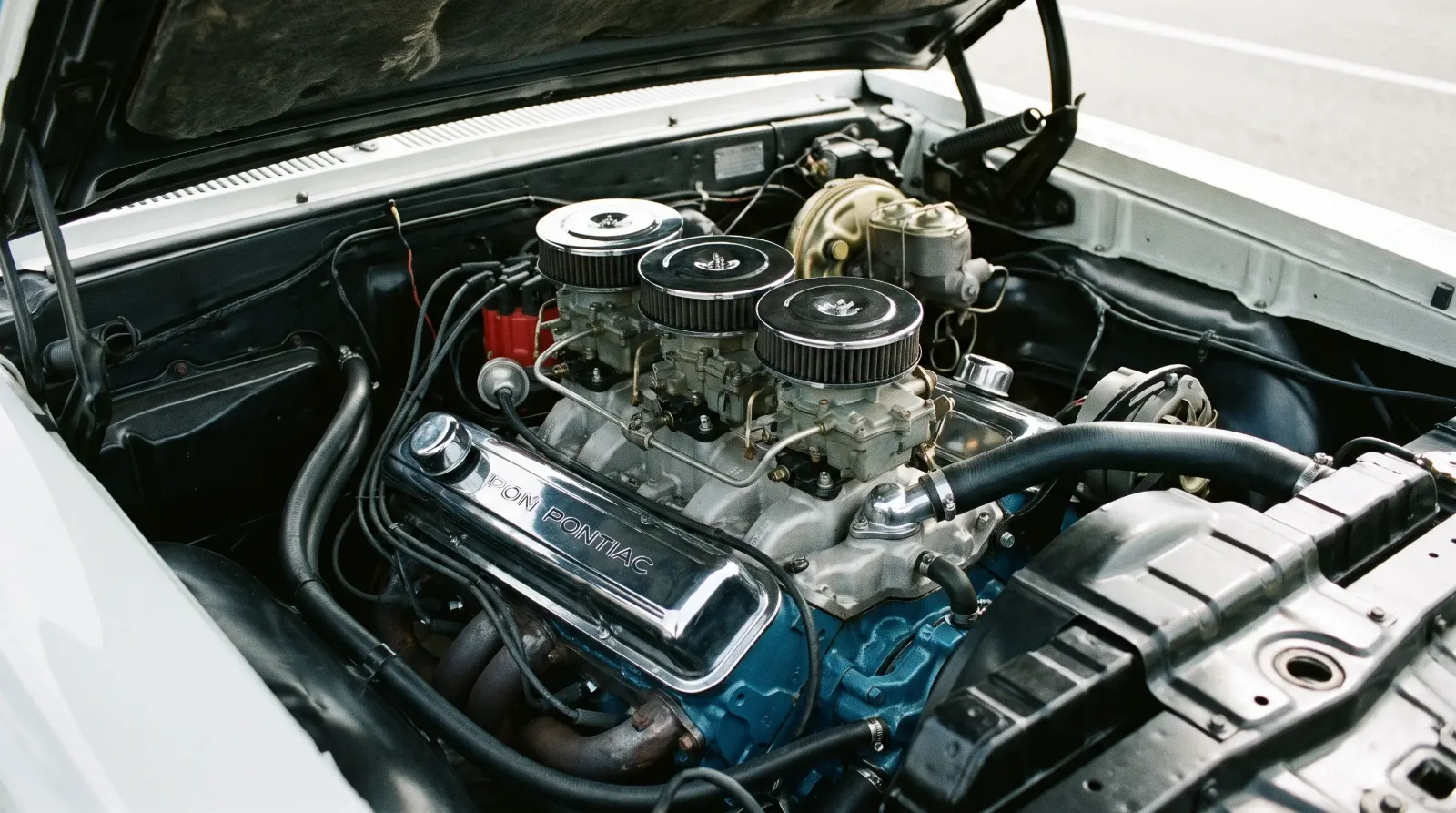
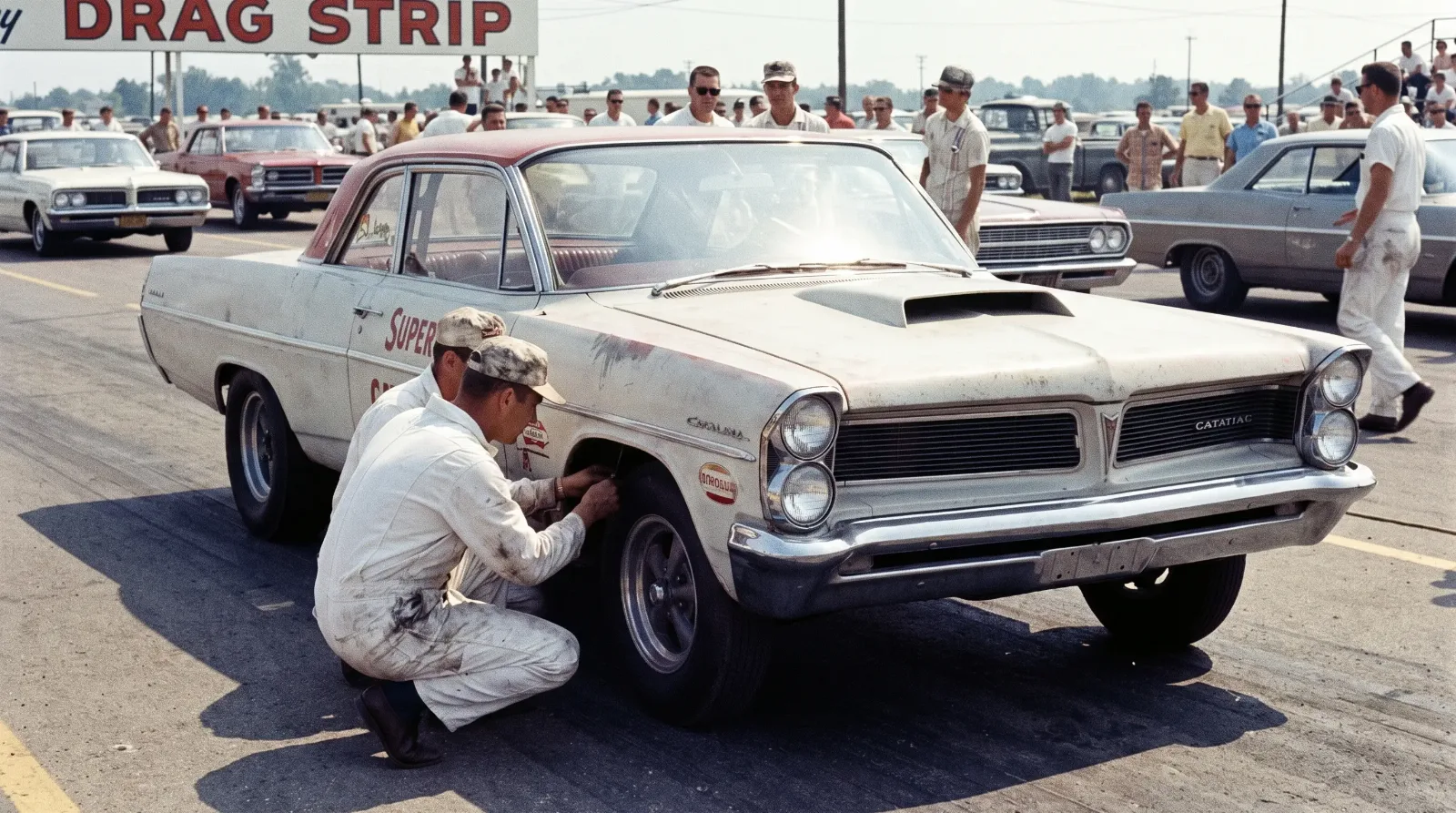
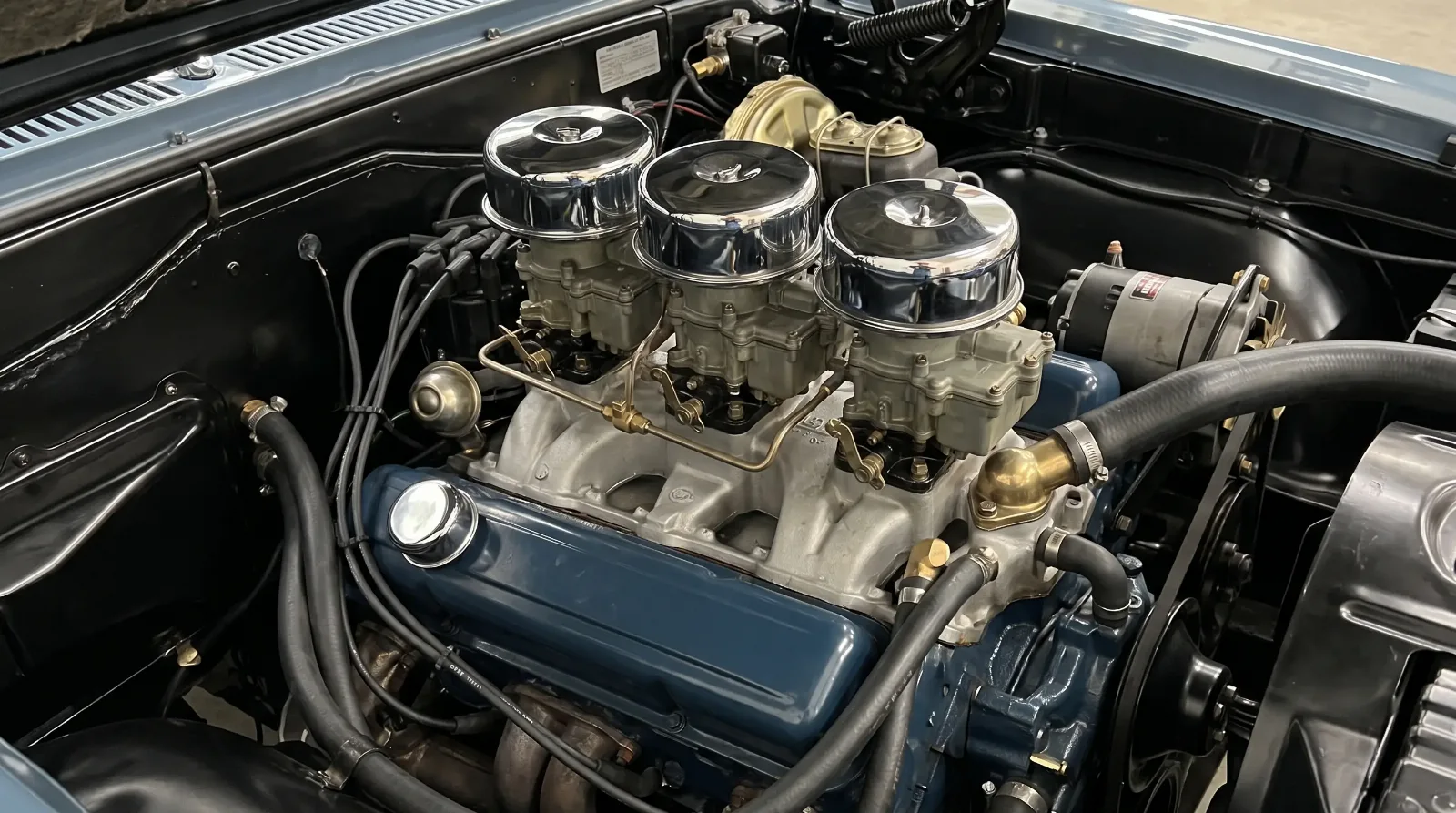
The Pontiac in that test wasn't a stock GTO either. Wangers had the red test car quietly handed to Royal Pontiac, the Detroit-area dealer known for its Bobcat tuning packages, where the factory 389 was swapped for a 421 cubic inch V8 making well north of the GTO's rated output. That ringer ran the quarter mile in 13.1 seconds at 115 mph and hit 0-60 in 4.6 seconds, numbers no customer taking delivery of a 389-powered GTO off a dealer lot could come close to matching. Wangers admitted to the swap decades later. The test's real impact was never the data, which described a car Pontiac didn't sell. It was the premise: an American mid-size option package, priced within reach of a working buyer, sharing a magazine cover with a European sports car most readers would never see in person, let alone drive.
Two cars that had almost nothing else in common
Set aside the shared three letters for a moment and the gap between these two machines becomes almost comic. The Ferrari's body was hand-formed aluminum over a tube-frame chassis, built by a coachbuilder in small batches for a clientele that raced at Le Mans and the Targa Florio. Its 3.0 liter V12 was tuned for sustained high-RPM racing duty, not stoplight-to-stoplight acceleration, and it demanded a level of mechanical sympathy and maintenance a typical American buyer never encountered. The Pontiac's 389 was an iron-block pushrod V8 built on an assembly line by the thousands, designed to start reliably on a cold Michigan morning and run for years on routine dealer service. One car existed to win international sports car championships. The other existed to sell Pontiacs to twenty-five-year-olds with a car payment and a Friday night free.
That contrast is exactly why the comparison worked as a stunt and never could have worked as an honest technical evaluation, which is likely a real part of why Car and Driver couldn't actually get a Ferrari 250 GTO in front of its testers at all. Nobody seriously believed a Tempest-based coupe could out-corner a purpose-built Le Mans racer. The story's value was in the audacity of putting the two names on the same cover, not in producing a scientifically rigorous answer to which car was "better," since no such answer was ever actually tested.
Why the comparison worked as marketing regardless of the numbers
Enzo Ferrari reportedly took offense at Pontiac's use of his car's name, and whether or not that reaction was as pointed as legend has made it, the controversy itself did exactly what Pontiac's marketing team wanted. It put the GTO name in front of readers who followed international racing, generated free press coverage well beyond what Pontiac's advertising budget alone could buy, and reinforced the exact positioning the birth of the GTO depended on: a car that wanted to be judged against genuine performance machinery, not against other family sedans.
Patrick Walsh has spent time with collectors on both sides of this story, from Ferrari purists who still bristle at the comparison to Pontiac owners who wear it as a badge of honor.
"Talk to a Ferrari collector about this and you'll get an eye roll, sometimes a lecture on what Omologato actually means. Talk to a Pontiac guy and you'll get a grin. Both reactions are the point. Pontiac wasn't trying to convince anybody their car was actually a Ferrari. They were trying to get people arguing about it, and sixty years later people still are."
Patrick Walsh
A legend that outgrew the actual magazine pages
Ask around long enough and you'll hear the story told in a dozen slightly different versions, some involving a real head-to-head race that never happened, some involving a formal legal threat that never quite materialized into anything. The truth, as best anyone can document it now, sits somewhere quieter than the version that's traveled furthest through car-show parking lots and forum threads: no Ferrari 250 GTO and Pontiac GTO were ever tested together, and the car that ran the published numbers wasn't a stock GTO at all. What's certain is that the name stuck, Pontiac never backed off using it, and Ferrari never mounted a serious legal challenge that changed anything about how the GTO badge appeared on American cars for the rest of the decade. The legend grew because it made a good story, and a good story about an underdog daring to borrow a legend's name is exactly the kind of thing that gets repeated at more bench-racing sessions than the actual test results ever were.
What happened to each car afterward
The two nameplates went on to have almost nothing in common in the decades that followed either, which makes the 1964 comparison feel even stranger in hindsight. Ferrari's 250 GTO became one of the most valuable cars in the world, a machine that today changes hands, when it changes hands at all, for sums that would have been unimaginable to the readers flipping through that March 1964 issue. Its scarcity only grew more extreme as the decades passed, since Ferrari never built more of them and the surviving examples are almost entirely accounted for in serious collections. Pontiac's GTO went the opposite direction entirely, growing from an option package into its own model, spawning The Judge, absorbing bigger engines through the rest of the decade, and eventually fading out by 1974 as insurance costs and emissions rules reshaped the entire muscle car category. One name, two completely different trajectories, and neither car's fate had anything to do with the other beyond that one magazine page in 1964.
A rivalry that never really existed, and mattered anyway
There was no real competition between these two cars in any practical sense. Different continents, different price points by an order of magnitude, different buyers entirely. The Ferrari was a track weapon built in tiny numbers for wealthy racers. The Pontiac was a street car built for volume, sold through ordinary dealerships to buyers who wanted something quick for the price of a nicely equipped family sedan. But the manufactured rivalry between them did real work for Pontiac's image at the exact moment the GTO needed to establish itself as more than another option package. For a full look at what a buyer actually got for that $296, including the 389 and the Tri-Power option that backed up the borrowed name, read on.
Sources and notes
- Hagerty: Jim Wangers' secretly-prepped '64 GTO from Car and Driver's cover
- Old Cars Weekly: Car of the Week, the 1964 Pontiac GTO Red Car
- Curbside Classic: 1964 Pontiac GTO, the ultimate ringer
- GTO Forum: Pontiac GTO vs Ferrari 250 GTO, the gauntlet thread
- Wikipedia: Ferrari 250 GTO
- Wikipedia: Pontiac GTO
Related Reading
Have a
Pontiac GTO
for Sale?
Reach thousands of serious classic car collectors across the US.
Sell It Here →
Are You a Classic Car Dealer?
List your full inventory and connect with targeted classic car buyers.
Join as a Dealer →
#muscle car marketing
#Pontiac GTO
#gto history
#ferrari 250 gto
#car and driver 1964
#gto name origin

About the author
Patrick Walsh
Automotive journalist covering classic car shows, events, and the enthusiast community across North America.
Related Listings - Pontiac GTO




Comments
Be the first to comment on this article.