
General Motors' board issued a directive in January 1963 that on its face should have ended Pontiac's performance ambitions entirely. All GM divisions were to withdraw from factory-supported racing, effective immediately, closing out programs that had funded engine development, driver relationships, and dealer promotions built directly around competition results. The order was corporate policy, not a suggestion, and it landed hardest on the one division that had built its entire public identity around racing over the previous five years.
Car Features
7 min read
GM's 1963 Racing Ban and the Muscle Car It Accidentally Made
GM ordered every division out of racing in 1963. Pontiac answered by putting factory performance on the showroom floor instead of the track.
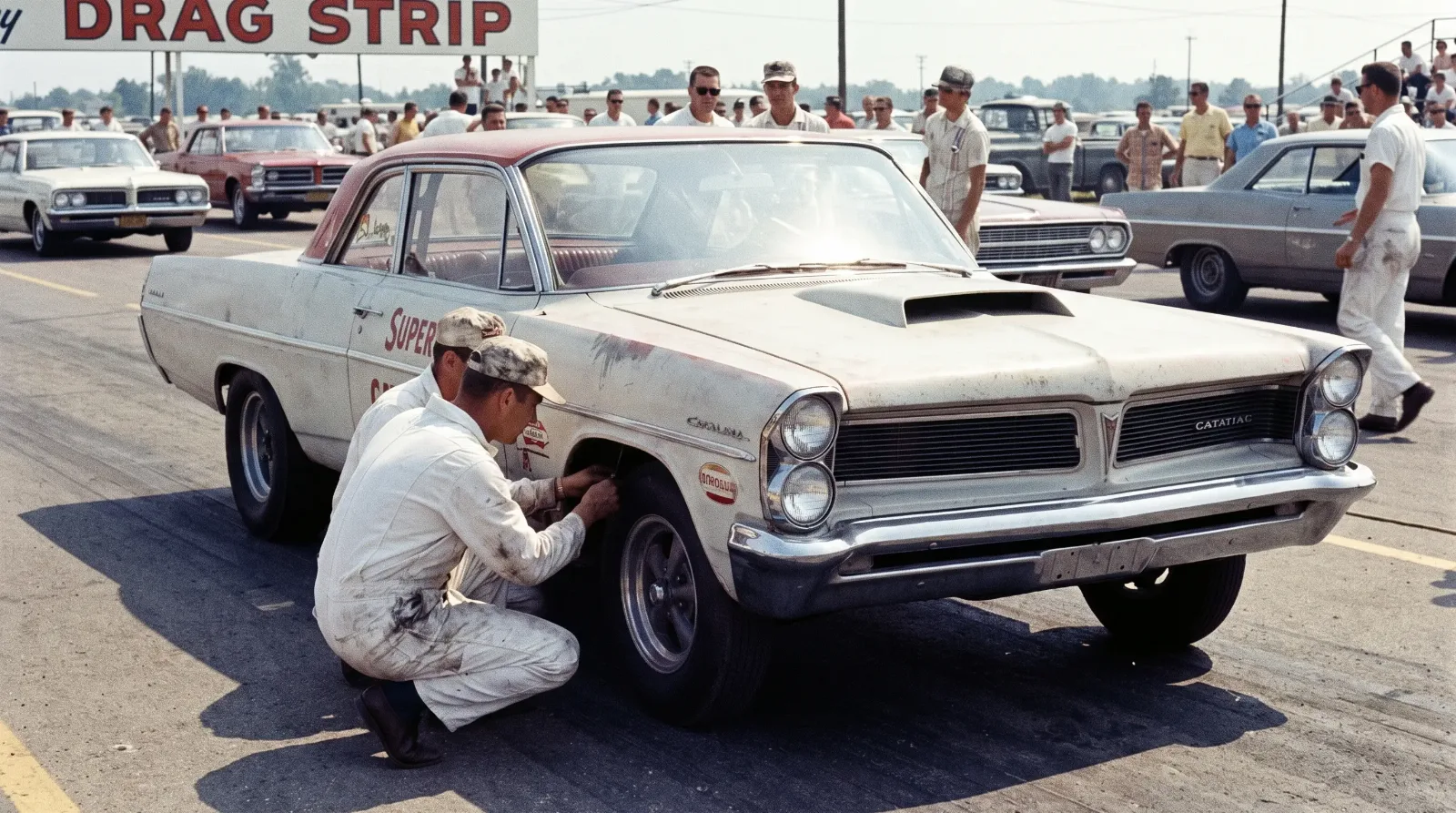
What Pontiac had built before the ban
Under general manager Semon "Bunkie" Knudsen and later Pete Estes, Pontiac spent the late 1950s and early 1960s turning itself from a stodgy, older-buyer brand into the performance arm of General Motors. The division ran factory-backed teams in NASCAR and NHRA competition, developed engines specifically for drag racing, and built its advertising almost entirely around speed and youth. By 1962 Pontiac had become one of the most successful manufacturers in NASCAR, and its Super Duty engine program had a reputation among racers that the sales floor leaned on heavily.
The Automobile Manufacturers Association had already issued a voluntary racing ban back in 1957, one every major manufacturer had quietly ignored to varying degrees for years. GM's 1963 order was different. It came from inside the corporation itself, with actual enforcement behind it, and it hit at a moment when antitrust scrutiny and safety criticism aimed at Detroit's horsepower race were both rising in Washington.
The internal paper trail from this period is thinner than most enthusiasts assume. GM did not issue a single sweeping press release explaining every reason behind the decision, and division general managers were left to interpret how strictly the policy would be enforced against their own programs. Pontiac's racing budget did not disappear overnight so much as it was rerouted and quietly wound down over the following months, with some Super Duty parts supply continuing informally even after the official program had ended.
A brand built on racing with the racing budget cut off
Pontiac's problem after the ban wasn't a lack of engineering talent. It was a lack of the one marketing tool the division had leaned on hardest. Without factory teams on Sunday, Pontiac needed another way to keep the performance image alive for buyers who associated the brand with speed. That pressure sat directly on John DeLorean's desk as Pontiac's chief engineer, and it's a large part of why the first GTO arrived within roughly a year of the ban taking effect.
What makes this timeline worth studying closely is how little slack there actually was. DeLorean and his engineering team, including Bill Collins and Russ Gee, had to move from concept to a sellable option package inside a single product cycle, working within a GM corporate policy that officially capped intermediate-car engine displacement at 330 cubic inches. The GTO package sidestepped that cap by classifying the 389 as an option rather than a standard engine, a distinction GM's own rulebook technically allowed even if it clearly wasn't the intent behind the displacement ceiling.
Turning off-track performance into a sales pitch
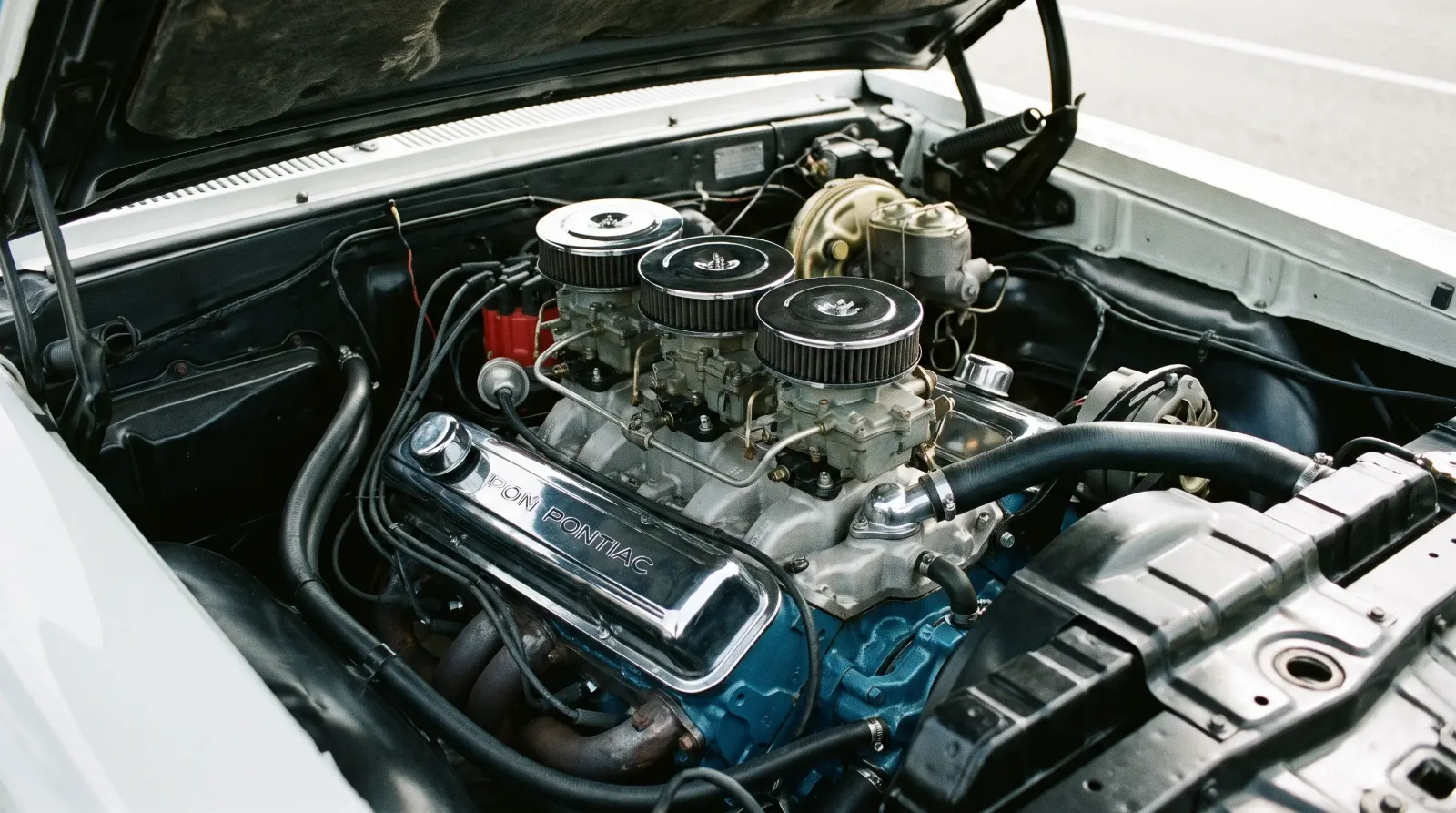
The GTO answered the racing ban's constraint almost perfectly. A buyer couldn't watch a Pontiac win at Daytona anymore, but he could walk into a dealership and order a car with a 389 out of the full-size lineup, dual exhaust, and a stiffer suspension, all wrapped into a single option package on the LeMans. It was performance the customer could own outright rather than performance he watched from the grandstand, and that shift in how Pontiac sold speed turned out to matter more than the ban's authors likely anticipated.
Tom Ramirez has traced Pontiac's internal correspondence from this period and sees the racing ban less as an obstacle Pontiac worked around and more as the direct cause of the GTO's specific shape.
"Take away the racing ban and Pontiac probably keeps funneling its performance investment into factory teams and specialized racing engines that only a handful of buyers ever see. The ban forced that investment out into a car anybody with a checkbook could order off a regular dealer lot. The GTO isn't a workaround to the ban. It's the ban's direct consequence."
Tom Ramirez
How Pontiac kept a foot in performance without breaking the rule
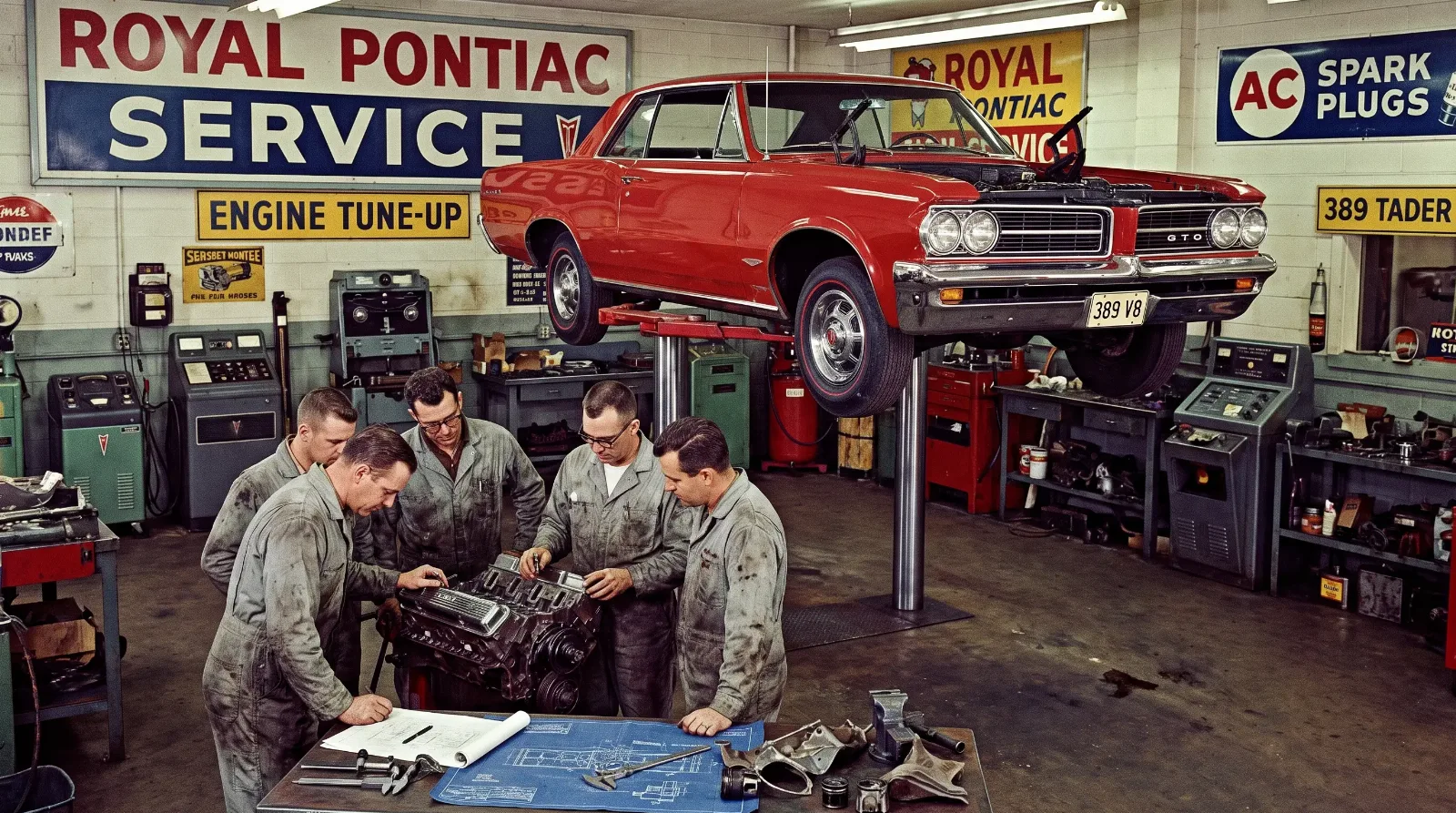
Even with the factory teams gone, Pontiac found ways to keep the performance halo alive without technically violating the corporate order. Dealer-based tuning operations, most famously Royal Pontiac outside Detroit, took on informal roles the factory teams used to fill, offering blueprinting and tuning services that kept GTOs competitive at the drag strip without a single Pontiac logo appearing on a factory-sponsored entry. Pontiac's own public relations department also leaned harder into press car loans and magazine road tests during this period, feeding buff books strong examples of the GTO to review, a workaround that generated the kind of enthusiast-press credibility factory racing used to provide directly.
What the ban cost Pontiac in the years right after
It's worth being honest about what Pontiac actually lost, not just what it gained. Factory-backed NASCAR and NHRA programs had given the division direct feedback from professional drivers and mechanics running cars at the absolute limit, feedback that fed back into production engineering in ways a street car program alone couldn't replicate. Some of that institutional knowledge walked out the door with the racing program itself, and Pontiac's engine development through the mid-1960s leaned more heavily on incremental refinement of existing designs than on the kind of ground-up racing-derived innovation that had defined the Super Duty era. The GTO's success masked that loss for most buyers, but engineers inside Pontiac at the time understood exactly what had been traded away.
There's also a regulatory footnote that tends to get lost in the GTO origin story. GM's corporate legal department had genuine antitrust concerns driving part of the racing ban decision, not just safety optics. Congress had been holding hearings on auto safety and horsepower throughout the early 1960s, and GM's size alone made it a natural target for scrutiny that smaller manufacturers avoided. Pulling back from factory racing was, in part, a defensive move meant to lower GM's public profile at a moment when regulators were already circling the entire industry's marketing practices.
Why this single policy shaped the whole muscle car era
Every GM division felt the same pressure Pontiac did, and the GTO's commercial success by the end of 1964 gave Oldsmobile, Buick, and eventually Chevrolet the internal justification to build their own versions of the same idea: a mid-size car carrying a big engine, sold as street performance rather than track performance. Ford and Chrysler, watching GTO sales figures, followed with their own intermediate muscle cars within a few years. The racing ban that was supposed to quiet Detroit's horsepower race ended up redirecting it onto public roads instead. For the fuller arc of how that redirection played out inside Pontiac specifically, Pontiac GTO history follows the option package through its growth into a standalone model by 1966.
Sources and notes
- PontiacV8.com: GM's infamous racing ban of 1963
- The Supercar Registry: GM's infamous racing ban of 1963
- HotCars: the Pontiac muscle car GM built, gave away, then banned
- Ate Up With Motor: Three Deuces, Four Speeds, the Pontiac GTO history
- Wikipedia: Pontiac GTO
- Hagerty: the GTO origin story
The GTO's road-going credibility got a very different kind of test within months of launch, one built more on publicity stunt than on a genuine head-to-head. Read on for the story behind the 1964 magazine test that claimed to pit Pontiac's new option package against the Ferrari whose name it had borrowed, and why no Ferrari actually showed up.
Related Reading
Have a
Pontiac GTO
for Sale?
Reach thousands of serious classic car collectors across the US.
Sell It Here →
Are You a Classic Car Dealer?
List your full inventory and connect with targeted classic car buyers.
Join as a Dealer →
#gto history
#muscle car origin
#gm racing ban
#pontiac gto history
#1963 racing ban
#pontiac super duty

About the author
Tom Ramirez
Corvette researcher and historian based in Bowling Green, Kentucky. Two decades documenting Corvette production history from original factory records.
Related Listings - Pontiac GTO

Comments (1)
H
Hank Weaver
1 month ago
The documentation point can't be overstated. I've seen beautiful cars pass at auction because the seller couldn't back up what they were claiming.