
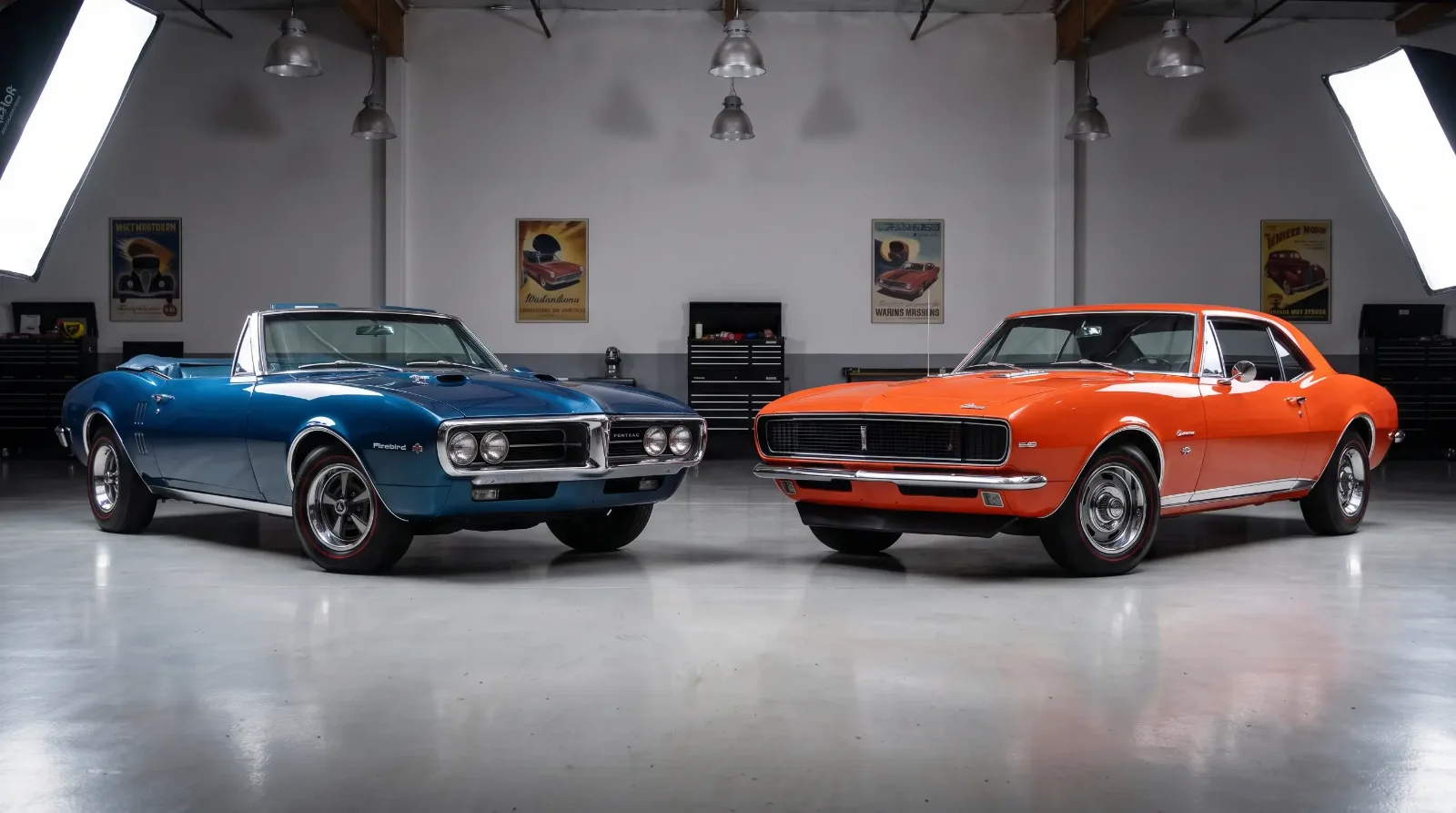
Every Pontiac forum has a version of this thread eventually: someone posts a photo of a Firebird's firewall next to a Camaro's, points out how closely they match, and asks whether the Firebird was ever really its own car at all. The accusation is always the same word, badge engineering, and it gets thrown around like an insult that settles the matter on its own. It does not. The Firebird's relationship to the Camaro is more complicated than a rebadge job, and understanding the real f-body badge engineering debate means separating what Pontiac genuinely changed from what it simply inherited.
Car Features
6 min read
The GM Badge-Engineering Debate
Was the Firebird ever more than a rebadged Camaro? A look at what Pontiac actually changed, and what it simply inherited, across the classic F-body era.
The accusation and why it persists
Badge engineering, properly defined, means taking one car and selling it under a different name with cosmetic changes only, no meaningful engineering distinction underneath. GM did plenty of that in later decades, and the accusation sticks to the Firebird because the underlying complaint is not baseless. The Firebird did launch five months after the Camaro, riding on the same unibody, the same floor pans, and much of the same basic architecture that Chevrolet had already tooled up. Anyone looking for evidence that Pontiac's pony car was an afterthought assignment handed down from corporate rather than a from-scratch design will find plenty of it in that timeline alone.
The persistence of the debate says something about brand loyalty too. Pontiac buyers have spent decades insisting their car was meaningfully different, and Camaro buyers have spent just as long enjoying the chance to needle them about it. Neither side is arguing in good faith about the engineering itself most of the time, they are arguing about identity.
It also helps that the accusation is easy to make and hard to fully rebut in a forum post. A photo of two firewalls looks like proof at a glance, and proving the counterargument requires actually knowing what a Pontiac spring rate spec looked like against a Chevrolet one in a given model year, which is a much harder thing to screenshot. The debate survives partly because one side of it fits in a single image and the other requires an actual parts catalog.
What Pontiac actually changed
Here is where the simple "rebadge" framing falls apart. Pontiac's engineers, working under John DeLorean's division leadership in the Firebird's early years, made real changes to how the shared platform behaved on the road. Spring rates, bushing durometer, and anti-roll bar sizing were tuned differently than Chevrolet's specifications, chasing a ride and handling character Pontiac wanted distinct from the Camaro's. Sheet metal above the beltline, the dashboard architecture, the instrument cluster, and the entire front and rear styling treatment were Pontiac's own work, not shared tooling with a different grille bolted on.
That is a meaningfully different situation from true badge engineering, where a Buick and an Oldsmobile version of the same car might differ only in nameplate and trim level. The Firebird shared its skeleton with the Camaro but built its own face, its own cabin, and its own road manners on top of it, which is a real engineering effort even if it started from someone else's foundation.
Compare that to what happened elsewhere at GM in later decades, when divisions genuinely did share entire dashboards, entire drivetrains, and entire body panels with only trim level and grille inserts separating one nameplate from another. The Firebird never sank to that level of shared identity during its classic-era run, and the distinction matters when the same accusation gets leveled at cars that deserve it far more than the Firebird ever did.
The engines: separate identity, then convergence
The clearest argument against the badge engineering charge sat under the hood for most of the car's classic-era life. Through the 1960s and 1970s, Firebirds ran Pontiac's own engine family, the 326, 350, 400, and 455, built at Pontiac's engine plant and sharing essentially no internal parts with Chevrolet's small block and big block lines beyond common bolt patterns and basic engineering conventions. A Pontiac 400 and a Chevrolet 400 are entirely different engines that happen to share a displacement number, and that kind of divisional independence is the opposite of badge engineering.
The convergence critics point to came later. By the early 1980s GM had consolidated engine production hard enough that Firebirds increasingly ran Chevrolet-sourced V8s, and by the fourth generation the Firebird and Camaro were sharing the LT1 outright, engine for engine, with no Pontiac-specific alternative left. That later-era convergence is real, and it is the strongest piece of evidence badge engineering critics have, but it describes the car's final chapter, not its defining decades.
Verdict: badge engineering or real differentiation
Call it what it actually was: shared architecture with genuine divisional engineering layered on top, at least through the years most collectors care about. The Firebird did not spring from a blank sheet of paper, and pretending otherwise does the car no favors. But it also was not simply a Camaro wearing a different grille, not in its suspension tuning, not in its cabin, not in its styling, and for most of its classic-era run, not under the hood either. The debate covered more fully in the F-body chapter lays out just how far that differentiation went generation by generation.
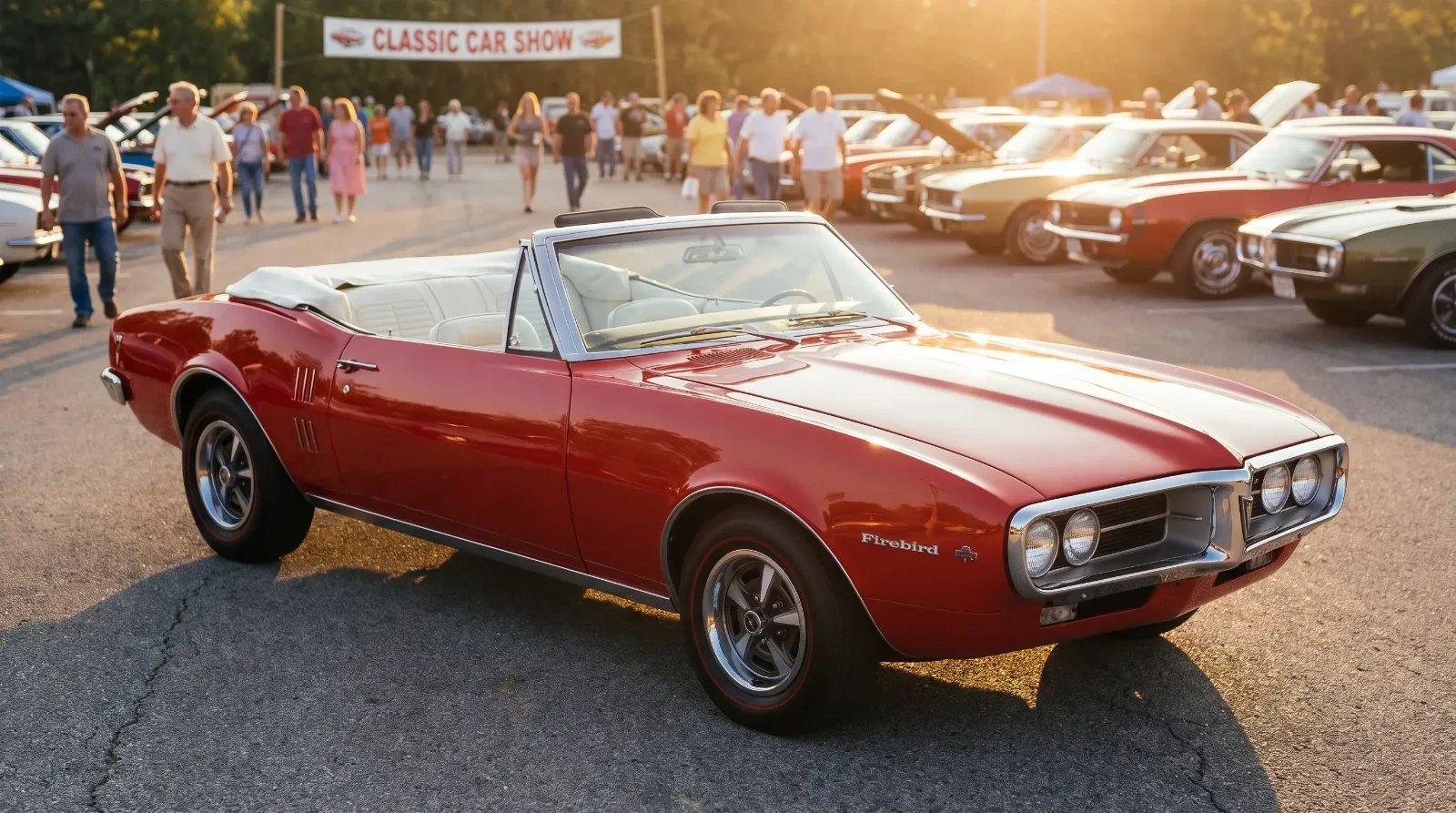
Where the argument gets genuinely interesting is in the details enthusiasts fight over hardest, the convertible question among them, which is exactly the ground covered in a companion piece on how Pontiac and Chevrolet handled that body style across the years both cars offered it.
"Badge engineering is when nobody bothered to change anything but the name. Pontiac changed the tuning, the face, the cabin, and for most of its life, the engine. Call the Firebird a lot of things, but don't call it lazy."
Patrick Walsh
The forum thread will keep happening, photo of one firewall next to another, same accusation, same word. It is worth having the actual answer ready the next time it comes up, because the honest one is more interesting than either side's shorthand admits.
Sources and notes
- The Summer of John Z: John DeLorean and the Pontiac Firebird - Ate Up With Motor
- How the 1967 Pontiac Firebird Was Born - Mac's Motor City Garage
- Pontiac Firebird - Wikipedia
- General Motors F platform - Wikipedia
- Differences Between F-Body Camaro and Firebirds - SS396.com
- 1967 Pontiac Firebird History - First Gen Firebird
Related Reading
Have a
Pontiac Firebird
for Sale?
Reach thousands of serious classic car collectors across the US.
Sell It Here →
Are You a Classic Car Dealer?
List your full inventory and connect with targeted classic car buyers.
Join as a Dealer →

About the author
Patrick Walsh
Automotive journalist covering classic car shows, events, and the enthusiast community across North America.
Related Listings - Pontiac Firebird
Comments
Be the first to comment on this article.