
She found the Firebird before she found the Camaro, parked at the far edge of a county fairground under a tarp that had given up on one corner, letting rain trace a line down the driver's door for who knows how long. The seller wanted less than she expected, and when she asked why, he shrugged and said the Camaro version of the same year would have gone for twice that. She bought the Firebird anyway, mostly because the shaker hood had caught her eye before the price tag did, but the seller's shrug stayed with her longer than the car itself. It is the kind of moment that explains more about Firebird Camaro values than any spreadsheet could.
Car Features
6 min read
Firebird vs Camaro Values Today
Two cars built on the same platform still walk away from each other in value, and the gap has more to do with mythology and documentation than with what is under the sheet metal.
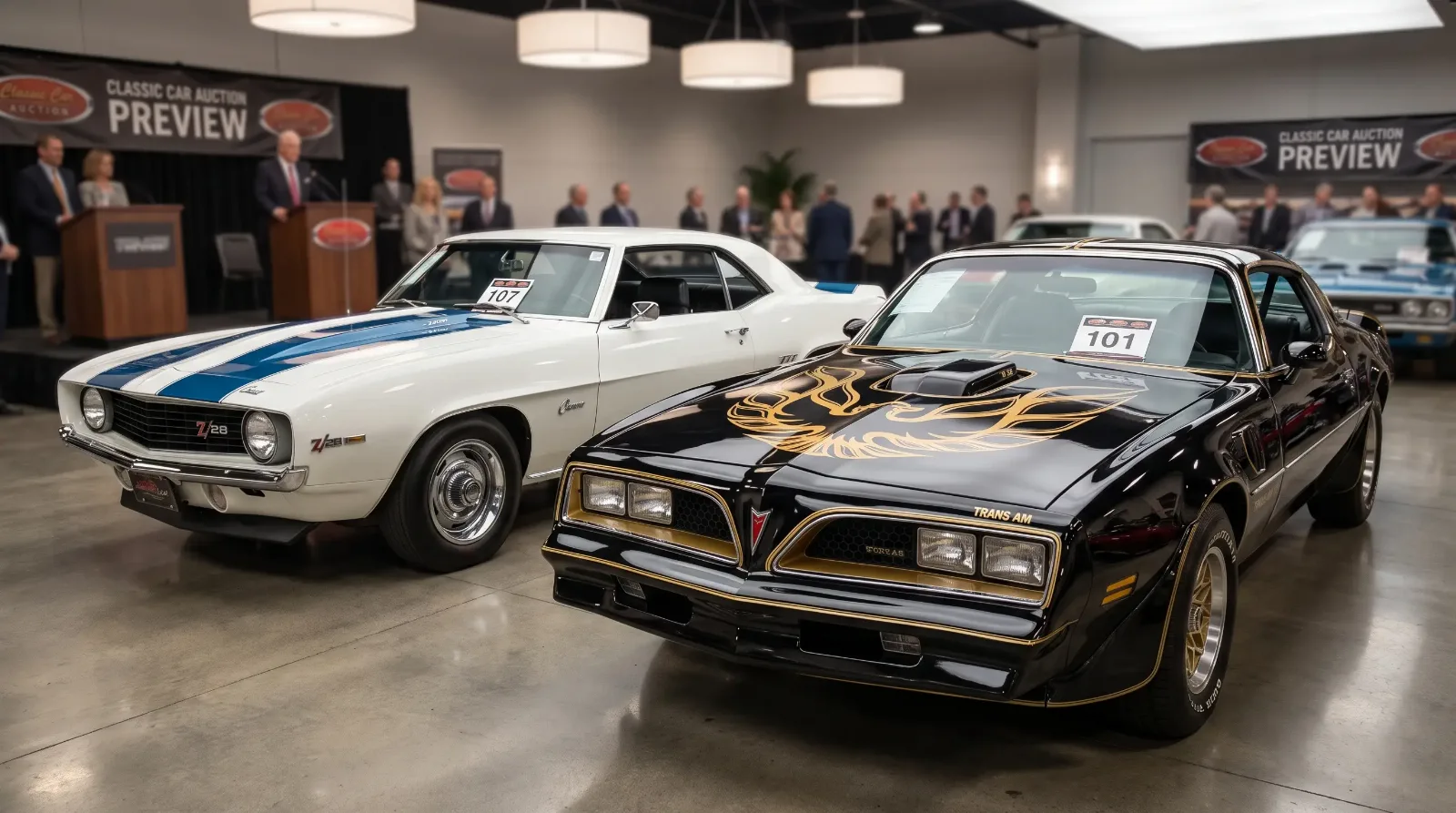
Why identical bones price so differently
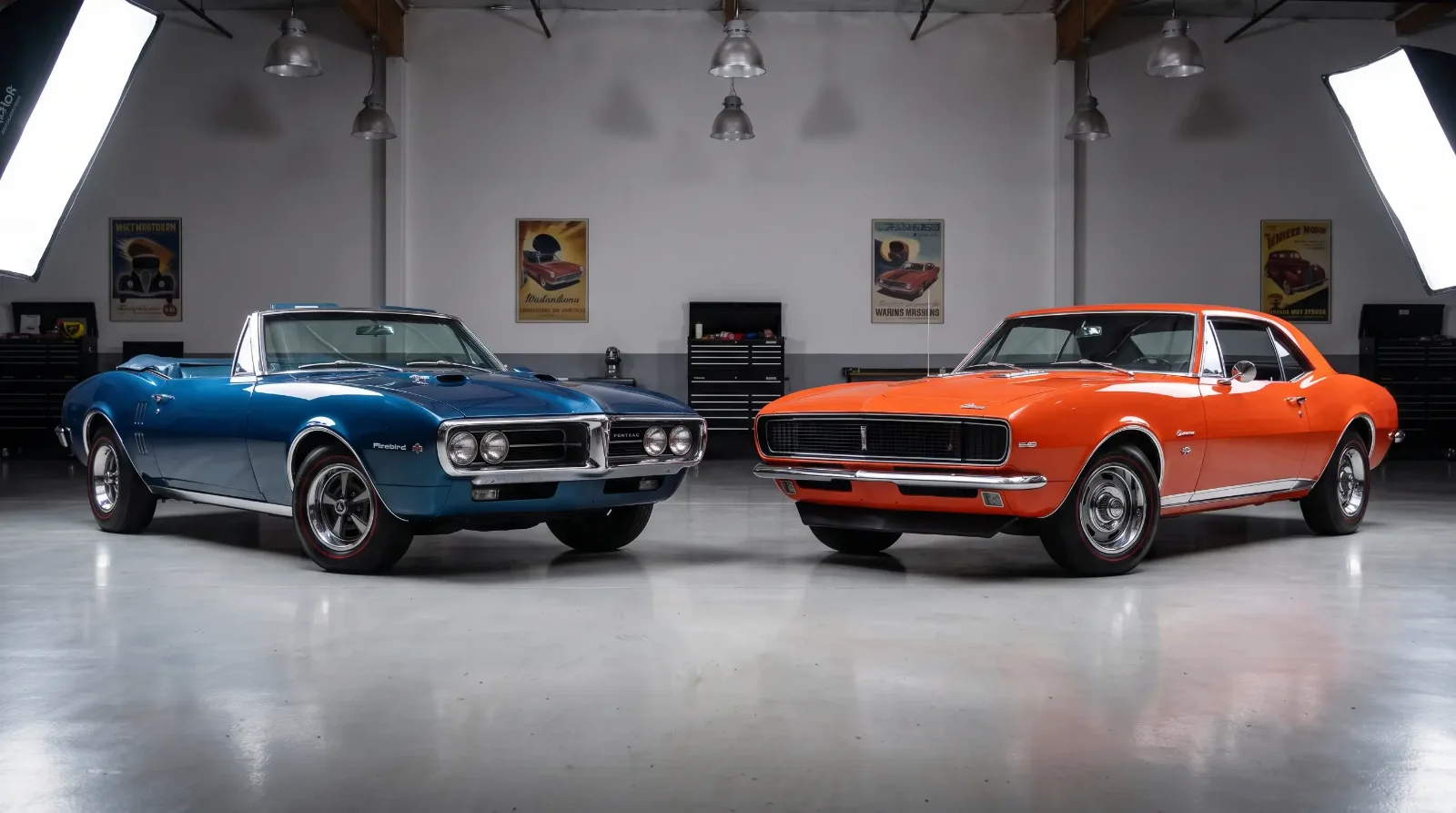
The two cars share a structure, as anyone who has spent time under one knows, and yet the market has never treated them as equals. Part of it is simple production math: Chevrolet built the Camaro in far greater numbers across most of the F-body's run, which means good original Camaros are easier to find today, and scarcity alone pushes certain Firebird trims higher when the numbers are actually rarer. Part of it is cultural weight that has nothing to do with build sheets. The Camaro rode into the muscle car mythology on the back of the Z/28 and decades of drag strip folklore, while the Firebird carved out its own identity through the Trans Am, a car that became inseparable from a specific strain of 1970s American cool that Pontiac's marketing team could not have engineered if they had tried.
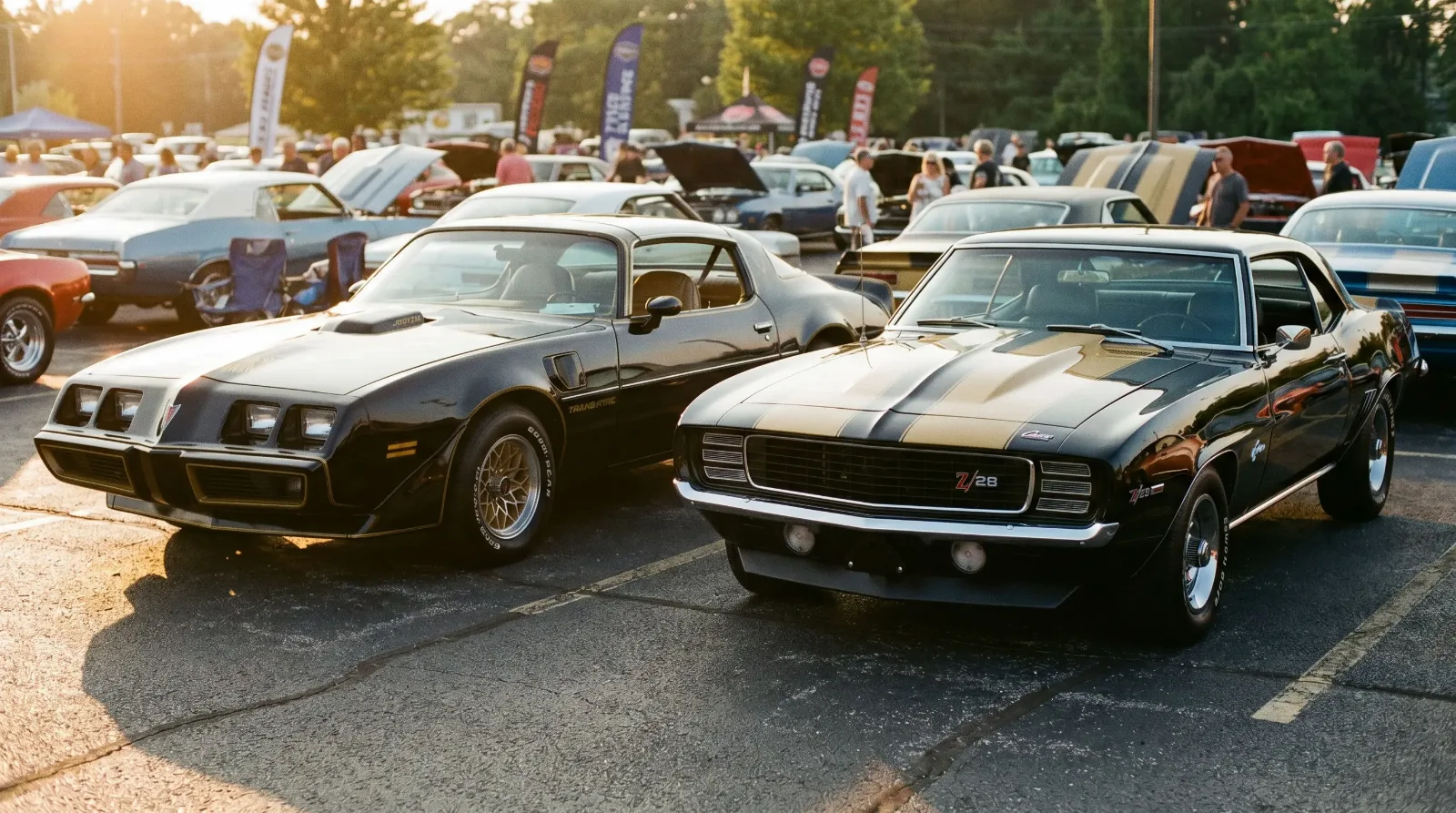
That cultural weight cuts both directions in the auction results. A numbers-matching Ram Air IV Firebird can outprice a comparable Camaro of the same year, while a base six-cylinder Firebird coupe will often sit unloved next to Camaros of similar spec that move faster simply because more buyers are actively hunting for Camaros in that price bracket.
Documentation matters more here than in almost any other muscle car comparison. A Firebird with a broken paper trail, no window sticker, no PHS documentation, and a vague ownership history gets punished harder in the marketplace than an equally undocumented Camaro, precisely because Firebird buyers tend to be more specialized and more skeptical. They know which trims get faked, they know what a real Ram Air hood looks like versus a reproduction, and they price accordingly. Camaro's broader buyer pool absorbs some of that risk simply through sheer number of transactions.
Where Firebird pulls ahead
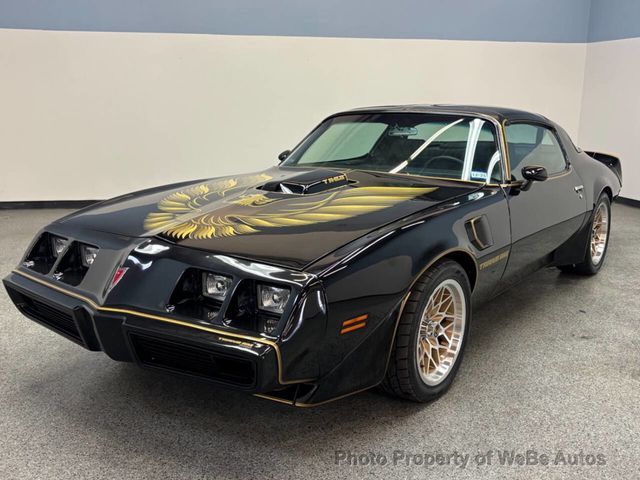
Trans Am models, particularly the black and gold Special Edition cars that rode the Bandit wave after 1977, occupy a place in the market that Camaro simply does not have an equivalent for. That single film turned an already strong performance package into a cultural touchstone, and pricing on well-documented Special Edition Trans Ams has reflected that ever since, often commanding a real premium over a mechanically similar Camaro Z/28 from the same year, with top-condition Special Edition cars reaching well into six figures at major auctions. The shaker hood scoop, the screaming chicken hood graphic, and the whole visual language Pontiac built around the Trans Am created a recognizability that translates directly into bidder enthusiasm at auction.
Firebird also benefits from being, in the eyes of a certain buyer, the rarer choice simply because fewer people default to shopping for one first. When two equally clean cars sit side by side at a show, the buyer who already knows they want a Pontiac will pay to get exactly that, and there are fewer of those buyers competing against each other than there are Camaro shoppers bidding one another up.
Where Camaro still wins
None of that erases the Camaro's advantages. The Z/28's motorsport pedigree runs deeper and further back, its association with Trans-Am series racing giving it a documented competition history that carries real weight with serious collectors. Parts support is broader and cheaper across nearly every category, from reproduction sheet metal to interior trim, which keeps restoration costs lower and resale liquidity higher. A clean, honest Camaro is simply easier to sell in a hurry than a clean, honest Firebird, and in a market where liquidity matters as much as headline price, that ease counts for something real.
Big block Camaros in particular hold a ceiling the Firebird never quite reached in the same years, since Pontiac's engine lineup, however strong on its own terms, never carried the same racing mythology that Chevrolet's 396 and 454 built over the same era.
There is also a simple network effect at work. More Camaro-specific clubs, more Camaro-focused parts suppliers, and more Camaro price guides mean a Camaro seller has an easier time proving what their car is worth to a skeptical buyer. A Firebird seller often has to work harder to establish comparable pricing, walking a buyer through Pontiac-specific documentation resources that are simply less centralized than what Camaro owners have built up over decades.
| Segment | General value tendency |
|---|---|
| Base coupes, six-cylinder or small V8 | Camaro usually sells faster; values close |
| Mid-tier V8 performance trims | Roughly comparable, condition dependent |
| Special Edition Trans Am (post-1977) | Firebird often commands a premium |
| Documented Z/28 or big block Camaro | Camaro often commands a premium |
"A Firebird and a Camaro can leave the same factory a week apart and still walk into two completely different rooms twenty years later. One of them carries a movie's worth of mythology on its hood, and the market has never stopped noticing."
Nora Beckett
What the gap means for buyers today
None of this settles the argument at the fairground, and it was never going to. What it does is give a shape to that seller's shrug, the quiet acknowledgment that two cars built on the same platform can still walk away from each other in value depending on trim, documentation, and the accident of which film crew showed up in 1977. Anyone weighing the two side by side owes it to themselves to read Firebird vs Camaro for the fuller history behind these price patterns, and for a look at how GM's habit of sharing hardware across divisions shaped both cars' identities, a companion piece lays out that argument in full.
She still has that Firebird. The tarp is gone, the paint is sorted, and she has never once regretted paying less for it than the Camaro crowd would have. Some bargains are not about the money at all.
Sources and notes
- Hagerty Media: Why is the last Pontiac Firebird worth more than the Chevy Camaro?
- Hagerty Media: The most valuable Camaros from every generation
- Hagerty Media: Why aren't 1993-2002 Camaros and Firebirds worth more?
- Bonhams Cars: 1978 Pontiac Trans Am, Smokey and the Bandit Universal promo car
- Hagerty Media: 5 Pontiac Firebirds That Deserve a Second Look
- Wikipedia: Pontiac Firebird
Related Reading
Have a
Pontiac Firebird
for Sale?
Reach thousands of serious classic car collectors across the US.
Sell It Here →
Are You a Classic Car Dealer?
List your full inventory and connect with targeted classic car buyers.
Join as a Dealer →
#trans-am
#chevrolet camaro
#pontiac firebird
#muscle car market
#classic car values
#F-Body Platform

About the author
Nora Beckett
Automotive features writer and photographer who tells the human stories behind the cars, from show fields to cross-country road trips.
Related Listings - Pontiac Firebird
Comments
Be the first to comment on this article.