
Pop the hood on a second-generation Firebird and the first thing you notice isn't the engine. It's the paint. Firebird Gen2 colors weren't an afterthought at Pontiac. Somebody in Warren, Michigan spent real time picking hues that would look right under a showroom light and even better parked outside a drive-in. I've repainted enough of these cars to know the factory list was better than most people give it credit for, and I've also seen enough bad "correct color" jobs to know why buyers get burned.
Car Features
6 min read
Firebird Gen2 Colors and Graphics: What's Factory, What's Not
Second-gen Firebird paint and graphics went through eleven model years of changes, and knowing the codes is the difference between buying history and buying a guess.
The Gen2 body arrived mid-year in 1970 with the Endura nose and a lower, wider stance than the first-gen car. Pontiac didn't just carry over the old palette. They rebuilt it around the new sheet metal, and the list changed almost every model year through 1981. That's eleven years of color codes, which is exactly why nobody should trust a seller who says "it's the original color" without a fender tag to back it up.
The palette Pontiac actually shipped
Early Gen2 cars leaned on straightforward solids: Cameo White, Polar White, Lucerne Blue, Verdant Green. Nothing wild yet. That changed once the Formula and Trans Am models started pulling buyers who wanted the car to announce itself in the parking lot. By the mid-1970s you had Carousel Red, Buccaneer Red, and Brewster Green Firemist on the order sheet, plus a run of gold and brown tones that dated the car to its decade the second you looked at it.
Firemist paints deserve their own mention. These were the metallic-flake colors, and they cost extra new for a reason: the base coat had to be laid down clean, then a tinted clear went over it, and getting an even flake pattern on a Firebird's curved quarters was not a five-minute job for the paint crew. A lot of restorers today skip the flake step to save money. That's fine if you're building a driver. It's not fine if you're calling the car numbers-matching correct.
| Model years | Notable colors | Common trim tie-in |
|---|---|---|
| 1970-1972 | Cameo White, Lucerne Blue, Verdant Green | Base Firebird, Esprit |
| 1973-1975 | Buccaneer Red, Admiralty Blue, Brewster Green Firemist | Formula, early Trans Am |
| 1976-1978 | Carousel Red, Cameo White w/ blue graphics, Goldenrod Yellow | Trans Am Special Edition, Formula |
| 1979-1981 | Starlight Black, Solar Gold, Yellow Bird package | 10th Anniversary Trans Am, Turbo Trans Am |
The screaming chicken changed everything
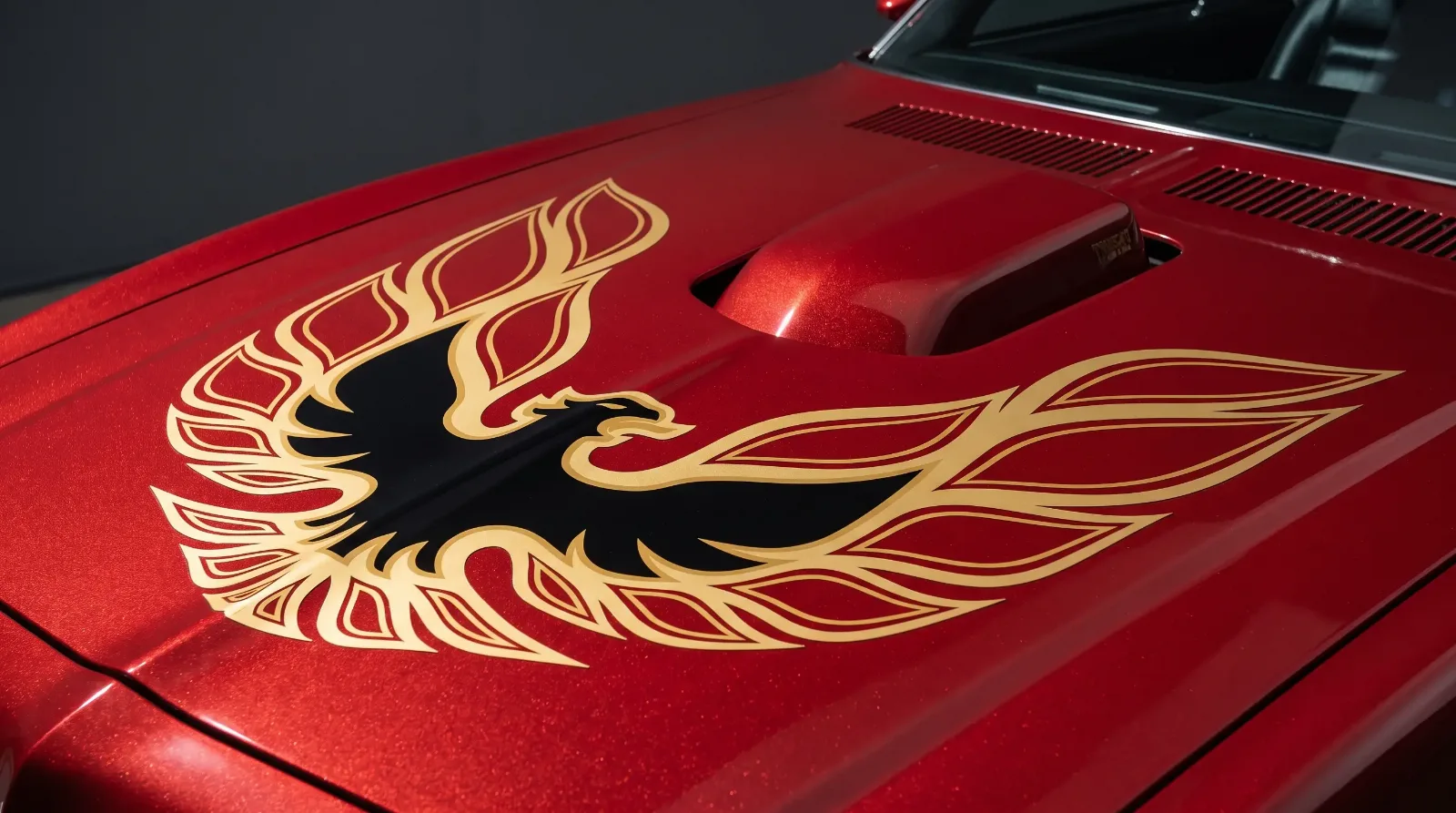
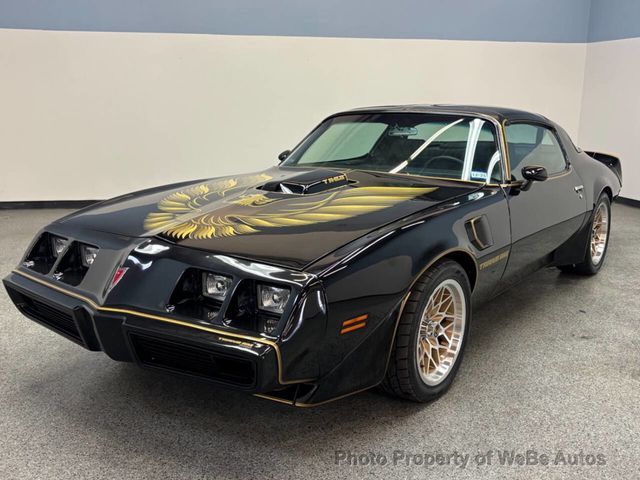
Graphics did as much work as paint on these cars, and the biggest one is the hood decal everybody calls the screaming chicken. Pontiac's actual name for it was the Trans Am hood bird, and it showed up as a factory option, code WW7, starting with the 1973 model year. It got bigger and louder every year after that. By 1976 it stretched across the whole hood, and by the end of the decade it was arguably more recognizable than the car underneath it.
The bird wasn't universal. Plenty of Formula and base Firebird buyers skipped it entirely and ran clean hoods with just pinstriping or none at all. That matters for buyers now because a hood bird added to a car that never had one from the factory is an easy tell once you check the build sheet against what's sitting in the driveway.
What to check before you trust a "correct" color
Every Gen2 Firebird left the factory with a body tag stamped with the paint code. That tag is your reference point, not the seller's memory. Cross-check the code against the trim tag decoder for the model year, because Pontiac reused some numeric codes across different years for different colors. A car repainted in the "wrong right" color still looks fine in photos. It just isn't correct, and correct is what pays at resale.
Overspray is the other giveaway. Open the doors, check the jambs, check under the trunk weatherstrip. Factory paint stopped at specific lines because the body was painted before final assembly. A repaint job done with the doors closed leaves telltale overspray shadows that a factory line never would have produced.
"Color sells the car from ten feet away, but the tag under the hood is what tells you if you're buying history or buying a guess."
Mike Sullivan
Why the color story still matters for buyers
None of this is trivia for its own sake. The paint and graphics on a Gen2 car are half of what a buyer is paying for, especially once you get into Trans Am and Formula territory where the graphics package was part of the ordering decision, not an afterthought. Get familiar with the second-gen Firebird as a whole platform before you specialize into colors, because the body changes across 1970 through 1981 affected which colors and graphics packages were even available in a given year.
If you want the collector-value side of this same generation, there's a companion piece that goes deeper into what actually moves prices at auction. Read that one after this, because color correctness and collector value are two sides of the same coin on these cars. Get the color story wrong and the value story falls apart with it.
Bottom line from someone who has sanded down more than one "matching numbers" hood: know the code before you fall for the color.
Sources and notes
- How the Pontiac Trans Am's Screaming Chicken got its wings, Hagerty Media
- The History of the Pontiac Trans Am Hood Bird, Classic Industries
- The Phoenix-like Rise of Pontiac's "Screaming Chicken", ClassicCars.com Journal
- Pontiac Firebird, Wikipedia
- What Kind of Bird Is on the Pontiac Firebird, Blue Water Auto Restoration
Related Reading
Have a
Pontiac Firebird
for Sale?
Reach thousands of serious classic car collectors across the US.
Sell It Here →
Are You a Classic Car Dealer?
List your full inventory and connect with targeted classic car buyers.
Join as a Dealer →
#pontiac firebird
#classic car paint
#buyers guide
#Firebird Gen2
#Trans Am graphics
#screaming chicken decal

About the author
Mike Sullivan
Detroit-area muscle car enthusiast and restoration specialist with three decades of hands-on experience working on American iron.
Related Listings - Pontiac Firebird
Comments
Be the first to comment on this article.