
Every generation of Firebird has a defender, but the numbers keep landing on the same answer. The gen2 Firebird collectible market has held up better and grown faster over the past decade than either the first-generation cars or the boxier third-gen models that followed it. That's not nostalgia talking. That's what auction results actually show when you line up comparable sales across body styles and years.
Car Features
6 min read
Why Gen2 Is the Definitive Firebird Collectible
Auction data shows the gen2 Firebird outperforming other generations, but only the documented, unmodified cars are carrying that value.
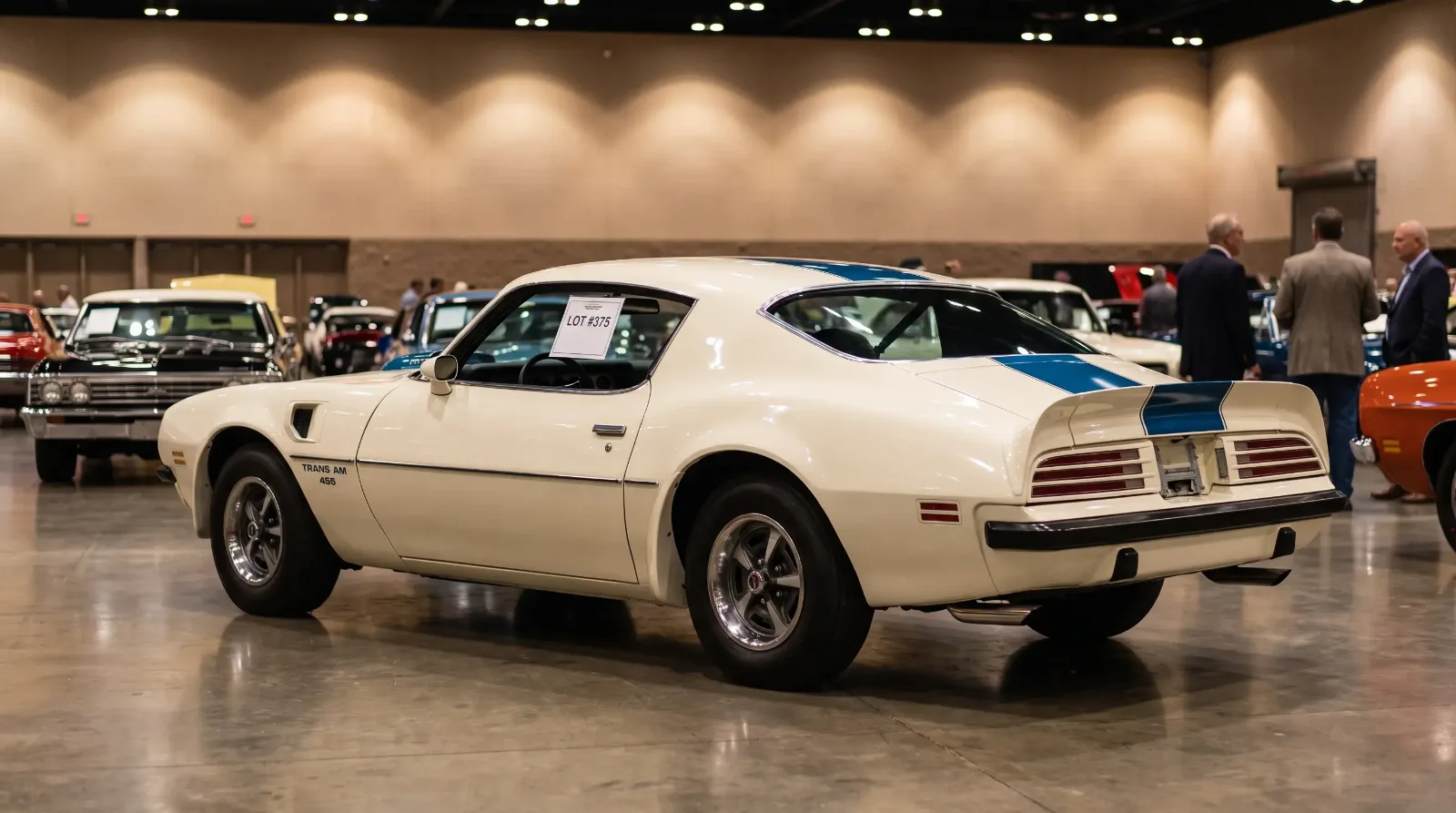
I track transaction data for a living, and the pattern with 1970 through 1981 Firebirds is consistent enough to call it a trend rather than noise. Trans Am and Formula cars from this run consistently outperform base and Esprit trims at the same mileage and condition grade, sometimes by a factor of three or four. That gap is the whole story if you're deciding where to put money.
Why this body style separated from the pack
Pontiac kept the Gen2 platform in production for twelve model years, which is unusually long for a performance car of that era. That longevity means the design had to evolve to stay relevant, and it did, through the Endura nose update, the shaker hood scoop, the T-top option, and eventually the turbocharged 301 in the final years. Buyers today are effectively choosing from several distinct eras of the same body, and each era has its own collector base.
The 1977-1979 Trans Am years, boosted by film and TV exposure, remain the volume leader for public sale counts. But the earlier 1973-1974 Super Duty cars command the strongest per-unit premiums because production numbers were far lower and the drivetrain is genuinely rarer. Scarcity and cultural visibility are pulling in different directions here, and that's exactly the kind of divergence a market analyst wants to see before making a call.
| Segment | Typical condition range | Price trend, last 5 years |
|---|---|---|
| Base/Esprit six-cylinder | Driver to good | Flat to slightly up |
| Formula 400/455 | Good to excellent | Steady climb |
| Trans Am, standard | Good to excellent | Strong climb |
| Trans Am Super Duty 455 | Excellent to concours | Sharpest climb of the group |
Region matters too, more than a lot of buyers factor in. Cars that spent their working life in rust belt states tend to show more hidden structural repair than their sale photos suggest, while sunbelt survivors, especially those with a single long-term owner, tend to command a premium once buyers verify the paper trail. I've seen two cosmetically similar Formulas separated by ten thousand dollars purely because one had a clean southwestern ownership history and the other didn't.
What the auction floor actually rewards
Documentation moves prices more than most sellers want to admit. A Trans Am with a build sheet, a Protect-O-Plate, and matching casting numbers on the block and heads will consistently beat an undocumented twin with identical cosmetics. I've watched near-identical looking cars split by 20 to 30 percent purely on paperwork depth. If you're buying to hold value, budget for the documentation search as seriously as you budget for the mechanical inspection.
Color and options also stratify the market inside this generation more than people expect. A factory Firemist color with the right graphics package tends to sell ahead of the same car in a common solid, even when both are mechanically identical. That's a collector preference, not a mechanical one, but it shows up in the sale price every time.
There's also a generational shift happening on the buyer side that's worth tracking. The people bidding on these cars now increasingly weren't old enough to buy one new, which means the emotional pull is coming from movies, magazines, and secondhand nostalgia rather than a direct memory of the showroom. That shift tends to favor the most visually iconic years, the mid-to-late 1970s Trans Ams with the biggest graphics packages, even when the earlier Super Duty cars are objectively rarer and better engineered. It's a market quirk worth knowing before you assume rarity alone sets the price.
Where the risk actually sits
The biggest mistake I see buyers make with this generation is paying Trans Am money for a car wearing Trans Am parts. Reproduction shaker hoods, W72 decals, and spoiler kits are all available new, and a base Formula dressed up to look like a Trans Am can fool a casual buyer at a glance. This isn't a small gap. It's the difference between an appreciating asset and a car that will lose money the moment you try to sell it honestly.
The other risk is rust hiding under fresh paint, especially in floor pans and trunk drop-offs, which is a chronic weak point on unibody Firebirds of this era. A car that looks like a strong buy in photos can turn into a five-figure repair bill once it's up on a lift. Get a pre-purchase inspection before you commit, full stop.
"Buy the paperwork, not the paint job. The paint fades from a photo in a week. The build sheet is what still means something in five years."
David Mercer
My actual call on this generation
If you're asking whether to buy into the gen2 Firebird right now, my answer is a qualified yes, weighted toward documented Formula and Trans Am cars in good original condition rather than heavily modified or re-created Trans Am clones. The base cars are fine drivers but don't show the same appreciation curve, so don't buy one expecting it to behave like an investment.
For buyers actively shopping this generation, there are usually several classic Firebirds for sale worth cross-shopping by documentation quality before price. Compare build sheets first, then negotiate. If you want the fuller design history behind why this body lasted twelve model years and evolved the way it did, keep reading the series for the redesign story that started it all.
The short version: this generation earned its collector status through documented rarity, not just looks. Buy accordingly.
Sources and notes
- 1974 Pontiac Firebird Trans Am Super Duty, Audrain Auto Museum
- 1974 Pontiac Trans Am SD-455, Sports Car Market
- 1973-1974 Pontiac Firebird and Trans Am Super Duty, Horsepower Memories
- Pontiac Firebird, Wikipedia
- Super-Rare Super Duty: 1974 Trans Am, autoevolution
- How the Pontiac Trans Am's Screaming Chicken got its wings, Hagerty Media
Updated October 6, 2026: Corrected the length of the run: the second-generation Firebird lasted twelve model years, 1970 through 1981.
Related Reading
Have a
Pontiac Firebird
for Sale?
Reach thousands of serious classic car collectors across the US.
Sell It Here →
Are You a Classic Car Dealer?
List your full inventory and connect with targeted classic car buyers.
Join as a Dealer →

About the author
David Mercer
Classic car market analyst with two decades of experience tracking collector car valuations, auction results, and investment trends.
Related Listings - Pontiac Firebird
Comments (1)
J
Jerry Olszewski
5 days ago
Some historical context on the 1973 Super Duty figure, since it is so often read as a verdict on demand. The low 1973 total was not purely a matter of buyers declining an expensive option. Mind you, the SD-455 reached dealers late in that model year, after Pontiac had to revise the engine to get it through emissions certification, so the car simply had far less time on sale. The 1974 cars had a full year and sold several times as many. Incidentally, that is why the two years should not be compared as if demand alone set them apart.
Jerry, that timing matters for anyone reading the 1973 total as a demand signal. It isn't one. The market today doesn't care much why a car is scarce, though. A documented 1973 SD-455 trades on the count of survivors, not on the reason the count is low, and that count is what bidders pay for. The history helps a buyer mostly in spotting sellers who oversell rarity.