
Walk a swap meet long enough and you'll hear somebody call any second-gen Firebird a Trans Am, whether it's got the shaker hood or a rubber floor mat and a straight six. That's the problem with a nameplate that ran four trim levels for twelve years. The firebird gen2 trims split into four distinct cars, and knowing which one you're looking at, or which one you actually want, changes everything about what you should pay and what you should expect when you get it home.
Car Features
6 min read
Esprit, Formula, Trans Am: The Gen2 Tiers
Base, Esprit, Formula, and Trans Am were built for four different buyers. Here is how to tell them apart and which one is worth your money today.
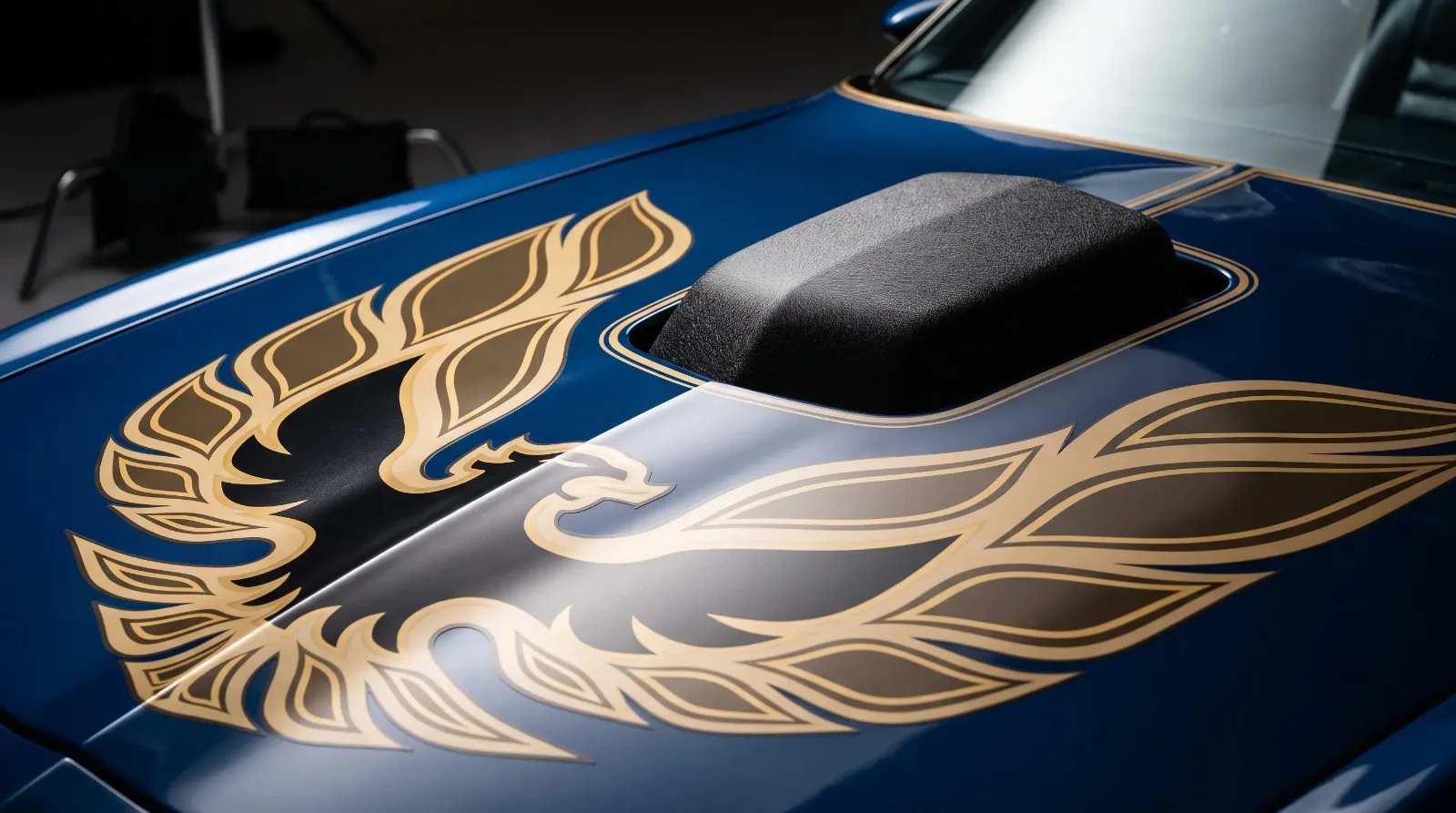
I've had all four through my shop at one point or another. Base cars, Esprits, Formulas, and Trans Ams don't just wear different badges. They were built to different briefs, and Pontiac was pretty upfront about who each one was for.
The base Firebird: the one nobody remembers
The plain Firebird, no suffix, no special package, was the entry point starting in 1970. Six-cylinder standard, small-block V8 optional, vinyl bench or bucket seats depending on the year, and none of the visual cues that make the other three easy to spot in a parking lot. Nobody bought one to be seen. They bought one because it was the cheapest way into that long hood and short deck shape, and a lot of them got optioned up piecemeal over the years by owners chasing a Formula look on a base-car budget.
These are the cars nobody restored for decades. That's starting to change, because a clean base Firebird with a V8 and a four-speed is an honest, light, fun car that doesn't carry Trans Am money. If you want a second-gen without the premium, this is where I'd point a first-time buyer.
Esprit: Pontiac's idea of a personal luxury coupe
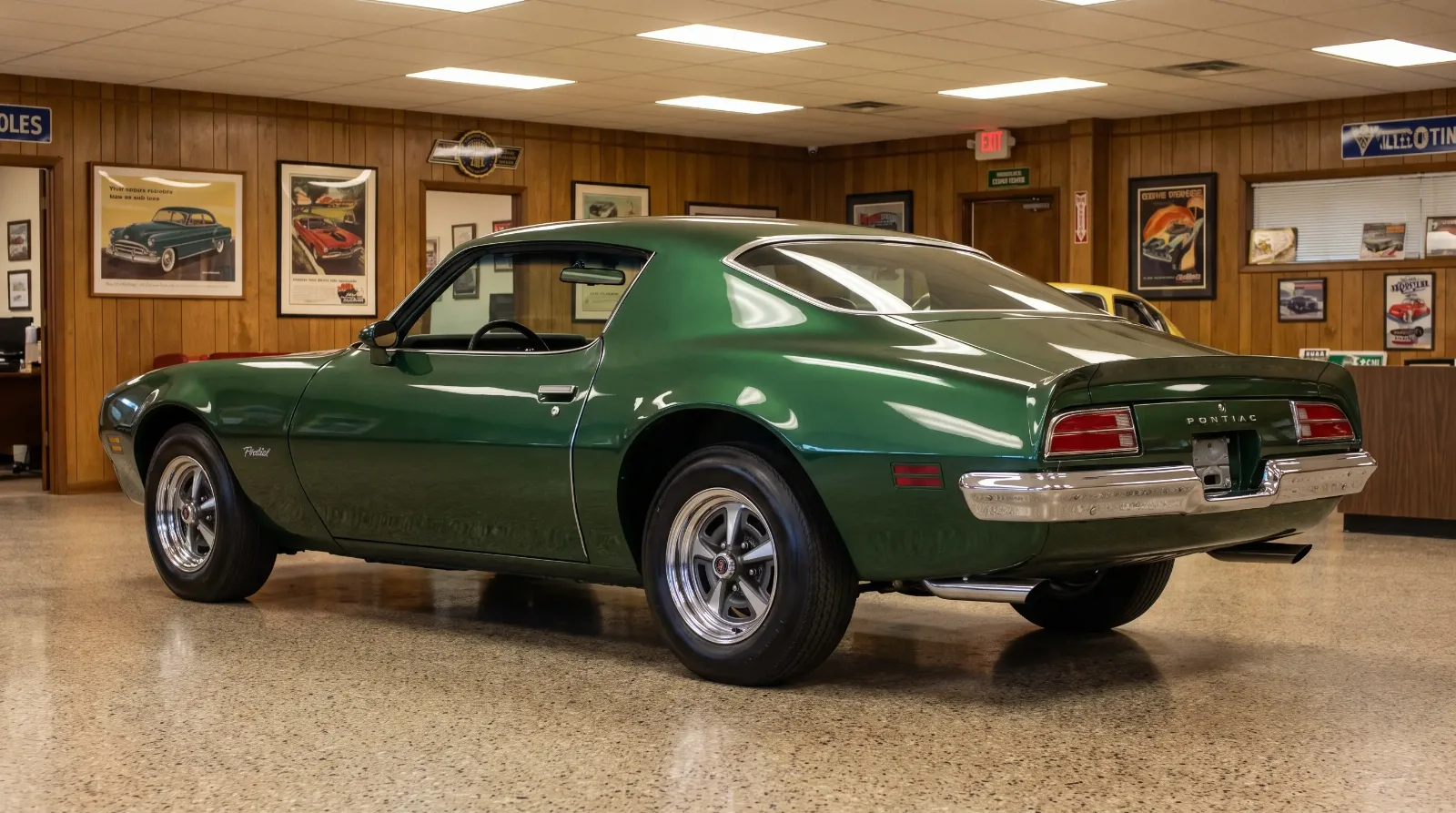
Esprit sat above the base car and aimed at a buyer who wanted the shape without the noise. Softer suspension tune, more sound deadening, upgraded interior trim, wood-look dash accents in some years, and a quieter exhaust. It wasn't slow by default; you could still order a decent V8. But the whole car was tuned toward comfort, not lap times.
I get buyers who assume Esprit means "grandma's car" and dismiss it. That's a mistake if you actually want to drive the thing every week. The softer bushings and better sound insulation make an Esprit a genuinely nicer daily proposition than a stiffly sprung Trans Am, and they're usually priced like it, which is to say reasonably.
Formula: the driver's Firebird
Formula split the difference between Esprit's comfort and Trans Am's spectacle. It got the functional dual-scoop hood (non-functional in some early years, functional Ram Air in others depending on engine and model year), a firmer suspension package, and Pontiac's better V8 options without the Trans Am's spoilers, decals, and price premium. No shaker scoop through most of the run, no screaming chicken hood decal, and a noticeably lower window sticker.
This is the trim I tell people to actually cross-shop against Trans Am. You get most of the mechanical substance, a hood that still looks purposeful, and none of the cosmetic tax that comes with the top trim's decal package and spoiler kit. Formula prices have crept up as buyers figured this out, but they're still the value play in the lineup.
Trans Am: the halo car and what it actually got
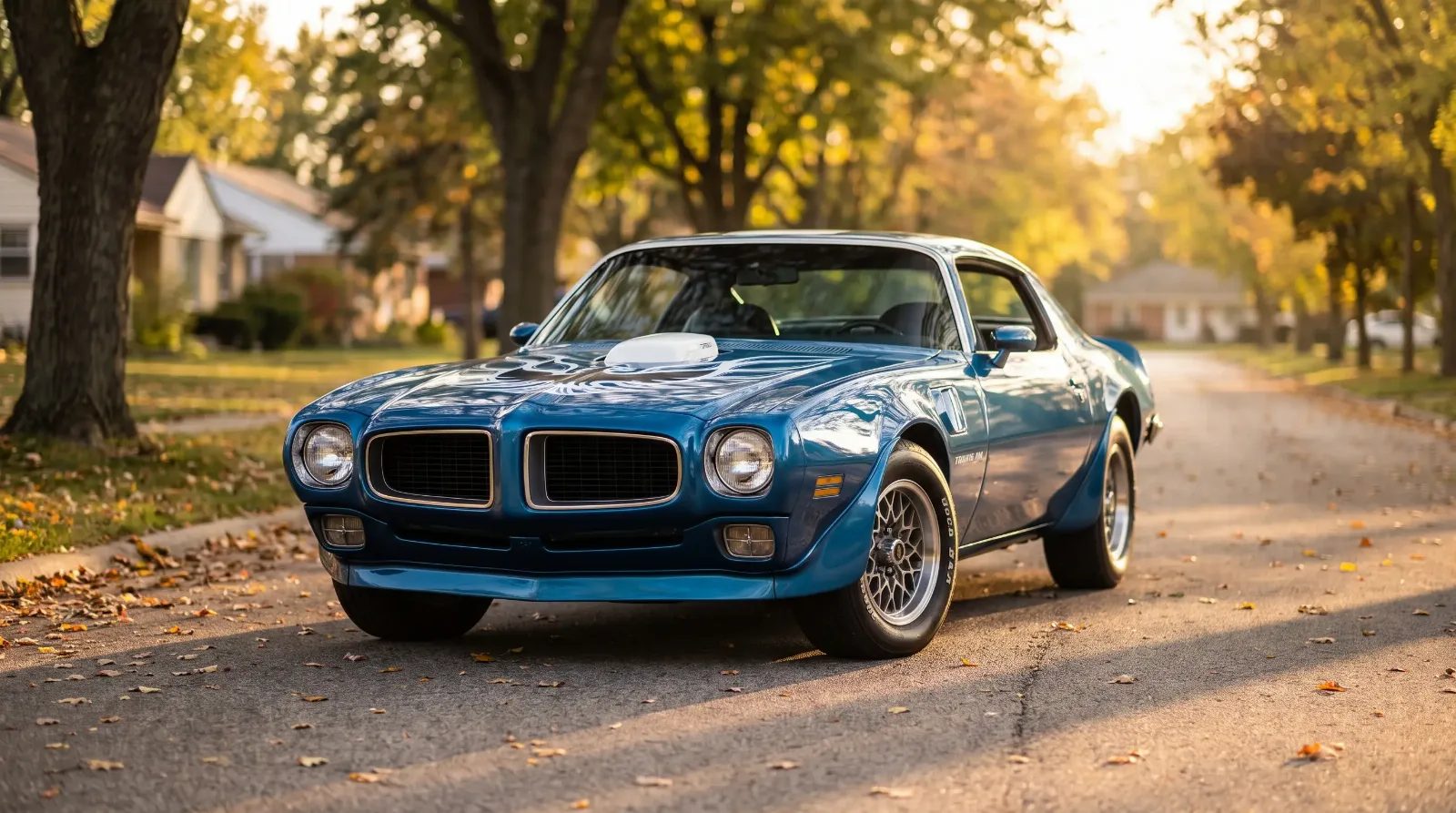
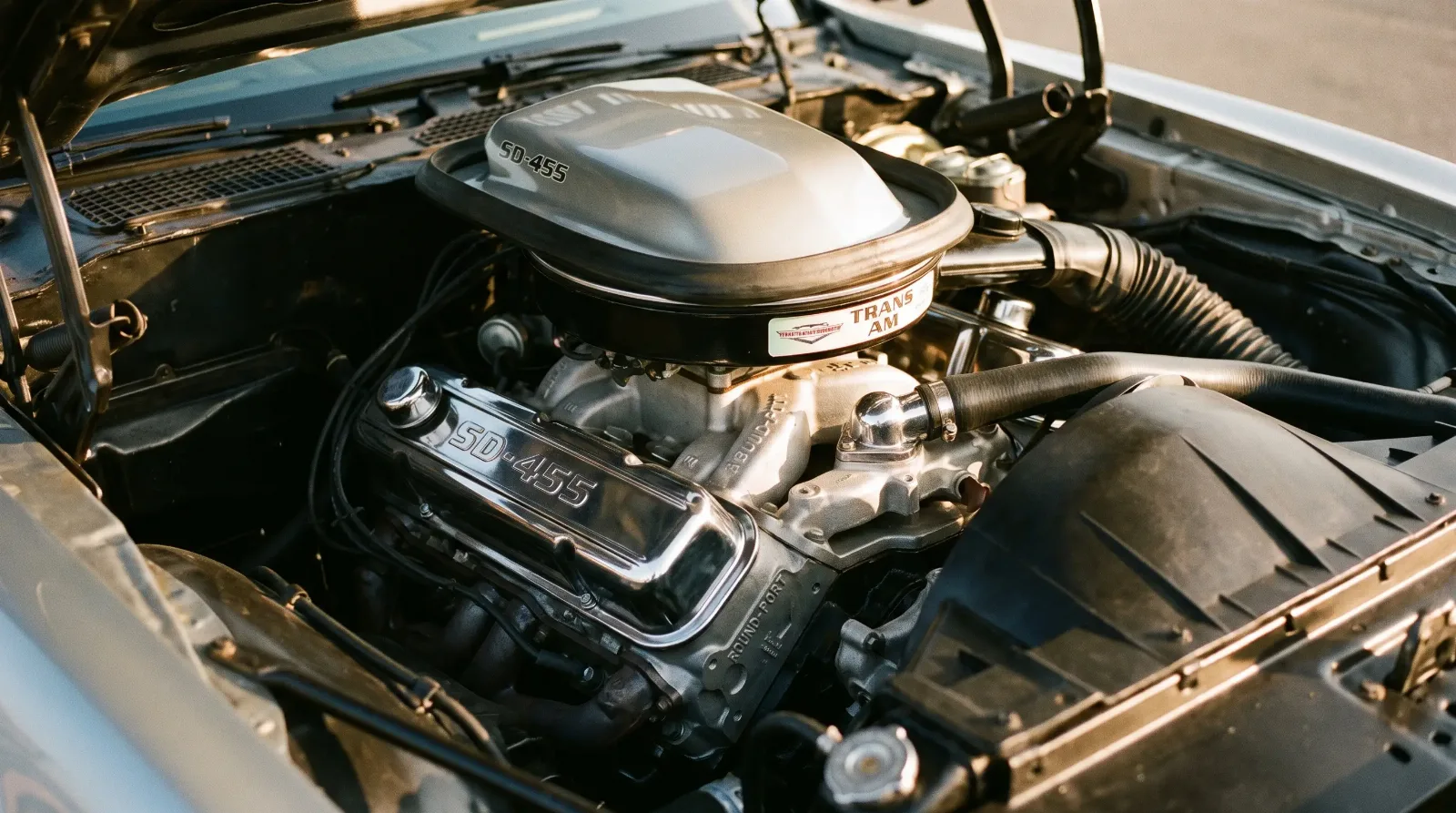
Trans Am carried the shaker hood scoop on the right engines, the front and rear spoilers, the screaming chicken decal (optional to delete in most years, and some buyers did), and Pontiac's best-available engine and suspension combination for the model year. It was the image car, and Pontiac built it to be photographed as much as driven, though the Super Duty 455 years proved it could back up the look with real hardware.
Trans Am is where the money is now, and it's also where the fakes and clones live. A four-speed W72 or SD-455 car is a different animal from a base 350 automatic dressed up with reproduction decals and a spoiler kit bolted on last decade. Documentation matters more on a Trans Am than on any other trim in this lineup, because the incentive to fake one up is highest here.
| Trim | Focus | Hood | Suspension tune |
|---|---|---|---|
| Firebird (base) | Entry price | Flat, no scoops | Standard |
| Esprit | Comfort, luxury cues | Flat, no scoops | Softer |
| Formula | Performance without the show | Dual-scoop | Firm |
| Trans Am | Image and top performance | Shaker (on qualifying engines) | Firmest available |
Where this actually matters is inspection day. On any of the four trims, check that the trim-specific pieces match what the car's build sheet or door tag says it left the factory with. A Formula hood swapped onto a base car, or a screaming chicken decal added to an Esprit, doesn't make the car something it wasn't. It just makes it harder to know what you're buying, and easier to overpay.
"I've had guys try to sell me a 'loaded Formula' that was really a base six-cylinder car with a Formula hood bolted on and a fresh coat of paint. Check the cowl tag before you check the options list a seller hands you. The tag doesn't lie, the seller might not know he's wrong."
Mike Sullivan
Which tier to buy today
If you want the cheapest way into the gen2 Firebird shape, buy a clean base car or Esprit and don't apologize for it. If you want to actually drive the thing hard on a back road without paying Trans Am tax, Formula is the smart buy right now. If you want the image, the spoilers, and the resale ceiling, Trans Am is still the one, but budget time and money for verifying it's genuinely equipped the way it's advertised, not dressed up to look that way.
None of these are wrong answers. They were built for four different buyers in period, and that's still true on the used market forty-plus years later. I've seen this play out from another angle with buyers chasing the top-of-the-line engine option instead of the trim badge, and the lesson is the same either way: know exactly what left the factory before you sign the check.
Sources and notes
- Pontiac Firebird (second generation) - Wikipedia
- Hitman's Pontiac Trans Am Site - Shaker Scoops 1970-1981
- Firebird Central - 1977-1981 Trans Am Shaker Hood Scoop
- 1970-1981 Pontiac Firebird/Esprit - 2nd Gen Guide
- 1970-1981 Pontiac Firebird/Trans Am - 2nd Gen Deep Dive
- Gateway Classic Cars - 2nd Gen Pontiac Firebird 1970-1981
Related Reading
Have a
Pontiac Firebird
for Sale?
Reach thousands of serious classic car collectors across the US.
Sell It Here →
Are You a Classic Car Dealer?
List your full inventory and connect with targeted classic car buyers.
Join as a Dealer →

About the author
Mike Sullivan
Detroit-area muscle car enthusiast and restoration specialist with three decades of hands-on experience working on American iron.
Related Listings - Pontiac Firebird




Comments (1)
D
Dave Scarpelli
2 months ago
Best advice in any article like this: if the seller gets defensive about an independent inspection, walk away.