
By 1973 most of Detroit had already thrown in the towel on big-inch performance. Insurance surcharges, tightening emissions rules, and gas prices heading the wrong direction had gutted the muscle car lineup that existed just three years earlier. Pontiac built the firebird super duty 455 anyway, right in the middle of all that, and it's the reason the Trans Am name still meant something when the rest of the segment went soft.
Car Features
6 min read
The 1973-74 Super Duty 455
While the rest of Detroit was detuning, Pontiac built a forged-bottom-end big block for the Trans Am. Here is what actually made the SD-455 different.
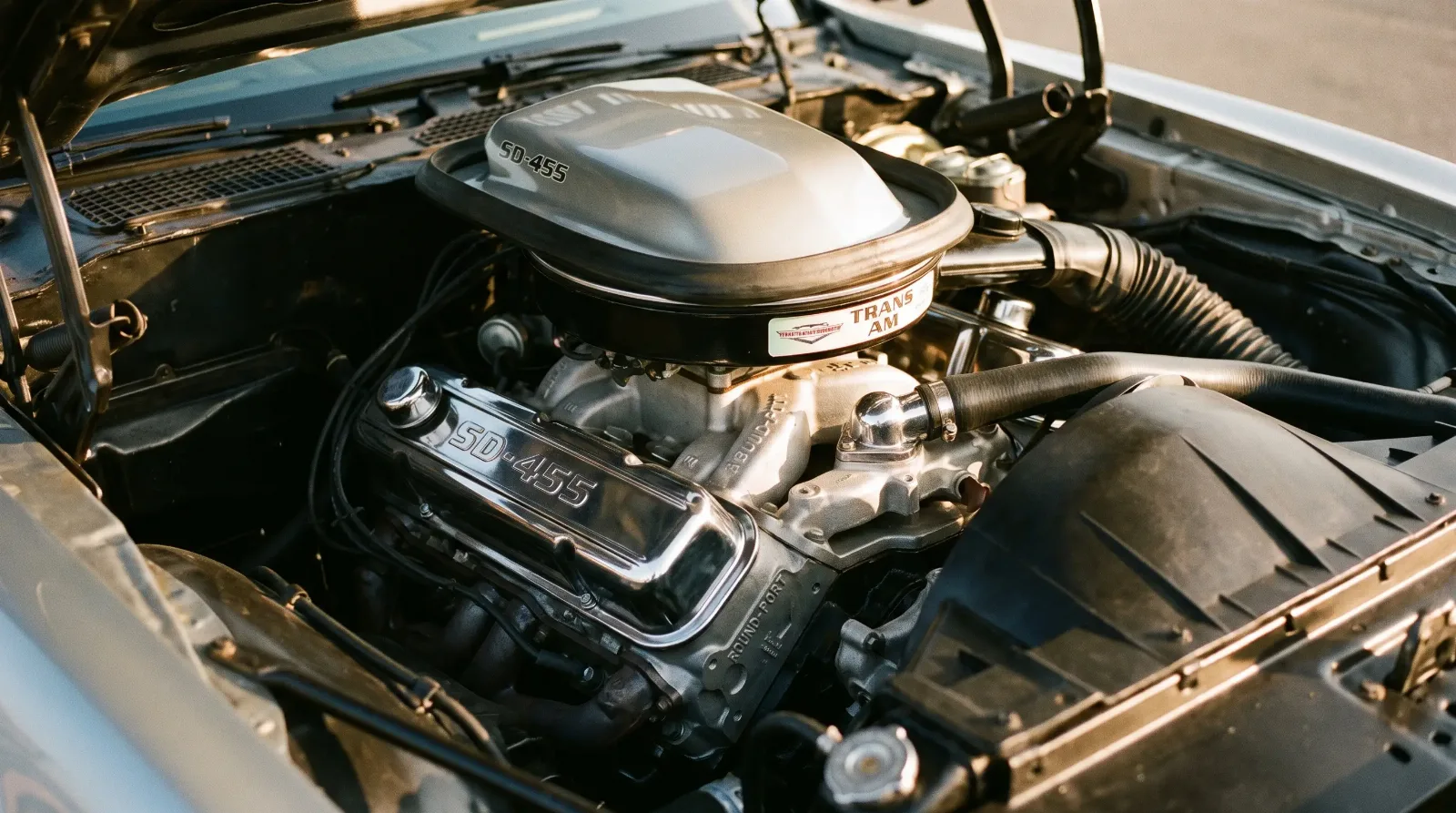
I've torn into a couple of these over the years, and they don't feel like a company playing out the string. They feel like an engineering department that got one more shot and used it.
Why Pontiac built a big engine when everyone else was shrinking
The Super Duty 455, internally the SD-455, wasn't a bored-out version of the regular 455 with a hotter cam. It got its own block casting with thicker main bearing webs, four-bolt main caps, a forged crankshaft and forged connecting rods where the standard 455 ran cast pieces, and a set of round-port cylinder heads that had more in common with Pontiac's earlier Ram Air engines than with anything else in the 1973 catalog. This was a real engineering effort at a moment when most manufacturers were detuning and calling it a day.
Part of the reason it existed at all: Pontiac's engineering staff, including John Delorean's successors on the performance side, pushed the SD-455 through as a way to keep the Trans Am's reputation alive while corporate mandates were strangling everything else. It shipped as the top engine option on both Firebird Formula and Trans Am for 1973 and 1974, and nowhere else.
What made it different under the valve covers
The 4-bolt main block and forged rotating assembly gave the SD-455 a durability margin the regular 455 didn't have, which mattered because Pontiac intended this engine to actually be driven hard, not just advertised. The round-port heads flowed noticeably better than the standard "D-port" 455 heads, and the SD-455 ran a more aggressive camshaft profile than the base big-block. Functional Ram Air induction fed the engine on Trans Am and Formula models equipped with the shaker hood scoop.
Output is where the story gets murky, and where I want to be straight with you rather than repeat a number I can't stand behind. Pontiac's early 1973 literature quoted the SD-455 at 310 hp SAE net, but that figure came from pre-production engines that hadn't yet cleared emissions certification. Once the EPA-mandated cam swap went in, the production engine settled at 290 hp SAE net, the number that stuck for both the 1973 and 1974 cars. That was already measured under the newer, more conservative SAE net standard that replaced the inflated gross ratings of the muscle car era, so on paper the SD-455 looks tame next to a late-1960s Ram Air IV. On the road, with real torque low in the rev range, it didn't feel tame at all.
| Spec | 1973 SD-455 | 1974 SD-455 |
|---|---|---|
| Displacement | 455 cubic inches | 455 cubic inches |
| Block | Special 4-bolt main casting | Special 4-bolt main casting |
| Rotating assembly | Forged crank and rods | Forged crank and rods |
| Heads | Round-port | Round-port |
| Availability | Formula, Trans Am | Formula, Trans Am |
| Rated output | 290 hp SAE net (production) | 290 hp SAE net |
1973 versus 1974: what actually changed
The two model years aren't identical under the hood. Emissions equipment tightened between the two years, and the camshaft and tuning were revised for 1974 to keep the engine compliant, which nudged the power and torque curves slightly. Some SD-455 cars also ran into a mid-year production hiccup in 1973 that limited how many of the earliest Trans Ams actually got the engine installed at launch, which is part of why 1973 SD-455 cars are considered scarcer than the 1974s: documented production breakdowns put 1973 at roughly 295 SD-455 cars total (Formula and Trans Am combined) against roughly 1,001 for 1974, despite both being low-production runs by any normal measure.
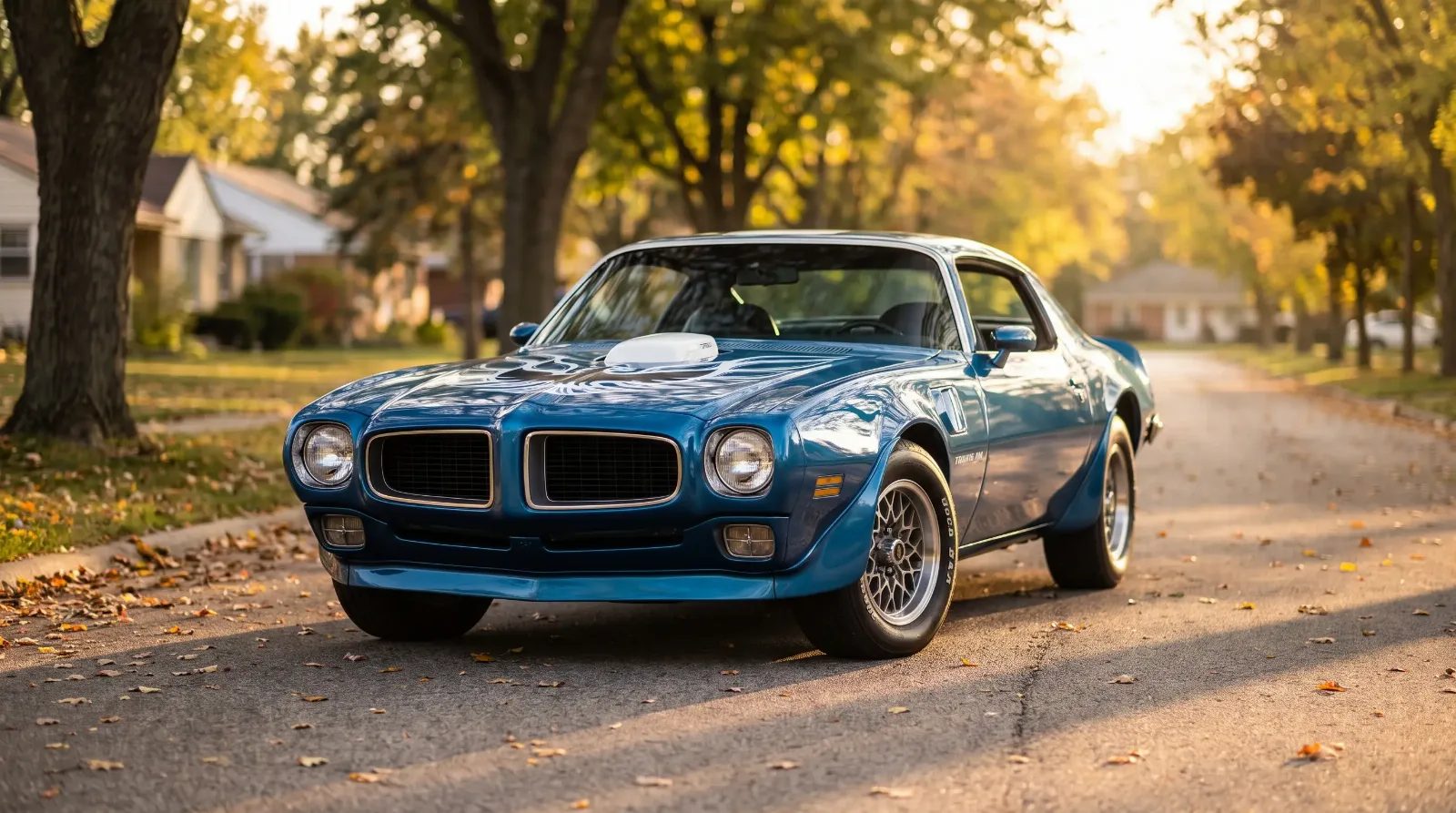
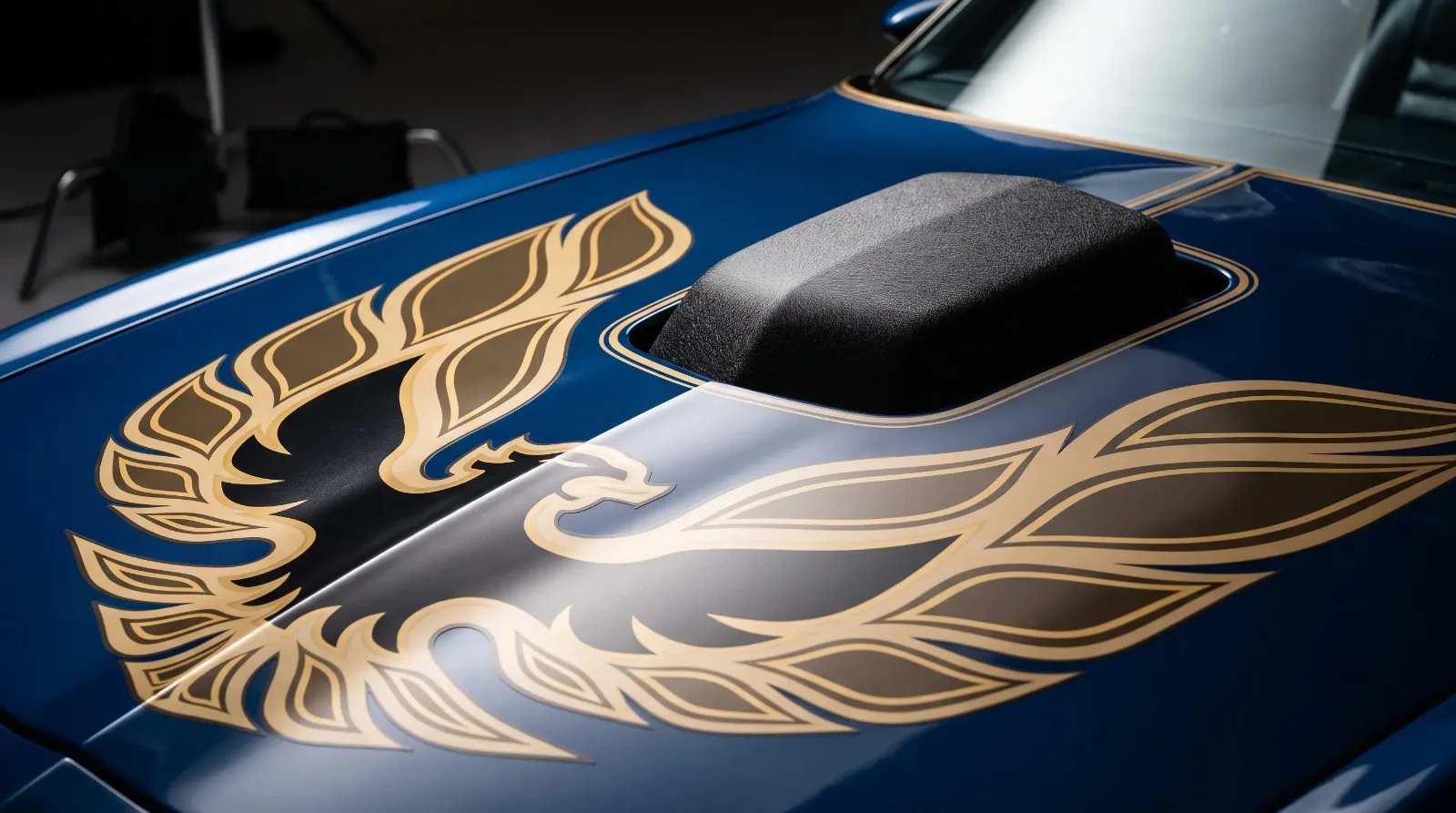
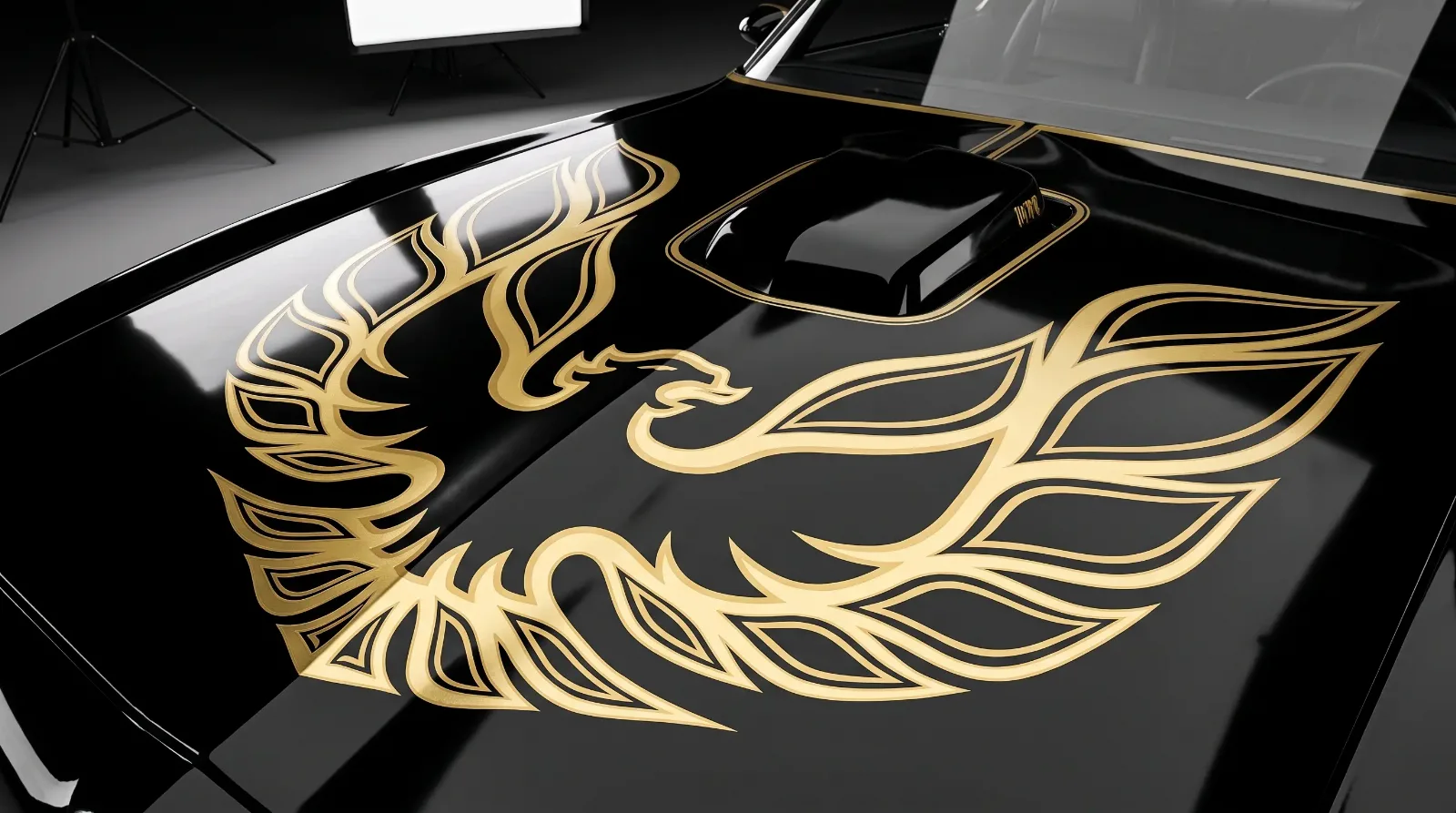
Visually the two years share the same shaker scoop, spoilers, and screaming chicken decal options that made the next story in this set worth telling on its own. Mechanically, a numbers-matching 1973 and a numbers-matching 1974 are both legitimate SD-455 cars, and neither should be dismissed as the lesser of the two just because of a production date.
Numbers and rarity today
Total SD-455 production across both years was small by any measure, split between Formula and Trans Am, and further split between manual and automatic transmissions. Exact build totals vary a little depending on the source and whether it's counting Formula and Trans Am separately, but documented breakdowns put the combined 1973-1974 total at around 1,296 SD-455 cars, split unevenly between Formula and Trans Am and between manual and automatic transmissions. What I can tell you from having chased build sheets on these cars: a documented SD-455, verified against its cowl tag and, ideally, its original invoice or PHS documentation, is one of the few second-gen Firebirds where the paperwork genuinely doubles the car's value over an undocumented example claiming the same engine.
"The forged bottom end is the tell. Pull a valve cover and check the rod stamps before you believe anybody's SD-455 story. I've seen plenty of 455s wearing SD badges that were never anything more than a regular block with a decal kit."
Mike Sullivan
What it's worth and what to check before you buy one
Documentation is everything on these cars. Because the SD-455 sat at the top of the second-gen Firebird lineup and because the badge alone commands real money, verify the block casting number, the cylinder head castings, and ideally a build sheet or factory invoice before you take a seller's word for it. A genuine, numbers-matching SD-455 Trans Am is a different car, and a different price, from a 455 H.O. or a standard 455 wearing the right stripes.
If you want the full arc of how Pontiac got here and where the Firebird went next, our Firebird retrospective covers the whole run. And if you're shopping rather than just reading, browse classic Firebirds for sale and start with the cowl tag, not the ad copy.
Sources and notes
- CarBuzz: Pontiac's 455 Super Duty, The Muscle Car Era's Final Powerhouse
- Street Muscle Magazine: Muscle Cars You Should Know, Pontiac Firebird SD-455
- autoevolution: 1973 Pontiac Trans Am SD-455
- Hagerty: Sorting Through Pontiac's Ram Air Engine Production
- SD 455 Registry
- Automobile-Catalog: 1974 Pontiac Firebird Trans Am SD-455 Specifications
Related Reading
Have a
Pontiac Firebird
for Sale?
Reach thousands of serious classic car collectors across the US.
Sell It Here →
Are You a Classic Car Dealer?
List your full inventory and connect with targeted classic car buyers.
Join as a Dealer →

About the author
Mike Sullivan
Detroit-area muscle car enthusiast and restoration specialist with three decades of hands-on experience working on American iron.
Related Listings - Pontiac Firebird




Comments
Be the first to comment on this article.