
A guy walked up to a Formula parked at a regional show a few years back and asked the owner where he could find one "like this but with the notchback trunk, like the Camaro had." The owner just laughed and said there was no such thing, not on a Firebird anyway. That mix-up comes up more than you would think, because the Camaro's third-generation lineup really did offer a notchback Sport Coupe alongside its hatchback, and people assume the the gen3 Firebird mirrored it. It did not. Pontiac's version of the F-body, from 1982 through 1992, came one way at the back end, and everything else about body style variety happened at the roof.
Car Features
6 min read
T-Tops and Notchback Gen3: Sorting Out Firebird Body Styles
The gen3 Firebird never had a notchback like its Camaro sibling. What it did have was a hatchback body, a popular T-top option with real tradeoffs, and a late-arriving convertible.
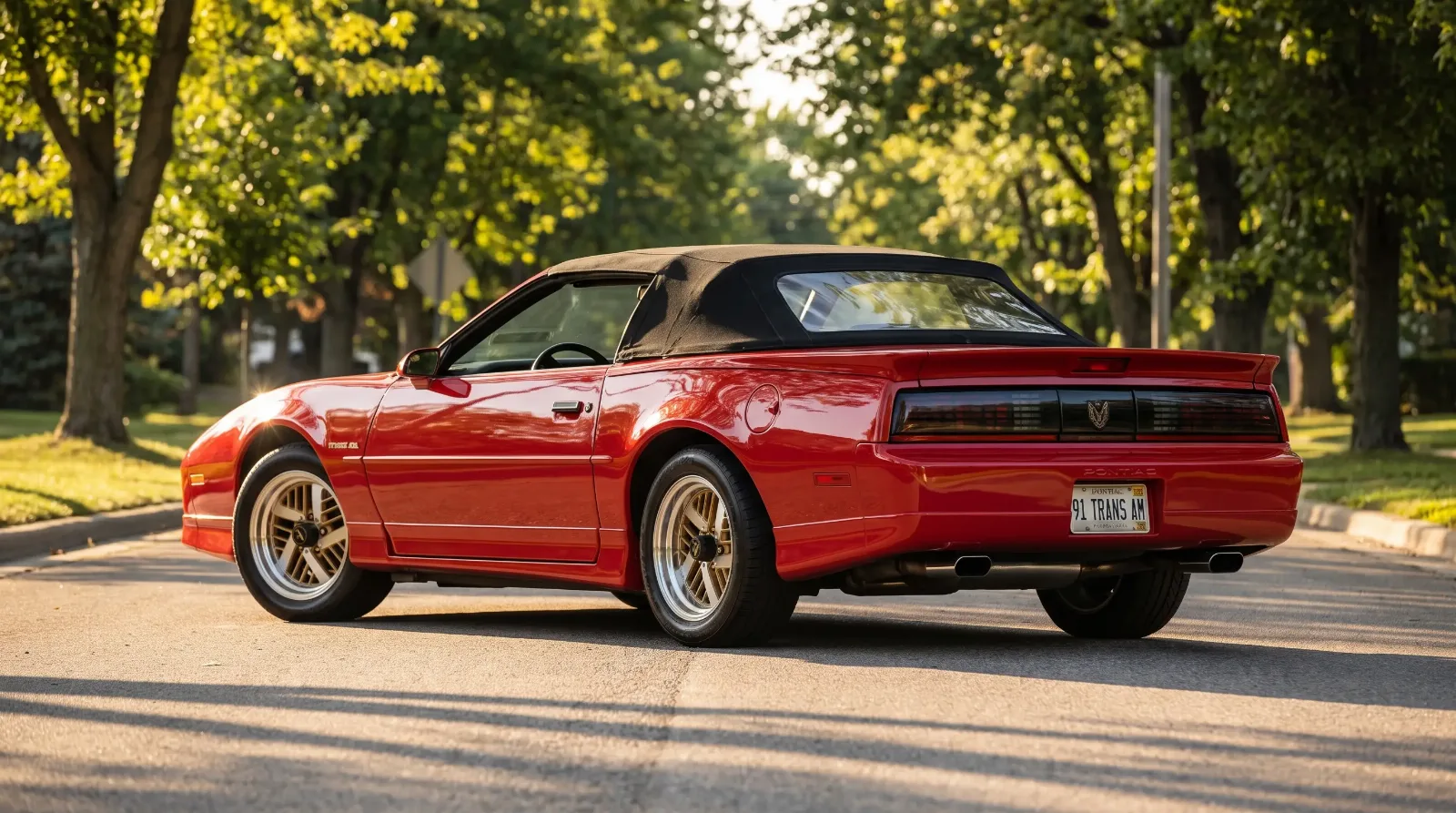
One body, no notchback
Every gen3 Firebird, base coupe, Formula, or Trans Am, left the plant as a hatchback with a large fixed rear glass panel. There was no notchback trunk configuration offered on the Firebird side of the F-body platform during this generation, unlike its Camaro sibling in the early part of the run. If you are hunting a period photo or a swap meet parts car and someone tells you it is a "notchback Firebird," get specific about what they mean before you get excited, because the term does not describe an actual factory body style here. What did vary, meaningfully and often confusingly for buyers today, was what happened above the passenger compartment.
The base roof was a solid steel unit, and it stayed the quietest, tightest, and most rust-resistant option across the whole run. It is also the one that gets the least attention at shows, which tells you something about where enthusiasm and practicality diverge in this hobby. Plenty of well-optioned Formulas and Trans Ams left the factory this way, no glass panels at all, and today they are an easy car to overlook in a parking lot full of louder options. That is exactly why a clean solid-roof example is worth a second look rather than a pass.
T-tops and what they actually cost you
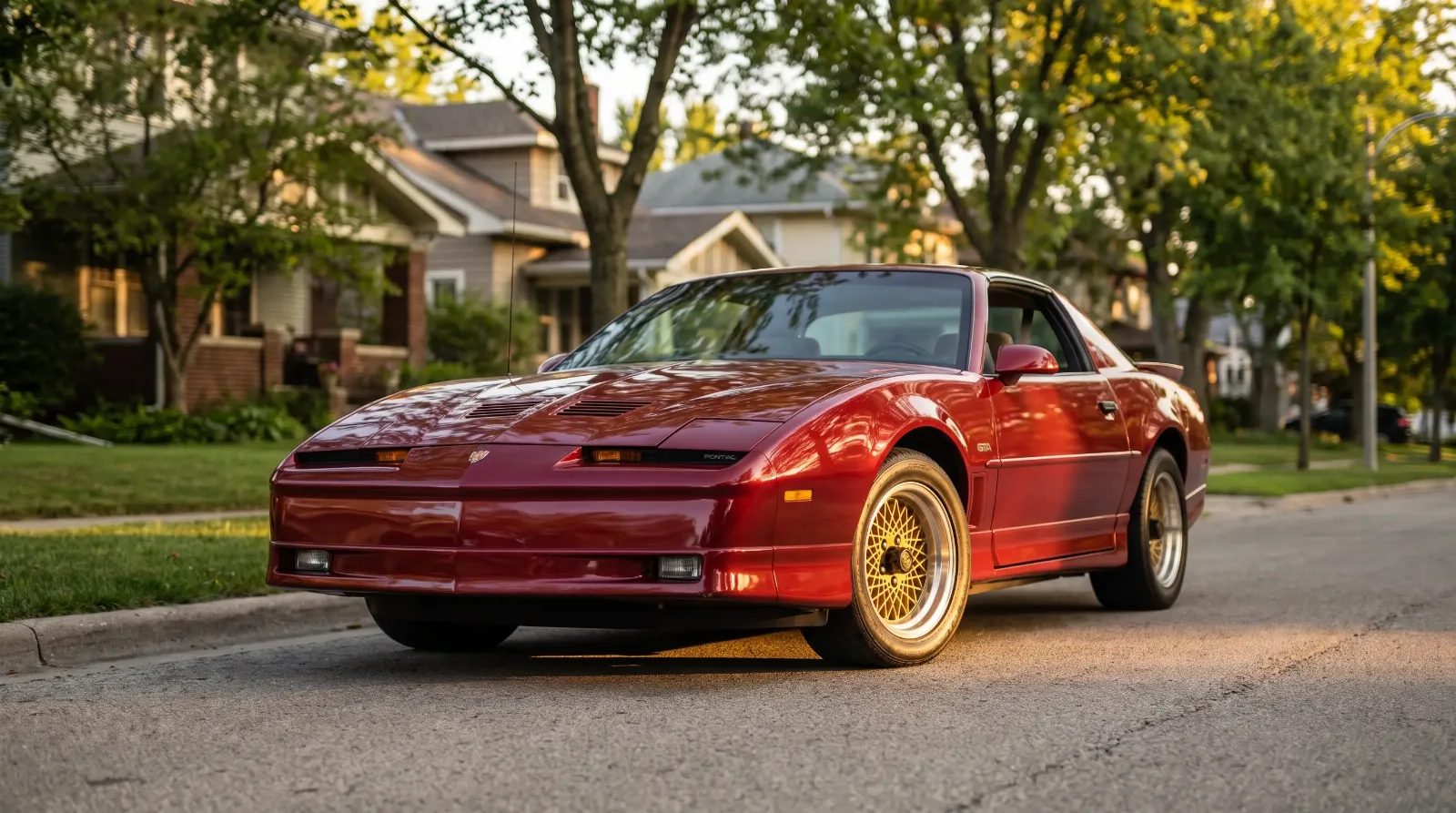
The T-top option, twin removable glass panels over a center structural spine, was the popular choice for most of the decade, and it is the roof most people picture when they think of an 80s Trans Am. It came with real tradeoffs that period buyers accepted and that current buyers need to understand before they fall for a clean paint job. The panels sealed with gaskets that hardened and shrank over time, and a T-top car that has sat through a few Southern summers without seal maintenance will leak, sometimes obviously and sometimes as a slow damp smell in the carpet that only shows up after a hard rain. The center spine also added some cowl shake that a solid-roof car simply does not have, more noticeable on rough pavement and more noticeable still if the car has done any hard miles without a subframe connector or two added underneath.
None of that makes T-tops a mistake. They are why plenty of people bought these cars in the first place, and a properly sealed, well-maintained set is a genuine pleasure on a good day. The point is that a T-top car needs a specific kind of inspection that a solid-roof car does not, and a buyer who skips it is buying a future headliner replacement without knowing it.
The convertible that came back late
For most of the gen3 run, hatchback with or without T-tops was the entire menu. That changed in 1991, when Pontiac brought a factory convertible back to the Firebird lineup for the first time since the second-generation cars, offered through outside conversion partners on the Trans Am and later trims. These late convertibles are a genuinely different animal from the T-top cars, not a variation on the same theme. They came in far smaller numbers than the hatchbacks: Pontiac built around 1,505 Firebird convertibles across all trims for 1991, with roughly 555 of those wearing Trans Am trim, and Trans Am convertible production for 1992 came in at a similarly low count, roughly 600 to 660 depending on the source you check. Finding one with a straight top mechanism and a body that has not developed the flex problems convertibles are prone to takes more patience than finding a good hatchback. The conversion work itself was done outside the main assembly process, which means the fit and finish on some surviving cars varies more than buyers expect from a factory-catalog option. Check door gaps and top alignment carefully before assuming a rattle is just age.
What this means for a buyer today
Body style should factor into what you are willing to pay and what you should expect to spend afterward. A solid-roof car is the simplest ownership experience and the one that ages best structurally, but it is also the one collectors chase least, which can make it a genuine value if you actually want to drive the thing. A T-top car needs its seals and structure checked honestly, not just admired for the look, and a convertible needs the most thorough inspection of the three because there is more that can go wrong and fewer of them to compare against.
"Everybody assumes the Firebird copied the Camaro's notchback. It didn't, and once you know that, half the confusing swap meet conversations start making sense."
Wayne Coburn
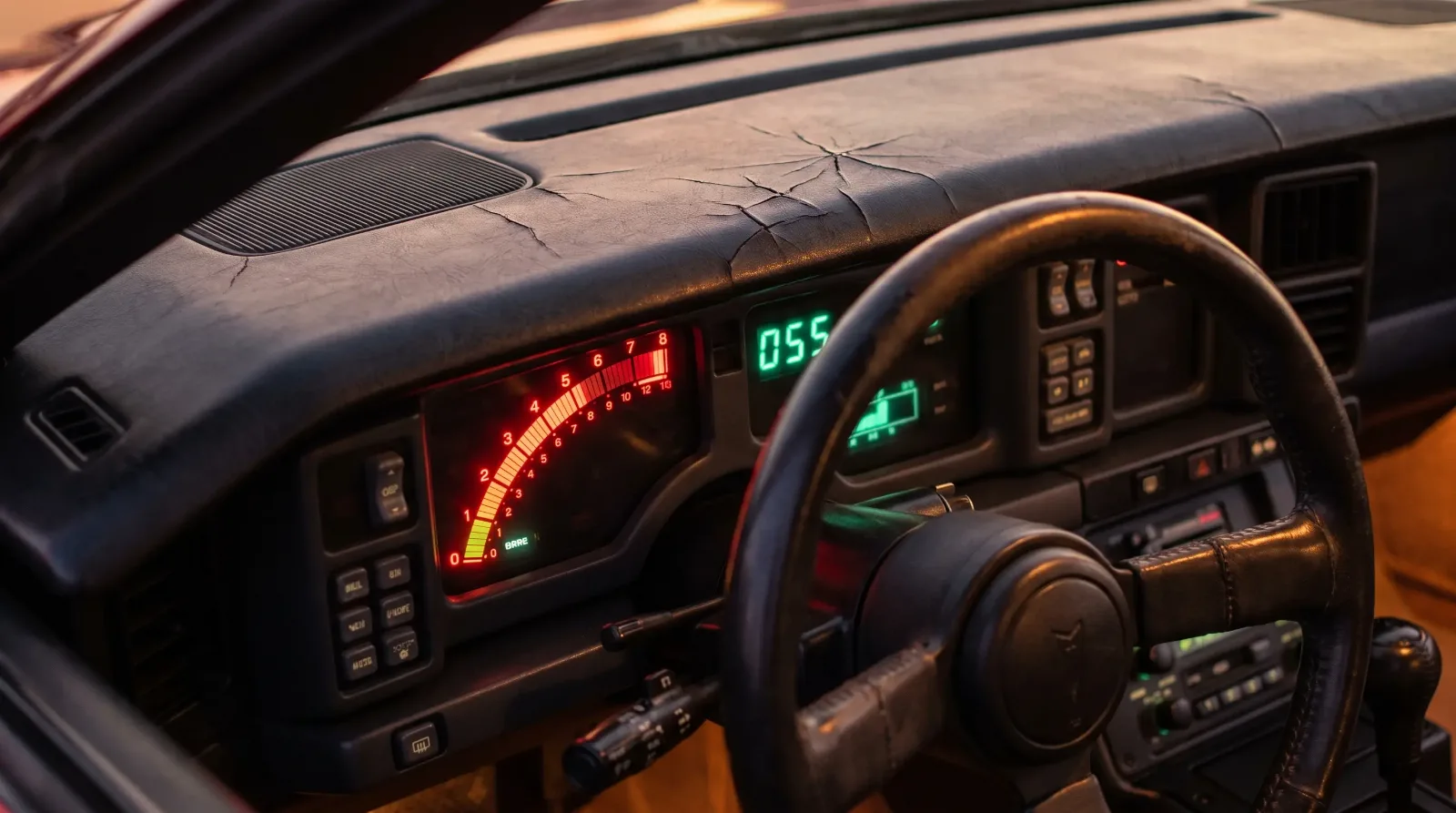
Roof configuration is one piece of a bigger picture, and it pairs naturally with what Pontiac did to the cabin underneath it. For a companion piece on how that interior evolved across the decade, the next article in this set covers the dash and trim changes in detail. For the full arc of the nameplate from the 1960s through the end of production, the complete Firebird saga ties all of it together.
Sources and notes
- Pontiac Firebird (third generation) - Wikipedia
- Curbside Classic - 1991 Pontiac Firebird Convertible, Welcome Back
- autoevolution - Rare 1992 Pontiac Trans Am Convertible Production
- ThirdGen.Org - 1991 Pontiac Firebird
- Classic.com - Pontiac Firebird Convertible, 1st Gen (1967-1969)
- 3rdGenFormula.com - Third-Gen Firebird Production Numbers
Related Reading
Have a
Pontiac Firebird
for Sale?
Reach thousands of serious classic car collectors across the US.
Sell It Here →
Are You a Classic Car Dealer?
List your full inventory and connect with targeted classic car buyers.
Join as a Dealer →

About the author
Wayne Coburn
Longtime Corvette owner, judge and club figure who knows the cars, the records and the people behind them.
Related Listings - Pontiac Firebird
Comments
Be the first to comment on this article.