
The Pontiac Firebird name did not start life on a pony car at all. It started on a jet-powered concept car, and by the time it reached a production Firebird in 1967, the name already carried fourteen years of experimental history most buyers never knew about. The hood decal came later still, and it arrived with almost none of the reverence people now attach to it. Both pieces of Firebird identity, the name and the bird itself, have simpler origins than the legend suggests, and the record is worth setting straight.
Car Features
6 min read
The Firebird Name and the Screaming Chicken Logo Origin
The Firebird name began on a 1950s jet-powered GM concept car, and the Trans Am's hood decal earned its Screaming Chicken nickname the public gave it, not Pontiac.
Where "Firebird" came from before 1967
General Motors used the Firebird name first on a series of Motorama show cars built through the 1950s: Firebird I, II and III, developed under GM design chief Harley Earl. These were gas turbine research vehicles, closer to jet aircraft experiments wearing car bodies than anything resembling a street car. Firebird I in 1953 looked almost literally like a fighter jet on wheels. Firebird III, the last of the series, arrived in 1959 with a bubble canopy and tailfins that made no attempt to hide its aircraft inspiration.
None of these cars were ever going to reach a dealer lot. They existed to show off what GM's engineers could build when cost and practicality were not part of the conversation. But the name stuck around inside the company, unattached to any production plan, waiting for a project that needed exactly that kind of association with speed and forward motion.
Why Pontiac chose it for the new pony car
When Pontiac needed a name for its answer to the Ford Mustang and Chevrolet Camaro, "Firebird" was sitting right there in GM's own back catalog, already understood internally as something fast and futuristic. Pontiac general manager John DeLorean's team weighed several names before settling on Firebird for the car that debuted in February 1967, built on the same F-body platform as the Camaro but with Pontiac's own styling and engine lineup underneath.
The choice was not without friction, though the friction was internal rather than a trademark fight with another GM division. Pontiac's early favorite was reportedly Banshee, tied to the earlier XP-833 show car, until someone in marketing flagged that a banshee is a death omen in Irish folklore, not the association anyone wanted on a new car. That rejection is what pushed the naming conversation back toward Firebird, the name already sitting in GM's Motorama files. The F-body program itself did not get its final corporate go-ahead until May 1966, with the car reaching dealers in February 1967, so naming discussions were still running in parallel with a styling and engineering program that was already largely locked in.
That overlap explains why some early press previews of the car referenced Pontiac's F-body project without a settled name attached, since the naming argument was still being closed out even as engineering and styling had already finalized most of the car's shape. Production planning did not wait for marketing to finish its naming argument, and that kind of overlap is common enough in Detroit's history that it barely counts as a footnote, except that it explains a real gap in the documentation trail researchers still run into today.
The Trans Am gets a bird on the hood
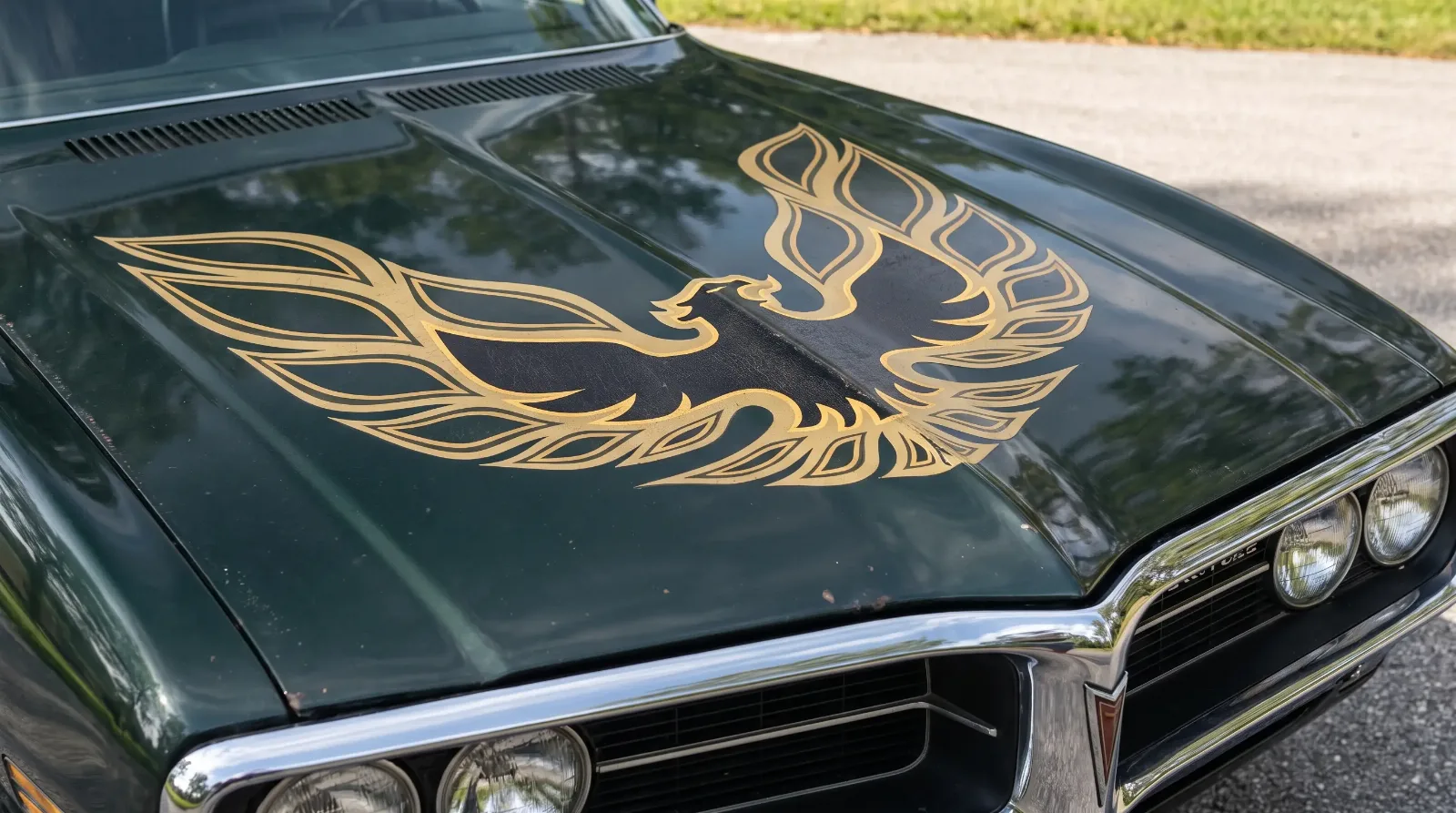
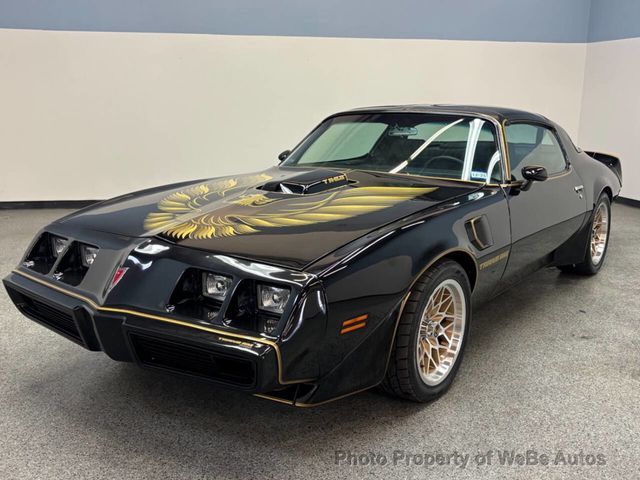
The hood bird decal, the big stylized firebird spreading across the hood of a Trans Am, is a separate story from the name itself and came along years later. It was not part of the original 1967 launch. The decal, officially option code WW7, debuted as a factory option on the 1973 Trans Am for 55 dollars, six years after the car's 1967 launch, and Pontiac treated it as a bold styling statement aimed squarely at buyers who wanted their car to announce itself before it even moved.
The design work behind the decal has a documented lineage: GM graphics designer Norm Inouye first sketched an oversized hood bird for the 1970 and a half Trans Am, but design chief Bill Mitchell rejected it and the idea was shelved for two years. Designer John Schinella later revived the concept, and Pontiac general manager Jim McDonald signed off on production, which is how the graphic landed on the 1973 model rather than the car it was originally sketched for. It was large, it was aggressive, and it was polarizing from day one. Some dealers reported buyers specifically ordering the Trans Am without it, which tells you the decal split opinion inside Pontiac's own showrooms, not just among outside critics.
The "Screaming Chicken" nickname sticks
Enthusiasts and critics alike started calling the decal the "Screaming Chicken" almost as soon as it appeared, and the nickname outlasted every attempt at a more dignified name Pontiac's marketing department might have preferred. It is not a flattering nickname, and Pontiac never used it in official materials, but it became the common shorthand across car culture so completely that plenty of buyers today ask for a Trans Am "with the screaming chicken" without ever using the word Firebird at all.
That kind of nickname sticking to a factory design, uninvited and unofficial, says something about how visible the decal actually was on the road. A design element does not earn a nickname that persistent unless it is doing exactly what it was built to do: get noticed.
"Pontiac borrowed a name from a jet-powered dream car and put a bird on the hood that the public renamed against the company's wishes. Neither one happened the way most people assume, and both records are sitting in plain sight if you go looking."
Tom Ramirez
Setting the record straight on common myths
Two claims circulate constantly and neither holds up cleanly. The first is that the Firebird name was created specifically to compete with the Mustang's horse imagery. It was not created for that purpose. It already existed inside GM from the Motorama program and was simply repurposed for a car that happened to compete with the Mustang. The second is that the hood decal was part of the Firebird's launch identity from 1967. It was not. The name and the bird graphic are two different chapters, separated by years, and collapsing them into one origin story flattens a more interesting history into a tidier but less accurate one.
If you want the fuller account of how the car itself came together once the naming question was settled, a related deep-dive covers that debut year in detail. And if this history has you thinking about owning one of these cars rather than just reading about them, a look at current classic Firebirds for sale is a reasonable next stop.
Sources and notes
- Wikipedia: General Motors Firebird concept series
- Ate Up With Motor: The Summer of John Z, DeLorean and the Pontiac Firebird
- Mac's Motor City Garage: How the 1967 Pontiac Firebird Was Born
- Classic Industries: The History of the Pontiac Trans Am Hood Bird
- ClassicCars.com Journal: The Phoenix-like Rise of Pontiac's Screaming Chicken
- Conceptcarz: 1959 GM Firebird III design and development
Related Reading
Have a
Pontiac Firebird
for Sale?
Reach thousands of serious classic car collectors across the US.
Sell It Here →
Are You a Classic Car Dealer?
List your full inventory and connect with targeted classic car buyers.
Join as a Dealer →
#trans-am
#pontiac firebird
#first-gen Firebird
#screaming chicken decal
#Firebird history
#Pontiac Motorama concepts

About the author
Tom Ramirez
Corvette researcher and historian based in Bowling Green, Kentucky. Two decades documenting Corvette production history from original factory records.
Related Listings - Pontiac Firebird

Comments (1)
K
Kenny
1 week ago
Nobody I ran with in '73 called it a screaming chicken. Just the bird. Chicken came later round here.
Kenny, that matches the period material I have seen, which calls it the hood bird or just the bird. Nicknames live in parking lots long before they reach print, and it was the big decal on the late-70s cars that made "Screaming Chicken" the name everybody knows today. If you have a dealer brochure or club newsletter from '73 that uses either name, I would like to see it.