
Picture a driveway at dusk somewhere in 1978, a garage door left half open, an FM station bleeding out of a portable radio propped on a workbench. Somebody's older brother is out there with a rag and a can of wax, and the car under his hands is a gold and black Firebird that has clearly never once been washed for practical reasons. That scene repeated itself in a thousand driveways that decade, and the Pontiac Firebird sat right at the center of it, not because it was the fastest car on the block, but because it looked like the decade sounded.
Car Features
6 min read
The Pontiac Firebird in Rock Music and 1970s Culture
The Firebird and Trans Am became visual shorthand for 1970s rock culture, from airbrushed album art to radio station car giveaways, long before any single film cemented it.
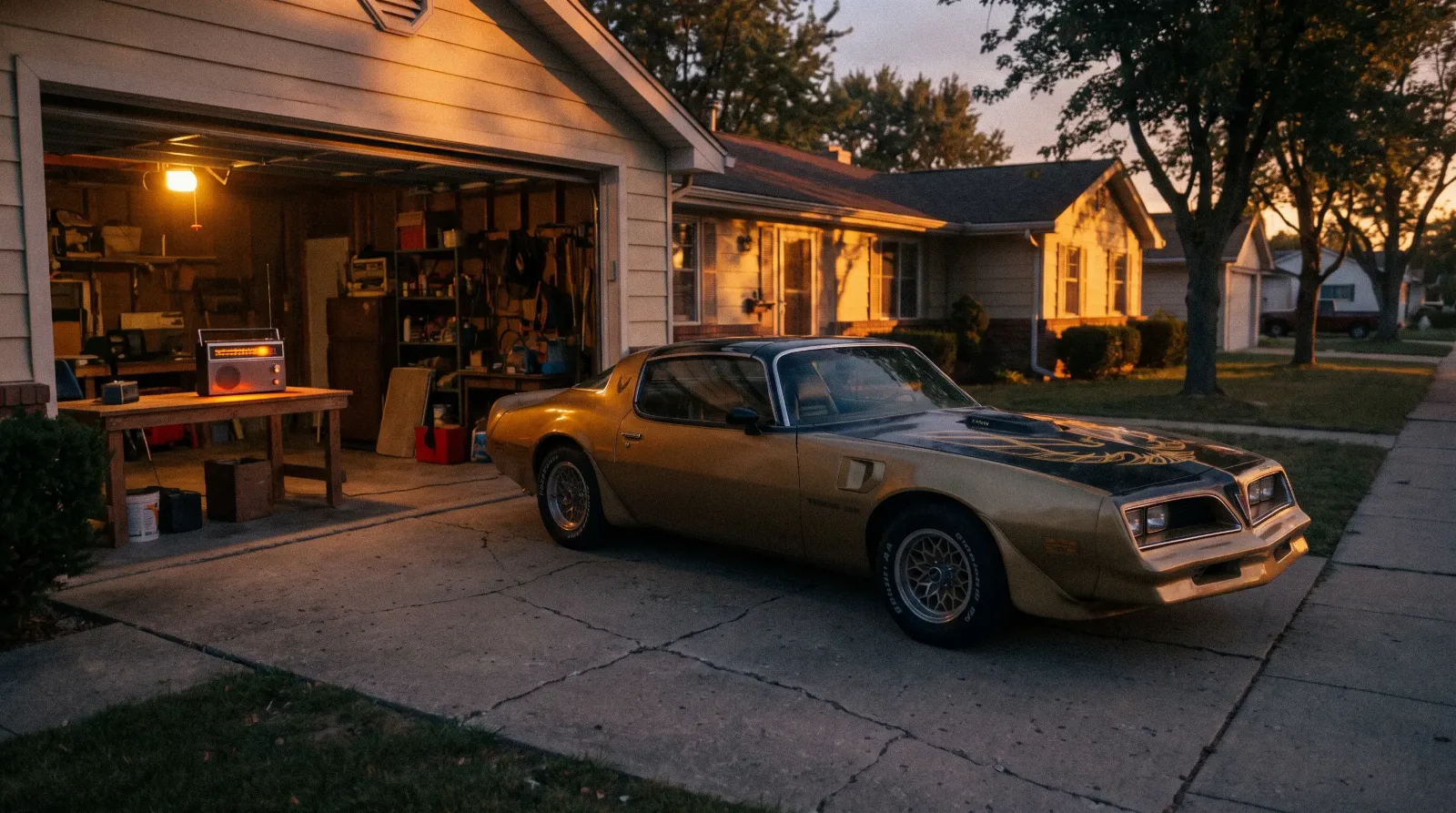
A car that matched the decade's volume
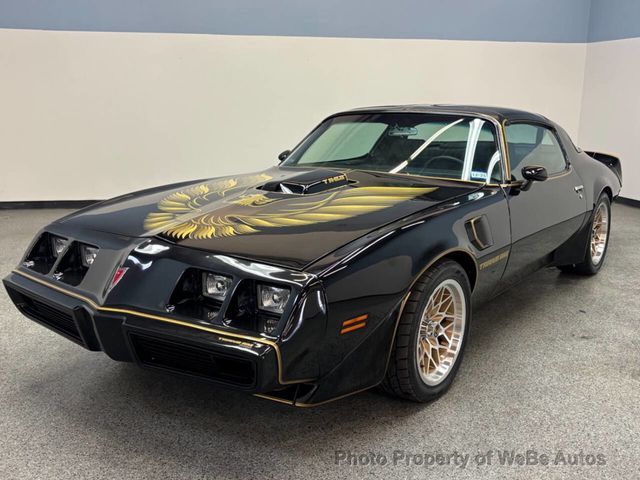
The 1970s did not do subtlety, not in its music and not in its cars. Arena rock filled stadiums with light shows and wall-sized speaker stacks, and Detroit answered with hood scoops, spoilers, and a Trans Am wearing a firebird decal the size of a dinner table across its hood. The visual grammar was the same in both places: bigger, louder, more willing to be looked at. A teenager cruising the strip with the windows down and the radio turned up was not choosing between the music and the car. Both were doing the same job.
That overlap was not an accident dreamed up by a marketing department, though Pontiac certainly noticed and leaned into it. It came from the same audience wanting the same thing from two different objects, a car and a soundtrack that both refused to whisper.
The Trans Am becomes a rock-adjacent icon
By the middle of the decade, the Trans Am had drifted well past being just a Pontiac trim level and into something closer to shorthand for a whole attitude. It showed up on album-adjacent iconography, in poster shops next to concert flyers, in the kind of teenage bedroom where a Firebird poster and a band poster hung on the same wall without any sense of contradiction. The car did not need a lyric written about it to earn a place in that world. It earned it by looking like it belonged there already.
Some of that connection ran through film and television as much as music directly, and the most famous chapter of that story belongs to the Bandit story rather than this one. But the broader cultural moment was bigger than any single film. Radio stations, concert promoters, and car dealers were all pulling from the same well of imagery, and the Firebird sat comfortably in all three currents at once.
Airbrush, fire, and the visual language of the era
Southern rock and hard rock album covers of the period leaned hard on fantasy airbrush art, flames, wings, mythical birds rising out of smoke. The Trans Am's hood decal spoke exactly that visual language, a firebird rendered in the same maximalist style as the art wrapping a gatefold LP sleeve. Custom van culture, which peaked alongside the Firebird's own popularity, borrowed from the same airbrush shops and the same appetite for imagery that refused to sit still.
None of this was coordinated between Detroit and the record labels. It came from a shared visual moment, a decade that wanted its objects to look mythic rather than merely functional, and the Firebird's designers were drawing from the same well of inspiration as the album cover artists working a few states over.
| Cultural touchstone | Approximate era | Connection to Firebird |
|---|---|---|
| Arena rock and stadium tours | Mid to late 1970s | Shared maximalist visual and sonic scale |
| Southern rock airbrush album art | Mid 1970s onward | Firebird decal shares the fantasy-bird visual language |
| Dealership and radio promotions | Late 1970s | Trans Am used as an aspirational giveaway prize in local promotions |
Radio contests and the culture of wanting one
Wanting a Trans Am in 1978 was not purely a car enthusiast's ambition. It was woven into the same aspirational current that made a concert ticket, a good stereo, or a leather jacket feel like they meant something beyond their price tag. The car functioned as a kind of trophy for a certain version of youth culture, one built around FM radio, cruising, and a general refusal to be quiet about wanting nice things.
That desire was real even for the people who never got close to owning one. A kid who spent his allowance on records and his weekends hanging around a dealership lot he could not afford anything from was still participating in the same culture as the guy who drove one off that lot. The Firebird's reach in the decade's imagination was always bigger than its actual sales figures.
I think about the dealership lot version of that story more than the finished-driveway one, honestly. The car nobody bought yet says more about a culture's appetite than the ones that sold. Every kid pressing his face against a showroom window on a Saturday afternoon was rehearsing a version of adulthood the record collection back home had already promised him, long before he ever turned a key.
"Nobody wrote the Firebird into a song because Pontiac paid them to. It got there because it already looked like the cover art half of us were staring at while the record spun."
Nora Beckett
What the era left behind
The specific songs and stations fade from memory faster than the image does. Ask anyone who came of age in that decade to picture a Trans Am and they will describe the hood bird before they mention a single spec. That is the real inheritance of the era, a car remembered as much for what it meant as for what it did, filed away in the same part of memory as a favorite record sleeve.
If the pop culture side of this story is what drew you in, a related deep-dive traces the Firebird's wider footprint beyond music specifically. And if a little bit of that old driveway feeling has you wanting to see one in person, there are always classic Firebirds for sale worth a look, gold and black hood bird optional but recommended.
Sources and notes
- HotCars: The Truth Behind What Trans Am Really Stood For
- Drivers Daily: The Pontiac Trans Am, the Screaming Chicken That Ruled America's Streets
- Classic American Magazine: Boogie Vans, the History and the Present
- Team Valvoline: The Pontiac Firebird Trans Am
- History Facts: The Most Iconic Cars of the 1970s
- Tunnel Ram: Pontiac Firebird & Trans Am Ads, 1967-1981
Related Reading
Have a
Pontiac Firebird
for Sale?
Reach thousands of serious classic car collectors across the US.
Sell It Here →
Are You a Classic Car Dealer?
List your full inventory and connect with targeted classic car buyers.
Join as a Dealer →
#trans-am
#pontiac firebird
#muscle car history
#1970s car culture
#firebird pop culture
#arena rock era

About the author
Nora Beckett
Automotive features writer and photographer who tells the human stories behind the cars, from show fields to cross-country road trips.
Related Listings - Pontiac Firebird




Comments
Be the first to comment on this article.