
The Pontiac Firebird Esprit that James Garner drove down the dirt access roads of Malibu never got the poster treatment the Bandit's Trans Am did, and that is exactly why it deserves a second look. Jim Rockford's gold 1974 Firebird Esprit was a working man's car playing a working man's detective, dented and dusty and always one bad landing away from a body shop bill nobody would pay. It is one of the most quietly influential Firebirds in television history, and it never once tried to look important.
Car Features
7 min read
The Rockford Files Firebird: TV's Unsung Gold Esprit
Jim Rockford's dented gold Esprit never chased Bandit-style fame, yet its stunt-driven ordinariness made it one of the most quietly influential Firebirds in TV history.
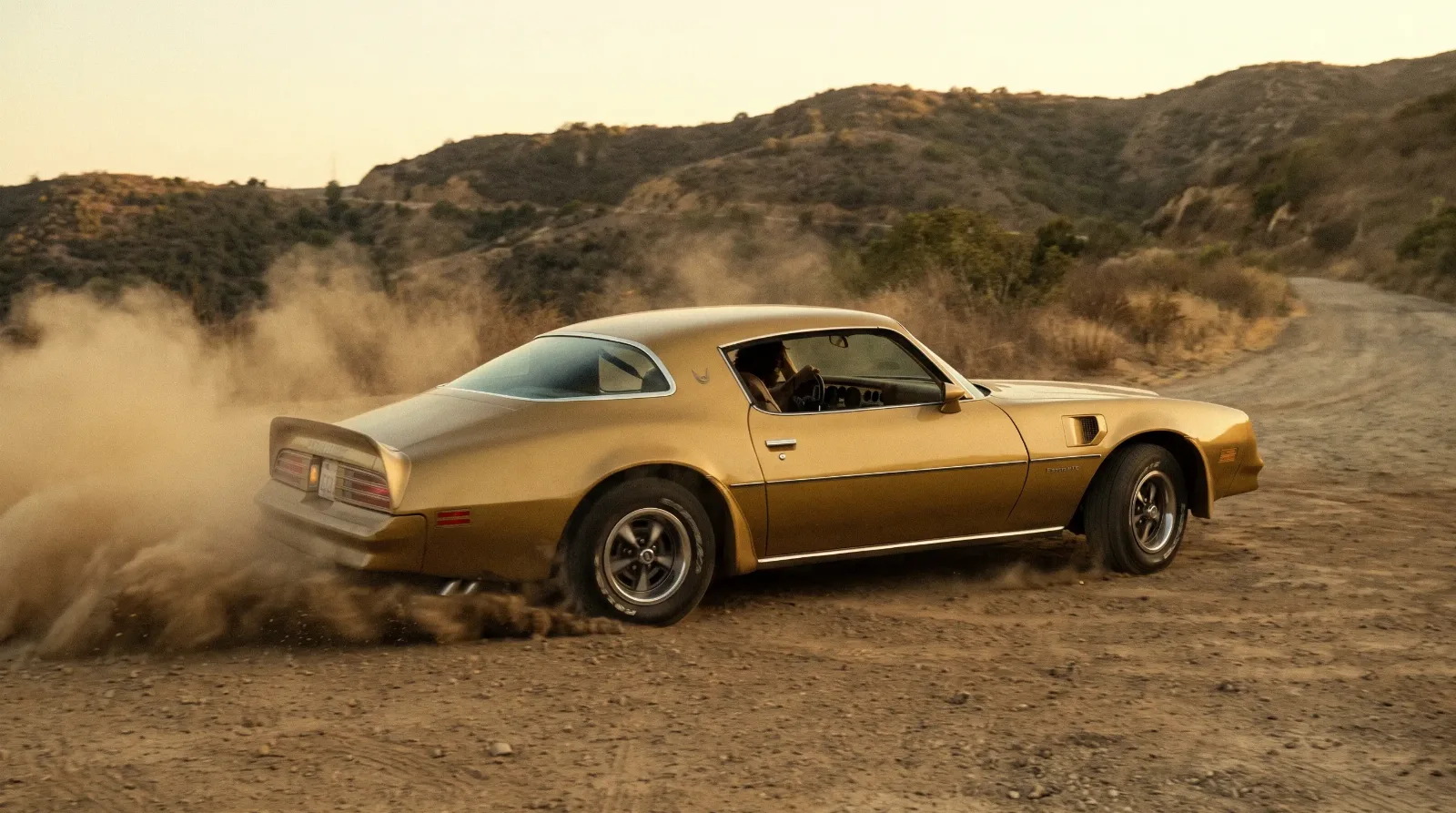
"The Rockford Files" ran from 1974 to 1980, and across those six seasons the production went through a small fleet of Firebirds, since Pontiac supplied new cars nearly every year as part of a promotional arrangement with Universal. That detail surprises people who assume it was one lovingly preserved car. It was not. It was several cars, aged in real time by stunt work, and the show's producers treated each one as a consumable prop rather than a hero vehicle to be babied between takes. It also surprises people to learn the cars were not all genuine Esprits: the first season used an actual 1974 Firebird Esprit, but from 1975 on the production switched to Formula 400 cars with the Esprit's single hood scoop swapped in for the Formula's twin-scoop hood, the rear spoiler deleted, and Esprit badging added, giving the show V8 performance for chase work while keeping Rockford's modest-car image intact.
Why a mid-trim Esprit, not a Trans Am
The choice of the Esprit trim rather than the flashier Trans Am was not an accident of budget, or at least not only that. James Garner wanted a car that matched who Jim Rockford was supposed to be: a private investigator working out of a trailer on the beach, perpetually behind on his bills, driving something respectable but not aspirational. The Trans Am's screaming chicken hood decal and firm suspension tuning would have read as too much car for a man who complains about his retainer in nearly every episode.
The Esprit sat in the middle of the Firebird lineup, above the base car but below the Formula and Trans Am, with softer springs, a quieter exhaust, and trim that leaned toward comfort rather than track credibility. That made it plausible as a private eye's daily driver, and it made the stunt work land differently too. Watching a mid-trim commuter coupe get thrown sideways down a fire road hits harder than watching a factory performance car do the same thing, because the Esprit was not built to expect it.
The stunt work that defined the look
Rockford's signature move, a reverse 180-degree J-turn spun into a forward launch known ever since among fans as the "Rockford turn" or the "Jim Rockford Turnaround," became so associated with the show that the maneuver still carries the character's name decades later. Executing it required a handbrake yank at speed, a full lock of the wheel, and enough throttle on the exit to send the Firebird's tail whipping around before it rocketed off in the opposite direction. James Garner, a genuinely skilled wheelman off screen, performed the vast majority of that stunt himself across the series rather than handing it to a double, and the toll on each car was significant.
Because the Esprit-badged cars were treated as disposable stunt tools, few original show cars survived in any documented, continuously provenanced form. Collectors have chased replica-grade cars built to the show's specification for years, since a verified original with continuous chain of custody back to a specific season of production is exceedingly rare. Most of what circulates at car shows and online forums are tribute builds, and serious buyers should treat any "original Rockford car" claim with real skepticism until the paperwork backs it up.
Color, wheels, and the details fans argue about
The signature color was a gold commonly called "Denver Gold," which the production kept consistent from car to car even as Pontiac's own paint codes and marketing names for similar shades shifted across model years, and fans still argue online about whether a given screen shot shows Denver Gold or a related factory hue like Copper Mist. The wheels were Rally IIs, the same workhorse rims found on countless Firebirds and Trans Ams of the era, chosen for durability under stunt conditions rather than showroom flash.
Inside, the car carried a simple interior, nothing close to the Trans Am's more aggressive gauge package, which again reinforced the character. A private investigator running a modest operation out of a beachfront trailer was never going to be driving something with a hood scoop and a shaker. The show's production team understood something that a lot of car-culture marketing misses: restraint can be more memorable than spectacle when it is used consistently and matched to character.
| Detail | Rockford Files Firebird |
|---|---|
| Model years used on screen | 1974 Esprit for season one, Esprit-badged Formula 400s from 1975-1977, a single 1978 model for the final three seasons |
| Trim level | Genuine Esprit in 1974, Formula 400s rebadged with Esprit trim and hood from 1975 on |
| Wheels | Rally II steel wheels |
| Signature stunt | The "Rockford turn," a reverse-to-forward J-turn |
| Primary stunt driver | James Garner, performing most of the driving himself |
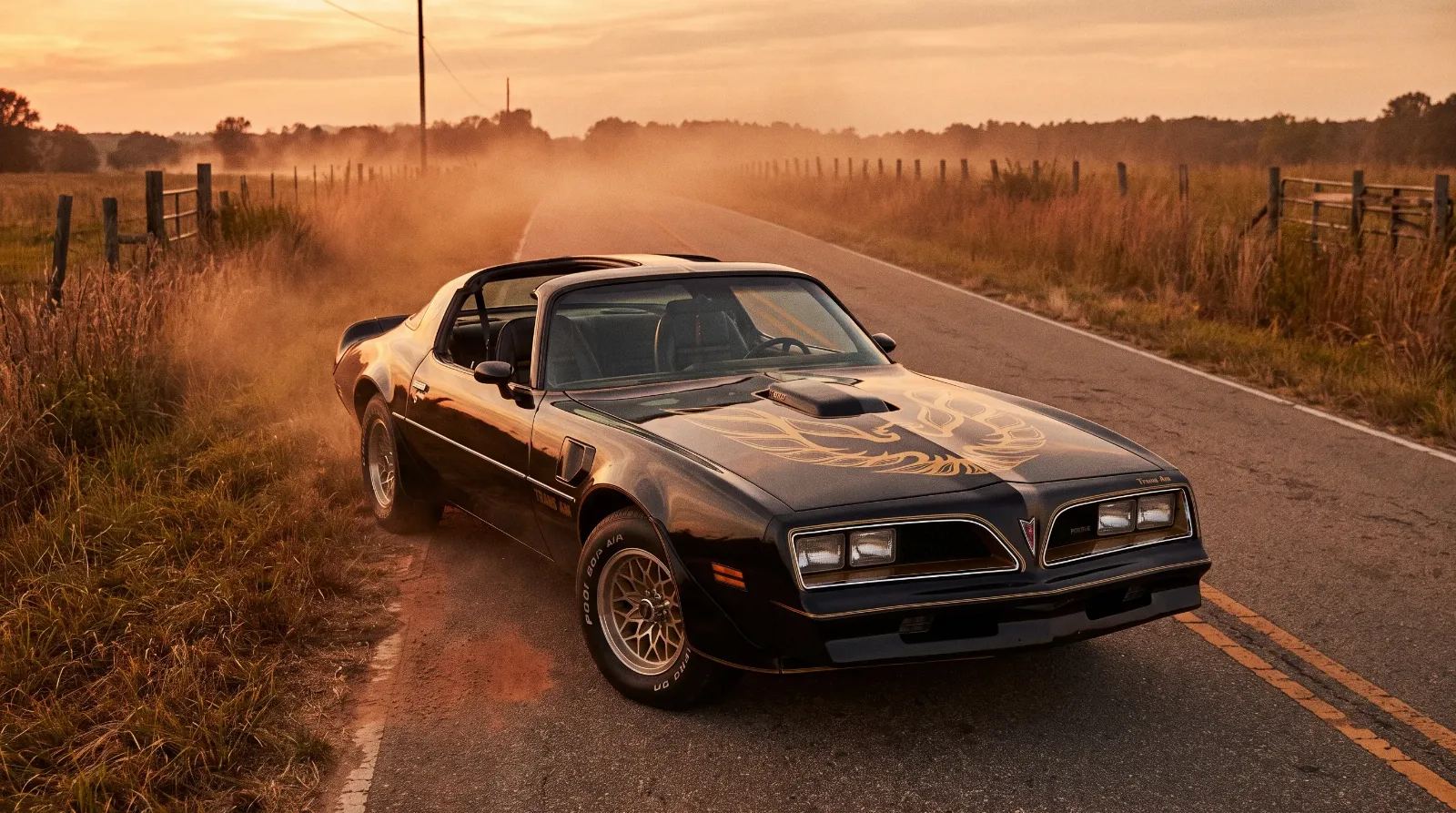
The relationship between the show and Pontiac also mattered for the brand's image well beyond the specific cars used on set. A weekly network drama putting an ordinary Firebird through genuinely difficult driving, week after week, did more for the model's reputation with a mainstream audience than any print ad could, and it happened at the same time other Hollywood productions were building the pop-culture Firebird image through very different means.
"Everyone remembers the Bandit's car because it was built to be remembered. Nobody was supposed to remember Rockford's Firebird, and that's the whole reason it stuck. A beat-up gold Esprit doing a handbrake turn on a fire road feels like something that could actually happen to you."
Nora Beckett
What it means for collectors today
Anyone chasing a genuine screen-used Rockford Firebird today faces a documentation problem more than a supply problem. Because so many cars were used and none were treated as precious, provenance research depends heavily on production records, insurance paperwork from the studio era, and the memories of surviving crew members, none of which are easy to assemble into an airtight chain of ownership. A buyer serious about this pursuit should expect years of research before a purchase, not weeks.
For most enthusiasts, the more realistic route is a well-built 1974 to 1978 Esprit finished to the show's general look: correct gold paint, Rally II wheels, a period-correct interior, and no pretense about its exact screen history. That is an honest way to own a piece of the aesthetic without overstating what the car actually is. For readers who want another angle on how a very different Burt Reynolds vehicle earned its own screen legacy, the contrast in approach says a lot about how differently productions can treat the same basic car.
The Rockford Files Firebird endures not because it was fast or rare in period, but because it was ordinary in exactly the right way. It let a flawed, likable character drive something a real person might actually own, and then it did something extraordinary with it every week. That tension, between the mundane car and the impossible stunt, is still the reason people search out gold Esprits at swap meets and car shows, hoping to find a small piece of that trailer-park detective's world.
Sources and notes
- Rob's Movie Muscle: The Pontiac Firebirds from the Rockford Files - Street Muscle Magazine
- Jay Leno Investigates the Pontiac Firebird from The Rockford Files - Hagerty Media
- 1978 Pontiac from The Rockford Files is one famous Firebird - Hagerty Media
- The Cars of The Rockford Files - Consumer Guide
- What Happened to the Pontiac Firebird from The Rockford Files - SlashGear
- The Rockford Files - Wikipedia
Related Reading
Have a
Pontiac Firebird
for Sale?
Reach thousands of serious classic car collectors across the US.
Sell It Here →
Are You a Classic Car Dealer?
List your full inventory and connect with targeted classic car buyers.
Join as a Dealer →

About the author
Nora Beckett
Automotive features writer and photographer who tells the human stories behind the cars, from show fields to cross-country road trips.
Related Listings - Pontiac Firebird
Comments
Be the first to comment on this article.