
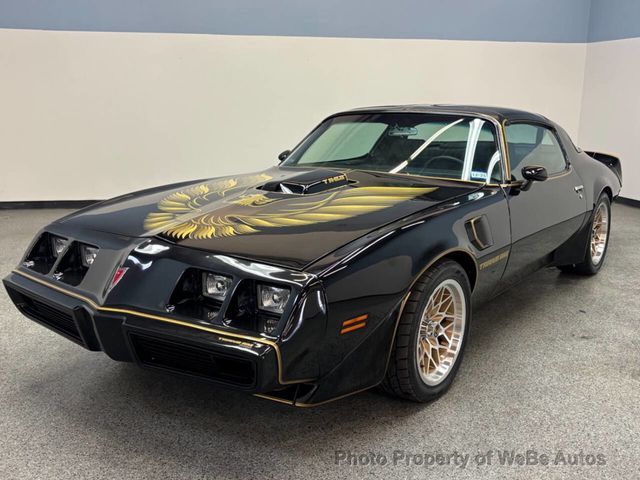
A red light sweeping back and forth across a black hood became one of the most recognizable pieces of set dressing in television history, and it was mounted on a Pontiac Trans Am. When Knight Rider premiered on NBC in 1982, the show's real star was not David Hasselhoff's Michael Knight but the car he drove, a talking, thinking machine named KITT. Kitt knight rider became shorthand for an entire decade's idea of futuristic cool, and the Trans Am underneath the props and the scanner light had already earned its reputation on movie screens five years earlier thanks to a black-and-gold bootlegger's car most viewers would have instantly recognized.
Car Features
6 min read
Knight Rider: KITT the Trans Am
Kitt knight rider turned a Pontiac Trans Am into a talking, thinking television star, building on the cultural momentum the Bandit films had already created.
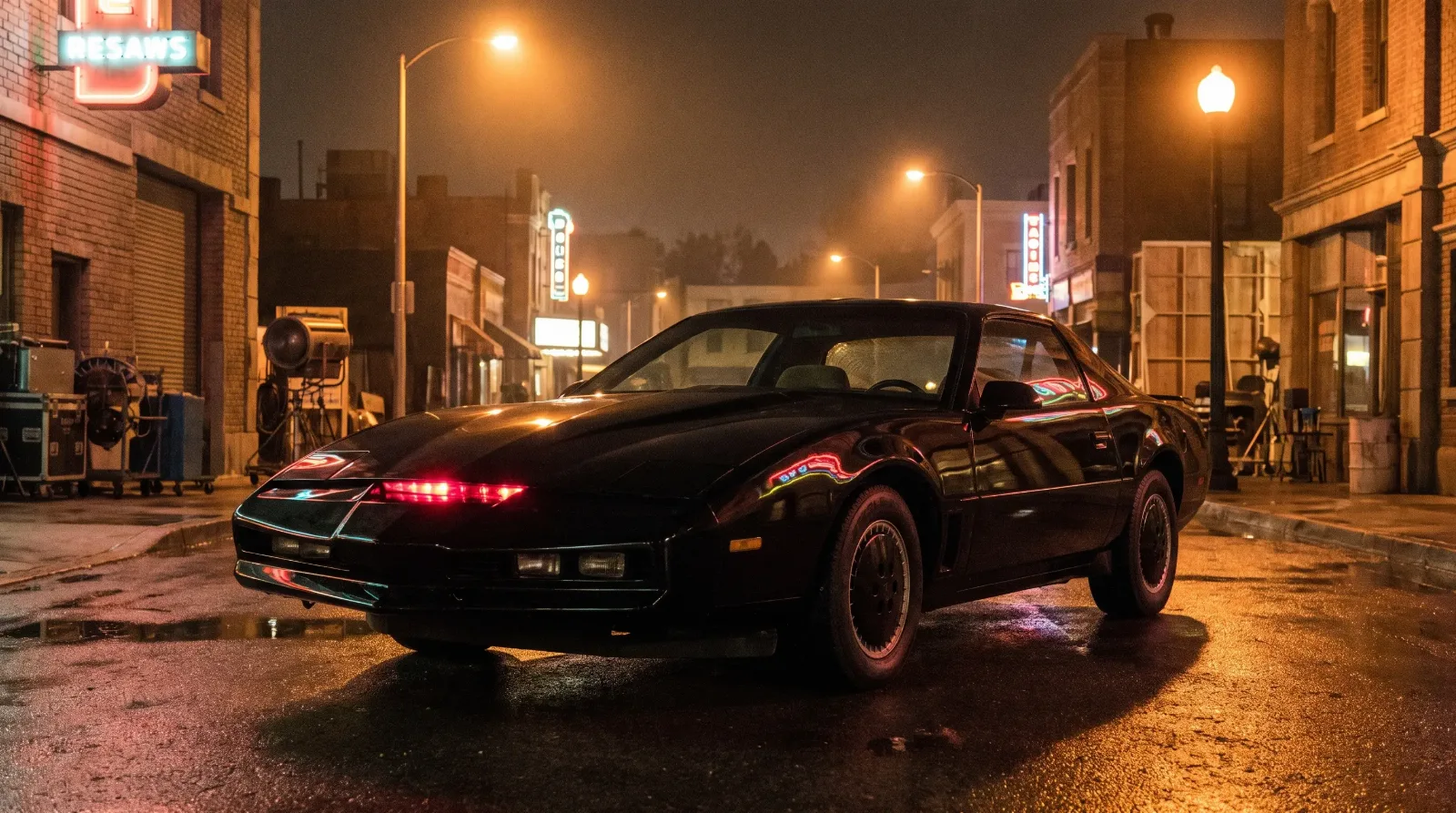
Glen A. Larson's pitch
Producer Glen A. Larson, already known for high-concept television, built Knight Rider around a simple hook: a car that could think, talk, and fight crime alongside a driver who had been given a second chance at life after being left for dead. Michael Long, a police detective shot in the line of duty, is saved by a wealthy foundation and given a new identity, Michael Knight, along with KITT, an artificially intelligent Trans Am built to help him take on crimes too big for ordinary law enforcement. The premise leaned into the same appetite for cars-as-characters that Smokey and the Bandit had proven audiences would respond to.
Larson needed a car that already read as powerful and modern to 1982 audiences, and the Trans Am, still riding the cultural momentum from its movie stardom, was the obvious choice. Pontiac was willing to supply cars for a network show given the free advertising a hit series could provide, a calculation that had already paid off once with the Bandit films.
Turning a Trans Am into KITT
The production used modified 1982 Pontiac Trans Ams, dressed up with a distinctive red scanning light across the nose, a heavily reworked interior with an oversized dashboard full of blinking electronics, and bodywork changes to sell the idea of an advanced prototype rather than a showroom coupe. Several cars were built for the series across its four-season run, handling different needs: hero cars for close-up interior shots, stunt cars for the jumps and chases, and cars fitted for specific effects sequences.
| Detail | KITT (Knight Rider) |
|---|---|
| Base vehicle | 1982 Pontiac Trans Am |
| Signature feature | Front scanner light bar |
| Voice | William Daniels (uncredited early episodes) |
| Fictional AI name | Knight Industries Two Thousand |
| Signature ability | Turbo Boost jump function |
The fictional capabilities, from Turbo Boost to a later Super Pursuit Mode with an enclosed cockpit shell, had nothing to do with the actual mechanical limits of a production Trans Am, and that was the point. KITT was meant to feel like the next step beyond what audiences already associated with the nameplate, a car so capable it justified the leap from movie chase scenes to full science fiction premise.
🔧 Inspection Priorities
- Confirm which season the car claims to represent. KITT's appearance changed across the show's run, and props built for later seasons do not match earlier hero car specifications.
- Check for replica versus screen-used documentation. The vast majority of KITT tribute cars on the market today are fan-built replicas, not production props, and should be described that way.
- Look at the dashboard electronics fabrication. Original prop dashboards were built for camera appeal, not function, and reproductions vary wildly in fidelity.
A voice that made the car a character
William Daniels voiced KITT without credit for much of the show's run, reportedly to keep some separation between the character actor and the machine, and his measured, slightly droll delivery gave the car a personality distinct from Michael Knight's more straightforward heroics. That voice work did as much to sell KITT as a character as any of the physical modifications to the Trans Am itself. A car that could jump a ravine was impressive. A car with a dry sense of humor about its own driver's recklessness was memorable in a different way.
"KITT worked because the writers treated the car like a partner with opinions, not a gadget. That is a harder trick to pull off than it looks, and it is why people who have never seen a full episode can still tell you what KITT sounded like."
Patrick Walsh
Four seasons, several cars
Knight Rider ran for four seasons on NBC, and the KITT prop fleet grew and changed across that run to keep up with production demands. Early episodes relied on a smaller number of cars pushed hard across dozens of stunts, while later seasons brought in additional builds, including versions modified for the Super Pursuit Mode storyline that gave KITT an enclosed, more aggressive shell for high-speed chase sequences. None of the changes were meant to track real Pontiac production updates the way the Bandit sequels inadvertently did. Every modification served the fiction first, whether or not it matched anything Pontiac was actually building that model year.
That distinction matters for anyone researching surviving cars today. A handful of original production and stunt vehicles are known to have survived the show's run in varying states of completeness, while the overwhelming majority of KITT cars seen at shows and conventions are fan-built tributes constructed long after the series ended. The demand for an authentic-looking KITT never really faded, and an entire cottage industry of replica builders has kept the look alive for collectors who were not old enough to watch the original broadcasts.
The Trans Am's second act on screen
Knight Rider gave the Trans Am a second major cultural moment, distinct from but built on top of the goodwill the nameplate had already earned through the Bandit films. Where the movies sold the car as a rebel's ride, the television show sold it as the future, a shift that tracked with how Pontiac itself was marketing performance cars in the early 1980s: less about outrunning the law, more about technology and capability. How Hollywood made it a star the first time set the stage for a car willing to reinvent its own image just a few years later without losing what made it recognizable.
For another chapter in the Trans Am's run of television and film appearances during this stretch, keep reading the series, and for the full arc of the model that made all of this possible, our Firebird retrospective traces the car back to its 1967 origins, long before anyone imagined it talking back to its driver.
Sources and notes
Related Reading
Have a
Pontiac Firebird
for Sale?
Reach thousands of serious classic car collectors across the US.
Sell It Here →
Are You a Classic Car Dealer?
List your full inventory and connect with targeted classic car buyers.
Join as a Dealer →

About the author
Patrick Walsh
Automotive journalist covering classic car shows, events, and the enthusiast community across North America.
Related Listings - Pontiac Firebird
Comments
Be the first to comment on this article.