
Somewhere in a Pontiac dealership showroom in the fall of 1992, a salesman was probably standing between two Firebirds that had almost nothing to do with each other despite wearing the same name. One was a leftover third generation car, the last of a design that had run since 1982, boxy Aero styling and all. The other, arriving as a 1993 model, was an entirely new machine built on a redesigned F-body platform, and its arrival quietly marked the end of what most collectors now consider the classic Firebird era. The 1993 changeover is not just a model year footnote, it is the line in the sand that separates the cars this hobby treats as vintage from the ones it treats as merely old.
Car Features
8 min read
The 1993 End of the Classic F-Body
The 1993 Firebird was faster and better built than the car it replaced, and that is exactly why collectors treat the year before it as the true end of the classic F-body.
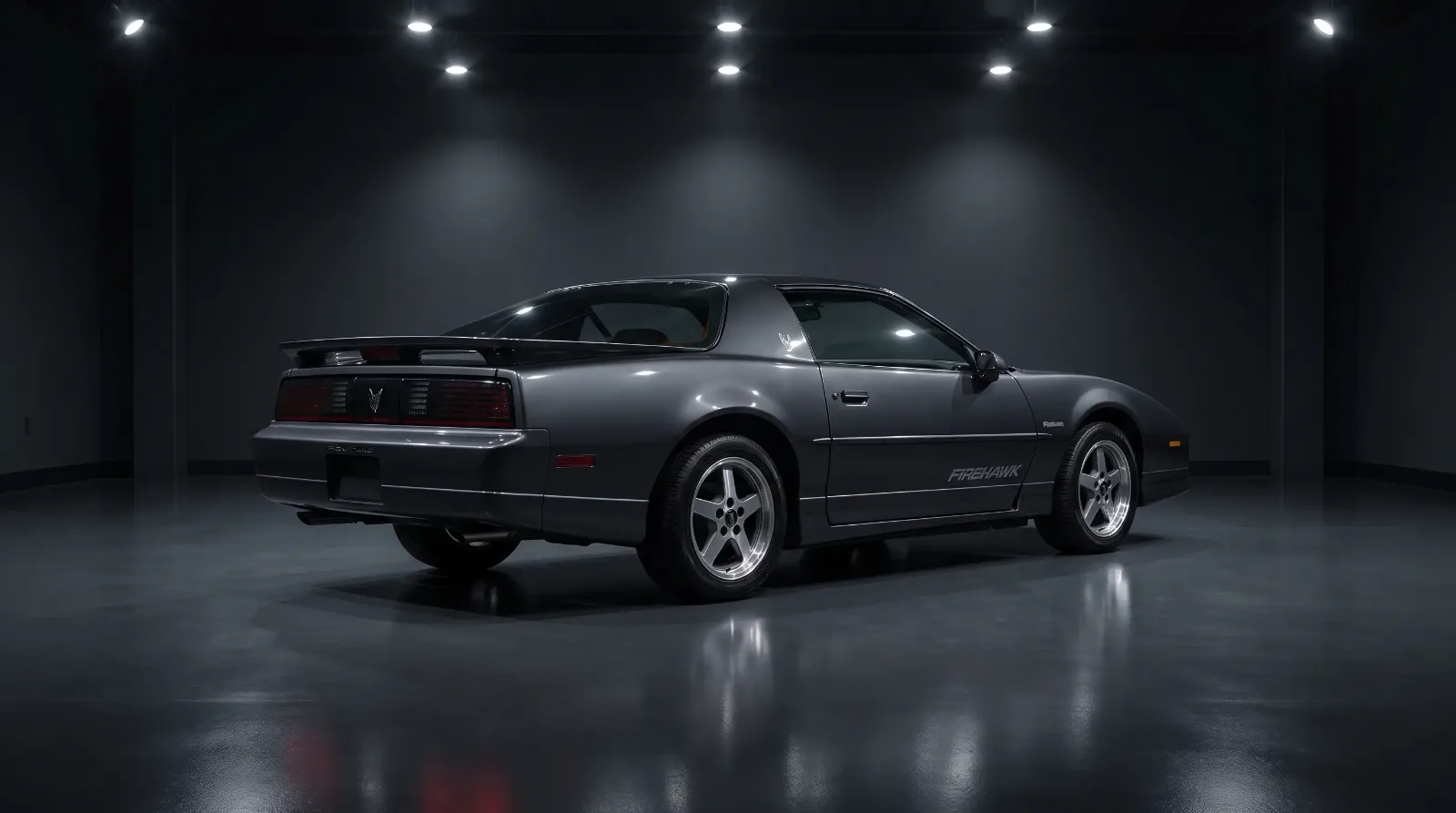
1992: the third generation's final bow
The third generation Firebird had been in production for a full decade by 1992, longer than any prior generation, and GM sent it off with the SLP-built Firehawk, a Formula 350-based package tuned with a hotter intake, upgraded suspension, and the Corvette ZR-1's six-speed manual transmission, good for more than 350 horsepower and 390 pound-feet of torque, making it the fastest and most powerful regular-production Firebird Pontiac dealers had ever offered. Only 25 of the standard 1992 Firehawks were built, at a price near $40,000, which made it a genuine curtain call rather than a routine trim option. It was a fitting closer for a generation that had introduced fuel injection, the Formula and GTA trims, and the T-top roof configuration that became a signature look for the era. By its last year the third generation was tired in places, its dashboard plastics and switchgear dated against newer competitors, but it was also fully sorted, built on a platform GM's engineers understood down to the last bushing.
Production numbers for that final third generation run were modest compared to the platform's peak years in the mid 1980s, with Pontiac building only 969 Trans Am coupes and 663 Trans Am convertibles for 1992, reflecting both an aging design and a Firebird lineup that had been through a long slide in overall sales volume since the muscle car boom years, with some buyers reportedly holding off in anticipation of the redesigned 1993 model. Dealers that year were effectively selling on twenty five years of accumulated goodwill and a shape buyers already trusted, even as word of a genuinely new car circulated ahead of its release.
That tension was not new to 1992. GM had stretched the third generation platform through a mid-cycle refresh in 1985 and kept finding ways to update the drivetrain and trim without touching the fundamental architecture, a pattern common across Detroit in an era when full redesigns were expensive enough that automakers preferred to extend a good platform as long as the market would tolerate it. By the time the anniversary cars rolled off the line, the third generation Firebird was arguably the most thoroughly developed version of itself the nameplate had ever produced, every rattle worked out, every supplier relationship mature, right at the moment GM chose to retire it.
What the Firehawk send-off said about the moment
GM did not typically build a halo package for a platform it planned to keep running unchanged, and handing SLP the job of building the fastest, most powerful regular-production Firebird ever offered, right as a full redesign sat tooled and ready for the following model year, reads in hindsight like a company aware it was closing a chapter. The third generation Firebird had carried the nameplate through the malaise era's worst years and out the other side into a genuine performance revival by the late 1980s, and the Firehawk gave that arc a proper send-off rather than letting the generation simply age out unremarked.
The Firehawk leaned hard on genuine performance credibility rather than nostalgia trim, pulling the ZR-1's six-speed and a reworked drivetrain into a Firebird body rather than dressing up a standard Formula with stripes and badges, and that framing matters. GM was not marketing the car as a birthday party for the nameplate, it was closing out a full generation's run with the most capable version of the platform it had ever built, at a price and production count, just 25 units, that made clear this was a send-off rather than a routine option package. Pontiac's own 25th Anniversary Trans Am, when it eventually arrived, celebrated the Trans Am trim's 1969 debut rather than the Firebird nameplate's 1967 launch, and it landed two years later, in 1994, on the redesigned fourth generation platform, not on the car being retired here.
1993 and the platform that replaced it
The fourth generation Firebird for 1993 was a clean break rather than an evolution. New unibody structure, a lower and more rounded silhouette that traded the third generation's sharp Aero creases for smoother composite panels, and a modernized interior all arrived at once. Mechanically the fourth generation brought real gains, including the LT1 V8 shared with the Corvette in Formula and Trans Am trim, giving the nameplate its most powerful factory engine in years. Judged purely on capability, the 1993 car was the better machine in nearly every measurable way.
That is precisely why enthusiasts draw the classic-era line where they do. The fourth generation Firebird is a genuinely good car and a legitimate part of the model's history, but it belongs to a different design language, a different manufacturing era, and in the collector market's eyes, a different category. The 1993 changeover is treated less like a mid-story chapter break and more like the closing of one book and the opening of another, which is exactly why the story covered in Firebird vs Camaro focuses so heavily on the generations before it.
Why the cutoff still matters to buyers
For anyone shopping today, the 1992/1993 divide is not academic. Third generation cars, especially the final anniversary examples, carry a nostalgia and originality premium that fourth generation cars generally do not command in the same way, even though the newer car is objectively quicker and better built in several respects. Parts availability differs too. Third generation trim, glass, and body panels are a known, if occasionally thin, market, while fourth generation parts draw from a completely separate supply chain built around a different design.
Buyers chasing what the hobby calls a classic Firebird are, almost without exception, chasing a car built before that 1993 redesign. If you are cross-shopping across that line, it helps to look at the question from a value perspective too, which is covered from another angle in a companion piece on how these generations price out against each other today.
"The 1993 car is faster, it handles better, and honestly it's probably the smarter buy if all you want is a fun weekend cruiser. But nobody at a car show gathers around a fourth generation Firebird the way they gather around the last of the Aero cars. That's not fair, and it's also just how this hobby works."
Patrick Walsh
Twenty five years after its debut, the Firebird nameplate did not end in 1992, it simply changed shape, and that change is exactly why the year matters so much to anyone tracing this car's history. For the full arc from the nameplate's 1967 launch through this closing chapter, see the full Firebird feature, and if the third generation's final years have you thinking about ownership, there are classic Firebirds for sale worth a look before you decide which side of 1993 you want to be on.
Sources and notes
- Here's What the 1992 Pontiac Firebird Trans Am Costs Today - HotCars
- Pontiac Firebird (third generation) - Wikipedia
- 1992 Pontiac Firebird - ThirdGen.org
- Pick of the Day: 1994 Pontiac 25th Anniversary Trans Am - ClassicCars.com Journal
- 1993-1994 Pontiac Firebird - HowStuffWorks
- Pontiac Firebird - Wikipedia
Related Reading
Have a
Pontiac Firebird
for Sale?
Reach thousands of serious classic car collectors across the US.
Sell It Here →
Are You a Classic Car Dealer?
List your full inventory and connect with targeted classic car buyers.
Join as a Dealer →
#gm history
#pontiac firebird
#classic car market
#Third Generation Firebird
#F-Body Platform
#SLP Firehawk

About the author
Patrick Walsh
Automotive journalist covering classic car shows, events, and the enthusiast community across North America.
Related Listings - Pontiac Firebird




Comments
Be the first to comment on this article.