
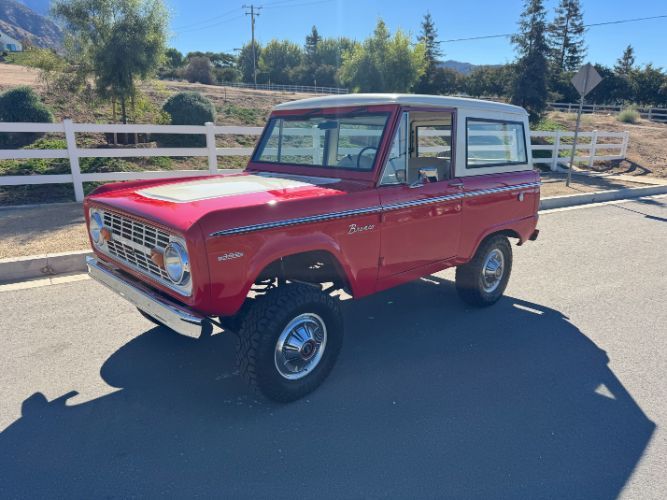
The ford bronco 1969 collector sweet spot argument comes down to a simple market observation. Early Broncos from 1966 and 1967 carry a first-year premium that buyers pay for regardless of condition. Late seventies and eighties full-size Broncos are a different vehicle entirely, larger, less charming to purists, and priced accordingly. Sitting in between, the 1969 model has quietly become one of the more rational buys in the entire first-generation Bronco range, and the numbers back that up.
Car Features
6 min read
Why 1969 Broncos Are a Collector Value Sweet Spot
A market read on why the 1969 Bronco, with its 302 V8 and sorted mechanicals, sidesteps the first-year premium tax without giving up real early Bronco character.
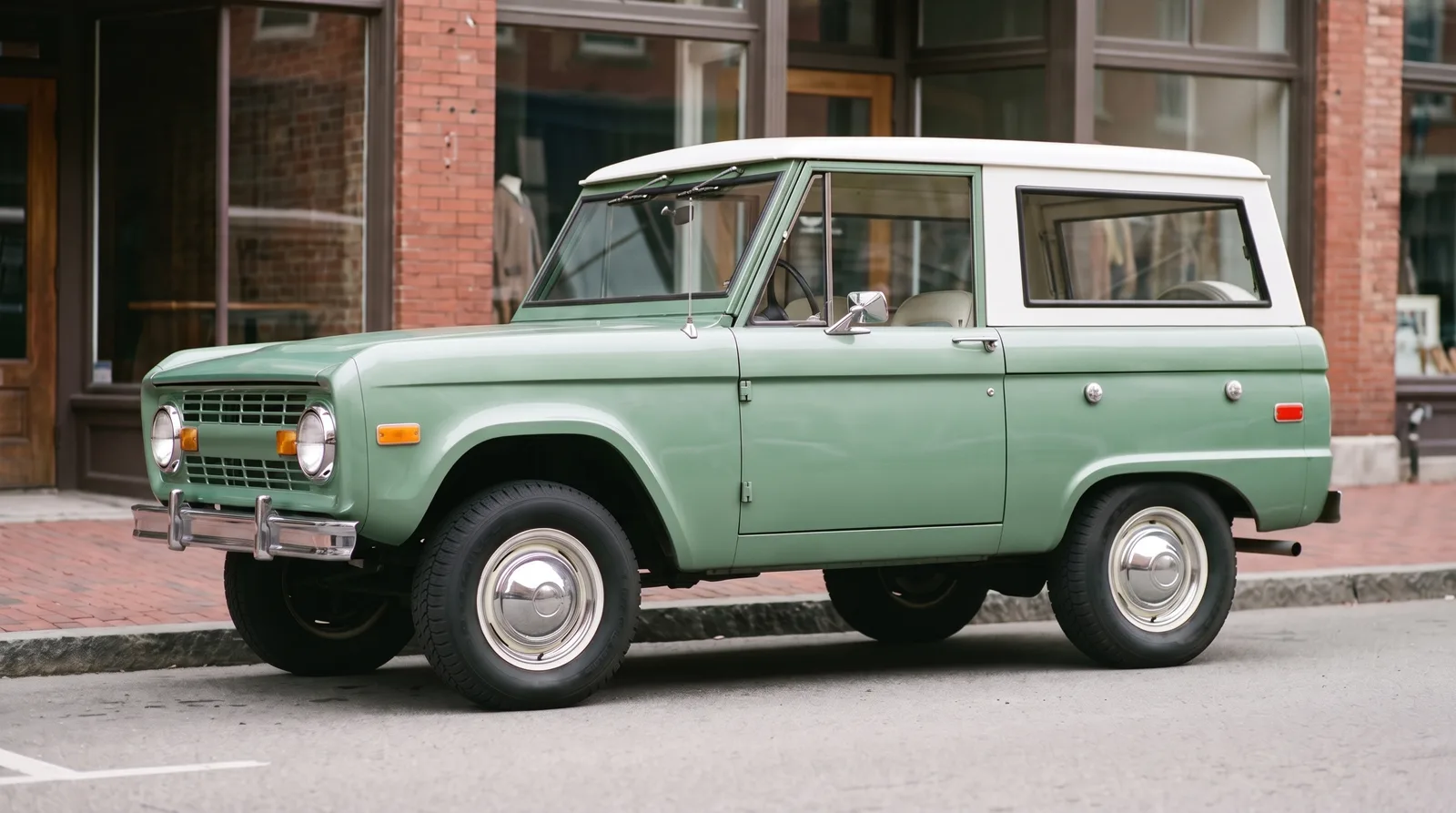
Why 1969 sits where it does on the price curve
Auction results for first-generation Broncos, 1966 through 1977, show a pattern that repeats across most collector vehicle categories. The earliest model years command a premium tied to novelty and historical significance, first year of production, the model that established the whole category. The 1969 truck does not carry that badge, and its price reflects it. What it does carry is the 302 V8, standard on the option sheet for the first time that year, plus a body and mechanical package that had already worked out the early rough edges from 1966 and 1967. Buyers get a more sorted truck for meaningfully less money than an early example in comparable condition.
| Model year segment | Typical collector positioning | Relative price tier |
|---|---|---|
| 1966-1967 early Bronco | First-year premium, historical significance | Highest |
| 1968-1969 Bronco | Sorted mechanicals, 302 V8 from 1969, still early-body styling | Middle, value-oriented |
| 1970-1977 Bronco | Later cosmetic and mechanical updates, growing recognition | Rising steadily |
What the 302 swap actually did for value
The move from the 289 to the 302 cubic inch V8 in 1969 is more than a trivia point for buyers evaluating a purchase. It puts the truck one step closer, mechanically, to the small-block Ford platform that generations of owners and shops have supported with parts and knowledge ever since. That practical advantage shows up in the market as fewer buyers walking away from a 302-equipped truck over parts availability concerns, which keeps demand, and therefore price, more stable than it might otherwise be for a truck this old.
The case against overpaying for early-year hype
A lot of buyers walk into the Bronco market assuming the earliest year available is automatically the smartest purchase. That assumption does not hold up well under scrutiny. A 1966 or 1967 Bronco in rough condition can cost more than a genuinely excellent 1969 example, simply because the model year itself is doing work that the actual truck's condition should be doing instead. I have watched buyers pay a real premium for a badge year and end up with more deferred maintenance than they bargained for, because the seller knew the year alone would carry the sale.
The 1969 truck rarely gets that kind of pass. Buyers evaluating it tend to actually look at the truck in front of them, which means the trucks that do sell well have earned it through condition and documentation rather than a birth year alone. That is a healthier market dynamic for a buyer to step into.
"I tell clients looking at first-generation Broncos the same thing every time. Buy the best documented truck you can find in the year range that fits your budget, and stop paying a premium for a badge year if the truck itself does not back it up."
- David Mercer
Liquidity matters more than buyers think
A collector vehicle is only worth what someone else will pay for it when you decide to sell. The 1969 Bronco benefits here too. It is popular enough, and recognizable enough as an early Bronco with the more desirable V8, that a well-documented example does not sit on the market waiting for the right buyer the way a more obscure variant might. That liquidity is worth factoring into any purchase decision, not just the enjoyment a buyer gets while they own the truck.
Condition still beats everything else
None of this market positioning matters if the specific truck in front of a buyer has hidden problems. Frame rust, a common issue on Broncos of this vintage that spent decades exposed to road salt or coastal air, can erase whatever pricing advantage the 1969 model year offers. A cheap 1969 Bronco with a compromised frame is not a bargain, it is a liability with a lower asking price attached. Buyers should always weigh what they are paying against what a proper structural repair would cost, not just against what a similar-looking truck sold for at a recent auction.
Paperwork carries real weight too. A title history, service records, and any documentation tying a truck to its original drivetrain all move the needle on both price and resale confidence. Two visually similar 1969 Broncos can sell for meaningfully different prices once one comes with a paper trail and the other comes with nothing but a seller's word. Buyers who do the work of verifying that history before bidding consistently do better than buyers who trust a clean-looking photo set alone.
My actual buy or no-buy read
For a buyer who wants genuine first-generation Bronco character, the compact early body, the 302 V8, and standard four-wheel drive, without paying the first-year premium that 1966 and 1967 trucks command, the 1969 model is a legitimate buy. It is not a truck people talk about in the same breathless tone reserved for the very earliest examples, and that is exactly the inefficiency a disciplined buyer should be looking to exploit. Prioritize documentation and mechanical honesty over chasing the earliest possible build date, and a 1969 Bronco is one of the more sensible entries into this market.
Anyone doing this research should also read our complete history of the 1969 model year before making a purchase decision, since production and design context matters as much as auction data when evaluating a specific truck. And when you are ready to act on that research, it is worth taking the time to browse classic Bronco listings and compare asking prices against documented condition rather than against the seller's story alone.
The sweet spot argument for the 1969 Bronco is not that it is the cheapest possible entry into first-generation ownership. It is that the money spent buys more truck, more sorted mechanicals, and less exposure to first-year premium pricing than the alternative. That is a straightforward value proposition, and in a market where hype often runs well ahead of actual scarcity, straightforward value is worth paying attention to. It is not the flashiest recommendation a market analyst can make, but it is the one that holds up when the buyer eventually becomes a seller.
Sources and notes
Related Reading
Have a
Ford Bronco
for Sale?
Reach thousands of serious classic car collectors across the US.
Sell It Here →
Are You a Classic Car Dealer?
List your full inventory and connect with targeted classic car buyers.
Join as a Dealer →
#collector trucks
#Ford Bronco
#auction values
#classic car values
#1969 Bronco
#Bronco market analysis

About the author
David Mercer
Classic car market analyst with two decades of experience tracking collector car valuations, auction results, and investment trends.
Related Listings - Ford Bronco
Comments
Be the first to comment on this article.