
By the time the 1969 Ford Bronco reached showrooms, the vehicle had stopped being an experiment. Three model years of feedback had come back through the dealer network, the odd body style had been quietly retired, the V8 had grown, and the trim catalog had learned that some buyers wanted carpet. Nineteen sixty-nine is the year the early Bronco settled into the shape it would keep, more or less, until the whole thing ended in 1977.
Car Features
10 min read
The 1969 Ford Bronco: The Early Bronco Hits Its Stride
The 302 arrived, the Roadster was gone, and a Bronco won the Baja 1000 outright. Nineteen sixty-nine is the year the early Bronco found its final shape.
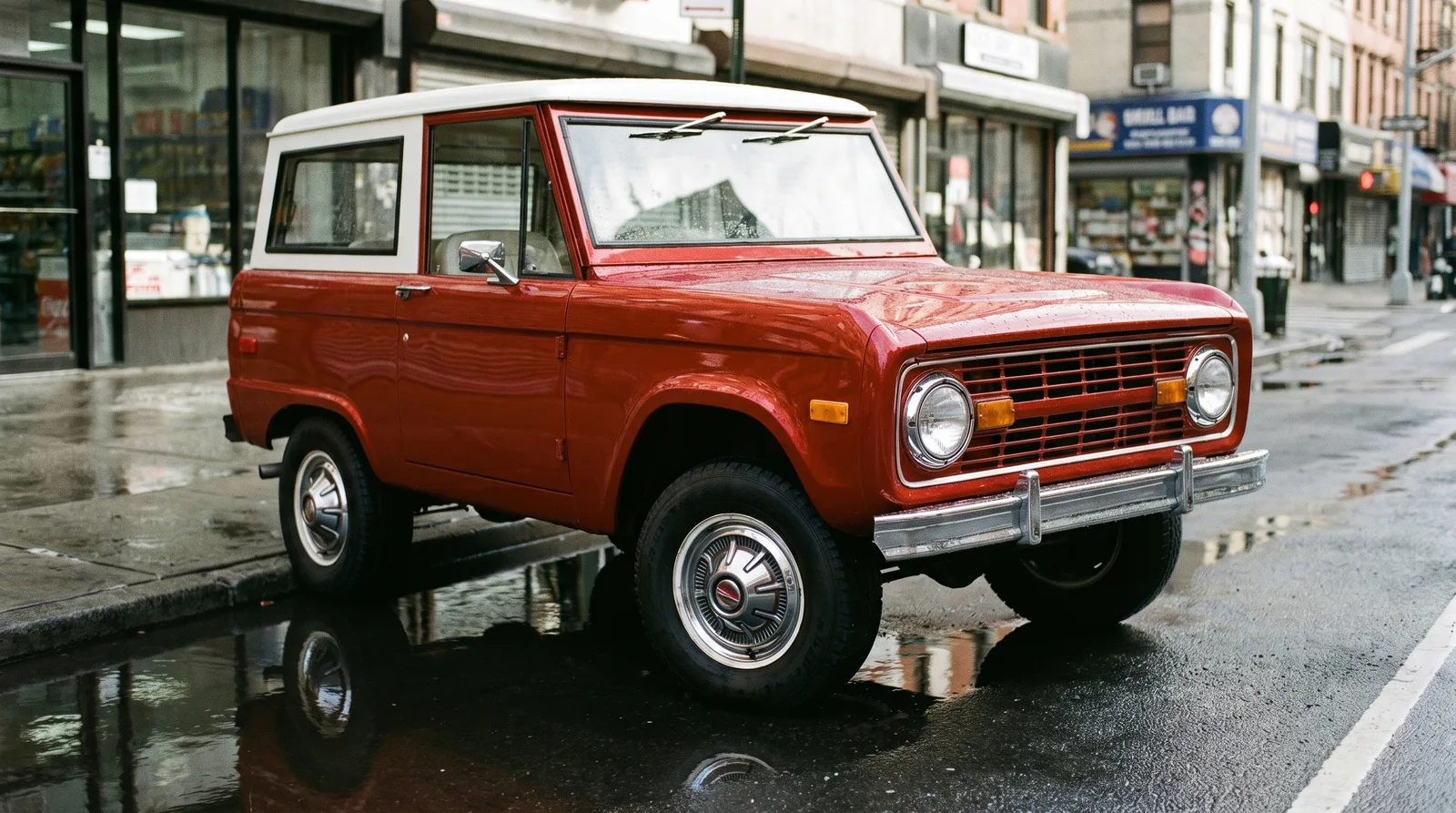
It is also the year the Bronco won the Baja 1000 outright, which is not a small footnote. Very little else in the vehicle's competition record carries the same weight, and nothing else in 1969 did more for the badge.
The 302 replaces the 289
The headline change under the hood was the arrival of the 302 cubic inch V8 in place of the 289. Ford had already made the switch across much of the passenger car line, and the Bronco followed. Rated output landed at 205 horsepower (SAE gross), a modest gain on paper, but the more useful improvement was torque delivery low in the rev range, which is the only part of the curve a two-speed transfer case really cares about.
The 170 cubic inch inline six remained the standard engine, unchanged in character and still rated at 105 horsepower (SAE gross). Ford kept it in the catalog because it kept the entry price honest and because fleet buyers, county road departments, and forestry services genuinely wanted the cheapest engine that would run forever. Plenty of them got exactly that.
The transmission situation had not moved at all. Three-speed manual, non-synchronized first gear, Dana 20 transfer case. No automatic. No power steering. Ford had heard the complaints and had not yet acted on them, which is a reminder that the early Bronco was still being sold against the Jeep CJ rather than against a station wagon. Buyers who wanted an automatic in a four-wheel-drive were told to look at an F-Series.
A two-model line, and what that says about buyers
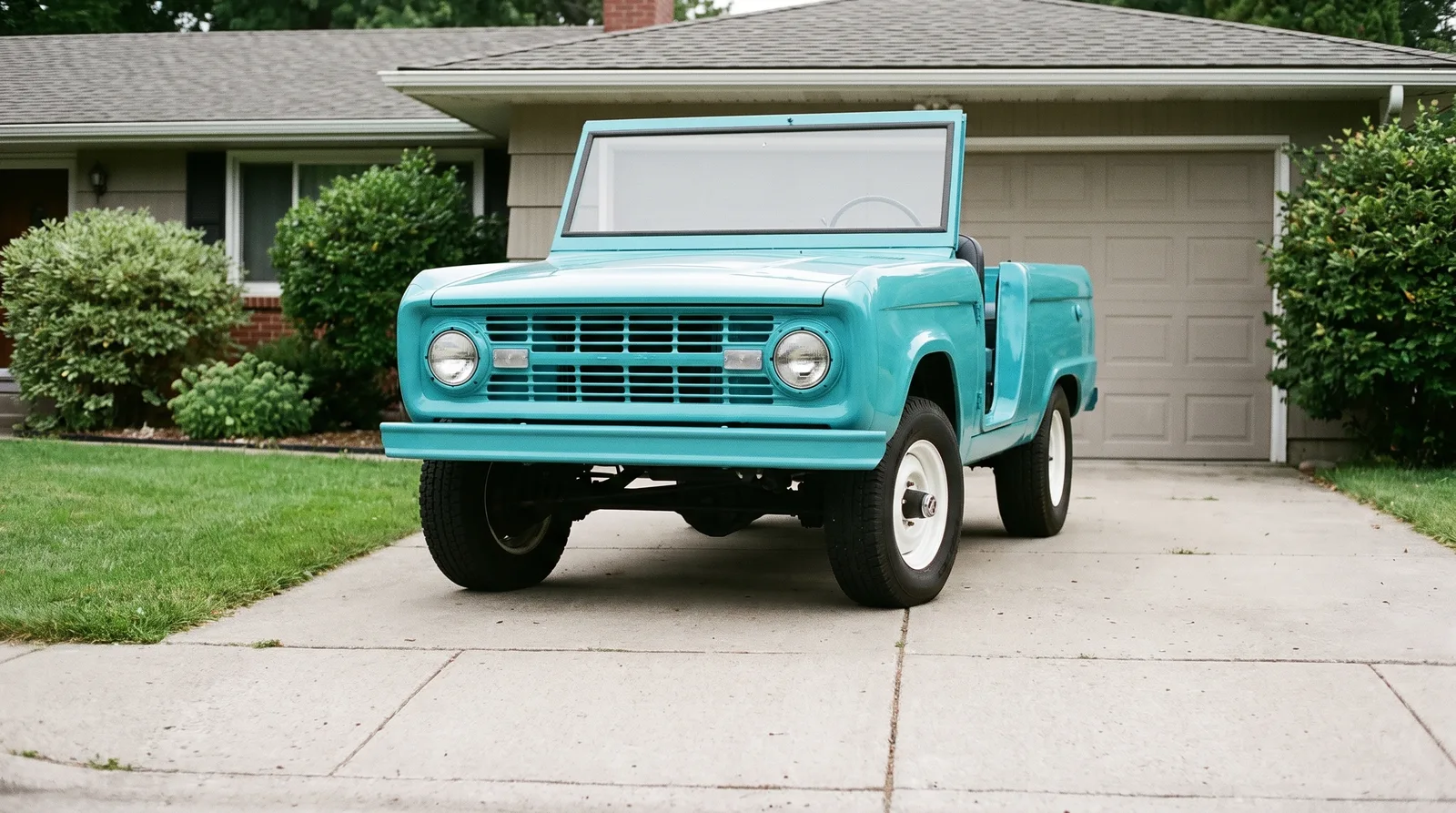
The 1969 Bronco range was down to two bodies: the U15 Wagon and the U14 Sports Utility half-cab. The U13 Roadster, the doorless open version Ford had launched with such conviction in 1966, was finished after 1968. It had never sold in meaningful numbers.
The reason is not mysterious. The Roadster asked its owner to accept genuine discomfort for a look, in an era before that trade had a market. Doors and a top were options, and once a buyer added them the price advantage evaporated and the result was still less weatherproof than a wagon. Ford let it go. Sixty years later the Roadster is the rarest and most valuable of the three body styles, which is the usual reward for a slow seller.
What remained sold well. The wagon dominated the mix by a wide margin, and the half-cab held its narrow niche among people who needed an open bed. That two-body structure held for the rest of the generation. For the wider arc of how the nameplate evolved from this point through the full-size years, the ford bronco story covers the whole run.
Trim levels, and the arrival of comfort
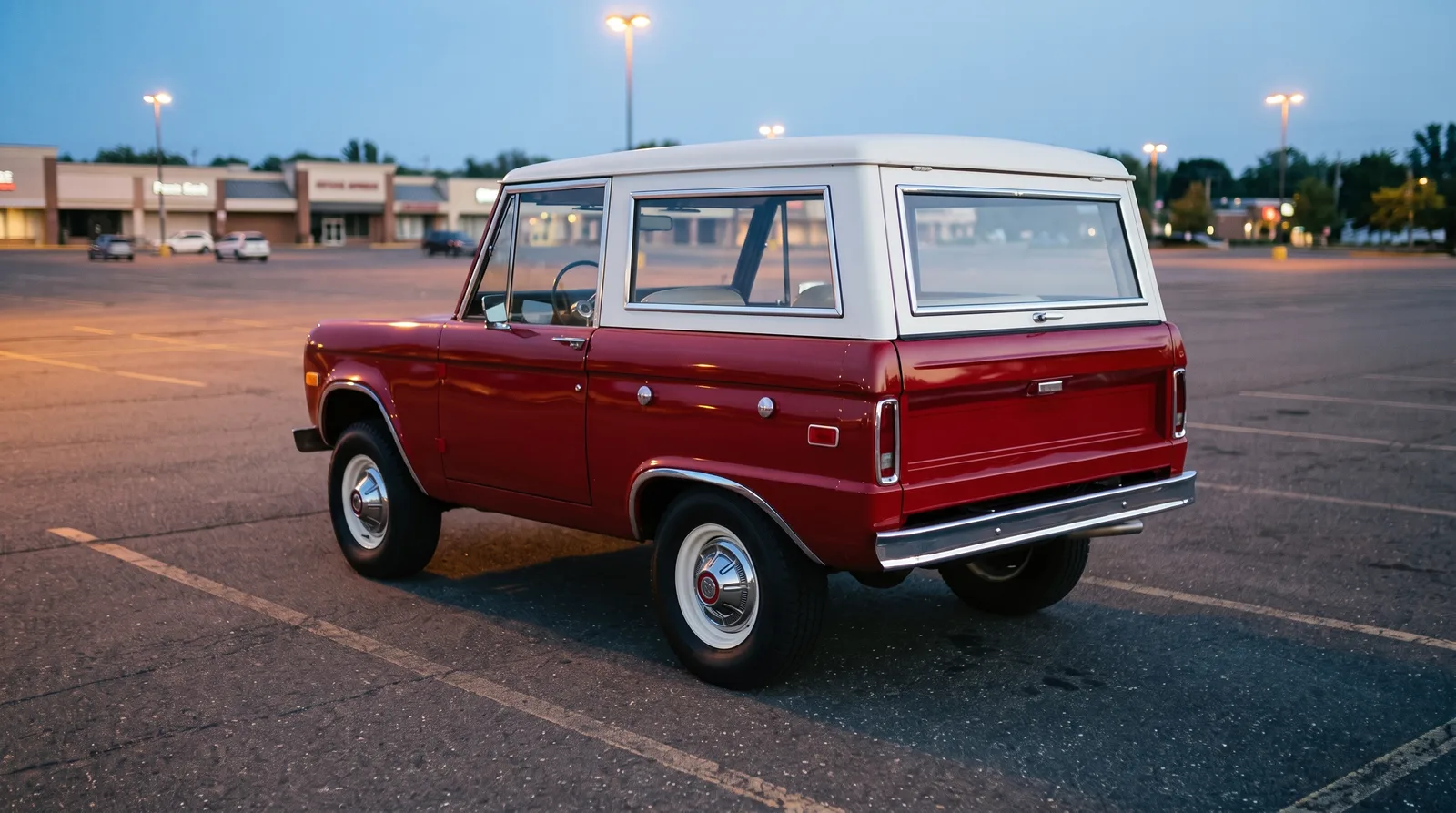
The Sport package had first appeared in 1967 as a way to dress up an otherwise plain vehicle, and by 1969 it had grown into something close to a distinct model in Ford's own literature. The content was straightforward: bright trim around the windshield and the grille, chrome bumpers, a horn ring, better door panels, argent wheel covers, and a level of interior finish that made the vehicle tolerable on pavement.
It sounds trivial. It was not. The Sport trim is the visible evidence that Ford had identified a buyer who wanted the capability without the penance, and that buyer eventually became the entire market. Every Eddie Bauer badge and leather-lined off-roader that came later traces back to somebody in Dearborn deciding that a four-wheel-drive could have a horn ring.
Original Sport cars carry a premium today, though the premium is smaller than it should be, because the package is easy to replicate and hard to prove without documentation.
The option sheet around it had grown too. A buyer in 1969 could order a limited-slip rear axle, an auxiliary fuel tank, a swing-away spare tire carrier, tow hooks, a front-mounted winch, a heavy-duty cooling package, free-running front hubs, and a range of axle ratios that made a real difference to how the vehicle behaved with a trailer behind it. Dealers also moved a steady volume of snowplow-equipped Broncos in the northern states, which is why so many surviving northern cars have extra holes in the frame horns and a wiring stub nobody can identify.
None of this was luxury by any modern reading. There was still no carpet worth the name, still no insulation, and the heater was a compromise. But the direction of travel was clear, and every year after 1969 pushed a little further along it.
| 1969 Ford Bronco | Detail |
|---|---|
| Body styles | U15 Wagon, U14 Sports Utility (half cab) |
| Wheelbase | 92 inches |
| Standard engine | 170 cu in inline six, 105 hp (SAE gross) |
| Optional engine | 302 cu in V8, 205 hp (SAE gross) |
| Transmission | Three-speed manual only |
| Transfer case | Dana 20, two-speed |
| Front axle | Dana 30, coil sprung with radius arms |
| Trim | Base, Sport package |
| Brakes | Drums front and rear |
| Competition highlight | Overall win, 1969 Baja 1000 |
Baja, November 1969
The Mexican 1000 was five years old and already the most credible endurance test in North American off-road racing. It punished vehicles rather than drivers, and the overall winners had almost always been light, fast, two-wheel-drive buggies that could float over the rough sections rather than fight through them.
In 1969 Rod Hall and Larry Minor drove a Bronco to the overall win. Not a class win. The overall. A steel-bodied, leaf-sprung-at-the-rear, four-wheel-drive production vehicle beat the buggies on their own ground, and no four-wheel-drive has repeated it since.
What makes the result durable is the nature of the course. The Baja peninsula in 1969 offered silt beds deep enough to swallow a wheel, dry washes lined with rock, and long open stretches where a heavy vehicle simply loses to a light one. A production-based four-wheel-drive should have been beaten on the fast sections even if it survived the rough ones. It was not. The approach was to keep moving and break nothing, and in an event where most entries fail to finish at all, that turned out to be faster than being quick.
The result did two things. It gave Ford an advertising line it used for years, and it pulled Bill Stroppe's Long Beach operation permanently into the Bronco business. Stroppe had been preparing Fords for competition since the 1950s, and the Bronco became his signature project. The Baja Bronco he built under Ford's blessing a couple of years later, with its rounded fender flares, padded roll bar, quick-ratio steering and automatic transmission, remains the most collectible early Bronco variant of all, and just 650 were sold over the package's four-year run from 1971 to 1975.
"People remember 1969 for the 302. The archives suggest they should remember it for Baja, because that is the year the Bronco stopped being a Jeep alternative and started being a legend with a result to point at."
- Tom Ramirez
Federal rules stamped into the sheet metal
Nineteen sixty-nine sits in the middle of the period when federal safety standards were rewriting American vehicles year by year, and the Bronco absorbed the changes like everything else. Side marker lights and reflectors had arrived for 1968 and carried over. The dual-circuit master cylinder was in place. The steering column was of the energy-absorbing type. Seat belt provisions and interior padding requirements had tightened.
These are the details that let a knowledgeable person date a Bronco body from across a parking lot, and they are also the details that get quietly wrong in restorations. A 1966 dash pad on a 1969 car, or 1969 side markers filled and smoothed for a cleaner look, both break the timeline. Neither is a crime. Both affect what a serious buyer will pay.
There is a gentle misconception worth correcting here. People often describe the early Bronco as unchanged from 1966 to 1977, and it is easy to see why, because the silhouette really does hold steady across twelve model years. The record says otherwise. Between 1966 and 1969 alone the vehicle lost a body style, gained a trim level, changed V8 families, absorbed several federal equipment mandates, and revised its lighting twice. The Bronco looked static because Ford never spent money restyling it, not because Ford stopped touching it.
The colors moved too. The 1969 palette drew on Ford's contemporary car chart, with Wimbledon White and Candyapple Red the most common survivors, alongside Lime Gold, Boxwood Green, Harbor Blue and Meadowlark Yellow. On a vehicle with a rubber floor and a metal dash, those colors look better than they have any right to.
How 1969 reads to collectors now
Within early Bronco collecting, the 1969 cars occupy a comfortable middle position. They are late enough to have the 302 and the improved trim, and early enough to keep the small tail lights, the uncluttered dash, and the general austerity that people are actually paying for. The 1971 and later cars brought the stronger Dana 44 front axle. The 1973 cars brought the automatic and power steering. Both of those are genuine improvements and both move the vehicle a step further from what it was in 1966.
Production for 1969 was modest by Ford standards, at 20,956 units, and the survivor pool has been thinned by rust, by hard use, and by the enormous appetite of the resto-mod market for clean early bodies. A correct, documented, unmolested 1969 wagon is a genuinely scarce object now, and priced accordingly.
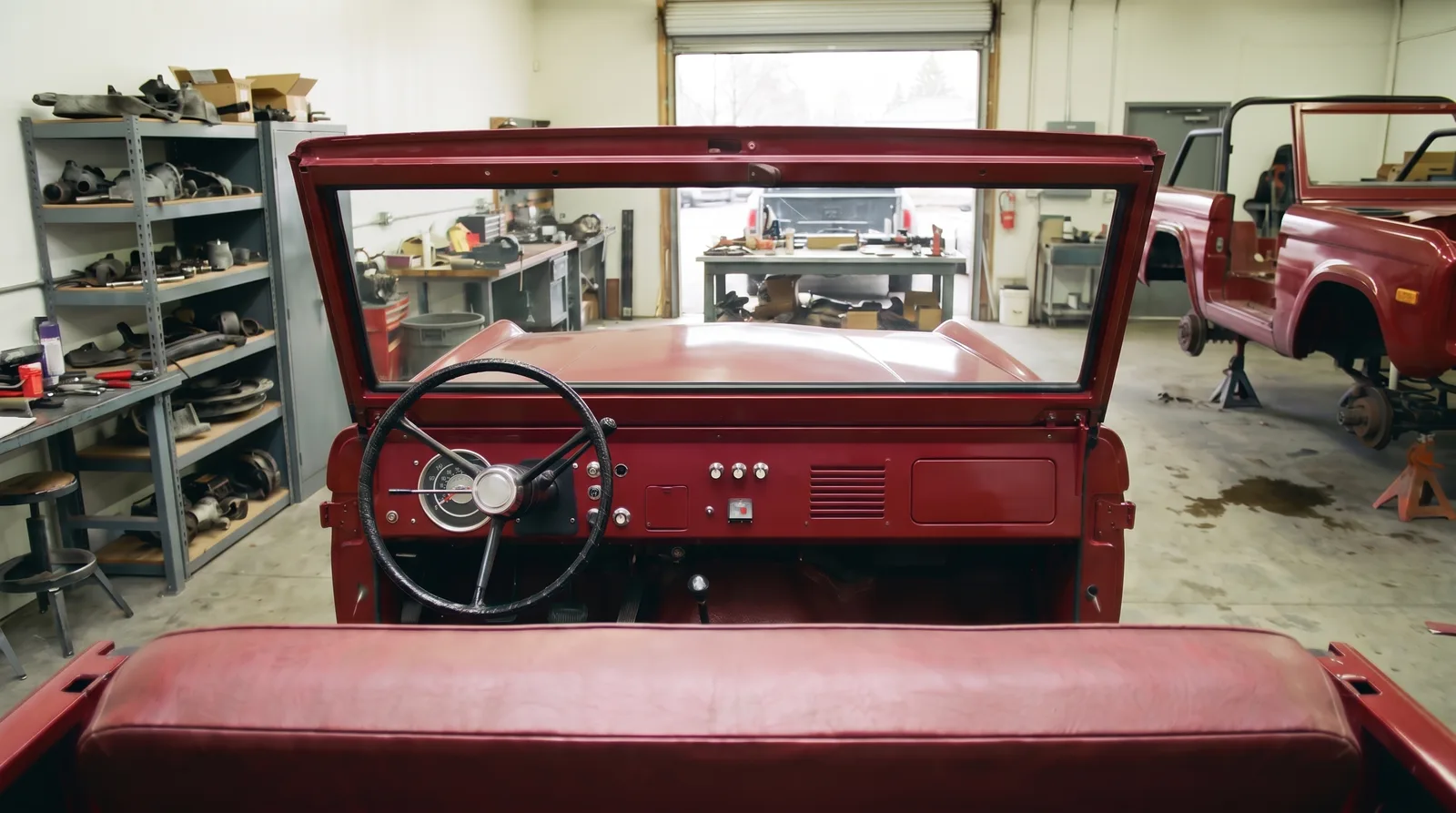
The practical advice is the same as it is for any early Bronco. Buy the body and the documentation, because everything else can be sorted. Rot in the rear quarters, the floors, the tailgate and the rocker area is the single largest cost in any of these vehicles, and it hides well. Anyone ready to browse classic Bronco listings should be prepared to look underneath before looking at the paint.
The 1969 Ford Bronco is the version of this vehicle that had learned what it was for without yet losing its edges. If you want to see what happened when Ford finally softened it for a wider audience, the 1973 cars are another one worth knowing.
Sources and notes
Related Reading
Article
The Ford Bronco Story: How an American 4x4 Became an Icon
Article
The 1966 Ford Bronco: The First Year of an Icon
Article
The 1973 Ford Bronco: Peak of the First Generation
Article
The Quiet Updates That Defined the 1969 Bronco

Article
From 289 to 302, the V8 That Transformed the Bronco
Article
The Bronco Sport Package and Its Chrome Appeal
Article
The Fading of the Bronco Roadster by 1969
Article
The Dana Axles That Made Broncos Trail Tough, a History

Article
1969 Bronco Before the Blazer Storm

About the author
Tom Ramirez
Corvette researcher and historian based in Bowling Green, Kentucky. Two decades documenting Corvette production history from original factory records.
Related Listings - Ford Bronco


Comments (1)
R
Roy Sandoval
5 days ago
if you're redoing the door panels on a sport bronco, don't go thick on the vinyl. heavy marine weight looks puffy against the factory pattern and the window cranks start to bind. a lighter automotive vinyl over thin foam lays flat and keeps the original lines. save the old panels for the pattern even if they're shot. you'll need them.