
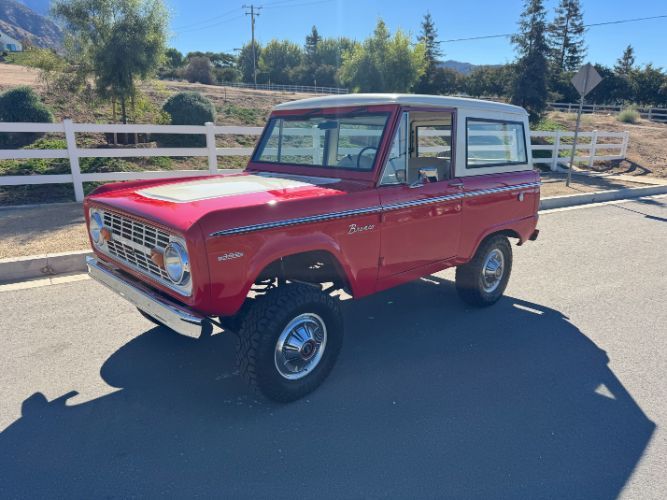
There is a photograph, the kind every Bronco club seems to have at least one copy of, showing a young couple leaning against a bright red truck outside a drive-in somewhere in the Midwest. Nobody remembers exactly where it was taken or who the couple was. What everyone notices first is the color. That is the quiet power of the ford bronco 1969 color trends story. Decades later, long after engine specs and options lists have blurred together in memory, it is the paint that people still describe first.
Car Features
6 min read
Late Sixties Colors on the 1969 Bronco
From candy red drive-in trucks to quiet farm-duty whites, the 1969 Bronco's color options captured a country caught between two decades of taste.
A palette caught between two decades
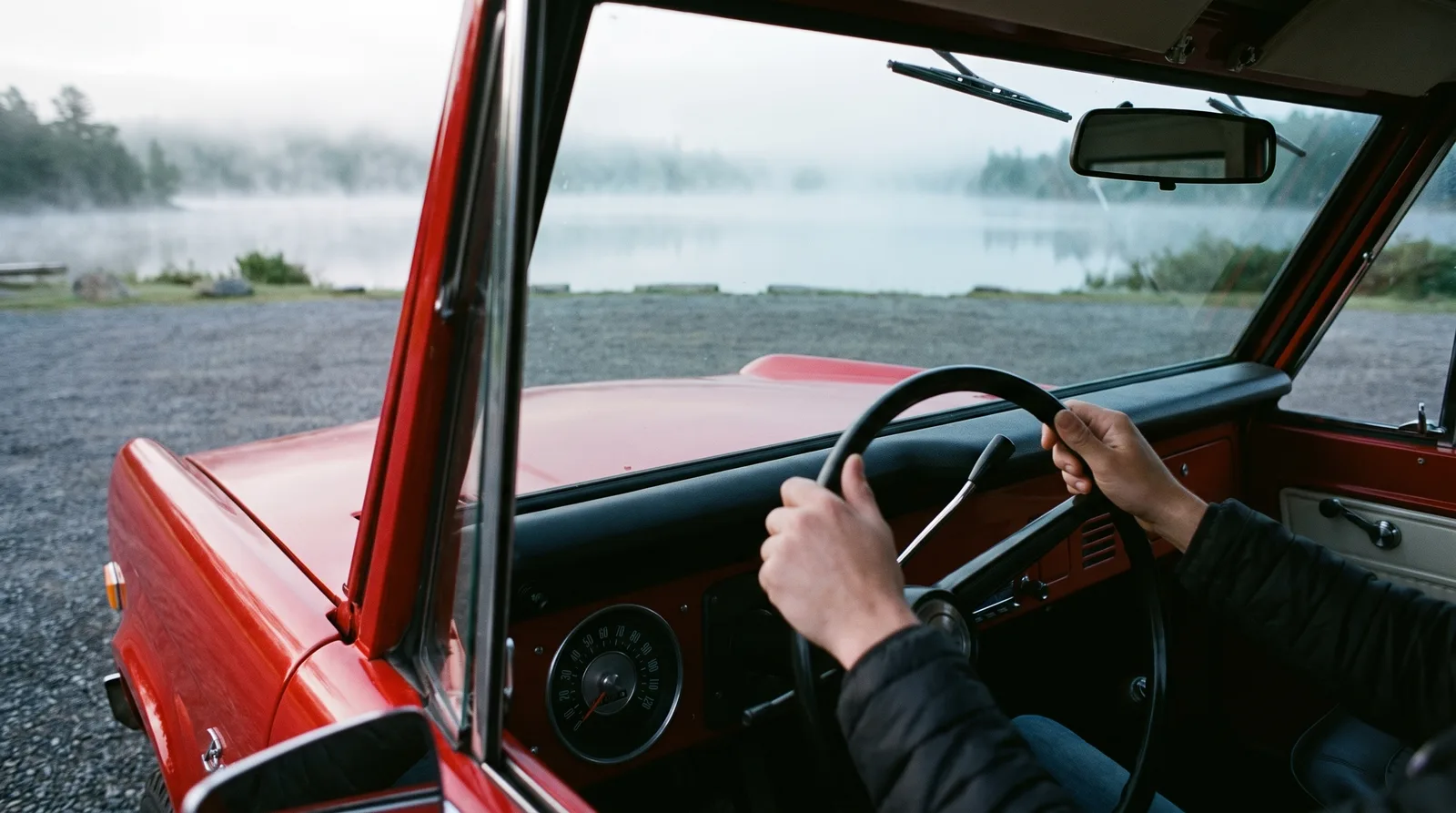
1969 sat at an odd hinge point in American color taste. The bold, almost theatrical hues of the late sixties, the candy reds, the golds, the deep blues, were still very much in fashion, but the earthier, more muted tones that would define the 1970s were already creeping into showroom brochures. Ford's Bronco color offerings for the year reflected that tension. Buyers could still order a truck in a shade bright enough to turn heads at a drive-in, but the option sheet also included quieter, more conservative colors for buyers who wanted their four-wheel drive to blend in rather than announce itself.
What is not in dispute is the cultural mood behind those choices. This was a country in the middle of a decade that had reshaped its own sense of style, and even a working truck like the Bronco was not immune to that shift. A red or gold Bronco parked outside a suburban house in 1969 was making a small statement, whether the owner intended it or not.
Why red became the color people remember
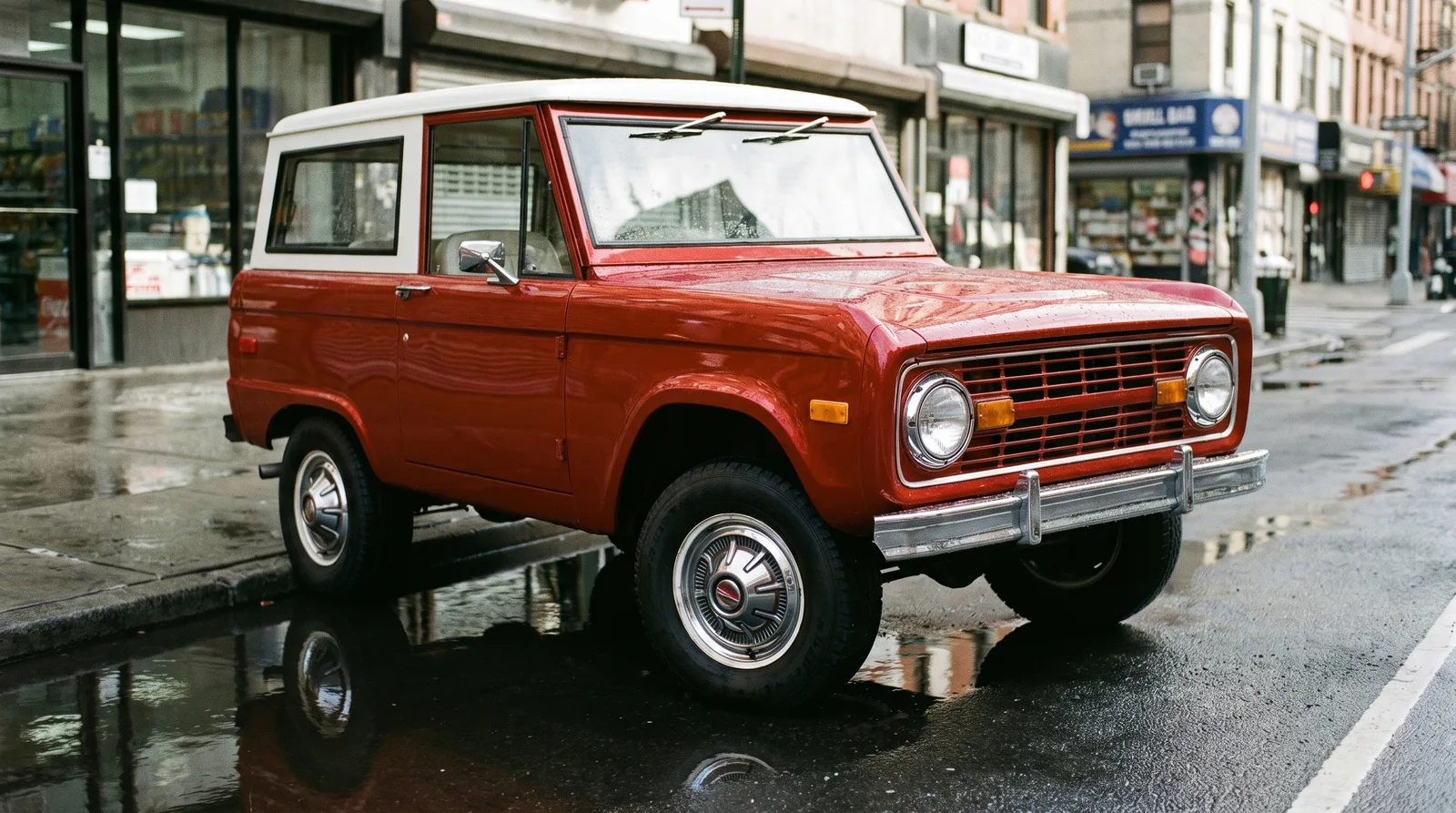
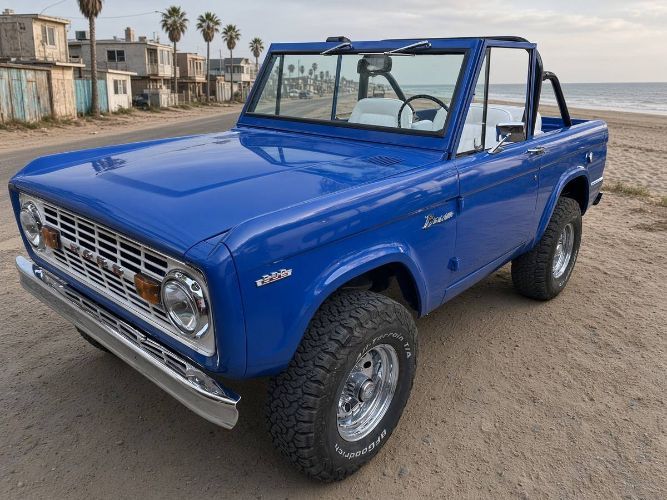
Ask a longtime Bronco owner what color the trucks were in 1969 and red comes up disproportionately often, even though plenty of period Broncos left the factory in white, black, or one of the softer metallics. Part of that is simple visibility bias. A red truck photographs well, sells well decades later, and tends to survive in memory the way quieter colors do not. Part of it is also genuine period popularity. Bright reds were having a moment across the entire American auto industry in the late sixties, and the Bronco's boxy, upright shape carried a bold color unusually well, without the visual noise that curvier cars sometimes had.
The colors nobody talks about
For every red Bronco in a family photo album, there were several more in white or a muted tan that simply did their job without fanfare. These were often the ranch and work trucks, chosen because they hid dust and did not show scratches from brush and fence wire. Nobody took a proud photograph of a dusty white Bronco outside a feed store, which is exactly why so few of those images survive compared to the bright ones parked outside diners and drive-ins. The color record we have inherited is skewed toward vanity, not toward what actually rolled off dealer lots in the highest numbers.
That gap between memory and reality is worth sitting with. It means the popular image of the 1969 Bronco, bold, bright, ready for a photograph, is only half true. The other half is a fleet of quieter trucks doing quieter work, unphotographed, uncelebrated, and now mostly gone, scrapped or rusted away decades before anyone thought to preserve them. What remains skews toward the vivid ones simply because those were the trucks worth keeping in a family's memory in the first place.
How the ordering process actually worked
Buying a Bronco in 1969 meant sitting across a desk from a dealer with a color chip book, not scrolling through photographs the way a buyer would today. The chips were small, glossy rectangles glued into a binder, and they lied a little, the way paint chips always do, looking richer under showroom lighting than they would under an Oklahoma sun six months later. Some buyers ordered based purely on those chips without ever seeing a finished truck in that shade. Others waited to see one on a dealer's lot before committing, unwilling to trust a swatch the size of a playing card with a decision they would live with for years.
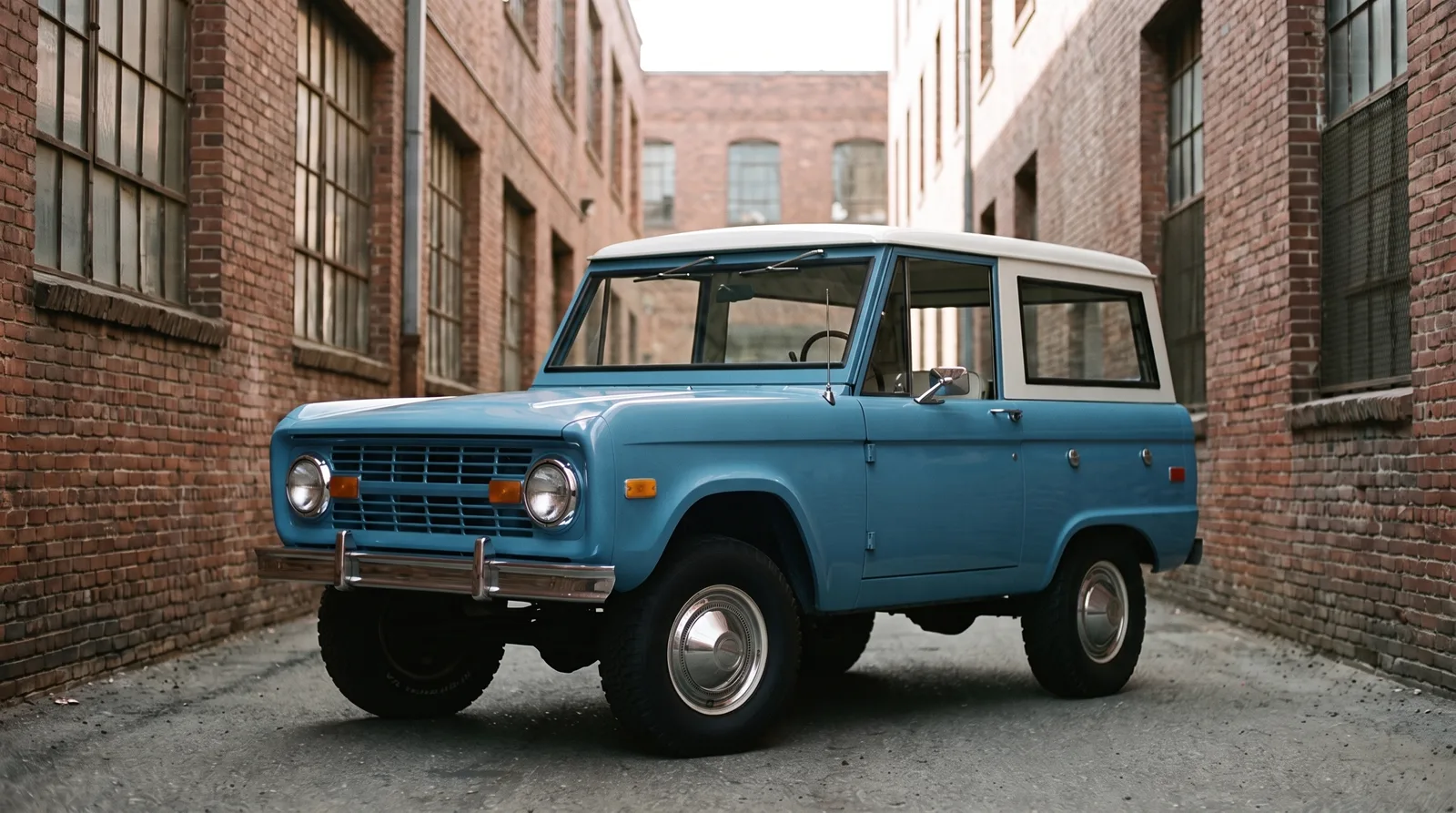
Two-tone combinations added another layer of choice, with a contrasting roof or lower body panel available on some configurations. That option let a buyer soften a bold color with a neutral roof, or double down and order something loud from bumper to bumper. Dealers in different parts of the country reported different preferences, with two-tone combinations proving more popular in markets where the Bronco was bought as much for its looks as for its capability.
Color as a small act of identity
There is something worth sitting with in the idea that a paint chip could carry so much personal meaning. A young rancher ordering a Bronco in a quiet earth tone was making a different statement than a young couple ordering one in bright red for weekend drives. Neither choice was wrong. Both were a small, ordinary way of saying something about who they were and what the truck was for, long before anyone thought to call that kind of decision an act of self-expression.
"People assume color is the least important thing about an old truck. I have met owners who can tell you nothing about the engine but everything about why their father chose that particular shade of blue."
- Nora Beckett
What color means to collectors today
Original paint, in its original color, is one of the quiet obsessions of the classic Bronco world. A truck that still wears its factory color, even faded and worn, tells a story a repaint cannot. Collectors chasing the 1969 ford bronco story in full often find themselves circling back to color as one of the more emotional parts of that research, since a factory color code connects a specific truck to a specific moment in a very particular year.
For a broader view of how the whole Bronco lineage developed, from its earliest year through the changes that followed, the full story is worth reading alongside this one. And for those drawn to a particular shade from this era, it is worth browsing classic Broncos on the market to see which colors have survived, and which have quietly become harder to find than anyone expected.
Paint fades. Photographs yellow. But somehow the color of a truck someone loved fifty years ago still has a way of staying vivid long after everything else about that memory has softened. Ask an owner to describe their first Bronco and watch how quickly the color comes out before the engine size does. That order of memory says something true about what actually stays with us, long after the specifications have been forgotten.
Sources and notes
Related Reading

About the author
Nora Beckett
Automotive features writer and photographer who tells the human stories behind the cars, from show fields to cross-country road trips.
Related Listings - Ford Bronco
More in Car Features
Comments
Be the first to comment on this article.