
The first time I saw an early Ford Bronco doing what it was designed for, it was crawling out of a dry creek bed in eastern Oregon with a fly rod strapped to the roll bar and a dog standing on the passenger seat like a hood ornament. The owner had bought it in 1974 for the price of a decent used sedan. He had never washed it on purpose. That is the thing about the classic Ford Bronco that gets lost in the auction results and the six figure restomods: it was born as a cheap, honest, slightly awkward little truck for people who wanted to get somewhere the mail did not reach. Everything else, the racing legend, the Hollywood shorthand, the white one on the freeway, came later and came by accident.
Car Features
16 min read
The Ford Bronco Story: How an American 4x4 Became an Icon
From a 92 inch wheelbase runabout in 1966 to the last full size truck in 1996, the Ford Bronco lived two entirely different lives in the American imagination. Here is how it happened.
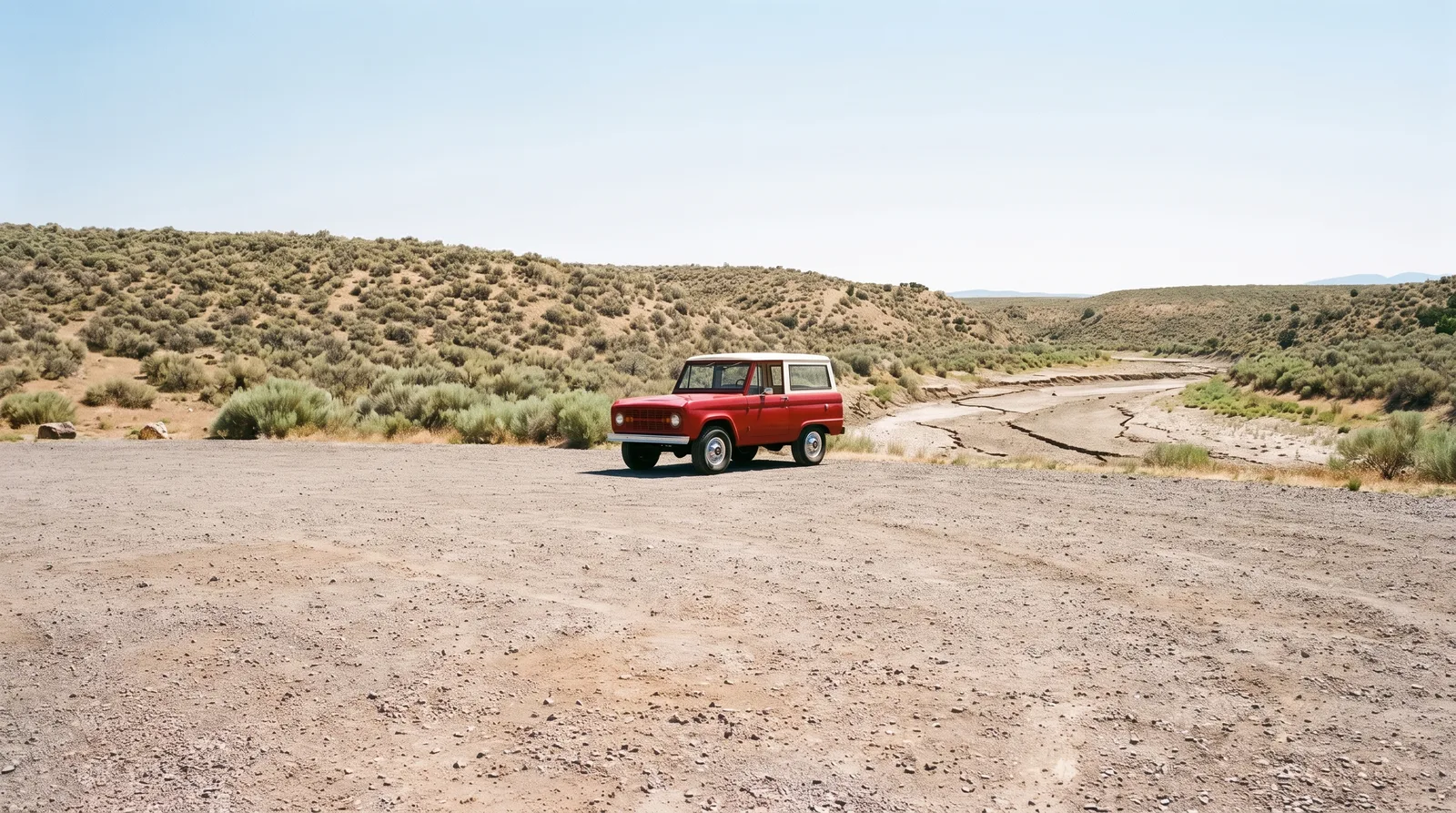
Ford built the Bronco from the 1966 model year through the summer of 1996, and in those thirty years it changed shape so completely that the first and last examples share almost nothing except a badge and a philosophy. This is the story of how a 92 inch wheelbase runabout with a straight six and no power steering turned into one of the most recognizable American vehicles ever made.
A truck built to answer a question nobody at Ford had asked
In the early 1960s the small four wheel drive market in the United States belonged to two companies, and neither of them was Ford. Willys, by then Kaiser Jeep, sold the CJ series to farmers, ranchers, hunters and a growing number of suburban buyers who liked the idea of a vehicle that could embarrass a station wagon in a snowstorm. International Harvester had answered in 1961 with the Scout, a boxy, likable thing that sold far better than Ford executives expected. Ford had the F series and it had station wagons. It had nothing in between.
The push came from inside product planning rather than from a customer clinic. Donald N. Frey, the Ford product manager whose name is attached to the Mustang program, argued that the company needed a compact utility vehicle of its own, and Lee Iacocca signed off on the money. The engineering lead was Paul G. Axelrad, and the brief he worked to was unusually strict. The new vehicle would not share a platform with anything. It would get its own frame, its own body, its own short wheelbase, and it would be simple enough that a dealer in a small town could keep one running with ordinary tools.
That decision is the reason the early Bronco feels like nothing else Ford built in the period. The frame was a purpose designed box section unit. The front suspension used a solid axle on coil springs, which was a genuinely forward looking choice in a segment where leaf springs were the default, and it gave the Bronco a ride quality and a turning circle that Scout and CJ owners noticed immediately. The steering box, the axles and the transfer case were sized for abuse rather than for showroom smoothness. Ford was not trying to build a luxury item. Ford was trying to build something a rancher would buy twice.
1966: three body styles, one wheelbase, and a very short options list
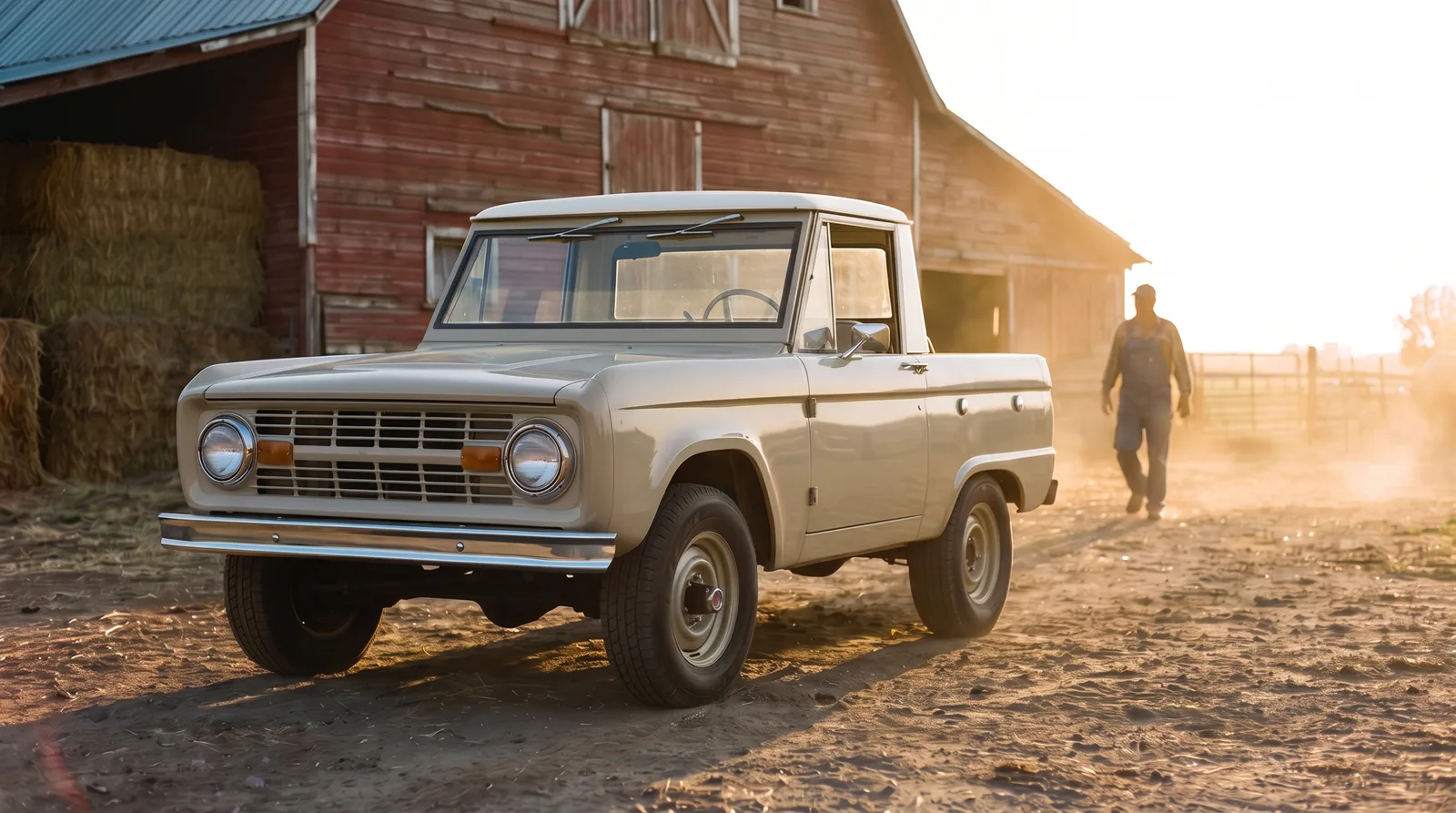
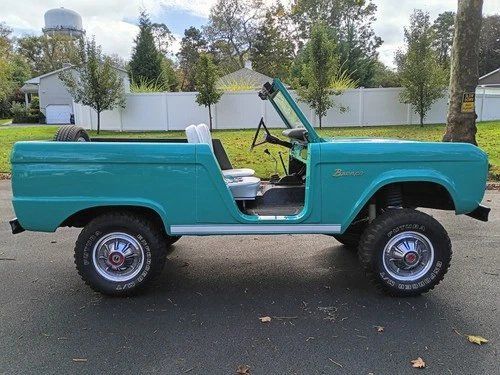
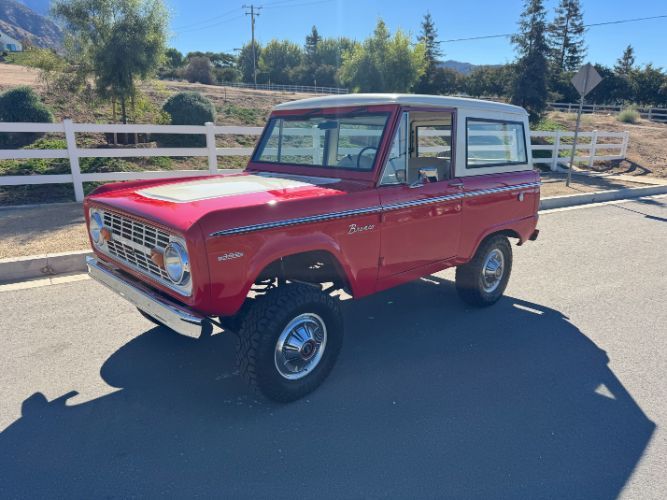
The Bronco reached dealers in August 1965 as a 1966 model, and buyers got a choice that looks strange today. There were three distinct bodies on the same chassis. The U13 Roadster had no doors and no top at all, a doorless open tub aimed squarely at the Jeep buyer who wanted wind in the face and did not care about February. The U14 Sports Utility was a half cab, a two seat pickup with a small bed behind the passengers. The U15 Wagon had a full length roof and a rear seat, and it is the version that essentially everyone remembers, because it is the one that outsold and outlived the other two.
The Roadster was the first to go, dropped after the 1968 model year once it became clear that the American buyer said he wanted a doorless truck and then bought the one with doors. The half cab lasted considerably longer and is now, in the collector market, the body style that turns heads at a show precisely because so few people expect it. The wagon carried the line to the end.
Equipment was deliberately thin at launch. A heater was optional. So were a passenger seat, a rear seat, a tachometer and a tailgate mounted spare carrier. Power steering did not appear as a factory option until 1973, and neither did an automatic transmission, which arrived the same year in the form of the C4. For seven model years, if you wanted a Bronco, you got a three speed manual and you got strong forearms. Ford leaned into that in the advertising, selling the truck on capability and on a kind of plainspoken competence rather than on comfort.
| Generation | Years | Platform | Signature engines | Body notes |
|---|---|---|---|---|
| First generation, early Bronco | 1966-1977 | Unique 92 inch wheelbase frame | 170 and 200 six, 289 and 302 V8 | Roadster, half cab and wagon; wagon only after 1972 |
| Second generation, big Bronco | 1978-1979 | Full size F series derived | 351M and 400 V8 | Removable fiberglass rear top, two model years only |
| Third generation | 1980-1986 | New lighter full size chassis | 300 six, 302 and 351 V8 | Twin Traction Beam independent front, aero nose |
| Fourth generation | 1987-1991 | Revised full size | Fuel injected 302 and 351 | Rounded front end, Eddie Bauer trim prominent |
| Fifth generation | 1992-1996 | Final full size update | 302 and 351 EFI | Safety driven redesign, production ended 1996 |
The engines that made the reputation
The Bronco arrived with a 170 cubic inch inline six, an engine borrowed from the passenger car parts bin and rated at a modest 105 hp. It was adequate rather than inspiring, and Ford knew it. By the spring of 1966 the 289 cubic inch V8 was on the option sheet, and that is the moment the Bronco stopped being a competitor to the Scout and started being something the Scout could not answer. A small block V8 in a vehicle weighing well under two tons, geared for low speed work, produced a truck that could climb almost anything at walking pace and still pull away from traffic on the way home.
In 1969 the 302 replaced the 289, and it stayed to the end of the first generation. The six grew to 200 cubic inches along the way. None of these engines were exotic. All of them were sold in enormous volume in Mustangs, Falcons and F series pickups, which is exactly why the early Bronco became a favorite of people who fix their own vehicles. Parts were everywhere, the machining tolerances were forgiving, and a small block Ford in reasonable health will run for a very long time on indifferent maintenance.
The bigger trucks that followed told a different engine story. The 1978 and 1979 Broncos got the 351M and the 400, tall deck engines with a reputation for torque and thirst in roughly equal measure. From 1980 Ford put the legendarily durable 300 cubic inch inline six into the lineup alongside the 302 and 351 Windsor, and by the late 1980s fuel injection had arrived and transformed the driving experience. A 1990 Bronco with the injected 351 starts on a cold morning without ceremony, which is more than can be said for a carbureted 1977 with a tired choke.
"The early Bronco is one of the few American vehicles where the entry level engine is a genuine part of the character. A 170 six with three on the tree is slow, and being slow is the whole point. You notice the road."
- Patrick Walsh
Baja, Bill Stroppe, and the year the Bronco became a legend
Every long lived vehicle needs one weekend that fixes its reputation forever, and for the Bronco that weekend came in the Mexican desert. Bill Stroppe was a California racer and preparer with a long relationship with Ford, and he had been campaigning Broncos in off road competition almost from the moment they went on sale. In 1971 he and Parnelli Jones ran a purpose built machine called Big Oly, a tube framed, fiberglass bodied creature with an enormous roof wing that was a Bronco mostly in spirit and in silhouette. It won the Baja 1000 that year, and it won again in 1972.
Big Oly was not a production truck and nobody pretended it was. What mattered was what came next. Stroppe built and sold a run of Baja Broncos through Ford dealers between 1971 and 1975, street legal trucks with reinforced suspension, a padded roll bar, fender flares, quick ratio steering and the famous red, white and blue paint. Production was small, with surviving records putting the run at somewhere between 450 and 650 units depending on the source, and survivors with documented Stroppe history now sit in a completely different market tier than an ordinary early Bronco.
The racing connection also changed who bought the truck. Through the middle 1970s the Bronco stopped being purely a rural work vehicle and became something a young person in Southern California wanted, lifted, with wide tires and a surfboard in the back. That cultural shift is why so many original early Broncos were modified into oblivion during the following two decades, and why an honest, unmolested, factory specification survivor is now genuinely difficult to find.
1978: the big Bronco finally arrives
Ford had been planning a larger Bronco since the early 1970s, and two energy crises pushed the program back repeatedly. When the second generation finally appeared for 1978, it was an entirely different proposition. Gone was the bespoke short chassis. In its place sat a shortened F series pickup platform, and the Bronco suddenly had a full width cab, a proper back seat, real towing capacity and a curb weight that had climbed enormously.
It also had the removable fiberglass rear roof section, a feature that gave the big Bronco much of its visual identity and that owners either loved or cursed depending on whether they had a friend available to help lift it. The 1978 and 1979 trucks are the ones enthusiasts now call the Bullnose or, more commonly, simply the big Bronco, and they occupy an odd position in the model history. They ran for only two model years before emissions rules and fuel economy standards forced another redesign, which makes them scarce, and their styling has aged far better than anyone predicted in 1980.
Some early Bronco purists were unimpressed at the time. The little truck had been a specialist tool and the new one was a family vehicle with four wheel drive. But the sales numbers were decisive. The second generation outsold the entire final years of the first generation quickly, and Ford had confirmed what the market wanted: space, comfort and a V8, with the off road capability held in reserve for the four weekends a year it was actually used.
1980 to 1996: the long full size run
The third generation arrived for 1980 on a new, lighter chassis with the Twin Traction Beam independent front suspension. It is the least romanticized Bronco and probably the most quietly significant, because it is where the model settled into a shape it would keep, with revisions, for sixteen years. Ford refined rather than reinvented. The 1987 update brought a softer nose, flush headlamps and, importantly, electronic fuel injection across the range. The 1992 redesign added structural and safety improvements and gave the truck the rounded, slightly heavy look that most people picture when they hear the word Bronco without a year attached to it.
Trim levels did a lot of work in this era. XLT covered the mainstream. Eddie Bauer, with its two tone paint and its outdoor outfitter association, turned the Bronco into a plausible alternative to a luxury wagon. Special editions like the blacked out Nite package gave the model a bit of late 1980s attitude. Ford was selling an image of capable American leisure, and it worked well enough that the Bronco outlasted most of its original rivals.
The end came in June 1996. The market had moved to four door sport utilities, and the two door Bronco could not answer the Chevrolet Tahoe and the new generation of family haulers. Ford replaced it with the Expedition, a vehicle that was better at almost everything the average buyer actually did and worse at being memorable. Total Bronco production across all five generations topped 1.1 million units, with the first generation accounting for roughly 230,800 of them.
The white Bronco: how a truck became a news event
No account of this vehicle is honest without the afternoon of June 17, 1994. A white 1993 Ford Bronco driven by Al Cowlings, carrying O. J. Simpson, moved slowly along southern California freeways while helicopters filmed and an estimated audience in the tens of millions watched live. It is one of the strangest pieces of automotive pop culture in existence: a mass market truck that became, for one evening, the most recognized object in the United States.
The effect on the model was complicated and long lasting. In the immediate aftermath, white Broncos became awkward to own, and used values on late examples softened for a period. Over the following decades the association faded into something closer to historical trivia, and by the time the nameplate returned in 2021 the imagery had lost most of its sting. Today the incident is a footnote for younger buyers who were not alive for it, and an unavoidable memory for everyone who was.
What it did not do, notably, was damage the early Bronco. The first generation truck had already been absorbed into a different cultural category by the 1990s, alongside surfboards, ski towns and a certain kind of unhurried American outdoors imagery. Those two reputations, the 1966 fire road runabout and the 1994 news broadcast, belong to the same nameplate and to completely separate vehicles, and collectors have never confused them.
"Ask ten people what a Bronco is and you will get two answers thirty years apart. Both are correct. Very few vehicles get to have two entirely different lives in the public imagination."
- Patrick Walsh
What the classic Bronco is worth now, and why
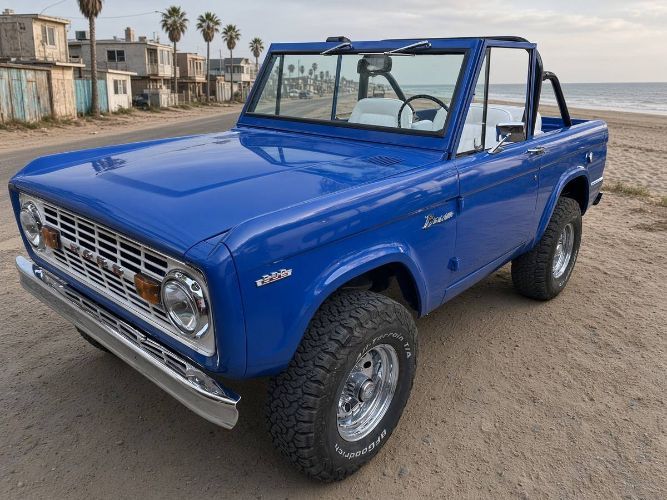
The early Bronco market changed permanently around the middle 2010s, and the cause was the restomod. Shops including Icon in California, founded by Jonathan Ward, and Velocity Restorations in Florida began delivering first generation Broncos rebuilt to a standard the factory never approached: modern fuel injected drivetrains, coilover suspension, leather interiors, sound deadening, air conditioning that works. Prices for those builds reached and passed six figures, and once the top of the market moved, everything underneath it moved too.
The result is a market with unusually wide spread. A rough but complete 1970s wagon with a solid frame occupies one price world. A correct, documented, numbers matching 1966 with the original 289 occupies another. A Stroppe Baja Bronco with paperwork occupies a third. Half cabs and the surviving Roadsters carry a scarcity premium that catches new buyers by surprise. Meanwhile the 1978 and 1979 big Broncos have started climbing from a low base, and clean 1980s and early 1990s full size trucks, long treated as disposable, are finally being preserved rather than scrapped.
Rust is what decides values in the end. These are body on frame trucks that lived outside, and the rear quarters, floors, tailgates and frame rails tell the truth about a vehicle's history far more reliably than a fresh paint job does. Anyone browsing a classic Ford Bronco for sale listing should be reading the underside photographs before the color, because on this model condition and documentation move the number far more than trim level ever will.
Why it lasted
The Bronco worked because Ford got the original concept right and then had the sense to let it grow up. The 1966 truck was small, tough and cheap, aimed at a buyer who needed a tool. The 1996 truck was large, comfortable and well equipped, aimed at a buyer who wanted an option. In between it won races in Mexico, carried a generation of surfers and skiers, appeared in an unforgettable news broadcast, and quietly did farm work in about forty states.
Ford revived the name in 2021 and the modern truck sells well, which has done the old ones no harm at all. Interest in the nameplate lifted values and attention across the whole classic range, and it introduced the early Bronco to people who had never looked twice at one. But the vehicle that earned all of it is still the little 92 inch wheelbase wagon with the coil sprung front axle, the one you can pick out from three fields away by its silhouette. Thirty years after the last one left Michigan, it remains one of the clearest statements of purpose Ford ever put on wheels.
Sources and notes
- Ford Bronco - Wikipedia
- 1966 Ford Bronco Wagon 170 Six specifications - Automobile Catalog
- Parnelli Jones's Big Oly Bronco sells for $1.87M - Hagerty Media
- Bill Stroppe 1971-1975 Baja Broncos - Bronco Corral
- 1966 Ford Bronco Guide: U13 Roadster, U14 Half Cab, U15 Wagon - Old Broncos
- 1st Generation Bronco (1966-1977) - Ford.com
Related Reading
Article
The 1966 Ford Bronco: The First Year of an Icon
Article
The 1969 Ford Bronco: The Early Bronco Hits Its Stride
Article
The 1973 Ford Bronco: Peak of the First Generation
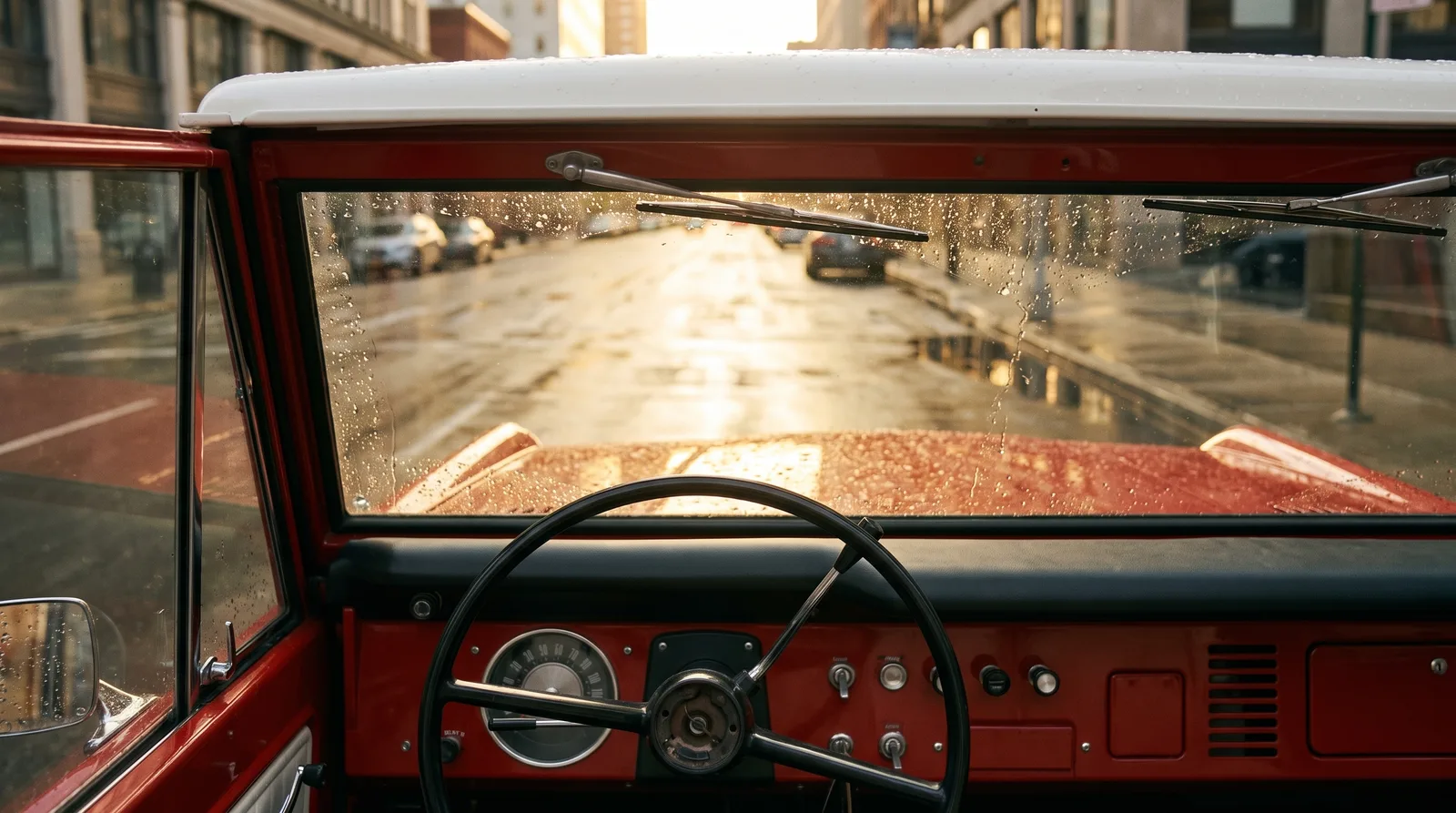
Article
The Early Bronco 1966-1977: The First-Generation Legend
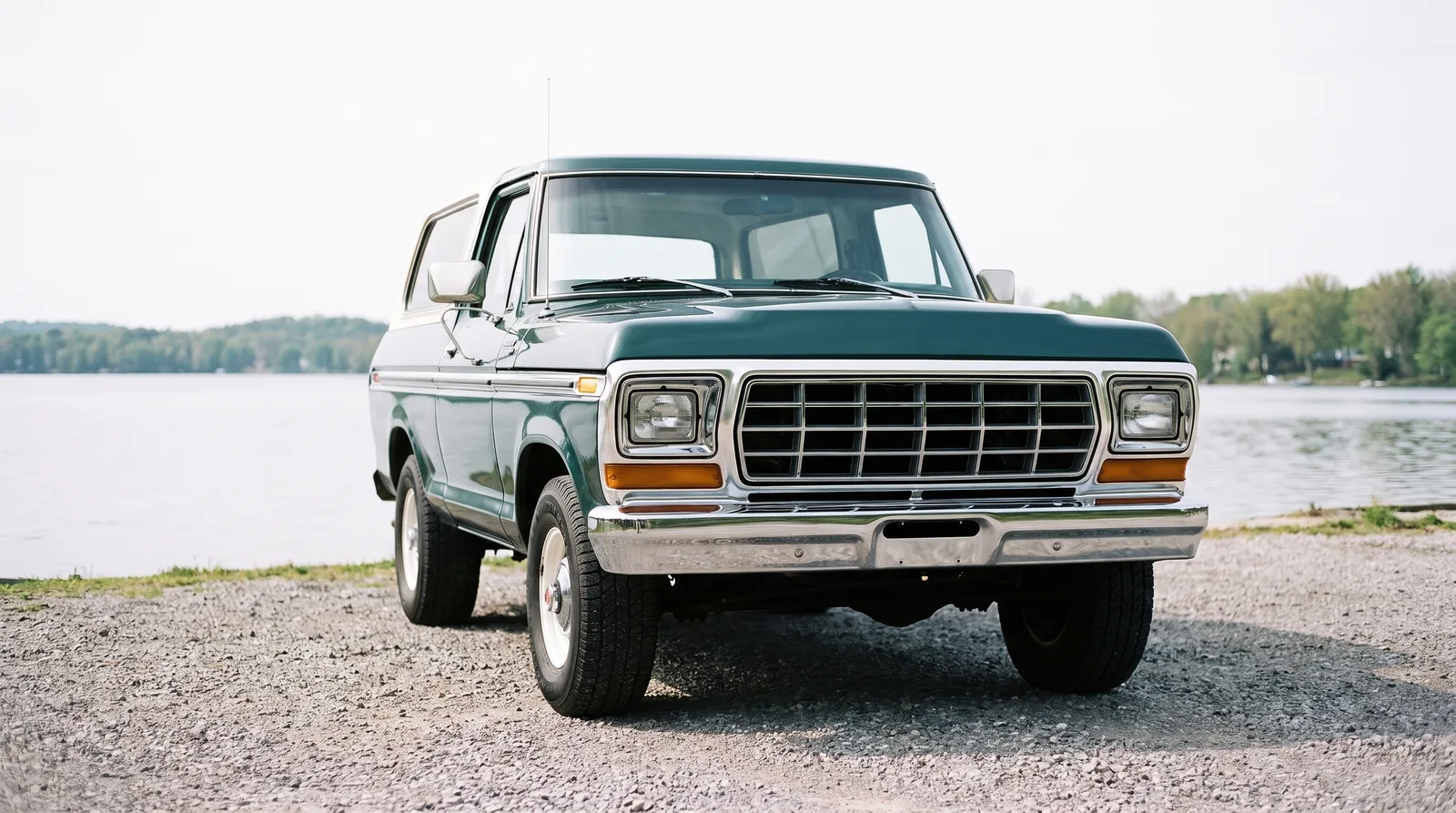
Article
The 1978-1979 Ford Bronco: The Big Bronco Arrives
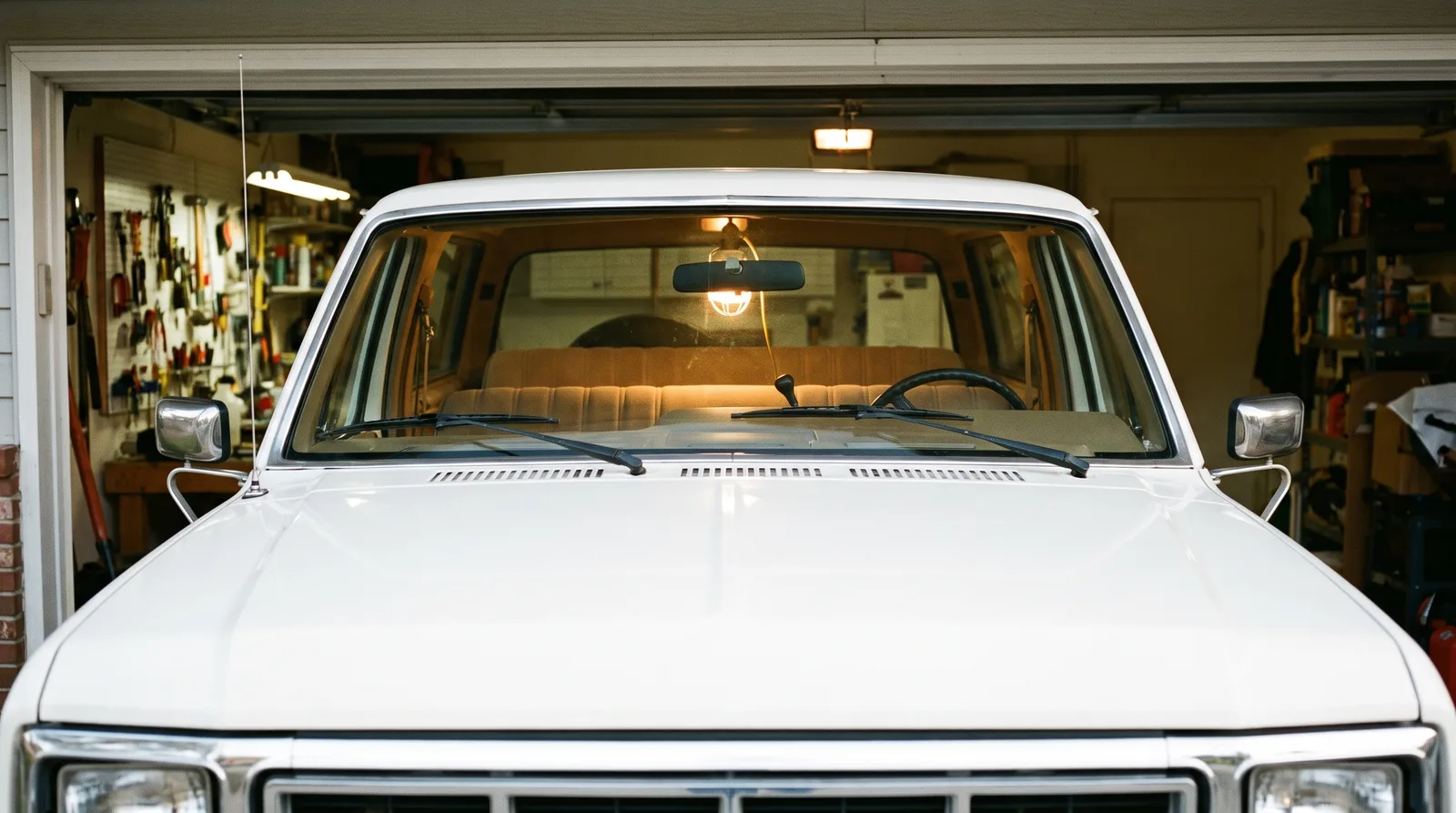
Article
The 1980-1996 Ford Bronco: Bullnose, Brick and OBS
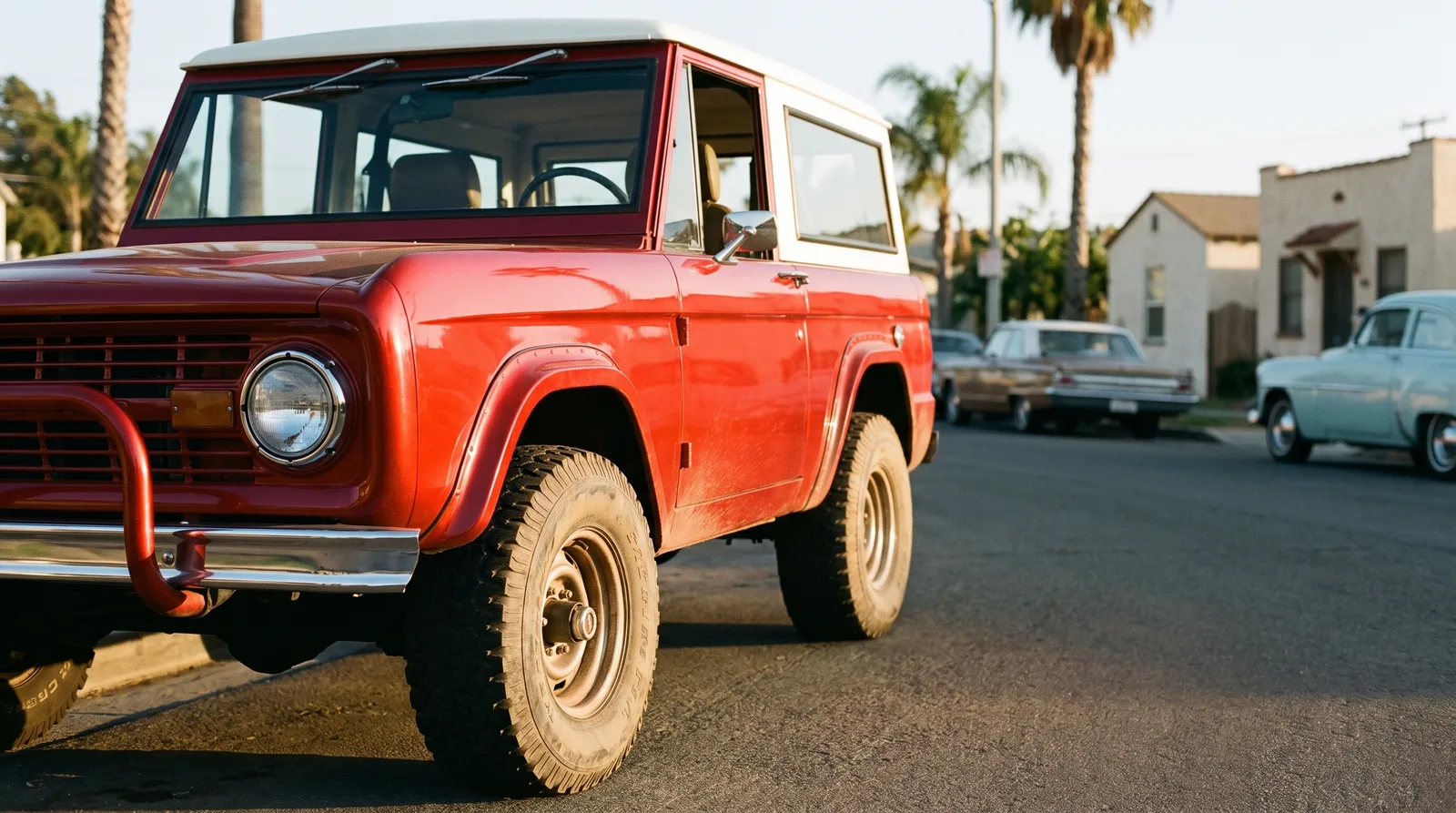
Article
The Baja Bronco and Bill Stroppe: Ford's Off-Road Racing Legend
Article
Ford Bronco Body Styles and Engines: Roadster, Half-Cab, Wagon and V8s

About the author
Patrick Walsh
Automotive journalist covering classic car shows, events, and the enthusiast community across North America.
Related Listings - Ford Bronco




Comments
Be the first to comment on this article.