
Here is the short version. The ford bronco 1969 dana axles are the reason the truck earned its trail reputation, not the body style, not the paint, not the badge. Axles are unglamorous. They also decide whether a truck actually works off-road or just looks like it should. The Bronco used Dana-sourced axles front and rear, and that decision mattered more than most of the truck's more visible features.
Car Features
7 min read
The Dana Axles That Made Broncos Trail Tough, a History
The ford bronco 1969 dana axles, a Dana 30 front and Ford 9-inch rear, are the real reason the truck earned its trail reputation. Here is why they matter more than paint.
The front axle that made the difference
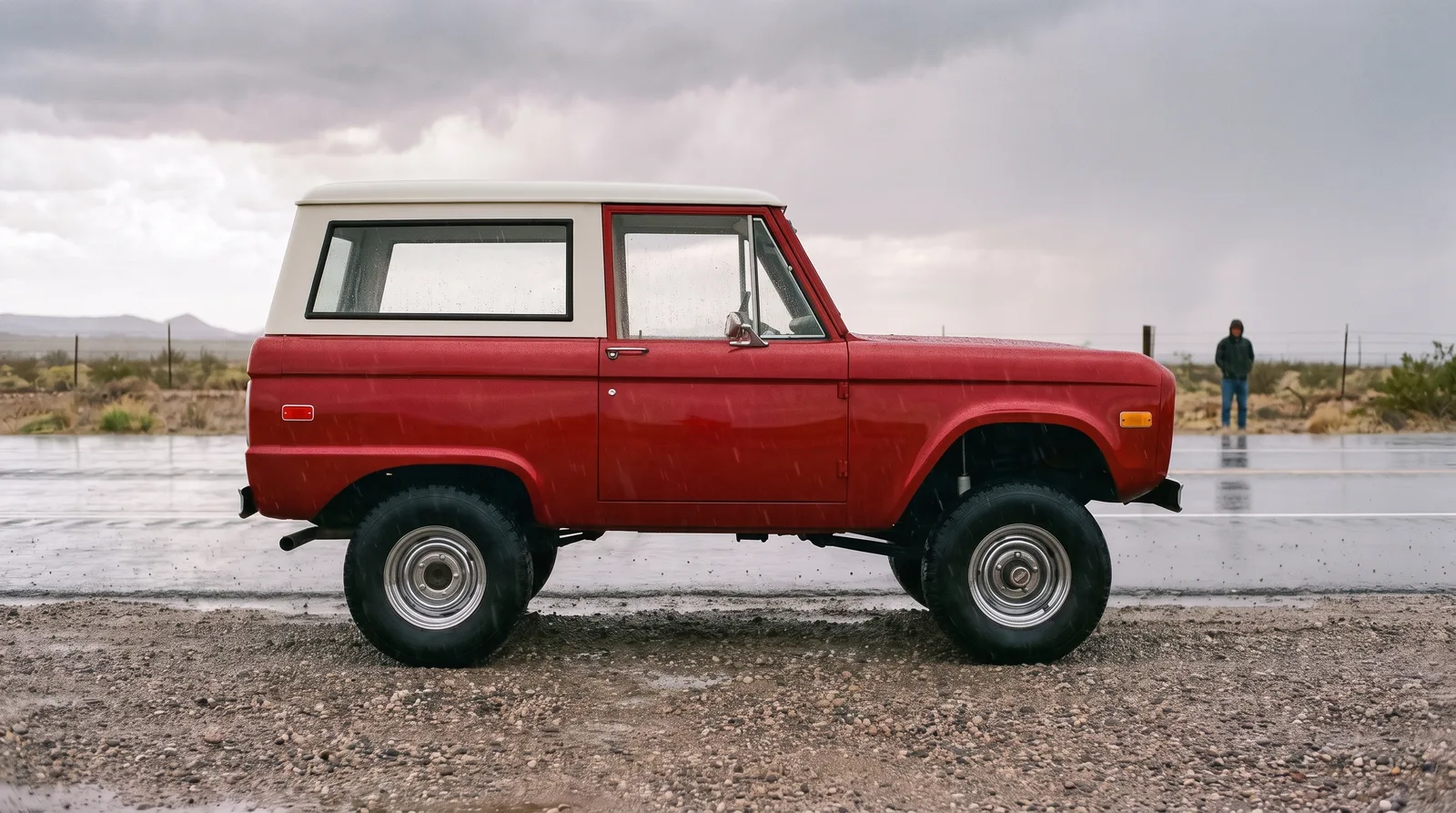
Ford equipped the Bronco with a Dana 30 front axle, a design already proven in other four-wheel drive applications by the time the Bronco launched. This was not a cut corner. Dana built axles for a reason: they knew how to engineer a unit that could handle steering loads and off-road abuse at the same time, which is a harder problem than it sounds. Ford ran the Dana 30 up front from the truck's 1966 debut all the way through the 1970 model year, then moved to the stouter Dana 44 starting in 1971, so a correct 1969 truck should still be wearing the original Dana 30.
A live front axle with real off-road pedigree behind it gave the Bronco genuine capability that a passenger-car-based competitor simply could not match. That is not marketing spin. It is a mechanical fact you can verify by comparing axle housing strength and articulation numbers against anything built on a unibody car platform from the same era.
The rear axle and why it matched the mission
Behind the front Dana 30, Ford ran a Ford 9-inch rear axle in most early Broncos, a unit with its own well-earned reputation for strength across multiple Ford product lines. Pairing a Dana front with a Ford rear was not unusual for the era, and it gave the Bronco a balanced combination: proven off-road front geometry and a rear axle known for handling torque without complaint. That Ford 9-inch, mounted on leaf springs in a Hotchkiss-drive layout, was consistent across the entire first-generation run, so a 1969 truck's rear axle should match what left the factory in 1966 or 1977 alike.
The number that matters here is durability under load, not horsepower. A Bronco climbing a rutted trail or towing a trailer up a grade puts stress on axle components that a spec sheet horsepower figure never captures. Dana and Ford both built hardware that held up under that stress, and that is the entire reason the Bronco built the reputation it did.
| Component | Source | Role |
|---|---|---|
| Front axle | Dana 30 | Steering plus off-road strength |
| Rear axle | Ford 9-inch | Torque handling |
Why this matters more than most buyers realize
People shop Broncos by looking at paint and interior condition first. That is backwards. Axle condition determines whether the truck actually does what a Bronco is supposed to do. A rough-looking truck with a healthy, correctly matched Dana front axle is a better buy than a shiny truck with axle damage hiding under an otherwise clean restoration.
Numbers do not lie here. Axle housings crack. Bearings wear. Gears develop noise long before a casual buyer notices anything wrong on a short test drive. If you are serious about buying a Bronco from this era, get the axles checked by someone who knows what they are looking at, not just someone who can start the engine and call it good.
The bottom line on buying a Bronco with this axle setup
Every early Bronco worth serious money has this drivetrain foundation somewhere in its history, whether original or rebuilt. That is not a coincidence. It is the mechanical baseline the truck's entire reputation rests on. Get the axle numbers matched to the correct model year, get them inspected, and you are buying a truck that will actually do what the badge promises. For the full context on how this drivetrain fits into the rest of the year's production story, where this started covers the complete picture.
Skip that step and you are buying a shape, not a truck. The axles are the part of the Bronco that decides whether the rest of the restoration was worth doing at all.
"Paint tells you what a restoration looked like. Axles tell you what it actually is. Check the axles first."
- Dan Reeves
Where to find one worth checking
If you want a Bronco with this drivetrain foundation intact and documented, start your search where inventory turns over regularly. You can browse a classic Bronco for sale and get the axle history in writing before you commit to anything. That single step saves more buyers from regret than any other part of the purchase process.
Signs of a healthy axle versus a problem waiting to happen
A quick inspection tells you more than most sellers want you to know. Rock the front wheels at the top and bottom, feel for play in the kingpins or ball joints, and listen for clunking that suggests worn u-joints. On the rear, check for gear whine on acceleration and deceleration, a telltale sign of wear that a fresh coat of undercarriage paint will never hide. None of this requires a lift or specialized tools. It requires patience and a willingness to actually get under the truck instead of trusting the seller's description.
Fluid condition matters just as much as noise and play. Pull the fill plug if the seller allows it, or ask for recent service records if they do not. Metal shavings in old gear oil are a warning sign that should stop a purchase cold, or at minimum reset the negotiation around the cost of a proper rebuild. A seller who balks at a fluid check is telling you something, even if they never say a word.
None of this is complicated. It is just the kind of unglamorous diligence that separates buyers who end up with a truck that actually works from buyers who end up with a beautiful shell hiding a five-figure repair bill. The axles do not care how good the paint looks. Check them anyway, every time, no exceptions.
I will say this plainly because too many buying guides dance around it: a rebuilt Dana 30 with documented work and fresh receipts is worth more to me than an original, unverified unit with an unknown service history. Originality matters for certain collector segments, but functional reliability matters for anyone who actually plans to drive the truck. Know which category you fall into before you decide what premium, if any, you are willing to pay for one axle history over another.
The number that should drive your decision is simple: what will it cost to bring the axles up to a standard you trust, and does the asking price already account for that number. If a seller has priced a truck as though the drivetrain is flawless without providing evidence, that is a gap between claim and proof, and closing that gap is squarely on the buyer's shoulders before any money changes hands.
Sources and notes
Related Reading


About the author
Dan Reeves
Performance engine builder from North Carolina's motorsports corridor, focused on swaps, forced induction and making real, repeatable power.
Related Listings - Ford Bronco



Comments
Be the first to comment on this article.